What Is Eye Pressure (Glaucoma)?
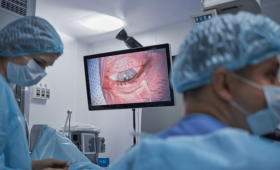
Eye pressure, medically known as glaucoma, is a condition where the fluid pressure inside the eye rises to levels that can cause significant damage to the optic nerve. When the balance between the production and drainage of the aqueous humor—a clear fluid in the front of the eye—is disrupted, the internal pressure increases. This buildup of pressure gradually destroys the optic nerve, which consists of millions of nerve fibers that transmit visual information to the brain. If left untreated, this condition can lead to permanent vision loss and eventually total blindness. Since it is often a slowly progressing disease, regular check-ups are of vital importance for early detection.
Why Is Glaucoma Called the Silent Thief?
The most common type of glaucoma, known as open-angle glaucoma, typically shows no symptoms in its early stages. Because there is usually no pain, redness, or sudden blurring of vision, patients often do not realize that their peripheral visual field is narrowing. Vision loss typically progresses from the edges toward the center, meaning individuals only notice the problem when their central vision is affected, at which point the damage has reached an irreversible stage. This is why glaucoma is nicknamed the “silent thief of sight,” stealing vision without warning, making periodic ophthalmological examinations essential for early diagnosis.
How Does Intraocular Pressure Form?
In order for the eye to remain healthy, its internal tissues must be properly nourished. This nourishment is provided by a clear fluid produced in the back of the eye, which then flows through the pupil into the anterior chamber. From there, it drains out into the bloodstream through a microscopic filtering system called the “trabecular meshwork.” Intraocular pressure depends on the delicate balance between the rate of fluid production and its drainage. If the drainage channels become blocked or if production increases significantly, the fluid becomes trapped inside, causing the pressure to rise and exert damaging force on the eye’s internal structures.
What Are the Symptoms of Eye Pressure?
While open-angle glaucoma may not show early signs, other types like angle-closure glaucoma can present with sudden and severe symptoms. These signs include intense eye pain, severe headaches, nausea, seeing rainbow-colored halos around lights, and sudden blurred vision. Additionally, in congenital glaucoma seen in infants, symptoms may include enlarged eyes, extreme sensitivity to light, and excessive tearing. In adults, difficulty reading or focusing may sometimes occur, but most often, the only true sign is a high pressure reading discovered during a professional examination by a specialist.
Who Is More Likely to Develop Glaucoma?
Although glaucoma can occur at any age, the risk increases significantly for individuals over the age of 40. People with a family history of glaucoma should be extra cautious due to a strong genetic predisposition. Furthermore, those with diabetes, high blood pressure, heart disease, or refractive errors such as high myopia or hyperopia are also in a high-risk group. Long-term use of corticosteroid medications and serious eye injuries can also trigger secondary glaucoma. Ethnic background is another factor, as certain populations may be more susceptible to developing the disease than others.
When Is Laser Treatment Preferred for Glaucoma?
Laser treatment is usually implemented when eye drops are insufficient or when a patient cannot use drops due to side effects. Additionally, if a patient finds it difficult to adhere to a daily eye drop routine, doctors may recommend laser as a primary treatment method. It is also preferred in emergency situations where intraocular pressure must be brought under control quickly or as a less invasive step before proceeding to traditional surgical intervention. In modern medicine, lasers have become a widely used tool to improve the patient’s quality of life and manage the disease effectively.
What Is SLT Laser Treatment?
Selective Laser Trabeculoplasty (SLT) is a highly advanced and safe method used in the treatment of open-angle glaucoma. During this procedure, low-energy laser pulses are directed at the trabecular meshwork, the eye’s natural drainage channel. The laser specifically targets only the pigmented cells without causing thermal damage to the surrounding tissue, which helps to clear the channels and improve fluid outflow. One of the greatest advantages of SLT is that it does not cause scarring, allowing the procedure to be repeated multiple times throughout a patient’s life if necessary.
Is Laser Treatment Considered a Surgery?
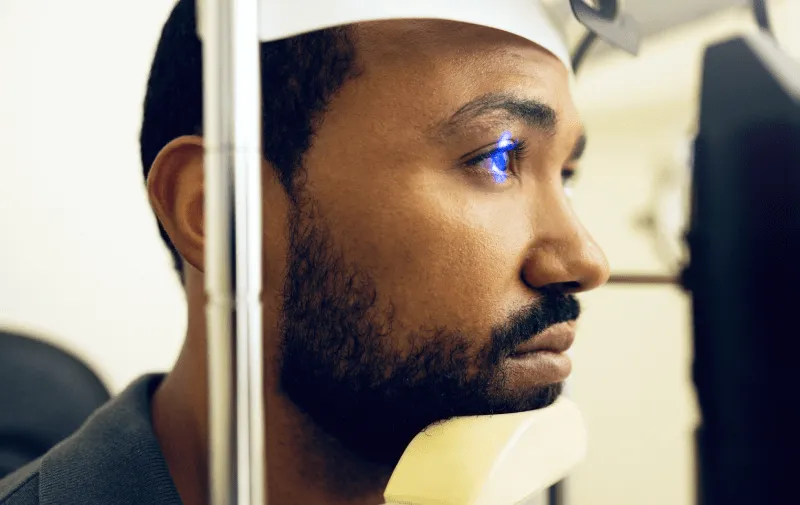
Laser treatment is not a surgical operation in the traditional sense. It does not require hospitalization or an operating room environment. It is a short procedure performed in a clinical setting while the patient sits in a specialized chair. No incisions are made on the eye, no stitches are required, and the risk of infection is significantly lower compared to traditional surgical methods. The patient can return to their daily life immediately after the procedure. Therefore, the term “laser treatment” describes an interventional outpatient procedure rather than a major surgical operation.
Is There Any Pain During the Laser Procedure?
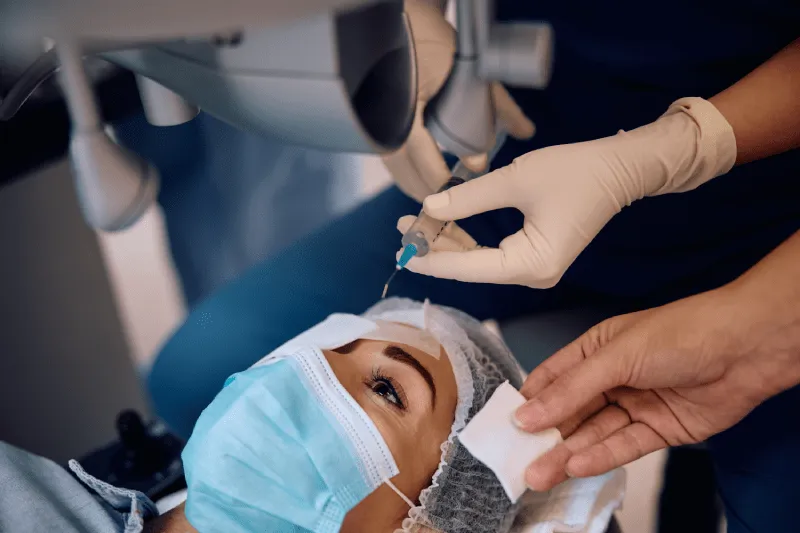
Before the laser treatment begins, numbing drops are applied to the patient’s eye. This ensures that the patient feels no pain or discomfort during the procedure. A specialized lens is used to touch the surface of the eye during the process, which only serves to focus the laser beam accurately. Some patients may notice slight stinging sensations or see bright flashes of light during the laser pulses, but this is generally not painful. Most patients complete the procedure quite comfortably and do not require any painkillers afterward.
How Long Does the Laser Treatment Take?
Laser treatment for glaucoma is a very quick process. The preparation phase, which includes applying numbing drops and ensuring the eye is ready for the procedure, takes about 15 to 20 minutes. The actual laser application itself usually takes only 5 to 10 minutes per eye. After the procedure is finished, the doctor may ask the patient to wait for a short period to monitor the eye pressure. In total, the time a patient spends in the clinic rarely exceeds one hour. This speed is a major advantage for individuals with a busy daily schedule.
Can I See Immediately After the Treatment?
Vision may be slightly blurry immediately following the laser procedure. This is due to both the numbing drops used and the bright light of the laser. Additionally, the gel used with the protective lens during the procedure can cause temporary blurring. However, this situation usually resolves itself within a few hours. Most patients achieve completely clear vision by the next day. Nevertheless, it is recommended not to drive on the day of the procedure; returning home with a companion is the safest way to ensure your well-being.
Is Laser Treatment a Permanent Solution?
While laser treatment is very effective at lowering intraocular pressure, its effect may diminish over time. The success of methods like SLT varies from patient to patient but generally lasts for several years. For some patients, a single session is sufficient, while for others, the procedure may need to be repeated if the pressure rises again. Laser is not a permanent cure that eliminates glaucoma entirely, but rather a management tool to keep the disease under control. Therefore, it is essential to continue regular doctor check-ups even after a successful procedure.
What Are the Risks of Laser Treatment?
As with any medical intervention, there are some minimal risks associated with laser treatment. The most common occurrence is a temporary spike in intraocular pressure immediately after the procedure. To prevent this, doctors may use additional drops before or after the session. Rarely, a mild inflammation inside the eye (iritis) or temporary swelling of the cornea (edema) may occur. However, these side effects are usually easily treated with drops in a short time. The risk of permanent vision loss from laser treatments is extremely low, nearly non-existent.
Who Is Not a Good Candidate for Laser Treatment?
Laser treatment may not be suitable for every type of glaucoma or every patient. For example, individuals with severe internal eye inflammation, those with advanced corneal clouding, or people whose eye structures are too narrow for the laser to reach may not be eligible for this method. Furthermore, in cases where intraocular pressure is extremely high and requires emergency surgical intervention, laser might be a waste of time. Your doctor will determine if your anatomical structure and the stage of your disease are suitable for laser after a comprehensive examination.
Should I Continue Using Drops After Laser?
One of the primary goals of laser treatment is to reduce or completely eliminate the need for eye drops. Many patients can stop using drops after the procedure. However, in some cases, the laser alone may not provide enough of a pressure drop. In these situations, the laser is used to support the effect of existing medications. Your doctor will check your pressure levels a few weeks after the procedure to decide whether to stop the drops or reduce the dosage. You should never stop using your medication on your own without medical advice.
What Is YAG Laser Iridotomy?
YAG Laser Iridotomy is a method applied particularly to those who carry the risk of “angle-closure glaucoma” or who are already suffering from it. In this procedure, a tiny hole, about the size of a pinhead, is created in the upper part of the iris (the colored part of the eye). This hole creates a bypass route, allowing fluid to flow more easily from the back of the eye to the front. This prevents the occurrence of a sudden glaucoma crisis. This method is a life-saving precaution to prevent the risk of sudden and permanent blindness caused by angle-closure glaucoma.
Does Laser Treatment Expand the Visual Field?
Unfortunately, vision that has already been lost due to glaucoma cannot be restored. Once optic nerve cells die, it is not possible to revitalize them with current technology. The goal of laser treatment (and all other glaucoma treatments) is to protect existing vision and stop the progression of damage. Therefore, laser treatment does not expand your visual field or improve your sight; rather, it aims to lower the pressure so that your remaining vision stays with you for years, or even for a lifetime.
What Is the Pre-Treatment Preparation Process?
No special diet or fasting is required before laser treatment. Patients can continue using their routine medications. During the examination, your doctor will inspect your eye structure in detail and determine which type of laser is appropriate for you. On the day of the procedure, it is recommended not to wear eye makeup and to wear comfortable clothing. Your doctor will apply pressure-stabilizing and numbing drops just before the procedure. This preparation process is quite simple and consists of steps that are not tiring for the patient.
How Many Times Can Laser Treatment Be Repeated?
The answer to this question depends on the type of laser used. Selective Laser Trabeculoplasty (SLT) can be repeated many times if the pressure rises again because it does not damage the tissue. However, an older method called Argon Laser Trabeculoplasty (ALT) leaves slight scar tissue, so its application is usually limited. YAG Laser Iridotomy is typically performed only once, and the hole created remains open for a lifetime. The need for repetition will be determined by your doctor during your annual follow-up examinations.
What Should Be Considered After the Procedure?
The recovery process after laser is very fast. For the first few days, there may be slight tearing, light sensitivity, or a sensation like there is sand in the eye; this is normal. It is important to regularly use the short-term anti-inflammatory drops that your doctor will prescribe. You should avoid rubbing your eyes and stay away from dusty environments for a few days. Activities such as exercising, bending over, or lifting weights are usually not restricted, but resting for the first 24 hours is beneficial. If you experience unusual pain or vision loss, you should contact your doctor immediately.
What Is the Success Rate of Laser Treatment?
The success rate of laser treatments is quite high. In approximately 75% to 85% of patients who undergo SLT, a significant drop in intraocular pressure is observed. This drop is usually around 20% to 30%, which is often equivalent to the effect provided by a single eye drop. The success rate can vary depending on the patient’s type of glaucoma, age, and eye structure. In some patients, the effect starts a few months later, while in others, results are obtained immediately. If it is unsuccessful, other treatment options are evaluated.
Which Is Better: Medication or Laser for Glaucoma?
The choice between medication and laser depends entirely on the patient’s individual situation. Medications (drops) have been a standard method for decades, but they must be used consistently every day, sometimes multiple times a day. They may also cause side effects like allergies, eye redness, or eyelash growth. Laser, on the other hand, can free the patient from this daily routine and has no systemic side effects. Recent studies show that in some cases, laser is more cost-effective and comfortable as an initial treatment than drops. You should make the decision together with your doctor.
Is Laser Treatment Covered by Insurance or Social Security?
In Turkey, laser glaucoma treatment is performed in many public and private hospitals. The Social Security Institution (SGK) can cover part or all of these procedures in state hospitals and contracted private hospitals in case of medical necessity. Private health insurance may also cover laser procedures depending on the policy coverage. However, additional fees may arise depending on the technology of the device used and the standards of the hospital. It would be useful to consult with the hospital’s financial department before the procedure to get information about the coverage.
Do Other Eye Diseases Affect the Laser Treatment?
Having additional eye problems such as cataracts, macular degeneration, or diabetic retinopathy usually does not prevent you from receiving laser glaucoma treatment. In fact, methods like SLT can yield very successful results in people who have had cataract surgery. However, a very thin cornea or previous heavy intraocular surgeries might change the effectiveness of the laser. Your doctor will explain in detail how your other diseases will interact with the glaucoma treatment after a comprehensive examination.
Can Laser Treatment Be Applied to Children?
Glaucomas in childhood are usually more resistant and have a different structure. Since glaucoma in infants and young children is mostly caused by a structural abnormality, the first choice is usually surgical operations rather than laser. However, in some special cases or as a support to surgery, laser can be used in children as well. The treatment of pediatric patients should be performed by pediatric ophthalmologists who specialize in this field, and the decision for laser should be made with great care.
Does Laser Treatment Cause Dry Eyes?
The laser procedure itself does not permanently dry out the eyes. However, the preservative substances in the drops used by glaucoma patients for a long time already prepare a ground prone to eye dryness. The lens and gel used during the laser procedure might provide a temporary feeling of discomfort. However, the biggest benefit of laser is that it can improve chronic dryness and irritation caused by drops over time by reducing the patient’s need for medication. In this respect, laser can actually contribute to long-term ocular surface health.
What Is the Follow-Up Process After Laser Treatment?
After the procedure, your doctor usually schedules follow-up appointments after one week, one month, and three months. During these check-ups, intraocular pressure is measured and the optic nerve head is examined. The full effect of the laser usually becomes clear within 4 to 6 weeks. If the pressure has dropped to the desired level, follow-up intervals can be increased to once every six months. It should not be forgotten that glaucoma is a disease that requires lifelong follow-up, and you must maintain your connection with your doctor even if the laser is successful.
Is Laser Treatment Risky for the Elderly?
No, on the contrary, laser treatment is an extremely safe and ideal method for elderly patients. As age progresses, it can become difficult to apply drops at the same time every day (due to reasons such as forgetfulness or hand tremors). Additionally, other systemic drugs used by elderly individuals can interact with glaucoma drops. Since laser does not require general anesthesia and does not impose a systemic burden on the body, it carries much less risk for elderly patients compared to surgery. It is frequently preferred in the elderly to increase the quality of life.
On What Factors Do Laser Treatment Prices Depend?
Laser treatment costs vary according to the technology of the laser device used (e.g., whether it is SLT or YAG), the experience of the doctor performing the application, and the equipment of the hospital. Since modern SLT devices can be more costly, session fees may differ. Additionally, whether the procedure will be applied to a single eye or both eyes is a fundamental factor determining the price. Turkey is one of the leading countries in the world offering the highest quality service with the most accessible costs in this regard.
Is It Possible to Lower Eye Pressure at Home?
Eye pressure is not a disease that can be treated with herbal cures or methods to be applied at home. Some lifestyle changes (consuming plenty of fluids, limiting caffeine, sleeping with the head elevated) can affect the pressure in very small amounts, but these never replace medical treatment. Glaucoma is a serious condition that requires professional intervention. Relying only on natural methods without receiving laser or drop treatment is an invitation to irreversible vision loss. You should always follow the advice of an expert physician.
What Are the New Technologies in Glaucoma Treatment?
The medical world is constantly evolving for glaucoma treatment. In addition to traditional lasers, more sensitive methods such as micropulse laser technologies have been developed today. Also, with methods called “MIGS” (Minimally Invasive Glaucoma Surgery), tiny implants that offer easier but more permanent solutions than laser are used. Lenses that secrete medication or slow-release drugs that are injected into the eye and are effective for months may also replace lasers and drops in the future.
Does Nutrition Affect Eye Pressure?
Although a direct relationship has not been established, it is thought that a diet rich in antioxidants might help protect nerve cells (neuroprotection). Green leafy vegetables (spinach, kale), fish containing omega-3 fatty acids, and fruits containing vitamin C are beneficial for general eye health. However, these foods do not lower intraocular pressure; they can only increase the resistance of the optic nerve against damage. Healthy nutrition should be seen as a supportive lifestyle for laser or drug treatment.
Does Exercising Raise Eye Pressure?
It is known that light and moderate-intensity exercises (walking, swimming, cycling) lower intraocular pressure by a small amount. However, heavy weight lifting, forced movements made while holding breath, or “upside down” poses made during yoga can raise eye pressure to dangerous levels. If you have glaucoma or have had laser treatment, you should consult your doctor about which sports branches are safe for you. Generally, an active lifestyle is recommended, but extremes should be avoided.
When Can I Work After Laser Treatment?
Patients who have laser treatment can usually return to their work the next day. A serious resting period is not required after the procedure. If your job is at a computer or requires intense attention, you might have a bit of difficulty on the first day due to temporary blurring or a feeling of dryness in your eyes; in this case, using plenty of artificial tear drops will be relieving. Those working in jobs requiring physical strength are also generally not seen to have any harm in working at full capacity after 24-48 hours.
What Happens If Eye Pressure Is Not Treated?
If glaucoma is not treated, the result is inevitably blindness. This process can take years, but once the nerve fibers are broken, there is no turning back. At first, the peripheral visual field narrows, and the patient starts to feel as if they are looking through a tunnel. In the last stage, this tunnel also closes and complete darkness occurs. While there are modern opportunities like laser treatment, not having a diagnosed glaucoma treated means the person gives up their quality of life and independence.
Why Should Turkey Be Preferred for Glaucoma Treatment?
Turkey has become a world-standard center in the field of ophthalmology. The use of the latest technology laser devices, expert doctors with thousands of cases of experience, and JCI-certified modern hospitals make Turkey attractive. Additionally, compared to Europe and America, waiting times are very short and costs are much more accessible. Turkish doctors achieve high success rates by combining laser and surgery even in the most complex types of glaucoma.
Get Your Health Back With Cure Holiday
Eye health is too precious to be left to chance. If you are experiencing an eye pressure problem or thinking about having laser treatment, you need a solution partner who manages the process professionally for you. Cure Holiday brings you together with the best eye hospitals and the most experienced professors in Turkey. By taking care of every detail from your treatment plan to your accommodation, from transfer services to your post-operative follow-up, it offers you the comfort of focusing only on healing.
Why Should You Choose Cure Holiday?
Cure Holiday is the address of trust and quality in health tourism. It provides you access to the most modern SLT and YAG laser technologies in a sensitive issue like eye pressure. You receive a world-standard treatment under the guidance of your personal health assistant without experiencing a language barrier. Combining Turkey’s hospitality and medical excellence, Cure Holiday turns your glaucoma treatment into a health holiday, minimizing your stress. You are at the right address to protect your vision and look at the future more clearly.
How Does the Treatment Process Start With Cure Holiday?
The process is very simple; when you reach out to us, your existing reports are examined by our expert physicians and a special treatment map is drawn for you. From the moment you arrive in Turkey, you are met at the airport and placed in your luxury accommodation areas. On the appointment day, after the most comprehensive tests are made in our clinic, your laser procedure is performed within minutes. Our team, which is with you throughout this whole process, guarantees that every stage of your treatment goes smoothly. Experience the peace of mind of entrusting your health to professionals.
Take Action Now And Get Your Appointment
Eye pressure does not wait; every passing day carries a risk of loss for your optic nerve. Do not lose any more time to regain your health painlessly and quickly with modern laser technologies. With Cure Holiday, you can both be treated in Turkey and enjoy this beautiful country. You can get a free preliminary consultation by reaching us immediately through our website or our contact numbers and take your first step towards a clear future. Your vision is our priority.
Free Consultation
Fill out the form below to get your free medical travel plan and price quote.
Sources and how to verify this yourself
- Ministry of Health, Regulation on International Health Tourism and Tourist Health, Official Gazette 26 April 2025, No. 32882 — authorisation requirement for facilities and intermediaries, TÜSKA accreditation, compulsory complication insurance (deadline 31 December 2025 for insurance, 31 December 2026 for accreditation). source
- Ministry of Health, Regulation on Promotion and Information Activities in Health Services, Official Gazette 12 November 2025, No. 33075 — treatment promises and guarantees are prohibited; price and campaign announcements are permitted only within international health tourism. source