What Is Myopia And How Does It Develop?
Myopia is a condition where the eye cannot see distant objects clearly and is defined in medical literature as a refractive error. It occurs when the eyeball is longer than normal or the cornea has a very steep curve, causing light rays to focus in front of the retina rather than directly on it. This results in distant objects appearing blurry, while near objects can still be perceived clearly. It typically begins in childhood and tends to progress as long as physical body development continues, which is usually until the early 20s.
How Does Myopia Affect Eye Structure?
In a myopic eye, the light refraction process functions differently than in a normal eye. While light passes through the lens and reaches the retina directly in a normal eye, in a myopic eye, light creates a focal point in the vitreous space in front of the retina. The primary anatomical cause of this defect is that the front-to-back diameter of the eye is longer than normal. This structural difference directly affects how a person perceives their environment and, if left untreated, can significantly reduce quality of life by negatively impacting social and academic success.
What Are The Symptoms Of Myopia?
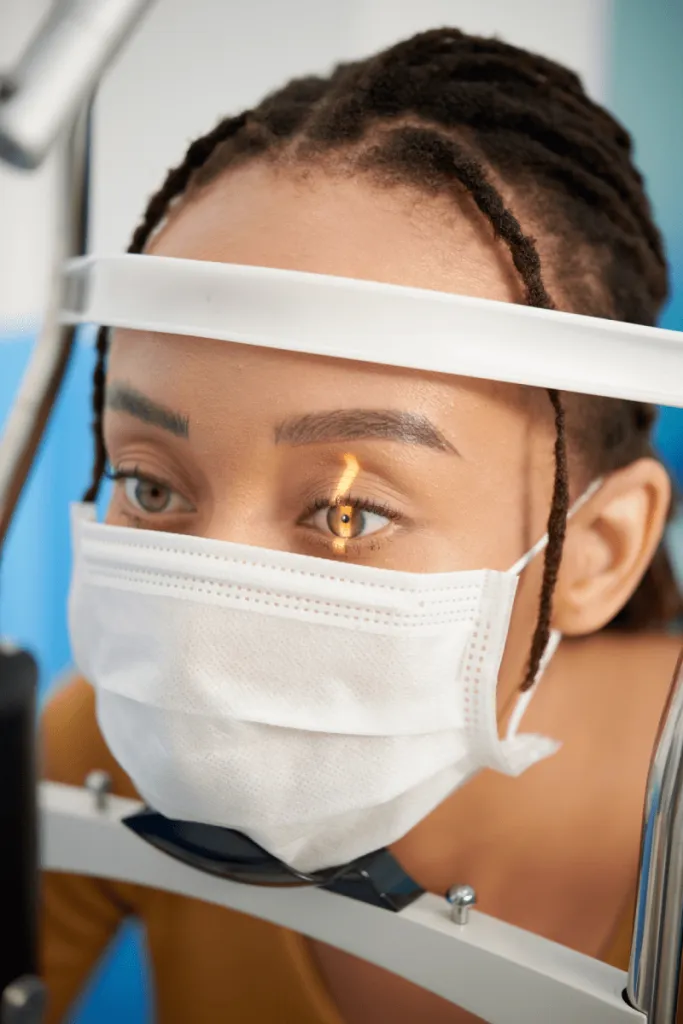
The most common symptom is difficulty reading distant signs, watching television, or seeing the board in a classroom. In addition, squinting to see clearly, severe headaches, and eye fatigue are frequently encountered complaints. Children, in particular, may not realize they cannot see far away, but constant eye rubbing or looking at objects very closely should be a warning sign. The weakening of night vision while driving is also considered one of the most prominent signs of myopia in adults and poses a risk to safety.
Why Can Myopic People Not See Distant Objects Clearly?
The reason myopic individuals cannot see clearly at a distance is a focusing error in the optical system. Parallel light rays coming from a distant object fall in front of the retina because the refractive power of the eye (cornea and lens) is too great relative to the length of the eye. The retina is the nerve layer that transmits images to the brain, and if light does not focus exactly here, the brain perceives the distant view as a blurry signal. However, rays coming from near objects arrive at a different angle and can fall directly onto the retina, which is why myopic people have no trouble reading or using a phone.
What Are The Genetic Factors Of Myopia?
Genetic predisposition is one of the strongest determinants in the emergence of myopia. Research shows that children whose parents are both myopic are much more likely to have this refractive error than those whose parents are not myopic. Having a family history of high-degree myopia can cause myopia to start at an earlier age and progress faster in children. However, genetics is not the only factor; the combination of environmental factors with genetic heritage is the main element that determines the degree and rate of development of myopia.
Do Environmental Factors Trigger Myopia?
Yes, modern lifestyle plays a major role in myopia becoming a global pandemic. Specifically, long hours spent in front of screens, and near-work activities like tablet and phone use, can trigger myopia by straining the eye’s accommodation ability. Not benefiting enough from daylight and constantly staying in closed spaces also negatively affects eye development. Research has proven that the progression rate of myopia is lower in children who spend time outdoors; this is explained by sunlight increasing dopamine release, which slows down the elongation of the eyeball.
Can Myopia Be Cured Naturally?
While many people search hopefully for an answer to the question “Can myopia be cured naturally?”, medical reality shows that this is not possible. Myopia is not an infection or a temporary ailment, but an anatomical change in the physical structure of the eye. The elongation of the eyeball or the change in corneal curvature cannot be reversed by any diet, exercise, or herbal cure. Natural methods may help reduce eye strain, but they do not have the ability to permanently change the eye’s refractive power or axial length.
Do Herbal Remedies Treat Myopia?
There is a common but false belief among the public that blueberries, carrot juice, or various herbal teas can cure myopia. Although vitamins and minerals are beneficial for protecting eye health and preventing diseases like macular degeneration, they cannot eliminate myopia, which is an optical defect. No herbal ingredient can shorten the elongated axial length of the eye or reshape the cornea as is done with a laser. Relying on such methods can lead to delays in professional treatment and further deterioration of eye health.
Do Eye Exercises Reset Myopia?
Eye yoga or various eye muscle exercises can be recommended to alleviate eye fatigue, especially for those working at computers. However, there is no scientific evidence that these exercises lower the myopia number or completely eliminate the refractive error. Myopia is a structural condition related to the eye’s focus distance rather than a problem with the muscles. Working the muscles can relax the eye and temporarily improve focusing ability, but surgical intervention or optical tools are required to change the eye’s fundamental optical structure.
Does Eating Carrots Lower Eye Prescription?
Carrots are very beneficial for general eye health and night vision as they are rich in Vitamin A and beta-carotene. However, the idea that consuming carrots will treat myopia or lower the eye number is a urban legend. This myth originated from propaganda spread during World War II, claiming that pilots gained their night vision through carrots. While healthy nutrition is important for the eye’s general resistance, it is medically impossible to correct structural refractive errors like myopia through diet.
Do Vitamin Supplements Improve Myopia?
Vitamins C, E, and A, along with minerals like Zinc, protect eye tissues against oxidative stress. Eye doctors may sometimes recommend these supplements for conditions like age-related macular degeneration; however, vitamins have no effect on curing myopia. Vitamin supplements are supportive products, not medicines, and they do not have the power to change the eye’s focal point. What a myopic eye needs is not nutritional support, but lenses or corneal corrections that will ensure light focuses in the correct place.
Does Myopia Progression Stop With Natural Methods?
Although some behavioral changes (like the 20-20-20 rule) are recommended to slow down the progression of myopia, there is no “natural miracle” that stops progression completely. Progression is usually dependent on biological growth and occurs with a genetic coding. Today, medical methods such as atropine drops or specially designed contact lenses are used to slow myopia progression. Natural ways only make a person feel better by reducing eye fatigue; however, their clinical success in stopping the growth of the eyeball has not been proven.
Why Should We Use Glasses?
Using glasses is the safest and simplest method for myopic individuals to see the world clearly. Glasses ensure that light focuses exactly on the retina, eliminating blurry vision. This is not just a matter of visual comfort, but also a matter of safety; because not being able to see clearly can cause traffic accidents or falls. Furthermore, a brain and eye constantly trying to see through blurriness exert excessive effort, causing chronic headaches and exhaustion. Wearing glasses is an effective solution that immediately cuts these complaints.
Does Wearing Glasses Make The Eyes Lazy?
There is a major misconception among the public that wearing glasses will make the eye worse or lazy. On the contrary, not wearing glasses causes the eye to constantly struggle to focus and get tired. Especially in childhood, not using glasses with the correct prescription can prevent the brain from learning to receive clear images, leading to permanent lazy eye (amblyopia). Glasses are not a treatment tool, but a vision correction tool; when glasses are worn, the eye does not become lazy, it just receives the optical support it needs to see properly.
Do Glasses Prevent The Progression Of Myopia?
Wearing glasses does not treat myopia or directly stop its progression; however, it prevents unnecessary fatigue by relaxing the eye’s accommodation system. Although some specially designed spectacle lenses have been developed to slow progression in children, the primary goal of standard glasses is clear vision. Some people think the number increases once they start wearing glasses; however, the number would already increase with body development, and wearing glasses is not the culprit in this process. Not using glasses only makes the process more painful and reduces quality of life.
What Kind Of Problems Does Not Wearing Glasses Cause?
A myopic patient who does not use glasses must constantly squint their eyes to see at a distance. This situation causes the muscles around the eye to strain, facial features to tire, and results in severe migraine-like pains. Additionally, low-quality vision can distort depth perception, leading to errors in distance estimation. In the long term, untreated myopia reduces a person’s productivity in education and work life, and can cause a lack of self-confidence due to situations like not being able to recognize people in social environments.
What Is The Importance Of Wearing Glasses In Children?
Since the visual system in children continues to develop, wearing glasses is of vital importance. If a child cannot see clearly at a distance, they cannot follow their lessons, they fail in sports activities, and this situation can be perceived as a learning disability. Glasses contribute to the child’s cognitive and social development by clarifying their visual world. Using glasses for myopia diagnosed at an early age prevents the eye from acquiring wrong focusing habits and forms the first line of defense to prevent more serious vision loss that may occur in the future.
Should Glasses Or Contact Lenses Be Preferred?
The choice between glasses and contact lenses depends entirely on the person’s lifestyle, age, and eye structure. While glasses are advantageous in terms of ease of use and not requiring maintenance, lenses offer a wider field of vision and are ideal for those who play sports. Since contact lenses come into direct contact with the eye, hygiene rules must be strictly followed; otherwise, they can lead to serious infections. Most myopic patients prefer lenses in social environments while choosing to use glasses at home to rest their eyes. A guest doctor must be consulted before making a decision.
Why Can Myopia Not Be Healed Naturally?
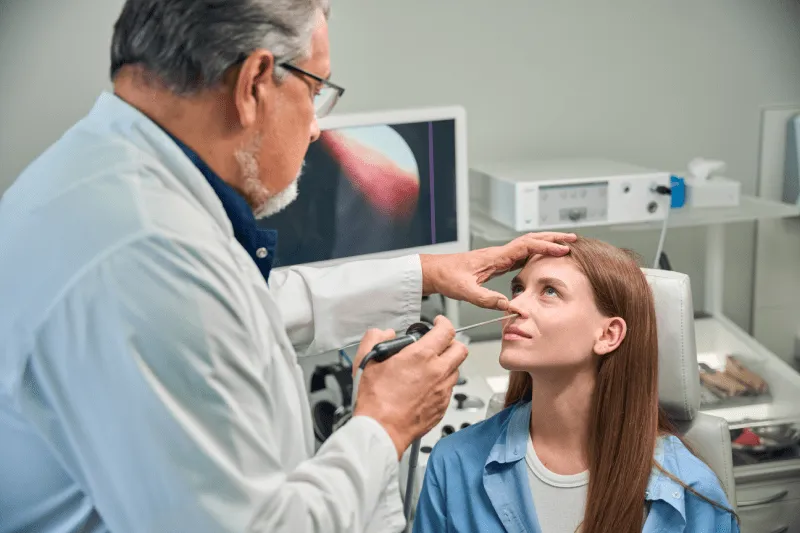
The fundamental reason myopia cannot be healed naturally is that this condition is a biological structural disorder. Just as it is not possible for a person to shorten their height through exercise once they have grown, the eyeball does not shorten through natural methods once it has elongated. Even when the front-to-back length of the eye changes at a millimetric level, a refractive error occurs. This structural change is managed by genetic and developmental processes. To change the angle of light refraction, either an additional lens (glasses/contacts) must be placed in front of the eye or the corneal layer must be surgically reshaped.
Can The Axial Length Of The Eye Be Reversed?
Axial length is the distance from the front to the back of the eye, and in myopia, this distance is more than normal. Scientifically, it is impossible to reverse or shorten the axial length of the eye in an adult individual through non-surgical methods. This condition, called “axial myopia” in medicine, is due to the physical stretching of the eyeball. This stretching can lead to thinning in the retina and even tears in the future. Therefore, treatment-oriented approaches are aimed at focusing the light according to the existing length, rather than changing the length.
Does Cornea Shape Change Naturally?
The cornea is the transparent and curved layer at the very front of the eye and is where light is refracted the most. The shape and degree of curve of the cornea can only be changed permanently by evaporating tissue with laser energy (laser surgery) or temporarily mechanically with hard lenses (orthokeratology). No nutrient or massage technique can permanently affect the density or slope of the cornea. Corneal tissue has an extremely resistant and special structure; to change this structure, precise interventions offered by medical technology are essential.
Is Myopia A Disease Or A Refractive Error?
Medically, myopia is considered a “refractive error” rather than a “disease.” Diseases are usually associated with pathogens or tissue deterioration, whereas myopia is an incompatibility between the optical components of the eye. However, very high-degree myopias (pathological myopia) should be closely monitored as they can pave the way for real eye diseases such as retinal detachment and glaucoma. For a standard myopic patient, the process consists only of making an optical adjustment that will correct the vision.
What Does Modern Medicine Say About Myopia?
Modern medicine views myopia as a manageable and correctable condition. Today, with the advancement of technology, eliminating myopia not only with glasses but also with permanent surgical methods has become a standard practice. The scientific world focuses on mapping the genetic blueprint of myopia and producing pharmacological solutions to stop progression in children. Eye doctors emphasize that myopia is a lifelong condition, but through correct interventions, a person’s visual acuity can be increased to the level of 100%.
Is There A Scientifically Proven Natural Treatment?
To date, no clinical research has identified a “natural treatment” method that completely cures myopia or permanently lowers its number. Although some studies have proven that spending time outdoors delays the onset of myopia, this is a “prevention” method, not a “treatment.” Books, courses, or apparatuses sold under the title of “natural treatment” are usually for commercial purposes and lack a scientific basis. In a critical matter like eye health, the only reliable source is evidence-based medicine and the recommendations of expert eye doctors.
What Is Laser Eye Surgery?
Laser eye surgery is a permanent treatment method applied for patients who want to stop using glasses or contact lenses. Using Excimer laser technology, the corneal layer is thinned at the micron level and reshaped. Thanks to this process, light begins to focus exactly on the retina. The procedure usually takes a total of 10-15 minutes for both eyes and is painless because it is performed under drop anesthesia. Laser treatment, considered one of the most successful surgical operations of modern medicine, has improved the vision of millions of people.
How Is The No-Touch Laser Method Applied?
No-Touch laser (Trans-PRK) is a method where no surgical instrument or blade touches the eye. In this method, it is sufficient for the patient to just look at a light source; laser beams pass through the epithelial layer on the corneal surface and directly correct the refractive error. It is an ideal option especially for people with thin corneas or those engaged in sports with a high risk of impact to the eye. Although the healing process is slightly painful for the first few days, it is a very popular choice due to the safe structure it provides in the long term and its lack of contact.
What Are The Differences Between LASIK And PRK?
In the LASIK method, a thin flap is created in the cornea and the laser is applied under this flap; recovery is very fast and the patient can return to normal life the next day. In the PRK method, a flap is not created; the top layer of the cornea is scraped and the laser is applied directly. The recovery period is longer, but the corneal biomechanics are better preserved. The fundamental goal of both methods is the same, but the doctor decides which method is safer by looking at the patient’s corneal thickness and eye structure.
Is Smart Lens Treatment Suitable For Myopia?
Smart lenses (trifocal lenses) are generally preferred for older patients with cataracts or near vision problems (presbyopia). However, they can also be an option for patients with very high-degree myopia who are not suitable for laser surgery. In this method, the eye’s natural lens is removed and replaced with a multi-focal artificial lens that will stay for life. This way, the patient can see far, middle distance, and near without glasses. This surgery offers a permanent and definitive solution.
What Are The Advantages Of Smile Laser Technology?
SMILE (Small Incision Lenticule Extraction) is the latest and most closed technology in laser eye surgery. A tiny tissue piece (lenticule) is removed from inside the cornea by applying laser through a small incision of only 2 millimeters. This method minimizes the risk of dry eyes after surgery because it causes the least damage to corneal nerves. The recovery period is extremely fast and corneal integrity is preserved at the maximum level. For high-degree myopics and those prone to dry eyes, SMILE is the most comfortable solution today.
Who Is Eligible For ICL (Intraocular Lens) Treatment?
ICL (Implantable Collamer Lens) is a method applied for people whose cornea is too thin for laser surgery or whose eye number exceeds the limits of laser (usually over 10). In this process, the patient’s own natural lens is preserved and a special lens is placed right in front of the lens. This method, also known as an “intraocular contact lens,” provides high-definition vision and has the great advantage of being removable if desired. It is an extremely safe surgery that gives miraculous results for high myopics.
What Is The Success Rate In Myopia Treatment?
The success rate in myopia treatments performed with modern laser and lens technologies is over 95%. The vast majority of patients achieve full vision without glasses after the operation and seriously increase their living standards. Thanks to the precision of the technology, the risk of side effects has been minimized. The most important factor affecting treatment success is a detailed pre-operative examination and choosing the most suitable method for the patient’s eye structure. A correctly planned intervention means visual freedom for a lifetime.
Why Should You Get Eye Treatment In Turkey?
Turkey is in a leading position in the world regarding eye surgery. Turkish eye doctors have vast experience on a global scale in terms of annual case numbers and technological equipment. Services are provided at much lower costs than in Europe and America, at the same and even superior standards. Furthermore, hospitals in Turkey hold international accreditations such as JCI. The opportunity to receive treatment while experiencing the historical and cultural riches of the country places Turkey at the peak of health tourism.
Why Are Eye Hospitals In Turkey Popular?
Eye hospitals in Turkey offer the latest laser devices (SMILE, Excimer, Femtosecond) for use simultaneously with the world. The boutique service approach of the hospitals, the interpreter support provided for foreign patients, and VIP transfer services make the process very easy. Additionally, the near-zero waiting times allow patients to be diagnosed and treated in a short period. The success of the expert staff and the modern architecture of the hospitals make patients from all over the world feel safe.
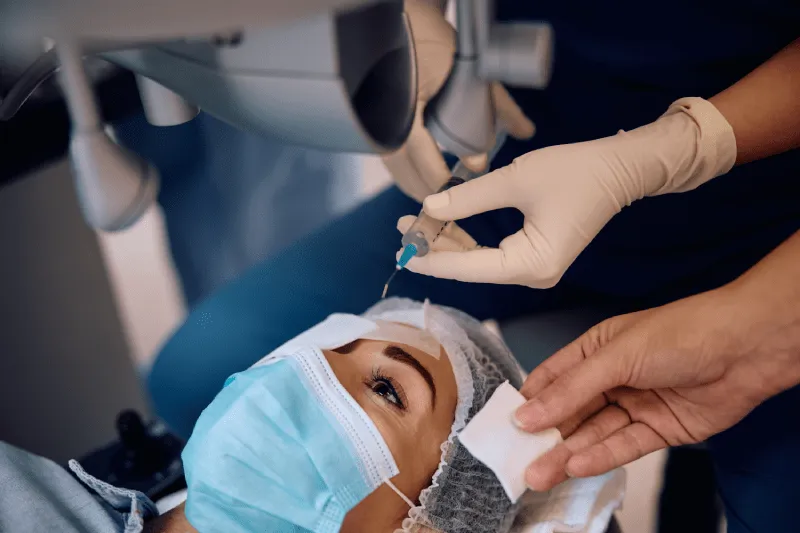
How Does The Treatment Process Work With Cure Holiday?
Cure Holiday is a professional health tourism partner that organizes the entire process for patients who want to receive treatment in Turkey. In the first stage, the suitability of your eyes for treatment is evaluated through an online consultation. Then, your travel plan, accommodation, and appointments are meticulously planned for you. When you arrive in Turkey, our teams who meet you will be with you at every step, from your transportation to the hospital to your first post-operative checks. You are left to just enjoy healing and discover the world with your new, clear vision.
What Are The Advantages Of Cure Holiday?
Choosing Cure Holiday means purchasing a comprehensive health experience, not just a surgery. Thanks to our collaborations with the best eye doctors and the most equipped hospitals, we work to ensure high success rates. With our transparent pricing policy, you will not encounter surprise costs. Furthermore, we help you boost your morale by combining your treatment process with a holiday in the fascinating atmosphere of Turkey. Offering trust, quality, and comfort together, Cure Holiday is your most accurate address in Turkey for your eye health.
Free Consultation
Fill out the form below to get your free medical travel plan and price quote.
Sources and how to verify this yourself
- Ministry of Health, Regulation on International Health Tourism and Tourist Health, Official Gazette 26 April 2025, No. 32882 — authorisation requirement for facilities and intermediaries, TÜSKA accreditation, compulsory complication insurance (deadline 31 December 2025 for insurance, 31 December 2026 for accreditation). source
- Ministry of Health, Regulation on Promotion and Information Activities in Health Services, Official Gazette 12 November 2025, No. 33075 — treatment promises and guarantees are prohibited; price and campaign announcements are permitted only within international health tourism. source