What is LASIK Eye Surgery?
LASIK stands for “Laser-Assisted In Situ Keratomileusis” and is currently one of the most frequently used surgical methods for the treatment of refractive errors worldwide. This operation is based on the principle of reshaping the cornea, the frontmost layer of the eye, with the help of a laser. This procedure, which aims to eliminate dependence on glasses or contact lenses, significantly increases the quality of life of patients. Considered one of the safest surgical procedures offered by modern medicine, LASIK has provided millions of people with clear vision and a life free from visual aids.
Is it Possible to Use LASIK for Myopia Treatment?
Myopia is known as the inability to see far distances clearly and usually occurs because the eyeball is longer than normal or the cornea is too steep, causing light to fall in front of the retina instead of directly on it. The excimer laser used during LASIK surgery slightly flattens the central region of the cornea, allowing light to focus directly on the retina. In this way, myopic patients start to see distant objects clearly without glasses immediately after the operation. Even in high-degree myopias, very successful results are obtained if the corneal thickness is suitable for the procedure.
What are Laser Solutions for Hyperopia Complaints?
Hyperopia is the difficulty of seeing near objects, which is the exact opposite of myopia. In this case, the eyeball is shorter than it should be or the cornea is too flat, which causes light to focus behind the retina. With LASIK treatment, surgeons reshape the edges of the cornea with a laser to give the central region a steeper structure. This change allows light to be refracted and fall exactly on the retina. For hyperopic patients, this method is a permanent solution that minimizes the need for reading glasses and improves overall visual comfort for near tasks.
Is LASIK Suitable for Astigmatism Problems?
Astigmatism is a condition where the cornea has an irregular curvature, like an American football instead of a perfect sphere. This deformity prevents light from focusing at a single point and causes vision to blur both at a distance and up close. LASIK technology has the ability to correct this irregular curvature in the cornea with millimeter precision. Patients with an astigmatism degree within certain limits can completely get rid of this shadowed and blurred vision with LASIK and have a much sharper contrast perception, leading to significantly higher visual satisfaction.
What are the Age Limits for Laser Surgery?
An individual who wants to have LASIK surgery is expected to be at least 18, preferably 21 years old. The main reason for this is that eye development and the degree of visual impairment continue to change until these ages. In operations performed before body development is completed, there is a risk of the number changing again in the following years. The upper age limit is generally flexible until the onset of presbyopia (loss of near vision) around the age of 40-45; however, it can also be applied to older individuals whose general eye health is good, as long as there is no cataract development.
What is the Importance of Corneal Thickness in the Surgery Decision?
One of the most critical factors determining the feasibility of LASIK surgery is the thickness of the corneal layer. During the operation, a thin flap is lifted from the cornea and the underlying tissue is shaved with a laser. If the patient’s cornea is naturally very thin, the remaining tissue after the laser may not be strong enough to withstand intraocular pressure. For this reason, surgeons map the cornea with detailed topography devices and prefer to recommend different methods such as PRK instead of LASIK for patients below safe limits to prevent future complications.
Why is the Stability of the Eye Number Important?
For a successful LASIK operation, it is essential that the patient’s eye number has not shown a significant change in the last year. If the number is still increasing, the correction made with the laser will not provide permanent satisfaction and the need for glasses will arise again after a while. Stabilization is an indispensable prerequisite to protect the success of the laser and to guarantee that the patient sees clearly for many years. During the examination, the patient’s old prescriptions are strictly examined to confirm this situation and ensure a predictable outcome.
What is the Relationship Between Dry Eye and Laser Treatment?
Before the surgery, whether the patient has a serious dry eye syndrome is meticulously examined. LASIK surgery may increase eye dryness during the first few months after surgery because the nerve endings are temporarily affected. If the patient already has severe dryness, this may negatively affect the healing process and cause discomfort. Mild and moderate dryness can be controlled with drops and the operation can be performed, but in very severe cases, dry eye treatment should be completed first or alternative surgical methods should be evaluated for the patient’s safety.
What is the Difference Between Cataracts and LASIK Surgery?
Most patients confuse cataracts with laser operations. LASIK is a procedure performed on the cornea, the outer layer of the eye, and corrects refractive errors. Cataract, on the other hand, is the loss of transparency of the natural lens inside the eye. If a patient has started to develop cataracts, performing a laser on the cornea will not improve vision quality sufficiently. In such cases, cataract surgery and accompanying smart lens applications offer a much more logical and effective solution than LASIK. A specialist physician will clarify this distinction during a comprehensive eye examination.
Can Presbyopia Namely Near Vision Impairment be Fixed with Laser?
Near vision problem (presbyopia), which starts in almost every person after the age of 40, is caused by the lens inside the eye losing its elasticity. Standard LASIK surgery mainly corrects distance vision, but a special technique called “Monovision” can be applied for those with near vision problems. In this technique, one eye is adjusted for distance and the other eye for near vision. In this way, the patient becomes able to manage both distances without glasses. However, it should not be forgotten that this method may not be tolerated by every patient’s brain.
Is Diabetes and Eye Surgery Risky?
Great care should be taken when making a LASIK surgery decision in individuals with diabetes. Diabetes can affect the body’s wound healing capacity and increase the risk of infection in the cornea. In addition, if there are complications affecting the back of the eye, such as diabetic retinopathy, these problems must be controlled first. Although LASIK can be applied to diabetes patients whose blood sugar is regulated and whose fundus examination is clear, with the approval of the surgeon, it is of great importance to analyze the risks well and monitor the healing closely.
Why is Surgery Not Performed During Pregnancy?
The pregnancy process is a period of intense hormonal changes in the body. These hormones can cause temporary edema in the corneal structure and fluctuations in the eye number. For this reason, measurements taken during pregnancy may be misleading and the surgical result may not provide the desired success. In addition, the risk of antibiotic and steroid drops that must be used after the operation passing into the blood and affecting the baby is also taken into consideration. It is the safest way to plan laser treatment after the end of pregnancy and the completion of the breastfeeding period.
Is the Breastfeeding Process Suitable for Laser Operations?
Just like in pregnancy, hormonal balances may not have fully returned to pre-pregnancy levels during the breastfeeding period. This affects both the stability of the eye number and brings up the possibility of the drugs used passing into the milk. Many ophthalmologists recommend re-measuring the eye number at least 2-3 months after the breastfeeding process is over and making the surgery decision then. Being patient is a very critical step for the accuracy and safety of the vision result that will last a lifetime, ensuring that the final prescription is truly stable.
What is the LASIK Risk in Keratoconus Patients?
Keratoconus is a disease characterized by progressive thinning and sharpening of the cornea. LASIK surgery should definitely not be performed on individuals with this disease. Because thinning a part of the corneal tissue during LASIK can further disrupt the structure of the already weak cornea and lead to rapid progression of the disease, causing serious vision loss. For keratoconus patients, different approaches such as Cross-linking treatment or ring treatment, if suitable, are generally preferred. Detection of this disease in pre-operative scans is of vital importance to prevent ectasia.
Can Glaucoma Patients Have Laser Surgery?
Glaucoma, known as eye pressure, is not an absolute obstacle to LASIK surgery, but there are many issues to be considered. During the operation, intraocular pressure rises temporarily, and this situation can damage the optic nerve in patients with advanced glaucoma. In addition, the thinning of the cornea after LASIK can cause intraocular pressure measurements to appear lower than they actually are. This can make glaucoma follow-up difficult. In patients with mild glaucoma that is kept under control with medication, laser can be performed using special techniques and careful monitoring.
How Should Eye Infections and Pre-Surgical Status Be?
LASIK surgery for people who have an active infection, stye, or inflammatory condition in the eye should be delayed. Conditions such as conjunctivitis or keratitis make sterilization of the surgical area impossible and invite serious complications after surgery. Laser treatment should be planned after making sure that the eye surface is completely healthy and clean. In addition, the fact that patients with chronic eyelid inflammation (blepharitis) go through an intensive cleaning and treatment process before surgery is a factor that directly affects the success rate and the comfort of the patient.
What is Automatic Keratome and Femtosecond Technology?
In the traditional LASIK method, the corneal flap was created with a mechanical blade called a “microkeratome.” However, today, with “Femto-LASIK” technology, this flap is created entirely with computer-controlled laser beams. This method, also known as bladeless laser, allows for much more precise, smooth, and thin flaps. This technological advancement has reduced the risk of complications during the operation to almost zero, while significantly shortening the healing period and setting much higher vision quality standards for patients seeking the best possible outcomes in modern refractive surgery.
How is the Working Principle of Excimer Laser Devices?
An excimer laser is a cold ultraviolet light beam created by a mixture of argon and fluoride gases. The most important feature of this laser is its ability to evaporate tissues at a microscopic level by breaking molecular bonds without burning them. When used in eye surgery, it reshapes the cornea with millimeter precision like a sculptor. Each pulse removes a tissue one-fortieth the thickness of a human hair. This superior precision ensures that refractive errors are corrected exactly as targeted and does not cause any thermal damage to the surrounding tissues of the eye.
What are the Tests that Need to be Performed Before Surgery?
Before a LASIK decision is made, the patient goes through a comprehensive “check-up” process. In this process, eye number measurement, corneal thickness detection (pachymetry), corneal mapping (topography), tear quality test, and pupillometry (measurement of pupil width) are performed. In addition, the status of the retina is examined with a dropped fundus examination. All of these tests are performed to determine whether the patient is suitable for surgery and how clearly they can see after the surgery. Selecting the right candidate is the biggest hidden hero in the success of laser surgery.
What is the Effect of Contact Lens Use on Surgery?
If you use contact lenses, you are asked to stop using lenses for a certain period before the pre-operative examination. Usually, at least 1 week is given for soft lenses and 3 weeks for hard or semi-hard lenses. This is because contact lenses can temporarily compress the natural shape of the cornea and cause the measurements to be incorrect. Waiting for the cornea to return to its own natural form is of critical importance for the accuracy of the correction to be made with the laser. Not following this rule may lead to disappointment in the surgical result.
What Awaits You on the Day of Surgery?
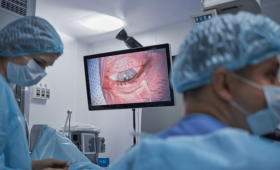
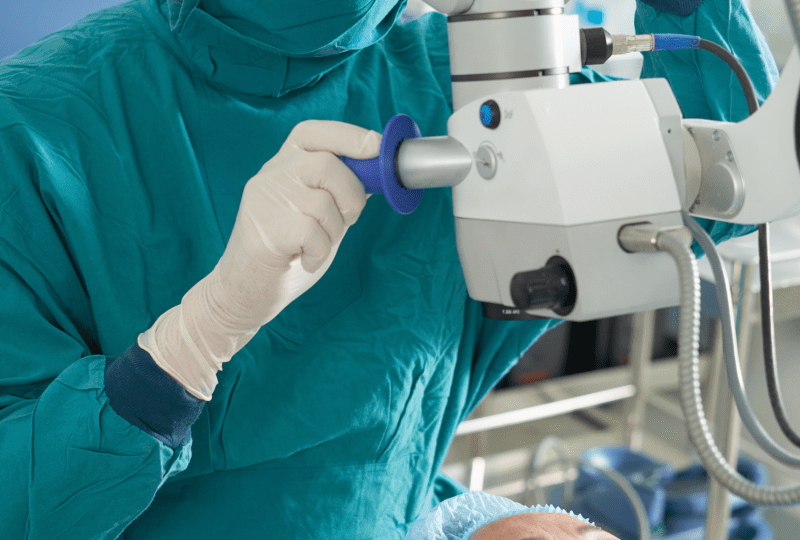
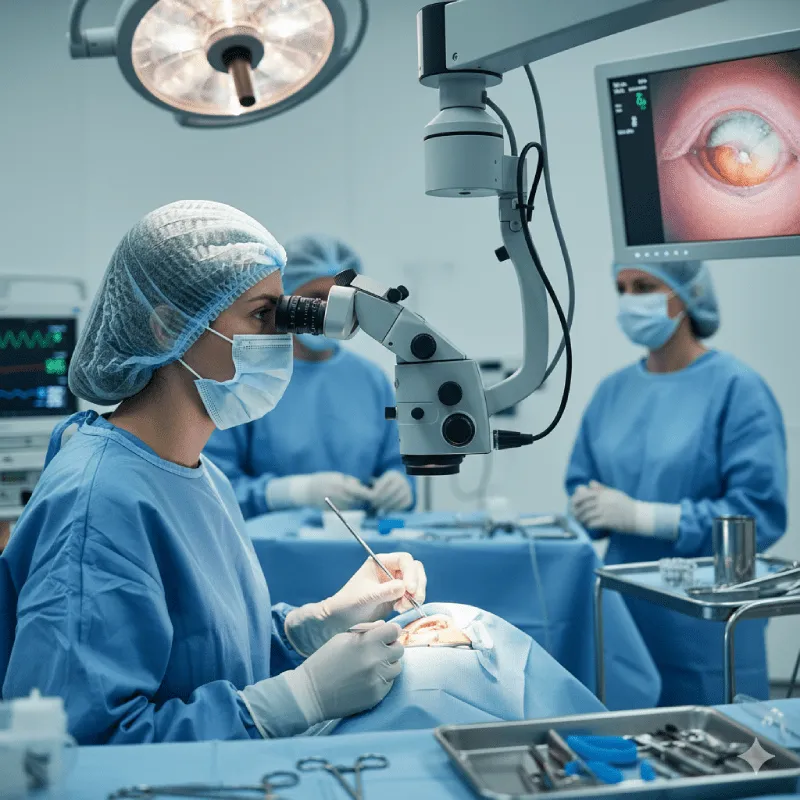
The LASIK operation is a very fast and painless procedure; it usually takes a total of 10-15 minutes for both eyes. Before the surgery, your eyes are completely numbed with anesthetic drops, so you do not feel any pain. During the process, you may only feel a slight pressure and see bright lights. Your surgeon will ask you to look at a certain point. The duration of the laser’s operation is usually less than a minute. When the operation is over, you are taken to the recovery room without the need for any stitches and you can go home after a short time.
What are the Things to Consider During the Healing Process?
In the first few hours after surgery, burning, watering, and a stinging sensation as if sand has entered the eyes are normal. You should use the protective glasses given by your physician and definitely not rub your eyes. Water should not touch the eyes for the first 24 hours and dusty environments should be avoided. Generally, the next day, patients can return to their normal lives and work. However, it may be necessary to wait a few weeks for sports activities and applications such as makeup. Regular use of prescribed drops is the key to a fast and smooth recovery.
What Should be the Expectations in Post-Operative Vision Quality?
Most patients encounter a miraculous change when they wake up the first morning after LASIK and start to see the world clearly. It may take a few weeks to a few months for vision quality to fully stabilize. During this process, it is natural to experience occasional blurring or light sensitivity. The ultimate goal is for the patient to be able to do daily work, drive, and read comfortably without glasses. More than 95% of patients reach this goal and continue their lives without glasses dependence, enjoying a new level of visual freedom and convenience.
What are the Possible Side Effects of Laser Treatment?
As with any surgical procedure, LASIK operation may have some temporary side effects. The most common conditions are temporary dry eye, halos around lights (halo effect), and glares in night vision. bu symptoms usually decrease or disappear on their own as the healing process is completed (within 3-6 months). Very rarely, situations such as under-correction or over-correction of the number may occur. However, thanks to modern technology and experienced surgeons, such risks are now at minimal levels and most problems can be solved with simple enhancements or secondary treatments.
Is a Second Laser Surgery Possible?
In some cases, small regressions in the eye number may occur years after the first surgery or the targeted full correction may not be achieved. If the patient’s corneal thickness is still sufficient and the eye health is suitable, a second “touch-up” or correction operation can be performed. Before deciding on this procedure, it should be ensured that the number has stabilized again. Usually, surgeons perform the procedure using the flap left from the first operation. However, every patient’s structure may not be suitable for a second procedure; this is a completely individual and medical decision.
What are the Advantages of LASIK Surgery for Athletes?
Especially for individuals who do active sports, the use of glasses or contact lenses can be quite challenging. Sweating, the lens slipping, the risk of glasses breaking, or fogging cause problems and negatively affect performance. LASIK provides athletes with a panoramic and clear vision, giving them freedom of movement. From football to swimming, from cycling to tennis, athletes in every branch have a much more comfortable experience thanks to the laser. Especially in sports that require high speed and coordination, the clarity of peripheral vision provides a serious advantage to the athlete.
What Should be Known About Night Vision and Halos?
After laser surgery, some patients report seeing halos or scattering around lights in the dark of night. This situation may be more pronounced especially in patients with large pupils. “Wavefront” technology in modern laser devices is designed to minimize such aberrations (light deviations). As the healing period passes, the brain adapts to this new vision state and these complaints fade over time. Although night driving comfort is slightly affected at first, this situation does not constitute a permanent problem for most patients, and modern lasers have significantly improved these outcomes.
Is it Possible to Get Rid of Glasses and Lens Expenses?
Although LASIK surgery requires a cost at the beginning, it is an economical investment when looked at in the long run. When constantly renewed eyeglass lenses, fashionable frames, monthly lens boxes, solutions, and control examinations are calculated, the surgery cost amortizes itself within a few years. In addition to the financial advantage, the psychological comfort and freedom provided by being able to see the clock as soon as you wake up in the morning, or seeing clearly in the sea or bath, is priceless. The increase in life quality is the biggest gain of this treatment.
What are the Basic Differences Between PRK and LASIK?
If the patient’s cornea is too thin for LASIK, the surgeon may recommend the PRK (No-Touch) method. While a flap is lifted in LASIK, in PRK, the epithelium layer on the very top of the cornea is completely peeled off or evaporated with a laser. The healing process after PRK may be a bit longer and more painful for the first few days compared to LASIK. However, both methods give similar results in terms of final vision success. PRK may be a safer option for some special eye structures and certain occupational groups (such as combat sports, soldiers) because it preserves corneal integrity more.
What are the Comparative Analysis Results with Smile Laser?
SMILE (Small Incision Lenticule Extraction) is the newest generation method in laser surgery. Instead of creating a large flap as in LASIK, a small tissue piece (lenticule) is created inside the cornea with a laser and this piece is taken out through a very small incision. The SMILE method reduces the risk of dry eye after surgery because it causes less damage to the corneal nerves. However, SMILE may not be suitable for every number and astigmatism type at the moment. Your surgeon will determine the most suitable method for your eye structure (LASIK, Femto-LASIK, or SMILE) based on the comprehensive examination results.
Why is Health Tourism and Eye Treatment Preferred in Turkey?
Turkey has become the shining star of the world in the field of eye surgery, especially in the last decade. The excellence of the technological infrastructure, the incredible case experience of the surgeons, and the quality of service provided cause thousands of foreign patients to prefer Turkey every year. At this point, Ure Holiday is a professional intermediary institution that steps in to ensure that patients spend this process in the most comfortable way. Thanks to this team that is with you at every step of your treatment process, you can both regain your health and discover the beauties of Turkey.
How to Make Secure Treatment Planning with Ure Holiday?
Working with a reliable partner is very important in a sensitive issue such as eye surgery. Ure Holiday offers you the safest treatment protocols by cooperating with the most modern hospitals and surgeons specialized in their fields. From appointment planning to pre-examinations, from the surgical process to post-operative follow-ups, all details are managed professionally. Ure Holiday, which eliminates all bureaucratic and logistical obstacles you may encounter in your health journey, ensures that you focus only on recovering and enjoying your new vision.
What is the Cooperation Between Expert Surgeons in Turkey and Ure Holiday?
Eye surgeons in Turkey have one of the highest numbers of operations in the world; this gives them unique manual dexterity and case experience. Ure Holiday offers this elite surgeon network to your service. Working with physicians who can make the right decision even in the most complex eye structures directly affects your surgical success. The consultancy service you will receive through Ure Holiday guarantees that you reach the expertise of world-famous Turkish doctors in the fastest and easiest way. Your eyes will be in expert hands and safe.
How is Accommodation and Transfer Provided Through Ure Holiday?
The biggest concern of patients coming for treatment from abroad or out of town is accommodation and transportation. Ure Holiday offers all-inclusive packages that completely eliminate these concerns. Everything is organized in advance for your comfort, from being greeted at the airport with VIP transfer vehicles to staying in luxurious and comfortable hotels. Your transfers between the hospital and the hotel are meticulously planned, so you do not experience the stress of finding your way in a city you are a stranger to. With Ure Holiday, you feel as comfortable as if you were at home.
What are the Ure Holiday Advantages for Your Eye Health?
Having a clear vision is a step that will change your life, and choosing the right guide in this step is the key to success. Ure Holiday turns your treatment process in Turkey into an unforgettable experience with its transparent price policy, high-standard health service, and hospitable approach. They stay in touch with you in the post-operative period and follow your healing process. To get rid of your glasses and look at life more vividly, you can also plan your treatment in Turkey with the assurance of Ure Holiday and reach your health with a professional touch.
Free Consultation
Fill out the form below to get your free medical travel plan and price quote.
Sources and how to verify this yourself
- Ministry of Health, Regulation on International Health Tourism and Tourist Health, Official Gazette 26 April 2025, No. 32882 — authorisation requirement for facilities and intermediaries, TÜSKA accreditation, compulsory complication insurance (deadline 31 December 2025 for insurance, 31 December 2026 for accreditation). source
- Ministry of Health, Regulation on Promotion and Information Activities in Health Services, Official Gazette 12 November 2025, No. 33075 — treatment promises and guarantees are prohibited; price and campaign announcements are permitted only within international health tourism. source