What Is A Cataract And How Does It Affect Vision?
A cataract is a condition where the natural lens of the eye loses its transparency and becomes cloudy. This situation prevents light from reaching the retina properly, leading to blurred vision, faded colors, and decreased night vision. While it usually develops due to aging, genetic factors, traumas, or certain diseases can also trigger it. This decline in vision quality significantly lowers living standards by restricting a person’s daily activities.
What Are The Symptoms Of Cataracts And When Should You Be Concerned?
The most common symptom of a cataract is blurred vision, which feels like looking through a foggy window. In addition, symptoms such as sensitivity to light, excessive scattering of headlights during night driving, double vision, and needing stronger light for reading are observed. If your glasses prescription changes frequently or colors no longer seem vivid to you, it is necessary to suspect the presence of a cataract and undergo a detailed examination by a specialist ophthalmologist.
What Is The Best Time For Cataract Surgery?
In the past, patients waited for the cataract to “ripen,” but with today’s technology, the time for surgery depends entirely on the patient’s quality of life. If the cataract prevents you from reading, driving, or doing your job, it means the time for surgery has come. Waiting for vision loss to deepen can make the surgical process more difficult and increase risks. Therefore, it is recommended to plan the most accurate intervention time by sharing your daily difficulties with your doctor after early diagnosis.
Which Modern Techniques Are Used In Cataract Surgery?
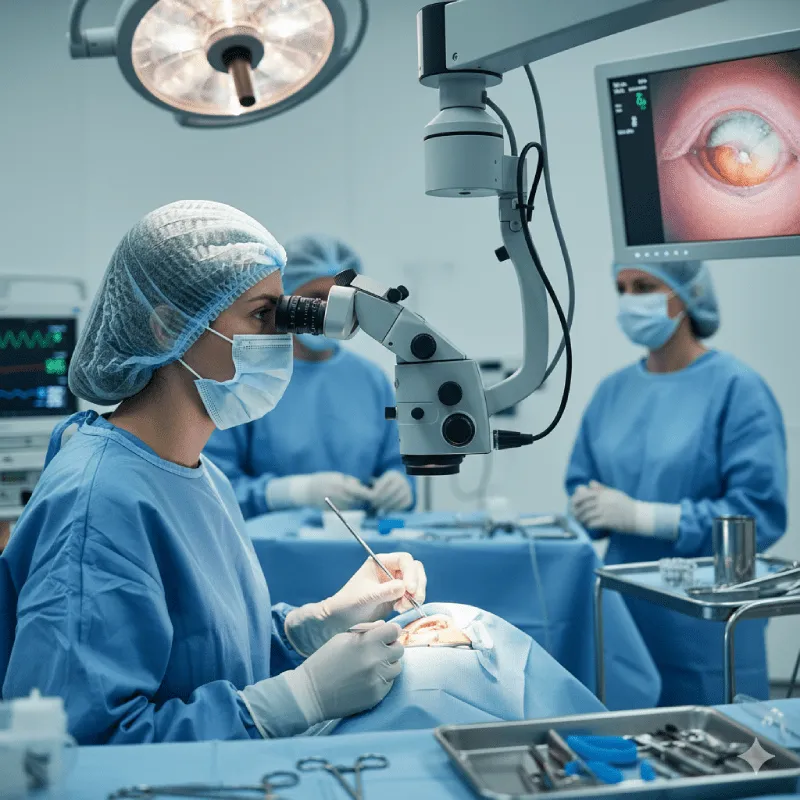
Cataract surgery has undergone a major technological transformation in recent years. The most commonly used method, the phacoemulsification (PHAKO) technique, is based on micro-surgery principles. In addition, high-precision femtosecond laser technology also increases success rates in surgery. Thanks to these modern techniques, procedures are performed that provide stitch-free, rapid recovery, and minimized complication risks. Both methods can be customized according to the patient’s eye structure.
What Is The Phacoemulsification Method And How Is It Applied?
Phacoemulsification, or PHAKO as it is known among the public, is the process of breaking up the cataractous lens using ultrasonic sound waves and removing it from the eye. The eye is entered through a very small incision; the hardened lens is liquefied by vibrations and suctioned out. A new, artificial lens is placed inside the emptied lens capsule. The incision is so small that it usually does not require stitches and heals on its own. This method is considered the most reliable surgical standard in the world.
How Is Laser Cataract Surgery Performed?
Cataract surgery with a femtosecond laser involves performing the critical stages of the surgery with a computer-controlled laser. Opening the anterior capsule of the eye, breaking up the lens, and, if necessary, correcting astigmatism are performed with high accuracy with this laser. This technology, which exceeds the precision of the human hand, gives superior results, especially in complex cases and premium lens placements. The use of a laser provides a faster stabilization process after surgery by reducing tissue trauma.
Which Tests Should Be Done Before Surgery?
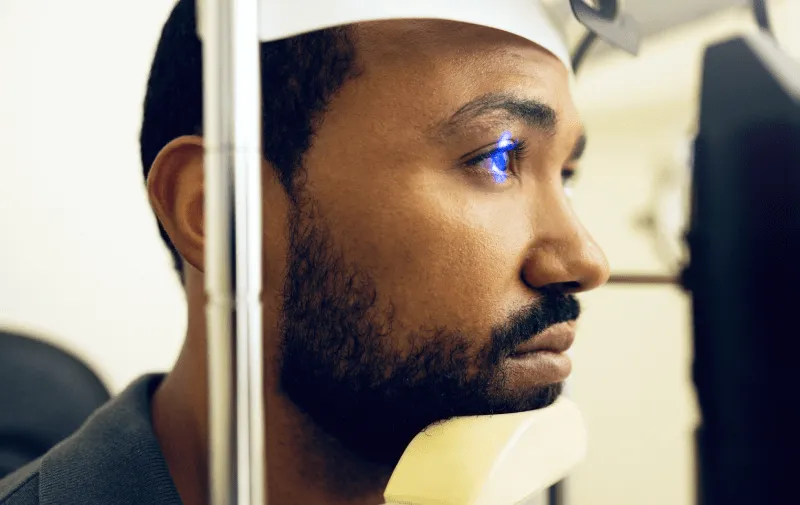
Comprehensive preliminary preparation is essential for a successful cataract surgery. In the first stage, biometry measurements are taken to calculate the power of the lens to be placed inside the eye. The surface map of the eye is drawn with corneal topography and the amount of astigmatism is determined. In addition, the health of the nerve layer at the back of the eye is checked with a retina examination and OCT (Optical Coherence Tomography). These tests are vital for clarifying both the surgical plan and post-operative expectations.
Why Is Intraocular Lens Selection Vital?
Cataract surgery not only corrects blurred vision but also offers an opportunity to treat the patient’s refractive errors. The artificial lens (IOL) placed inside the eye is permanent and stays in the eye for life. Correct lens selection determines whether the patient will be dependent on glasses after surgery and how clearly they will see far or near. This choice should be personalized according to the patient’s profession, hobbies, and night vision preferences.
Who Are Monofocal Lenses Suitable For?
Monofocal lenses are standard lenses with a single focal point. They are usually planned to show the distance clearly; in this case, the patient sees the distance without glasses but needs glasses for near activities such as reading or computer use. Contrast sensitivity is high, and side effects such as light scattering are minimum. Because it is budget-friendly and provides a clear image, it is an excellent choice for patients who do not have a problem using reading glasses.
What Are The Advantages Of Multifocal Lenses?
Multifocal lenses are designs that aim for clear vision at both far and near by distributing light to different focal points. Thanks to these lenses, patients can completely get rid of glasses in most of their daily activities (watching TV, using a phone, reading a newspaper). Modern multifocal designs provide high comfort to the patient by offering continuous vision in transition zones. It offers ideal solutions especially for individuals who have an active social life and do not want to wear glasses.
How Do Trifocal Smart Lenses Work?
Trifocal lenses, known as “smart lenses” among the public, are the most advanced optical systems that provide clear vision at far, intermediate, and near distances. They solve the intermediate distance (computer and car dashboard distance) problem where traditional lenses fall short. They provide functional vision at all three distances by using light refraction and reflection principles. Patients with trifocal lenses can see everything clearly and continuously while cooking, working on the computer, or at the cinema.
What Is The Difference Between EDOF Lenses And Trifocal Lenses?
EDOF (Extended Depth of Focus) lenses increase depth perception by extending the focus of vision instead of dividing light into individual focal points. While trifocal lenses offer three separate focal points, EDOF lenses provide a more natural transition and excellent intermediate distance vision. The biggest advantage of EDOF lenses is that the risk of night light reflection (halo/glare) is much lower than trifocals. Active patients who drive at night generally prefer EDOF technology.
How Do Toric Lenses Correct Astigmatism?
Astigmatism, which is a shape deformity in the cornea layer of the eye, can be corrected with special “Toric” lenses during cataract surgery. While standard lenses do not eliminate astigmatism, Toric lenses are placed on a specific axis inside the eye to reduce this refractive error to zero. If a patient has high astigmatism and a non-toric lens is fitted, they may have to wear glasses even to see far after surgery. Toric lenses take vision quality to the highest level by clarifying the distance.
Why Is Lifestyle Important In Lens Selection?
Every patient’s visual needs are different. The lens needs of a software developer who is constantly at the computer cannot be the same as a driver who drives long distances all day. Near focus is vital for a retired reader, while distance and contrast sensitivity are priorities for a young person doing outdoor sports. Therefore, before lens selection, you should tell your doctor in detail about your daily routine, how often you drive at night, and at which distance you need clarity the most.
Which Lens Should Those Who Drive At Night Choose?
Night driving can be challenging due to light flares in some lens types after cataract surgery. Especially in multi-focal lenses, seeing rings around lights (halo effect) is a common occurrence. High-quality monofocal lenses or specially designed EDOF lenses that minimize glare are recommended for people whose night driving performance is a priority. These lenses provide a safe driving experience by preserving contrast in low light conditions.
How Does Reading Habit Affect Lens Preference?
If you spend most of your time with a book, tablet, or phone, near vision focus is the most critical factor for you. Trifocal or high near-add multifocal lenses are designed to meet this need. However, if wearing glasses while reading is not a problem for you, you can choose monofocal lenses that show the distance perfectly and enjoy natural contrast. Whatever your choice, your reading distance needs to be planned according to your anatomical structure.
How Long Does Cataract Surgery Take?
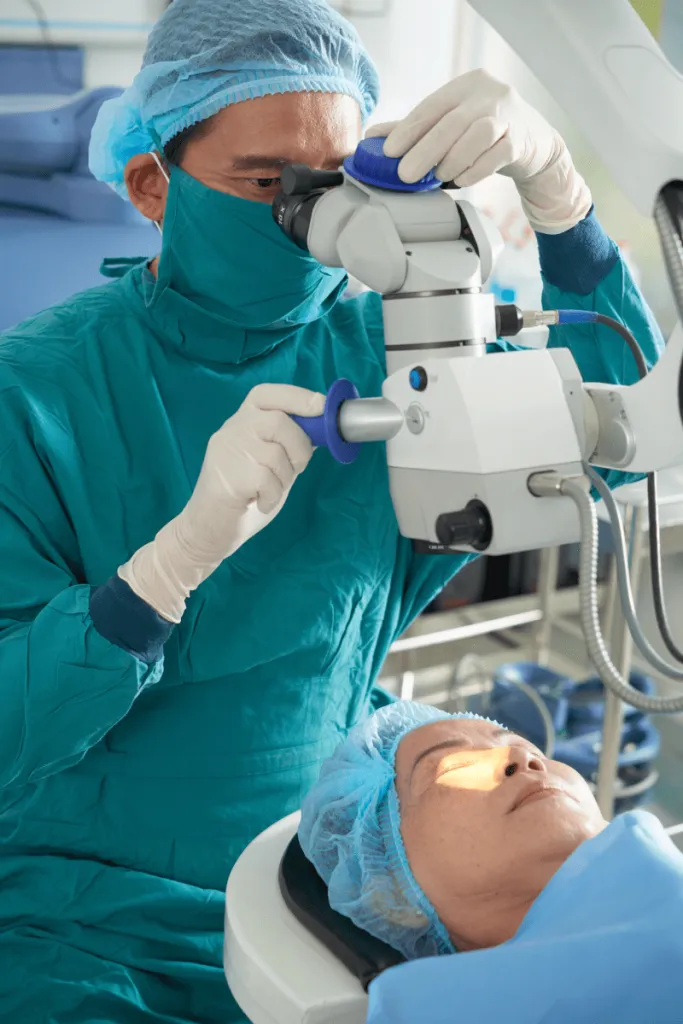
Modern cataract surgery is a very short procedure thanks to advanced technologies. A standard case is usually completed within 15 to 25 minutes. The stay in the hospital does not exceed a few hours in total, including preparations and observation. This speed does not mean the process is simple; on the contrary, it is a technological superiority that requires high precision. The shortness of the surgery prevents the patient from getting stressed and is an important factor that reduces the risk of complications.
Is Pain Felt During Surgery?
Cataract surgery is usually performed under drop anesthesia (topical anesthesia), meaning only numbing drops are instilled in the eye. In this way, the patient is awake but does not feel any pain or ache in their eye. In rare cases, local or general anesthesia may be required. During the surgery, you may only feel a slight pressure or the flow of water. The procedure is so comfortable that patients are usually surprised that it went so smoothly when the surgery is over.
How Does The Recovery Process Progress After Surgery?
Vision begins as soon as the surgery is over, but full clarity usually settles within a few days. During the first 24 hours, a slight stinging, watering, or a feeling like there is sand in the eye is considered normal. Vision may fluctuate during the first week. The brain’s adaptation to the new lens (neuroadaptation) can take a few weeks, especially with multi-focal lenses. Regular use of drops given by the doctor during the recovery process is critical to prevent the risk of infection and speed up healing.
What Should Be Considered After Surgery?
Protecting the eye during the recovery process is the key to success. It is important not to rub the eye, avoid hard impacts, and use a protective shield while sleeping for the first week. Care should be taken not to get water in the eye, and lifting heavy objects and bending head-down should be avoided. Staying away from pools, the sea, and dusty environments for at least two weeks is necessary to prevent infection. It is necessary to stick to doctor controls and apply to the clinic immediately in case of sudden pain or vision loss.
When Should The Second Eye Be Operated On?
If there is a cataract in both eyes, it is generally preferred to leave a certain period between surgeries. The common practice is to operate on the second eye after the first eye has healed and vision has stabilized (about 1-2 weeks later). This process allows seeing the healing performance of the first eye and revising the lens power for the second eye if necessary. In some special cases or if the patient is coming from abroad, both eyes can be operated on on consecutive days with the approval of the surgeon.
Does The Need For Glasses Completely End After Cataract Surgery?
The answer to this question depends on the type of lens chosen. The vast majority of patients who prefer smart lenses (trifocal) or EDOF lenses can see far, intermediate, and near without glasses, and their dependence on glasses is reduced by over 90%. However, patients fitted with monofocal lenses will definitely use glasses for reading even if they see the distance clearly. It should not be forgotten that even with multi-focal lenses, a low-numbered glasses support may sometimes be required for reading very small prints or for very fine detailed work.
What Are The Risks And Possible Complications Of Surgery?
Cataract surgery is one of the most frequently performed surgeries with the highest success rate in the world; however, like every surgical procedure, it carries some risks. Although rare, complications such as infection (endophthalmitis), intraocular bleeding, retinal detachment, or tearing of the lens capsule can be seen. In addition, eye pressure may rise or corneal edema may form after surgery. These risks are minimized in cases performed by experienced surgeons under sterile conditions and if the patient follows the rules.
What Is Secondary Cataract And How Is It Treated?
Known among the public as “recurrence of cataracts behind the eye,” secondary cataract (posterior capsule opacification) is not a real cataract. It is the clouding of the capsule membrane where the lens is placed over time. This situation causes vision to become blurred again months or years after surgery. Its treatment is extremely simple; without needing to enter the operating room, this matte layer is cleaned with a few-minute YAG Laser procedure under polyclinic conditions and vision returns to its former clarity instantly.
How Is Cataract Surgery Performed In Diabetic Patients?
In diabetic patients, cataracts can develop at earlier ages, and the surgical process requires a more meticulous approach. Having regular blood sugar before surgery is very important for the speed of recovery. In addition, it must be checked whether diabetes has damaged the retina (diabetic retinopathy). In diabetic patients whose retina is not healthy, multi-focal lenses may not always give a good result. In these patients, the surgeon should both clean the cataract and evaluate lens options that will protect retinal health.
Can Glaucoma And Cataract Be Treated Together?
Eye pressure (glaucoma) and cataracts are conditions that are frequently seen together. In these cases, “combined surgeries” that will solve both problems in a single session can be performed. Replacing the lens during cataract surgery can also help the intraocular pressure to drop slightly. In patients with advanced glaucoma, multi-focal lens selection is generally not recommended because the visual field is restricted. The surgeon will create the safest plan based on the patient’s glaucoma stage and the condition of the optic nerve.
How Does Macular Degeneration Affect Lens Selection?
Lens selection requires extra care in individuals with macular degeneration (yellow spot disease). Since central vision is weakened in these patients, multifocal lenses that scatter light can further reduce vision quality. Instead, monofocal lenses that increase contrast or have a specific magnifying effect are preferred. Special technologies such as “macular lenses” developed for macular degeneration patients are also available. The main goal is to make maximum use of the remaining healthy areas of the retina.
Is Cataract Surgery A Permanent Solution?
Yes, cataract surgery is a definitive and permanent solution. The artificial lens placed in place of the removed natural lens is biologically compatible and maintains its form for life. Once a cataract is operated on, it is not possible for a cataract to form again in the same eye. Only the “secondary cataract” condition mentioned before can occur, which is eliminated in seconds with a laser. The vision quality obtained after surgery is permanent as long as other structures of the eye (retina, cornea) remain healthy.
When Can Sports And Exercise Be Done After Surgery?
Light walks can be started the day after surgery. However, heavy lifting that will increase intraocular pressure, exercises that require straining, and high-tempo cardio activities should be waited for at least a week. Swimming should be postponed for at least 2-3 weeks due to the risk of water getting into the eye and infection. Contact sports (football, basketball, boxing, etc.) are inconvenient for at least a month so that the lens does not move and the eye does not receive trauma. You should always increase your activity level by getting your doctor’s approval.
According To What Do Cataract Surgery Prices Change?
The most important factor affecting cataract surgery costs is the quality and type of the lens fitted inside the eye. Standard monofocal lenses are more economical, while premium lenses such as trifocal or toric are more costly. In addition, the experience of the surgeon, the technological equipment of the hospital (such as the use of lasers), and the quality of the consumables used determine the price. Within the scope of health tourism, Turkey is an attractive center for international patients because it offers world-standard service at much more affordable prices.
How To Choose The Right Doctor And Clinic?
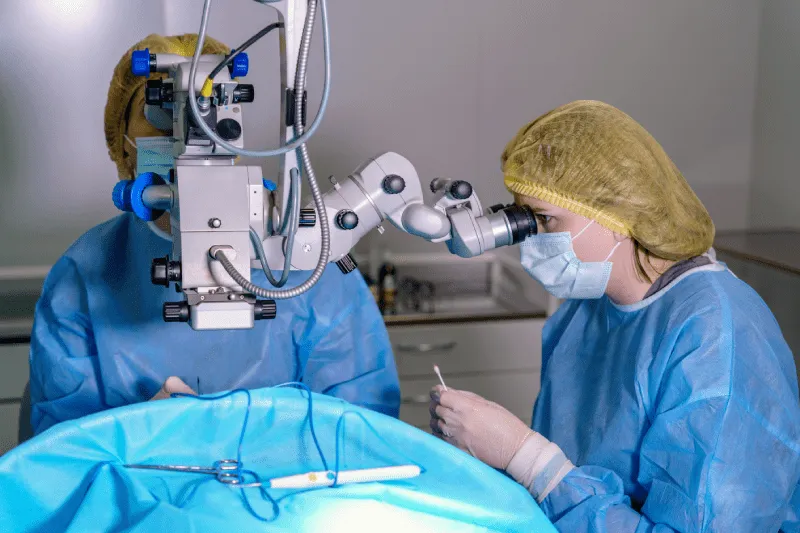
Your eyes are one of your most valuable organs, so you should focus on experience when choosing your surgeon. The number of cases the doctor has in cataract surgery and premium lenses is an important criterion. The sterilization standards of the clinic, whether it has the latest laser technologies, and its meticulousness in pre- and post-operative patient follow-up are also of great importance. Examining patient reviews and the explanatory answers given by the doctor to your questions in the first examination are the best indicators that you are in the right place.
How Long Is The Life Of Lenses Used In Cataract Surgery?
Modern intraocular lenses (IOL) used in cataract surgery are produced from polymer materials (acrylic, silicone, etc.) that are fully compatible with body tissues. Although the shelf life of these lenses is limited, they are designed to remain in the eye for life without deteriorating once placed. The lens does not melt, rust, or lose its quality inside the eye. Regardless of the patient’s age, the fitted lens continues to perform its visual function until the end of the person’s life. Therefore, choosing the highest quality lens is a long-term investment.
How Does The Cataract Treatment Process Start With Cure Holiday?
Cure Holiday serves as a bridge that facilitates the entire process for patients who want to receive cataract treatment. The process starts with you contacting us and sharing your current eye reports. Our expert team examines your reports and provides detailed information about the most suitable treatment methods and lens options for you. We plan your appointment with the most experienced surgeons in Turkey’s most distinguished eye centers. We professionally coordinate not only your treatment but also your logistic needs such as accommodation and transfer, offering you a peaceful recovery process.
Why Is Cure Holiday A Leader In Health Tourism?
Cure Holiday has a vision that holds patient satisfaction and ethical approach above everything in health tourism. The clinics we have agreements with are centers that have international JCI accreditation, use the latest technology, and have proven success rates. We offer our patients not just a surgery, but a 360-degree service. We eliminate the language barrier with our multi-lingual team and stand by you at every step of your treatment journey. We create a difference by combining high-quality healthcare service with transparent pricing and personal interest.
What Do Personalized Treatment Packages Offer With Cure Holiday?
We are aware that every patient’s needs are different; that’s why we prepare special packages for you as Cure Holiday. Our packages cover specialist surgeon examination, the highest quality (German or American-made) intraocular lenses, VIP transfers, and luxury accommodation options. Every detail is thought of by us, from your post-operative controls to the supply of the medications you need. While you only focus on your health, we carry out all the organization perfectly in the background. This is the key to a stress-free and safe health journey.
Why Should You Make An Appointment Through Cure Holiday?
Regaining your vision is one of the most important decisions you will make in your life. When you make an appointment through Cure Holiday, you get direct access to Turkey’s best ophthalmologists. While offering the most suitable price guarantee for you, we never compromise on service quality. By being informed at every stage of the process, you feel safe. We are here for you to regain your health as soon as possible without losing time with waiting lists. Take the first step with us to see the world clearly again and enjoy a privileged health experience.
Free Consultation
Fill out the form below to get your free medical travel plan and price quote.
Sources and how to verify this yourself
- Ministry of Health, Regulation on International Health Tourism and Tourist Health, Official Gazette 26 April 2025, No. 32882 — authorisation requirement for facilities and intermediaries, TÜSKA accreditation, compulsory complication insurance (deadline 31 December 2025 for insurance, 31 December 2026 for accreditation). source
- Ministry of Health, Regulation on Promotion and Information Activities in Health Services, Official Gazette 12 November 2025, No. 33075 — treatment promises and guarantees are prohibited; price and campaign announcements are permitted only within international health tourism. source