Is Myopia Treatment Possible with No Touch Laser?
Myopia, also known as nearsightedness, is one of the most successfully treated vision defects with No Touch Laser technology today. In myopia, the image falls in front of the retina because the eye’s anteroposterior diameter is longer than normal or the corneal curvature is too steep. No Touch Laser reshapes the corneal surface without any incision, ensuring that light falls exactly on the retina. Through this process, patients can permanently get rid of the thick-lens glasses or contact lenses they have been dependent on for years. The treatment process is extremely fast, and both eyes can be corrected with laser in the same session.
Can Hyperopia Problems be Solved with No Touch Laser?
Hyperopia, unlike myopia, is a condition where distant objects are seen clearly but near objects appear blurry, and it usually results from the eye being shorter than normal. No Touch Laser technology provides a highly effective solution for hyperopic patients as well. The laser beams steepen the center of the cornea, allowing the image to focus directly on the retina instead of behind it. While hyperopia treatment can sometimes be more complex in traditional methods, the non-contact nature of the No Touch method ensures a safe recovery by preserving corneal integrity. Low and moderate hyperopic defects are eliminated with a high success rate using this method.
Can Astigmatism Traces be Erased with No Touch Laser?
Astigmatism is a condition that causes blurred or shadowed vision at both near and far distances due to the irregular curvature of the cornea or lens. No Touch Laser uses smart software such as “Wavefront” or “Topography-guided” technology that can correct this irregularity with millimetric precision. After the map of the eye is created, the applied laser levels the asymmetrical areas in the cornea and ensures that the vision becomes clear. Astigmatism patients usually worry about flap complications in other methods, but since the eye is not touched in the No Touch method, these risks are completely eliminated and even high-degree astigmatisms are treated successfully.
Can Combined Vision Defects be Treated with No Touch Laser?
Many people are not just myopic or just astigmatic; usually, these two defects coexist. No Touch Laser exhibits superior performance in cases of “mixed astigmatism” or astigmatism combined with myopia. Advanced computer systems calculate both defects in the eye at the same time and coordinate laser pulses accordingly. In this way, both the distance vision problem and the blurring and shadowing in the image are eliminated with a single operation. After the operation, patients begin to see the world with a clarity and depth they have never experienced before.
Which Eye Diseases are Preferred for No Touch Laser?
No Touch Laser is primarily accepted as the gold standard in the treatment of refractive errors called myopia, hyperopia, and astigmatism. However, beyond this, this method is also used for some irregularities on the corneal surface, corneal scars, or the revision of previously unsuccessful laser operations. Especially for patients with thin corneas or superficial dystrophies, other laser methods can be risky, while the No Touch method creates a safe treatment area by removing the minimum amount of corneal tissue. This versatility makes it one of the most important tools of modern ophthalmology.
What is No Touch Laser and What Does It Do?
No Touch Laser, medically known as Trans-Epithelial Photorefractive Keratectomy (TransPRK), is a laser eye surgery performed without touching the outermost layer of the eye. Its difference from classic laser methods is that no flap is lifted from the cornea and no mechanical instrument comes into contact with the eye. This method aims to end the patient’s need for glasses or lenses by eliminating refractive errors. This procedure, performed using only laser beams, protects the natural structure of the eye to the maximum extent. It offers a comfortable and safe alternative, especially for individuals at risk of trauma and patients who are afraid of surgical intervention.
What Did No Touch Laser Technology Change in Eye Health?
This technology has completely changed the perception of “laser surgery” and minimized the fear of surgical complications. In older methods like LASIK, a piece had to be cut and lifted from the cornea; this brought risks such as dry eye, flap displacement, or infection. With No Touch Laser, the era of incision is over. The ability to perform treatment only with light energy has allowed patients to enter the operation more comfortably psychologically. In addition, hope for clear vision was reborn for thousands of people who were previously told “you cannot have laser” because their cornea was thin. From a medical perspective, the preservation of corneal biomechanics is the greatest success of this technology.
Why is This Method Called No Touch?
The name “No Touch” comes from the fact that the operation is performed completely without contact. In standard operations, vacuum rings are used to fix the eye, blades are used to cut the cornea, or tools like alcohol/spatulas are used to scrape the epithelial layer. In No Touch Laser, the patient only looks at a green light under the device, and the laser unit finishes the entire process without contacting the eye. The fact that no instrument touches the eye both reduces the risk of infection and eliminates the pressure and discomfort the patient feels during the operation. The name symbolizes this technological minimalism and trust offered by the method.
What is the Basic Working Principle of No Touch Laser?
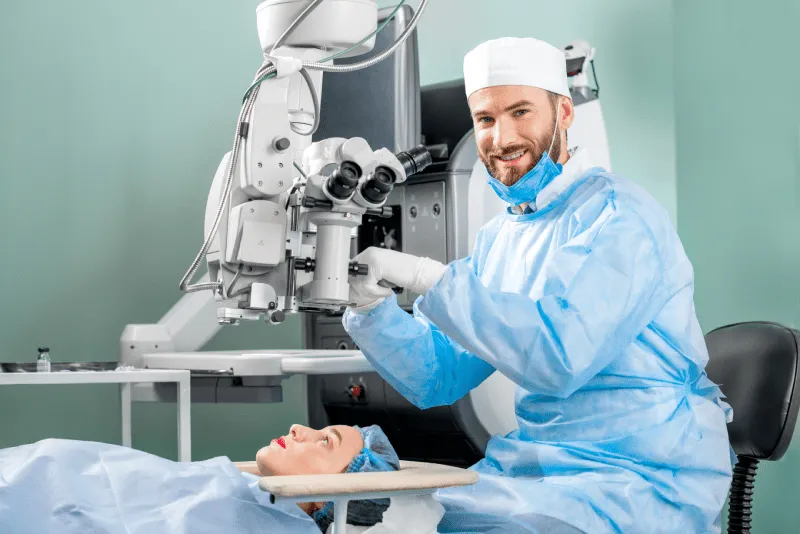
High-precision beams called “excimer laser” lie at the heart of the method. The procedure consists of two stages, but these stages take place with a single continuous laser flow. First, laser beams pass through the epithelium, the outermost protective layer of the eye, by evaporating it. Immediately after, it proceeds to the actual correction process (the stroma layer) that will correct the refractive error. The computer-controlled system works with an “eye-tracker” that follows eye movements thousands of times per second. In this way, even if your eye moves slightly, the laser always focuses on the right spot and performs error-free shaping.
How Does No Touch Laser Change the Eye Structure?
The focusing power of the eye largely depends on the curvature of the corneal layer. No Touch Laser changes this slope at a microscopic level, creating a kind of “permanent contact lens” effect. While it slightly flattens the center of the cornea in myopes, it steepens it in hyperopes; and in astigmatisms, it levels the irregular meridians. This change ensures that after light enters the eye, it focuses exactly on the macula, the vision center. The tissue of the cornea is shaped so precisely that when the operation is over, it is not even noticed from the outside that the eye has undergone intervention. While natural anatomy is preserved, optical performance is maximized.
What is the Preparation Process for No Touch Laser Surgery?
The most critical stage before the operation is a detailed eye examination. Tests such as corneal topography (mapping), corneal thickness measurement, and pupillometry (pupil measurement) are performed. It is required that the patient’s eyeglass prescriptions have not changed for at least one year. On the day of the surgery, no makeup should be applied to the eye, and no perfume should be worn because laser devices are sensitive to smell and moisture. A mild sedative can be given to the patient, but usually, just informing them is sufficient. The preparation stage ensures that the patient feels safe and becomes compatible with the device. This process forms the basis of a successful result.
How is the Eye Numbed During the Operation?
No Touch Laser operation is a completely painless procedure, and this is made possible by the powerful topical anesthetic drops used. There is no need for injections into the eye or general anesthesia. Just minutes after a few drops of anesthetic are applied, the eye surface becomes completely numb. The patient feels the apparatus holding the eye open during the operation or the laser beams but does not feel any pain. The effect of the drops continues throughout the operation and even keeps the patient comfortable for a while after the procedure is finished. This method is the most comfortable form of anesthesia that minimizes surgical stress.
How Many Minutes Does No Touch Laser Surgery Take?
One of the most impressive aspects of this operation is its speed. The total duration, including preparation and placing the patient under the laser, is approximately 10-15 minutes. However, the time the laser actually works on the eye is usually between 30 and 60 seconds per eye. The time may increase by a very small amount if the prescriptions are high. Completing it in such a short time prevents the patient from getting tired and helps the healing process start more healthily. Immediately after the operation, the patient can stand up on their own and go to the rest room. Using time this efficiently is a luxury offered to the patient by modern technology.
Which Layer of the Eye Does Laser Beams Affect?
No Touch Laser affects the epithelial and stroma layers of the cornea. The epithelium is the outermost layer of the eye that constantly renews itself. The laser removes this layer and reaches the stroma layer underneath. The stroma is the main body of the cornea, and it is here that the vision defect is permanently corrected. The beauty of the No Touch method is that it does not make any incision to reach the stroma. The epithelial layer is naturally reproduced by the body within 2-3 days after the operation. When this layer is completely closed, the biological protection of the eye is re-established and vision begins to clear.
Is Pain or Ache Felt During the Operation?
This is one of the things patients are most curious about: absolutely no pain is felt during the operation. Anesthetic drops temporarily desensitize the nerve endings of the eye. The only thing the patient can hear during the operation is the working sound of the laser device, and sometimes a slight odor may occur as a result of the laser’s interaction with the tissue. This is completely normal. Patients usually describe the process as “I saw a light and it was over.” You can talk to your doctor during the procedure to relax psychologically. No Touch Laser is designed to provide a “patient-friendly” surgical experience.
Who is No Touch Laser Suitable For?
This method is suitable for individuals who have completed the age of 18 and whose eye prescriptions have stabilized. It is ideal especially for those with thin corneas, those whose eye structure is found risky for classic LASIK, or patients with steep corneal surfaces. It is also the safest choice for active sports participants (such as boxing, karate where there is a possibility of getting a blow to the eye), and mobile professional groups such as firefighters, police, and soldiers; because even if a blow comes to the eye, there is no flap to slide or tear. Patients with a tendency for dry eyes also benefit more from the No Touch method.
Can Those with Thin Corneal Layers Have This Treatment?
Yes, one of the greatest advantages of No Touch Laser is that it can be applied to patients with thin corneas. In other laser types, since a flap is lifted from the cornea, as much tissue as the thickness of this flap is wasted. However, there is no such loss in the No Touch method; the laser starts directly from the surface and corneal tissue is saved. In this way, many people whose cornea was found insufficient for LASIK can be operated on safely with No Touch. Still, the corneal thickness must be above a certain safety limit, which is determined by your doctor through topographic measurements.
Why Should Athletes Choose the No Touch Laser Method?
For professional or amateur athletes, eye safety is everything. The flap created in methods like LASIK can move out of place even years later with a severe blow. An elbow or punch blow to the eye of someone involved in basketball, football, or combat sports can have serious consequences. Since there is no incision or flap in No Touch Laser, the resistance of the cornea remains as strong as before the operation. When healing is complete, the eye is as robust as if it had never had surgery. For this reason, many elite athletes worldwide prefer this non-contact method to increase their performance.
Who Should Not Have No Touch Laser Surgery?
Although it is very safe, this surgery is not recommended in some cases. Women during pregnancy and breastfeeding periods should wait as prescriptions may change due to hormonal changes. Individuals with advanced keratoconus disease, uncontrolled diabetes, rheumatic diseases, or severe dry eye may not be suitable candidates for this operation. Also, for elderly patients with incipient cataracts, lens replacement may be a more logical option instead of laser. Your doctor will tell you clearly whether your eye structure is suitable for this treatment through a comprehensive examination.
Is the Age Limit Important in No Touch Laser Treatment?
Generally, the lower limit is accepted as 18 years, because eye development and changes in prescriptions can continue until this age. In some cases, the early 20s can also be waited for to be sure that prescriptions have stopped. The upper limit is usually 40-45 years old. After these ages, the near vision defect we call “presbyopia” begins, and although laser operation corrects the distance, it can make it difficult to see near. However, for a 50-year-old patient whose distance vision is impaired, No Touch can still be an option if there is no cataract. The important thing is that the prescription has not changed for the last year.
What are the Differences Between No Touch Laser and LASIK?
The most fundamental difference is that in LASIK, the cornea is cut with a blade or laser to create a flap; No Touch is completely incisionless. Vision clears much faster (within a few hours) after LASIK and there is almost no pain. In No Touch Laser, there may be a stinging and burning sensation for the first 2-3 days and it may take a few weeks for vision to fully clear. However, in terms of long-term safety, No Touch is more advantageous as it reduces the risk of flap complications to zero. LASIK is designed for those who want “fast results,” and No Touch is for those who want “maximum safety” and “natural corneal structure.”
What is the Superiority of No Touch Laser Over Classic PRK?
In the classic PRK method, the epithelial layer is peeled by hand by the doctor with the help of alcohol or a surgical instrument. This mechanical process can lead to more inflammation in the cornea and more pain after the operation. In the No Touch (TransPRK) method, the epithelial layer is removed completely by the laser, without being touched. The laser’s epithelium removal process leaves a much smoother and regular surface. This ensures that the epithelium heals faster, pain is reduced, and results are more predictable. In summary, No Touch is the modernized and comfort-enhanced version of the PRK method.
Why is No Touch Preferred Over Blade Surgeries?
As technology advances in eye surgery, the use of metal blades is gradually decreasing. In bladed methods, the depth and quality of the incision depend on the human hand or mechanical devices, which increases the margin of error. No Touch Laser is completely computer-controlled and has micron-level precision, so it eliminates human error. In addition, the psychological fear created by the word “blade” used to distance many patients from treatment. No Touch breaks this barrier, allowing patients to leave themselves to the safe embrace of laser light. Incisionless surgery is the greatest gift of modern medicine.
Is the Risk of Dry Eye Less in No Touch Laser?
Dry eye is one of the most common temporary side effects after laser operations. In the classic LASIK method, nerves can be damaged during the flap incision, so tear production may be interrupted for a while. In No Touch Laser, since a deep incision is not made, corneal nerves are affected much less. This makes No Touch a much more attractive option especially for patients who already have mild dry eye before the operation. With artificial tear drops used after surgery, the process passes much more comfortably and the eye’s moisture balance returns to normal faster than in the LASIK method.
How is the Risk of Flap Displacement Prevented with No Touch Laser?
Flap displacement (dislocation) is an emergency that can be seen rarely after LASIK operations. It usually occurs as a result of rubbing the eye or receiving a blow during the healing process. In No Touch Laser, since such a structure as a “flap” is never created, such a risk is technically impossible. The corneal surface heals as a whole and the surface becomes completely smooth after the epithelium is closed. This feature completely eliminates patients’ concerns such as “what if something hits my eye and I go blind?” after the operation. Safety is one of the strongest claims of No Touch.
What to Expect in the First 24 Hours After Operation?
Immediately after the operation, when the effect of the numbing drops begins to wear off, watering, sensitivity to light, and a foreign body sensation (stinging) begin in the eyes. These symptoms are an indication that the epithelial layer is trying to heal and are completely normal. The protective contact lenses given by your doctor will help you get through this process more comfortably. Resting in a dark room on the first day and keeping the eyes closed accelerates healing. Your vision will be blurry in the first hours, so it is important that you go home with a companion. Remember, this challenging process is only temporary and is the price of permanent clear vision.
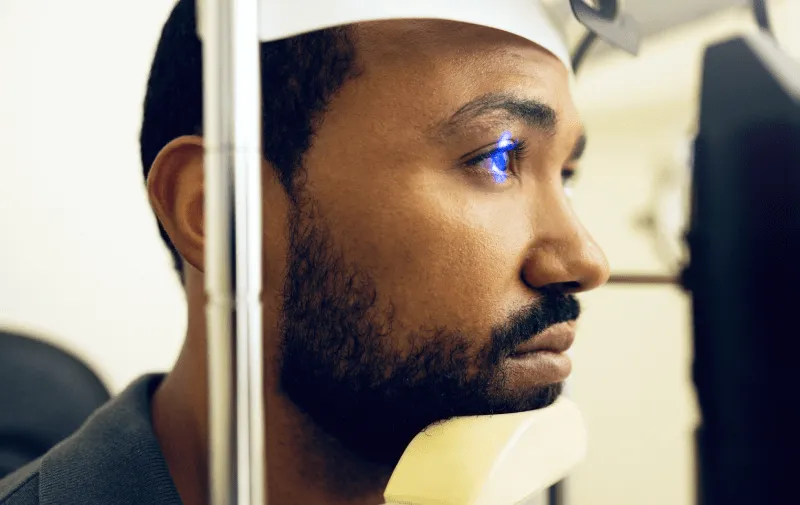
Why is Protecting Eyes Important During the Recovery Process?
For the first few days after No Touch Laser, the eyes are vulnerable to external factors. Since the epithelial layer has not closed yet, there is a risk of infection; therefore, water should not touch the eyes and they should definitely not be rubbed. In addition, ultraviolet rays of the sun can cause a slight blurring called “haze” on the healing cornea. For this reason, high-quality sunglasses must be used when going outside. Protecting your eyes is vital not only for your comfort but also for the new corneal shape created by the laser to settle flawlessly and for you to achieve clear vision.
When is Visual Clarity Fully Achieved?
The healing process in No Touch Laser is gradual. When the epithelial layer closes on the 3rd-4th days after the operation, your doctor removes the bandage lenses and vision improves a bit. However, it usually takes 2 to 4 weeks for vision to fully sharpen and become stable. In some patients, this period can extend up to 2-3 months. In this process, while distance vision improves rapidly, temporary difficulties in focusing near may be experienced. Being patient is the most important part of this treatment. It is a great feeling to realize every day when you wake up in the morning that the world is a little clearer.
Is Stinging and Burning Sensation Normal After Surgery?
Yes, especially within the first 48-72 hours, intense stinging, burning, and watering sensations are expected. Your eye may react as if there is a grain of sand inside it. This is caused by the top layer of the cornea repairing itself rapidly. The anesthetic-effect or soothing drops prescribed by your doctor will alleviate this feeling. Usually, at the end of the third day, when the epithelium is completely closed, this discomfort stops abruptly and is replaced by relief. If the pain reaches an unbearable level or if vision suddenly deteriorates significantly, you need to consult your doctor, but in the routine process, these symptoms are part of healing.
How Should Medication Use Be After No Touch Laser?
Medication use after the operation is at least as important as the laser itself for success. Usually, three types of drops are used: antibiotic drops to prevent infection, steroid drops to control inflammation (edema), and artificial tears to keep the eye moist. Steroid drops are usually used for weeks by decreasing under doctor control. Strictly following the hours of the medications ensures that the cornea heals transparently and smoothly. Washing hands before dripping the drops and not touching the eye with the dropper tip is critical to prevent the risk of infection.
Is It Necessary to Use Glasses Again After Treatment?
The main purpose of No Touch Laser is to completely free the patient from glasses, and this goal is achieved in more than 95% of patients. However, a small prescription may remain in very high-prescription eyes or low prescriptions may return over the years depending on natural changes in the eye structure. Still, these numbers are usually too small to require wearing glasses. The natural age-related near vision defect (presbyopia) that everyone experiences after the age of 40 cannot be prevented with laser; that is, even if you see far clearly, you may need to use reading glasses after the age of 45-50. In general, laser offers you a freedom that will last a lifetime.
What is the Long-Term Success Rate of No Touch Laser?
This technology has been applied for decades and its long-term results are quite satisfying. Studies show that in suitable candidates, the effect of the treatment is permanent and the vast majority of patients are satisfied with the results even 10-20 years later. Once eye prescriptions are zeroed, the quality of vision remains high as long as another disease such as cataract or glaucoma does not develop in the eye. The precision of modern devices has minimized the possibility of the “prescription returning.” No Touch Laser is not just a temporary solution, it is a long-term investment in quality of life.
Is Night Vision Affected After No Touch Laser?
In older generation lasers, problems such as seeing rings around lights (halo) or glare at night were more common. However, these problems have been largely overcome thanks to the “aspheric treatment” profiles used in today’s No Touch Laser devices. Even in patients with large pupils, night vision is optimized by keeping the laser area wide. Slight glares may be experienced depending on the healing process in the first few weeks after the surgery, but when the cornea fully heals and its surface becomes smooth, night vision usually becomes sharper and more contrasted than before the operation.
Is Lifelong Clear Vision Possible with a Single Session?
For most patients, a single No Touch Laser session is sufficient for a life without glasses. Laser beams permanently change the corneal tissue and this change is not reversible. However, in very rare cases (high prescriptions or rapid eye structure change), if the desired full correction cannot be achieved, a second “touch-up” operation can be performed as long as the corneal thickness is suitable. Although this is necessary for a small portion of patients, the targeted clarity is ultimately achieved. No Touch is a method powerful and permanent enough to save you from looking for glasses every morning.
What are the Side Effects and Risks of No Touch Laser?
Like any surgical procedure, No Touch Laser has some risks, but they are very low. Temporary dry eye, light sensitivity, and pain in the first days are the most common side effects. Rare risks include “haze” (corneal blurring), infection, or slight under/over-correction. Thanks to advanced “eye-tracker” systems, the risk of the laser making a shot in the wrong place is almost non-existent. The important thing is to stick to the use of drops and doctor check-ups after the operation. When modern technology and experienced surgeons combine, No Touch Laser becomes one of the safest medical procedures in the world.
Why Should Turkey Be Preferred for Eye Treatment?
Turkey is one of the first countries that come to mind when it comes to eye surgery worldwide. Especially cities like Istanbul and Antalya are centers with eye hospitals equipped with the latest technology and world-renowned surgeons. While clinics in Turkey offer technological infrastructure above standards in Europe and America, costs are much more accessible. In addition, the number of cases and experience of Turkish doctors is a factor that directly increases the success of the operation. Turkey is an unrivaled destination for those who want to receive both quality health service and spend the healing process in a pleasant environment.
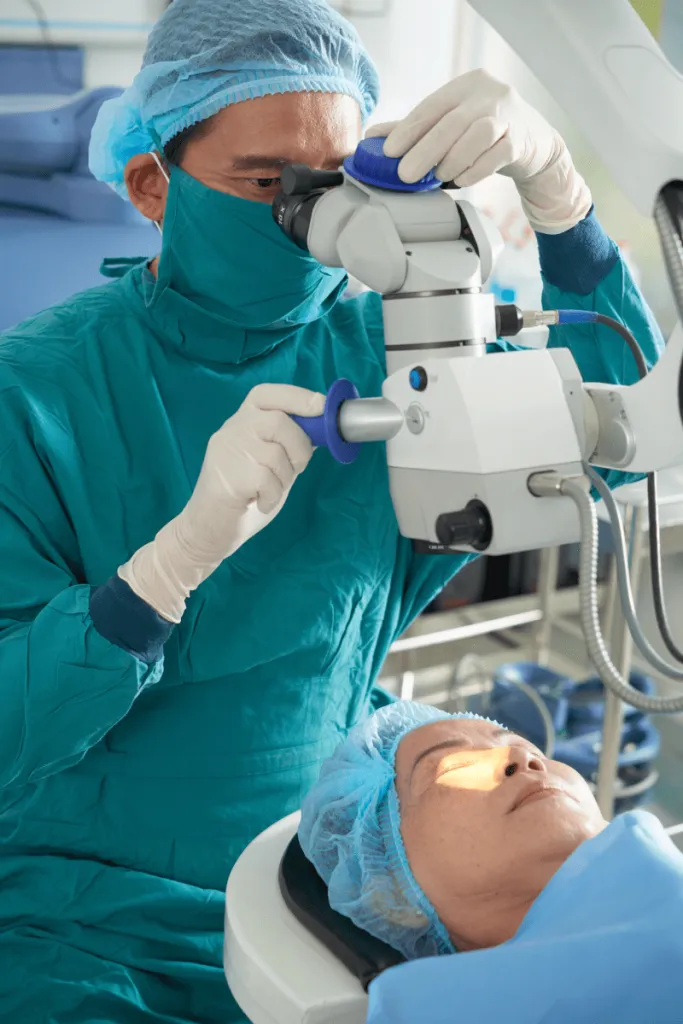
What is the Expertise Level of Eye Doctors in Turkey?
Turkish eye doctors are experts who go through rigorous training processes and are known in international platforms for their articles and research. Every year, thousands of foreign patients come to Turkey just for this expertise. In sensitive technologies like No Touch Laser, the experience of the surgeon plays a critical role in optimizing the settings of the device according to the patient’s specific eye structure. Doctors in Turkey have great experience in implementing “personalized treatment” protocols. The approach to the patient, meticulousness during the operation, and follow-up processes afterwards make Turkish ophthalmologists a reason for preference worldwide.
How is the Eye Treatment Process Planned with Cure Holiday?
Cure Holiday offers an excellent end-to-end service for patients who want to be treated in Turkey. The process begins with contacting you and having your eye reports evaluated by expert doctors. From your flight tickets to luxury accommodation options, from your hospital appointments to your airport transfers, every detail is organized by Cure Holiday. A private consultant will be with you at every step from the moment you step into Turkey until you leave. In this way, while you only focus on your health, all other logistical details are managed flawlessly by a professional team.
What are the Advantages of Receiving Treatment with Cure Holiday?
The biggest advantage of receiving treatment with Cure Holiday is being able to combine the concepts of “health” and “holiday” without experiencing stress. Working only with the best hospitals and the most experienced doctors, the institution guarantees your treatment success. Professional translator support is provided so you do not experience a language barrier, and the entire process progresses transparently. In addition, in the fascinating atmosphere of Turkey, you can spend the post-operation rest period in the comfort of a holiday. Offering trust, comfort, and high success rates together, Cure Holiday is the most reliable bridge for patients coming from abroad.
Why Should You Trust Cure Holiday for No Touch Laser Treatment?
Health is no joke, and your eyes are your most precious assets. Cure Holiday has a vision that keeps patient satisfaction and safety above everything. Thanks to its strategic partnerships with Turkey’s most distinguished eye health centers, it offers you the most advanced No Touch Laser technology under the most favorable conditions. With its experienced staff who have been instrumental in thousands of patients seeing clearly, it ensures that you feel at home at every stage. To gain a clear vision and turn this process into an unforgettable experience, contact Cure Holiday in Turkey and look at the world again with eyes as clear as glass!
Free Consultation
Fill out the form below to get your free medical travel plan and price quote.
Sources and how to verify this yourself
- Ministry of Health, Regulation on International Health Tourism and Tourist Health, Official Gazette 26 April 2025, No. 32882 — authorisation requirement for facilities and intermediaries, TÜSKA accreditation, compulsory complication insurance (deadline 31 December 2025 for insurance, 31 December 2026 for accreditation). source
- Ministry of Health, Regulation on Promotion and Information Activities in Health Services, Official Gazette 12 November 2025, No. 33075 — treatment promises and guarantees are prohibited; price and campaign announcements are permitted only within international health tourism. source