What is amblyopia and what are its primary causes?
Amblyopia is a reduction in vision that occurs when the brain and the eye fail to communicate effectively, even though the eye is structurally normal. Its primary causes include strabismus (misaligned eyes), a high difference in prescription between the two eyes (anisometropia), and physical barriers that block vision, such as cataracts. During childhood, the brain learns to suppress signals coming from the eye that sends blurred images, causing that eye to lose function over time. If not intervened in early, this condition can feel like permanent vision loss in adulthood; however, the problem is not in the eye itself but in the way the brain processes visual data.
Is lazy eye treatment possible for adults?
Traditional medicine argued for a long time that lazy eye treatment was only possible up to the age of 7 to 10. However, research conducted over the last twenty years has proven that the adult brain can also change and form new connections. This situation demonstrates that adults can also increase their visual acuity with appropriate treatment methods. Although the treatment process for adults requires more patience and discipline compared to children, it is entirely possible to achieve significant improvements in vision quality. Modern clinical studies reveal that even individuals in their 50s and 60s can enhance their visual performance thanks to neuroplasticity.
How has the concept of the critical period changed today?
The process formerly called the “critical period” was seen as the only window of opportunity for the brain’s visual development. Today, this concept has been redefined as a “sensitive period.” While brain plasticity decreases with age, it does not disappear entirely. Adult brains have the ability to reorganize their synaptic connections when given intense and specific stimuli. This scientific revolution has become a new beacon of hope for adult amblyopia patients. Experts now accept that the brain can learn new things at any age and that dormant cells in the visual cortex can be reactivated.
How are lazy eye symptoms noticed in adults?
In adults, lazy eye usually manifests with symptoms such as weak depth perception, getting tired quickly while reading, and difficulty focusing on an object. Most patients perceive the world with their dominant good eye and only notice the weakness of the lazy eye when they close their good eye. Clumsiness, failure in sports requiring hand-eye coordination, or the inability to distinguish objects in crowded environments are also common complaints. Additionally, severe headaches after long-term computer use or reading can be a result of the excessive energy the brain spends trying to combine incompatible images from two eyes.
Which tests are applied to make a diagnosis?
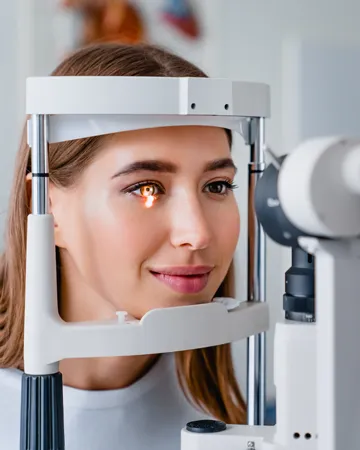
The diagnosis of amblyopia in adults is made with a comprehensive eye examination. First, a visual acuity test is performed, and the best-corrected vision level of both eyes is measured. Then, refractive errors in the eyes are determined with a refraction test. Strabismus examination and cover-uncover tests are critical for checking the alignment of the eyes. Furthermore, stereo-tests measuring depth perception and contrast sensitivity tests help understand to what extent the quality of vision is affected. In modern clinics, imaging methods such as OCT (Optical Coherence Tomography), which examines the retina and optic nerve structure, are used to confirm whether vision loss is based on a structural cause.
How does neuroplasticity affect the adult brain?
Neuroplasticity is the brain’s ability to change its structure and function in response to experiences. This mechanism is the cornerstone of lazy eye treatment in adults. Even if the signals from the lazy eye are weak, the relevant neurons in the brain’s visual cortex are not completely dead; they are merely in a state of sleep. Targeted visual exercises and dichoptic treatments strengthen the synaptic connections between these neurons, allowing the brain to process information from the lazy eye more effectively. This process is based on the principle of the visual processing center working more efficiently through training, similar to a muscle strengthening with exercise.
Does eye patching therapy work in adults?
Patching therapy is the method of forcing the lazy eye to work by closing the dominant eye. In adults, patching therapy alone may not yield results as quickly as in children; however, it still maintains its value as an auxiliary method. For adult patients, active patching for 1-2 hours a day while engaging in fine tasks (reading, puzzles, crafts) is generally recommended. Instead of just patching, combining it with activities that challenge the lazy eye increases neuronal activation. However, it has been scientifically proven that modern methods promoting binocular (two-eyed) vision in adults are more effective than just patching.
Are atropine drops used in adult treatment?
Atropine drops are a “penalization” method that makes the brain use the lazy eye by temporarily blurring the vision of the healthy eye. This method is rarely preferred in adults because it can negatively affect the daily activities, driving safety, and work performance of working individuals. Additionally, since the eye accommodation ability of adults is different from children, dosage adjustment is difficult. However, it can be evaluated as an alternative option under doctor supervision for adult patients who are allergic to patches or cannot use patches for social reasons. Still, it is not the first choice in adults due to its side effects.
What is the role of glasses and lenses in treatment?
The first and most important step of the treatment process is to make the most accurate optical correction for both eyes. Glasses or contact lenses ensure that the image falling on the retina is as clear as possible. If the image goes in blurred, it is impossible for the brain to learn to use that eye. In adults, especially if there is anisometropia (a high prescription difference between the two eyes), contact lenses can be more successful than glasses in equalizing image sizes. Other therapies performed after providing a clear image become much more effective. In some cases, an increase in visual acuity can be observed within a few months with just the correct glasses prescription.
What is vision therapy and how is it applied?
Vision therapy is a type of physical therapy program aimed at developing communication between the eyes and the brain. These programs, prepared specifically for the individual, target not only visual acuity but also focusing, eye tracking, and depth perception. Exercises performed in a clinical environment with special equipment, prisms, and lenses are integrated with supportive work done at home. These sessions, conducted in the presence of a therapist, increase the adult’s conscious control over their visual system. This method is accepted as one of the approaches with the highest success rate in permanently improving lazy eye in adults.
What is the dichoptic training method?
Dichoptic training involves presenting different images to both eyes at the same time and forcing the brain to combine them. For example, in a computer game, some objects might only be visible to the right eye, while others are only visible to the left eye. The brain is forced to process information from both eyes to be successful in the game. This method aims to break the “suppression” effect of the dominant eye over the lazy eye. Research in adults shows that dichoptic training improves both visual acuity and depth perception much faster and more effectively than traditional patching therapy.
How can video games treat lazy eye?
Action-packed video games intensely stimulate the visual cortex because they require high attention and fast visual processing. Scientists have found that dichoptic games specifically designed for amblyopia patients trigger brain plasticity. In these games, parameters such as contrast, brightness, and speed are adjusted according to the patient’s level. This treatment method is quite fun for adults and increases compliance. Dopamine released during the game helps strengthen the bonds between nerve cells, accelerating the learning process. In this way, progress that would take months with traditional methods can be achieved with a few weeks of intensive game therapy.
What is the role of virtual reality technology in treatment?
Virtual Reality (VR) headsets provide an excellent platform for implementing dichoptic therapy. In a VR environment, completely different and controllable images can be projected to each eye. Thanks to this technology, patients find themselves inside three-dimensional worlds that require depth perception. VR-based applications provide “balancing” by reducing the contrast of the dominant eye and increasing that of the lazy eye. Adult patients can receive professional-level therapy using VR headsets in the comfort of their homes. This immersive experience is one of the most modern and effective tools for allowing the brain to recalibrate the visual system.
What is RevitalVision technology?
RevitalVision is an FDA-approved computer-based vision enhancement program. This technology focuses on the brain’s visual processing ability rather than the eye itself. Neuronal efficiency is increased using visual stimuli called “Gabor patches” specifically designed for this purpose. In clinical tests on adults, this program has been proven to provide an average increase of 100% in visual acuity and significantly improve contrast sensitivity. Sessions lasting approximately 30-40 minutes a day create a permanent difference in vision quality by teaching the brain to better interpret weak incoming signals.
Does surgical intervention completely cure lazy eye?
Surgical intervention is used to eliminate the cause of amblyopia but does not directly treat the laziness itself. For example, strabismus surgery ensures that the eyes stay parallel, or cataract surgery removes blurriness. However, after the eyes are corrected, a neuro-visual treatment is still needed for the brain to learn to use that eye. In adults, surgery is usually performed to address aesthetic concerns or to prepare the ground for binocular vision therapy. Surgery alone does not create a miracle; however, it can produce excellent results when combined with the correct rehabilitation process.
What is the relationship between strabismus surgery and amblyopia?
Strabismus is one of the biggest causes of lazy eye. If the eyes are looking in different directions, the brain ignores the image coming from the deviating eye to prevent double vision. Strabismus surgery performed in adults brings the eyes to the same alignment by balancing the eye muscles. This provides the necessary physical environment for the brain to combine images from both eyes into a single point (fusion). Vision therapies performed in the post-operative period facilitate the brain’s adaptation to this new alignment and its coordinated use of both eyes. Therefore, surgery and therapy are two important processes that complement each other.
Why is binocular vision so important?
Binocular vision is the ability to use both eyes simultaneously and in harmony. Thanks to this ability, we see the world in three dimensions, estimate distances correctly, and perceive objects more clearly. In lazy eye, it’s not just that one eye is weak; the real problem is that the two eyes cannot work together. It is not enough to just increase the vision of the lazy eye; the brain must combine both eyes to create a single image. When binocularity is achieved, the quality of vision shows a revolutionary development not only in terms of sharpness but also in terms of comfort and depth.
Can depth perception be regained in adulthood?
For many years, it was believed that depth perception (stereopsis) could never be acquired in adulthood. However, examples like neuroscientist Susan Barry, nicknamed “Stereo Sue,” have proven that this perception can also be triggered in adulthood. Barry began to see the world in three dimensions for the first time after age fifty, thanks to vision therapy. The adult brain can learn to process depth cues with the help of correct stimuli and binocular exercises. Regaining depth perception dramatically increases the adult’s quality of life and safety in every area of daily life, from driving to walking down stairs.
How long does the treatment process take?
The treatment process in adults varies greatly from individual to individual. The degree of laziness, the patient’s age, motivation, and the frequency of the applied method are the primary factors determining this period. Generally, a regular work program of 3 to 6 months is required to see a significant improvement. While some technology-based programs yield results in 40-60 sessions, clinical vision therapy can span a longer period. The important thing is to act with the awareness that treatment is a marathon and to ensure continuity. Results obtained with a patient and disciplined approach are usually permanent for a lifetime.
What are the factors affecting success rates?
The most critical factor affecting the success of the treatment is the patient’s compliance and motivation. Adults may have difficulty finding time for exercises amidst the hustle and bustle of daily life; however, regular application is the key to success. Additionally, the type of amblyopia is important; anisometropic (prescription difference-based) amblyopia generally responds to treatment faster than strabismus-based ones. The patient’s general health status, the starting level of visual acuity, and the choice of the correct method under the supervision of a specialist physician also directly affect the process. Age is not an obstacle, but the earlier treatment is started, the faster progress can be.
What are the challenges encountered during treatment?
The biggest challenge for adults is time management. Doing regular exercises every day among work and family responsibilities requires discipline. In the initial stages of treatment, trying to use the lazy eye can lead to complaints such as headaches, eye fatigue, and even slight nausea. These symptoms are a sign that the brain is being challenged and starting to change. Additionally, having very high expectations and not being able to get results immediately can cause a loss of motivation. Carrying out this process with a professional vision therapist helps overcome these challenges by providing psychological support and technical guidance.
Are there eye exercises that can be done at home?
In addition to clinical treatments, simple exercises that can be done at home can also support the visual system. An exercise performed with a string called “Brock String,” with beads threaded on it, is great for improving the coordination of both eyes. Furthermore, activities such as closing the dominant eye and threading beads, coloring, or reading a book with the lazy eye are useful. However, these exercises must be recommended and controlled by a specialist. Randomly performed exercises can sometimes trigger eye deviation or be inefficient. Home studies should be seen as supportive parts of a professional program.
What is the effect of nutrition on eye health?
Nutrition alone does not treat lazy eye; however, it supports the general health and neurological functions of the visual system. Omega-3 fatty acids are critical for brain health and nerve transmission; therefore, fish and walnut consumption is beneficial. Antioxidants such as Vitamin A, lutein, and zeaxanthin help protect the retina. Green leafy vegetables, eggs, and colorful fruits optimize eye health. Additionally, considering that the brain spends energy during new learning processes, balanced nutrition and adequate water consumption help maintain cognitive performance during treatment. A healthy body responds better to neuroplasticity processes.
How do psychological factors affect the treatment process?
Lazy eye in adults is not only a physical barrier but can also sometimes be a cause of lack of self-confidence or social anxiety. During the treatment process, the patient’s confidence in themselves and their belief that they can succeed is very important. The placebo effect or the “expectation effect” plays a bigger role in neurological healing than we think. Therapists’ motivating the patient and celebrating small progress increases the success of the treatment. Additionally, the negative effects of stress on the visual system are known; therefore, using stress management and relaxation techniques during the treatment process contributes to creating an environment that increases the brain’s learning ability.
What are the limitations brought by living with one eye?
Adults with amblyopia generally perceive the world with “one eye” (monocularly). This situation creates difficulty especially in sports requiring depth perception, parking in narrow spaces, or catching fast-moving objects. Not being able to watch 3D movies in the cinema can be a social limitation. Furthermore, the risk of vision loss in case of damage to the healthy eye is a great source of concern for these individuals. Lazy eye treatment not only increases vision but also reduces these safety risks, allowing the individual to participate in life more safely and capably.
Is lazy eye an obstacle when getting a driver’s license?
While driver’s license standards change from country to country, generally the total visual acuity and field of vision of both eyes are examined. Individuals with one lazy eye can generally get a license if their healthy eye meets the standards. However, weak depth perception can cause difficulty in night driving and distance estimations. Therefore, drivers with amblyopia are recommended to be more careful. Improving visual acuity and binocular vision through treatment not only facilitates the process of obtaining a license but also significantly increases general driving safety and reaction speed in traffic.
Does doing sports improve eye coordination?
Especially sports like table tennis, tennis, basketball, or archery require hand-eye coordination and visual tracking ability. These types of activities can work like a natural part of vision therapy. For adults with lazy eye, engaging in these sports offers the opportunity to test the visual system in a dynamic environment. Focusing on a moving ball forces the brain to process visual data quickly. Adrenaline and physical activity provided during sports support general brain health, contributing to the activation of visual neurons. Using sports as a therapy tool can make the healing process more enjoyable.
Why is regular examination critical?
It is vital for adults with lazy eye to go for regular check-ups to protect the health of both the lazy eye and the healthy eye. The excessive load on the healthy eye can cause fatigue or progress of refractive errors over time. Additionally, conditions such as glaucoma or cataracts that may emerge with age can further jeopardize the already limited vision capacity due to amblyopia. Regular check-ups by a specialist physician allow for monitoring the progress of the treatment process and taking early precautions against possible risks. It should not be forgotten that vision is our most valuable sense and requires care for its protection.
Does technology addiction worsen the situation?
Looking at digital screens for a long time can cause eye fatigue (digital eye strain) for everyone; however, this situation can be felt more severely in adults with amblyopia. In a visual system where the brain is already struggling, contrast and brightness imbalances created by screens can trigger headaches and blurred vision. On the other hand, as we mentioned above, correct technological tools (VR, special software) are part of the treatment. The critical point here is the conscious and purposeful use for healing instead of uncontrolled technology use. Adopting simple habits like the 20-20-20 rule makes the time spent in front of the screen more bearable for an adult in the treatment process.
Does laser eye surgery treat amblyopia?
Laser eye surgery (LASIK, PRK, etc.) is a procedure performed on the cornea to correct refractive errors (myopia, hyperopia, astigmatism). Laser corrects the eye’s optical focus but does not directly improve the brain’s “laziness.” That is, even if your need for glasses disappears after laser, your lazy eye may still continue to see at its old level. However, since laser surgery helps provide a clear image, it can increase the success of a vision therapy program to be performed after surgery. In short, laser is not the treatment itself, but an optical preliminary step that can be taken to get better results.
What risks arise in adulthood if left untreated?
Untreated lazy eye generally remains stable, meaning it does not get worse on its own; however, it brings important risks. The biggest risk is the possibility of the individual becoming seriously visually impaired in the event of any disease (cataract, macular degeneration, etc.) that may develop in the healthy eye in later years. The deactivation of the “spare eye” threatens independence during old age. Additionally, clumsiness and balance problems increasing due to the lack of binocular vision can increase the risk of falls and injuries, especially in advanced ages. For these reasons, striving to increase vision capacity even in adulthood is a long-term health investment.
How much does the age factor reduce the effect of treatment?
Age is a factor that affects the speed of treatment and the flexibility of brain plasticity; however, it is not an absolute obstacle to success. While the brains of young adults can respond faster to synaptic changes, this process proceeds more gradually in middle-aged and older individuals. Scientific research has shown that even 70-year-old patients can increase their contrast sensitivity with special exercises. The important thing is not age, but how intensely the brain encounters the correct stimuli. For an adult individual, the speed of recovery will perhaps not be the same as a 10-year-old child, but every 10% increase to be achieved can create a huge difference in the quality of life.
How effective is family history in this case?
Amblyopia and its causes like strabismus or high refraction errors can show a genetic predisposition. It is very important for adults with a family history of lazy eye to see this as a warning sign for their own children. However, in terms of the adult’s own treatment process, while family history helps understand the cause of the situation, it does not directly prevent the progress of the treatment. In the past, elders in your family saying “it won’t get better after this age” was a result of the medical knowledge of that day. Today, regardless of your family predisposition, you have the chance to change your own vision destiny with the opportunities offered by modern science.
What do scientific studies promise for the future?
The world of science is discovering exciting new horizons for the treatment of lazy eye. Research on some neuromodulation techniques (mild electrical stimuli applied to the brain) that increase brain plasticity and pharmacological supports (use of some drugs together with therapy) is ongoing. In the future, it is expected that supportive treatments that temporarily raise the brain’s learning capacity to childhood levels, not just with exercise, will also come into use. Additionally, artificial intelligence-supported personalized therapy software will further shorten treatment times by being updated instantly according to each patient’s progress. These developments show that the future will be much brighter for adult amblyopia patients.
What are the sources of motivation for adult patients?
The biggest source of motivation for an adult starting treatment is the desire to see the world more clearly and in three dimensions. Reading success stories like “Stereo Sue” reinforces the belief that treatment is possible. Feeling a depth difference for the first time or noticing less fatigue while reading are small successes that increase the desire to continue the process. Furthermore, setting personal goals such as driving more safely with your loved ones and being more successful in your hobbies (photography, sports, etc.) keeps motivation alive. Remember that every step you take for your own vision health is the greatest reward you give yourself.
Consequently, is lazy eye a fate?
Lazy eye is no longer a “fate” that needs to be carried for a lifetime for adults. Thanks to the facts science has discovered about neuroplasticity, vision therapies, and modern technological applications, the door to healing is open at any age. Yes, the process requires effort and time; however, a world full of clarity, depth, and visual comfort is more than worth this effort. If you are also living with this problem, put aside the thought of “I’m late” and meet with a specialist ophthalmologist or vision therapist to create the most suitable treatment map for yourself. Your eyes and your brain are ready to evaluate this second chance you will give them.
Free Consultation
Fill out the form below to get your free medical travel plan and price quote.
Sources and how to verify this yourself
- Ministry of Health, Regulation on International Health Tourism and Tourist Health, Official Gazette 26 April 2025, No. 32882 — authorisation requirement for facilities and intermediaries, TÜSKA accreditation, compulsory complication insurance (deadline 31 December 2025 for insurance, 31 December 2026 for accreditation). source
- Ministry of Health, Regulation on Promotion and Information Activities in Health Services, Official Gazette 12 November 2025, No. 33075 — treatment promises and guarantees are prohibited; price and campaign announcements are permitted only within international health tourism. source