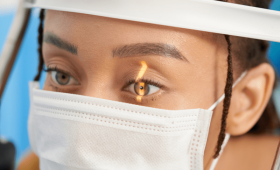
Today, one of the most impressive points reached by medical technology is smart lens applications that can permanently correct vision defects. Once applied only to cataract patients, intraocular lenses have now become a standard for millions of people seeking flawless vision at far, intermediate, and near distances thanks to “smart lens” technology. This guide covers all the details about smart lens treatment, candidacy criteria, and modern solutions in depth.
What Is Smart Lens Treatment?
Smart lens treatment is the process of removing the eye’s natural lens when it loses its function or when a cataract forms and replacing it with a multifocal artificial lens. These artificial lenses distribute light to different focal points, allowing the patient to see clearly at far, near, and the intermediate distance (computer distance) without using glasses. They are called “smart” because of their sophisticated optical designs that mimic the focusing ability of the natural eye.
Who Is A Suitable Candidate For Smart Lens Surgery?
This treatment method is extremely suitable for individuals, especially those over the age of 40-45, who experience near vision problems (presbyopia) or show symptoms of cataracts. Individuals whose eye structure meets general health criteria, who have a smooth corneal surface, and a healthy retinal layer are the strongest candidates. Additionally, those who are tired of using glasses or contact lenses and adopt an active lifestyle can benefit from the freedom offered by this operation.
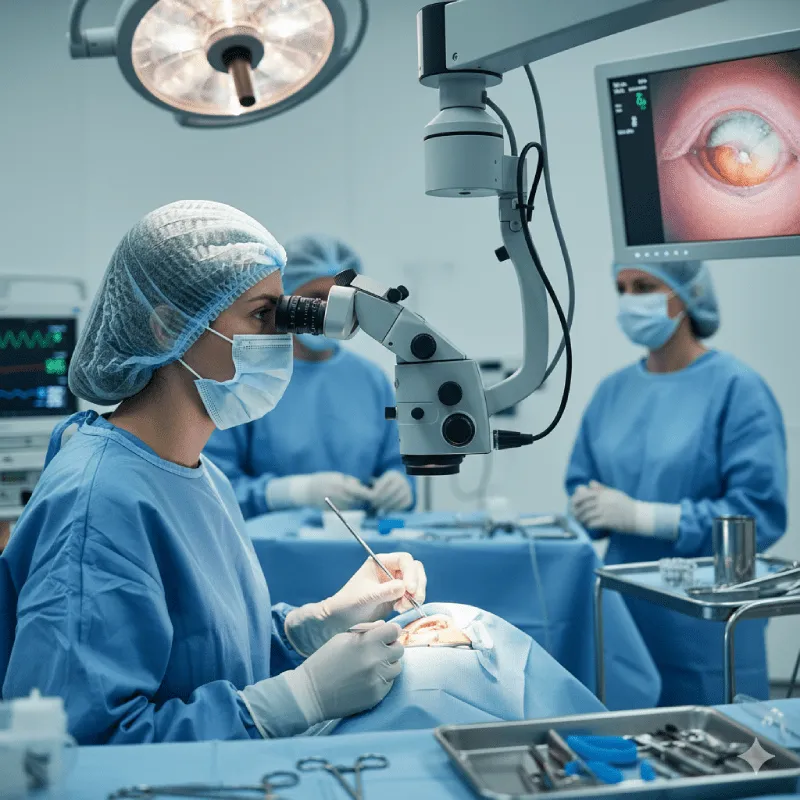
How Do Smart Lenses Work?
Smart lenses break light from different angles through microscopic rings on them and deliver it to the retina. These diffractive or refractive rings allow the brain to process both near and far images simultaneously. While the natural lens loses its flexibility as it ages and loses its ability to focus, smart lenses perfectly compensate for this deficiency with their multifocal structures despite having a fixed structure.
What Are The Differences Between Multifocal And Trifocal Lenses?
Multifocal lenses generally have two focal points; meaning they clarify far and near distances but may create a slightly blurred image at intermediate distances. Trifocal lenses are the latest product of modern technology and include the “intermediate distance” (computer use, cooking, car dashboard) between 60-80 cm in addition to far and near distances. Today, trifocal lenses are mostly preferred to increase visual comfort.
Can People With Cataract Problems Have Smart Lenses?
Cataract patients are the most ideal candidate group for smart lens treatment. A cataract is already a condition where the lens inside the eye loses its transparency, and its treatment is to replace this lens. When an old, blurred lens is removed and replaced with a smart lens during surgery, the patient both gets rid of the cataract and eliminates the obligation to use glasses after the surgery, achieving clear vision for life.
Is Smart Lens The Best Option For Presbyopia Treatment?
Presbyopia, the problem of not being able to see near that everyone experiences after the age of 40, can be fundamentally solved with smart lenses. While laser treatments may not always provide permanent results for presbyopia, smart lenses are not affected by the natural aging process of the eye. For this reason, smart lens application is accepted as the most stable and long-lasting solution for middle-aged and older individuals who want to get rid of wearing reading glasses.
Which Age Group Is Ideal For This Treatment?
Generally, people aged 45 and over who have started to lose their near vision are the main target audience. However, it can also be applied at earlier ages with doctor approval in young patients with very high refractive errors or in people with early cataract onset. The upper age limit depends on the person’s general eye health and the state of systemic diseases; meaning even a 70-80-year-old patient can be treated if they meet the appropriate criteria.
Can Myopia And Hyperopia Patients Be Cured With This Method?
Yes, smart lenses can correct not only cataracts or presbyopia but also very high-degree myopia and hyperopia defects. Especially for patients who have degrees too high to be corrected with laser or whose cornea is too thin, intraocular smart lens applications are an alternative that dramatically increases the quality of life. After the treatment, these refractive errors are permanently eliminated.
Can People With Astigmatism Use Smart Lenses?
In the past, astigmatism could pose an obstacle for multifocal lenses. However, today, smart lenses with “Toric” features are produced. These lenses both provide far-intermediate-near focusing and reset the patient’s astigmatism defect with the same operation. Therefore, people with high astigmatism can also have crystal-clear vision with these specially produced toric smart lenses.
Are People With Diabetes Candidates For This Treatment?
The situation for diabetic patients requires a bit more detailed examination. If diabetes has not caused permanent damage, bleeding, or edema in the retina (if there is no onset of diabetic retinopathy), smart lens application can be performed. However, in those with advanced retina problems, the performance of smart lenses may decrease, so doctors may turn to different lens types. Therefore, it is essential for diabetic patients to undergo a very comprehensive retinal examination.
Is Smart Lens Application Safe For Those With Eye Pressure?
In patients with glaucoma or eye pressure, the stage of the disease is of critical importance. In people whose optic nerve is seriously damaged due to glaucoma, the light-distributing structure of smart lenses may further reduce contrast sensitivity. However, in patients with early-stage glaucoma that is kept under control, the doctor can decide on suitability by making a meticulous evaluation. Each case should be evaluated specifically within itself.
Why Is Corneal Structure Important For Smart Lens Selection?
In order for smart lenses to deliver a clear image to the retina, the cornea, the first layer where light enters the eye, must be smooth and healthy. In people with significant scar tissue in the cornea, advanced keratoconus, or irregular astigmatism, smart lenses may not provide the desired performance. The optical quality of the cornea is measured with topographic measurements, and if the cornea is normal, smart lens application is started.
Can People With Dry Eye Have Smart Lenses?
In individuals with chronic and severe dry eye, fluctuations in vision quality may be experienced after surgery. While mild and moderate dryness can be controlled with drops before and after surgery, this situation can pose an obstacle in those with very advanced dryness. Doctors usually prepare the patient for the operation by applying a preparation process to optimize the tear film layer before surgery.
What Are The Advantages Of Smart Lenses For Active Sports Participants?
Using glasses is a big obstacle for athletes and those who love an active life. In activities such as swimming, tennis, skiing, or hiking, smart lenses offer the patient 360-degree freedom. Problems such as sweating, the glasses slipping, fogging, or the contact lens falling out become history. It is a treatment option that also positively affects sports performance by providing a wide viewing angle and depth perception.
Is It A Suitable Treatment For Those Who Drive At Night?
The rings in the design of smart lenses can create halos around lights or light scattering (glare) at night. This situation requires an adaptation process for professional long-distance drivers or people who drive very intensively at night. However, most patients get used to this situation within a few months through the neuroadaptation process. If the person is extremely sensitive about night vision, they should discuss this situation in detail with their doctor.
How Do Professional Needs Affect Lens Selection?
The vision expectations of a surgeon, a graphic designer, or a watchmaker who constantly does micro-level work are different. While evaluating smart lens candidacy, the patient is asked what they do all day. For example, a trifocal (three-focal) lens is recommended for someone who is constantly at the computer, while lenses with different focal points can be preferred for someone who only wants to see far clearly. Personalized lens selection is the key to success.
Can People With Retinal Problems Be Candidates?
People with macular degeneration (yellow spot disease), retinal detachment, or serious vascular problems are generally not good candidates for smart lenses. Although smart lenses are optically perfect, if the retinal layer that will perceive the image is damaged, the advantages of the lens cannot emerge. In this case, it may be a more logical approach to fit the patient with simpler, monofocal lenses to at least ensure the clarity of the far distance.
What Is The Lifespan Of Smart Lenses?
Smart lenses placed inside the eye are produced from acrylic materials compatible with the body and are lifelong. These lenses do not wear out, break, or lose their function inside the eye. Once fitted, it remains in the patient’s eye for the rest of their life. Since it does not blur over time like the natural lens, there is no such thing as a recurrence of cataracts. In other words, a procedure done once is a lifelong investment.
Is It Possible To Completely Get Rid Of Glasses After Treatment?
More than 95% of patients do not need glasses in their daily lives after surgery. Glasses are not required to read signs in the distance, use the computer at intermediate distance, and see phone messages nearby. However, sometimes a very low-numbered support may be needed to read very small prints (like medicine leaflets) in very dim light. Still, in general terms, the goal of “life without glasses” is successfully achieved.
Is The Application Performed On Both Eyes At The Same Time?
Generally, it is preferred to leave an interval of 1-2 days or sometimes a week between the two eyes. The reason for this is to observe the healing process of the first eye and follow the patient’s adaptation. However, in some clinical situations and according to the patient’s condition, both eyes can be operated on the same day. Your doctor will plan the most correct timing for your safety and comfort together with you.
How Long Does Smart Lens Surgery Take?
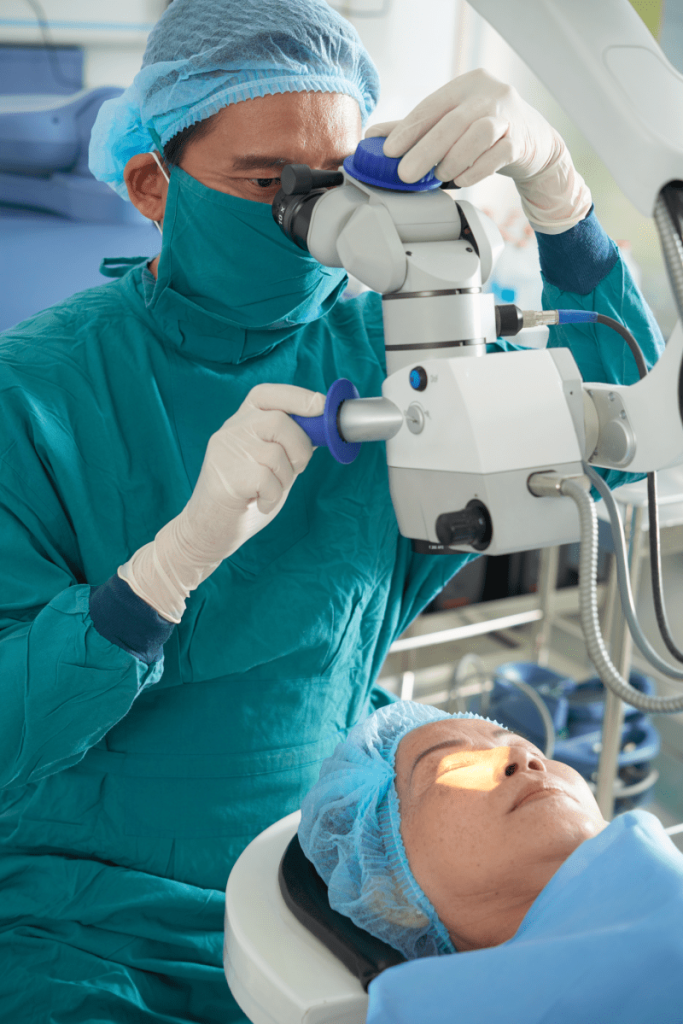
The operation is usually a short procedure lasting about 10 to 15 minutes for each eye. It is performed painlessly and without stitches with the modern technique called PHACO surgery. Patients are discharged on the same day. Although the time spent in the operating room is short, the micro-surgical intervention performed during this time is extremely sensitive and requires high technology.
Is Pain Felt During Surgery?
No, the eyes are numbed with special drops before the surgery (topical anesthesia). In some cases, a mild sedation can be given to relax the patient. The patient does not feel any pain or ache during the procedure, they can only feel the sensation of touching the eye or the coolness of the washing waters used. Serious pain is not expected in the postoperative period; generally, a slight stinging sensation is considered normal.
How Long Does The Recovery Process Take?
Most patients start to see clearly the day after surgery. However, the time until full visual quality is reached and neuroadaptation (the brain’s adaptation to new lenses) is completed can take several weeks. Protective covers or sunglasses can be used to protect the eye for the first few days. Regular use of drops given by the doctor is of vital importance to prevent infection risk and speed up recovery.
When Can You Return To Social Life After Surgery?
Generally, 1-2 days after surgery, patients can read books, watch television, and do their light work. It is possible to return to work life after about a week. However, it is necessary to avoid heavy sports for the first 15 days, not to rub the eye, and to stay away from environments that carry an infection risk such as pools/seas. Driving can start from the 2nd or 3rd day when visual acuity reaches a sufficient level.
What Are The Possible Side Effects Of Smart Lenses?
The most common conditions are seeing halos around lights and night glares. In addition, although rare, temporary dryness in the eye, slight stinging, or slowness in focusing speed may be experienced. Most of these effects decrease and disappear spontaneously within the first 3-6 months as the brain learns to process new images (neuroadaptation). The risk of permanent and serious complications is quite low with experienced surgeons and modern technology.
Does Color Perception Change With A Smart Lens?
Especially patients with cataracts see the world more yellowish and pale before the surgery. When a smart lens is fitted, colors start to be seen much more vividly, brightly, and in their natural tones thanks to the crystal clarity of the new lens. Many patients state that they “rediscovered” colors after the surgery. Whites look whiter, blues look deeper. This positively affects the patient’s life energy and psychological state.
Who Is Not A Suitable Candidate For Smart Lens Treatment?
Those with serious damage to the retina, advanced yellow spot patients, those with uncontrolled glaucoma, and people with extremely irregular corneal structures are not suitable for this treatment. In addition, people whose expectations are not realistic, who seek “zero defect,” and who state that they will not even tolerate the slightest light scattering in night vision are also risky candidates. Psychological preparation and expectation management are at least as important as surgery in this treatment.
Can Those Who Have Had Laser Surgery Before Have Smart Lenses?
People who have had laser (LASIK, PRK, etc.) surgery for myopia or hyperopia in the past can also be smart lens candidates. However, corneal measurements of these patients are different from standard patients. With special calculation formulas and the evaluation of an experienced surgeon, patients who have had old laser surgery can also safely own smart lenses and get rid of near vision problems.
Can Those With A Problem In Only One Eye Have A Smart Lens?
Yes, but the highest efficiency of smart lenses is obtained when applied to both eyes at once. Because the brain creates depth perception by combining focused images from both eyes. If there is a cataract in only one eye and the other eye is normal, the application can be performed only on the problematic eye with the recommendation of your doctor for a balanced view. Still, the general approach is to equip both eyes with smart lenses to maximize visual comfort.
What Should Be Considered When Choosing A Smart Lens Brand?
There are many different lens brands on the market. Global brands that are FDA-approved, have proven long-term results, have optimized light distribution, and have high material quality should be preferred. Your doctor’s experience and the choice of the most suitable design for your eye structure (aspherical structure, UV filters, etc.) directly affect the success of the surgery. Avoiding cheap and poor-quality lenses is the most important rule for your eye health.
Which Tests Are Performed In The Pre-Treatment Examination?
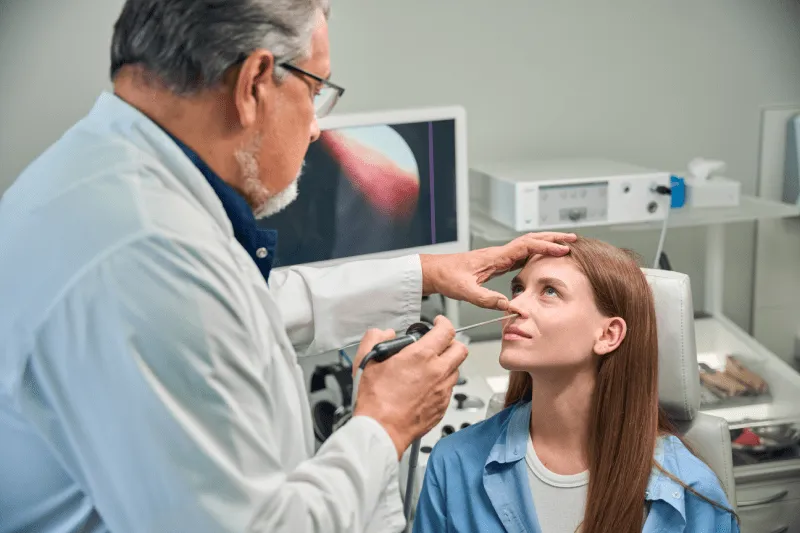
In a comprehensive examination; biometry (to determine the lens number), corneal topography (map of the eye), OCT (retina and optic nerve analysis), dry eye tests, and detailed refractive error measurements are performed. The purpose of these tests is to understand whether the eye is anatomically suitable for the lens and to calculate the power of the lens to be fitted with a precision of one hundredth of a millimeter.
Why Should Cure Holiday Be Preferred For Smart Lens Treatment?
Cure Holiday is a platform that provides world-class service in the field of health tourism, organizing the patient’s treatment process flawlessly from beginning to end. In a field that requires precision such as smart lens treatment, it brings together the most experienced surgeons and hospitals with the latest technology for you. It professionally manages not only the medical operation but also logistical needs such as accommodation and transfer.
What Are The Advantages Of Getting Treatment Through Cure Holiday?
When you choose Cure Holiday, you don’t have to deal with complex appointment processes. A personal health consultant is assigned to you, and all your questions are answered before the surgery. In addition, the lenses used in Cure Holiday’s contracted clinics are the top segment, global brands. This model, which combines Turkey’s hospitality and medical success, allows you to receive a premium quality service without straining your budget.
How Is The Smart Lens Treatment Process Planned With Cure Holiday?
The process starts with a free online consultation. When you convey your eye reports and expectations, Cure Holiday experts create the most suitable treatment plan for you. When you come to Turkey, you are met with VIP transfers, hosted in comfortable hotels, and receive your treatment in distinguished hospitals. You feel safe thanks to a team that is always with you during your recovery process.
How Do You Start Seeing Your Life Clearly Again With Cure Holiday?
To say goodbye to your glasses and look at the world from a more vivid window, all you need to do is contact Cure Holiday. The professional staff determines the most correct doctor and the most suitable time for you, ensuring that you achieve the vision of your dreams. When the freedom brought by clear vision is combined with the safe and peaceful treatment environment offered by Cure Holiday, a brand new and bright page opens in your life.
Summary and Call to Action
Smart lens treatment is an operation whose results are miraculous when applied by the right surgeon on the right candidate. Being able to see far, intermediate, and near distances without glasses carries the quality of life to an unprecedented level. If you want to get rid of your glasses and step into a more comfortable life, you should receive a professional evaluation to learn about your candidacy status.
Contact Cure Holiday, your most reliable partner in your health journey, immediately and get information about special smart lens treatment packages for you. Seeing the future clearly is in your hands!
Free Consultation
Fill out the form below to get your free medical travel plan and price quote.
Sources and how to verify this yourself
- Ministry of Health, Regulation on International Health Tourism and Tourist Health, Official Gazette 26 April 2025, No. 32882 — authorisation requirement for facilities and intermediaries, TÜSKA accreditation, compulsory complication insurance (deadline 31 December 2025 for insurance, 31 December 2026 for accreditation). source
- Ministry of Health, Regulation on Promotion and Information Activities in Health Services, Official Gazette 12 November 2025, No. 33075 — treatment promises and guarantees are prohibited; price and campaign announcements are permitted only within international health tourism. source