About the prices on this page. The figures below are indicative market prices and country comparisons, not a quote. Our own current, all-inclusive prices are published on our cosmetic surgery in Turkey page, and we confirm your figure in writing before you commit to anything.
The landscape of aesthetic surgery is constantly evolving, moving away from “one-size-fits-all” solutions toward highly personalized techniques. Among these innovations, hybrid breast augmentation—also known as composite breast augmentation—has emerged as a premier choice for women seeking the perfect balance between volume and natural aesthetics. By combining the structural reliability of silicone implants with the soft, refining touch of autologous fat transfer, surgeons can now sculpt breasts that not only look beautiful but feel remarkably authentic. This guide explores every facet of this dual-modality approach to help you decide if it is the right path for your transformation.
What Is Hybrid Breast Augmentation?
Hybrid breast augmentation is a sophisticated surgical technique that utilizes two distinct methods simultaneously: the placement of medical-grade breast implants and the injection of the patient’s own processed fat cells. Traditionally, patients had to choose between the significant volume increase provided by implants or the subtle, natural enhancement of fat grafting. The hybrid approach merges these two worlds. The implant provides the core projection and desired cup size, while the fat injection is used to “soften” the edges of the implant, fill in the cleavage area, and provide a more natural transition from the chest wall to the breast mound. It is essentially a 3D sculpting process that allows for a level of customization that a single method cannot achieve.
Why Is This Technique Becoming So Popular?
The surge in popularity for hybrid breast augmentation is driven by the modern patient’s desire for results that do not look “done.” While implants are excellent for adding size, in thin patients or those with minimal natural breast tissue, the edges of the implant can sometimes be visible or palpable, a phenomenon known as “rippling.” Hybrid surgery solves this by using fat as a biological camouflage. Additionally, the rise of body contouring (liposuction) as a complementary procedure means patients can remove unwanted fat from areas like the abdomen or thighs and “recycle” it to enhance their breasts. This dual benefit of slimming one area while enhancing another makes it an incredibly attractive option for holistic body rejuvenation.
How Does The Procedure Work Step By Step?
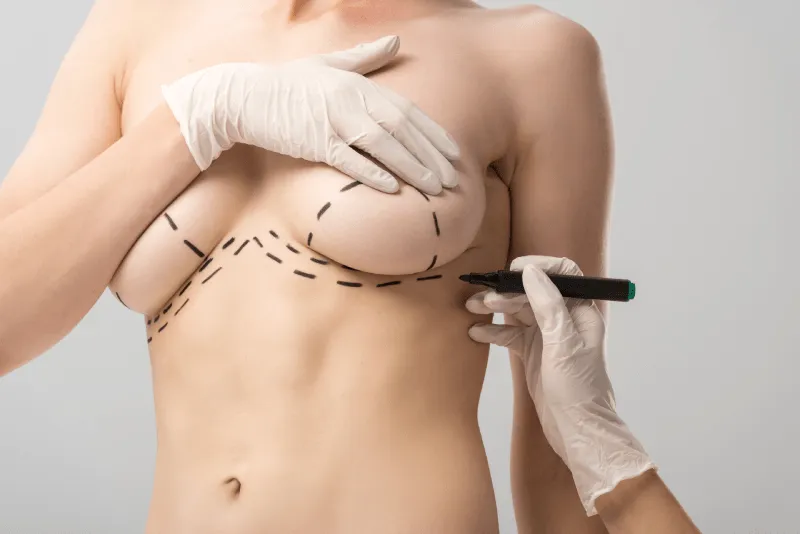
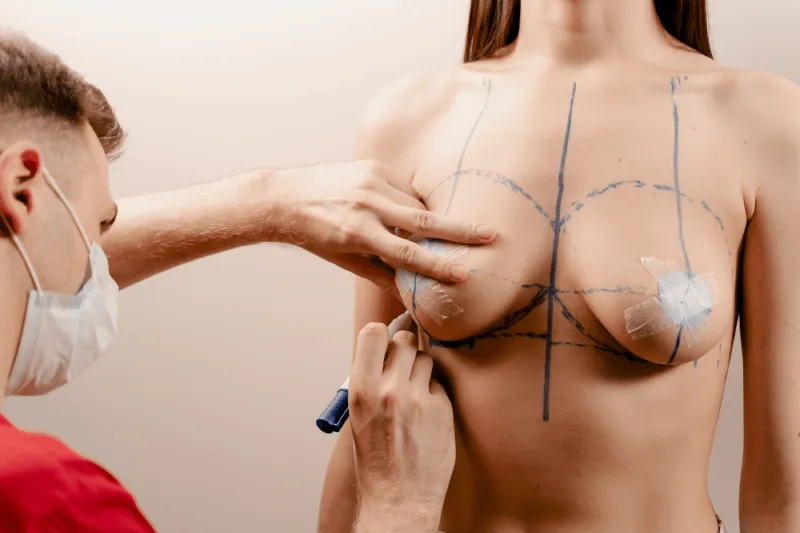
The procedure begins with a detailed consultation and marking phase where the surgeon identifies the donor sites for fat and the placement areas for the implants. On the day of surgery, the process typically starts with gentle liposuction to harvest fat from areas such as the flanks, thighs, or stomach. This fat is then purified using a centrifuge or specialized filtration system to isolate healthy, viable fat cells. Next, the surgeon performs the standard implant augmentation, creating a pocket (usually submuscular or subfascial) and inserting the chosen silicone or saline implants. Finally, the purified fat is meticulously injected into the subcutaneous layers of the breast, particularly around the upper pole and cleavage, to refine the shape and mask the implant’s presence.
Who Is The Ideal Candidate For Hybrid Augmentation?
The ideal candidate for hybrid breast augmentation is someone looking for a significant increase in size but with a high priority on a natural appearance and feel. It is particularly beneficial for “thin” patients who lack sufficient breast tissue to adequately cover an implant. Patients with mild breast asymmetry, those who have experienced “rippling” from previous surgeries, or individuals who want to enhance their cleavage without using excessively large implants are also perfect candidates. Because the procedure involves liposuction, the candidate must have enough “donor fat” in other parts of their body to be harvested. General good health and realistic expectations are, of course, essential prerequisites for any surgical intervention of this nature.
What Are The Main Benefits Of Combining Implants And Fat?
The primary advantage of the hybrid method is the superior aesthetic control it offers the surgeon. While an implant is a fixed shape, fat is a liquid gold that can be placed exactly where it is needed. This allows for the correction of minor asymmetries that an implant alone might actually exaggerate. Furthermore, the fat provides an extra layer of insulation over the implant, which significantly reduces the risk of visible rippling and creates a softer, more “fleshy” feel to the touch. Another major benefit is the “two-for-one” effect: patients achieve their dream breast shape while simultaneously contouring their waist, hips, or thighs through the necessary liposuction process.
How Does Fat Injection Improve The Look Of Implants?
One of the common critiques of traditional breast implants, especially in patients with low body fat, is the “stuck-on” appearance where the transition from the collarbone to the breast is too abrupt. Fat injection acts as a transitional buffer. By injecting fat into the upper pole of the breast, the surgeon can create a gentle, sloping curve that mimics the anatomy of a natural breast. Furthermore, fat can be used to narrow the “inter-mammary” distance, creating a tighter and more defined cleavage that implants alone often cannot achieve without risking “symmastia” (where the breasts merge in the middle). Essentially, the fat “humanizes” the synthetic implant.
Is This Method Better Than Standard Implants Alone?
“Better” is subjective in plastic surgery, but the hybrid method is certainly more “complete” for a specific subset of patients. For a woman with plenty of natural breast tissue, a standard implant might be perfectly sufficient. However, for those seeking a bespoke result, the hybrid technique offers solutions that standard implants cannot. It addresses the “touch” factor—making the breasts feel softer—and the “vision” factor—eliminating the tell-tale signs of surgery. While it involves a longer surgical time and a slightly higher price point, the reduction in long-term dissatisfaction due to rippling or unnatural shaping often makes it the superior choice for discerning patients.
What Type Of Implants Are Used In Hybrid Procedures?
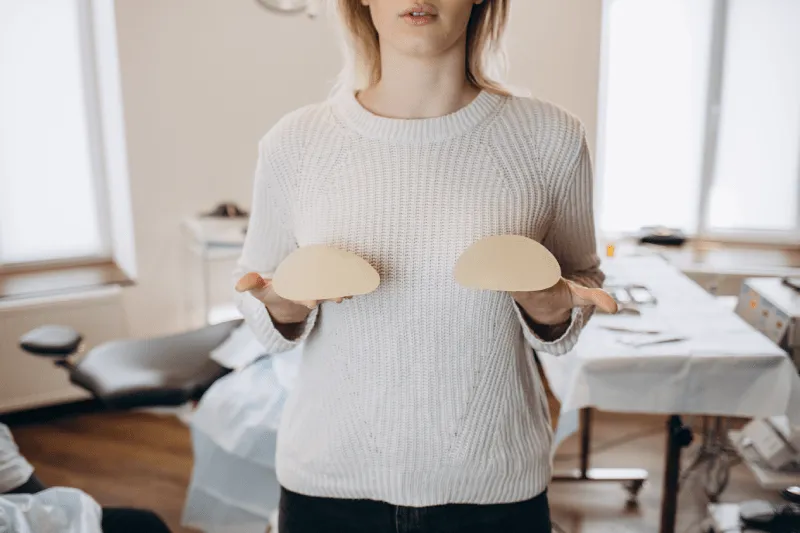
Almost any type of implant can be used in a hybrid procedure, including cohesive silicone gel (often called “gummy bear” implants) or saline implants. However, most surgeons prefer modern, highly cohesive silicone gel implants for hybrid cases. These implants maintain their shape well and have a lower risk of leaking. Since the fat injection is going to provide the “softness,” the surgeon can focus on choosing an implant that provides the best structural projection and base width. Both round and anatomical (tear-drop) shapes are compatible with the hybrid technique, though round implants are frequently used because the fat grafting can provide the natural “tapering” that anatomical implants usually aim to achieve.
Where Is The Fat Usually Harvested From?
The beauty of the hybrid procedure is that the fat is harvested from “problem areas” where the patient typically carries excess weight. The most common donor sites include the lower abdomen, the “love handles” (flanks), the outer thighs (saddlebags), and the inner thighs. In some cases, fat can also be taken from the upper back or arms. The choice of donor site depends on the patient’s body composition and their personal goals for body contouring. During the consultation, the surgeon will assess these areas to ensure there is a sufficient volume of fat to achieve the desired breast refinement, usually requiring several hundred milliliters of harvestable material.
How Is The Fat Prepared For Injection?
Fat preparation is a critical step that determines the “survival rate” of the grafted cells. Once the fat is harvested via low-pressure liposuction (to avoid damaging the delicate cells), it contains a mixture of oil, blood, and lidocaine. This “tumescent” fluid must be separated from the living fat cells. Surgeons use various methods for this, such as centrifugation (spinning the fat at high speeds), specialized washing and filtration systems, or simple sedimentation. The goal is to obtain “pure” adipose tissue rich in regenerative cells. This purified fat is then placed into small syringes, ready to be delicately “threaded” into the breast tissue using fine cannulas.
Can This Procedure Fix Breast Asymmetry Effectively?
Breast asymmetry is incredibly common, but it can be one of the most challenging issues to fix with implants alone. Implants come in specific sizes (e.g., 300cc, 325cc), and sometimes the difference between a patient’s breasts falls “between” these sizes. Hybrid augmentation provides the perfect solution. The surgeon can place identical or slightly different implants and then use the fat injection as a “fine-tuning” tool. If one breast is slightly emptier in the cleavage or has a different fold height, the fat can be strategically placed to create near-perfect symmetry. This “hand-sculpted” approach is much more precise than trying to match volumes with pre-fabricated silicone shells.
Does Hybrid Augmentation Provide A More Natural Feel?
Yes, this is one of the most cited reasons for choosing the hybrid approach. A common complaint about breast implants is that they can feel “firm” or “bouncy” compared to natural tissue. By placing a layer of the patient’s own living fat tissue over the implant, the surgeon adds a natural “padding.” This adipose tissue has the same texture and consistency as original breast tissue because, well, it is natural tissue. When someone touches the breast, they are feeling the soft fat layer rather than the surface of the silicone. This makes the breasts feel warmer, softer, and much more integrated into the patient’s body.
What Is The Recovery Process Like For Patients?
The recovery for a hybrid procedure is slightly more complex than a standard breast augmentation because it involves two different surgical sites: the breasts and the liposuction donor areas. Patients can expect some soreness and swelling in the chest, similar to a traditional implant surgery. However, they will also experience bruising and a “deep ache” in the areas where fat was harvested. Most patients need about 7 to 10 days off work. A surgical bra must be worn to support the breasts, and a compression garment is usually required for the liposuction areas to minimize swelling and help the skin adhere to the new contours. Heavy lifting and vigorous exercise are typically restricted for 4 to 6 weeks.
Are There Specific Risks Associated With Fat Grafting?
While fat grafting is generally very safe, it does carry specific risks that patients should be aware of. The most common “risk” is fat resorption, where the body absorbs some of the injected fat (usually 20-40%). To account for this, surgeons often slightly over-fill the area. More rare complications include “fat necrosis,” where some fat cells die and form small, firm lumps or oil cysts. While these are usually harmless, they can sometimes be felt under the skin. It is also vital that the fat is injected into the subcutaneous tissue and not the breast gland itself or the muscle, to avoid complications and ensure the best possible survival rate of the graft.
How Long Do The Results Of Hybrid Augmentation Last?
The results of a hybrid breast augmentation are considered long-lasting and, in many ways, permanent. The breast implants themselves are durable medical devices that may eventually need replacement (usually after 10-15 years), but the fat that “takes” and survives the first few months becomes a permanent part of your breast anatomy. As long as your weight remains relatively stable, the fat cells will stay in place for a lifetime. However, it is important to remember that these are living cells; if you lose a significant amount of weight, the fat cells in your breasts will shrink, just like fat cells elsewhere in your body.
Will The Injected Fat Disappear Over Time?
There is a common misconception that all injected fat eventually disappears. In reality, the fat cells that survive the initial “transfer” process (the first 3 to 6 months) establish a blood supply and behave exactly like the fat cells that were already there. They do not “dissolve” or “leak.” However, during the immediate post-operative period, the body will naturally clear away the cells that didn’t successfully graft. This is why the final result is usually visible after about 3 to 4 months. Once you reach that milestone, the volume provided by the fat is stable and permanent, barring extreme lifestyle changes or aging.
How Much Volume Can Fat Injection Add To The Breast?
Fat injection is generally used for refinement rather than massive volume. While an implant can easily add 300cc to 500cc of volume, fat grafting typically adds about 100cc to 150cc per breast in a single session. Any more than that can compromise the blood supply to the fat cells, leading to higher rates of fat necrosis. This is why the “hybrid” approach is so brilliant: the implant does the “heavy lifting” by providing the bulk of the volume, while the fat provides the nuanced shaping and “finishing touches.” Together, they can achieve a size increase that looks significantly more substantial than fat alone could ever provide.
Is The Scarring Less Visible With This Technique?
The scars for the implant portion of the surgery are the same as a traditional augmentation—usually a small incision in the breast fold (inframammary) or around the nipple (periareolar). However, the fat injection part of the procedure is performed using very thin cannulas, which only require tiny “poke” incisions about 2-3 millimeters in length. These tiny marks usually fade into insignificance over time and do not require stitches. Because the fat can be used to hide the edges of the implant, the overall aesthetic result often looks “scar-less” in terms of surgical tell-tales, even if the primary incisions are the same size as standard surgeries.
Can Hybrid Augmentation Be Done Under Local Anesthesia?
While simple fat grafting can sometimes be done under local anesthesia with sedation, a full hybrid breast augmentation involving implants almost always requires general anesthesia. This is because creating the pocket for the implant and performing thorough liposuction are invasive processes that require the patient to be completely still and comfortable. General anesthesia ensures that the surgeon can work precisely and that the patient has a pain-free experience. However, the advanced techniques used today mean that “waking up” is much smoother, and post-operative nausea is significantly reduced compared to older methods.
Does This Procedure Affect Future Mammograms?
This is a very important question for women’s health. In the past, there was concern that fat necrosis (calcified fat) could mimic the appearance of breast cancer on a mammogram. However, modern imaging technology and the expertise of radiologists have improved significantly. Radiologists can now easily distinguish between the characteristic appearance of fat calcifications and the suspicious micro-calcifications associated with malignancy. It is always recommended to have a “baseline” mammogram before surgery and to inform your radiologist that you have had a hybrid procedure. The implants are typically placed behind the muscle, which also helps in keeping the breast tissue clear for screening.
How Should You Prepare For The Surgery Day?
Preparation is key to a smooth surgery and recovery. You should stop smoking at least 4 to 6 weeks before surgery, as nicotine constricts blood vessels and can severely impact fat graft survival and wound healing. You will also need to avoid blood-thinning medications and supplements like aspirin, ibuprofen, and Vitamin E for two weeks prior. Arranging for a “recovery nest” at home with plenty of pillows, easy-to-reach snacks, and button-down shirts is a great idea. Most importantly, ensure you have a responsible adult to drive you home and stay with you for the first 24 to 48 hours after the procedure.
What Is The Difference Between Fat Grafting And Fillers?
It is vital to distinguish between autologous fat and synthetic dermal fillers. Fillers (like those used in lips) are temporary, gel-like substances that the body eventually breaks down. They are NOT FDA-approved or recommended for large-scale breast enhancement because they can migrate and interfere with cancer screenings. Autologous fat, on the other hand, is your own living tissue. It is biocompatible, carries no risk of allergic reaction, and provides a permanent result once the cells have integrated. In the context of the breast, fat is a “living filler” that grows with you and ages with you, making it far superior to any synthetic injectable.
Can Hybrid Augmentation Be Combined With A Breast Lift?
Yes, many patients choose to combine a hybrid augmentation with a breast lift (mastopexy). This is often referred to as a “comprehensive breast rejuvenation.” If a patient has sagging (ptosis) as well as a loss of volume, an implant alone can sometimes create a “Snoopy” deformity where the tissue hangs off the implant. By doing a lift to tighten the skin envelope, adding an implant for volume, and using fat injection to perfect the cleavage and upper pole, the surgeon can achieve a truly youthful and perky result. This is a complex surgery, but for the right patient, it offers the most transformative outcome possible.
How Do Surgeons Determine The Right Amount Of Fat?
Choosing the right amount of fat is more of an art than a pure science. During surgery, the surgeon will assess the “tightness” of the breast skin after the implant is in place. If the skin is very tight, there is less room for fat cells to receive oxygen and survive. The surgeon will inject fat until the desired “cushioning” is achieved without over-pressurizing the tissue. Usually, between 100cc and 200cc per breast is the “sweet spot” for hybrid procedures. The goal is always to maximize the “take” rate rather than simply injecting the largest volume possible, as quality is much more important than quantity in fat grafting.
Is The Cost Of Hybrid Augmentation Higher?
Yes, the cost of a hybrid procedure is generally higher than a standard breast augmentation. This is because you are essentially paying for two surgeries in one: a breast augmentation and a full liposuction/fat transfer procedure. It requires more time in the operating room (usually 3-4 hours instead of 1-1.5 hours), more specialized equipment for fat processing, and a higher level of surgical expertise. However, many patients find the extra investment worthwhile because it avoids the need for a separate liposuction surgery later and provides a level of naturalness and contouring that a cheaper, standard surgery simply cannot match.
What Should You Look For In A Qualified Surgeon?
Not all plastic surgeons are experts in fat grafting. When searching for a provider, you should look for a board-certified plastic surgeon who has a specific portfolio of “Composite” or “Hybrid” breast augmentation cases. Ask to see “before and after” photos specifically of thin patients or those with asymmetry who underwent this procedure. Inquire about their fat processing technique and their philosophy on implant placement. A good surgeon will be honest about the expected “fat survival” rate and will have a clear plan for both the breast enhancement and the body contouring through liposuction.
Are The Results Visible Immediately After Surgery?
You will see an immediate increase in size, but you won’t see your “final” result on day one. Immediately after surgery, your breasts will be very swollen and may look “higher” or “firmer” than expected. The donor sites from the liposuction will also be swollen and bruised. Over the next 3 to 6 weeks, the initial surgical swelling will subside. Between 3 and 6 months, the body will have processed the fat cells that didn’t survive, and the remaining fat will soften. This is the “settling” phase where the breasts take on their final, natural shape and the implants drop into their natural position.
How Does Weight Change Affect The Injected Fat?
Because the injected fat is made of living cells, it will behave exactly like the fat in the rest of your body. If you gain a significant amount of weight, the fat cells in your breasts will enlarge, potentially making your breasts larger. If you lose a significant amount of weight, those fat cells will shrink. This is why surgeons recommend being at a stable “goal weight” before undergoing the procedure. Minor fluctuations of 5-10 pounds usually don’t have a noticeable impact, but extreme weight loss can diminish the “cushioning” effect that the fat transfer provided.
Is There An Age Limit For This Procedure?
There is no strict chronological age limit for hybrid breast augmentation, provided the patient is in good health. However, skin elasticity is a factor. Younger patients often have tighter skin that responds well to the “filling” effect of fat. Older patients may have more skin laxity, which might necessitate a concurrent breast lift to get the best results. As long as a patient’s medical history (especially cardiac and pulmonary health) allows for general anesthesia and their breast tissue is healthy, they can be a candidate for this procedure well into their 50s or 60s.
What Are The Success Rates Of Fat Survival?
Success in fat grafting is measured by the percentage of fat that survives and remains permanently. With modern techniques, the survival rate is typically between 60% and 80%. Several factors influence this, including the surgeon’s harvesting technique, the purification process, the patient’s smoking status, and the post-operative care (avoiding pressure on the breasts). While you may “lose” some of the initial volume in the first few weeks, the fat that remains after 3 months is yours to keep. This predictable survival rate is what makes the hybrid procedure a reliable and highly recommended option in modern aesthetics.
Why Is Cure Holiday The Best Choice For Surgery?
When it comes to complex procedures like hybrid breast augmentation, the environment where you receive care is just as important as the surgery itself. Cure Holiday has established itself as a world-class destination for medical tourism, specifically focusing on aesthetic excellence. By choosing Cure Holiday, you are not just getting a surgery; you are accessing a curated network of the most skilled, board-certified plastic surgeons who specialize in the latest hybrid techniques. The focus here is on safety, precision, and achieving the most natural-looking results possible in a setting designed for your absolute comfort.
What Are The Advantages Of Choosing Cure Holiday?
The advantages of Cure Holiday extend far beyond the operating room. Patients benefit from an all-inclusive, VIP experience that removes the stress of planning a medical journey. From the moment you land, you are supported by professional coordinators, luxury accommodations, and private transfers. Perhaps most importantly, Cure Holiday offers access to high-end medical facilities at a fraction of the cost found in many Western countries, without ever compromising on quality or hygiene standards. The combination of expert surgical hands and a relaxing, holiday-like recovery environment ensures that your transformation journey is as beautiful as the final result.
How Does Cure Holiday Support International Patients?
Cure Holiday understands the unique needs of international patients. Language barriers are non-existent, as dedicated translators and patient advocates are available at every step. The team provides comprehensive pre-operative consultations via digital platforms, allowing you to discuss your goals with your surgeon before you even pack your bags. Post-operative care is also a top priority; Cure Holiday ensures that you have all the necessary medications, follow-up appointments, and 24/7 support during your stay. This “hand-holding” approach ensures that every patient feels safe, informed, and cared for throughout their entire stay.
What Steps Should You Take To Start With Cure Holiday?
Starting your journey with Cure Holiday is a simple and transparent process. The first step is to reach out through their official website or contact channels for a free initial assessment. You will be asked to provide some basic medical information and photos of your current breast shape and donor areas. Based on this, the experts at Cure Holiday will provide a personalized treatment plan and a clear, all-inclusive quote. Once you are ready, their coordinators will help you schedule your surgery date and organize your travel arrangements. It is a streamlined pathway designed to take you from your initial curiosity to a confident, new you.
Is It Time To Transform Your Life With Cure Holiday?
Choosing to undergo hybrid breast augmentation is a powerful step toward reclaiming your confidence and loving what you see in the mirror. With the expertise of Cure Holiday, you can turn this dream into a reality with the peace of mind that you are in the best possible hands. Why settle for standard results when you can have a “hand-sculpted” masterpiece? If you are ready for a natural feel, a beautiful cleavage, and a contoured body, it is time to contact Cure Holiday. Your journey toward a more confident version of yourself begins with a single conversation. Take that step today and experience the gold standard of aesthetic care.
Free Consultation
Fill out the form below to get your free medical travel plan and price quote.
Sources and how to verify this yourself
- Howe M-S, Keys W, Richards D. Long-term (10-year) dental implant survival: a systematic review and sensitivity meta-analysis. Journal of Dentistry, 2019 — pooled 10-year implant survival 96.4% (95% CI 95.2–97.5%); conservative sensitivity estimate 93.2%. source
- Ministry of Health, Regulation on International Health Tourism and Tourist Health, Official Gazette 26 April 2025, No. 32882 — authorisation requirement for facilities and intermediaries, TÜSKA accreditation, compulsory complication insurance (deadline 31 December 2025 for insurance, 31 December 2026 for accreditation). source
- Ministry of Health, Regulation on Promotion and Information Activities in Health Services, Official Gazette 12 November 2025, No. 33075 — treatment promises and guarantees are prohibited; price and campaign announcements are permitted only within international health tourism. source