What Is Obesity And Why Is It Dangerous?
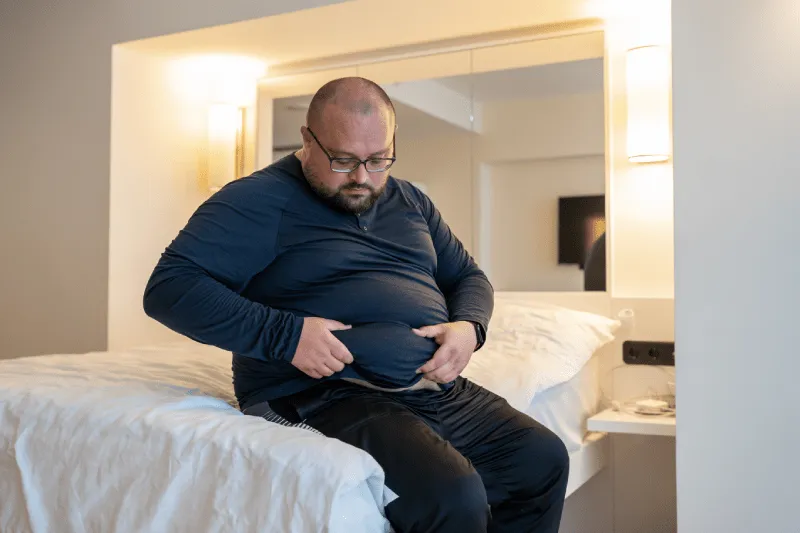
Obesity is defined as a chronic and complex disease characterized by the accumulation of excessive body fat to an extent that impairs health. Today, sedentary lifestyles and high-calorie eating habits brought about by modern life have caused this problem to turn into a global pandemic. Obesity is not just an aesthetic concern; it is also a serious medical condition that negatively affects almost all systems of the body. This condition, which impairs the functions of many vital organs from cardiovascular diseases to fatty liver, directly threatens life expectancy and quality. If not intervened early, it can lead to consequences ranging from organ failure to permanent disabilities.
What Are The Effects Of Excess Weight On General Health?
Excess weight means that the body exceeds its carrying capacity, which leaves damage in a wide range from the skeletal system to the circulatory system. The excessive load on the joints leads to permanent calcification and movement restriction in the knee and hip areas over time. In addition, with the increase in resistance in blood circulation, the heart exerts more effort to pump blood, which causes the heart to enlarge or get tired. Due to the pressure on the respiratory system, nighttime breathing arrests such as sleep apnea can be experienced. When all these effects combine, it becomes impossible for the individual to perform their daily activities effectively.
Which Chronic Diseases Are Associated With Obesity?
Excess weight brings with it a series of “co-morbid diseases,” the primary one being Type 2 Diabetes. As the fat tissue in the body increases, insulin resistance develops and blood sugar reaches an uncontrollable point. In addition, hypertension, namely high blood pressure, is one of the most common vascular diseases encountered in obese individuals. Imbalances in cholesterol and triglyceride levels increase the risk of vascular occlusion, raising the probability of heart attack and stroke. Scientific studies have also proven that certain types of cancer, especially colon and breast cancer, are directly linked to obesity. These diseases prove that obesity is not just a weight problem.
What Are The Psychological Effects Of Excess Weight?
Obesity is not only a physical destruction but also a heavy psychological burden. Beauty standards imposed by society and the fear of being excluded by the social environment lead to the development of lack of self-confidence and social anxiety in obese individuals. The person may feel alienated from their own body, and this situation can trigger a deep depression process. Individuals who enter the “emotional eating” cycle try to suppress their unhappiness by eating and gain more weight in the process. This vicious cycle can imprison the individual at home by taking away their joy of life. Mental health and physical health must be handled as a whole in obesity treatment.
How Is Body Mass Index Calculated?
Body Mass Index (BMI) is an international measure used to determine a person’s weight level relative to their height. The calculation is quite simple: it is obtained by dividing your body weight (in kilograms) by the square of your height (in meters). If the result is between 18.5 and 24.9, it is classified as normal; above 30 is classified as obesity; and above 40 is classified as morbid obesity. However, BMI alone does not measure body fat distribution or muscle mass. For this reason, experts use waist circumference measurements and body analysis devices in addition to BMI to evaluate the patient’s general health profile and suitability for surgical operation in detail.
What Is Gastric Bypass Surgery?
Gastric bypass is an obesity surgery method that both shrinks the stomach and reduces absorption by disabling a part of the intestines. Its most popular type is the technique known as “Roux-en-Y.” The aim of this surgery is to ensure that the patient feels full with less food and to prevent the calories of the consumed food from being fully absorbed by the body. Since it has both restrictive and malabsorptive effects, it is considered the “gold standard” of obesity surgery. It is currently one of the most frequently applied metabolic surgery methods in the world, not only for losing weight but also for taking Type 2 diabetes under control.
How Is Gastric Bypass Performed?
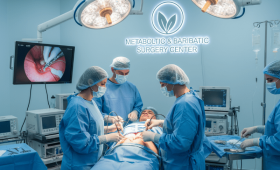
Thanks to modern surgical techniques, gastric bypass surgery is usually performed with the laparoscopic, i.e., closed method. By entering through small incisions made in the abdominal area, a small pouch of approximately the size of an egg is created in the upper part of the stomach. Then, a section of the small intestine is connected to this new small stomach pouch. Thus, the food bypasses a large part of the stomach and the duodenum, passing directly to the later sections of the small intestine. This process changes the anatomical structure of the digestive system, affecting hormone levels and significantly reducing the feeling of hunger. This operation, which lasts approximately 2-3 hours, is performed under general anesthesia.
Who Is A Suitable Candidate For Gastric Bypass?
This operation is not a valid option for every overweight individual; certain criteria must be met. Generally, individuals with a Body Mass Index (BMI) of 40 and above, or individuals with a BMI value of 35 who have serious accompanying diseases such as Type 2 diabetes, sleep apnea, or hypertension, are considered suitable candidates. In addition, it is required that the patient has previously tried to lose permanent weight with diet and exercise programs but has not been successful. Having the psychological maturity to adapt to lifestyle changes after surgery and not having a health problem that prevents the surgical process are among the most basic criteria for success.
What Is The Pre-operative Preparation Process?
The preparation period before gastric bypass is a process that must be carried out very meticulously. The patient is first undergone a detailed examination by different specialists such as cardiology, endocrinology, chest diseases, and psychiatry. Blood tests, chest X-rays, EKG, and endoscopy tests are performed to see the condition of the stomach. The surgeon explains the risks of the surgery and the nutrition order afterwards to the patient in detail. Usually, a few weeks before the operation, a special low-carbohydrate diet is requested to shrink the liver and make the operation easier. This preparation both minimizes the risks during the operation and facilitates the patient’s adaptation to their new life.
What Are The Advantages Of Gastric Bypass?
The biggest advantage of gastric bypass surgery is the permanent and high-rate weight loss it provides in the long term. Patients usually lose 70% to 80% of their excess weight within the first year and a half. However, its benefits are not limited to weight loss alone; in a large portion of Type 2 diabetes patients, blood sugar levels improve immediately after the surgery, and medication use decreases or ends completely. In addition, it shows a stronger metabolic effect than sleeve gastrectomy in the improvement of comorbid diseases such as sleep apnea, high cholesterol, and blood pressure problems. Patients’ mobility increases, their self-confidence rises, and their lifespans statistically increase.
How Does The Post-operative Recovery Process Begin?
Following the operation, patients are usually kept under observation in the hospital for 3 to 4 days. The healing process proceeds quite quickly thanks to the surgery being performed with the closed (laparoscopic) method. On the first day of the operation, the patient is encouraged to walk in order to reduce the risk of blood clotting. Initially, pain control is provided with medications given through the vascular access. After checking the condition of the sutures and possible leakage risks, the surgeon discharges the patient. Within the first week, the patient becomes able to perform daily household activities; however, they are asked to avoid heavy lifting and forcing movements. The full recovery and return to work process may vary between 2-4 weeks.
How Does The Diet Change After Surgery?
Post-operative nutrition follows a gradual path for the stomach to get used to its new structure. The first two weeks are called the “liquid period,” and only clear liquids, broth, and special protein drinks are consumed. In the following two-week “puree period,” soft foods passed through a blender are eaten. Approximately one month after the surgery, solid foods are gradually introduced. However, portions should remain small enough for a bird to eat. It is necessary to chew the bites very well and scrupulously follow the rule of solid-liquid separation (not drinking water with meals). This new order prevents the stomach from over-stretching and supports the healthy continuation of weight loss.
Is Vitamin And Mineral Supplementation Necessary?
Yes, it is mandatory to use vitamin and mineral supplements for life after gastric bypass surgery. The main reason for this is that the absorption of vitamins in food decreases because a part of the intestines is disabled. Especially B12 vitamin, iron, calcium, and D vitamin deficiencies can be seen frequently. If these supplements are not taken regularly, serious complications such as anemia, osteoporosis, weakness, and neurological problems may develop. Patients should have blood tests done at certain intervals to check their values and use multivitamin sets in the dosages recommended by the doctor. This is a vital necessity not only for losing weight but also for protecting general body health.

How Much Weight Is Lost With Gastric Bypass?
The weight loss process after gastric bypass starts quite quickly and usually continues for 18 to 24 months. Statistically, patients lose an average of 60% to 80% of their excess weight in this process. For example, an individual who is 50 kilograms over their ideal weight is expected to lose approximately 35-40 kilograms. The most dramatic weight loss is experienced within the first 6 months. However, these figures may vary according to how well the patient follows the post-operative diet rules and whether they exercise regularly. Surgery is not a miracle on its own, but a very powerful tool given to the patient to lose weight, and its success is directly proportional to the patient’s effort.
What Is The Effect Of The Surgery On Diabetes?
One of the most striking results of gastric bypass is its curative effect on Type 2 diabetes. The change of path in the digestive system allows food to reach the later parts of the intestine faster, triggering an increase in hormones (incretins) that stimulate insulin secretion. Many patients see that their blood sugar levels return to normal on the day after the surgery, even before they have experienced significant weight loss. In many cases, insulin use and oral diabetes medications can be completely discontinued. This situation proves that gastric bypass is not just a weight loss surgery, but also a powerful metabolic surgical procedure and prevents the damage that diabetes would create in the organs.
Is Gastric Bypass Really Reversible?
Gastric bypass surgery is an anatomically reversible procedure. In sleeve gastrectomy (gastric sleeve) surgery, since a large part of the stomach is removed from the body, a reversal is not possible. However, in gastric bypass surgery, no part of the stomach is thrown out; only a large part of the stomach and the duodenum are disabled (bypassed). If a medical necessity arises, the digestive system can be restored to its old state by sewing the bypassed intestine sections to their old places and joining the small stomach pouch with the large stomach. However, this process is a more complex surgical procedure than the first surgery and is only preferred in very serious clinical situations.
Why Would Someone Want To Reverse Gastric Bypass?
Demands for the reversal of the surgery are generally rare and are often based on serious medical complications. One of the most common reasons is severe nutritional disorders and vitamin-mineral deficiencies resulting from the patient’s body being unable to adapt to the surgery. In addition, uncontrollable “dumping syndrome” (a feeling of malaise resulting from the rapid passage of food into the intestine) that seriously disrupts the quality of life, non-healing chronic stomach ulcers, or continuously ongoing severe diarrhea and abdominal pain are also among the reasons for reversal. In some cases, this procedure can be applied as a result of the patient being at vital risk due to excessive weight loss (malnutrition).
Is Reversing The Surgery Risky?
Any kind of revision or reversal surgery carries higher risks than the first surgery. Adhesions remaining from the first surgery in the intra-abdominal tissues can restrict the surgeon’s field of vision and maneuverability. In addition, the blood supply and healing capacity of the tissues may not be as strong as the first time in a second intervention. Complication rates such as bleeding, infection, leakage, and narrowing in the suture areas are slightly higher in reversal surgeries. For this reason, a very detailed risk-benefit analysis should be done before the operation decision is made, and it is vital that the surgeon performing the surgery has high experience in revision surgery.
What Is Revision Surgery And What Is Its Purpose?
Revision surgery consists of corrective surgeries performed to improve the results of a previously undergone obesity surgery or to eliminate complications that have arisen. Its main purpose is to prevent the patient from starting to gain weight again, to accelerate the process in patients who could not reach their targeted weight, or to treat problems (ulcers, suture line problems, etc.) that developed after the first surgery. Revision surgery does not mean that the first surgery was a failure; it is an update made against the structure of the body that changes over time or the decrease in the effect of the surgical intervention. With today’s developing techniques, revision surgeries can also be successfully applied, usually with the laparoscopic method.
Is Revision Surgery Performed After Weight Regain?
Yes, revision surgery is an option for patients who regain weight after gastric bypass or another obesity surgery. Usually 2-3 years after the surgery, weight regain can be observed in some of the patients due to returning to wrong eating habits or the stomach pouch stretching and expanding over time. In this case, the surgeon can shrink the existing stomach pouch again or further reduce absorption by extending the bypassed part of the small intestine. However, before a revision decision is made, the patient’s nutrition and exercise order are meticulously examined; if the problem arises only from lifestyle errors, the process is tried to be managed with dietician support before surgery.
What Are The Types Of Revision Surgery?
Revision surgeries vary according to the patient’s needs and the type of the first surgery. If the patient’s stomach pouch has expanded, this pouch can be shrunk again. Another method is to narrow this area if the opening where the stomach connects to the intestine (stoma) has expanded. If it is desired to increase absorption more, the bypassed distance of the small intestine can be extended. In addition, if a patient who has previously had a “gastric sleeve” gains weight, converting this surgery to “gastric bypass” is one of the most frequently performed revision procedures. In some modern techniques, narrowing procedures (TORE) can be performed by entering through the mouth with the endoscopic method without making a surgical incision.
Can Stomach Size Regrowth Be Prevented?
Although it is not possible to completely prevent the stomach size from growing after surgery, it is in the patient’s hands to slow down this process. The stomach is a muscular organ with stretching properties. If the patient constantly expands their portions by going above the feeling of satiety, the stomach pouch cannot resist this pressure over time and expands. Also, consuming carbonated drinks can trigger expansion by creating pressure on the stomach wall. The best way to prevent the stomach from growing is to chew the bites very well, not to consume solid and liquid foods at the same time, and to stop eating the moment satiety is felt. Staying faithful to the nutritional discipline ensures that the stomach maintains its anatomical integrity for many years.
What Is The Diet Like After Reversal Surgery?
The nutrition process after a surgery where gastric bypass is reversed requires a gradual transition, just like in the first surgery. However, this time, since the stomach capacity increases, the patient’s appetite and eating capacity will also quickly return to their old state. Since the anatomy of the digestive system returns to normal, vitamin absorption problems decrease; however, this situation can also pave the way for the patient to quickly regain weight. It should not be forgotten that in the process after the reversal, if the patient does not stay away from high-calorie and processed foods, they will face the risk of quickly returning to the morbid obesity state before the surgery. Dietician follow-up is very critical in this transition phase.
What Is The Success Rate Of Revision Surgery?
The success rate of revision surgery varies according to the reason for the operation and the patient’s expectations. Revisions performed in patients whose weight loss has stopped or who have regained weight usually ensure that the patient loses weight again; however, this rate of weight loss may generally not be as dramatic as in the first surgery. In revisions performed to eliminate complications (for example, reflux or ulcer treatment), success rates are quite high, and a significant increase in the patient’s quality of life is provided. For long-term success, the most important factor is that the patient supports the surgical intervention with a strict diet and an active life after the revision. Generally, revisions performed by experienced hands give very successful results.
How Long Does The Reversal Procedure Take?
The process of reversing (reversal) gastric bypass is a longer and technically more challenging process than a normal bypass surgery. In this operation, which can usually take between 3 and 5 hours, the surgeon first carefully separates the intestinal connections and places the anatomical tissues in their old places. Cleaning the adhesions and checking the blood supply of the tissues are sensitive stages that take time. The duration of the surgery can be shortened or lengthened according to the patient’s weight, the number of previous operations they have undergone, and the density of intra-abdominal adhesions. For a surgeon who prioritizes patient safety, this time is necessary to ensure the strength of every suture and connection.
What Are The Complications After Revision Surgery?
Although the complications encountered in revision surgeries show similarity with the first surgery, their frequency of occurrence is slightly higher. Among the most serious risks are leakage from the suture lines, intestinal obstruction, wound site infection, and intra-abdominal bleeding. In addition, narrowing (stricture) may occur over time in the regions where tissues are rejoined, and this situation can lead to difficulty in swallowing. The risk of blood clotting to the lungs (embolism) is also a risk that is valid for every patient undergoing obesity surgery but should be followed more carefully in revisions. Although modern anesthesia methods and advanced surgical equipment minimize these risks, patients need to be conscious of possible symptoms.
Is Every Patient Suitable For Revision Surgery?
No, a surgery decision is not immediately made for every patient who is a candidate for revision surgery. First of all, the reason why the patient gained weight or why they have complaints should be deeply researched. If a patient’s complaints stem only from wrong nutrition rather than a surgical disorder, a second surgery may not be a solution and only increases the risks. Patients whose heart or lung capacity is very weak, who have advanced active psychological problems, or who are understood not to follow the rules after surgery may not be considered suitable for revision. The surgeon makes their final decision by weighing the patient’s general health status and the benefit they will obtain from the operation in detail.
How Does Quality Of Life Change After Revision?
After a successful revision surgery, there is often a visible improvement in the quality of life of patients. When problems such as chronic diarrhea, severe abdominal pain, or reflux that developed after the first surgery and made life difficult are eliminated, the patient takes a comfortable breath. The mobility of patients who start to lose weight again increases, joint pains decrease, and the depressive mood caused by obesity is replaced by happiness. However, this improvement requires not only physical but also spiritual discipline. Individuals who regain their health become more active in business life and more self-confident in their social circles, holding onto life again.
Are There Alternatives To Reversing The Surgery?
Completely reversing gastric bypass is a radical decision, and alternative ways should be evaluated before this decision. If the problem is weight gain, some modern weight loss drugs (under doctor control) or a stricter dietician follow-up can be a solution. Special vitamin cures and supports through the vascular access can be applied for nutritional disorders. Endoscopic suturing (overstitch) techniques, which are a non-surgical method, can be used for expansions at the stomach entrance. These methods carry much less risk compared to surgery, and their recovery times are very short. Reversal surgery should be considered as a “last resort” in cases where all these alternatives have been tried or the patient carries a vital risk.
What Is The Exercise Routine After Revision Surgery?
Starting exercise after revision surgery should be spread over time for the tissues to heal. In the first weeks after the operation, only short indoor walks at a light pace are recommended. When the first month is completed, walking distances can be increased and the pace can be raised slightly. It is usually necessary to wait at least 2-3 months for weight lifting or heavy fitness training that will force the abdominal muscles. Swimming is one of the most ideal sports after revision since it does not put a load on the joints. Doing regular exercise not only accelerates weight loss but also minimizes skin sagging that may occur after the lost weight and keeps the metabolism alive.
Why Should Obesity Surgery Be Preferred In Turkey?
Turkey has become one of the most important centers in the world in the field of obesity and metabolic surgery in recent years. Among the main reasons for this are the extraordinary case experience of Turkish surgeons in this field, the fact that hospitals are equipped with state-of-the-art medical devices, and the quality of the service offered being at international standards. In addition, the fact that costs are much more reasonable compared to Europe and America ensures that patients have easier access to high-quality health services. In Turkey, the surgical process is not limited to the operation only; the patient is offered a comprehensive check-up, constant communication, and a comfortable recovery process. These advantages have carried Turkey to the top of health tourism.
What Are The Advantages Of Health Tourism With Cure Holiday?
Cure Holiday is a leading organization that professionally manages the entire process for patients who want to receive treatment in Turkey. As a health tourism organization, Cure Holiday offers its patients not only a medical procedure but also a perfect experience. Patients feel safe at every stage from the moment they leave their own country. Personalized treatment plans, the opportunity to meet the best surgeons, and uninterrupted pre- and post-operative support are the priorities of Cure Holiday. Without a language barrier, in a system where every kind of logistical detail is thought of for you, the only thing you need to do is focus on your own health and healing process.
What Are The Hospital Standards In Turkey?
Hospitals in Turkey, especially the centers where obesity surgery is performed, have prestigious international accreditations such as JCI (Joint Commission International). These hospitals meet the highest criteria in every subject from hygiene standards to technological infrastructure, from patient safety to personnel training. Modern operating rooms, comfortable patient rooms, and intensive care units allow even the most complex revision surgeries to be performed safely. Patients can find the same facilities, even sometimes more, in private health institutions in Turkey as in the best hospitals in Europe. This high-quality understanding is the biggest factor that directly affects the success rates of the operations and patient satisfaction.
Which Services Does Cure Holiday Offer To Patients?
Cure Holiday facilitates the health journey by offering its patients a service package in “all-inclusive” comfort. Within the scope of these services; meeting at the airport with VIP transfers, accommodation in luxury hotels, all hospital procedures, and professional translation support are included. An assistant, who is with you 24/7 throughout the treatment process, guides you in every subject from your doctor appointments to the supply of medicine. In addition, even after the surgery period when you return to your country, dietician support and online follow-up services continue. Cure Holiday acts with an understanding that values patient psychology and comfort as much as surgery, in addition to medical success.
How To Contact Cure Holiday For The Treatment Process?
It is quite simple to contact Cure Holiday and step into a new life. You can reach expert consultants by filling out a form on the website or directly via the WhatsApp line. In the first step, your medical history and current status are evaluated; then, the most suitable surgeon and hospital for you are determined and a detailed offer is presented. Following a preliminary meeting where all your questions are answered, your travel plan is created. The Cure Holiday team will be with you at every moment from the landing of your plane in Turkey until you complete your treatment and return home happily. You can contact them today to entrust your health to professional hands and benefit from this privileged service offered by Turkey.
Free Consultation
Fill out the form below to get your free medical travel plan and price quote.
Sources and how to verify this yourself
- Eisenberg D, et al. 2022 ASMBS and IFSO Indications for Metabolic and Bariatric Surgery. — surgery is recommended at BMI ≥35 regardless of co-morbidity, and considered at BMI 30–34.9 with metabolic disease (lower thresholds for Asian populations). source
- Ministry of Health, Regulation on International Health Tourism and Tourist Health, Official Gazette 26 April 2025, No. 32882 — authorisation requirement for facilities and intermediaries, TÜSKA accreditation, compulsory complication insurance (deadline 31 December 2025 for insurance, 31 December 2026 for accreditation). source
- Ministry of Health, Regulation on Promotion and Information Activities in Health Services, Official Gazette 12 November 2025, No. 33075 — treatment promises and guarantees are prohibited; price and campaign announcements are permitted only within international health tourism. source