
Why Do Thin Lips Occur?
The presence of thin lips is generally a result of genetic inheritance, but it is not the only cause. The density of collagen and elastin fibers in the skin structure are the primary factors that determine the fullness of the lips. Some people may be born with a very thin lip line. This situation can affect the overall symmetry and aesthetic balance of the face. Thin lips can sometimes make a person appear harsher or more tired than they actually are; therefore, many individuals prefer to turn to various methods to gain volume and enhance their facial harmony.
Do Genetic Factors Affect Lip Thickness?
Yes, lip thickness is largely determined by genetic codes passed down from the family. If your parents have a thin lip structure, it is highly likely that you will have a similar structure as well. Genetics affect not only the volume of the lip but also its shape, the prominence of the “cupid’s bow” (the upper lip curve), and the stance of the lip corners. Since these hereditary traits are structural, it is almost impossible to achieve a permanent change through natural means; at this point, professional aesthetic interventions come into play.
How Does The Aging Process Thin The Lips?
As time passes, collagen production in our bodies slows down and hyaluronic acid levels decrease significantly. This situation leads to volume loss and thinning in the lips, just as it does everywhere else on the skin. Lips that were full and prominent during youth begin to collapse inward and form vertical lines (smoker’s lines) as one gets older. Along with aging, the distance between the lips and the nose also lengthens, which is a biological process that makes the lips appear thinner and more saggy than they were before.
How Do Thin Lips Change Facial Expression?
Lips are one of the focal points of the face and play a critical role in conveying emotional expressions. Thin lips can sometimes cause a person to be perceived as having an unintentionally angry, unhappy, or rigid expression. Especially when the upper lip is very thin, it can lead to the lip disappearing completely during a smile (which may combine with a gummy smile), creating aesthetic concern. Full lips, on the other hand, soften the facial expression as they are generally accepted as symbols of youth, health, and friendliness.
Is A Lack Of Lip Volume A Health Problem?
The lack of lip volume does not constitute a physical health problem; it is purely an aesthetic condition. However, a person’s dissatisfaction with their own physical appearance can negatively affect their psychological well-being and self-confidence. Aesthetic surgery and medical applications are seen not as a medical treatment, but as an improvement method at this point. In rare cases, extremely thin lips and disorders in the mouth structure can affect speech or chewing functions, but 99% of applications in the modern world stem from cosmetic concerns.
What Is A Lip Filler Procedure And How Is It Applied?
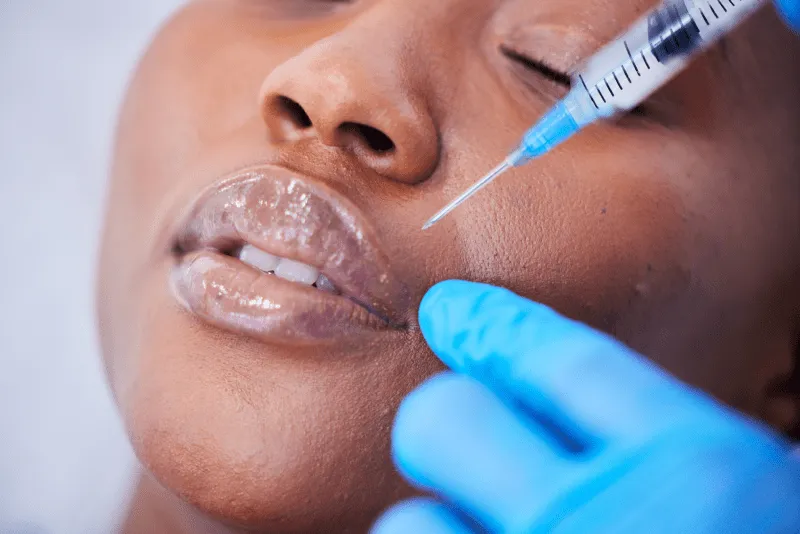
Lip filling is a procedure where hyaluronic acid-based gels are injected into the lip tissue with the help of fine needles or cannulas. This application is a quick procedure performed under office conditions, lasting approximately 15-20 minutes. Before the procedure, local anesthetic creams are applied to the lips to minimize the sensation of pain. The specialist physician places the filler at strategic points according to the lip’s needs, providing volume increase, correcting asymmetries, and defining the lip contour. Results can be seen immediately after the application.
How Long Do The Effects Of Lip Fillers Last?
Lip filler applications are procedures that offer temporary results. Depending on the density and brand of the material used, the lifespan of the filler usually varies between 6 to 12 months. While some bodies metabolize the filler material faster, in others, this period can extend up to a year. Since the lip area is a very active area (speaking, eating, facial expressions), the filler material tends to dissolve a bit faster compared to other facial regions. This situation requires the procedure to be repeated periodically to maintain the full appearance.
Why Do Fillers Dissolve In The Body Over Time?
The most commonly used substance in modern lip fillers is hyaluronic acid. Hyaluronic acid is actually a sugar molecule found naturally in our bodies. An enzyme called “hyaluronidase” in our body breaks down this foreign (but compatible) substance over time and removes it from the system. This is a natural biological process and is the primary reason why the filler is not permanent. The melting of the substance is actually a safety advantage; if the results are not satisfactory or a complication develops, the substance can be dissolved within minutes using an enzyme injection.
Is Lip Filler A Permanent Solution?
No, lip filler is definitely not a permanent solution. Although some substances sold under the name of “permanent filler” (silicon or polymer-based) were used in the past, they are not preferred by professional physicians today because they cause serious tissue reactions and difficult-to-reverse deformations. The temporary nature of hyaluronic acid fillers allows you to adapt to your changing facial features with age and get rid of aesthetic looks that go out of fashion (such as excessively swollen lips). It provides a flexible aesthetic journey for the patient.
Does Getting Regular Fillers Damage The Lip Structure?
Regular fillers performed with the right technique and in appropriate amounts do not damage the lip structure; on the contrary, they can make it look healthier by increasing the moisture capacity of the skin. However, loading excessive amounts of filler at very short intervals can lead to a condition called “filler migration” and cause the lip tissue to lose its elasticity. What matters is to protect the lip anatomy and make natural transitions under the guidance of a specialist doctor. When controlled, it is observed that the lips remain slightly more vigorous than their original state even if the filler dissolves.
What Is A Lip Lift Operation?
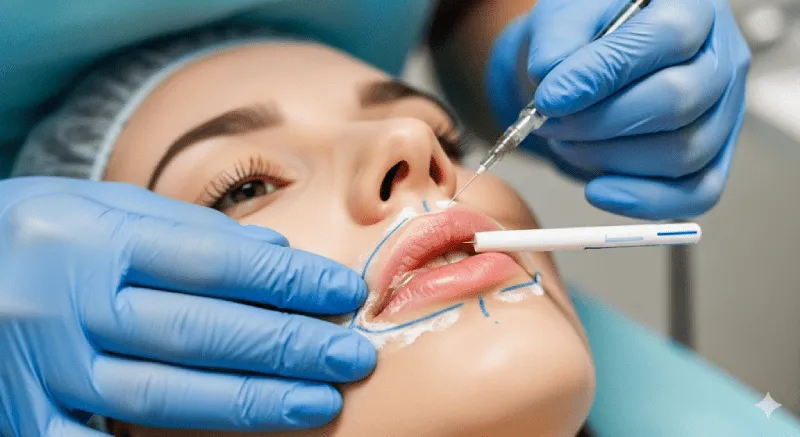
A lip lift is a surgical procedure aimed at shortening the distance between the upper lip and the base of the nose. During this operation, a small, gull-wing-shaped piece of skin is removed from just below the base of the nose and the lip is suspended upwards. This makes the pink tissue of the upper lip more prominent and increases tooth visibility. Unlike fillers, this procedure creates a natural illusion of fullness by making the lip’s own tissue more visible instead of injecting external volume into the lip.
Does Lip Lift Surgery Provide Permanent Results?
Yes, the lip lift operation is a permanent surgical intervention. Since the removed skin tissue will not grow back, the results of the operation show lifelong permanence. Even if general sagging due to aging continues, the shortened distance between the lip and the nose is maintained. This is an excellent long-term investment for people who do not want to have fillers every year or who cannot get the result they want from fillers due to their lip structure. Once the healing is complete, the new form of your lips becomes a natural part of you.
What Are The Differences Between A Lip Lift And Fillers?
A lip lift is a surgical procedure and is permanent; filling is a medical application and is temporary. While filler creates a “swelling” effect by increasing lip volume, a lip lift creates an “upward pull” and “opening” effect by changing the position of the lip. Additionally, while the filler procedure is finished in 15 minutes, a lip lift is a surgery that takes about 1 hour and requires stitches. A lip lift provides that aesthetic “shortening” effect that filler cannot do, especially in people with a long sub-nasal distance, making the face look younger.
Is Surgery Required For Permanent Lip Fullness?
If a result that will truly last a lifetime is sought, surgical methods (lip lift, fat transfer, or lip implants) are inevitable. Injection-based fillers are temporary by nature and are absorbed by the body. However, if what is meant by the word “permanent” is the results to be obtained without undergoing surgery, this is unfortunately not possible. Surgery provides the maintenance of form by making a permanent change on the tissue. Therefore, it is recommended that patients seeking permanence discuss surgical options in detail with a plastic surgeon to understand their long-term benefits.
How Is The Bullhorn Lip Lift Technique Applied?
The Bullhorn lip lift is the most popular lip lifting technique, named after the shape of the incision site resembling bull horns. The incision is hidden in the folds just below the nostrils, so the scars are visible to a minimum degree. The surgeon removes the pre-planned amount of skin tissue and fixes the muscle tissue upwards. This technique provides a more attractive and balanced appearance by significantly lifting the middle part of the upper lip. Since the stitch scars blend into the natural shadow at the base of the nose after healing, they are quite difficult to notice.
What Is The Recovery Process Like After Lip Lift Surgery?
It is normal to have edema, bruising, and a feeling of tension in the lip area for the first few days after the operation. Stitches are usually removed within 5 to 7 days. Avoiding hard foods, refraining from excessive smiling, and applying ice during the first week speeds up healing. Returning to social life usually occurs within 10 days, but it may take several months for the stitch scar to fade completely and the tissue to soften. Protecting from the sun during this process plays a very critical role in preventing the scar from becoming more prominent.
Does Lip Lift Surgery Leave A Scar?
Like every surgical incision, the lip lift operation technically leaves a scar. However, this scar becomes almost invisible when performed by professional hands because it is placed inside the natural folds at the base of the nose. This line, which is initially slightly reddish, turns into skin color and becomes blurred within months. Scar management can be supported by silicone-based gels or laser treatments recommended by the doctor. Most patients state that this tiny scar carries no importance compared to the aesthetic appearance they have gained.
Who Is A Suitable Candidate For A Lip Lift Operation?
The most ideal candidates for a lip lift are people whose distance between the upper lip and the nose (philtrum) is longer than 15 mm. Also, people whose upper lip turns inward as they age, whose teeth are not visible at all when smiling, or who have a “duck lip” appearance when they have fillers benefit greatly from this surgery. If your upper lip is very thin and gaining volume only with fillers pushes your lip structure too far forward, a lip lift may be a more natural and permanent solution for you.
What Is A Lip Implant And How Safe Is It?
Lip implants (such as Permalip) are soft silicone-based prostheses surgically placed inside the lip. These implants do not dissolve like fillers and do not stretch the lip like a lip lift; they directly add volume. Small incisions are made from the corners of the lips for placement. In terms of safety, although it carries rare risks such as the body rejecting the foreign substance or the implant shifting, the results are completely reversible. If the patient changes their mind, the implant can be removed with an easy procedure. In this respect, they can be described as a “removable permanent solution.”
How Is Fat Transfer Performed To The Lips?
Fat transfer (fat grafting) is the injection of fats taken from the person’s own body (usually from the abdomen or hip area) into the lips after undergoing special processes. The biggest advantage of this method is the use of the person’s own tissue and the absence of allergy risk. Although some of the injected fat dissolves over time, the remaining part becomes permanent. Usually, after one or two sessions, a fullness that will last a lifetime can be achieved. However, since how much of the fat will hold varies from person to person, results may not be as millimetrically predictable as fillers.
Why Do Permanent Lip Augmentation Prices Vary?
Prices vary according to whether the chosen method is surgical or not, the experience of the doctor, the equipment of the clinic, and the city where the procedure is performed. Surgical procedures such as lip lift or fat transfer are much more costly than fillers due to operating room and anesthesia expenses. However, considering that the filler needs to be repeated every 6-8 months, it can be said that surgical methods are more economical in the long run. Permanent solutions should be evaluated as a one-time investment, and one should not focus only on low price.
How Is A Natural Look Preserved In Lip Aesthetics?
The secret of a natural look is to stay faithful to the “golden ratio” and anatomy. It is considered ideal for the upper lip to be slightly thinner than the lower lip (usually a 1/1.6 ratio). While performing an aesthetic intervention, not only the volume of the lip but also its edge contours, the “cupid’s bow” curve, and the position of the lip corners should be taken into account. Procedures that go to extremes create an artificial appearance by disturbing the balance of the face. The best result is the one that doesn’t look like “a procedure was done” but rather “it was always beautiful.”
Is Non-Surgical Permanent Lip Augmentation Possible?
Technically speaking, there is no method that provides “permanent” lip fullness in a non-surgical and needle-free way. Lip plumping vacuum devices or creams sold on the market only create a temporary swelling (usually based on irritation) lasting minutes or hours. Permanence requires changing the biological structure of the tissue or adding a stable tissue/substance from the outside. Therefore, those who want a permanent change must consult medical aesthetic or plastic surgery specialists.
Why Does Lip Filler Cause “Duck Lips” In Some People?
The “duck lips” appearance usually occurs as a result of excessive filler injection or applications performed with the wrong technique. When too much product is given over the upper lip muscle, the lip projects forward instead of lifting up. Additionally, when only filler is applied to someone with a very long upper lip distance, the weight increases and the lip sags even further. In these types of cases, it is a more correct approach to perform a lip lift instead of filling, or to first dissolve the existing filler and redesign it.
How Is Lip Asymmetry Corrected Permanently?
Asymmetry in the lips can be corrected both with fillers and with surgery. For temporary solutions, the filler material is applied more intensely to the asymmetrical side. For a permanent solution, the skin piece removed during the lip lift operation can be planned asymmetrically to balance the asymmetry. In some cases, there may be asymmetries due to nerve or muscle structure; in such cases, your doctor will determine the most appropriate method (sometimes in combination with Botox support). Symmetry is the most important element that increases the aesthetic quality of the face.
How Are Sagging Lip Corners (Marionette Lines) Removed?
The downward look of the lip corners gives a person a sad expression. This condition can be removed both by supporting those areas with fillers and by a small surgical intervention called a “corner lip lift.” A corner lip lift is the procedure of lifting the corners by removing only a small part of the skin at the lip corners. In this way, the person has a more positive and slightly smiling expression even while at rest. This procedure is also a surgical technique that offers permanent results.
How Is Lip Aesthetics Performed In Men?
Lip aesthetics in men requires a much more conservative approach compared to women. The aim is to bring the lips to a healthier and more balanced form without “feminizing” them. In men, instead of volume increase, it is usually aimed to bring the thinning lips back to their old form with age or to correct prominent asymmetries. The lip lift operation can also be performed in men, but the incision planning must be done very meticulously so as not to damage the hair follicles in the mustache area.
Does Smoking After Lip Aesthetics Affect The Process?
Yes, smoking both shortens the life of the filler and seriously risks surgical recovery. Smoking delays the healing of stitches by lowering oxygen levels in the blood and increases the risk of scarring. Additionally, the “puckering” movement made while smoking can cause a newly made filler to displace or the stitches to be forced. Surgeons strongly recommend quitting smoking completely at least 2 weeks before and after procedures such as lip lifts and fat transfers to ensure the best vascular health and wound healing.
What Is The Role Of Hyaluronidase In Lip Augmentation?
Hyaluronidase is an enzyme that breaks down hyaluronic acid. It acts as a “seat belt” in lip filler application. If the result of the filling is not satisfactory, if asymmetry occurs, or if a rare complication such as vascular occlusion develops, the filler can be destroyed within seconds by injecting this enzyme. This reversibility feature has made hyaluronic acid fillers one of the safest aesthetic procedures in the world. In permanent methods (operations), such a reversal usually requires a second surgery.
Is Botox Used In Lip Thickening?
Botox is not actually a filler, but it can make lips look fuller with the technique called “lip flip.” By injecting very small doses of Botox into the upper lip muscle (orbicularis oris), the muscle is ensured to relax. This relaxation causes the upper lip to curl slightly outward and upward. This procedure does not add volume to the lip, it only makes the existing tissue more visible. Its effect lasts about 2-3 months and can give very aesthetic results when combined with fillers.
Does Lip Tattooing (Lip Coloring) Provide Fullness?
Lip coloring or permanent makeup does not add volume to the lips but creates an visual illusion. When the color of the lip borders (vermillion border) becomes prominent, the lips look more framed and full. Especially in people with pale lip color, passing the lip contour slightly from the outside (overlining effect) shows the lip wider. This method is a great auxiliary application with a permanence of 2-3 years, completing lip aesthetics when combined with fillers or a lip lift.
How Should Nutrition Be During The Recovery Period?
Nutrition is important for the first few days after lip operations or intense filler procedures. Very hot, very cold, or excessively spicy foods should be avoided. Large bites that require opening the lips too much (hamburgers, etc.) can force the stitches or tissue. Using a straw may not be recommended in the first days because it sometimes contracts the lip muscles too much, contrary to what is thought. Soft foods at room temperature that can be easily eaten with a spoon (soup, puree, yogurt) make the healing process comfortable.
Does A Lip Implant Burst Or Leak?
Modern lip implants (such as Permalip) are in a solid silicone structure, meaning they do not contain liquid or gel inside. Therefore, they do not have a risk such as bursting, leaking, or dispersing into the body. The structure of the implant is quite durable and does not deteriorate with external impacts. The only risk is the displacement of the implant or the feeling of its ends from the stitch sites, which are quite rare in operations performed by experienced surgeons. In case of a problem, the implant can be easily removed in one piece.
How Does Lip Aesthetics Affect Smile Design?
Lips are the frame of the smile. Having beautiful teeth is as important as how these teeth are exhibited by the lip. The lip lift operation provides a more “youthful” smile by increasing the visibility of the upper teeth. As you age, the upper lip lengthens, making the teeth invisible, which creates an aged expression. Having the teeth visible about 2-3 mm with lip aesthetics (while at rest) is one of the ideal aesthetic criteria. For this reason, lip aesthetics is usually planned together with dental aesthetics (veneers, etc.).
Why Does Lumping Occur After Lip Filler?
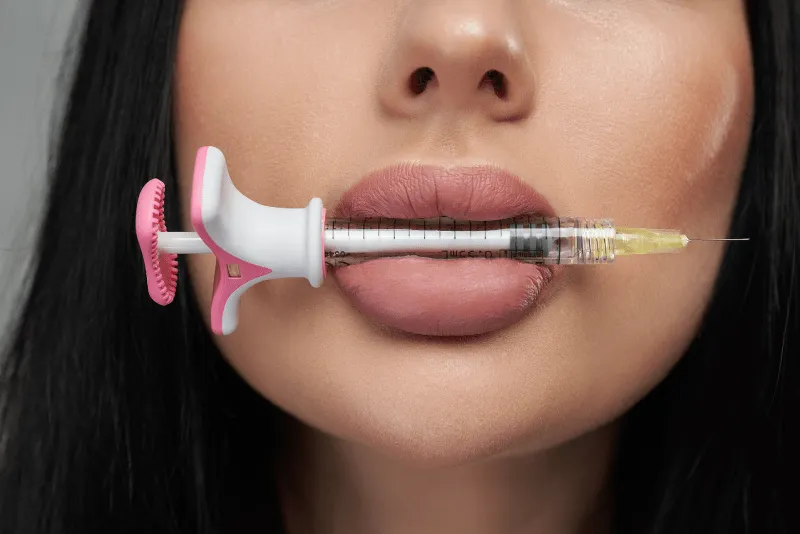
Small hardnesses or lumps felt in the first days after the procedure are usually caused by edema or the filler not yet integrating with the tissue. Most of the time, it passes by itself within 1-2 weeks. However, if there are lumps that do not pass and are obvious from the outside, this situation may indicate that the injection was made too superficially or that the body is reacting in that area. In this case, your doctor can easily correct the situation by intervening with light massages or hyaluronidase.
What Is The Best Age For Permanent Lip Augmentation?
There is no single answer to this because needs vary from person to person. While younger patients generally apply with complaints of structural thin lips (genetic), middle-aged and elderly patients come with complaints of volume loss and lip lengthening due to aging. Although surgical procedures such as lip lifts are generally more frequently preferred from the late 30s onwards, they are also successfully applied to younger patients with structural problems. What matters is not the age, but that the facial anatomy is developed and expectations are realistic.
Are Revision Surgeries Possible In Lip Aesthetics?
If a previous lip operation (such as a lip lift) was not satisfactory or if an excessive procedure was performed, revision surgery is possible. However, revisions are always more complex than the first surgery because it is necessary to work with existing scar tissue. In filler-related problems, revision is much easier; the filler is dissolved and after waiting for a while, the application is redone with the correct technique. In any kind of aesthetic intervention, starting with the philosophy of “less is more” minimizes the need for revision.
Why Is Sun Protection Critical After Lip Aesthetics?
Sun rays can cause permanent darkening (hyperpigmentation) of especially surgical incision scars (such as lip lift scars). Fresh wound tissue is very sensitive to the sun. For those who have fillers, extreme heat and UV rays can lead to slightly faster breakdown of hyaluronic acid. Therefore, using high-factor sunscreen creams when going out after an operation or procedure, or protecting the face with wide-brimmed hats, directly affects the quality of the aesthetic result.
In Which Cases Is Lip Aesthetics Not Performed?
In those with active herpes infection, those with open wounds in the lip area, those with blood clotting disorders, or women during pregnancy/breastfeeding, lip aesthetics applications are usually postponed. Also, surgical procedures can be risky in uncontrolled diabetes patients as the healing process can be very slow. Most importantly, it is not considered ethically appropriate to perform procedures on people with body dysmorphic disorder or who have unrealistic expectations.
What Are The Types Of Anesthesia In Lip Operations?
Lip filling is done only with local anesthetic creams. The lip lift operation can usually be performed under local anesthesia, only by numbing the lip area; the patient is awake but feels nothing. In more complicated cases or when the patient is excited, “sedation” (half-sleep state) or rarely general anesthesia may be preferred. In fat transfer, the type of anesthesia may change depending on the region where the fat will be taken. Thanks to modern anesthesia methods, these procedures pass extremely comfortably.
What Are The Future Trends In Lip Aesthetics?
Now, “exaggerated and fake” looks are giving way to completely “personalized and natural” looks. With the development of technology, work is being done on fillers that last longer and surgical stitching methods that leave fewer scars. Additionally, “light fillers” that increase the quality of the lip skin (brightness, smoothness) instead of just volume, and cell transfers produced with tissue engineering are candidates to be popular applications of the future. The main goal will always be to create the lip form that is most compatible with the person’s facial features.
Why Is Choosing A Physician Important In Permanent Lip Augmentation?
Lip aesthetics is a millimetric art. One millimeter of excess tissue removal or a filler made at the wrong point can disturb the entire balance of the face. Therefore, it is of vital importance to choose a plastic surgeon or medical aesthetic specialist who knows lip anatomy very well and has an advanced aesthetic perspective. Examining before-and-after photos of procedures your doctor has done before, questioning the quality of the materials used, and getting honest information about risks will protect you from disappointment. Remember, the reversal of permanent procedures is much more laborious.
Free Consultation
Fill out the form below to get your free medical travel plan and price quote.
Sources and how to verify this yourself
- Ministry of Health, Regulation on International Health Tourism and Tourist Health, Official Gazette 26 April 2025, No. 32882 — authorisation requirement for facilities and intermediaries, TÜSKA accreditation, compulsory complication insurance (deadline 31 December 2025 for insurance, 31 December 2026 for accreditation). source
- Ministry of Health, Regulation on Promotion and Information Activities in Health Services, Official Gazette 12 November 2025, No. 33075 — treatment promises and guarantees are prohibited; price and campaign announcements are permitted only within international health tourism. source