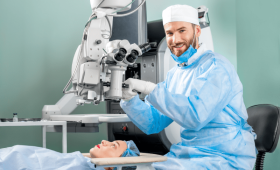
With the aging process, the production of collagen and elastin in the skin decreases, leading to sagging and wrinkles under the influence of gravity. Traditionally, the solution to these problems has been surgical facelift operations; however, today, many people are turning to less invasive methods with short recovery periods. The French Lift is one of the most popular applications in the world of non-surgical aesthetics, stepping in right at this point. The natural appearance and long-lasting effects provided by this method have placed it at the center of modern anti-aging treatments. In this guide, we will examine everything you wonder about the French Lift in the finest detail.
What is the French lift method and how did it originate?
The French Lift is a non-surgical facelift and suspension procedure developed in France, using flexible threads made of polyester on the inside and silicone on the outside. This method is specifically designed to eliminate sagging that occurs with age and to reshape facial contours. Unlike traditional thread lifts, the flexible structure of the threads used ensures full harmony with facial expressions and does not create a dull expression on the face. These threads, developed as a result of years of biomedical research, have become a preferred standard by plastic surgeons and medical aesthetic specialists all over the world due to their full compatibility with the human body and their long-lasting permanence.
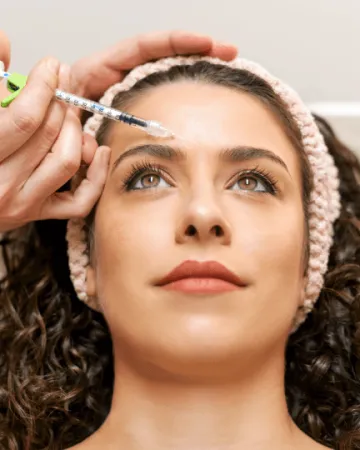
What are the characteristics of the threads used in French lift?
The threads used in this technique have a special structure known for their durability and flexibility. The inner part of the threads contains high-strength polyester, while the outer part contains medical-grade silicone compatible with the tissue. This combination ensures that the thread is both resistant to breaking and can move naturally under the skin. Small barbs or cone-like structures on the threads firmly grip the tissue when placed under the skin and create a lifting effect upwards. The silicone surface is smooth, which minimizes the risk of infection while keeping the tissue reaction at the lowest level in the long term.
In which areas does this method provide the most effective results?
The French Lift can be successfully applied to many different areas across the face, but its effect is much more pronounced in certain areas. It gives excellent results especially in eliminating nasolabial lines (grooves on the sides of the nose), recovery of sagging in the cheeks, and sharpening the jawline. It is also frequently preferred for brow lifting, eliminating neck sagging, and highlighting the cheekbones. The tension force of the threads helps the face regain its oval form while allowing sagging tissues to be moved back to their original anatomical positions.
Why should French lift be preferred for non-surgical face lifting?
The risks of surgical operations, such as general anesthesia, long recovery periods, and permanent scarring, can worry many patients. The French Lift is one of the rare methods that can offer results close to surgery without undergoing surgery. The fact that the procedure is performed only under local anesthesia, completed within about an hour, and offers a quick return to social life is a great advantage. Furthermore, thanks to the flexibility of the threads, the natural expression of the face is preserved; no “pulled” or “tense” artificiality occurs. The fact that its permanence is much longer than other absorbable threads (5-10 years) makes this method a cost-effective option.
Who is a suitable candidate for a French lift?
Ideal candidates for a French Lift are usually individuals between the ages of 35 and 60, whose skin sagging is at a beginning or moderate level. For individuals of very advanced age and whose excess skin is excessive, surgical facelift may be more appropriate; however, if these patients do not want surgery, it can also be used to provide mild improvement. Threads grip better in individuals whose skin quality is not very deteriorated and who have sufficient subcutaneous tissue. Additionally, anyone whose general health is good, who does not have blood clotting problems, and whose expectations from the procedure are realistic can benefit from this application.
What should be done during the pre-procedure preparation process?
The preparation phase for a successful French Lift operation is quite simple but requires care. It is recommended to stop blood-thinning supplements such as aspirin, vitamin E, and omega-3 at least one week before the procedure; this reduces the risk of bruising. Smoking and alcohol consumption should be restricted before the application as they slow down tissue healing and collagen synthesis. It is important that the face is thoroughly cleaned and no makeup is worn on the day of the application. If there is an active skin infection or cold sore (herpes), the procedure should be postponed until this situation passes. It is vital to state your existing diseases and the medications you use in the preliminary interview with your specialist doctor.
How is the French lift application performed step by step?
The procedure process primarily begins with the sterilization and marking of the areas where the application will be made. The doctor makes drawings on the face to determine the entry and exit points of the threads and the direction of stretching. Then, local anesthesia is injected into the application areas, so the patient feels no pain during the procedure. With the help of cannulas, the threads are placed into the fat tissue under the skin. The threads are suspended from fixed points in the scalp or areas close to the bone tissue. After the desired stretching effect is achieved, the cannulas are removed and the ends of the threads are hidden under the skin. No stitches are required at the end of the procedure, and only small tapes are applied to the entry points.
What type of anesthesia method is used during the application?
The French Lift operation is generally performed under local anesthesia. This means that the patient is awake throughout the procedure but feels no pain in the application area. The anesthetic solution is given under the skin along the line where the threads will pass, and this process only takes a few minutes. For patients who are very anxious or have a low pain threshold, a light sleep state called “sedation” can also be added, but for most cases, only local numbing is sufficient. In this way, the risks of general anesthesia are avoided and the patient can leave the clinic on their own as soon as the procedure is over.
How long does the French lift operation take?
The French Lift is a procedure that takes quite a short time thanks to the speed and efficiency provided by modern medicine. Although the duration can vary depending on the number of threads applied and the extent of the sagging on the face, a standard face lifting procedure is completed in approximately 45 to 60 minutes. If additional areas such as the neck or eyebrows are included in the process, this period can extend up to 90 minutes. It is sufficient to allocate a total time period of 1.5 – 2 hours along with the preparation and anesthesia stages. Although this shortness leads to the method being called a “lunchtime procedure,” the subsequent rest process should not be neglected.
Is any pain or discomfort felt after the procedure?
When the effect of the anesthesia begins to pass, it is quite normal to feel a slight fullness, tension, and sensitivity in the application area. However, this situation is usually not at an unbearable level of pain. Most patients get through this process comfortably with simple painkillers prescribed by the doctor. There may be slight stings when chewing or laughing for the first few days because the threads are newly attaching to the tissue. Severe pain is not expected; if such a situation is experienced, the physician who performed the application must be consulted. In general, 90% of patients describe the pain level as “quite low.”
How many days does the healing process take?
The healing process after a French Lift is extremely fast compared to surgical operations. Slight swelling (edema) and rarely small bruises can be seen during the first 2-3 days. Most patients can return to their social lives with light makeup from the 3rd day. It takes approximately 2 to 4 weeks for the threads under the skin to fully settle and integrate with the tissue. During this process, facial contours gradually gain a more natural form. When full recovery is achieved, the presence of the threads is not felt, and no signs are seen from the outside. Fast recovery makes this technique attractive for individuals with a busy work pace.
When do the results start to be fully visible?
One of the most satisfying aspects of the French Lift is that the result can be seen in the mirror as soon as the procedure is over. The lifting effect occurs immediately, and the sagging on the face is recovered right away. However, this first image may look a bit “too tense” due to the anesthetic fluids used and mild edema. The real and most natural result becomes clear at the end of the 4th week, when the edema has completely dissipated and the tissue has synthesized new collagen around the threads. From the 3rd month onwards, with the increase in the quality of the skin, the face attains a much more radiant, lively, and youthful appearance.
How long does the effect of the French lift last?
The permanence of this method stems from the non-absorbable structure of the threads used. While classic thread lifts are usually melted by the body within 1-2 years, the polyester-silicone threads used in the French Lift stay under the tissue for years. Depending on the patient’s lifestyle, skin quality, and aging rate, the effects generally continue for between 5 and 10 years. Even if the threads stay there, the aging process does not stop; however, the person always has a younger and more vigorous face compared to their peers. If necessary, the continuity of the effect can be ensured by re-tightening the existing threads or adding new threads years later.
How can edema and swelling be reduced after the procedure?
To minimize the edema that may occur after the application, it is recommended to apply cold compresses (ice application) intermittently for the first 24-48 hours. Care should be taken that the ice does not come into direct contact with the skin and is applied over a cheesecloth or cloth. Additionally, keeping the head elevated (with double pillows) for the first few nights prevents fluid accumulation. Edema-relieving creams or herbal supplements (such as arnica) recommended by the doctor can speed up the process. Consuming plenty of water and avoiding salty foods also help the body throw off excess fluid. Generally, most of the edema dissipates spontaneously after the 5th day.
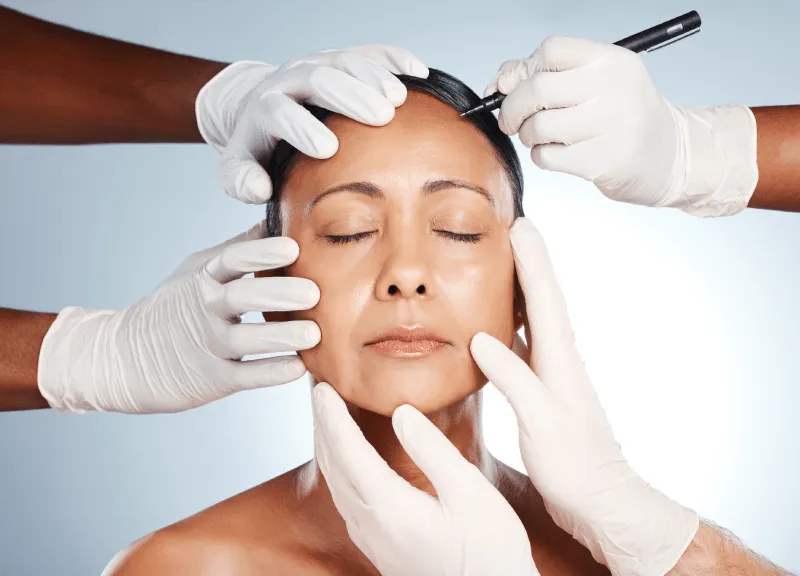
Is there any loss in facial expressions?
The most important technological difference of the French Lift is the flexible structure of the threads. These threads work like a “spring,” adapting to facial movements. For this reason, it does not freeze the muscles like botox or lock the skin to a fixed place like surgical stretching. When the patient laughs, speaks, or uses their expressions, the threads stretch along with the tissue and then return to their original position. In this way, the risk of a “dull face” expression is completely eliminated. Threads placed with the correct angle move only to their positions in youth without disturbing the natural anatomy. Therefore, a loss of expression is not in question in this technique.
When can one return to daily life?
The return to social life after a French Lift varies from patient to patient, but it is usually very short. Those working in a desk job can return to their work even the day after the operation. However, it usually takes until the 3rd or 4th day for the slight swellings on the face to completely go down and for the person to feel comfortable enough to “go on screen.” If there is an organization such as an important invitation or a wedding, it is safer to plan the procedure at least 2 weeks in advance in terms of the complete passage of possible small bruises. This method is ideal for men and women in the modern business world because it does not require long leaves.
What are the differences between classic facelift surgery and this method?
Classic facelift is a surgical procedure; it involves cutting the skin, removing sagging tissues, and stitching the excess skin. This surgery requires general anesthesia and can leave permanent stitch scars in front of/behind the ear. In the French Lift, no incision is made, only needle holes are entered. While the healing process in surgery takes weeks or even months, in the suspension method, it is a few days. The surgical method can offer a more radical change and 15-20 years of permanence, but its risks and cost are much higher. The French Lift is in the form of a middle way for people who are afraid of the surgery table but want effective rejuvenation.
Are the threads used absorbed by the body?
The fundamental difference that distinguishes the French Lift technique from other thread applications (such as PDO or PLA threads) is that the threads are non-absorbable. These threads fall into the “permanent” class medically. The body does not melt these threads; instead, it surrounds the threads with a thin connective tissue, making them a part of the tissue. This “fibrosis” process is actually a natural skeleton duty that increases the success of the procedure. The fact that the threads are not absorbed significantly extends the time for sagging to reoccur. If the patient wants to have a full facelift surgery in the future, these threads can be easily removed by the surgeon.
Is there a risk of allergic reaction?
The outer surface of the threads used in the French Lift is made of medical silicone. Silicone is one of the most tissue-friendly materials used in a very wide field from prosthetics to catheters in the medical world. The combination of pure silicone and polyester is biologically inert, meaning the probability of it causing an inflammation or an allergic reaction in the body is extremely low. In the cases reported so far, a real allergic reaction has almost never been encountered. However, for people who have very sensitive bodies, it is possible to test in a small area before the application or for the doctor to evaluate in this direction.
How effective is this method for eyebrow lifting?
The French Lift is quite popular in the process of pulling the gaze upwards, known as “Cat eyes” or “Fox eyes.” The fact that the outer parts of the eyebrows are sagging can make the person look more tired and older than they are. With French Lift threads, the eyebrow tip is suspended upwards and sideways, creating a much more dynamic and youthful expression around the eyes. It provides a much more permanent and distinct lift compared to other methods (botox or temporary threads). Since the skin in the eyebrow area is thin, expertise and sensitivity are very important here; threads placed at the correct depth create a non-surgical brow lift effect.
Is it used for sagging in the neck area?
The neck area is one of the areas where signs of aging are seen earliest and treatment is most difficult. The French Lift is an effective tool for recovering looseness in the neck skin and the formation of a “jowl.” By suspending the threads to fixed tissues behind the ear, the neck skin is stretched upwards. In this way, the sub-mandibular line becomes clearer and the “turkey neck” appearance decreases. Usually, not as many threads are used in neck applications as on the face, but the gripping power of the selected threads is high. The neck lift especially improves the profile image (side view) dramatically and adds an integrated rejuvenation to the face.
How is jawline definition performed?
A strong and clear jawline is a symbol of youth and attractiveness. With age, cheek tissues displace downwards, causing the jawline to flatten and saggings called “jowls” to occur. French Lift threads carry this sagging cheek tissue back towards the elmacık bones, stretching the skin over the jawbone. This mechanical pulling provides a non-surgical jawline definition. When done together with filler applications, both the loss of volume is eliminated and a perfect V-shaped facial line is obtained as the sagging is suspended. This procedure gives a thinner and more vigorous appearance by carrying the weight in the lower part of the face upwards.
When can makeup be applied after the procedure?
After the French Lift, very small holes occur at the entry points of the threads. To close these micro-channels and eliminate the risk of infection, it is usually recommended not to wear makeup for the first 24 to 48 hours. From the second day onwards, if there is no active bleeding or open wound at the entry sites, light makeup can be made with mineral-containing products that are easy to clean. However, it is necessary to avoid rubbing the face hard while applying and cleaning makeup. For the first week, one should stay away from pressurized cleaning movements that will pull the face downwards, and gentle upward touches should always be preferred.
What should the sleeping position be?
The sleeping position for the first 2 weeks after the procedure is of vital importance. In order for the threads to firmly unite with the tissue, one should not lie face down or on the side during this process. Lying face down can cause the threads to move out of place or the stretching effect to decrease by applying direct pressure on the threads. The safest position is when the back is flat and the head is slightly high. It can be useful for patients to put supporting pillows on their sides to prevent them from turning unconsciously in their sleep. After about 1 month, since the threads are completely integrated with the tissue, the person can return to sleeping in any position they wish.
Why is sun protection important?
As in all aesthetic interventions, sun protection after the French Lift affects the quality of healing. Especially if micro-wounds at the entry points of the threads are exposed to sunlight (UV) while healing, permanent brown spots called “post-inflammatory hyperpigmentation” may occur in these areas. Additionally, excessive heat can cause an increase in edema and sensitivity of the skin. For the first 2 weeks, high-protection sunscreens (SPF 50+) should be used and the face should be shaded with wide-brimmed hats. Avoiding intense heat sources such as solariums for at least 1 month is necessary for the healing of the tissue around the threads.
When can sports and exercise be performed?
Activities that increase body temperature and raise blood pressure should be avoided for a while after the operation. Carrying heavy loads, bending down, or doing intense cardio during the first 1 week can increase edema. From the 10th day onwards, light-paced walks can be started. However, at least 1 month should be waited for sports that will strain the facial muscles too much, carry a risk of impact, or require excessive effort (boxing, weightlifting, intense yoga, etc.). Excessive sweating that may occur during sports can also disturb the sterilization at the entry points. Being patient and giving the body time to heal guarantees the permanence of the result obtained.
How are French lift prices determined?
French Lift pricing varies depending on many factors. The most decisive criterion is the number of threads to be used during the operation; usually, a total of 4-6 threads are used, 2 or 3 on each side. However, if sagging is excessive, this number can increase. Additionally, the experience of the physician performing the application, the equipment of the clinic, and the brand/quality of the threads used affect the cost. The cost of original French-origin threads is higher than other imitation or products from different countries. The price becomes clear after the examination performed in line with the needs of the patient; however, it should not be forgotten that this procedure offers permanence for many years.
What are the side effects and how do they pass?
Although the French Lift is a safe procedure, it has some side effects like every medical intervention. The most common ones are slight swelling, bruising, and small scabbing at the needle entry sites. These usually pass on their own within a week. Sometimes “dimpling” or “rippling” can be seen on the skin surface; this situation is caused by the threads being stretched too tightly or from edema and usually improves in 2-3 weeks when the tissue settles. In rare cases, problems such as infection or the feeling of the thread can be experienced; in such cases, antibiotic treatment or a small intervention by the physician on the thread is sufficient.
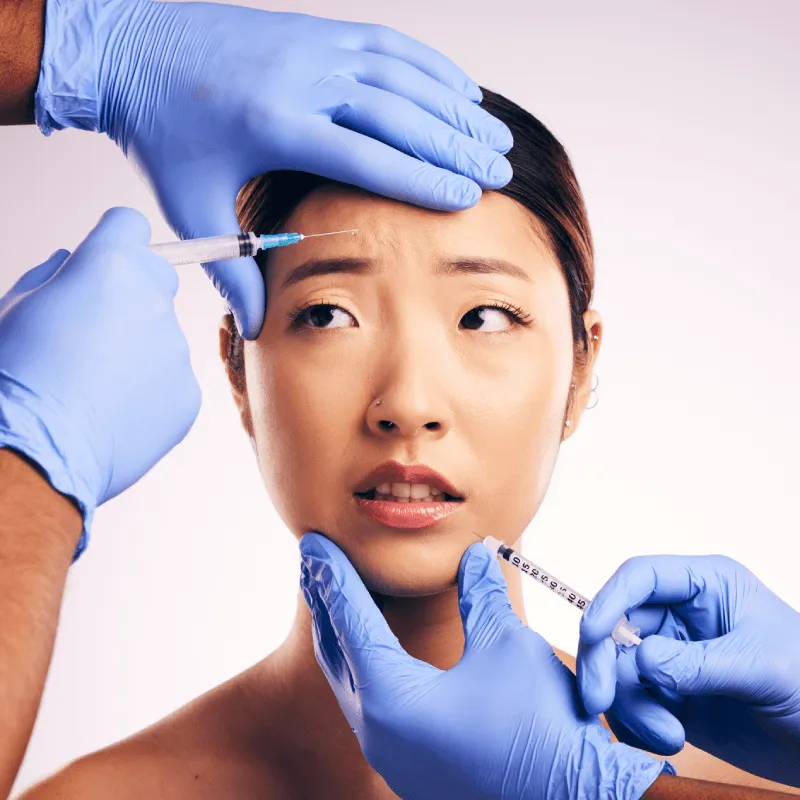
For whom is the application inconvenient?
The French Lift is not recommended in some health conditions. It should not be preferred in those with an active skin disease, immune system disorder, or uncontrolled diabetes (sugar disease) because tissue healing can be problematic. For women in the pregnancy and breastfeeding period, it is recommended to postpone the procedure. Additionally, it can be risky for patients who have blood clotting disorders or who have to use heavy blood thinners. It is also not appropriate to perform thread suspension in individuals receiving cancer treatment or who have damage due to radiotherapy on their skin. In any case, your doctor must comprehensively examine your general health history.
Can it be done together with fillers and botox?
When combined with other aesthetic applications, the French Lift creates a “total face rejuvenation” effect. While the suspension process carries sagging tissues upwards, dynamic wrinkles are eliminated with botox, and volume lost with age is regained with filler. This triple combination gives the results closest to surgery and the most natural results. It is usually recommended to perform filler and botox procedures about 2-4 weeks after the French Lift; so the edema on the face goes down and the points where the filler will be made are determined more correctly. Such combinations provide a chance to intervene in different dimensions of aging (sagging, wrinkles, volume loss) at the same time.
Does thread breakage or migration occur?
Original French Lift threads are extremely resistant to breaking thanks to their polyester cores; it is almost impossible for a person to break these threads with their own strength. However, “migration” (loss of grip) of the threads from their places can be experienced, albeit rarely, within the first few weeks. This situation usually occurs as a result of the patient not taking the doctor’s warnings into account and doing hard massage to the face, making very wide mouth movements, or having an accident. If one of the threads comes out of its gripping place, asymmetry may occur on the face. In such a case, the doctor can re-fix the thread with a small intervention or provide balance by adding a new thread.
Can the threads be removed if not satisfied?
One of the advantages of the French Lift is that the procedure is reversible. If the patient is not satisfied with the result or a complication develops, the threads can be surgically removed within weeks or even years after being placed. Since the threads are not absorbed, they maintain their integrity under the tissue. The removal process is performed with a small intervention made from the entry points. However, the collagen tissue (fibrosis) formed around the threads will ensure that the skin always remains tighter than before. The removal process requires expertise; therefore, it must definitely be performed by the physician who made the application.
Is it a suitable method for men?
The French Lift is also extremely popular among male patients. Since the skin structure of men is usually thicker and heavier, classic thread lifts can be insufficient in men; however, the strong carrying capacity of the French Lift is perfect for male cheek and jawline saggings. The biggest concern of men is to look “feminine” or “artificial”; this method preserves the masculine expression since it only eliminates sagging without disturbing anatomical lines. Thanks to the entry points hidden inside the scalp, no scars are seen even in short-haired men. It is the most preferred method to create a sharp jawline especially in men.
What should be considered for a natural look?
Naturalness is the signature of a successful French Lift. To obtain a natural look, the depth and angle at which the threads are placed are very critical. Threads should be neither too superficial (to not make a trace in the skin) nor too deep (to not damage nerves). Additionally, the same amount of stretching should not be applied to every face, and one should stay faithful to the person’s original bone and muscle structure. Little but essential intervention ensures avoiding the “over-stretched” image. The best result emerges as a result of the correct analysis of the patient’s anatomical needs with the artistic perspective of the doctor. It should not be forgotten that the best aesthetic is the one that is not obvious.
How should the doctor selection be when getting a French lift?
Although the French Lift seems like a simple procedure, it is actually a surgical skill that requires deep anatomy knowledge. It should be preferred that the person performing the application is a plastic surgeon or a dermatologist specialized in the field of medical aesthetics. Asking about the number of cases the doctor has performed before, and examining “before/after” photos if any, will give you confidence. Additionally, you should not hesitate to ask the brand and originality of the thread used. A good doctor will realistically evaluate your expectations and honestly tell you how much improvement can be provided. Trust and experience are the two most important keys in the success of aesthetic results.
Free Consultation
Fill out the form below to get your free medical travel plan and price quote.
Sources and how to verify this yourself
- Ministry of Health, Regulation on International Health Tourism and Tourist Health, Official Gazette 26 April 2025, No. 32882 — authorisation requirement for facilities and intermediaries, TÜSKA accreditation, compulsory complication insurance (deadline 31 December 2025 for insurance, 31 December 2026 for accreditation). source
- Ministry of Health, Regulation on Promotion and Information Activities in Health Services, Official Gazette 12 November 2025, No. 33075 — treatment promises and guarantees are prohibited; price and campaign announcements are permitted only within international health tourism. source