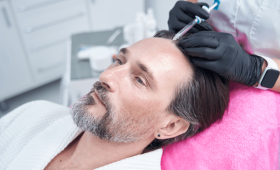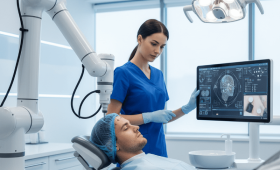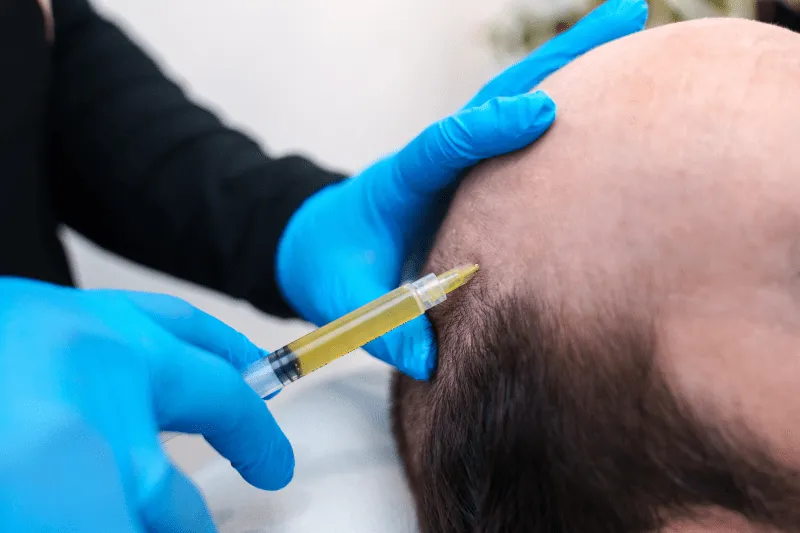
The Sapphire FUE technique is considered a revolutionary development in the modern hair transplant world. Built upon traditional methods, this technology is known for shortening the healing process and enhancing the naturalness of the results. Today, thousands of people experiencing hair loss problems prefer this advanced technology to resolve their aesthetic concerns and achieve permanent solutions. In this blog post, we will examine all the details, advantages, and processes of Sapphire FUE in the finest detail.
What is Sapphire FUE and why is it so popular?
Sapphire FUE is a hair transplantation method where hair follicles are collected individually from the donor area, and the channels in the recipient area are opened using blades made from sapphire, a precious gemstone. The popularity of this method stems from the smooth surface and antibacterial properties of the sapphire tips used. Using sapphire tips instead of metal slits (steel blades) minimizes tissue trauma, allowing for a much faster recovery after the operation. Additionally, since more frequent channels can be opened with sapphire tips, hair density can reach much more satisfactory levels.
What is the fundamental role of sapphire blades in hair transplantation?
Sapphire blades play a key role in the “channel opening” phase, which is the most critical stage of the operation. The success of a hair transplant depends on how precisely these channels are opened, as well as their correct angle and depth. Sapphire tips are much sharper and more durable than steel blades, allowing for microscopic holes to be opened in the scalp. This prevent damage to surrounding tissues while ensuring that the transplanted hair follicles integrate with the tissue more quickly. Thanks to sapphire technology, surgeons can work with artistic precision to replicate the patient’s natural hair direction exactly.
What are the differences between metal blades and sapphire blades?
Steel blades used in the traditional FUE method can lose their sharpness over time, leading to tissue trauma during channel opening. Sapphire tips, due to their crystalline structure, are smooth and maintain their sharpness throughout the operation. While channels opened with metal blades are often wider and more irregular, channels opened with sapphire tips are exactly the size of the hair follicle (graft). This precision reduces scarring to almost zero. Furthermore, sapphire tips are hypoallergenic, offering a much safer alternative for individuals with metal allergies.
How is the Sapphire FUE technique applied step by step?
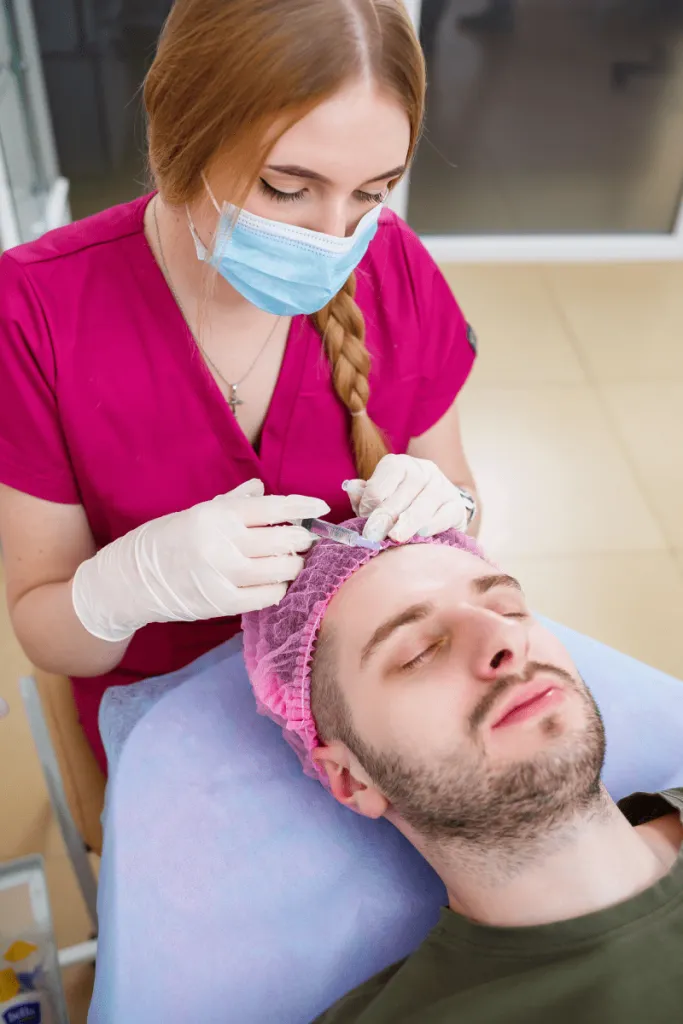
The operation process primarily begins with analyzing the patient’s hair structure and donor area. In the first stage, the area where the grafts will be taken is numbed with local anesthesia, and hair follicles are collected one by one using micro-motor devices. In the second and most important stage, the channel opening process, sapphire blades come into play. In line with the determined design, micro-channels are opened at angles suitable for the natural growth direction of the hair. In the final stage, the collected grafts are meticulously placed into these opened channels. All these steps are completed within an average of 6 to 8 hours under modern clinic conditions by an expert team.
Why does this technique speed up the healing process so much?
The biggest advantage of Sapphire FUE is that the trauma caused to the scalp is at a minimum level. The micro-channels opened with sapphire tips are much smaller than the width created by steel blades. The body can close and heal these small incisions much faster. The crusting process seen after the operation is usually completed within 7-10 days in cases where sapphire tips are used. Additionally, because tissue integrity is preserved, the risk of edema and bruising is significantly reduced. Patients can return to their daily lives in a much shorter time compared to traditional methods.
How is a natural appearance achieved in hair transplantation?
Naturalness is the most important criterion determining the success of a hair transplant. Sapphire tips give the surgeon the freedom to open the channels exactly according to the natural growth angle of the hair (approximately 40-45 degrees). The fact that the channels are very small allows the grafts to fit perfectly into these holes, eliminating the possibility of the hair growing vertically or in the wrong direction. Furthermore, thanks to the sharpness of sapphire tips, very dense transplantation can be performed in the frontal hairline area. This thickening process ensures that the hair grows densely and naturally, as if it had never fallen out, producing an aesthetic result.
Who is suitable for the Sapphire FUE technique?
Sapphire FUE is a suitable method for almost any individual over the age of 18 whose hair loss process has stabilized. It is especially ideal for those experiencing intense hair loss and those who want a thicker and more lush hair appearance. Additionally, individuals with sensitive skin or metal allergies can benefit from the biocompatible structure of sapphire tips. Anyone with a sufficient amount of healthy hair follicles in their donor area (usually the nape of the neck) is a candidate for this operation. Expert doctors apply this technique safely to individuals who do not have chronic diseases and whose general health status is good.
What should the pre-operative preparation process be like?
The preparation phase is quite critical for a successful Sapphire FUE operation. Alcohol consumption and blood-thinning medications (aspirin, etc.) should be stopped at least one week before the operation. Since smoking negatively affects tissue healing and the attachment of hair follicles, it should be paused before and after the operation if possible. Patients should prefer comfortable clothes (such as a button-down shirt) on the day of the operation. It is recommended to have a light breakfast on the morning of the operation. Since the hair will be washed in the operation area, no special preparation is required, but it is important that the hair is free from chemical products.
Why is sapphire preferred during the channel opening stage?
The most important reason for choosing sapphire tips is the smoothness that its crystallized structure provides to the surgical procedure. Sapphire tips that come into contact with the scalp during channel opening reduce frictional resistance to the tissue. This means that vibration is reduced to a minimum. Reduced vibration ensures that the edges of the sockets (channels) where the hair follicles will be placed remain smooth. Smooth channel walls increase the contact of the grafts with the tissue and help blood flow reach the transplanted follicles faster. As a result, the “retention” rate of the transplanted hair, i.e., the success percentage, reaches its peak with Sapphire FUE.
Is the Sapphire FUE operation a painful procedure?
As technology advances, the level of comfort in hair transplantation has also increased. The Sapphire FUE operation is performed entirely under local anesthesia. In this way, the patient does not feel any pain or ache during the procedure. In fact, today, “needle-free anesthesia” techniques are used to eliminate the initial stinging sensation during the anesthesia injection. After the operation, there may be a slight tingling sensation, but this can be easily controlled with simple painkillers. Most patients can watch movies or read books during the operation, which proves how comfortable the procedure is.
What should be considered in the first 24 hours after the procedure?
The first 24 hours after the operation is the most critical period when the grafts start to attach to their new places. During this process, the transplanted area must definitely not come into contact with anything. As a sleeping position, it is recommended to keep the head at a high 45-degree angle and lie on the back; this helps prevent edema formation. Heavy physical activities should be avoided on the day of the operation, and the focus should be on resting. Additionally, the medications given by the doctor should be used regularly, and water should not touch the transplant area until applying to the clinic for the first wash.
How are hair follicles protected with sapphire tips?
Maintaining the vitality of the hair follicles (grafts) is vital for the success of the transplant. In the Sapphire FUE technique, since the channels are opened in full compatibility with the size of the grafts, the risk of the follicles moving or shifting within the channel decreases. This tight fit ensures that the blood supply required by the follicles occurs faster. Additionally, since the operation time is used more efficiently thanks to sapphire tips, the risk of the grafts waiting outside undergoing dehydration (losing water) is minimized. The smooth surface created by sapphire tips allows the follicles to be placed into the channels without being exposed to trauma.
How does the scabbing process pass after Sapphire FUE?
Small scabs begin to form on the scalp on the 2nd or 3rd day after the operation. This is a natural result of the skin’s healing mechanism. In Sapphire FUE, these scabs are usually much thinner and smaller. Thanks to the special medical washes performed during the first 10 days, these scabs are softened and ensured to shed. At the end of the 10th day, all scabs usually have shed, and the scalp regains its normal appearance. It is very important that patients do not pick these scabs with their fingernails during this process and only follow the washing instructions by massaging lightly with their fingertips.
What happens during the shock loss phase?
The “shock loss” phase, experienced by almost everyone who has a hair transplant, starts from the 2nd week after the operation and can last up to the 2nd month. In this phase, the transplanted hair strands fall out, but the hair follicles remain under the skin. This situation is temporary and a natural part of the process. After shock loss ends, the follicles emerge from the resting phase and start producing new and permanent hair. Since tissue damage is low in the Sapphire FUE technique, this phase is usually overcome more smoothly. Patients should not lose their morale during this period and should wait patiently for the new hair to grow.
When do Sapphire FUE results start to be seen?
Hair transplantation is a process that requires patience. After the shock loss phase, i.e., about 3-4 months after the operation, new hair starts to emerge slowly on the surface. Around the 6th month, about 50%-60% of the hair has grown, and results become evident. Thanks to the high retention rate provided by Sapphire FUE, final results are reached at the end of the 12th month. In some cases, especially in the crown (vertex) area, it may take 18 months to see full results. At the end of this period, the hair reaches the desired density and natural form, restoring the person’s self-confidence.
What is the permanence of Sapphire FUE?
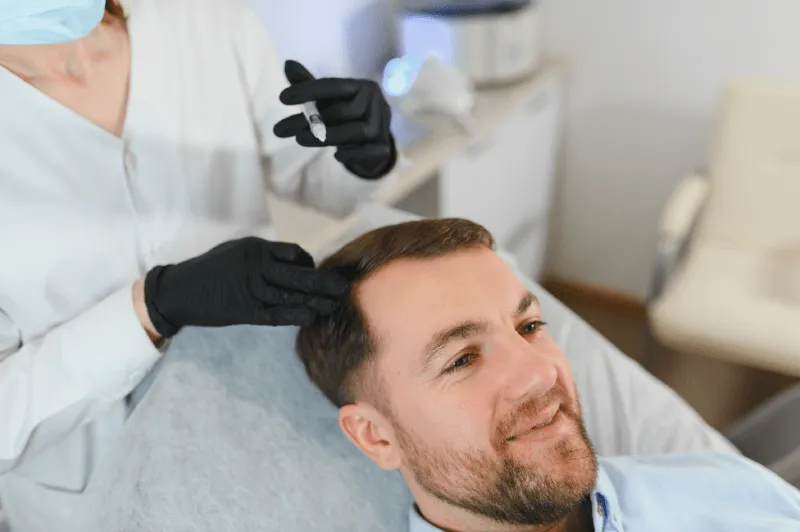
Hair transplanted with the Sapphire FUE method is permanent for life. The reason for this is that the grafts are taken from the nape area, which is called the “safe zone” and is genetically resistant to hair loss. These follicles retain their non-shedding characteristics even when they are transferred to their new places. However, a natural thinning of the hair may be seen in every person with the aging process. The result obtained with Sapphire FUE accompanies the person for the rest of their life when supported by correct care and a healthy lifestyle. This makes the method the most logical and permanent investment.
What can be the maximum number of grafts with this technique?
The Sapphire FUE technique allows for quite high numbers of grafts to be transplanted in a single session. Depending on the capacity of the patient’s donor area, it is possible to perform transplantation between 4000 and 5000 grafts in one session. The precision provided by sapphire tips allows the channels to be opened very close to each other, so the number of hair per square centimeter (density) can be increased. However, the important thing here is not just the number of grafts, but making a balanced distribution by protecting the donor area. Expert doctors determine the most ideal number of grafts according to the patient’s needs and achieve a homogeneous appearance.
Do sapphire tips reduce the risk of infection?
Yes, the use of sapphire tips is one of the most important factors minimizing the risk of infection. Sapphire has a smooth and non-porous surface by nature. This structure makes it difficult for microorganisms to accumulate or attach to it. Additionally, sapphire tips are used as special apparatus sterilized for each operation. Surface irregularities that can be seen in metal tips are not present in sapphire, which allows for cleaner and sharper channels to be opened in the skin during the operation. The fact that tissue healing occurs very quickly also reduces the chance of infection as it shortens the time the wound stays open to the external environment.
How are edema and swelling prevented?
It is normal to see slight swelling (edema) in the head area and sometimes around the forehead after the operation. Since tissue trauma is low in the Sapphire FUE method, edema usually remains very limited. To prevent edema, it is vital to consume plenty of water for the first 3 days, reduce salt use, and keep the head upright. In some clinics, a special headband is given to the patient after the operation; this band prevents the fluid from descending down (around the eyes). Additionally, making a short-term ice compress with the doctor’s recommendation also helps the edema to dissipate quickly.
How is washing done after hair transplantation?
The first wash is usually done by experts in the clinic 48-72 hours after the operation. The aim of this wash is to soften the scabs with the help of a softening lotion and to clean the transplant area. While the patient is washing at home, they should apply the shampoo with light touches by foaming it in their hand instead of pouring it directly onto the transplant area. Definitely no rubbing or scratching should be done. During rinsing, care should be taken that the water is not pressurized and is lukewarm. If a hairdryer is to be used, it should be kept on the cold mode and from a distance. This washing routine continues until the scabs have completely shed (about 10 days).
What are Sapphire FUE prices determined by?
Sapphire FUE prices can vary depending on many variables. The most important criteria are the experience of the team performing the operation, the equipment of the clinic, and the quality of the sapphire tips used. Additionally, the number of grafts to be transplanted is among the factors affecting the cost. The fact that sapphire tips are a more costly technology compared to steel blades can push the price of this method slightly higher than classic FUE. However, considering the comfort, fast recovery, and natural results it offers, the satisfaction it provides in the long run shows that this difference is much more valuable. Since every patient’s needs are different, pricing usually becomes clear after a personalized planning.
What are the advantages of having Sapphire FUE in Turkey?
Turkey, especially Istanbul, is accepted as the world capital of hair transplantation. It is one of the leading countries where Sapphire FUE technology is most widely and successfully applied. Surgeons in Turkey have experience in tens of thousands of cases in the Sapphire FUE method. Additionally, the technological infrastructure is at world standards. For foreign patients, Turkey offers the advantage of receiving high-quality service at affordable prices, as well as benefiting from health tourism opportunities such as accommodation, transfer, and guidance. The fact that successful results are known worldwide has made Turkey the most reliable address for Sapphire FUE.
How is the donor area selected?
Donor area selection in a Sapphire FUE operation is critical for the success and permanence of the result. Usually, the area between the two ears and the nape area is preferred as the donor area. Hair follicles in this area are insensitive to the DHT (dihydrotestosterone) hormone, meaning they do not fall out. If the hair density in the nape area is insufficient, the sub-mandibular beard area or chest hair can also be evaluated as donor sources. However, the most natural look is always achieved with the hair on the scalp. Experts perform a homogeneous harvest while collecting grafts from the donor area, ensuring that no appearance of thinning or gaps occurs in the nape area after the operation.
Why is hairline design important?
The hairline is the most important aesthetic element determining a person’s facial expression and age. In the Sapphire FUE technique, very detailed hairline design can be done thanks to the micro-precision provided by sapphire tips. A natural hairline is not straight; it should have slight indentations and protrusions, and the angle of the hair should follow a flow towards the sides, not just straight forward. In the design stage, the patient’s age, facial bone structure, and shedding type are taken into account. Sapphire tips allow for single grafts to be transplanted with great care even to the outermost points of this designed line, producing a result that “doesn’t look like a transplant.”
Can eyebrow transplantation be done with Sapphire FUE?
The Sapphire FUE technique is successfully applied not only in hair loss but also in more sensitive areas such as eyebrow and beard transplantation. The biggest challenge in eyebrow transplantation is that eyebrows grow at very parallel and sharp angles to the skin. Sapphire tips are so thin and sharp that it becomes much easier to catch these narrow angles of the eyebrows. Additionally, since the skin in the eyebrow area is very thin, the tissue-friendly structure of sapphire tips reduces the risk of swelling and bruising. Eyebrow transplants performed with Sapphire FUE provide a much more natural and permanent solution for fallen or “resentful” eyebrows, reshaping the person’s gaze.
Is beard-to-hair transplantation possible with sapphire tips?
If the patient’s donor capacity in the nape area is not sufficient, the beard area is a great alternative donor area. Beard follicles under the chin are structurally similar to hair strands and are resistant to shedding. Roots taken from the beard with the Sapphire FUE method are frequently used to fill the gaps in the crown (vertex) area of the hair. When harvesting is done from the beard, the risk of scarring is minimized with sapphire tips. The transplanted beard follicles adapt to the characteristics of the hair where they are transplanted over time. This method is an important example showing the flexibility of Sapphire FUE and how it can give successful results even in difficult cases.
What are the anesthesia methods during the operation?
Different anesthesia methods can be applied to increase comfort in Sapphire FUE operations. Standard local anesthesia is the process of numbing with thin needles into the scalp. However, for patients with a fear of needles, “sedation” supported anesthesia or “pressurized (needle-free) anesthesia” options are available. In the sedation method, the patient passes into a light sleep state and does not remember the beginning of the procedure at all. Needle-free anesthesia devices, on the other hand, eliminate the feeling of a needle sting by spraying the numbing liquid under the skin with high pressure. Thanks to these methods, the patient can rest without feeling any discomfort throughout the operation.
What should nutrition be like during the recovery period?
Nutrition is an important aid for the nourishment of newly transplanted hair follicles and tissue repair. Eating a protein-rich diet during the recovery period supports the body’s collagen production, allowing wounds to close faster. Additionally, vitamins B, C, and E, and Zinc and Iron minerals are critical for hair health. Especially Biotin (vitamin B7) supplementation can help the new hair to be stronger and higher quality. Plenty of water consumption is necessary for the removal of medications used after the operation from the body and for maintaining the moisture balance of the skin. Avoiding processed foods and excessive sugar during this process positively affects general health and hair follicle vitality.
When can sports be done after Sapphire FUE?
Physical activities after the operation should be started gradually. For the first 1 week, all kinds of heavy movements that will increase blood pressure and sweating should be avoided; sweating can increase the risk of infection and make it difficult for grafts to attach. After the 10th day, light-paced walks can be started. At least 1 month should be waited for heavy sports such as weightlifting, fitness, or football, and contact sports. Since pool and sea water contain chlorine and salt, they can damage the transplant area; therefore, it is recommended to wait about 1 month after the operation to swim. Acting patiently is critical not to risk the health of the hair.
How do smoking and alcohol affect healing?
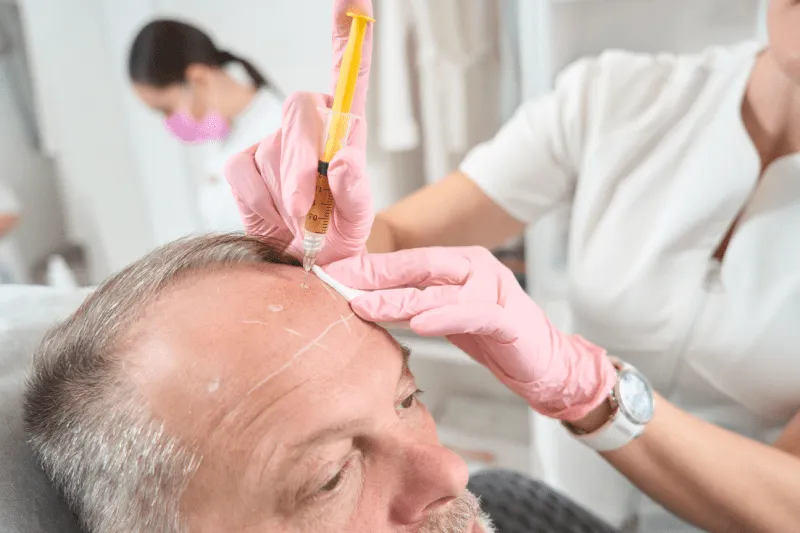
Smoking and alcohol consumption are factors that directly threaten the success of a Sapphire FUE operation. Smoking slows down blood circulation by lowering the oxygen level in the blood. This situation can lead to the transplanted hair follicles not receiving enough oxygen and nutrients, and thus dying. Additionally, smoking increases the risk of infection by delaying wound healing. Alcohol, on the other hand, can increase the risk of bleeding during and after the operation by thinning the blood, and can also tire the liver by interacting with the medications used. For the best results, it is strongly recommended to stay away from these habits at least one week before and after the operation.
Why is it necessary to be protected from sunlight?
The skin in the transplanted area is quite sensitive and vulnerable after the operation. Being exposed to direct sunlight (UV rays) can lead to permanent pigmentation (color change) spots on the healing tissue. Additionally, sun heat can cause sweating, making it difficult for grafts to attach. For the first month, it is recommended to use a cotton and wide hat that does not squeeze the scalp when going outside. This hat both protects from the sun and preserves the transplant area from dust and external factors. After the 3rd month, when the skin returns to normal, the need for sun protection drops to standard levels.
Do sapphire tips have any harm to the skin?
Sapphire tips are produced from a completely natural element and are 100% biologically compatible with the body. It does not show any reaction even in individuals with metal allergies. Since the surface of sapphire tips is smooth, it does not cause tissue fragmentation but a gentle separation of the tissue. This situation allows the scalp to maintain its elasticity after the operation. In transplants performed using sapphire tips, undesirable conditions such as “pitting” or “scarring” are not seen in the transplanted area when healing is complete. In short, sapphire tips, far from harming the skin, are the technology that best protects the health and integrity of the skin.
How is hair density increased with sapphire tips?
In the Sapphire FUE technique, the channel opening process is done with much thinner tips, so the number of channels opened per square centimeter is much higher than classic methods. While in classic FUE, transplanting grafts very close to each other is limited because it carries the risk of disrupting circulation; in Sapphire FUE, grafts can be placed very close to each other (with high density) as tissue damage is low. This ensures that the hair looks much thicker and more lush. Especially for patients with thin hair, sapphire tips allow for new channels to be opened without damaging surrounding follicles by entering between existing hair.
How is the Sapphire FUE application performed in women?
Female pattern hair loss usually follows a different course than that of men and can spread across the entire scalp. Sapphire FUE application in women is usually preferred as “unshaven.” Only a small area in the donor region is shaved to collect follicles, and channels are opened between the hair in the transplant area without shaving. The thinness of sapphire tips is perfect for entering between long hair and performing precise work. Since aesthetic concerns can be higher in women, the non-scarring structure of sapphire tips and the fact that it offers fast healing have made this technique the number one choice among women as well.
What should be considered when choosing Sapphire FUE?
When you decide to have Sapphire FUE, the experience of the clinic and team you choose is as important as the technology used. The sterilization standards of the clinic, the hair analysis performed before the operation, and the support process they offer after the operation should be questioned. It should be confirmed whether the sapphire tips are truly disposable and original. Additionally, examining the results of Sapphire FUE performed by the surgeon before (before/after photos) will give you an idea about the quality of the procedure. Remember that Sapphire FUE is a tool; when combined with expert hands who use this tool in the best way, it can gain you the hair of your dreams.
Free Consultation
Fill out the form below to get your free medical travel plan and price quote.
Sources and how to verify this yourself
- Comparative study of graft survival by donor site (scalp, beard, chest) at 12 months — roughly 89% for scalp, 95% for beard and 76% for chest hair; survival also falls the longer grafts stay outside the body. source
- Ministry of Health, Regulation on International Health Tourism and Tourist Health, Official Gazette 26 April 2025, No. 32882 — authorisation requirement for facilities and intermediaries, TÜSKA accreditation, compulsory complication insurance (deadline 31 December 2025 for insurance, 31 December 2026 for accreditation). source
- Ministry of Health, Regulation on Promotion and Information Activities in Health Services, Official Gazette 12 November 2025, No. 33075 — treatment promises and guarantees are prohibited; price and campaign announcements are permitted only within international health tourism. source