What is non-surgical nose aesthetics?
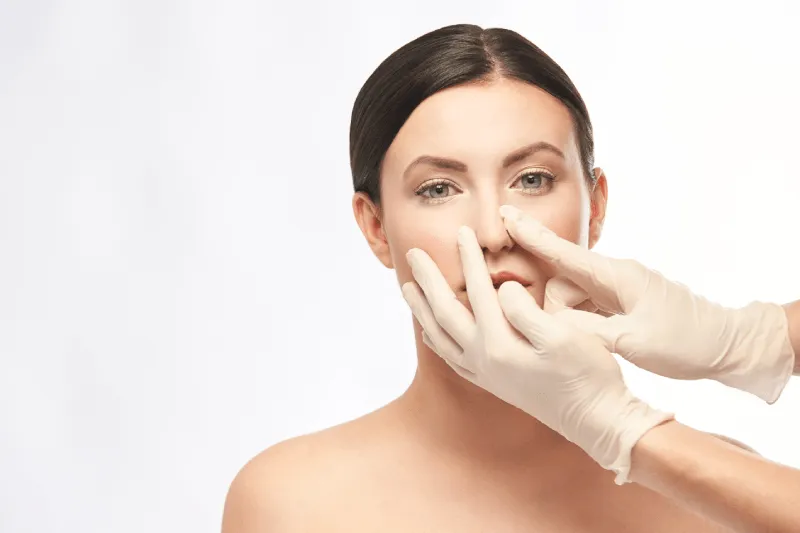
Non-surgical nose aesthetics is the process of changing the shape of the nose without a surgical incision and without the need for general anesthesia. In this procedure, the nasal contour is corrected by injecting filler materials into specific points under the skin. It is an extremely practical and effective medical aesthetic application, especially preferred for filling depressions on the bridge of the nose, making the tip of the nose look more lifted, and masking slight curvatures in the nose. It is a modern alternative for those who want to avoid the risks brought by surgery.
What substances are used for nose fillers?
Hyaluronic acid-based filler materials are most commonly preferred in nose filler procedures. Hyaluronic acid is a substance naturally found in the body and has a high water-holding capacity, so the risk of allergic reaction is quite low. In some cases, crystal fillers containing calcium hydroxyapatite can also be used to provide longer-term permanence and a harder structure. Which substance to use is determined by the specialist doctor according to the nasal structure of the patient, the thickness of their skin, and the details of the desired result.

Who is a suitable candidate for nose fillers?
Nose filler is ideal for people who do not require a radical reduction in the nose structure but only complain about shape deformities. Individuals who do not have a very prominent nasal hump, have a low nose tip, have slight asymmetry in the nostrils, or have had previous nose surgery but need small corrections are suitable candidates for this procedure. In addition, people who cannot receive general anesthesia for surgical operations or do not have a long recovery period after surgery frequently prefer this method.
Which defects can be corrected with nose fillers?
With this procedure, the arched appearance on the bridge of the nose can be flattened by applying fillers immediately above and below the hump. Low nose tips can be eliminated to give the nose a more “lifting” effect appearance. Slight asymmetries in the nostrils or nasal wings can be balanced by filling the gaps. In addition, the transition between the nose and the forehead is made more aesthetic by filling the excessive pits at the root of the nose. However, it should not be forgotten that nose filler is a “shaping” process and does not physically shrink the nose.
How long does the procedure take?
Non-surgical nose aesthetics is a very short-term procedure, also known as “lunchtime aesthetics.” Including the preparation phase and numbing the area, the entire procedure is usually completed within 15 to 30 minutes. The fact that the procedure takes such a short time allows even people with a busy work schedule to have this application during the day and return to their social lives immediately. Compared to the surgical nose aesthetics’ operation time lasting hours and hospital stay lasting days, it offers a great advantage in terms of time.
Is nose filler a painful procedure?
The pain felt during the nose filler procedure is quite minimal. Thanks to the local anesthetic creams applied to the nose area approximately 20 minutes before the application, the feeling of injection is greatly reduced. In addition, most of the filler materials used contain a local anesthetic substance called “lidocaine,” which increases comfort during the application. Patients usually state that they feel only a slight pressure or a small sting similar to a mosquito bite. No serious pain is expected after the procedure either.
Can nose tip lifting be done with filler?
Yes, nose tip lifting is one of the areas where the most successful results are obtained with non-surgical methods. In noses where the angle between the tip of the nose and the lip is narrow or structurally low, a certain amount of filler is injected to support the tip of the nose. Thanks to this process, the tip of the nose lifts upwards and a more elegant appearance is obtained from the profile. The lifting of the tip of the nose can sometimes indirectly help the person breathe more easily because the nostrils come into a more open position.
How is a humped nose structure hidden with filler?
In the treatment of a humped nose, the basic logic is not to destroy the hump, but to create an illusion of a straight nose bridge by filling the surrounding area of the hump. Filler is strategically added to the gaps in the upper part (nasal root) and lower part of the protrusion that forms the hump. Thus, a straight line is created along the bridge of the nose. Although this method technically increases the volume of the nose slightly, it generally creates a smaller or more harmonious perception in the face because the nose looks straighter and more balanced.
How long is the longevity of nose fillers?
Depending on the type of filler material used and the metabolic rate of the person, the permanence of the nose filler usually varies between 12 and 18 months. Hyaluronic acid-based fillers are naturally absorbed by the body over time. Since the nose area is a more immobile place compared to areas with dense lip or facial muscles, the permanence of the filler is longer here. Repeated applications made at regular intervals can help maintain the result for a much longer time and form a permanent shape in the tissue.
What is the recovery process after the filler procedure?
One of the biggest advantages of nose filler is that it requires almost no recovery process. As soon as the procedure is finished, you can see the result in the mirror and immediately return to your normal life. Within the first 24-48 hours, slight swelling, sensitivity, or very rarely small bruises may be seen in the application area; however, these can be easily covered with makeup. Since there are no difficulties such as cast, tampon, or stitches as in surgical interventions, patients go through this process extremely comfortably.
What are the differences between nose filler and surgical nose aesthetics?
While surgical nose aesthetics (rhinoplasty) offers a permanent solution and can intervene in the bone/cartilage tissue in the internal structure of the nose, nose filler is temporary and only changes the shape by adding volume. With rhinoplasty, the nose can be reduced and functional breathing problems can be solved fundamentally; filler only corrects contour deformities in the external appearance. While the surgical procedure requires general anesthesia and a long recovery period, the filler procedure is performed in office conditions with local numbing and gives instant results.
Are results visible immediately after the procedure?
Yes, one of the most satisfying aspects of the nose filler application is that the results are instantly visible. You can see the new form of the nose as soon as the doctor completes the injection. However, it usually takes 1-2 weeks for the final result to fully settle due to the very slight edema that occurs in the first days. At the end of this period, the filler material integrates with the tissue and the nose gains a more natural and soft appearance. If necessary, small touch-ups are made during the control examination to reach the perfect result.
What are the side effects of nose fillers?
As with any medical intervention, nose filler can have some side effects. The most common side effects are slight redness, swelling, sensitivity, and sometimes bruising seen at the injection site. These effects usually resolve on their own within a few days. In very rare cases, situations such as infection, asymmetry, or migration of the filler material to an undesired location may occur. However, in applications performed by an experienced physician under sterile conditions, these risks are minimized.
Is there a risk of complications?
Although the nose filler procedure seems simple, the nose area anatomically has a large number of vascular networks. The most serious risk is vascular occlusion caused by the accidental injection of the filler material into a vein. This situation can lead to damage to the skin tissue. Therefore, it is of vital importance that it is performed by a plastic surgeon or dermatologist who knows the nose anatomy very well and is an expert in complication management. When the correct technique is used, the risk of complications is extremely low.
What should be considered before the filler procedure?
At least one week before the procedure, it is recommended to stop the consumption of blood-thinning medications (aspirin, etc.), Vitamin E, omega-3 supplements, and green tea, because these substances may increase the risk of bruising after the procedure. It is also recommended not to take alcohol for 24 hours before the application. If you have an active cold sore or skin infection, it will be healthier to postpone the procedure. Not having makeup on your face on the day of the appointment helps the doctor see your skin and vascular structure more clearly.
When can sports be done after the procedure?
For the first 24 hours after the nose filler is performed, heavy exercises, intense activities that cause sweating, and movements that require leaning the head down should be avoided. Such activities can increase blood flow to the face, causing an increase in edema (swelling). While light activities such as walking can be done the next day, it is usually safest to wait 3-4 days to return to heavy fitness programs or contact sports. The most critical rule in this process is that the nose should not receive any impacts.
Does wearing glasses cause problems after fillers?
It is important not to apply pressure to the area where the nose filler is applied for the filler to settle. Therefore, it is recommended not to wear heavy-framed glasses for the first 2-3 days after the procedure, and to use contact lenses if possible. If wearing glasses is mandatory, it should be ensured that the glasses do not apply pressure to the filler area on the bridge of the nose. It is beneficial to avoid very tight sunglasses or heavy optical glasses until the filler material fully integrates with the tissue (approximately 1 week) in order not to disturb the shape.
From what age can nose fillers be done?
As a general rule, a person’s bone development is expected to be completed for nose filler and similar aesthetic applications. This development is usually completed at the age of 18. Therefore, unless there is a medical necessity, it is not recommended to perform nose filler for people under the age of 18. Parental consent and the assessment of the development process by a specialist doctor are mandatory for individuals who are not of legal age. In addition to aesthetic concerns, it is an important criterion for the person to be psychologically ready for this change.
Can men have nose fillers?
Today, the interest of male patients in non-surgical nose aesthetics is increasing day by day. The male nose requires a straighter profile and a wider angle compared to the female nose. In men, it is generally aimed to camouflage the nasal hump and create a more masculine nasal line. Since the filler application is not a surgical procedure and does not require a recovery period, it offers an extremely practical aesthetic solution for men who do not want to stay away from business life.
Should massage be done after nose fillers?
It is strictly not recommended for the patient to massage the nose area on their own after the nose filler. The filler material continues to take shape and settle into the tissue for the first few days after it is injected. Pressure or massage applied during this process can cause the filler to displace and an undesired image to form. Your doctor will perform the necessary shaping during the procedure; afterwards, massage can only be performed with professional guidance in cases specifically recommended by the doctor.
Does the applied filler material dissolve in the body?
Yes, hyaluronic acid, which is the most common substance used in nose fillers, is a bio-compatible substance that is naturally broken down and completely absorbed by the body over time. This situation also explains why the procedure is “temporary.” The body slowly metabolizes this filler through an enzyme called “hyaluronidase.” This feature is actually a safe harbor; because the filler is not permanent, it allows new adjustments to be made in the future to adapt to the facial features that change with the aging process.
Can unsatisfactory results be reversed?
One of the biggest advantages of nose filler is that if a hyaluronic acid-based filler was used, the result is completely reversible. If the patient is not satisfied with the result or a complication develops, the filler can be dissolved within minutes by injecting an enzyme called “hyaluronidase.” This is not possible in surgical operations; when a mistake is made in surgery, it takes months of waiting and a second difficult operation to correct it. Filler gives the patient a great sense of security in this sense.
What is hyaluronidase and what does it do?
Hyaluronidase is an enzyme that breaks down hyaluronic acid molecules. It is used in medical aesthetics like an “antidote.” In cases of excessive volume formation, asymmetry, or if the filler comes into a vein during nose filler application, hyaluronidase is immediately applied to the area. After the enzyme is injected, the filler material quickly reaches the consistency of water and is absorbed by the body. The presence of this enzyme makes hyaluronic acid fillers one of the safest aesthetic procedures in the world.
Does nose filler solve breathing problems?
Nose filler is primarily an aesthetic procedure and does not treat functional breathing problems such as cartilage curvature (deviation) or concha growth inside the nose. However, in some cases, for people with a very low nose tip, lifting the tip with filler can help the person breathe more easily at a mild level by allowing the nostrils to open. If you have a serious breathing problem, it would be more accurate to be examined by an ear, nose, and throat specialist and evaluate surgical options.
Can filler be applied after revision nose surgery?
For patients who have undergone nose surgery once or several times before but think the result is not perfect, nose filler can be a great complement. Small depressions remaining after surgery, slight irregularities on the bridge of the nose, or slight asymmetries in the tip part can be eliminated with filler in a non-surgical way. This is called the “camouflage” technique. However, since blood circulation may have changed in operated noses, this procedure requires extra care and experience; it must be performed by a very expert physician in the field.
Is nose filler harmful during pregnancy?
As a general rule in the medical world, it is not recommended to perform any medical aesthetic procedure that is not mandatory during the pregnancy period. Although there is no definitive evidence that nose filler substances have a direct negative effect on the fetus, there are not enough clinical studies conducted for ethical reasons on this subject. In addition, hormonal changes and increased edema in the body during pregnancy may affect the result and permanence of the filler. Therefore, postponing such procedures until after birth is the safest approach.
Is nose filler safe during the breastfeeding period?
The issue of having nose filler during the breastfeeding period is as sensitive as pregnancy. Although there are no definite data on whether the filler material passes into milk, doctors usually recommend waiting for the first few months of the breastfeeding process to pass. Local anesthetic creams used during the procedure or medications that may need to be used in case of a possible infection may affect the breastfeeding process. Therefore, breastfeeding mothers should make this decision by consulting their own doctors.
According to what do nose filler prices change?
Nose filler prices vary according to several basic factors. The brand and amount of filler material used (how many ml used) is the most important factor determining the price. In addition, the experience of the doctor performing the application, the equipment of the clinic, and the city where it is located also play a role in costs. Procedures performed using cheap and low-quality filler materials can carry great risks in terms of health. Therefore, it is more profitable in the long run not to compromise on quality and doctor experience when researching prices.
Which specialists should be consulted for application?
Nose filler should be performed by professionals who know the nose anatomy very well and specialize in facial aesthetics. Plastic surgeons, dermatologists, and physicians who are competent in the field of medical aesthetics are the most suitable specialists for this procedure. Since a wrong application can cause serious results ranging from vision loss, one should definitely stay away from unlicensed centers described as under-the-counter and unauthorized persons. Examining your physician’s previous applications and references will give you confidence.
Why is the quality of the filler material important?
A quality filler material ensures full compatibility with the body, does not cause allergies, and does not form clumping over time. Hyaluronic acid fillers of world-famous, FDA-approved brands have high purity levels and technologically advanced cross-links. Low-quality fillers can cause problems such as skin hardening, chronic edema, and granuloma (hard mass) formation. Since the nose is an area where the skin is thin and blood circulation is critical, choosing the material to be used here from the top segment is not a choice, but a necessity.
Can asymmetry problems be resolved with nose fillers?
One of the areas where nose filler is most successful is asymmetry correction. Slight curvatures that are congenital or occur as a result of trauma can gain a flat appearance thanks to the elevation of the hollow sides with filler. In cases where one of the nostrils is more faded than the other, millimetric touches to be made to that area ensure the general balance of the face. However, in cases where the midline of the nose (septum) is excessively curved, filler alone may not be sufficient; in these cases, surgical intervention gives a healthier result.
Are bruising and swelling normal after the procedure?
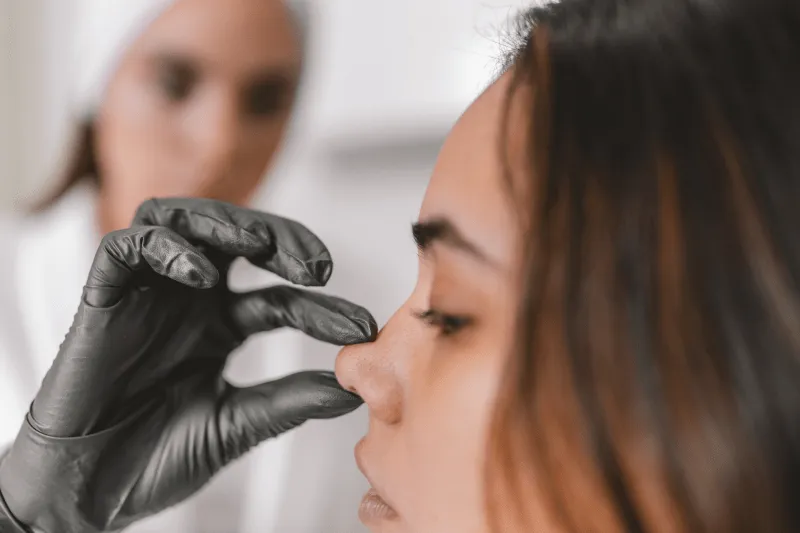
Yes, it is completely normal and expected for slight swelling in the application areas and small bruises at the needle entry points after the procedure. Since the nose skin is very close to the bone, the tissue may react after injection. These symptoms usually disappear by decreasing on their own within 3 to 5 days. Applying a cold compress helps reduce swelling in the first 24 hours, while anti-bruising creams can also speed up the process. If the swelling increases and the color of the skin turns white or dark purple, you should definitely consult your doctor.
Why is it necessary to protect from sunlight?
In the first few days after the nose filler, it is necessary to stay away from intense sunlight, solarium, sauna, and extremely hot environments such as hammam. Heat can cause the vessels to dilate, increasing edema and negatively affecting the integration process of the filler with the tissue. In addition, if there is a slight bruise in the procedure area, sunlight can cause this bruise to turn into a permanent stain. Therefore, high-factor sunscreen should be used when going out and wide-brimmed hats should be preferred if possible.
Can nose filler be repeated?
Yes, when the effect of the nose filler begins to wear off or if a fuller appearance is desired, it can be safely repeated. In fact, repetitions made at regular intervals (for example, every 1-1.5 years) can trigger collagen production in that area, allowing the permanence period of the filler to extend a little more each time. Most patients prefer to go for a check-up and have a small touch-up when 50-60% of the filler has dissolved. In this way, the nose form is constantly preserved without ever completely returning to its old state.
What should be considered after the nose filler?
For the first 24 hours after the procedure, it is recommended not to let water touch the nose, not to wash the face, and not to apply makeup. Hard impacts to the nose should be avoided, and one should sleep on their back and with a high pillow for the first night. Since alcohol and cigarette consumption can slow down the recovery process, they should be limited for a few days. No products other than creams recommended by the doctor should be applied to the area. If severe pain in the nose, color change in the skin, or a problem related to vision is felt, the physician who performed the application should be informed without losing time.
What are the advantages of non-surgical nose aesthetics?
Its biggest advantage is that it makes change possible without going under the knife, without receiving anesthesia, and without experiencing that difficult tampon/cast process after surgery. It is economically much more affordable compared to surgery. The fact that the results are reversible offers the patient a “trial” opportunity; the patient can test how their nose might look if they had surgery with this method. Being able to return to work immediately after the procedure and not disturbing the flow of daily life is a priceless convenience for modern-day people.
Can the nose be reduced with nose fillers?
This is one of the most misunderstood issues among the public: Nose filler does not reduce the nose. On the contrary, since a substance is added onto the nose, the volume of the nose increases technically. However, when the disproportions in the nose are eliminated, the hump is hidden, and the tip of the nose is lifted, the nose becomes more compatible with the face and creates a visual perception as if it has “shrunk.” If you want the physical dimensions of your nose to shrink (narrowing of the wings, rasping of the bone, etc.), the only solution is surgical rhinoplasty surgery.
Free Consultation
Fill out the form below to get your free medical travel plan and price quote.
Sources and how to verify this yourself
- Ministry of Health, Regulation on International Health Tourism and Tourist Health, Official Gazette 26 April 2025, No. 32882 — authorisation requirement for facilities and intermediaries, TÜSKA accreditation, compulsory complication insurance (deadline 31 December 2025 for insurance, 31 December 2026 for accreditation). source
- Ministry of Health, Regulation on Promotion and Information Activities in Health Services, Official Gazette 12 November 2025, No. 33075 — treatment promises and guarantees are prohibited; price and campaign announcements are permitted only within international health tourism. source