Cost and planning note (Mommy Makeover 2026)
The figures below are indicative market ranges, not a quote: your own price is confirmed after a clinical assessment.
Indicative price range: Standard Package: 4,500 – 7,500 USD | Advanced Combination: 8,000 – 12,000 USD | Tummy Tuck: 3,000 – 5,000 USD | Breast Lift: 2,500 – 4,500 USD | Liposuction Per Area: 500 – 1,500 USD | Bbl Fat Transfer: 3,500 – 5,500 USD
Facility standards: In Türkiye, any facility treating international patients must hold the Ministry of Health’s international health tourism authorisation; hospitals and medical centres must also be accredited by TÜSKA, and complication insurance is compulsory for procedures carried out in an operating theatre (Regulation of 26 April 2025).
Recovery Focus: Post-pregnancy body restoration & safety first.
Currency: GBP, EUR, USD accepted.
Managing your Diet in Turkey: High-Protein Options for Faster Healing
The Anatomy of Post-Pregnancy Reconstruction: Addressing Diastasis Recti and Tissue Laxity
The physiological metamorphosis experienced during pregnancy and subsequent postpartum recovery often leaves a lasting impact on the female abdominal wall and mammary tissues. Beyond the superficial concerns of skin laxity, many patients present with deep-seated structural changes, most notably Diastasis Recti. This condition involves the separation of the rectus abdominis muscles, resulting in a loss of core stability and a protruding abdominal profile that cannot be corrected through traditional caloric restriction or core strengthening alone.
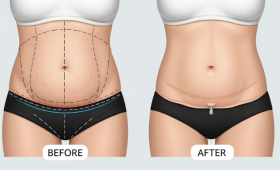
Advanced surgical intervention in Turkey focuses on the structural restoration of the abdominal wall. Modern Diastasis Recti repair involves internal corset suturing of the abdominal fascia. This technique is not merely aesthetic; it is a functional reconstruction where the surgeon re-approximates the separated muscle bellies, creating a tension-bearing “internal corset.” This process restores the intra-abdominal pressure necessary for core stability and flattens the abdominal plane. When combined with an abdominoplasty, the results are transformative, addressing both the subcutaneous adipose tissue and the underlying musculature.
Depending on the extent of the skin’s loss of elasticity, surgeons offer various tummy tuck options: Full, Mini, or Extended (360). While a Mini-Abdominoplasty targets only the lower portion of the abdomen, the Extended (360) approach is often preferred for a comprehensive “Mommy Makeover,” as it addresses the flanks and the lateral aspects of the waistline, ensuring a seamless transition from the anterior to the posterior torso.
Advanced Sculpting: Vaser Liposuction and Fat Transfer Dynamics
To achieve the highly defined silhouette desired in post-pregnancy restoration, modern clinics utilize state-of/the-art technologies such as Vaser Liposuction. Unlike traditional liposuction, which can be more traumatic to the surrounding tissue, Vaser (Ultrasound-Assisted) technology uses ultrasonic vibrations to selectively emulsify adipose tissue. This allows for high-definition contouring with minimal bruising and a more refined anatomical detail, particularly around the iliac crest and the flanks.
For patients seeking volume in the gluteal region to complement their abdominal flattening, the BBL (Brazilian Butt Lift) fat transfer is a cornerstone of the advanced combination package. This procedure involves harvesting stabilized fat from areas targeted by liposuction and precisely injecting it into the gluteal muscles and subcutaneous layers. The cost for Bbl_fat_transfer typically ranges from 3,500 – 5,500 USD, making it a highly accessible component of a larger reconstructive plan.
When calculating the total investment for these contouring procedures, patients can expect the following price ranges:
- Liposuction per area: 500 – 1,500 USD
- Standard package (Combined procedures): 4,500 – 7,500 USD
- Advanced combination (Comprehensive reconstruction): 8,000 – 12,000 USD
Restoring Mammary Projection: Mastopexy and Augmentation Standards
Pregnancy and breastfeeding often lead to mammary ptosis (sagging) and a loss of glandular volume. The surgical objective is to restore the upper pole fullness and the projection of the breast. This is achieved through a combination of Mastopexy (breast lift) and Augmentation. To ensure the highest safety benchmarks, Turkey’s leading surgical centers exclusively utilize JCI approved implants, specifically selecting from premium brands such as Mentor, Motiva, or Polytech.
The choice of implant—whether cohesive silicone or saline—depends on the patient’s specific tissue density and the degree of skin laxity. The breast_lift procedure, which focuses on repositioning the nipple-areola complex and removing excess skin, is priced between 2,500 – 4,500 USD. When integrated with augmentation, the goal is to recreate the youthful, anatomical projection that was lost during the postpartum period.
The Turkish Advantage: Safety Benchmarks and Global Clinical Leadership
Turkey has emerged as the global epicenter for the “Mommy Makeover” due to a unique synergy of surgical expertise, technological adoption, and a specialized recovery infrastructure. The country’s medical landscape is defined by rigorous adherence to international safety protocols, particularly regarding the use of JCI approved medical devices and the high density of board-certified plastic surgeons specializing in reconstructive abdominoplasty.
The logistical framework in Turkey is designed to minimize patient stress and maximize the efficacy of the healing process. This “medical tourism” ecosystem is built upon a foundation of premium hospitality and seamless medical coordination:
“The success of post-pregnancy surgery is not merely determined in the operating theatre, but through the precision of the post-operative care and the stability of the recovery environment.”
Patients arriving in Turkey can expect a highly organized itinerary. Upon arrival at Istanbul (IST) or Antalya (AYT), VIP private transfers are arranged to transport patients directly from the airport to their designated recovery locations. The standard of accommodation involves 5-star recovery suites with companion stay included, ensuring that the patient has a sterile, comfortable, and quiet environment to facilitate the initial stages of tissue healing.
Furthermore, the transparency of the surgical process begins long before arrival. Cure Holiday specialists facilitate free online video assessments with board-certified plastic surgeons, allowing for a preliminary clinical evaluation, customized surgical planning, and an accurate budgetary breakdown. This digital consultation phase ensures that the patient’s expectations regarding the tummy tuck, breast lift, and liposuction are aligned with the clinical reality of their anatomy.
The Post-Operative Timeline: Physiological Reintegration
Understanding the biological timeline of healing is critical for the longevity of the surgical results. The immediate post-operative phase is focused on edema (swelling) management and wound stabilization. Patients are typically required to remain in Turkey for a period of 7-10 days, during which time they undergo follow-up assessments to ensure that the internal sutures and skin flaps are healing without dehiscence or hematoma formation.
However, the biological reconstruction of the fascia and the stabilization of the fat grafts in a BBL require more time. While patients may return to light, sedentary activities almost immediately, a period of 6 weeks for full exercise return is mandatory. During this window, avoiding strenuous physical activity is essential to prevent undue tension on the internal corset suturing and to allow the new contours to settle into their permanent anatomical positions.
The Biochemistry of Healing: Protein and Tissue Reconstruction
The primary objective following an invasive procedure is the mitigation of inflammation and the acceleration of the proliferative phase of wound healing. In surgeries involving Diastasis Recti repair, which utilizes internal corset suturing of the abdominal fascia, the body requires a significant influx of glycine, proline, and hydroxyproline. These amino acids are the fundamental building blocks of collagen. Without adequate protein intake, the tension placed on the sutured fascia may compromise the long-term results of the abdominal tightening.
Furthermore, for patients undergoing Vaser Liposuction—a technology designed for high-definition contouring with minimal bruising—nutritional support plays a vital role in reducing post-operative edema. A diet rich in antioxidants, paired with high-quality lean proteins, assists the lymphatic system in processing the redistributed adipose tissue and reduces the inflammatory response associated with subcutaneous fat removal.
Case Study: Reconstructing the Maternal Silhouette
To understand the intersection of surgical precision and nutritional management, consider the journey of a 34-level Irish mother of three. Following three pregnancies, she presented with significant abdominal laxity and loss of volume in the gluteal region. Her clinical requirement involved a complex combination procedure: an Extended (360) Tummy Tuck combined with a BBL fat transfer.
Her journey began with free online video assessments with board-certified plastic surgeons, allowing for a precise preoperative plan before she ever departed for Turkey. For her, the surgical cost for this advanced combination fell within the 8,000 – 12,000 USD range.
During her 7-10 days in Turkey, her dietary regimen was strictly monitored to support the internal corset suturing of her rectus abdominis muscles. Her meal plan focused on:
- High-Biological Value (HBV) Proteins: Utilizing local Turkish lamb and poultry to ensure a complete amino acid profile for fascial repair.
- Micronutrient Density: Integrating local seasonal vegetables to provide Vitamin C, a critical cofactor in the hydroxylation of collagen.
- Hydration and Electrolytes: Crucial for maintaining the vitality of the transferred fat cells during the BBL process.
By adhering to this high-protein protocol during her stay in a 5-star recovery suite, she optimized the “take” rate of her transferred fat, ensuring the longevity of her new contours.
The Technical Standards of Surgical Excellence
The success of a transformation is predicated on the quality of the surgical intervention and the adherence to international safety protocols. At the heart of every procedure is the commitment to JCI (Joint Commission International) safety standards, ensuring that every surgical theatre and postoperative care unit meets rigorous global benchmarks.
The technical specifications of the procedures offered in Turkey are designed for durability and aesthetic naturalism:
- Implant Integrity: All breast augmentation-related procedures utilize only JCI-approved implants, specifically Mentor, Motiva, or Polytech brands, ensuring biocompatibility and long-term safety.
- Contouring Precision: The use of Vaser Liposuction allows for the sculpting of the flanks and waistline with minimal trauma to the surrounding vasculature, facilitating a smoother recovery.
- Abdominal Versatility: Patients may opt for Full, Mini, or Extended (360) tummy tuck options depending on the extent of skin redundancy and muscle separation.
Understanding the financial investment is also crucial for patient planning. While a standard package typically ranges from 4,500 – 7,500 USD, specialized procedures involve different cost structures:
- Tummy Tuck: 3,000 – 5,000 USD
- Breast Lift: 2,500 – 4,500 USD
- Liposuction (per area): 500 – 1,500 USD
- BBL Fat Transfer: 3,500 – 5,500 USD
Logistical Seamlessness and the Recovery Timeline
A successful surgical transformation is a logistical feat as much as a medical one. The patient journey is designed to minimize stress, which is a known inhibitor of the immune response. From the moment of arrival at Istanbul (IST) or Antalya (AYT), the focus is on a controlled, high-end recovery environment.
The use of VIP private transfers from the airport to the clinic ensures that the patient is not subjected to the physical strain of navigating unfamiliar transit. Upon arrival, patients are settled into 5-star recovery suites with companion stay included, providing a sterile yet comfortable environment conducive to the intensive nutritional and medicinal protocols required in the first week.
While the initial period of convalescence requires staying in Turkey for 7-10 days, the physiological “reset” continues long after departure. Patients must maintain their high-protein, nutrient-dense diet and adhere to activity restrictions for approximately 6 weeks for a full exercise return. This period is critical for the stabilization of the transferred adipose tissue and the maturation of the newly sutured abdominal wall. Through the synergy of advanced surgical technology, JCI-standard safety, and disciplined post-operative nutrition, the transformation becomes not just an aesthetic change, but a fundamental restoration of physical confidence.
The Bio-Chemical Role of Protein in Post-Surgical Tissue Repair
Following significant surgical interventions—ranging from Vaser Liposuction for high-definition contouring to complex Diastasis Recti repair—the body enters a state of heightened metabolic demand. During this phase, the primary physiological objective is the synthesis of new collagen and the reinforcement of the extracellular matrix. To facilitate this, a high-protein diet is not merely a recommendation; it is a clinical necessity for maintaining fascial integrity and accelerating wound closure.
When undergoing a Diastasis Recti repair, which involves the internal corset suturing of the abdominal fascia, the nutritional focus must shift toward amino acids like proline, glycine, and lysine. These are the fundamental building blocks of collagen. A deficiency in protein intake can lead to compromised suture strength and increased risks of dehiscence (wound separation). By prioritizing high-bioavailability proteins, patients can support the structural remodeling of the abdominal wall, ensuring the “internal corset” remains stable during the initial stages of healing.
Furthermore, in procedures involving Vaser Liposultion, which utilizes ultrasonic energy to emulsify adipose tissue with minimal bruising, the reduction of post-operative edema (swelling) is critical. A diet rich in protein helps maintain oncotic pressure within the blood vessels, preventing excessive fluid leakage into the interstitial spaces. This reduces the duration of swelling and minimizes the risk of seroma formation, allowing for a more aesthetic and smoother recovery profile.
Optimizing the Nutritional Environment: Macronutrients and Edema Management
Managing your diet in Turkey requires a strategic approach to both macronutrient distribution and micronutrient density. While protein is the cornerstone, the synergy between protein and hydration is vital for patients utilizing Motiva, Mentor, or Polytech (JCI approved) breast implants. The integration of these advanced implants requires the body to manage a new volume of foreign material; adequate protein ensures the surrounding capsule develops a healthy, thin layer of tissue, rather than excessive scar tissue or capsular contracture.
For patients undergoing more extensive body contouring, such as a Full, Mini, or Extended (360) Tummy Tuck, the nutritional focus must also include anti-inflammatory agents. Integrating high-protein foods with omega-3 fatty acids and antioxidants can mitigate the inflammatory response triggered by the surgical trauma. This is particularly important when the procedure involves significant tissue resection and reconfiguration.
- Amino Acid Density: Focus on lean poultry, egg whites, and high-quality whey isolates to provide the necessary substrates for myofibrillar repair.
- Collagen Support: Incorporating bone broths and collagen peptides can supplement the endogenous production of connective tissue.
- Hydration and Electrolytes: Essential for managing the metabolic byproducts of Vaser Liposuction and preventing post-operative constipation, a common side effect of anesthesia.
“The success of reconstructive surgery, particularly involving abdominal fascia reinforcement, is inextricably linked to the patient’s anabolic state. A protein-deficient state is a primary inhibitor of rapid epithelialization.”
Post-Operative Recovery Logistics: The Premium Recovery Experience
The transition from the operating theatre to a state of healing requires meticulous logistical planning. A critical component of the Cure Holiday aftercare strategy is the management of the post-op environment. Rather than returning immediately to the rigors of daily life, patients are encouraged to utilize 5-star recovery suites with companion stay included. These suites are designed to facilitate the high-protein, low-stress lifestyle required for optimal healing.
The logistics of your arrival and departure are handled via VIP private transfers from the airport, ensuring that the physiological stress of travel is minimized. Whether you land at Istanbul (IST) or Antalya (AYT), the seamless transition from the terminal to your recovery villa is paramount. This continuity of care extends to managing the “fly-home” timeline, ensuring that the inflammatory window is managed before the physical pressure changes of long-haul flights occur.
For patients traveling with family, the logistics of childcare and companion care are integrated into the recovery plan. The 5-star suites provide a controlled environment where nutritional needs can be met without the complications of navigating local food markets or finding specialized dietary providers. This allows the patient to focus entirely on the 7-10 days in Turkey required for the initial acute healing phase.
The Recovery Timeline and Physical Reintegration
Understanding the physiological timeline is essential for managing expectations regarding physical activity. While the initial 7-10 days in Turkey focus on wound stabilization and edema reduction, the deeper biological remodeling of tissues—especially following a BBL fat transfer or Tummy Tuck—continues long after you have returned home.
Patients must adhere to a strict period of restricted movement to protect the integrity of the surgical site. While light walking is encouraged to prevent Deep Vein Thrombosis (DVT), heavy lifting or abdominal straining must be avoided. The standard clinical guideline for a full exercise return is 6 weeks. During this period, maintaining the high-protein nutritional protocol is vital to prevent muscle atrophy and to support the ongoing structural integration of transferred fat cells in BBL procedures.
2026 Global Cost Breakdown: Turkey vs. UK/USA
When planning the economic logistics of your procedure, it is essential to view the cost of surgery through the lens of total value, including the high-end aftercare and nutritional support provided in Turkey. The following breakdown represents the projected 2026 pricing for premium surgical packages in Turkey compared to the significantly higher out-of-pocket expenses found in the UK and USA.
| Procedure/Package Type | Estimated Cost (Turkey) |
|---|---|
| Standard All-Inclusive Package | 4,500 – 7,500 USD |
| Advanced Combination Package | 8,000 – 12,000 USD |
| Tummy Tuck (Full, Mini, or 360) | 3,000 – 5,000 USD |
| Breast Lift (Mastopexy) | 2,500 – 4,500 USD |
| Liposuction (Per Area) | 500 – 1,500 USD |
| BBL (Fat Transfer) | 3,500 – 5,500 USD |
These costs include the surgical fee, the use of JCI approved implants, and the premium logistics outlined above. For those seeking personalized surgical planning, Cure Holiday specialists offer free online video assessments with board-certified plastic surgeons to discuss both your surgical requirements and your post-operative nutritional and logistical needs.
Considering a Mommy Makeover in Turkey? Get a Free Quote for your Managing your Diet in Turkey Transformation with cureholiday.com
Free Consultation
Fill out the form below to get your free medical travel plan and price quote.
Sources and how to verify this yourself
- Ministry of Health, Regulation on International Health Tourism and Tourist Health, Official Gazette 26 April 2025, No. 32882 — authorisation requirement for facilities and intermediaries, TÜSKA accreditation, compulsory complication insurance (deadline 31 December 2025 for insurance, 31 December 2026 for accreditation). source
- Ministry of Health, Regulation on Promotion and Information Activities in Health Services, Official Gazette 12 November 2025, No. 33075 — treatment promises and guarantees are prohibited; price and campaign announcements are permitted only within international health tourism. source