Cost and planning note (2026)
The figures below are indicative market ranges for 2026, not a quote: your own price depends on the clinic, the surgeon and your clinical assessment.
Indicative price range: Standard Cycle: 3,000 – 5,000 USD | With Pgt: add 1,500 – 3,000 USD | Donor eggs and sperm: not permitted under Turkish law (own gametes only).
Facility standards: In Türkiye, any facility treating international patients must hold the Ministry of Health’s international health tourism authorisation; hospitals and medical centres must also be accredited by TÜSKA, and complication insurance is compulsory for procedures carried out in an operating theatre (Regulation of 26 April 2025). Ask us for the authorisation of the facility you are matched with.
Currency: USD / EUR / GBP accepted at all clinics.
Natural Cycle IVF for “Low Responders”: A Gentler Path to Parenthood in Istanbul
Natural Cycle IVF: A Detailed Medical Overview for Low Responders
Natural Cycle In Vitro Fertilization (NC-IVF) represents a paradigm shift in Assisted Reproductive Technology (ART), particularly for patients categorized as “low responders.” Traditional IVF protocols utilize high doses of exogenous gonadotropins to stimulate ovarian response, maximizing egg retrieval numbers. However, for individuals with diminished ovarian reserve (DOR), characterized by a low antral follicle count (AFC) and/or elevated Follicle-Stimulating Hormone (FSH) levels, this approach often proves ineffective, costly, and potentially psychologically distressing due to a high risk of cycle cancellation. NC-IVF, offered in leading clinics in Istanbul, Turkey, bypasses this intense stimulation, embracing the body’s natural menstrual cycle.
Understanding the Physiology of NC-IVF
The core principle of NC-IVF hinges on carefully monitoring the natural selection of a dominant follicle during the menstrual cycle. Instead of attempting to force multiple follicles to mature, NC-IVF identifies and retrieves the naturally leading oocyte. This approach minimizes the risk of Ovarian Hyperstimulation Syndrome (OHSS), a potentially life-threatening complication associated with high-dose gonadotropin stimulation. A typical cycle begins with baseline hormone evaluation (FSH, estradiol, Anti-Müllerian Hormone – AMH) to confirm suitability. Follicular development is then meticulously tracked via transvaginal ultrasound and serial estradiol measurements. Unlike conventional IVF, no, or minimal, gonadotropin stimulation is used – often a ‘trigger’ shot of hCG or GnRH agonist is employed to induce final oocyte maturation.
Diagnostic Criteria and Patient Selection
Identifying suitable candidates for NC-IVF requires a nuanced understanding of ovarian reserve testing. While a low AFC (<5-7 follicles) is a primary indicator, a holistic assessment is crucial. We utilize sophisticated diagnostic tools beyond standard hormone assays. These include Doppler ultrasound assessment of ovarian blood flow, which can reveal subtle indicators of ovarian responsiveness, and even assessment of inhibin B levels, a glycoprotein secreted by granulosa cells, providing insight into early follicular development. The 'low responder' phenotype isn’t monolithic; it encompasses varying degrees of ovarian compromise. NC-IVF is particularly well-suited for:
- Patients with Primary Ovarian Insufficiency (POI) or Premature Ovarian Failure (POF).
- Individuals with a history of poor response to conventional IVF stimulation.
- Those seeking a less invasive and more patient-centered approach to fertility treatment.
- Patients with contraindications to high-dose gonadotropin therapy (e.g., certain medical conditions).
Technical Aspects & Laboratory Protocols
While the ovarian stimulation protocol is minimized, the embryological and andrological aspects of NC-IVF demand the highest technical standards. Our Istanbul facilities employ advanced techniques to optimize outcomes. Specifically:
- ICSI (Intracytoplasmic Sperm Injection): Given that fewer oocytes are retrieved in NC-IVF, maximizing fertilization rates is paramount. ICSI, where a single sperm is directly injected into the oocyte, is routinely employed.
- Micro-chip Sperm Sorting: For patients with compromised sperm parameters (e.g., low motility, abnormal morphology), we utilize micro-chip sperm sorting technology. This isolates motile, morphologically normal sperm, enhancing their potential for fertilization. The technique leverages microfluidic channels to separate sperm based on characteristics vital to successful fertilization.
- Embryoscope Time-Lapse Imaging: Conventional incubators provide static environments. The Embryoscope continuously monitors and records embryo development, capturing crucial morphological changes without external disturbance. This allows for non-invasive embryo selection, identifying viable embryos for transfer and minimizing the need for invasive trophectoderm biopsies.
- Vitrification: Rapid freezing of embryos (vitrification) is essential for preserving viable embryos for future transfer cycles. Our clinic utilizes optimized vitrification protocols with high survival rates.
Success Rates and Cost Considerations
Success rates with NC-IVF are intrinsically linked to patient age and ovarian reserve. While conventional IVF boasts higher overall numbers due to the retrieval of more oocytes, NC-IVF achieves comparable per-egg fertilization rates. The data shows success rates of up to 60-70% for patients under the age of 35, declining to approximately 15-20% for those over the age of 42. It’s crucial to emphasize that these are per-transfer rates, and cumulative pregnancy rates across multiple cycles can be significantly higher.
Cost-effectively, NC-IVF can be appealing. A standard NC-IVF cycle in Istanbul typically ranges from 3,000 – 5,000 USD. Adding Preimplantation Genetic Testing (PGT) to screen embryos for chromosomal abnormalities increases the cost by 1,500 – 3,000 USD. It’s important to note that Turkey offers a competitive advantage in ART costs compared to Western European countries and the United States.
The Turkish Medical Landscape & Patient Experience
Turkey has rapidly become a leading destination for medical tourism, particularly in the field of reproductive medicine. The country’s healthcare system is highly regulated by the Ministry of Health and many clinics, including ours, are JCI (Joint Commission International) Accredited, demonstrating adherence to rigorous international quality standards. We cater to international patients with seamless logistical support, including acceptance of USD, EUR, and GBP for payment, and provision of e-visa applications for citizens of the UK, US, and EU (allowing for a 90-day stay). Post-treatment, patients can choose to recuperate in a variety of settings:
- Istanbul (City/Boutique): Offers a vibrant cultural experience with numerous hotels and amenities.
- Antalya (Resort/Beach): Provides a relaxing coastal environment ideal for post-transfer recovery.
- Izmir (Aegean/Thermal): Features thermal spas known for their restorative properties.
We pride ourselves on providing personalized care, with dedicated patient coordinators available to address all queries and concerns throughout the treatment journey. We offer transparent pricing, detailed treatment plans, and ongoing support to ensure a positive and empowering experience for our patients seeking a gentler path to parenthood.
The Surgical/Clinical Journey: Natural Cycle IVF for Low Responders in Istanbul
Natural Cycle IVF (NC-IVF) presents a compelling alternative for patients diagnosed as “low responders” – individuals whose ovaries produce fewer eggs in response to conventional ovarian stimulation protocols. This approach, increasingly favoured at leading fertility clinics in Istanbul, prioritizes egg quality over quantity, minimizing the risks associated with high-dose gonadotropin stimulation. This pillar details the meticulous clinical journey, a case study illustrating the process, and crucial risk mitigation strategies.
Step-by-Step Procedure Technicals
The NC-IVF process diverges significantly from traditional IVF. Instead of employing substantial doses of follicle-stimulating hormone (FSH) to induce multiple follicular development, NC-IVF harnesses the body’s natural menstrual cycle. The protocol can be broadly divided into the following stages:
- Baseline Assessment (Days 1-3): Hormonal profiling (FSH, estradiol, Anti-Müllerian Hormone – AMH) confirms suitability for NC-IVF. Transvaginal ultrasound assesses the antral follicle count (AFC) which, despite being lower in low responders, is still a key indicator of ovarian reserve.
- Follicular Monitoring (Days 3-7): Daily monitoring via transvaginal ultrasound and serial estradiol measurements precisely track the growth of the dominant follicle. Unlike conventional IVF, the aim isn’t maximal stimulation but to identify the optimal time for egg retrieval from the naturally selected follicle(s). Doppler ultrasound is used to assess blood flow to the follicle, indicating its health and maturity.
- Triggering Ovulation: When the dominant follicle reaches a pre-determined size (typically around 18-20mm) and demonstrates adequate estradiol levels, ovulation is triggered with a single dose of human chorionic gonadotropin (hCG) or, increasingly, a GnRH antagonist. This induces final oocyte maturation.
- Egg Retrieval: Approximately 36 hours post-trigger, transvaginal ultrasound-guided oocyte retrieval is performed under conscious sedation or general anesthesia. A fine-gauge needle is inserted through the vaginal wall into the dominant follicle to aspirate the follicular fluid containing the egg.
- Sperm Preparation: Concurrent with egg retrieval, a semen sample is collected and prepared using advanced techniques. Our clinic utilizes both standard density gradient centrifugation *and* micro-chip sperm sorting, a novel technology separating sperm based on DNA fragmentation levels, selecting for healthier, more viable spermatozoa.
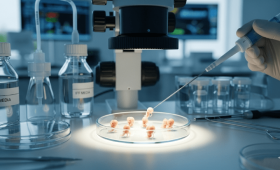
- Fertilization & Embryo Culture: Retrieved oocytes are immediately assessed for maturity (MII stage). Fertilization is achieved primarily through ICSI (Intracytoplasmic Sperm Injection), ensuring optimal fertilization rates even with a limited number of eggs. Embryos are then cultured in a state-of-the-art incubator, the Embryoscope. This time-lapse imaging system continuously monitors embryo development, providing detailed insights into cellular division and morphology without disrupting the culture environment.
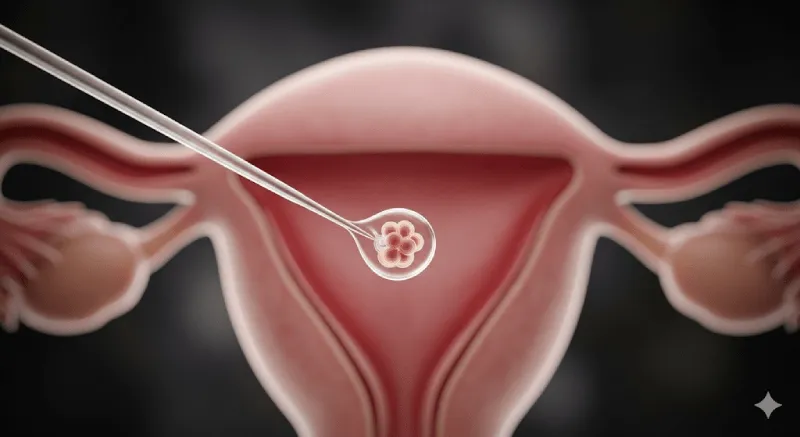
- Embryo Transfer: Typically, one or two embryos (depending on patient age and embryo quality) are transferred back into the uterus 3-5 days after egg retrieval via a soft, flexible catheter.
- Luteal Phase Support: Progesterone supplementation is administered to support the uterine lining and enhance implantation.
Persona Case Study: Ms. Eleanor Vance, 45 years old, UK Resident
Ms. Vance, a 45-year-old from the UK, presented with a history of recurrent failed IVF cycles using conventional stimulation protocols. Her AMH level was low (0.8 ng/mL) and her AFC was limited (4-5 follicles). Traditional IVF attempts had resulted in poor egg quality and no viable embryos. She was understandably hesitant about further aggressive stimulation due to associated risks and emotional distress.
Following comprehensive consultation, Ms. Vance opted for NC-IVF in Istanbul. Her cycle was meticulously monitored, and only one dominant follicle matured. Egg retrieval yielded a single mature oocyte, which was successfully fertilized with ICSI using sperm prepared with micro-chip sorting. The resulting embryo was of good morphological quality, as assessed by the Embryoscope. Single Embryo Transfer (SET) was performed on day 5. Beta HCG testing (pregnancy test) 14 days post-transfer returned a positive result. Subsequent ultrasound confirmed a viable intrauterine pregnancy.
Ms. Vance’s case highlights the potential of NC-IVF for low responders. The minimized stimulation reduced her anxiety and physical discomfort, while the focus on egg quality maximized the chances of fertilization and implantation with a single, carefully selected embryo.
Risk Mitigation Strategies
While NC-IVF offers a gentler approach, potential risks remain. Our clinic implements rigorous protocols to mitigate these:
- Careful Patient Selection: NC-IVF isn’t suitable for all low responders. Patients with severely diminished ovarian reserve or underlying medical conditions require thorough evaluation.
- Proactive Monitoring: Intensive follicular monitoring, including both ultrasound and hormonal assessments, is crucial to ensure follicle development is on track and to prevent premature ovulation.
- Ovarian Torsion Risk: Although less common in NC-IVF due to fewer follicles, ovarian torsion remains a possibility. Patients are educated about the symptoms (acute pelvic pain) and instructed to seek immediate medical attention if they experience them.
- Empty Follicle Syndrome: This rare complication, where a follicle appears normal on ultrasound but contains no egg, is addressed through meticulous follicle aspiration technique.
- Multiple Pregnancy Risk: While single embryo transfer is the standard practice, the possibility of fraternal twins exists if more than one mature egg is retrieved and fertilized. Thorough counselling regarding the risks of multiple gestation is provided.
- Infection Control: Strict adherence to sterile techniques during egg retrieval and embryo transfer minimizes the risk of infection.
Furthermore, our clinic maintains the highest standards of medical care, being JCI (Joint Commission International) Accredited and regulated by the Turkish Ministry of Health. We accept payments in USD, EUR, and GBP and offer comprehensive travel assistance, including guidance on obtaining an e-visa (available for most UK/US/EU citizens for a 90-day stay) and recommendations for accommodation in Istanbul (City/Boutique), Antalya (Resort/Beach), or Izmir (Aegean/Thermal) for post-transfer recovery.
Cost Considerations
A standard NC-IVF cycle in Istanbul typically ranges from 3,000 – 5,000 USD. Adding Preimplantation Genetic Testing (PGT) increases the cost by 1,500 – 3,000 USD. Egg donation is a legal and viable option in Turkey, but costs vary depending on donor characteristics and agency fees. A detailed cost breakdown is provided to all patients during the consultation process.
It’s important to note that success rates with NC-IVF are inherently influenced by age and ovarian reserve. While success rates can be as high as 60-70% for patients under 35, they decrease to approximately 15-20% for those over 42. However, NC-IVF offers a valuable option for low responders who may have limited alternatives.
Natural Cycle IVF for “Low Responders”: Recovery Logistics, Cost Audit, & Medical Verdict – Istanbul & Antalya
For patients classified as “low responders” – those exhibiting diminished ovarian reserve (DOR) or a suboptimal response to conventional ovarian stimulation protocols – Natural Cycle IVF (NC-IVF) presents a paradigm shift in assisted reproductive technology. CureHoliday.com is dedicated to facilitating access to this increasingly popular approach, particularly within the advanced medical landscape of Istanbul and Antalya, Turkey. This pillar details the recovery logistics, a comprehensive cost audit compared to Western nations, and a final medical verdict regarding the suitability of NC-IVF for low responders, focusing on 2026 projections.
Recovery Hubs: Tailoring Your Post-Cycle Experience
Unlike traditional IVF which often involves more intensive monitoring and potentially higher medication side effects, NC-IVF prioritizes a gentler physiological approach. This translates to a potentially smoother recovery period, allowing for strategic planning of post-cycle recuperation. Turkey offers diverse recovery hubs catering to varying patient preferences:
- Istanbul (City/Boutique): Ideal for patients desiring cultural immersion and easy access to amenities. Post-transfer, patients can continue with a normal, albeit relaxed, routine. Istanbul’s well-developed infrastructure supports comprehensive post-operative care, with readily available nutritional guidance and psychological support—critical components following any IVF cycle, particularly for those experiencing the emotional strain of low responsiveness. Expect 5-star hotel options averaging $150-300 USD per night.
- Antalya (Resort/Beach): Provides a restorative environment conducive to relaxation and stress reduction. The Mediterranean climate and access to healthy cuisine are advantageous for post-cycle recovery. Focus is on maximizing endometrial receptivity through lifestyle factors like diet and gentle exercise. Many resorts offer dedicated wellness programs. Costs range from $100-250 USD per night for quality accommodation.
- Izmir (Aegean/Thermal): Increasingly popular due to its thermal springs, believed to enhance uterine blood flow and potentially improve implantation rates, although this remains an area of ongoing research. The Aegean coast also offers a tranquil setting and opportunities for mindful activities. Hotels average $120-200 USD per night.
A crucial element of post-cycle care is meticulous monitoring of beta-hCG levels (pregnancy hormone) and early pregnancy ultrasound scans. Clinics in Istanbul and Antalya provide these services, with remote monitoring options available for patients returning to their home countries after the initial post-transfer period. Detailed post-transfer instructions, including guidance on progesterone support (often administered vaginally or intramuscularly) and lifestyle recommendations, are integral.
2026 Cost Audit: Turkey vs. Western Countries
The economic advantages of pursuing NC-IVF in Turkey remain significant, projected to widen even further by 2026 due to currency fluctuations and increasing healthcare costs in Western nations. Here’s a detailed breakdown:
- Standard NC-IVF Cycle: In Turkey, expect a cost of 3,000 – 5,000 USD. Comparable cycles in the US typically range from $12,000 – $20,000 USD. The UK average is £8,000 – £15,000 GBP (approximately $10,000 – $19,000 USD).
- NC-IVF with PGT (Preimplantation Genetic Testing): Adding PGT in Turkey will increase the cost to 4,500 – 8,000 USD. In the US, PGT adds $5,000 – $10,000 USD to the base cycle cost. The UK sees similar additions of £3,000 – £7,000 GBP (approximately $3,800 – $8,800 USD).
- Donor egg, sperm and embryo treatment is prohibited in Turkey; assisted reproduction is permitted only with the couple’s own gametes. Expect $2,000 – $5,000 USD for donor compensation and associated costs. This is considerably less than the $10,000 – $20,000 USD typically charged in the US.
These figures *exclude* travel and accommodation costs. However, factoring in round-trip flights, lodging, and living expenses, the overall savings remain substantial. Furthermore, Turkish clinics often offer package deals that bundle cycle costs with accommodation and transportation, simplifying the budgeting process.
The Medical Verdict: NC-IVF for Low Responders – A Nuanced Approach
NC-IVF isn’t a universal solution, but it’s gaining traction as a viable option for low responders. The principle relies on utilizing the natural follicular development process, minimizing the use of potentially counterproductive gonadotropic stimulation. This approach is predicated on the understanding that high doses of stimulating drugs, while intended to maximize egg yield, can paradoxically reduce oocyte quality in DOR patients, leading to decreased fertilization and implantation rates.
Key Considerations:
- AMH & AFC Assessment: Anti-Mullerian Hormone (AMH) levels and Antral Follicle Count (AFC) are critical prognostic indicators. While low AMH/AFC doesn’t preclude NC-IVF, it necessitates realistic expectations.
- Monitoring Protocol: NC-IVF requires meticulous monitoring via transvaginal ultrasound and estradiol (E2) level assessment. Careful observation of follicular growth is paramount. Some clinics incorporate 3D ultrasound to assess endometrial pattern and receptivity.
- Triggering Ovulation: Ovulation is typically triggered with a single dose of hCG or a GnRH agonist, timed precisely based on follicular maturity.
- Adjunctive Technologies: Turkish clinics routinely employ advanced technologies to optimize outcomes. This includes ICSI (Intracytoplasmic Sperm Injection) to address potential fertilization challenges, Micro-chip sperm sorting (e.g., MicroSort) to select for viable sperm, and Embryoscope time-lapse imaging to monitor embryo development and identify those with the highest implantation potential.
Success Rates: Success rates with NC-IVF for low responders are understandably lower than for conventional IVF in younger, high-responder patients. However, data suggests up to 60-70% for patients under 35. For women over 42, success rates may fall to approximately 15-20%, emphasizing the importance of individualized counseling and consideration of alternative options like egg donation.
The medical verdict is that NC-IVF, performed in a Ministry of Health–authorised facility like those prevalent in Istanbul and Antalya, represents a valuable, often more comfortable, and financially accessible option for low responders. A thorough medical evaluation, realistic expectations, and a collaborative approach between the patient and the fertility specialist are essential for maximizing the chances of success. CureHoliday.com ensures this through careful clinic selection and comprehensive patient support.
Ready to consult a specialist? Schedule a Free Consultation for Natural Cycle IVF for “Low Responders” in Turkey with cureholiday.com
Free Consultation
Fill out the form below to get your free medical travel plan and price quote.
Sources and how to verify this yourself
- HFEA (UK regulator), Fertility treatment 2024: trends and figures — average birth rate 30% per embryo transferred with the patient’s own eggs; 38% at ages 18–34 and 8% at 43–44. source
- Ministry of Health, Regulation on Assisted Reproductive Treatment Practices and Centres (ÜYTE), Official Gazette 30 September 2014 — treatment is limited to married couples using their own gametes; donor eggs, donor sperm, donor embryos and surrogacy are not permitted in Türkiye. source
- Ministry of Health, Regulation on International Health Tourism and Tourist Health, Official Gazette 26 April 2025, No. 32882 — authorisation requirement for facilities and intermediaries, TÜSKA accreditation, compulsory complication insurance (deadline 31 December 2025 for insurance, 31 December 2026 for accreditation). source
- Ministry of Health, Regulation on Promotion and Information Activities in Health Services, Official Gazette 12 November 2025, No. 33075 — treatment promises and guarantees are prohibited; price and campaign announcements are permitted only within international health tourism. source