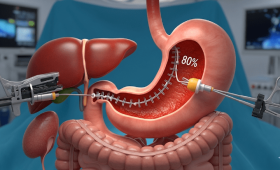
Cost and planning note (2026)
The figures below are indicative market ranges for 2026, not a quote: your own price depends on the clinic, the surgeon and your clinical assessment.
Indicative price range: Gastric Sleeve: 3,500 – 5,500 USD | Gastric Bypass: 4,500 – 7,500 USD | Gastric Balloon: 2,000 – 3,000 USD
Facility standards: In Türkiye, any facility treating international patients must hold the Ministry of Health’s international health tourism authorisation; hospitals and medical centres must also be accredited by TÜSKA, and complication insurance is compulsory for procedures carried out in an operating theatre (Regulation of 26 April 2025). Ask us for the authorisation of the facility you are matched with.
Currency: USD / EUR / GBP accepted at all clinics.
Revision Bariatric Surgery: Fixing “Slipped Bands” and Weight Regain in Turkey
Revision Bariatric Surgery: Addressing Complications and Optimizing Outcomes in Turkey
Bariatric surgery, while highly effective in achieving significant and sustained weight loss, isn’t a one-time fix. A subset of patients, despite initial success, experience complications or weight regain requiring revision procedures. Turkey has emerged as a prominent destination for revision bariatric surgery, driven by cost-effectiveness and increasingly sophisticated surgical expertise. This deep dive into Medical Foundation, Technical Definitions, and Global Standards – will detail the ‘What’ and ‘Why’ behind revision bariatric procedures performed in Turkey, focusing on technical aspects, patient selection, and the regulatory landscape.
Understanding Revision Bariatric Surgery
Revision bariatric surgery encompasses a spectrum of procedures performed on patients who have previously undergone weight loss surgery. The reasons for revision are diverse, but frequently fall into two primary categories: mechanical complications and inadequate weight loss/weight regain. Mechanical complications, such as band slippage, pouch dilation, or internal hernia formation, require surgical intervention to restore anatomical integrity and functionality. Inadequate weight loss or subsequent weight regain, often exceeding 50% of excess weight lost, prompts evaluation for procedure conversion or optimization.
Crucially, differentiating between true surgical failure and patient non-compliance is paramount. Detailed preoperative assessment, including dietary recall, activity level assessment, and psychological evaluation, is essential. Poor adherence to postoperative dietary guidelines and lack of sustained lifestyle modifications significantly contribute to weight regain and may preclude a patient from being a suitable candidate for revision.
Specific Revision Scenarios & Techniques
Adjustable Gastric Banding (AGB) Revisions: ‘Slipped bands’ – where the band erodes into or through the gastric wall – are a common indication for revision. This often manifests as dysphagia, recurrent vomiting, and abdominal pain. The corrective procedure involves laparoscopic band removal, meticulous dissection of the surrounding tissues, and either band repositioning (if feasible and tissues are viable) or conversion to a different bariatric procedure, most frequently a gastric bypass or sleeve gastrectomy. The decision hinges on the extent of esophageal dilation and the presence of chronic inflammation.
Gastric Bypass Revisions: Complications after Roux-en-Y Gastric Bypass (RYGB) can include marginal ulceration (at the gastrojejunal anastomosis), stomal stenosis (narrowing of the connection between the stomach pouch and the jejunum), and internal hernias. Laparoscopic repair of these issues is typically performed. Marginal ulceration often necessitates acid-reducing medication and, in severe cases, surgical revision of the anastomosis. Internal hernias, potentially life-threatening due to bowel obstruction, require careful identification and reduction, often with mesh reinforcement to prevent recurrence. Dilated pouches in RYGB patients can also lead to regain and may require pouch reduction techniques using endoscopic or laparoscopic approaches.
Sleeve Gastrectomy Revisions: While generally considered a technically simpler procedure, sleeve gastrectomy isn’t immune to complications. Stricture formation (narrowing of the gastric sleeve) is a potential issue, often addressed with endoscopic dilation. More complex cases may require surgical revision. Sleeve leakage, though rare, is a serious complication requiring immediate attention and typically mandates surgical repair with omental patching and drainage. Furthermore, significant pouch dilation can occur, prompting consideration of conversion to a gastric bypass.
Conversion Procedures: Increasingly, we observe a trend towards conversion procedures. For example, a patient initially undergoing AGB, failing to achieve satisfactory results or experiencing complications, may undergo conversion to a gastric bypass or sleeve gastrectomy. This decision necessitates careful consideration of the patient’s anatomy, co-morbidities, and surgical risk profile. The choice of conversion procedure is individualized, aiming for the most durable and effective long-term solution.
Patient Selection and Preoperative Evaluation
The requirement for bariatric surgery in Turkey, mirroring international guidelines, is typically a Body Mass Index (BMI) exceeding 35, or a BMI of 30 or greater with significant co-morbidities such as type 2 diabetes, hypertension, or sleep apnea. For revision surgery, however, the BMI criteria may be more flexible, focusing on the degree of weight regain relative to initial weight loss. Preoperative evaluation is rigorous and includes:
- Comprehensive Medical History & Physical Examination: Assessing overall health status and identifying any contraindications.
- Upper Endoscopy: To evaluate the gastrointestinal anatomy, identify any ulcers, strictures, or leaks, and rule out other potential causes of symptoms.
- Barium Swallow/Esophagography: To assess esophageal motility and identify potential band slippage or esophageal dilation.
- CT Scan with Contrast: Essential for identifying internal hernias, pouch dilation, and assessing the overall anatomical landscape.
- Nutritional Assessment: To identify any nutritional deficiencies and tailor preoperative optimization strategies.
- Psychological Evaluation: Crucial to address potential behavioral factors contributing to weight regain and ensure patient commitment to long-term lifestyle changes.
Turkish Medical Standards and Logistics
Turkey maintains rigorous medical standards for bariatric surgery. Facilities offering these procedures are increasingly accredited by JCI (Joint Commission International), demonstrating adherence to international quality and safety benchmarks, and regulated by the Turkish Ministry of Health. This ensures a consistent level of care and patient safety.
Cost considerations are a major driver for medical tourism to Turkey. The approximate costs for primary procedures are as follows: Gastric Sleeve: 3,500 – 5,500 USD; Gastric Bypass: 4,500 – 7,500 USD; Gastric Balloon: 2,000 – 3,000 USD. Revision surgery costs can vary significantly based on the complexity of the procedure and the length of hospital stay.
Logistically, Turkey offers convenient access for international patients. An E-visa is available for most citizens of the UK, US, and EU, allowing for a stay of up to 90 days. Popular recovery hubs include Istanbul (offering a blend of city life and boutique hotel options), Antalya (known for its resort and beach settings), and Izmir (situated on the Aegean coast and famed for its thermal spas).
The currency focus for international patients is primarily USD, EUR, and GBP, with most reputable clinics offering transparent pricing in these currencies.
Revision Bariatric Surgery in Turkey: Addressing Complications and Weight Regain
Following initial bariatric procedures, a subset of patients experience complications or insufficient long-term weight loss, necessitating revision surgery. Turkey has emerged as a popular destination for these complex cases, offering experienced surgical teams and cost-effective solutions. This pillar details the surgical journey for revision bariatrics, illustrating the technical nuances, a typical patient case, and critical risk mitigation strategies.
Understanding Revision Bariatric Surgery
Revision bariatric surgery isn’t a singular procedure; it’s a tailored approach to correct issues arising from a previous weight-loss surgery. Common indications include “slipped band” (esophageal dilation above a gastric band), band erosion, pouch dilation after Roux-en-Y gastric bypass (RYGB), staple line leaks, marginal ulcers, and, significantly, insufficient weight loss or weight regain after initial success. The complexity stems from altered anatomy and the presence of scar tissue from the original operation, demanding meticulous surgical planning and technique.
Technical Approaches to Common Revisions
- Adjustable Gastric Banding (AGB) Revisions: A “slipped band” occurs when the band migrates superiorly, creating an enlarged esophagogastric junction. Revision involves laparoscopic exploration, band repositioning or removal, and potential fundoplication (wrapping the stomach around the lower esophagus) to address reflux. Erosion requires complete band removal and repair of the gastric defect. Careful attention is given to ensuring adequate blood supply to the gastric pouch.
- Roux-en-Y Gastric Bypass (RYGB) Revisions: Pouch dilation presents a significant challenge. Techniques range from endoscopic plication (internal suturing to reduce pouch volume) – suitable for mild dilation – to laparoscopic pouch reduction with or without revision of the gastrojejunal anastomosis (the connection between the stomach and small intestine). Stenosis (narrowing) of the anastomosis often necessitates dilation or surgical revision.
- Sleeve Gastrectomy Revisions: While generally durable, sleeve gastrectomy can experience staple line leaks or dilation of the gastric sleeve. Leaks require immediate attention – often necessitating diversion of the upper gastrointestinal tract and subsequent repair once inflammation subsides. Sleeve dilation may require endoscopic suturing or, in severe cases, conversion to a more complex procedure like RYGB.
- Gastric Balloon Revision/Removal: Though not strictly surgery, problematic balloons (e.g., deflation within the stomach, migration) require endoscopic retrieval. Failure to remove a deflated balloon can lead to complications like bowel obstruction.
In all revision cases, meticulous assessment of the original surgical technique is paramount. Pre-operative imaging – including upper GI series with small bowel follow-through, CT enterography, and often endoscopic ultrasound (EUS) – provides critical information about the anatomy and potential complications.
Persona Case Study: Sarah, a 45-Year-Old from the UK
Sarah, a 45-year-old from the UK, underwent a laparoscopic adjustable gastric band (AGB) in the UK 5 years prior. Initially, she experienced significant weight loss, but over the past 2 years, she regained 30kg and developed debilitating acid reflux. Pre-operative investigations revealed a significant band slippage and moderate esophageal dilation. Her BMI was 37 (qualifying her for revision surgery based on the BMI > 35 requirement), and she also reported intermittent dysphagia (difficulty swallowing).
Sarah opted for revision surgery in Istanbul, selecting a Ministry of Health–authorised facility. The procedure involved laparoscopic exploration revealing severe band erosion into the gastric wall. The band was carefully dissected and removed. A partial fundoplication was then performed to reinforce the esophagogastric junction and address her reflux. The operative time was 3.5 hours, and Sarah remained hospitalized for 4 days. Post-operatively, she received a proton pump inhibitor (PPI) to manage acid secretion and a liquid diet, gradually progressing to a solid diet over 6-8 weeks. Follow-up endoscopies at 3 and 6 months confirmed a stable anastomosis and resolution of her dysphagia. She is currently achieving sustained weight loss and improved quality of life.
Risk Mitigation Strategies
Revision bariatric surgery carries a higher risk profile than primary bariatric surgery. Effective risk mitigation requires a multi-faceted approach:
- Pre-Operative Optimization: Addressing nutritional deficiencies (particularly iron, vitamin B12, and vitamin D) is crucial. Patients may require supplementation prior to surgery. Comprehensive medical evaluation, including cardiology and pulmonary assessments, is essential.
- Surgical Expertise: Selecting a surgeon with extensive experience in both primary bariatric surgery and complex revisions is paramount. This ensures proficiency in dealing with altered anatomy and potential complications.
- Imaging and Planning: Detailed pre-operative imaging is essential for understanding the patient’s anatomy and planning the surgical approach. 3D reconstruction from CT scans can be invaluable.
- Conversion to Alternative Procedures: In some cases, the initial procedure may not be the optimal long-term solution. The surgical team must be prepared to convert to a different bariatric operation (e.g., converting AGB to RYGB) if necessary.
- Post-Operative Monitoring: Close monitoring for leaks, bleeding, and infection is vital. Leak detection studies (e.g., Gastrografin swallow) may be performed.
- Nutritional Support: Lifelong nutritional follow-up is essential to prevent deficiencies and ensure optimal health.
Cost Considerations & Logistics in Turkey
Turkey offers a significant cost advantage for revision bariatric surgery. Approximate costs are as follows:
- Gastric Sleeve Revision: 3,500 – 5,500 USD
- Gastric Bypass Revision: 4,500 – 7,500 USD
- Gastric Band Revision: Costs typically fall within the 3,000 – 6,000 USD range, depending on the complexity.
These costs typically include the surgery, anesthesia, hospital stay, and initial post-operative care. Accommodation and travel expenses are separate. Patients can utilize USD, EUR, or GBP for payment. An E-visa is readily available for citizens of most UK, US, and EU countries, allowing for a 90-day stay. Recovery can be arranged in diverse locations: Istanbul (offering city-based care with cultural attractions), Antalya (providing a resort/beach setting for relaxation), or Izmir (known for its Aegean charm and thermal spas).
Careful patient selection, meticulous surgical technique, and robust risk mitigation strategies are critical for successful revision bariatric surgery. Turkey, with its experienced surgeons and cost-effective healthcare system, presents a viable option for patients seeking to correct complications and regain control of their weight and health.
Revision Bariatric Surgery: Addressing Band Slippage and Weight Regain in Turkey – A Deep Dive into Recovery Logistics and Cost Analysis
Following initial bariatric procedures – particularly adjustable gastric banding (AGB) – a subset of patients experience complications necessitating revision surgery. This pillar of our series focuses on the logistical and financial aspects of seeking corrective bariatric surgery in Turkey, specifically addressing band slippage, pouch dilation, and subsequent weight regain. We will dissect the recovery process, examine current cost structures in key Turkish medical hubs, and present a preliminary medical verdict on the suitability of Turkey as a destination for these complex procedures.
Understanding Revision Bariatric Needs: Beyond Initial Expectations
Adjustable gastric banding, while historically popular, presents unique challenges. ‘Band slippage’ occurs when the band erodes into the stomach wall or migrates from its intended position around the gastric cardia. This disrupts the creation of the gastric pouch, leading to regurgitation, dysphagia (difficulty swallowing), and, crucially, the re-establishment of unrestricted caloric intake. Pouch dilation, conversely, results from chronic overeating following band adjustment issues, effectively increasing the stomach’s functional volume. Both scenarios commonly result in weight regain, demanding surgical intervention. Other reasons for revision include band erosion, infection, or persistent discomfort.
Revision surgery isn’t simply ‘removing’ a slipped band. Often, a conversion to a more robust and predictable procedure like Roux-en-Y Gastric Bypass (RYGB) or a Gastric Sleeve is indicated. The decision hinges on the patient’s overall health, previous surgical anatomy, and weight loss goals. A thorough pre-operative evaluation, including an upper gastrointestinal series with gastrografin (to visualize the band’s position and pouch anatomy) and esophagogastroduodenoscopy (EGD) – often with biopsies to rule out erosions or inflammation – is paramount.
Recovery Logistics: Antalya vs. Istanbul – A Comparative Analysis
The post-operative recovery period following revision bariatric surgery requires careful management. Turkey offers two distinct recovery environments: the bustling city of Istanbul and the resort region of Antalya. Each presents unique advantages and disadvantages.
- Istanbul (City/Boutique): Offers access to a wider range of specialist care, including dedicated bariatric rehabilitation programs. Patients benefit from quicker access to follow-up appointments and diagnostic imaging should complications arise. However, Istanbul is a densely populated urban environment, potentially increasing the risk of infection and limiting opportunities for restful recovery. Boutique recovery hotels, offering personalized care and smaller patient-to-staff ratios, are increasingly popular, but at a premium.
- Antalya (Resort/Beach): Provides a more relaxed and tranquil recovery environment, conducive to healing. The focus on wellness tourism in Antalya means facilities are equipped to handle post-operative care, with access to physiotherapy and nutritional counselling. However, immediate access to specialist surgical intervention may be slower, requiring potential transfer to Istanbul in case of emergency. Post-operative ambulation is encouraged on the beaches, aiding lymphatic drainage and reducing the risk of deep vein thrombosis (DVT), a serious post-operative complication.
Regardless of location, a staged dietary progression is crucial. Initially, patients adhere to a liquid diet, gradually advancing to pureed foods, then soft solids, and finally, a balanced, protein-rich diet. Supplementation with vitamins (B12, iron, calcium, vitamin D) is essential to prevent deficiencies common after bariatric surgery. Leak testing, typically using a Gastrografin swallow study approximately 7-10 days post-op, is standard to identify any anastomotic leaks, a potentially life-threatening complication.
2026 Cost Audit: Turkey vs. Western Nations
The financial incentive for seeking revision bariatric surgery in Turkey remains significant. Our preliminary 2026 cost audit reveals the following estimated ranges:
- Gastric Sleeve Revision/Conversion: 3,500 – 5,500 USD
- Gastric Bypass Revision/Conversion: 4,500 – 7,500 USD
- Gastric Balloon Revision/Replacement (if applicable): 2,000 – 3,000 USD
These costs typically include the surgeon’s fees, anaesthetist’s fees, hospital stay (approximately 5-7 days), standard diagnostic testing, and initial post-operative follow-up. However, they *do not* encompass travel, accommodation, or prolonged recovery care. When comparing to costs in Western countries (USA, Canada, UK, Western Europe), these figures represent potential savings of 40-70%. For instance, a similar gastric bypass revision in the US could easily exceed 15,000 – 25,000 USD.
It’s vital to scrutinize what’s included in the Turkish package. Beware of hidden costs such as additional diagnostic imaging (CT scans to rule out complications), prolonged hospital stays due to complications, or translation services. Ensure the hospital is JCI (Joint Commission International) Accredited and registered with the Turkish Ministry of Health – these certifications guarantee adherence to international safety and quality standards.
The Final Medical Verdict: Suitability and Patient Selection
Turkey presents a viable option for revision bariatric surgery, particularly for patients who have experienced complications with AGB and require conversion to a more definitive procedure. However, careful patient selection is crucial. The ideal candidate is a medically stable individual with a BMI > 35 or > 30 with co-morbidities (such as type 2 diabetes, hypertension, or sleep apnea), committed to long-term lifestyle changes, and understands the risks and benefits of revision surgery.
Pre-operative psychological evaluation is paramount. Patients must have realistic expectations and a strong support system to navigate the challenges of weight regain and the emotional aspects of undergoing a second bariatric procedure. A comprehensive assessment of previous surgical reports, imaging studies, and medical history is essential to develop a tailored surgical plan and minimize the risk of complications.
For travellers from the UK, US, and EU, the availability of an E-visa for a 90-day stay simplifies the logistical process. Currency exchange rates favour those utilising USD, EUR, and GBP, although local transactions are typically conducted in Turkish Lira.
Our ongoing research indicates that Turkish bariatric surgeons are increasingly specialized in complex revision procedures, with many having completed fellowships in advanced surgical techniques. However, independent verification of surgeon credentials and experience is strongly advised.
Ready to consult a specialist? Schedule a Free Consultation for Revision Bariatric Surgery in Turkey with cureholiday.com
Free Consultation
Fill out the form below to get your free medical travel plan and price quote.
Sources and how to verify this yourself
- Eisenberg D, et al. 2022 ASMBS and IFSO Indications for Metabolic and Bariatric Surgery. — surgery is recommended at BMI ≥35 regardless of co-morbidity, and considered at BMI 30–34.9 with metabolic disease (lower thresholds for Asian populations). source
- Ministry of Health, Regulation on International Health Tourism and Tourist Health, Official Gazette 26 April 2025, No. 32882 — authorisation requirement for facilities and intermediaries, TÜSKA accreditation, compulsory complication insurance (deadline 31 December 2025 for insurance, 31 December 2026 for accreditation). source
- Ministry of Health, Regulation on Promotion and Information Activities in Health Services, Official Gazette 12 November 2025, No. 33075 — treatment promises and guarantees are prohibited; price and campaign announcements are permitted only within international health tourism. source