Cost and planning note (Kuşadası 2026 Data)
The figures below are indicative market ranges, not a quote: your own price is confirmed after a clinical assessment.
Indicative price range: Hollywood Smile Full: 3,000 – 5,000 USD | Zirconia Crown Per: 180 – 300 USD | E Max Veneer Per: 250 – 400 USD | Dental Implant Per: 400 – 800 USD (Top Brands) | All On 4 System: 4,000 – 7,000 USD | All On 6 System: 5,500 – 9,000 USD | Laser Whitening: 200 – 350 USD
Facility standards: In Türkiye, any facility treating international patients must hold the Ministry of Health’s international health tourism authorisation; hospitals and medical centres must also be accredited by TÜSKA, and complication insurance is compulsory for procedures carried out in an operating theatre (Regulation of 26 April 2025).
Location: Proximity to Ege Port Cruise Terminal & Ephesus.
Currency: GBP, EUR, USD accepted.
Screw-Retained vs. Cement-Retained Implant Crowns: The Technical Choice
Screw-Retained vs. Cement-Retained Implant Crowns: A Technical Deep Dive for the Discerning Patient
For patients considering dental implants as part of a comprehensive ‘Hollywood Smile’ transformation in Kuşadası, understanding the nuances of restorative options is paramount. While the implant itself represents a significant advancement in restorative dentistry, the method of attaching the crown – the visible portion of the tooth – dramatically influences long-term success, maintainability, and aesthetic outcomes. This pillar details the critical technical differences between screw-retained and cement-retained implant crowns, providing a foundation for informed decision-making, particularly within the high standards of care offered to international patients seeking treatment in Kuşadası.
The Biomechanical Considerations
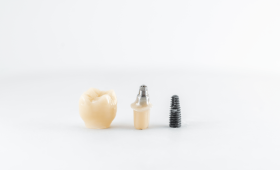
The fundamental difference lies in how the crown is secured to the implant abutment. Cement-retained crowns mimic the traditional method of crown placement on natural teeth, utilizing dental cement to establish a fixed connection. Screw-retained crowns, conversely, are mechanically fastened to the abutment with a small screw, accessible (and retrievable) through the crown itself. This seemingly simple distinction cascades into complex biomechanical implications.
Cement-retained crowns, while offering potentially superior aesthetics due to the ability to fully contour the crown margins, present a higher risk of peri-implantitis – inflammation around the implant – if excess cement remains subgingivally (below the gum line). This excess cement acts as a nidus for bacterial colonization, leading to bone loss and potential implant failure. Achieving completely cement-free margins requires meticulous technique and often, the utilization of advanced technologies such as 3D CBCT Imaging to verify complete removal during the cementation process. Clinics adhering to stringent international standards, like JCI and TÜRSAB Medical Tourism Certified accreditation, prioritize this meticulous attention to detail.
Screw-retained crowns, in contrast, avoid the risk of residual cement. The mechanical retention allows for predictable removal should maintenance or revision be required. However, the access hole for the retention screw must be addressed. Options range from composite resin fillings, meticulously matched to the crown’s shade, to utilizing a small plug within the access channel. The location of the screw access point is strategically planned during the CAD/CAM Digital Smile Design phase to minimize aesthetic impact and ensure ease of access for future adjustments.
Materials and Manufacturing Precision
The choice of crown material – zirconia, e.max, or others – interacts with the retention method. High-strength materials like zirconia, often used in the posterior (back) teeth, benefit from the robust retention offered by a screw-retained system, particularly in bruxism (teeth grinding) patients. Zirconia crowns currently range in price from 180 – 300 USD per unit. E.max, known for its superior translucency and aesthetic qualities ideal for anterior (front) teeth, can be successfully utilized in either retention method, but meticulous margin fit is critical with cement-retained e.max veneers, priced at 250 – 400 USD per unit.
Manufacturing precision is paramount in both cases. Intraoral Scanners facilitate the creation of accurate digital impressions, which are then used to design and mill the crowns with exceptional precision using CAD/CAM technology. This digital workflow minimizes distortion and ensures a passive, precise fit onto the abutment – a critical factor regardless of the retention mechanism.
Implant Platform & Connection Types
The implant platform itself influences the choice. Conical connection implants, with a tapered abutment, often lend themselves well to screw-retained restorations, providing excellent primary stability and retentive force. Platform switching – using an abutment with a smaller diameter than the implant – is a technique frequently employed with screw-retained crowns to minimize stress concentration and potentially improve soft tissue health around the implant.
External hex connections, while historically common, often require meticulous adaptation when using cement-retained restorations to ensure a stable and predictable cementation process. The type of abutment material (titanium, zirconia) also plays a role. Zirconia abutments, while aesthetically superior, require precise milling and fitting to avoid chipping or fracture, particularly with cement-retained restorations.
The All-on-X Approach & Retentive Strategies
For full-arch rehabilitations like the All-on-4 System (4,000 – 7,000 USD) or All-on-6 System (5,500 – 9,000 USD), the retention strategy becomes even more complex. While cementation is sometimes utilized for temporary restorations during the healing phase, a predominantly screw-retained approach is often favored for the final prosthetic. The sheer magnitude of the forces acting on a full-arch restoration necessitates a retrievable system for maintenance and potential repair. Multiple screws strategically positioned throughout the restoration provide redundancy and enhance stability.
Furthermore, the use of angled implants, a hallmark of the All-on-X technique, requires careful consideration of screw access. The prosthetic design must accommodate the screw channels without compromising aesthetic or functional requirements.
Kuşadası: A Hub for Advanced Implant Dentistry
Kuşadası has rapidly become a sought-after destination for dental implantology due to a confluence of factors. Beyond the attractive cost benefits – a full ‘Hollywood Smile’ transformation can range from 3,000 – 5,000 USD – the region boasts facilities equipped with the latest technologies, including those mentioned above. The availability of highly trained dental technicians proficient in CAD/CAM and digital workflows ensures consistently high-quality restorations.
The proximity to Izmir Adnan Menderes (ADB) airport (45-60 minute transfer) and the Ege Port Kuşadası cruise terminal offers seamless accessibility for international patients. The beautiful surroundings – including the Ephesus Ancient City, Pigeon Island, Ladies Beach, and Dilek Peninsula National Park – allow for a relaxing and restorative experience alongside treatment. Post-operative recovery can be enjoyed in luxurious accommodations ranging from boutique hotels to beachfront resorts and even thermal spas.
Patient coordination is further enhanced by staff fluent in English, German, and Irish, ensuring clear communication and a personalized experience. A 90-day E-visa is available for citizens of the UK, Ireland, US, and EU, and a Free Online Video Consultation is available to discuss individual needs and treatment plans with Cure Holiday specialists prior to travel.
Screw-Retained vs. Cement-Retained Implant Crowns: The Technical Choice – A Structural Journey
The successful integration of dental implants hinges not only on osseointegration – the biological fusion of the implant with the jawbone – but also on the meticulous selection and application of the prosthetic restoration. At the heart of this lies the decision between screw-retained and cement-retained implant crowns. This pillar delves into the technical nuances of each option, outlining the step-by-step procedure employed within our Kuşadası facilities, illustrated through a focused case study, and detailing stringent safety protocols. Understanding the biomechanical advantages and potential clinical considerations is paramount to delivering long-term functional and aesthetic success.
The Biomechanical Landscape
Both screw-retained and cement-retained restorations aim to achieve predictable function and aesthetics. However, their differing modes of retention profoundly impact the stress distribution around the implant. Cement-retained crowns mimic the conventional crown and bridge methodology, utilizing dental cement – typically resin-modified glass ionomer or composite – to establish a fixed connection between the crown and the abutment. This creates a passive fit, relying on cement to fill microscopic gaps. While offering excellent aesthetics, cement excess can contribute to peri-implantitis, an inflammatory condition affecting the tissues surrounding the implant. Furthermore, cement failure, though less common with modern cements, necessitates retreatment.
Screw-retained restorations, conversely, are mechanically retained via a screw accessing the implant through the crown. This allows for precise control over the seating of the crown on the abutment, fostering a highly accurate and predictable fit. The absence of cement eliminates the risk of cement-induced inflammation and facilitates easier retrieval for maintenance or repair. Biomechanically, screw-retained crowns, when properly designed, exhibit superior stress distribution, minimizing the risk of screw loosening or abutment fracture. The axial load is directly transferred to the implant, rather than being distributed unevenly through a cement layer.
Step-by-Step Procedure in Kuşadası
Our approach in Kuşadası prioritizes a digital workflow, leveraging advanced technologies to ensure precision and predictability. The procedure can be broadly divided into these stages:
- Comprehensive Diagnostic Phase: Utilizing 3D CBCT Imaging and Intraoral Scanners, a detailed assessment of the patient’s anatomy, bone density, and existing dental condition is performed. This data forms the basis for a virtual treatment plan, including implant placement position and prosthetic design.
- Implant Placement: Based on the pre-operative planning, implants – utilizing top brands – are surgically placed. Initial stability is crucial and assessed using resonance frequency analysis. The cost of a single dental implant typically ranges from 400 – 800 USD.
- Abutment Selection & Connection: Following a healing period allowing for osseointegration (typically 3-6 months), the appropriate abutment is selected. This is often a custom-milled abutment, fabricated using CAD/CAM Digital Smile Design, tailored to the patient’s specific anatomy and aesthetic requirements. The abutment is connected to the implant, applying a calibrated torque to ensure secure engagement.
- Crown Design & Fabrication: A digital impression of the abutment is taken using an intraoral scanner. This is then transferred to a dental laboratory, where the crown is designed and milled from materials such as zirconia or e.max. A zirconia crown per unit typically costs between 180 – 300 USD, while an e.max veneer per unit falls within the 250 – 400 USD range.
- Provisional Restoration (Screw-Retained Option): A provisional screw-retained crown is often fabricated and fitted to assess phonetics, aesthetics, and occlusion. This allows for any necessary adjustments before the final restoration is delivered.
- Final Restoration Delivery (Screw-Retained or Cement-Retained): For screw-retained crowns, the final restoration is seated onto the abutment and secured with the appropriate screws. Access holes are then filled with composite resin for aesthetic purposes. For cement-retained crowns, meticulous cementation techniques are employed, removing excess cement with Soft Tissue Lasers to minimize the risk of peri-implant complications.
Case Study: 55-Year-Old UK Patient
A 55-year-old male patient from the UK presented with a failing bridge in the upper anterior region. Following a thorough evaluation, a treatment plan involving a single dental implant and a screw-retained zirconia crown was proposed. 3D CBCT Imaging revealed adequate bone volume, and implant placement was performed under local anesthesia. The patient’s preference for a robust, easily maintainable restoration guided the decision towards a screw-retained design. Post-operative assessment demonstrated excellent osseointegration, and the final zirconia crown was delivered with precise adaptation and harmonious aesthetics. The patient, benefitting from the proximity to Ege Port Kuşadası, opted for post-operative checkups during a scheduled cruise, highlighting the convenience of the location.
Safety Protocols & Accreditation
Patient safety is paramount. Our Kuşadası facilities adhere to the highest international standards of care, including:
- Sterilization: Strict adherence to sterilization protocols, employing validated autoclaves and disinfectant solutions.
- Antibiotic Prophylaxis: Pre-operative antibiotic administration where indicated, based on the patient’s medical history.
- Post-Operative Monitoring: Close monitoring for any signs of infection or complications. Patients receive detailed post-operative instructions and access to 24/7 support.
- Material Biocompatibility: Utilization of only biocompatible materials, rigorously tested and certified.
We maintain accreditations from JCI (Joint Commission International), are TÜRSAB Medical Tourism Certified, and operate under the full regulation of the Ministry of Health. Our team includes English, German, and Irish-specialized Patient Coordinators who ensure a seamless experience for international patients. The cost for a “Hollywood Smile” full mouth restoration ranges from 3,000 – 5,000 USD, while All-on-4 and All-on-6 systems are priced between 4,000 – 7,000 USD and 5,500 – 9,000 USD respectively. Additionally, patients can enjoy the surrounding beauty of Kuşadası, with attractions like the Ephesus Ancient City (a mere 20 minutes away), Pigeon Island, and Ladies Beach, and choose from luxury boutique hotels, beachfront resorts, or thermal spas for their recovery.
Furthermore, all patients benefit from a 90-day E-visa for visitors from the UK, Ireland, US and EU, and a free online video consultation is available before travel to address any pre-treatment concerns.
Kuşadası: Seamless Travel Logistics & Recovery for Dental Implants
Cure Holiday recognizes that undergoing dental implant treatment, particularly procedures like All-on-4 or All-on-6, necessitates a holistic approach extending beyond the surgical chair. For patients choosing Kuşadası, Turkey, as their destination for restorative dentistry, meticulous travel planning and a restorative recovery experience are paramount. This pillar details the logistical infrastructure and post-operative support systems available to ensure a stress-free and successful dental journey.
Arrival & Transit: Izmir Adnan Menderes Airport (ADB)
The primary access point for international dental travelers to Kuşadası is Izmir Adnan Menderes (ADB) Airport. With efficient connections from major European hubs, ADB offers a convenient starting point. Our dedicated logistics team facilitates seamless transfers to Kuşadası, typically taking between 45-60 minutes depending on traffic and chosen accommodation. Beyond standard airport pick-up, we offer options for executive car services and, for larger groups, private coach transportation. Pre-arranged, multilingual drivers ensure a comfortable and efficient journey, allowing patients to focus on preparing for their initial consultations. For patients undergoing more complex procedures like full-arch restorations, a preliminary assessment of medical history via telehealth is encouraged to streamline the on-site evaluation. We utilise a comprehensive patient profile system to share crucial medical details with our partner dental professionals, enabling a faster, more informed diagnostic process.
Strategic Cruise Port Access & ‘Day Treatment’ Potential
Kuşadası’s Ege Port is a significant cruise destination, presenting a unique opportunity for dental tourism. For patients on cruise holidays, we offer tailored ‘day treatment’ options, specifically for procedures that require minimal downtime – such as single crown fittings, extractions, or initial consultations for implant planning. The proximity of Ege Port (< 2km from Kuşadası center) allows for a convenient, efficient experience. It’s critical to understand the limitations, however. Complex surgical procedures, particularly bone grafting or immediate implant placement, require a longer recovery period incompatible with a cruise schedule. Pre-cruise consultation and digital impressions (using intraoral scanners – see Technical Standards below) can be undertaken remotely to assess suitability and pre-plan treatment, maximizing the utility of a cruise stopover. Detailed pre-operative instructions, including dietary restrictions and post-operative medication schedules, are provided to ensure patient comfort and safety during their return to the cruise ship.
Ephesus & Beyond: Integrating Treatment with Cultural Experiences
Kuşadası isn’t merely a destination for dental work; it’s a gateway to a rich cultural heritage. The world-renowned Ephesus Ancient City, a UNESCO World Heritage site, lies just 20 minutes from Kuşadası, offering a captivating historical diversion. Beyond Ephesus, attractions like Pigeon Island (Güvercinada), Ladies Beach, and the pristine Dilek Peninsula National Park provide opportunities for relaxation and recreation during recovery periods. We understand the importance of mental well-being in the healing process and encourage patients to incorporate these cultural experiences into their recovery schedule, promoting a balanced and holistic approach. We provide fully accessible transportation options for patients with limited mobility, ensuring everyone can enjoy the sights.
Accommodation & Recovery: A Spectrum of Options
We offer a curated selection of accommodation options catering to diverse needs and budgets. These include:
- Luxury Boutique Hotels: Providing personalised service and a tranquil environment for optimal recovery.
- Beachfront Resorts: Offering direct access to the Aegean Sea and opportunities for gentle exercise and relaxation.
- Thermal Spas: Leveraging the therapeutic benefits of mineral-rich waters to accelerate healing and reduce inflammation. Post-surgical edema and discomfort can be effectively managed with controlled thermal therapy, administered under the guidance of qualified spa technicians.
For patients undergoing All-on-4 or All-on-6 procedures, we recommend a minimum stay of 7-10 days to allow for adequate osseointegration and soft tissue healing. Post-operative care includes regular check-ups, suture removal (if applicable), and meticulous oral hygiene instruction. Nutritional guidance is also provided, emphasizing soft food diets to minimise pressure on the surgical sites.
Technical Standards & Patient Safety
Cure Holiday partners with facilities adhering to stringent international standards. These include:
- Accreditations: JCI (Joint Commission International), TÜRKSAB Medical Tourism Certified, and rigorous oversight by the Turkish Ministry of Health ensure consistent quality and safety.
- Advanced Technology: Facilities utilise state-of-the-art diagnostic tools such as 3D CBCT Imaging for precise pre-operative planning, CAD/CAM Digital Smile Design for virtual treatment planning and prosthetic fabrication, Intraoral Scanners for accurate digital impressions (reducing the need for uncomfortable physical molds), and Soft Tissue Lasers for minimally invasive soft tissue management.
- Multilingual Staff: English, German, and Irish-specialized Patient Coordinators provide comprehensive support throughout the entire journey, addressing language barriers and cultural nuances. This dedicated support extends to post-operative care and follow-up communication.
The implant materials used are from globally recognised top brands, and careful attention is paid to biocompatibility and long-term stability. Detailed surgical protocols are followed to minimise complications and optimise outcomes.
Financial Transparency & Cost Overview (2026 Audit Planned)
We are committed to providing transparent and competitive pricing. Current estimates (subject to change and a full 2026 cost audit) are as follows:
- Hollywood Smile (Full Mouth): 3,000 – 5,000 USD
- Zirconia Crown (Per Tooth): 180 – 300 USD
- E-max Veneer (Per Tooth): 250 – 400 USD
- Dental Implant (Per Implant – Top Brands): 400 – 800 USD
- All-on-4 System: 4,000 – 7,000 USD
- All-on-6 System: 5,500 – 9,000 USD
- Laser Whitening: 200 – 350 USD
These prices are estimates and may vary depending on individual needs and complexity of treatment. A detailed, personalised treatment plan with a comprehensive cost breakdown is provided following a thorough consultation.
Visa Requirements & Pre-Travel Consultation
For travellers from the UK, Ireland, US, and EU, a 90-day E-visa is generally accessible, simplifying the travel process. We provide guidance on visa requirements and application procedures. Furthermore, we offer a Free Online Video Consultation with a qualified dental professional prior to travel, allowing patients to discuss their case, ask questions, and receive a preliminary assessment. This pre-travel consultation facilitates informed decision-making and ensures a smooth and efficient experience upon arrival in Kuşadası.
Planning a dental visit to Kuşadası? Get a Free Quote for Screw-Retained vs. Cement-Retained Implant Crowns in Kuşadası with cureholiday.com
Free Consultation
Fill out the form below to get your free medical travel plan and price quote.
Sources and how to verify this yourself
- Howe M-S, Keys W, Richards D. Long-term (10-year) dental implant survival: a systematic review and sensitivity meta-analysis. Journal of Dentistry, 2019 — pooled 10-year implant survival 96.4% (95% CI 95.2–97.5%); conservative sensitivity estimate 93.2%. source
- Ministry of Health, Regulation on International Health Tourism and Tourist Health, Official Gazette 26 April 2025, No. 32882 — authorisation requirement for facilities and intermediaries, TÜSKA accreditation, compulsory complication insurance (deadline 31 December 2025 for insurance, 31 December 2026 for accreditation). source
- Ministry of Health, Regulation on Promotion and Information Activities in Health Services, Official Gazette 12 November 2025, No. 33075 — treatment promises and guarantees are prohibited; price and campaign announcements are permitted only within international health tourism. source