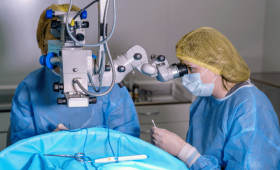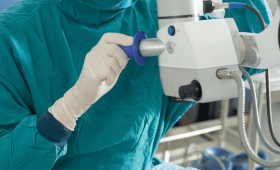
Strabismus is not just a condition specific to childhood; it is a serious health issue that directly affects the quality of life, self-confidence, and visual functions of adults as well. This guide, prepared under the title “Strabismus Surgery: Aesthetic and Functional Solution,” discusses in detail the most advanced surgical methods offered by modern medicine, recovery processes, and both the aesthetic and functional gains of this operation. Realigning the eyes in parallel is not merely a correction of outward appearance; it means the brain regaining depth perception and the elimination of complex problems such as double vision. Throughout this guide, you will discover why strabismus surgery is a life-changing procedure and how you can turn this process into a flawless experience with Cure Holiday.
What Is Strabismus And How Does It Affect Visual Functions?
Strabismus is a condition where both eyes cannot focus on the same point at the same time. In a normal visual process, images from both eyes are merged in the brain to create a single, three-dimensional image. However, in the case of strabismus, one eye turns in a different direction, causing two different images to be sent to the brain. This situation poses a risk of “lazy eye” (amblyopia), especially in children, while in adults it leads to the loss of depth perception and serious visual confusion. The misalignment of the eyes strains the brain’s focusing capacity and causes a constant feeling of fatigue.
Why Is Strabismus Surgery Both An Aesthetic And Functional Solution?
Strabismus surgery is often perceived only as a “cosmetic” intervention, but in medical literature, the situation is much more comprehensive. From a functional perspective, the surgery ensures that the eyes work in coordination, restoring or improving binocular vision (seeing with both eyes) and depth perception (stereopsis). From an aesthetic standpoint, the natural and parallel position of the eyes completely changes a person’s perspective in social interactions. Eye contact is a fundamental element in human communication, and this surgery provides psychological healing by allowing patients to feel more comfortable and secure in society.
Who Are The Most Suitable Candidates For Strabismus Surgery?
The candidacy process for this surgical intervention is determined by a comprehensive eye examination. Individuals of all ages who cannot achieve full correction with glasses, prismatic lenses, or patching treatments are potential candidates. Children with congenital strabismus, adults experiencing eye misalignment after trauma, or those with sudden-onset strabismus due to systemic diseases like diabetes are evaluated for surgery. The most important criteria are the patient’s general health being suitable for anesthesia and the imbalance in the eye muscles being at a level that can be corrected surgically.
How Does The Eye Muscle System Work And How Is Alignment Achieved?
There are six main muscles that move the eyeball. These muscles work in perfect synchronization with neural messages coming from our brain. Strabismus occurs as a result of one of these muscles being stronger or weaker than the others, or a malfunction in the neural control mechanism. The basic logic in surgery is to re-establish this “push-pull” balance. Weakening overly strong muscles by moving their attachment point backward (recession) or strengthening weak muscles by shortening them (resection) allows the eye to return to its ideal central position.
What Are The Most Common Types Of Eye Misalignment?
Strabismus is named differently according to the direction of the turn. The inward turning of the eyes is called “esotropia,” while the outward turning is called “exotropia.” Although less common, there are also vertical strabismus cases where the eyes turn upward (hypertropia) or downward (hypotropia). In some cases, the turn is constant, while in some patients, “latent strabismus” or “intermittent” conditions that appear only in moments of fatigue or stress can be observed. The surgical planning for each type is different and requires a customized approach based on the patient’s needs.
Can Strabismus Develop Later In Adults?
Contrary to common belief, strabismus is not just a childhood disease. In adulthood, strabismus can develop suddenly due to high blood pressure, diabetes, head trauma, stroke, or thyroid diseases. This situation is usually characterized by severe double vision (diplopia) and can paralyze the patient’s daily life. A surgical solution in adults not only addresses aesthetic concerns but also ends visual confusion in the brain, helping the patient regain basic functions such as driving and reading.
At What Age Should Strabismus Surgery Be Performed In Children?
Strabismus treatment in children is based on the principle that “early diagnosis saves lives.” Since the visual development of the brain is completed in the first 7-8 years, the earlier the surgical intervention is performed, the higher the chance of developing binocular vision. In cases of significant congenital strabismus, physicians usually recommend surgery within the first 1-2 years. The goal of the surgery is to align the eyes so that the images coming from both eyes match in the brain, thus preventing permanent lazy eye (amblyopia).
How Does Strabismus Affect Depth Perception?
Depth perception, the ability to correctly estimate the distance of objects from us, is possible when both eyes focus on the same object at the same time. In strabismus, the brain tends to suppress (suppression) the image coming from the turned eye. This causes the person to perceive the world not in 3D, but more like a 2D photograph. When the eyes become parallel after surgery, the brain can relearn to merge the two images; this increases the precision required when going up and down stairs, playing sports, or driving.
What Are Non-Surgical Strabismus Treatment Methods?
Not every case of strabismus requires direct surgery. Especially in low-degree misalignments or strabismus due to focusing errors (accommodative), the use of glasses alone may be sufficient. Prismatic spectacle lenses can prevent double vision by shifting the image. In addition, “eye yoga” or orthoptic exercises can be used to increase the coordination of the eye muscles. However, if there is a significant muscle imbalance, these methods usually remain as preparations for surgery or steps to support surgery; surgery is the gold standard for a permanent solution.
How Should You Prepare For Strabismus Surgery?
Once the decision for surgery is made, the preparation phase is carried out very meticulously. The first step is to undergo all systemic health screenings. If the patient is using blood thinners, they are regulated under the supervision of a physician. Coming to the surgery on an empty stomach (usually stopping eating and drinking from midnight) is critical for anesthesia safety. In addition, the eyes must be free of infection before surgery. Patients keeping their morale high during this process and having realistic expectations about the recovery process forms the psychological basis of surgical success.
What Happens During The Pre-Operative Consultation?
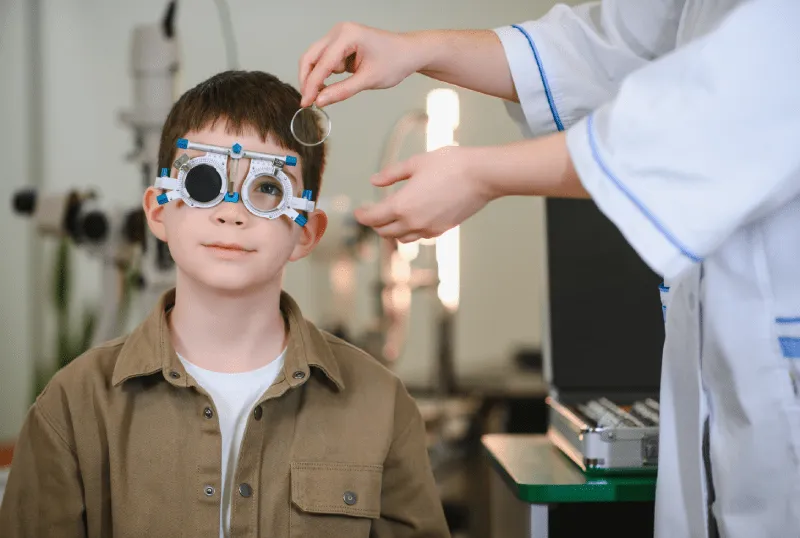
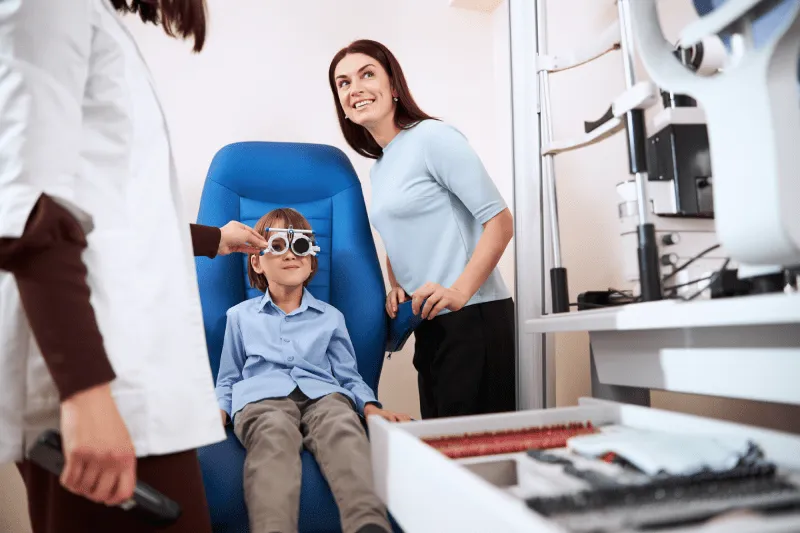
The consultation is the most important part where the surgeon draws the “roadmap.” The degree of misalignment is measured millimetrically in different gaze directions using a method called the “prism test.” Eye muscle strength, visual acuity, and a fundus (retina) scan are performed. The surgeon calculates how much a muscle will be recessed or shortened based on these measurements. The patient’s medical history, previous surgeries if any, and expectations are discussed in detail. The trust relationship established at this stage is the key to post-operative satisfaction.
Which Anesthesia Methods Are Used In Eye Surgery?
The choice of anesthesia varies according to the patient’s age and the complexity of the case. General anesthesia is preferred in all pediatric patients for surgical comfort and safety. In adults, a combination of local anesthesia (numbing only the eye area) and light sedation can be used depending on the situation. Thanks to modern anesthesia techniques, patients do not feel any pain during the operation, and side effects like nausea upon waking up are minimized. The anesthesiologist closely monitors all vital signs of the patient throughout the operation.
How Long Does Strabismus Surgery Usually Take?
Strabismus surgery varies depending on the number of interventions to be made (one eye or both eyes, how many muscles will be worked on). Generally, the procedure on a single eye is completed within 30 to 45 minutes. If both eyes need to be operated on, this period can extend up to 1-1.5 hours. During this time, the surgeon changes the position of the muscles with millimetric calculations under a microscope. Rather than the duration of the operation, the precision of the adjustments made is the main determinant of success.
What Is The Recession Technique In Strabismus Surgery?
The recession or “weakening” technique is used to relax an overactive or too strong eye muscle. The surgeon detaches the muscle from its attachment site and secures it with special sutures to a new, pre-calculated point further back. This process reduces the pulling force of the muscle on the eyeball. For example, in a patient with inward turning, the inner muscle (medial rectus) is recessed to allow the eye to relax outward. This is one of the most frequently used and reliable techniques in strabismus surgery.
How Does The Resection Method Strengthen Eye Muscles?
The resection or “shortening” technique is applied to increase the strength of a weak muscle. In this process, a part of the muscle is removed, and the remaining part is sutured back to its original attachment site. Since the length of the muscle is shortened, its tension increases and it begins to pull the eye more strongly in its own direction. It is usually used in combination with the recession technique; while one muscle is relaxed, the opposing muscle is strengthened to ensure the central balance of the eye. This method is very effective, especially in correcting large-angle misalignments.
What Are Adjustable Sutures And Why Are They Important?
In traditional surgery, the position of the muscles is determined permanently at the time of the operation. However, in the “adjustable suture” technique, the sutures that determine the position of the muscle can be slightly loosened or tightened while the patient is conscious immediately after the surgery or the next day. This gives the surgeon a chance to make a perfect fine adjustment. Especially in patients who have had unsuccessful strabismus surgery before or in complex nerve palsies, this technology provides a great advantage for zeroing even millimetric shifts.
Can Both Eyes Be Operated On At The Same Time?
Yes, depending on the type and degree of misalignment in the patient, it is very common to operate on both eyes in the same session. Especially in wide-angle misalignments or situations where the brain affects both eyes equally, it may be necessary to intervene in the muscles of both eyes to ensure symmetry. This situation does not extend the recovery time; on the contrary, it allows both eyes to adapt quickly with a single anesthesia session. The surgeon decides on single-eye or double-eye surgery based on the patient’s test results.
What Is The Success Rate Of Strabismus Surgery?
Success rates in strabismus surgeries performed with modern techniques are at very high levels, such as 80% to 90%. “Success” here is defined as the eyes coming to a socially acceptable parallelism and the elimination of double vision if present. In some very complex cases or depending on the growth process in children, a small “touch-up” surgery may be required. However, the vast majority of patients achieve life-changing positive results both aesthetically and functionally after the first operation.
What Is The Immediate Recovery Process Like After Surgery?
After surgery, patients are usually discharged on the same day. It is normal to have redness, watering, and a slight “stinging” sensation in the eye for a few days. Since the surgical incision is in the white part of the eye (sclera), visual quality is usually not affected, but there may be difficulty focusing for the first few days. The eye is not closed or remains bandaged for only a few hours. Regular use of antibiotic and edema-relieving drops prescribed by the surgeon prevents the risk of infection and accelerates healing.
When Can You Return To Your Normal Activities?
The recovery process is quite fast. Most patients can return to light desk work, read books, or watch television 2-3 days after the operation. Children can usually continue school within a week. However, it is important to protect the eye from physical impacts. It is generally recommended to wait 2-4 weeks for swimming pools, the sea, or heavy sports. The complete disappearance of the redness in the eye can take from 2 weeks to 6 weeks depending on the case; however, this situation does not prevent you from doing your daily tasks.
Are There Significant Risks Or Complications Of The Operation?
As with any surgical procedure, strabismus surgery has some risks, but these are very rare in expert hands. Infection, suture reaction, or the muscle healing differently than expected (under or over-correction) are among the possibilities. The risk of permanent vision loss is almost non-existent because the internal part of the eye is not touched. The most common “risk” is experiencing slight double vision during the recovery period, which usually resolves itself within a few weeks as the brain adapts to the new eye position.
How Does Surgery Affect Psychological Well-Being?
Strabismus can lead to behaviors such as “avoiding eye contact” in an individual’s social life, creating a lack of self-confidence. Especially in job interviews or personal relationships, this situation can make the person restless. The alignment of the eyes after surgery is not just a solution to a health problem, but also a strengthening of the person’s stance in society. Patients state that they look at the mirror more harmoniously after surgery and communicate more directly with their environment; this significantly increases general life satisfaction.
Does Strabismus Surgery Correct Double Vision?
Yes, one of the most important goals of strabismus surgery in adults is to eliminate double vision (diplopia). Two different images sent to the brain due to misalignment become a single and clear image again when gathered at a single focal point. Some patients may need prismatic glasses for a short time for brain adaptation after surgery, but the ultimate goal is to provide permanent single vision. The surgeon adjusts the muscle balance in pre-operative tests so that the brain reactivates its ability to merge images (fusion).
Can Strabismus Recur Years After Surgery?
Although strabismus surgery usually gives permanent results, in rare cases, eye misalignment can be observed again years later. The reason for this is usually the aging of the muscles, an underlying systemic disease, or changes in the brain’s control mechanism. However, this does not mean that the surgery was unsuccessful. If misalignment develops again, modern medicine has advanced techniques (secondary surgery) to intervene in these cases. Regular eye checks ensure early detection of such changes.
How Is Pain Managed After The Procedure?
Strabismus surgery is not usually defined as a “painful” procedure; it is described more as a “feeling of discomfort” or “foreign body sensation in the eye.” This feeling can be easily controlled with simple painkillers. Since the muscles are worked on during surgery, it is natural to feel a slight ache when moving the eye. Cold compress applications during the first 24 hours reduce edema and relax the patient. Most patients state that they do not experience any serious pain complaints the day after surgery.
What Should You Avoid During The Recovery Period?
For a fast and smooth recovery, rubbing the eye should be strictly avoided for the first few weeks. One should be gentle when cleaning the eyelids, and makeup materials (especially mascara and eyeliner) should not be used for at least 2 weeks. Since dirty water carries a risk of infection, Turkish baths, saunas, and public pools should be avoided. Staying away from dusty and smoky environments prevents the sutures from becoming irritated. In addition, following the appointment schedule recommended by the doctor is vital to ensure that the sutures and muscles heal correctly.
Where Do Glasses Or Prismatic Lenses Fit Into Post-Operative Care?
In some types of strabismus, the use of glasses may also be required after surgery for the full alignment of the eyes. Especially if there is a misalignment due to a refractive error (myopia, hyperopia, astigmatism), the eye may tend to turn again when glasses that correct this error are not worn. Surgery balances the muscle strength; glasses provide focus. Prismatic lenses can serve as a helpful “bridge” in the process of adaptation to the brain after surgery. Your doctor will determine the most suitable combination for you in post-operative follow-ups.
Are Aesthetic Results Visible Immediately?
The new position of the eyes can be noticed even on the operating table; that is, the “mechanical” correction is instantaneous. However, for the most perfect aesthetic appearance to emerge, the redness and edema in the eye must completely dissipate. Although this process varies from person to person, it usually results within 2 to 4 weeks. As the redness passes, the eyes begin to look brighter, more vibrant, and natural. Patients usually notice how striking the change is in the photos they take at the end of the first month.
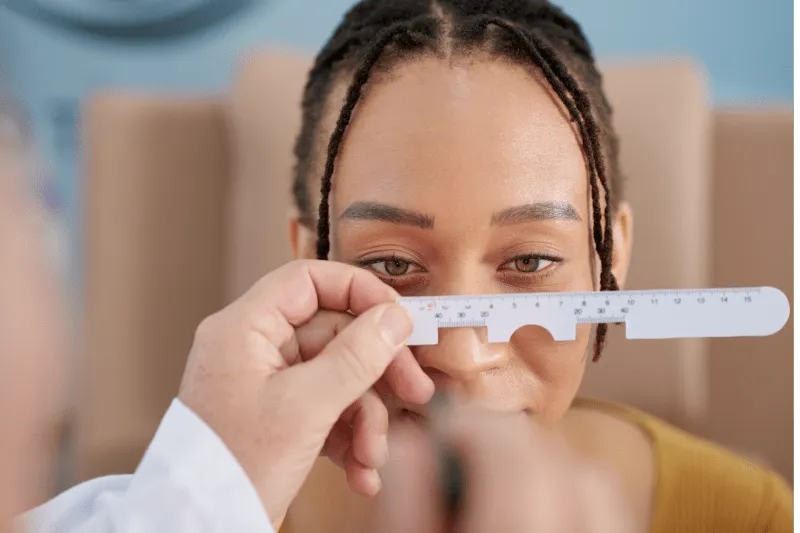
How Does Eye Alignment Affect Social Self-Confidence?
Parallelism in gaze is the architecture of the bridge the individual builds with the outside world. Individuals with strabismus often experience stress thinking that people are looking at them “wrong or right.” Surgery eliminates this uncertainty. Patients who have the necessity of tilting their head to the side (head position) while talking to people exhibit a more upright and self-confident posture after surgery. This physical change creates a positive domino effect in every area, from making presentations in business life to first dates in private life.
What Are The Technological Advancements In Eye Muscle Surgery?
Modern strabismus surgery is now performed with “minimal invasive” techniques. Thanks to small incisions (MISS technique), tissue damage is minimized, which means less redness and faster healing. Computerized measurement systems allow us to simulate the pulling force of the muscles before surgery. In addition, the suture materials used are tissue-friendly and are completely absorbed by the body, so there is no need for a procedure like removing sutures. All these technological advances increase the comfort and predictability of the operation.
How Do Cost Factors Change For This Procedure?
The cost of strabismus surgery varies according to the number of muscles to be intervened, whether it is for one or both eyes, the preferred anesthesia method, and the technological equipment of the hospital. In addition, the expertise and experience of the surgeon in this field is an important determinant. For patients abroad, treatment packages can usually cover not only the surgery but also accommodation and transfer services. The most accurate pricing emerges after a detailed examination and surgery plan to be made by an expert physician.
Why Should You Choose Turkey For Eye Surgery?
Turkey is one of the most advanced centers in the world in the field of ophthalmology (eye sciences). High-tech hospitals, internationally certified surgeons, and competitive price advantages have carried Turkey to the top of medical tourism. Especially in a field like strabismus that requires sensitivity and experience, the case diversity and success rates of Turkish surgeons are quite high. In addition, the touristic opportunities offered by Turkey turn the treatment processes of patients from being a source of stress into an experience where they can rest while healing.
How Does Cure Holiday Simplify Your Treatment Journey?
Cure Holiday is a professional solution partner that stands by you at every step of your health journey. It not only brings you together with the best eye surgeons but also offers translation services that eliminate the language barrier, airport transfers, and comfortable accommodation options. Our health consultants organize the entire process on your behalf, from pre-operative preparations to post-operative follow-ups. All you need to do is focus on your health and enjoy the perfect plan Cure Holiday has prepared for you.
What Advantages Does Cure Holiday Offer International Patients?
As an international patient, instead of waiting for months or encountering very high costs in your own country, you can receive VIP service with Cure Holiday. Thanks to personalized treatment plans, you can have your surgical intervention without waiting. Consultants who will accompany you during the treatment ensure that you feel at home. In addition, with our special packages that offer the opportunity to discover the beauties of Turkey in the post-operative period, we turn a medical necessity into a pleasant memory.
Why Is Cure Holiday The Best Choice For Strabismus Surgery?
Cure Holiday has a vision that guarantees both functional success and aesthetic satisfaction in strabismus surgery. Our strategic collaborations with the most advanced hospitals ensure that our patients receive service at world standards. Our transparent pricing policy gives you confidence by eliminating hidden costs. With the experience of thousands of happy patients and our expert team in the field, we are here to offer you the most modern solutions in a sensitive subject like strabismus.
How Can You Start Your Journey With Cure Holiday Today?
Capturing that look that will change your life is now very easy. You can get a free preliminary consultation by reaching us through the Cure Holiday website or our contact numbers. When you send the photos of your eyes and your current medical reports to our expert team, the most suitable treatment plan for you is quickly created. Take the first step for those clear and smooth looks you have postponed; regain your health and have an unforgettable experience with Cure Holiday.
Summary and Call to Action: Strabismus surgery is one of the most impressive areas where modern medicine combines aesthetics and function. Aligning the eyes not only increases your visual capacity but also strengthens your presence in the social world. All the details we have discussed in this article show how safe this process is with the right team and planning.
Free Consultation
Fill out the form below to get your free medical travel plan and price quote.
Sources and how to verify this yourself
- Ministry of Health, Regulation on International Health Tourism and Tourist Health, Official Gazette 26 April 2025, No. 32882 — authorisation requirement for facilities and intermediaries, TÜSKA accreditation, compulsory complication insurance (deadline 31 December 2025 for insurance, 31 December 2026 for accreditation). source
- Ministry of Health, Regulation on Promotion and Information Activities in Health Services, Official Gazette 12 November 2025, No. 33075 — treatment promises and guarantees are prohibited; price and campaign announcements are permitted only within international health tourism. source