Living with migraines is more than just dealing with a periodic headache; it is a debilitating neurological condition that can halt your personal and professional life. The intense throbbing, sensitivity to light, and nausea associated with chronic migraines are challenges that millions face daily. In this guide, we explore one of the most revolutionary medical advancements in recent years: Botox for migraines. We will answer your most pressing questions and explain how this treatment can provide the relief you have been searching for.
What Is Migraine And How Does It Affect Quality Of Life?
Migraine is far more than a simple headache; it is a complex neurological disease characterized by intense, pulsating pain, usually on one side of the head. Beyond the physical agony, it often brings symptoms like photophobia (sensitivity to light), phonophobia (sensitivity to sound), and severe nausea. These attacks can last for hours or even days, making it impossible to perform daily tasks, maintain social relationships, or meet workplace responsibilities. For many sufferers, the constant fear of the next attack leads to social isolation and significant psychological distress, including anxiety and depression.
What Is The Difference Between Chronic Migraine And Episodic Migraine?
The distinction between episodic and chronic migraine is crucial for determining the right treatment protocol. Episodic migraine involves having fewer than 15 headache days per month. In contrast, chronic migraine is defined as experiencing headaches on at least 15 days a month for more than three months, with at least 8 of those days being migraines. Chronic migraine patients live more than half of their lives in pain, which drastically limits their functionality. While oral medications may suffice for episodic cases, chronic sufferers often require more advanced preventive measures like Botox.
What Exactly Is Botox And How Does It Work?
Botox is a purified protein derived from the bacterium Clostridium botulinum. While most people associate it with smoothing wrinkles in the cosmetic industry, its medical application is vast. Scientifically known as OnabotulinumtoxinA, it works by temporarily blocking the transmission of signals between nerves and muscles. In the context of migraine treatment, it does not just relax muscles; it enters the nerve endings to inhibit the release of chemicals involved in pain signaling, acting as a sophisticated chemical shield against neurological overstimulation.
When Did The FDA Approve Botox For Migraine Use?
The U.S. Food and Drug Administration (FDA) officially approved Botox for the treatment of chronic migraines in 2010. This approval followed extensive clinical trials, most notably the PREEMPT (Phase III REsearch Evaluating Migraine Prophylaxis Therapy) trials. These studies involved thousands of patients and proved that Botox significantly reduces the frequency and severity of headache days for chronic sufferers. Since then, it has become a gold-standard preventive treatment for those who do not find relief through traditional oral medications or lifestyle changes.
How Does Botox Prevent Migraine Pain?
Botox prevents migraine pain by interfering with the transmission of pain signals before they reach the brain. During a migraine attack, the brain releases neurotransmitters and inflammatory peptides that cause pain and sensitivity. Botox is injected into specific areas where it is absorbed by nerve endings. Once inside, it prevents the release of these pain-carrying chemicals, such as Substance P and Calcitonin Gene-Related Peptide (CGRP). By stopping these signals at the source, the brain’s “pain alarm” never gets triggered, providing a long-term preventive effect.
How Is The Interaction Between Nerve Endings And Botox?
The interaction between Botox and nerve endings is a precise biochemical process. When injected, the toxin molecules bind to receptors on the surface of sensory nerves. The nerve then “internalizes” the Botox, which goes on to cleave a specific protein (SNAP-25) required for the release of neurotransmitters. This effectively “quiets” the nerve. For a migraineur, whose nervous system is often in a state of hyper-excitability, this calming effect reduces the sensitivity of the peripheral nerves, which in turn prevents the central nervous system from becoming over-sensitized.
Who Are The Suitable Candidates For Botox Treatment?
Botox is not recommended for everyone with occasional headaches. According to FDA guidelines and medical consensus, the ideal candidates are adults diagnosed with chronic migraine. This means you must experience at least 15 headache days per month, with at least half of those displaying migraine characteristics. It is particularly beneficial for patients who have tried and failed to see results from at least two or three classes of oral preventive medications, or for those who experience intolerable side effects from such pills.
How Is Chronic Migraine Diagnosed?
A formal diagnosis of chronic migraine is typically conducted by a neurologist through a detailed clinical evaluation. The doctor will review your medical history and often ask you to keep a “headache diary” for at least three months. This diary tracks the frequency, duration, and intensity of your attacks, as well as the symptoms involved. If the criteria of 15+ days of headache (8 of which are migraines) are met, the diagnosis is confirmed. Occasionally, imaging tests like an MRI or CT scan are ordered to rule out other underlying conditions.
What Preparations Should Be Made Before Botox Treatment?
Preparing for a Botox session is straightforward. Patients should provide a full list of their current medications, especially blood thinners or muscle relaxants, to their physician. It is also important to mention any history of allergies or previous reactions to neurotoxins. On the day of the procedure, it is advised to avoid heavy hair products like sprays or gels, as the injections occur around the hairline and scalp. No fasting is required; in fact, eating a light meal can prevent dizziness during the procedure for those sensitive to needles.
How Long Does The Treatment Process Take?
One of the greatest advantages of Botox for migraines is its efficiency. The entire procedure is performed in an outpatient clinical setting and typically takes between 15 to 20 minutes. Including the initial consultation and post-procedure briefing, a patient usually spends no more than 40 to 60 minutes in the clinic. Because there is no need for general anesthesia or sedation, patients can immediately return to their daily routines, making it a highly convenient option for busy professionals and parents alike.
Which Areas Of The Body Are Botox Injections Applied To?
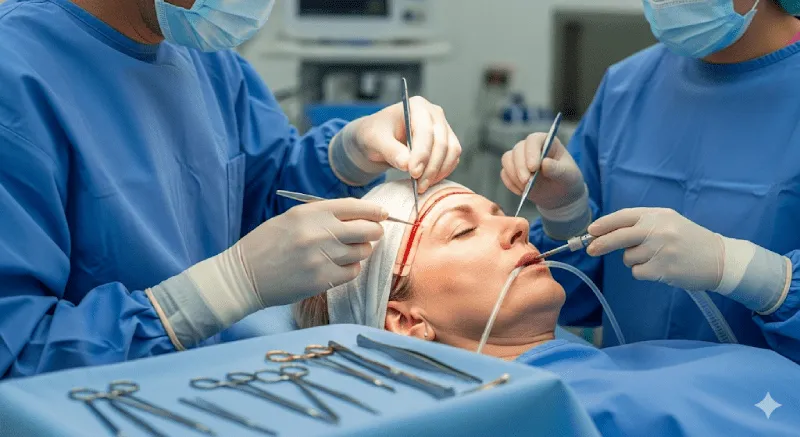
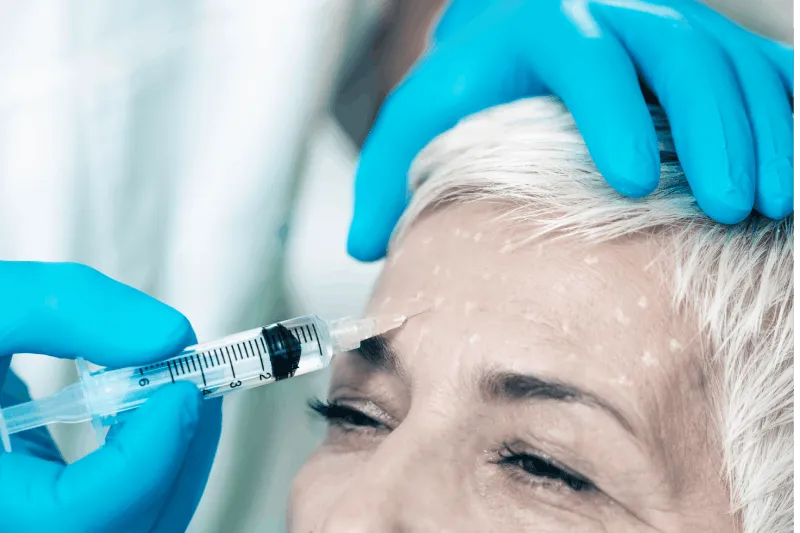
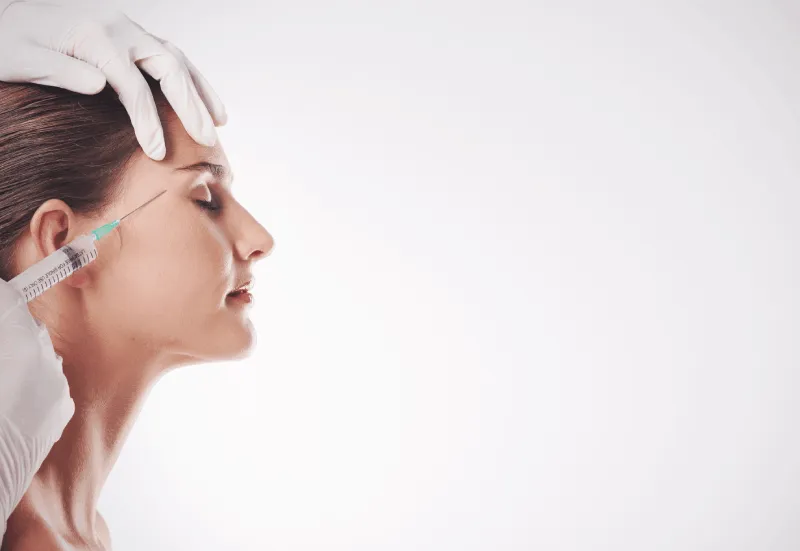
The injection protocol for migraines is very specific and follows the PREEMPT template. Unlike cosmetic Botox, which focuses on the face, migraine Botox involves 31 to 39 injection sites across seven key muscle groups in the head and neck. These areas include the forehead (frontalis), temples (temporalis), back of the head (occipitalis), the bridge of the nose (procerus/corrugator), the base of the skull (cervical paraspinal), and the upper shoulders (trapezius). This comprehensive distribution ensures that all major pathways for pain signals are covered.
Is Pain Or Discomfort Felt During The Application?
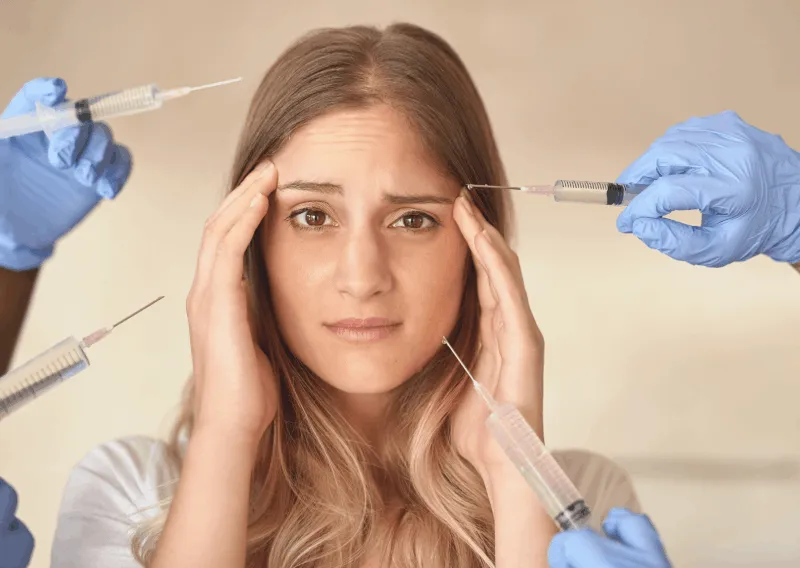
The needles used for Botox injections are extremely fine—often compared to the thickness of a human hair. Most patients describe the sensation as a series of tiny pinpricks or a mild stinging that lasts only a few seconds per site. Because the injections are shallow, the discomfort is generally very well tolerated. While topical numbing creams are rarely necessary, some doctors may use ice packs to dull the sensation for particularly sensitive patients. Most find the brief discomfort a very small price to pay for months of pain relief.
How Many Injections Need To Be Performed?
The standard FDA-approved protocol requires 31 injections at specific points. Each injection delivers a small, controlled dose of the neurotoxin. In some cases, depending on the patient’s specific pain patterns (such as extreme pain in the neck or shoulders), the doctor may add a few more “follow-the-pain” injections, bringing the total to 39. A standard treatment uses 155 units of Botox, though this can be increased to 195 units if necessary. This systematic approach ensures that the medication is distributed evenly across the affected nerve pathways.
When Does The Effect Of The Treatment Begin?
Botox is not an instant “rescue” medication for an active migraine. It takes time for the toxin to be absorbed by the nerves and for the biochemical changes to take effect. Most patients begin to notice a decrease in the frequency or intensity of their headaches about 10 to 14 days after the first set of injections. However, clinical data shows that the full benefit is often realized after the second or even third treatment session. Patience and consistency are key to seeing the transformative results of this therapy.
How Long Are The Results Permanent?
The effects of Botox are temporary as the body naturally breaks down the protein over time. Generally, the relief lasts between 10 to 12 weeks. As the medication wears off, the nerve endings gradually regain their ability to release pain signals, and the headaches may begin to return. To maintain a consistent “headache-free” state, patients are usually scheduled for treatments every 12 weeks. Sticking to this schedule prevents the nervous system from returning to its previous state of hyper-sensitivity.
How Much Does Botox Reduce The Frequency Of Migraine Attacks?
Clinical studies have shown that Botox can significantly decrease the number of headache days for chronic migraineurs. On average, patients report 8 to 9 fewer headache days per month after two treatment cycles. For many, this means cutting their pain days in half. About 70% of patients experience at least a 50% reduction in attack frequency. In some exceptional cases, patients may go months without a single migraine. While results vary, the statistical success rate makes it one of the most effective preventive tools available.
Does Botox Relieve The Severity Of Migraines?
Yes, one of the most significant benefits reported by patients is the reduction in pain intensity. Even if a migraine attack does occur after treatment, it is typically much milder and shorter in duration. What used to be a “level 10” pain that required a dark room and complete silence might become a “level 3” manageable dull ache. This reduction in severity often allows patients to use fewer acute rescue medications, which further improves their overall health by reducing the risk of drug-induced side effects.
What Are The Possible Side Effects Of The Treatment?
Botox is generally very safe, but some patients may experience mild side effects. The most common is a temporary soreness or stiffness in the neck and shoulders. Some people might experience a mild headache for a day or two after the injections. A very small percentage of patients (less than 5%) might notice temporary drooping of a group of muscles, such as a “heavy” eyebrow or eyelid (ptosis). These effects are almost always temporary and resolve on their own as the medication settles or wears off.
Is There A Risk Of Allergic Reaction?
While extremely rare, as with any biological product, there is a small risk of an allergic reaction. Symptoms might include itching, rash, dizziness, or in very rare cases, difficulty breathing. This is why it is imperative to have the procedure performed by a qualified medical professional in a clinical setting equipped to handle emergencies. If you have a known allergy to any botulinum toxin product (like Dysport or Xeomin), you must inform your doctor before proceeding with Botox for migraines.
Can Botox Be Performed During Pregnancy Or Breastfeeding?
Medical guidelines generally advise against the use of Botox during pregnancy and breastfeeding. While there is no definitive evidence that Botox crosses the placenta or enters breast milk in significant amounts, there are not enough controlled human studies to guarantee absolute safety for the fetus or infant. Most neurologists recommend pausing the treatment if you are planning to become pregnant or as soon as you find out you are pregnant, prioritizing the baby’s developmental health until the nursing period is over.
What Is Medication Overuse Headache And Does Botox Help?
Many chronic migraine sufferers fall into a trap called “Medication Overuse Headache” (MOH) or “rebound headaches.” This occurs when the frequent use of acute pain relievers (like triptans or ibuprofen) actually causes the brain to become more sensitive, leading to more frequent headaches. Botox is an excellent solution for breaking this cycle. Because Botox works preventively to stop the pain from starting, the patient’s need for acute pills drops significantly, allowing the brain to recover from chemical dependency and reducing the overall headache burden.
Can Botox Be Used Together With Other Migraine Medications?
Botox can safely be integrated into a broader migraine management plan. It does not interact negatively with most other medications. Many patients continue to take low-dose oral preventives or use acute rescue medications during the initial phases of Botox treatment. Interestingly, some of the newer CGRP-inhibitor injections (migraine vaccines) are also being used alongside Botox for particularly resistant cases. However, you should always keep your neurologist informed about every supplement and medication you are taking to ensure a safe and effective treatment plan.
Is Botox Treatment Safe?
Botox has one of the best-studied safety profiles in modern medicine. It has been used for various medical conditions for over 30 years, including treating muscle spasticity in children. For migraines, the doses used are relatively low and the injections are localized. The toxin does not travel through the bloodstream to other parts of the body in any significant way. When administered by a trained specialist following the established 31-point protocol, the risk of serious complications is negligible, making it a very reliable long-term option.
How Is The Recovery Process After Treatment?
There is virtually no “downtime” required after a Botox session. You can drive yourself home or back to work immediately after the appointment. Most people find they can resume all normal activities, including light work and social engagements. The tiny bumps at the injection sites usually disappear within 30 minutes. The lack of recovery time is a major reason why patients find it easy to comply with the three-month treatment schedule, as it doesn’t require taking time off or undergoing a recovery period.
What Should Be Considered After The Injection?
While you can return to normal life, there are a few “aftercare” tips to ensure the best results. For the first 24 hours, it is recommended to avoid rubbing or massaging the injection sites, as this could cause the Botox to migrate to unintended muscles. You should also skip high-intensity exercise, saunas, and very hot showers for the first day to prevent increased blood flow from dispersing the medication too quickly. Aside from these minor precautions, you can live your life as usual.
Can Botox Treatment Fail?
While highly effective, Botox is not a “magic bullet” for everyone. A small percentage of patients are “non-responders.” However, medical experts emphasize that a treatment is only considered a failure if there is no improvement after two or three cycles (6 to 9 months). The nervous system sometimes needs time to reset. If Botox truly does not work for you, it is usually because your headaches are not purely chronic migraines or because your body has developed a very rare resistance. In such cases, your neurologist will explore alternative modern therapies.
Who Should Apply The Treatment?
The success and safety of migraine Botox depend entirely on the skill of the injector. This is not a cosmetic procedure; it is a neurological one. Therefore, it should be performed by a board-certified neurologist or a specialist who has undergone specific training in the PREEMPT injection protocol. These professionals understand the complex anatomy of the cranial nerves and muscles. Choosing an experienced specialist ensures that the medication reaches the exact triggers of your pain and minimizes the risk of side effects like muscle weakness.
Is Botox Only Used For Cosmetic Purposes?
This is a common misconception. In fact, Botox was used for medical purposes (like treating crossed eyes and muscle spasms) long before it was approved for wrinkles. Today, its therapeutic uses are vast and include treating excessive sweating (hyperhidrosis), overactive bladder, cervical dystonia (painful neck contractions), and even certain types of depression. For migraine sufferers, Botox is a life-changing medical drug that targets the underlying pathology of their disease, and the aesthetic benefits are merely a pleasant side effect.
What Is The Difference Between Botox And Acupuncture?
While both involve needles, the mechanisms are fundamentally different. Acupuncture is a traditional practice that involves stimulating specific points to balance “energy” and trigger the release of natural painkillers (endorphins). Botox, on the other hand, is a targeted biochemical intervention. It physically blocks the release of specific pain-inducing chemicals at the molecular level. While some patients find acupuncture helpful as a complementary therapy, Botox is an FDA-approved medical treatment with standardized protocols and high clinical success rates for chronic migraine.
Is Long-Term Botox Use Safe?
Long-term studies following patients for over five to ten years have shown that Botox remains both safe and effective with repeated use. There is no evidence of the toxin “building up” in the system to toxic levels. In fact, many long-term patients report that the frequency of their attacks continues to decline over the years, as the nervous system becomes less reactive. The risk of developing antibodies that make the treatment less effective is also extremely low, meaning it can remain a viable solution for decades.
How Can Botox Treatment Change Your Life?
For someone who has spent years “scheduling” their life around migraines, Botox offers a new sense of freedom. Imagine being able to plan a vacation, attend a wedding, or accept a promotion without the looming fear of a three-day headache ruining everything. By reducing the frequency and severity of attacks, Botox improves mental health, increases productivity, and allows you to be more present for your family. It is not just about stopping pain; it is about reclaiming the days that were previously lost to darkness and silence.
Why Should You Seek Professional Support For Migraine Treatment?
Self-managing chronic migraine with over-the-counter pills is often a losing battle that can lead to liver, kidney, or stomach issues and worsening headaches. Professional support is essential because migraine is a complex condition that requires a personalized approach. A specialist can help you identify your specific triggers, rule out other conditions, and provide access to advanced treatments like Botox that aren’t available over the counter. Investing in professional care is the first step toward a long-term, sustainable recovery and a better quality of life.
How Does The Migraine Treatment Process Begin With Cure Holiday?
At Cure Holiday, your journey to a pain-free life begins with a comprehensive, patient-centered approach. We start with a detailed consultation with our international medical coordinators who help gather your medical history and specific symptoms. Our team then connects you with Turkey’s leading neurologists, specialists in the PREEMPT Botox protocol. From the moment you contact us, we handle the logistics, ensuring that your transition from a life of chronic pain to a professional treatment environment is seamless, supportive, and stress-free.
Why Is Cure Holiday The Right Choice For Migraine Treatment?
Cure Holiday stands out by combining world-class medical expertise with the comfort of a luxury healing experience. We understand that traveling for medical care can be daunting, so we provide an all-inclusive service that covers everything from VIP transfers to premium accommodation. Our partner clinics are equipped with the latest technology and follow strict international health standards. By choosing Cure Holiday, you are not just getting a medical procedure; you are choosing a team dedicated to your holistic well-being and long-term success in fighting migraines.
To What Factors Does Cure Holiday Owe Its Success?
Our success is rooted in our commitment to personalized care and medical excellence. We don’t believe in “one-size-fits-all” solutions. Every Botox treatment plan at Cure Holiday is tailored to the individual’s unique pain patterns. Furthermore, we pride ourselves on our transparency and follow-up care. Our success is measured by the thousands of patients who have returned to their home countries with significantly fewer headaches and a renewed zest for life. The combination of expert Turkish neurologists and our dedicated support staff makes us a leader in health tourism.
What Should You Do To Regain Your Health With Cure Holiday?
The path to reclaiming your life from chronic migraines is just one click away. You can reach out to Cure Holiday through our website or contact channels for a free initial consultation. Our experts will guide you through the process, answer all your questions about Botox, and help you schedule your treatment in a way that fits your life. Don’t let another day be stolen by pain. Contact Cure Holiday today, and let us help you start a new chapter where you are in control, not your migraines.
Free Consultation
Fill out the form below to get your free medical travel plan and price quote.
Sources and how to verify this yourself
- Ministry of Health, Regulation on International Health Tourism and Tourist Health, Official Gazette 26 April 2025, No. 32882 — authorisation requirement for facilities and intermediaries, TÜSKA accreditation, compulsory complication insurance (deadline 31 December 2025 for insurance, 31 December 2026 for accreditation). source
- Ministry of Health, Regulation on Promotion and Information Activities in Health Services, Official Gazette 12 November 2025, No. 33075 — treatment promises and guarantees are prohibited; price and campaign announcements are permitted only within international health tourism. source