Does Teeth Whitening Damage Tooth Enamel?
Teeth whitening, when applied correctly, does not cause permanent damage to tooth enamel. However, the critical point here is the concentration of the agent used and the duration of application. Professional products pass through the porous structure of the enamel to lighten the color of the underlying dentin layer. While enamel is the hardest tissue in the body, uncontrolled acid applications or excessive hydrogen peroxide use can lead to microscopic roughening. To prevent this, the procedure should be performed under expert supervision or by following professional advice, ensuring a healthy process by minimizing the risk of enamel demineralization.
What Are the Primary Differences Between At-Home Whitening and Clinic Treatment?
The most distinct difference between at-home teeth whitening and clinical treatment is the concentration of the chemical agents used and the level of application control. In clinics, dentists use high-concentration hydrogen peroxide ranging from 25% to 40%, whereas at-home kits typically contain between 3% and 10%. Furthermore, while dentists use barriers to protect the gums in a clinical setting, providing this protection at home is the responsibility of the user. Clinical treatments usually yield rapid results in a single session, while home applications require discipline over several weeks. In terms of safety, professional equipment in a clinic offers the chance for immediate intervention in case of potential complications.
Are At-Home Teeth Whitening Kits Truly Safe?
At-home teeth whitening kits available on the market are generally considered safe as long as the instructions are followed to the letter. However, the misconception that these products are “suitable for everyone” carries significant risks. For individuals with receding gums, cavities, or sensitive tooth enamel, these kits can cause severe pain and tissue damage. Additionally, if the trays within the kit do not fit the patient’s oral structure perfectly, the whitening gel may leak onto the gums, leading to chemical burns. To increase safety, it is vital to undergo a professional dental check-up before using an at-home kit to confirm that your oral health is suitable for the procedure.
What Are the Advantages of In-Clinic Teeth Whitening?
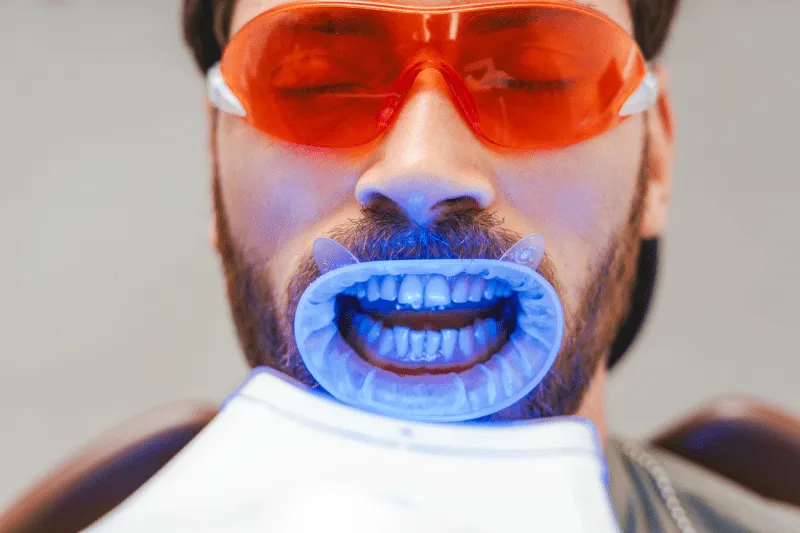
In-clinic teeth whitening is the top-tier method that offers both speed and safety. The dentist analyzes the patient’s oral structure and applies a customized treatment based on the type of stains present. Protecting soft tissues (gums, tongue, cheeks) with specialized isolation methods completely eliminates the risk of “gum burns,” which is the biggest problem encountered with at-home kits. Additionally, advanced light technologies used during the procedure accelerate the activation of the gel, providing more dramatic results in a shorter time. Dentist supervision allows for the immediate application of desensitizing agents if any sensitivity occurs, maintaining maximum patient comfort.
How Can Sensitivity During Teeth Whitening Be Prevented?
Tooth sensitivity that develops after whitening occurs when the gel reaches the dentin tubules and stimulates the nerves. To prevent this, professional gels containing potassium nitrate or fluoride are applied in clinics before and after the procedure. At home, sensitivity-reducing toothpastes should be used for a few weeks before starting treatment to mitigate this effect. Reducing the application time or lowering the dosage of the gel is also an effective way to manage sensitivity. In procedures performed under dental supervision, sensitivity management is carried out much more professionally by dividing sessions according to the patient’s pain threshold.
Why Is Protecting the Gums Crucially Important?
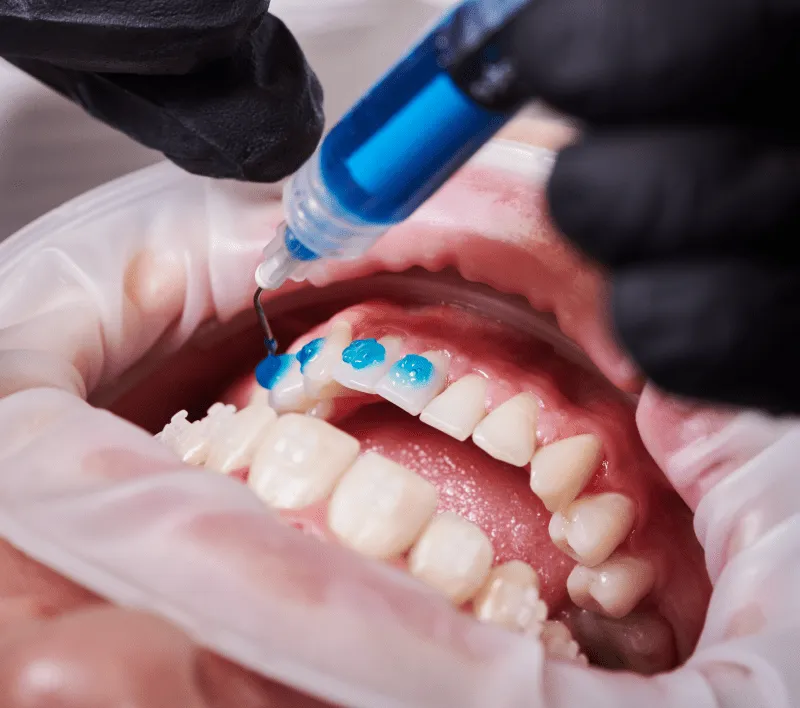
Gum tissue has a much more sensitive and vulnerable structure compared to tooth enamel. Peroxide compounds found in whitening gels can cause oxidative damage, or chemical burns, when they come into contact with the gums. This condition can lead to whitening of the gums, stinging, and in advanced cases, tissue loss (recession). “Light-cured barriers” or “gum masks” used in clinics ensure that the gel remains only on the tooth surface, reducing these risks to zero. In at-home applications, gel leakage due to standard trays is a very common problem and can lay the groundwork for permanent gum damage.
Does the Content of At-Home Products Pose Health Risks?
While the ingredients of at-home whitening products are within certain limits due to legal regulations, uncontrolled use carries health risks. Especially in unapproved products purchased online, a very low pH level can create an acidic erosion effect on the tooth enamel. Auxiliary substances found in some cheap kits can have negative effects on the digestive system if exposed for long periods (in case of accidental swallowing). Furthermore, allergic reactions should not be ignored. For this reason, it is of vital importance to read the ingredient list carefully and choose brands that have been approved by a dentist and clinically tested.
Which Whitening Method Provides More Permanent Results?
The longevity of whitening results is directly related to the depth of the method used. High-intensity treatments applied in clinics are much more effective at breaking down stubborn stains in the deeper layers of the tooth and generally provide longer-lasting whiteness. At-home kits, on the other hand, offer a more superficial cleaning, and results may revert to their original state in a shorter time. However, the ideal permanence is achieved with “supportive home trays” provided by the dentist following the clinical treatment. Lifestyle factors (smoking, coffee, tea consumption) are the most important external factors affecting the longevity of both methods.
Is Laser Teeth Whitening a Safe Option?
Laser teeth whitening is a very safe procedure used in dental literature as “office-type whitening,” where specific wavelengths of light are used to increase the effect of the gel. The purpose of the light is to accelerate the breakdown of peroxide and the penetration of oxygen into the tooth. When performed by expert hands, the laser does not damage surrounding tissues and does not raise the internal temperature of the tooth to critical levels. However, incorrect device settings or excessively long application can lead to thermal damage in the dental pulp. Therefore, it is essential for this technology to be used only in experienced clinics for safety reasons.
What Is the Importance of Dental Supervision for Safety?
A dentist does not just perform whitening; they also provide an intraoral diagnosis. A cavity or a microscopic crack that goes unnoticed before whitening can cause the gel to come into direct contact with the dental nerve, leading to unbearable pain. Supervision ensures these risks are eliminated beforehand. Additionally, the dentist balances the patient’s expectations with realistic results, preventing “over-whitening” of the teeth and an artificial appearance. Safety is not just about physical health but also about satisfaction with the aesthetic result, and professional guidance is where this comes into play.
What Is the Difference Between Carbamide Peroxide and Hydrogen Peroxide?
These two compounds are the cornerstones of teeth whitening. Hydrogen peroxide is a powerful agent that reacts quickly and is preferred in clinics; it shows its effect immediately. Carbamide peroxide, on the other hand, is hydrogen peroxide combined with urea and releases more slowly; this is why it is usually preferred in at-home kits (10% carbamide peroxide is equivalent to approximately 3.5% hydrogen peroxide). Because carbamide peroxide has a more stable structure, it increases the safety margin in home applications and slightly reduces the risk of sensitivity. However, the decision on which one to use should be evaluated by an expert based on the tooth structure and depth of stains.
What Are the Biggest Mistakes Made While Whitening Teeth at Home?
One of the most common mistakes is keeping the products on the teeth for longer than the recommended time; this causes irreversible erosion of the enamel and chronic sensitivity. Another mistake is using the gel without protecting the gums. Furthermore, attempting to whiten teeth without proper cleaning (while plaque is present) results in a patchy and uneven appearance. The uncontrolled mixing of methods perceived as natural, such as lemon juice or baking soda, erodes the tooth enamel like sandpaper, seriously endangering your health.
Who Should Avoid Teeth Whitening Treatments?
Teeth whitening is not a suitable treatment for everyone. People with gum disease (periodontitis), advanced enamel wear, deep dentin cracks, or active tooth decay must resolve these issues before treatment. Additionally, it is generally not recommended for individuals under the age of 16 because their dental pulp chambers are very large, leading to a high risk of extreme sensitivity. For pregnant and breastfeeding women, postponing this process is the safest approach, as there is insufficient clinical data regarding the effects on the fetus or baby.
Can Teeth Whitening Be Done During Pregnancy?
Dental communities recommend that elective (non-mandatory) aesthetic procedures, including teeth whitening, be postponed during pregnancy and breastfeeding. Although the risk of chemicals in whitening gels entering the bloodstream and reaching the fetus is low, there are no comprehensive human studies conducted on this subject for ethical reasons. Additionally, changing hormone levels during pregnancy can make the gums more sensitive and prone to bleeding (pregnancy gingivitis), which could make the whitening process much more painful or risky. For the safety of your baby and your own health, it is the most logical decision to leave this procedure until after birth.
What Should Be the Diet Routine After Teeth Whitening?
The first 48 hours after the whitening procedure are called the “white diet” period, during which the teeth are most susceptible to staining. Since the enamel pores are open, intensely colored foods and drinks such as coffee, tea, wine, cherry juice, and tomato paste, as well as smoking, should be strictly avoided. Additionally, acidic beverages (cola, soda) should not be consumed as they may trigger erosion in newly whitened teeth. Instead, consuming colorless foods like milk, water, white meat (chicken, fish), and potatoes extends the life of the achieved whiteness and reduces the risk of sensitivity.
Do Natural Teeth Whitening Methods Damage the Teeth?
Home attempts at whitening with baking soda, lemon, strawberries, or activated charcoal are usually not as innocent as they seem. Acidic ingredients like lemon chemically dissolve the tooth enamel, while abrasives like baking soda and activated charcoal mechanically scrape the top layer of the enamel. While these processes may remove stains in the short term, in the long term, they thin the enamel, causing the underlying yellower dentin layer to become visible and making the teeth more yellow and sensitive. For true safety, products conforming to standards formulated by dentists should be used instead of acidic materials from the kitchen.
Can People with Worn Enamel Undergo Whitening?
For individuals whose tooth enamel is worn due to genetics, aging, or incorrect brushing, the whitening process can be very risky. Thinning of the enamel means that the whitening gel reaches the nerves in the center of the tooth much faster, leading to severe pain (“shocks”). In such patients, alternative aesthetic approaches like veneers (porcelain laminates) or composite bonding usually provide safer and more satisfactory results than whitening. If whitening must be done, very low-concentration gels should only be applied under expert supervision.
Why Are Professional Whitening Gels More Effective?
Professional gels differ not only in their peroxide ratio but also in the buffering agents and stabilizers they contain. These special formulations balance the acidity of the gel while ensuring that hydrogen peroxide penetrates the tissues with the highest efficiency. Furthermore, professional gels often include additional components like fluoride or amorphous calcium phosphate (ACP) that reduce tooth sensitivity and strengthen the enamel. This ensures both a much faster color lightening and the maximum preservation of the integrity of the tooth structure during the procedure.
What Are the Side Effects of Whitening Strips Used at Home?
Whitening strips are easy to use and economical, but they have several disadvantages. The biggest problem with strips is their inability to make full contact with the gaps between teeth and recessed areas; this leads to the edges of the teeth remaining yellow while the middle parts whiten (a “patchy appearance”). Additionally, strips are often designed to touch the gums, which can cause chronic gum irritation. If your teeth are crowded, strips will never yield a smooth result. For safety, the application should be stopped immediately if stinging is felt in the gums during the use of strips.
How Long Can Teeth Whitening Results Be Maintained?
The lifespan of teeth whitening depends entirely on your oral hygiene habits. With good care, clinical results can be maintained for 1 to 3 years. However, in individuals who consume intensely colored foods or smoke after the procedure, the whiteness may begin to fade within 6 months. To extend the life of the results, teeth should be brushed at least twice a day, dental floss should be used, and professional dental cleaning (scaling) should be performed every six months. Additionally, “whitening toothpastes” recommended by your dentist help prevent the accumulation of superficial stains, preserving your glow.
How Does the Type of Stains Affect the Whitening Method?
Stains on teeth are divided into “extrinsic” (external) and “intrinsic” (internal). External stains from tea, coffee, and smoking can be lightened even with at-home kits; however, internal stains caused by antibiotic use (tetracycline), excessive fluoride consumption, or trauma only respond to professional and deep treatments that can be performed in a clinical setting. Treating internal stains is much more difficult and may sometimes require multiple sessions. Your dentist determines the depth and source of the stain to choose the most effective and safe protocol that will not waste your time.
Is the Leakage of At-Home Trays onto the Gums Risky?
Yes, this is one of the most common safety risks encountered in at-home whitening. When non-customized (standard-sized) trays are used, the whitening gel leaks from the edges of the tray and directly reaches the gum tissue. The hydrogen peroxide in the gel causes protein denaturation and cell damage in living tissues; this leads to a burning sensation in the gums, redness, and temporary white spots. In professional clinics, trays are prepared with millimeter precision according to the patient’s oral measurements to “follow the gingival margin,” thus completely eliminating the risk of gel leakage.
Are Light Sources Used in Clinical Treatments Safe?
LED, plasma arc, or laser light sources used in clinical whitening are safe technologies that have been used in the medical world for years. The main function of these lights is to activate the chemical reaction within the gel and accelerate the process. Modern devices are equipped with sensors that filter harmful UV rays and prevent excessive heat increase. If your dentist follows the procedure with the correct steps, these lights do not damage the tooth enamel or pulp. On the contrary, because they shorten the duration of the procedure, they expose the tooth to chemicals for less time, which is an indirect safety advantage.
At What Age Can Teeth Whitening Be Performed?
International standards generally recommend waiting until at least age 16 for teeth whitening. The main reason for this is that in young individuals, the dental pulp chamber (the nerve center) is wide, and the enamel layer has not yet fully completed its maturation. Aggressive whitening performed at an early age can lead to permanent pulp damage or extreme sensitivity. For the aesthetic concerns of young people, professional cleaning procedures are usually sufficient. The decision for aesthetic whitening should only be made with a dental examination after dental development is complete.
What Should Be Done if Tooth Pain Occurs During At-Home Whitening?
If you feel a sudden sharp pain or an “electric shock” sensation during home application, you should stop the procedure immediately and rinse your mouth with plenty of lukewarm water. This pain indicates that the gel has leaked into a crack on the tooth or that the enamel layer has become excessively thin. You should not use the product again until the pain subsides and you must make an appointment with a dentist. Your dentist can identify the sensitive area on the tooth and isolate it or prescribe a lower-concentration, sensitivity-protected gel for you. Pushing through the pain can lead to permanent nerve damage.
Can Porcelain Veneers and Fillings Be Whitened?
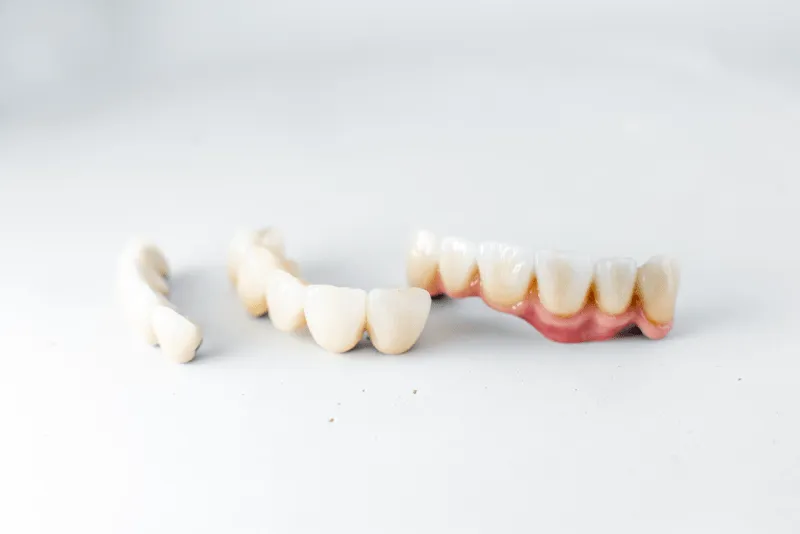
This is one of the most common misconceptions among patients: Whitening gels are only effective on natural tooth tissue. Porcelain laminates, zirconium coatings, fillings, or porcelain crowns absolutely do not change color. If you have fillings in the front area of your mouth, your natural teeth will whiten after the procedure, but your fillings will remain their old color, creating an unappealing aesthetic contrast. Therefore, if comprehensive whitening is planned, whitening should be done first, and old fillings and crowns should be renewed according to the achieved color. You can only prevent this planning error with an expert in a clinical setting.
Is Swallowing Teeth Whitening Gels Dangerous?
Whitening gels are not produced to be swallowed directly; however, swallowing very small amounts mixed with saliva usually does not cause serious problems other than a slight throat irritation. But if large amounts of gel are swallowed uncontrollably, nausea, heartburn, and digestive system disorders can develop. In clinical treatments, this risk is near zero thanks to gum barriers and professional vacuum (aspiration) systems. Those using trays at home should be careful to apply the gel in moderation and not send the gel to the stomach by talking or salivating excessively during application.
Is Single-Session Clinical Whitening Possible?
Yes, the biggest advantage of clinical whitening is its ability to lighten tooth color by 3 to 8 shades in a single session (approximately 45-60 minutes). This speed is achieved through the combination of high-concentration professional gels and the technological lights that activate them. To achieve this result at home, you would need to apply treatments every day for weeks. A single-session solution is the most ideal and safe way, especially for busy individuals or those preparing for a special day like a wedding or event. Furthermore, since the procedure is under physician control, the achieved level of whiteness can be monitored instantly with the patient.
What Is the Economic Cost and Risk Balance of At-Home Whitening?
At-home kits may seem more economical at first glance, but costs can increase when potential risks are taken into account. The treatment of gum burns caused by incorrect application, dental fillings that cannot be performed due to extreme sensitivity, or the professional correction of non-homogeneous results can cost much more than the amount saved initially. Clinical whitening, on the other hand, offers the guarantee of “doing it right and completely once.” Considering long-term dental health and aesthetic satisfaction, professional clinical treatments are the investment that provides the highest “price/performance and safety” balance.
What Purpose Do the Protective Barriers Used by Your Dentist Serve?
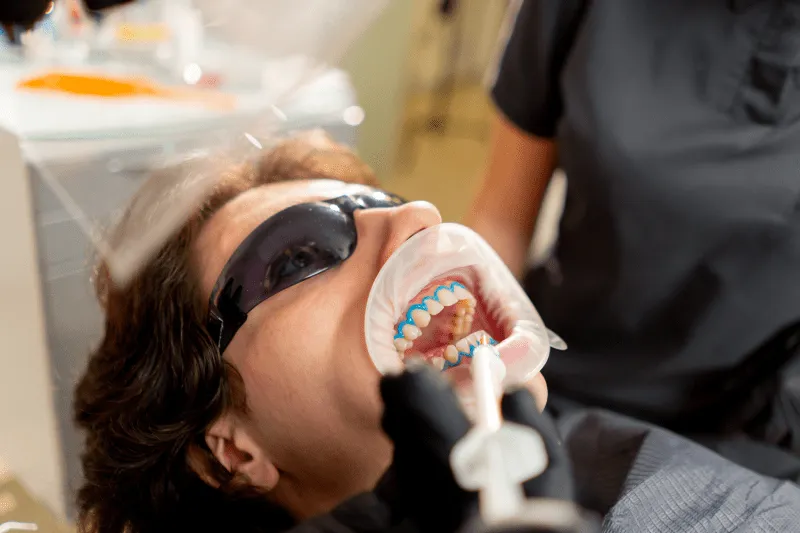
Light-cured “gingival barriers” are the safety fortress of clinical whitening. This blue or pink-colored gel layer wraps around your gums like a shield and completely cuts off the contact of the whitening gel with soft tissues. Thanks to this physical barrier, your dentist can safely apply powerful whitening agents that could never be used at home. Bruising, whitening, or stinging of your gums is prevented by this method. Since there is no such mechanism in standard home trays, choosing this professional isolation in clinics is much more sensible than risking your gum health.
In Which Cases Should At-Home Whitening Never Be Preferred?
If you have serious tooth sensitivity, numerous fillings or crowns in your mouth, or if your root surfaces are exposed due to gum recession, you should strictly avoid whitening at home. There is no protective enamel layer on root surfaces; home-type gels contacting these areas can cause severe and permanent pain. Furthermore, every application made without answering the question “what is the cause of my stains?” might actually be masking a disease. In such complex cases, only a dentist can determine which method will be safe for you.
What Is the Safest Whitening Protocol for Dental Health?
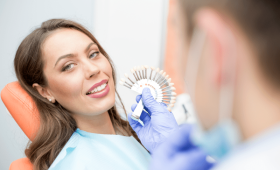
The gold standard is the protocol known as “Combined Treatment.” In this method, a professional office-type whitening is performed first in the dentist’s chair to achieve rapid and safe shade lightening. Then, a short-term reinforcement process is applied at home with custom-made trays and lower-dose gels. This approach both ensures the cleaning of deep stains and increases the longevity of the color. Since the entire process is under dental supervision, sensitivity management is perfectly executed, and the highest whiteness is achieved by putting the least amount of stress on the tooth enamel.
How Is the Professional Teeth Whitening Experience with Cure Holiday?
Cure Holiday offers a modern approach that prioritizes safety and aesthetics in the field of oral and dental health. Whitening procedures performed in our clinics are carried out with the latest generation of enamel-friendly gels conforming to international standards. Our experienced dentists analyze each patient’s tooth structure at a micro-level to determine the most suitable concentration and application time for them. With Cure Holiday, you don’t just get white teeth; you also embark on a completely personalized “premium aesthetic journey” aiming for zero loss of comfort during and after the procedure.
Why Should Cure Holiday Be Chosen for a Safe Smile?
Teeth whitening is not just a cosmetic procedure; it is a medical intervention. The biggest reason for choosing Cure Holiday is that safety is blended with expertise and advanced technology. We do not start any procedure without taking precautions in cases that could be risky (weak enamel, active diseases, etc.). Every detail, from the barrier systems used to the cold light technology activating the gel, is optimized to protect your dental health. You can leave yourself in the safe hands of a professional team without worrying about enamel erosion or gum damage that incorrect applications can cause.
How Is Treatment Planning Done with Cure Holiday?
At Cure Holiday, the process begins with a detailed intraoral examination and radiological analysis (if necessary). The source of your stains is diagnosed, and the estimated reaction of your teeth to whitening is shared with you. If you have tartar accumulation or gum problems, these issues are resolved first to prepare a “healthy foundation.” In the planning stage, your budget, time, and target whiteness shade are evaluated to offer you the most suitable hybrid or single-session solutions. Transparent communication and explaining every step to the patient is the basis of Cure Holiday’s patient-satisfaction-oriented working principle.
How Can You Achieve Your Dream White Smile with Cure Holiday?
The path to a radiant and safe smile goes through consulting an expert. At Cure Holiday, instead of taking the risk of incorrect applications made at home, we promise you a permanent and healthy whiteness in a comfortable clinical environment. We combine modern medical techniques with an aesthetic perspective and redesign your smile. Take a step now; contact our expert team to create your free pre-evaluation appointment. Achieve that perfect whiteness you’ve dreamed of immediately with the assurance and professional care of Cure Holiday, without endangering your dental health.
Free Consultation
Fill out the form below to get your free medical travel plan and price quote.
Sources and how to verify this yourself
- Howe M-S, Keys W, Richards D. Long-term (10-year) dental implant survival: a systematic review and sensitivity meta-analysis. Journal of Dentistry, 2019 — pooled 10-year implant survival 96.4% (95% CI 95.2–97.5%); conservative sensitivity estimate 93.2%. source
- Ministry of Health, Regulation on International Health Tourism and Tourist Health, Official Gazette 26 April 2025, No. 32882 — authorisation requirement for facilities and intermediaries, TÜSKA accreditation, compulsory complication insurance (deadline 31 December 2025 for insurance, 31 December 2026 for accreditation). source
- Ministry of Health, Regulation on Promotion and Information Activities in Health Services, Official Gazette 12 November 2025, No. 33075 — treatment promises and guarantees are prohibited; price and campaign announcements are permitted only within international health tourism. source