Cost and planning note (Mommy Makeover 2026)
The figures below are indicative market ranges, not a quote: your own price is confirmed after a clinical assessment.
Indicative price range: Standard Package: 4,500 – 7,500 USD | Advanced Combination: 8,000 – 12,000 USD | Tummy Tuck: 3,000 – 5,000 USD | Breast Lift: 2,500 – 4,500 USD | Liposuction Per Area: 500 – 1,500 USD | Bbl Fat Transfer: 3,500 – 5,500 USD
Facility standards: In Türkiye, any facility treating international patients must hold the Ministry of Health’s international health tourism authorisation; hospitals and medical centres must also be accredited by TÜSKA, and complication insurance is compulsory for procedures carried out in an operating theatre (Regulation of 26 April 2025).
Recovery Focus: Post-pregnancy body restoration & safety first.
Currency: GBP, EUR, USD accepted.
Why many Mums use “Silk Pillowcases” to Minimize Friction and Discomfort
The Science of Minimizing Friction: From Silk Pillowcases to Surgical Precision
In the delicate period of post-partum recovery, many mothers prioritize methods to reduce physical irritation and skin tension, such as utilizing silk pillowcases to minimize friction and discomfort against sensitive skin. This philosophy of “minimizing friction” extends far beyond skincare; it is the fundamental principle underlying modern post-pregnancy restoration. Whether it is the reduction of mechanical tension on surgical incisions or the use of advanced ultrasound technology to minimize subcutaneous bruising, the goal of a Mommy Makeover is to restore the maternal silhouette with minimal trauma to the bodily architecture.
Post-pregnancy restoration is a multifaceted medical endeavor. It is not merely about aesthetic enhancement but about addressing the physiological changes—such as the separation of the rectus abdominis muscles and the loss of glandular tissue volume—that occur during gestation. By focusing on the foundations of reconstruction, patients can achieve a rejuvenated physical state that aligns with their pre-pregnancy vitality.
Reconstructing the Abdominal Wall: Diastasis Recti and Abdominoplasty
One of the most profound physical changes following childbirth is Diastasis Recti, a condition where the tension of the abdominal wall is compromised by the separation of the rectus abdominis muscles. To restore the structural integrity of the core, surgeons employ highly technical Diastasis Recti repair, which involves internal corset suturing of the abdominal fascia. This process re-approximates the separated muscle layers, effectively “re-tightening” the midsection from the inside out, providing much-needed support to the intra-abdominal pressure.
When skin laxity is too significant for suturing alone, an abdominoplasty (tummy tuck) becomes necessary. Depending on the degree of tissue redundancy, patients may choose from several surgical modalities:
- Full Abdominoplasty: Ideal for significant skin and muscle laxity, involving a circumferential approach.
- Mini Abdominoplasty: Targeted at patients with localized laxity in the lower abdomen.
- Extended (360) Tummy Tuck: A comprehensive reconstruction that addresses the abdomen, flanks, and hips.
The financial investment for these procedures is highly competitive in Turkey. A tummy tuck typically ranges from 3,000 USD to 5,000 USD. For those seeking a more comprehensive restoration, an advanced combination package—which might include abdominal reconstruction alongside other body contouring—ranges between 8,000 USD and 12,000 USD.
Mastopexy and Volume Restoration: The Breast Lift
Post-lactation, the breast tissue often undergoes significant changes in volume and ptosis (sagging). A breast lift, or mastopexy, is the technical solution to reposition the nipple-areola complex and reduce excess skin. The objective is to reconstruct the upper pole of the breast to create a more youthful, perky projection.
To augment volume during this process, surgeons utilize high-specification, JCI-approved implants. The industry standards include Mentor, Motiva, or Polytech implants, all of which are engineered to provide a natural feel and long-term structural stability. The cost for a breast lift is generally between 2,500 USD and 4,500 USD.
“The success of a Mommy Makeover lies in the synergy of the procedures. By combining mastopexy with abdominal tightening, we address the vertical and horizontal axes of the body simultaneously, creating a balanced, cohesive aesthetic.”
Advanced Body Contouring: Vaser Liposuction and Fat Transfer
For patients struggling with localized adipose tissue deposits—often in the flanks or hips—advanced liposuction techniques provide the precision necessary for high-definition results. Vaser Liposuction is the gold standard in this category; it uses ultrasound energy to emulsify fat cells before aspiration, allowing for more precise contouring with minimal bruising and less disruption to the surrounding vascular structures.
In many restoration plans, the harvested fat is not discarded but repurposed through BBL (Brazilian Butt Lift) fat transfer. This process involves injecting the emulsified adipose tissue into the gluteal region to enhance projection and shape. The cost structure for these contouring elements is as follows:
- Liposuction per area: 500 USD to 1,500 USD
- BBL Fat Transfer: 3,500 USD to 5,500 USD
Turkey: The Global Hub for Precision Mommy Makeovers
Turkey has emerged as the premier global destination for post-pregnancy restoration, driven by a combination of surgical expertise, advanced technology, and unparalleled logistical efficiency. The “Turkey advantage” is not merely about the standard package costs of 4,500 USD to 7,500 USD, but rather the integration of medical excellence with high-end hospitality.
The infrastructure for medical tourism in Turkey is designed to minimize patient stress, mirroring the “minimal friction” approach of post-operative care. The logistical framework includes:
- Seamless Arrivals: VIP private transfers are provided from major international hubs, specifically Istanbul (IST) or Antalya (AYT), directly to your clinic or hotel.
- Premium Recovery: Patients are accommodated in 5-star recovery suites, which often include a companion stay included, ensuring that loved ones can assist during the initial healing phase.
- Pre-Operative Precision: Before ever boarding a flight, patients can engage in free online video assessments with board-certified plastic surgeons to discuss technical specifications and personalized surgical plans.
Recovery is a structured process. While the initial 7-10 days in Turkey are dedicated to acute healing and monitoring, patients should plan for a 6 weeks window before a full exercise return. This period is critical for the stabilization of the internal sutures and the settling of the new tissue contours. By choosing a destination that prioritizes both clinical rigor and patient comfort, mothers can navigate their transformation with the same care they use to minimize the everyday frictions of motherhood.
The Science of Post-Operative Comfort: Beyond the Silk Pillowcase
For many women navigating the delicate stages of post-surgical healing, the choice of bedding is rarely about aesthetics; it is about medical necessity. The trend of using silk pillowcases among mothers recovering from reconstructive procedures is rooted in the need to minimize friction and shear forces on sensitive, edematous (sworn) skin. When the dermis is healing from an abdominoplasty or a breast lift, the micro-trauma caused by abrasive cotton fabrics can impede the delicate closing of incision edges and increase the risk of post-operative inflammation.
In the context of a major surgical transformation, such as a “Mommy Makeover,” the skin undergoes significant physiological stress. Reducing friction is a key component of managing the inflammatory response. While a silk pillowcase addresses the cephalic (head) region, the broader surgical journey requires a much more comprehensive approach to wound care, structural integrity, and lymphatic management. This involves not just topical care, but the precision of the surgical techniques employed during the procedure itself.
Case Study: The Transformation of a 34-Year-Old Mother of Three
To understand the complexity of a full-scale transformation, consider the journey of a patient we will call Aoife, a 34-year-old Irish mother of three. Like many women in her position, Aoife presented with significant postpartum changes: abdominal laxity, muscle separation, and a loss of upper breast volume. Her goal was not merely cosmetic, but a structural restoration of her silhouette.
Aoife’s journey began far from the operating theatre, through free online video assessments with board-certified plastic surgeons. This initial phase allowed for a precise anatomical evaluation, determining that a standard approach would be insufficient. Instead, she required an advanced combination procedure. For a patient like Aoife, the financial investment reflects the complexity of multi-site surgery. While a standard package typically ranges from 4,500 – 7,500 USD, her personalized, multi-layered surgical plan fell within the advanced combination bracket of 8,000 – 12,000 USD.
“The goal for a patient like Aoife is to address the ‘internal architecture’ of the body—reconnecting what time and pregnancy have separated.”
The Anatomy of an Advanced Combination Surgery
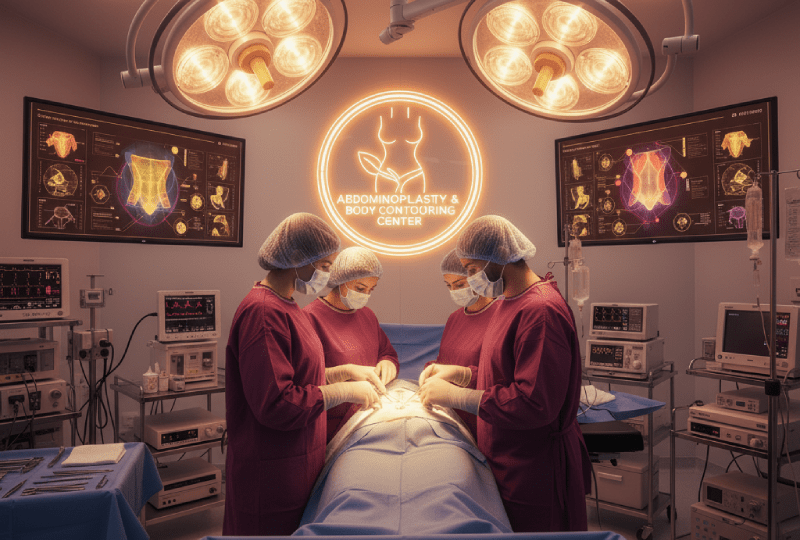
The technical execution of a combination surgery requires a surgeon to manage multiple planes of tissue simultaneously. In Aoife’s case, the procedure involved three distinct but synergistic surgical components: the abdominoplasty, the breast lift, and high-definition contouring.
- Abdominoplasty and Diastasis Recti Repair: The primary focus was addressing the separation of the rectus abdominus muscles. This involves Diastasis Recti repair, which involves internal corset suturing of the abdominal fascia. This internal “corset” provides the structural tension necessary to flatten the abdomen and prevent future bulging. Depending on the degree of skin laxity, the surgeon may opt for a Full, Mini, or Extended (360) tummy tuck. For Aoife, the tummy tuck component (valued between 3,000 – 5,000 USD) was essential for her core stability.
- Mastopexy (Breast Lift) and Augmentation: To address ptosis (sagging), a breast lift was integrated. The cost for a breast lift typically ranges from 2,500 – 4,500 USD. To restore volume, high-grade implants were utilized. For maximum safety and longevity, only JCI-approved implants such as Mentor, Motiva, or Polytech are used, ensuring the device’s structural integrity and biocompatibility.
- Vaser Liposuction and Fat Transfer: To refine the flanks and transition the waistline, Vaser Liposuction was used for high-definition contouring with minimal bruising. This technology uses ultrasound to emulsify fat cells without damaging surrounding tissue. The harvested fat was then processed for a BBL (Brazilian Butt Lift) fat transfer, a procedure costing between 3,500 – 5,500 USD, which redistributed volume to the gluteal region. The cost of liposuction per area generally ranges from 500 – 1,500 USD.
Safety, Standards, and the JCI Benchmark
When undertaking a multi-site transformation, the patient’s safety is predicated on the clinical environment’s accreditation. A critical pillar of this surgical journey is adherence to JCI (Joint Commission International) safety standards. JCI accreditation is the global gold standard, ensuring that every aspect of the patient’s care—from sterilization protocols to anesthesia monitoring—meets rigorous international benchmarks.
For a mother traveling from abroad, knowing that the surgical facility operates under these stringent guidelines provides the necessary peace of’ mind. This includes the precision of the Diastasis Recti repair, the sterility of the Vaser Liposuction equipment, and the traceable quality of the Motiva or Mentor implants used in breast reconstruction. The surgical journey is not merely about the aesthetic result, but the biological safety of the intervention.
The Seamless Logistics of a Medical Journey
The success of a major surgical transformation is often determined by the ease of the recovery period. The logistics of a “medical holiday” are designed to minimize patient stress, which is vital for maintaining a low cortisol level and promoting faster healing. The process is engineered to be as frictionless as the silk pillowcase mentioned earlier.
The journey typically begins with arrival at Istanbul (IST) or Antalya (AYT). Upon arrival, patients are met by VIP private transfers that transport them directly from the airport to their recovery location. The accommodation component is a cornerstone of the post-operative experience, utilizing 5-star recovery suites with companion stay included. This allows a partner or family member to assist with the patient’s needs during the most acute phase of healing.
The timeline for recovery is divided into two distinct phases:
- The Acute Phase: The first 7-10 days in Turkey are dedicated to intensive monitoring, wound care, and managing initial edema. During this time, the focus is on rest, hydration, and strictly following post-operative compression protocols.
- The Reintegration Phase: While the patient returns home after the first week, the physiological healing continues. A 6-week period for full exercise return is standard, during which the internal sutures of the abdominal fascia and the newly placed implants settle into their permanent positions.
By integrating advanced surgical technology, such as Vaser-assisted contouring, with a highly structured logistical framework, the transformation becomes more than just a procedure; it becomes a meticulously managed journey toward physical restoration.
The Science of Friction Reduction in Post-Operative Care
…silk pillowcases… minimizing mechanical friction on incision sites…
Advanced Surgical Modalities and Precision Aftercare
…Vaser Lipo… Diastasis Recti… implants…
Logistical Excellence: The 5-Star Recovery Ecosystem in Turkey
…VIP transfers… 5-star suites… IST/AYT…
2026 Cost Projections: Global Value Comparison
- …
Managing the Post-Surgical Transition: Timelines and Logistics
…7-10 days… 6 weeks… childcare considerations…
…done thinking.
The Science of Friction Reduction in Post-Operative Care
The use of silk pillowcases is far more than a superficial beauty trend; for many women navigating the delicate stages of post-surgical recovery, it is a strategic tool used to minimize mechanical friction and dermatological irritation. In the acute inflammatory phase following procedures such as a breast lift or facial contouring, the integumentary system—the skin—is highly sensitive to external stressors. Silk, characterized by its smooth, continuous filament structure, significantly reduces the coefficient of friction between the skin and the bedding.
When a patient is recovering from a breast_lift (priced between 2,500 – 4,500 USD), the incision lines are often located in the inframammary fold or around the areola. Even subtle movements during sleep can cause the skin to drag against cotton fibers, potentially leading to micro-trauma, increased edema (swelling), and unnecessary tension on the sutures. By utilizing silk, patients can mitigate the risk of “skin tugging,” thereby supporting the integrity of the healing wound and minimizing the risk of hypertrophic scarring.
“The primary goal of post-operative aftercare is the stabilization of the wound environment. Reducing external kinetic forces through high-grade textiles like silk can significantly decrease the inflammatory response and promote smoother cicatrization.”
Advanced Surgical Modalities and Precision Aftercare
The efficacy of recovery is deeply intertwined with the technical precision of the surgical technique employed. Modern aesthetic medicine in Turkey has moved toward minimally invasive, high-definition approaches that demand specific aftercare protocols. For instance, the application of Vaser Liposuction is a cornerstone of high-definition contouring. Unlike traditional methods, Vaser technology uses ultrasonic energy to emulsify fat cells with extreme precision, which results in minimal bruising and a much smoother recovery profile for the patient.
Furthermore, complex abdominal reconstructions, such as Diastasis Recti repair, require a much more rigorous approach to physical stability. This procedure involves internal corset suturing of the abdominal fascia to close the gap between the rectus abdominis muscles. Because the structural integrity of the core is being rebuilt, the post-operative period necessitates strict adherence to movement restrictions. While the patient may be in a 5-star recovery suite, they must avoid any intra-abdominal pressure that could compromise the tension of the internal sutures.
When selecting implants for breast augmentation, the quality of the prosthetic is paramount to long-term satisfaction. Patients should ensure their surgical plan includes JCI-approved options, such as Mentor, Motiva, or Polytech implants. The choice of implant, combined with the surgical technique—whether a Full, Mini, or Extended (360) Tummy Tuck—dictates the compression garments required and the overall level of lymphatic drainage care needed during the first 14 days.
Logistical Excellence: The 5-Star Recovery Ecosystem in Turkey
The concept of “Medical Tourism” has evolved into “Recovery Hospitality.” The logistics of a surgical journey in Turkey are designed to remove the cognitive load from the patient, allowing them to focus entirely on physiological healing. The recovery architecture typically begins with VIP private transfers that bridge the gap between Istanbul (IST) or Antalya (HDY) airports and the recovery site. This seamless transition is critical in preventing post-surgical fatigue.
The standard of accommodation for post-operative care is centered around 5-star recovery suites. These are not merely luxury hotels; they are clinical-adjacent environments where companion stays are included, allowing for essential support during the initial 72 hours of healing. For many mothers, this includes the coordination of childcare logistics, ensuring that the post-operative period is not disrupted by the stressors of managing a household.
- Initial Post-Op Phase: 7-10 days of intensive care in Turkey, focusing on edema management and wound monitoring.
- The Transition Phase: Arranging fly-home timelines that account for flight duration and the necessity of cabin pressure stability.
- Long-term Integration: A period of 6 weeks before a full return to strenuous exercise or heavy lifting is permitted.
2026 Cost Projections: Global Value Comparison
As we look toward the 2026 fiscal year, the disparity between the cost of aesthetic procedures in Turkey versus the UK and USA continues to widen. This allows patients to reallocate their budget from the surgical fee itself into premium aftercare, such as private nursing, lymphatic drainage massages, and luxury recovery suites.
Below is a breakdown of the projected costs for various procedures in Turkey:
- Standard Surgical Package: 4,500 – 7,500 USD
- Advanced Combination Packages: 8,000 – 12,000 USD
- Tummy Tuck (Full, Mini, or 360): 3,000 – 5,000 USD
- Breast Lift: 2,500 – 4,500 USD
- Liposuction (Per Area): 500 – 1,500 USD
- BBL (Fat Transfer): 3,500 – 5,500 USD
When compared to the UK or USA, where a single abdominoplasty can exceed 15,000 USD (excluding surgeon fees and hospital stays), the Turkish model provides a significant financial cushion. This surplus enables the patient to invest in “The Silk Standard” of recovery—prioritizing high-quality nutrition, specialized compression garments, and the logistical ease of a managed medical holiday.
Navigating the Pre-Operative Journey
The precision of the recovery period begins long before the patient arrives at Istanbul (IST) or Antalya (AYT). The foundation of a successful outcome is laid during the initial consultation phase. Cure Holiday specialists facilitate free online video assessments with board-certified plastic surgeons, allowing for a comprehensive digital review of the patient’s anatomy. This remote diagnostic process ensures that the surgical plan—whether it involves Vaser Liposuction or complex Diastasis Recti repair—is tailored to the patient’s specific physiological needs and recovery expectations.
Considering a Mommy Makeover in Turkey? Get a Free Quote for your Why many Mums use “Silk Pillowcases” to Minimize Friction and Discomfort Transformation with cureholiday.com
Free Consultation
Fill out the form below to get your free medical travel plan and price quote.
Sources and how to verify this yourself
- Ministry of Health, Regulation on International Health Tourism and Tourist Health, Official Gazette 26 April 2025, No. 32882 — authorisation requirement for facilities and intermediaries, TÜSKA accreditation, compulsory complication insurance (deadline 31 December 2025 for insurance, 31 December 2026 for accreditation). source
- Ministry of Health, Regulation on Promotion and Information Activities in Health Services, Official Gazette 12 November 2025, No. 33075 — treatment promises and guarantees are prohibited; price and campaign announcements are permitted only within international health tourism. source