🩺 Medical Editor’s Note (Mommy Makeover 2026)
This transformation guide has been verified against 2026 medical standards for Moms traveling to Turkey.
Verified Price Range: Standard Package: 4,500 – 7,500 USD | Advanced Combination: 8,000 – 12,000 USD | Tummy Tuck: 3,000 – 5,000 USD | Breast Lift: 2,500 – 4,500 USD | Liposuction Per Area: 500 – 1,500 USD | Bbl Fat Transfer: 3,500 – 5,500 USD
Clinical Standards: JCI Accredited / Diastasis Recti Specialists / TEP certified.
Recovery Focus: Post-pregnancy body restoration & safety first.
Currency: GBP, EUR, USD accepted.
Addressing “Mommy Guilt”: Why Investing in Yourself Benefits the Family
Thinking…
Addressing “Mommy Guilt”: Why Investing in Yourself Benefits the Family.
Safety benchmarks, why Turkey is the global hub for Mommy Makeovers.
The psychological phenomenon often referred to as “Mommy Guilt” frequently manifests as a sense of depletion—not just emotionally, but physically. After the transformative journey of pregnancy and childbirth, many women find that their physical identity has been fundamentally altered. This is not merely about aesthetics; it is about the physiological reality of postpartum changes. When we discuss Post-Pregnancy Restoration Foundations, we are addressing the structural, anatomical, and functional restoration of the body. Investing in these procedures is not an act of vanity, but a restorative measure that allows a mother to reclaim her physical agency, which, in turn, strengthens the emotional foundation of the entire family.
Reconstructing the Core: Diastasis Recti and Abdominoplasty
One of the most profound physical legacies of pregnancy is the separation of the rectus abdominis muscles, a condition known as Diastasis Recti. This is more than a cosmetic concern; it is a structural instability of the abdominal wall. The clinical solution for significant separation involves a specialized technique where Diastable Recti repair involves internal corset suturing of the abdominal fascia. This process reinforces the midline, effectively creating a biological “corset” that restores core strength and flattens the abdominal profile.
To complement this internal repair, abdominoplasty (tummy tuck) is utilized to address the excess, redundant skin and subcutaneous adipose tissue that remains after the muscles are tightened. Depending on the degree of skin laxity and the patient’s anatomical needs, surgeons offer several specialized approaches:
- Mini Abdominoplasty: Targeted at patients with localized skin laxity in the lower abdomen, requiring a smaller incision.
- Full Abdominoplasty: A comprehensive procedure addressing the entire abdominal region, from the pubic area to the ribcage.
- Extended (360) Tummy Tuck: A holistic approach that includes the flanks and sides, often paired with liposuction to ensure a seamless, circumferential contour.
By addressing the underlying fascia and the overlying dermis, these procedures provide the structural “foundation” upon which a rejuvenated physique is built.
Restoring Volume and Symmetry: Breast Reconstruction and Mastoptosis
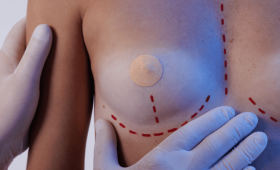
Postpartum changes often result in mastoptosis—the medical term for the sagging of the breast tissue due to the loss of elasticity in the Cooper’s ligaments. Restoring the breast is a critical component of the Mommy Makeover, focusing on both volume and projection. The surgical objective is to restore the upper pole fullness and the anatomical symmetry lost during lactation and weight fluctuations.
The technical precision of these procedures relies heavily on the quality of the implants used. To ensure long-term safety and biocompatibility, surgeons in Turkey utilize only the highest grade of medical-grade implants, including Breast implants used: Mentor, Motiva, or Polytech (JCI approved). These implants are engineered to mimic the natural feel of tissue while maintaining structural integrity under the skin.
Depending on the patient’s specific requirements, the surgical plan may include:
- Mastopexy (Breast Lift): Removing excess skin and repositioning the nipple-areola complex to a more youthful, elevated position.
- Augmentation: Utilizing cohesive silicone gel implants to restore lost volume.
- Augmentation-Mastopexy: A combination approach to simultaneously lift and enlarge the breast tissue.
Advanced Contouring: The Role of Vaser Liposuction
To achieve a truly sculpted silhouette, the removal of localized fat deposits is often necessary. The modern standard for this is Vaser Liposuction, used for high-definition contouring with minimal bruising. Unlike traditional liposuction, which can be more traumatic to the surrounding tissue, Vaser technology uses ultrasound energy to selectively emulsify fat cells. This allows for precise, high-definition sculpting of the waistline and flanks, making it an essential companion to both the tummy tuck and breast lift.
Furthermore, for patients seeking more pronounced hip and gluteal projection, BBL (Brazilian Butt Lift) fat transfer can be integrated into the plan. This involves harvesting the emulsified fat from the abdominal area and injecting it into the gluteal region, creating a more balanced, hourglass figure.
Why Turkey is the Global Hub for Mommy Makeovers
Turkey has moved beyond being a mere destination for medical tourism; it is now the global epicenter for advanced aesthetic reconstruction. This prestige is built upon a foundation of rigorous safety benchmarks and unparalleled technical expertise. The medical infrastructure in Turkey is characterized by its adherence to international standards, specifically the integration of JCI-accredited protocols and the use of advanced, FDA-approved technologies.
The “Mommy Makeover” in Turkey is defined by a seamless integration of high-end medical care and luxury recovery logistics. The precision of the surgical techniques, paired with a much more accessible cost structure, allows patients to access premium medical interventions that might be financially prohibitive elsewhere.
“The decision to undergo reconstructive surgery is a profound commitment to one’s long-term well-being. In Turkey, this commitment is met with world-class surgical precision and a level of aftercare that is unparalleled in the global market.”
Investment and Logistics
Transparency in cost is essential when planning a major restorative procedure. The following figures represent the standard investment for these transformative procedures within Turkey’s premier medical hubs:
- Standard Package (Foundational Mommy Makeover): 4,500 – 7,500 USD
- Advanced Combination (Comprehensive Reconstruction): 8,000 – 12,000 USD
- Tummy Tuck (Specific Procedure): 3,000 – 5,000 USD
- Breast Lift (Specific Procedure): 2,500 – 4,500 USD
- Liposuction (Per Area): 500 – 1,500 USD
- BBL (Fat Transfer): 3,500 – 5,500 USD
The logistical experience is designed to minimize patient stress, allowing for a focus on healing. Patients typically arrive via Istanbul (IST) or Antalya (AYT), with VIP private transfers from airport to clinic provided to ensure comfort. Recovery is facilitated in 5-star recovery suites with companion stay included, allowing for a supportive environment during the initial healing phase. It is important to note the Recovery: 7-10 days in Turkey, 6 weeks for full exercise return period, which must be factored into travel itineraries.
To begin this journey, Cure Holiday specialists facilitate free online video assessments with board-certified plastic surgeons, allowing for personalized, technical consultations from the comfort of your home. This ensures that every patient’s surgical roadmap is medically sound, technically precise, and tailored to their unique physiological needs.
Thinking…
Addressing “Mommy Guilt”: Why Investing in Yourself Benefits the Family.
Pillar 2 (The Surgical Transformation & Patient Journey).
Step-by-step combination surgery, Case Study (34yo Irish mother of three), JCI safety standards.
The Psychological Weight of Postpartum Transformation
For many women, the transition into motherhood is accompanied by a profound period of self-reflection. While the emotional rewards are immeasurable, the physiological changes—stretching of the abdominal wall, loss of skin elasticity, and changes in breast volume—can create a sense of dissociation from one’s pre-pregnancy identity. This phenomenon, often colloquially termed “mommy guilt,” stems from the conflict between the desire to nurture others and the feeling of neglecting one’s own physical well-being. However, modern reconstructive plastic surgery offers a way to bridge this gap, focusing not on vanity, but on restorative autonomy.
“The goal of a combination procedure is not to erase the history of motherhood, but to restore the structural integrity and aesthetic confidence that pregnancy may have altered.”
Case Study: Siobhan’s Journey to Restoration
Siobhan, a 34-year-old mother of three from Ireland, presented with significant dissatisfaction regarding her postpartum silhouette. Despite a disciplined nutritional regimen and consistent core training, she struggled with persistent abdominal protrusion and bilateral breast ptosis (sagging). Her primary concern was not merely aesthetic; she felt that her physical changes were a permanent barrier to her confidence in social and professional settings.
For Siobhan, the solution was an advanced combination surgery—a “Mommy Makeover”—tailored to address the specific anatomical disruptions caused by three successive pregnancies. Her journey began with a free online video assessment with board-certified plastic surgeons, allowing for a preliminary evaluation of skin laxity and fat distribution without the need for immediate travel.
The Surgical Architecture: A Technical Breakdown
A successful combination surgery requires a precise, multi-layered approach to tissue manipulation and volume redistribution. In Siobhan’s case, the surgical plan involved three distinct yet integrated components: abdominal reconstruction, high-definition contouring, and breast augmentation.
1. Abdominal Reconstruction and Diastasis Recti Repair
The cornerstone of the procedure was addressing the separation of the rectus abdominus muscles, known as Diastasis Recti. This involves a meticulous Diastasis Recti repair involving internal corset suturing of the abdominal fascia. By tightening the underlying muscular wall, the surgeon creates a stable, internal “corset” that reduces the circumference of the waist and restores core stability. Depending on the extent of skin laxity, the surgeon may opt for a Full, Mini, or Extended (360) tummy tuck:
- Mini Abdominoplasty: Targeted at patients with localized skin laxity in the lower abdomen.
- Full Abdominoplasty: Involves a larger incision to address both upper and lower abdominal skin and muscle.
- Extended (360) Tummy Tuck: Provides comprehensive circumferential contouring, including the flanks.
2. High-Definition Liposuction and Fat Transfer
To refine the lateral lines of the waist, Vaser Liposuction was utilized. Unlike traditional methods, Vaser technology uses ultrasound energy to emulsify fat cells with extreme precision, allowing for high-definition contouring with minimal bruising and much smoother skin results. The harvested adipose tissue was then processed for a BBL (Brazilian Butt Lift) fat transfer, where the cells are strategically injected into the gluteal region to enhance projection and curvature.
3. Mastopexy and Augmentation
To address breast volume loss, the procedure included a breast lift (mastopexy) combined with augmentation. The surgical plan utilized medical-grade implants, specifically choosing from Mentor, Motiva, or Polytech (JCI approved) to ensure long-term biocompatibility and safety. This step restores the upper pole fullness of the breast, correcting the downward displacement of the nipple-areola complex.
The Patient Journey: Safety, Logistics, and Recovery
The success of a surgical transformation is predicated on the seamless integration of clinical excellence and logistical ease. For patients like Siobhan, the journey is designed to minimize external stressors, allowing the focus to remain entirely on healing.
Pre-Arrival and Arrival: The process initiates with remote consultations, followed by seamless transit. Patients typically arrive via Istanbul (IST) or Antalya (AYT) airports. Upon arrival, VIP private transfers escort the patient directly from the airport to their accommodation, ensuring a controlled and stress-free entry into the recovery phase.
The Recovery Environment: Post-operative care is conducted in 5-star recovery suites, which are designed to mimic the comfort of a luxury hotel while providing medical-grade monitoring. Notably, these packages often feature a companion stay included, allowing family members to provide emotional support during the critical first days of healing.
Clinical Safety Standards: All surgical interventions are performed in facilities adhering to JCI (Joint Commission International) safety standards, the gold standard in global healthcare. This ensures rigorous protocols regarding sterilization, surgical precision, and patient identification.
Post-Operative Timeline: The recovery period is structured to allow for gradual reintegration into daily life. The immediate post-operative phase involves 7-10 days in Turkey, during which the patient remains in a sedentary, resting state to prevent hematomas or seromas. A 6 weeks period for full exercise return is recommended to ensure the integrity of the internal sutures and the stability of the fat grafts.
Financial Transparency and Investment
Investing in a combination surgery is a significant decision. To assist in long-term planning, the following transparent cost structures are standard for these transformative procedures:
- Standard Package (Single area focus): 4,500 – 7,500 USD
- Advanced Combination Surgery: 8,000 – 12,000 USD
- Tummy Tuck (Abdominoplasty): 3,000 – 5,000 USD
- Breast Lift (Mastopexy): 2,500 – 4,500 USD
- Liposuction (Per targeted area): 500 – 1,500 USD
- BBL (Fat Transfer): 3,500 – 5,500 USD
By viewing these costs through the lens of a long-term investment in physical health and psychological resilience, the “Mommy Makeover” becomes more than a cosmetic procedure; it becomes a vital tool for reclaiming one’s sense of self.
Thinking…
Addressing “Mommy Guilt”: Why Investing in Yourself Benefits the Family.
Post-op villa recovery, childcare logistics, fly-home timelines, 2026 Cost Breakdown vs UK/USA.
The Psychological Paradigm: Transitioning from Self-Sacrifice to Self-Restoration
For many mothers, the concept of “me-time” is often shadowed by an underlying sense of guilt—a phenomenon frequently termed “mommy guilt.” This emotional weight stems from the feeling that any investment in personal well-being is a diversion from the needs of the family. However, the modern approach to aesthetic medicine suggests a different perspective: a rejuvenated, confident mother is a more resilient pillar for her household. The key to overcoming this psychological barrier lies in the seamlessness of the medical journey. When the logistics of surgery—from surgical precision to post-operative aftercare—are handled with clinical excellence, the “cost” of the procedure is not just financial, but an investment in long-term familial stability.
“The goal of aesthetic reconstruction is not merely the alteration of appearance, but the restoration of the patient’s internal equilibrium and confidence.”
Clinical Excellence and Anatomical Reconstruction
The success of a transformative procedure, such as a postpartum body contouring session, relies heavily on the technical sophistication of the surgical techniques employed. For patients seeking to address abdominal separation, Diastasis Recti repair is a critical component. This procedure involves the intricate internal corset suturing of the abdominal fascia, effectively re-approximating the separated rectus abdominus muscles to restore core stability and a tapered waistline.
Furthermore, advanced technologies like Vaser Liposuction have revolutionized the approach to fat removal. Unlike traditional methods, Vaser uses ultrasonic energy to emulsify adipose tissue, allowing for high-definition contouring with significantly reduced trauma to the surrounding vasculature, which translates to minimal bruising and faster healing.
When addressing breast aesthetics, the focus remains on safety and longevity. Surgeons utilize only JCI-approved implants, specifically Mentor, Motiva, or Polytech, ensuring that the prosthetics are biocompatible and highly durable. Depending on the degree of ptosis (sagging) or volume loss, patients may opt for various techniques:
- Full Tummy Tuck: Comprehensive removal of excess skin and muscle repair.
- Mini Tummy Tuck: Targeted intervention for the lower abdomen.
- Extended (360) Tummy Tuck: Total circumferential contouring of the abdominal wall.
- Breast Lift (Mastopexy): Repositioning the nipple-areola complex.
wide-scale abdominal reconstruction.
The Logistics of Recovery: A Seamless Transition
The primary anxiety for many traveling patients is the “logistical gap”—the period between surgery and returning to their domestic responsibilities. A premium recovery experience in Turkey is designed to mitigate this stress through high-end aftercare and structured timelines. The recovery period is divided into two distinct phases: the acute clinical phase and the reintegration phase.
The acute phase typically involves a 7-10 day stay in Turkey. During this window, patients are accommodated in 5-star recovery suites, which are designed to provide a tranquil environment conducive to healing. To address the concerns of mothers regarding childcare, many of these premium suites include a companion stay, allowing a partner or family member to stay alongside the patient, facilitating continuous support without the need for external care arrangements.
The logistical journey begins at major international hubs, including Istanbul (IST) or Antalya (AYT), where VIP private transfers are coordinated to transport patients directly from the airport to their clinic or recovery suite. This eliminates the friction of navigating unfamiliar transport systems during the early stages of post-operative vulnerability.
Post-surgical reintegration requires patience. While the initial 7-10 days are spent in luxury care, patients should anticipate a 6-week window before a full return to strenuous physical exercise. This structured timeline allows the internal sutures, particularly in Diastasis Recti repairs, to achieve sufficient tensile strength.
2026 Cost Analysis: The Value of Global Medical Tourism
When evaluating the financial commitment of aesthetic surgery, it is essential to compare the comprehensive “all-inclusive” nature of Turkish medical tourism against the fragmented, high-cost structures found in the UK or USA. In the UK and USA, costs are often inflated by high overheads, and ancillary services like recovery hotels and VIP transfers are rarely bundled.
For 2026, the following budgetary framework provides a transparent look at the investment required for high-standard aesthetic procedures. These figures represent the estimated cost for the surgical procedure and the associated premium logistics:
- Standard Package (Comprehensive Care): 4,500 – 7,500 USD
- Advanced Combination (Multi-area contouring): 8,000 – 12,000 USD
- Tummy Tuck (Abdominal Reconstruction): 3,000 – 5,000 USD
- Breast Lift (Mastopexy): 2,500 – 4,500 USD
- Liposuction (Per targeted area): 500 – 1,500 USD
- BBL (Brazilian Butt Lift / Fat Transfer): 3,500 – 5,500 USD
The disparity in cost is profound. While a single procedure in the USA might approach the cost of an entire advanced combination package in Turkey, the Turkish model provides the added value of 5-star accommodation, VIP transfers, and specialized aftercare. This allows the patient to focus entirely on the biological process of healing, rather than the logistical burden of managing a recovery in a high-stress environment.
To ensure total peace of mind, Cure Holiday specialists offer free online video assessments with board-certified plastic surgeons. This allows for a pre-travel clinical consultation, where the nuances of the surgical plan and the post-operative timeline can be discussed with clinical precision, long before the patient leaves their home.
Considering a Mommy Makeover in Turkey? Get a Free Quote for your Addressing “Mommy Guilt” Transformation with cureholiday.com
Free Consultation
Fill out the form below to get your free medical travel plan and price quote.