About the prices on this page. The figures below are indicative market prices and country comparisons, not a quote. Our own current, all-inclusive prices are published on our cosmetic surgery in Turkey page, and we confirm your figure in writing before you commit to anything.
Cost and planning note (Mommy Makeover 2026)
The figures below are indicative market ranges, not a quote: your own price is confirmed after a clinical assessment.
Indicative price range: Standard Package: 4,500 – 7,500 USD | Advanced Combination: 8,000 – 12,000 USD | Tummy Tuck: 3,000 – 5,000 USD | Breast Lift: 2,500 – 4,500 USD | Liposuction Per Area: 500 – 1,500 USD | Bbl Fat Transfer: 3,500 – 5,500 USD
Facility standards: In Türkiye, any facility treating international patients must hold the Ministry of Health’s international health tourism authorisation; hospitals and medical centres must also be accredited by TÜSKA, and complication insurance is compulsory for procedures carried out in an operating theatre (Regulation of 26 April 2025).
Recovery Focus: Post-pregnancy body restoration & safety first.
Currency: GBP, EUR, USD accepted.
Correcting Capsular Contracture from Previous Breast Implants in Turkey
Restoring the Maternal Silhouette: The Science of Post-Pregnancy Reconstruction
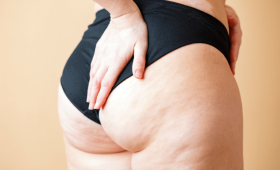
The physiological metamorphosis experienced during pregnancy and subsequent lactation is a profound biological feat, yet it often leaves lasting structural changes to the maternal anatomy. For many women, the biological “stretching” of the integumentary system and the underlying musculature results in permanent alterations to the abdominal wall and mammary tissue. Post-peripartum restoration, commonly referred to in clinical circles as the foundations of a “Mommy Makeover,” focuses on the surgical correction of abdominal ptosis, mammary ptosis, and the muscular separation known as diastasis recti.
Achieving a successful aesthetic outcome requires more than superficial skin tightening; it necessitates a deep architectural reconstruction of the body’s core. This process involves addressing the tension of the abdominal fascia and the volume loss in the breast parenchyma to recreate a rejuvenated, pre-pregnancy contour.
Structural Abdominal Reconstruction: Diastasis Recti and Panniculus Reduction
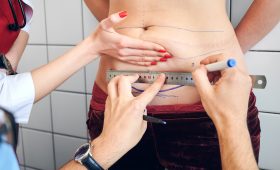
One of the most significant challenges following pregnancy is the loss of abdominal wall integrity. Diastasis Recti repair involves internal corset suturing of the abdominal fascia. This procedure is not merely cosmetic; it is a functional reconstruction where the surgeon re-approximates the separated rectus abdominis muscles. By suturing the linea alba, the surgeon creates an “internal corset” that restores tension to the abdominal wall, reducing the protrusion of the midsection and providing much-needed core stability.
Depending on the extent of skin laxity and the degree of tissue redundancy, surgeons offer several specialized approaches:
- Mini Abdominoplasty: Targeted at patients with localized skin laxity in the lower abdomen, avoiding a large horizontal incision.
- Full Abdominoplasty: A comprehensive procedure addressing both the upper and lower abdominal quadrants, essential for significant tissue redundancy.
- Extended (360) Tummy Tuck: An advanced technique that extends the sculpture around the flanks, often combined with liposuction to provide a circumferential contour.
The investment for these procedures varies based on the complexity of the tissue resection. A tummy tuck typically ranges from 3,000 USD – 5,000 USD. When integrated into a broader restorative plan, patients often opt for advanced combination packages, which can range from 8,000 USD – 12,000 USD, covering both the abdominal repair and breast or contouring refinements.
Mastopexy and Mammary Volume Restoration
Post-lactation, the mammary glands often undergo significant volume loss, leading to inframammary fold ptosis (sagging) and a loss of glandular density. The surgical solution, known as a breast lift (mastopexy), focuses on repositioning the nipple-areola complex to a more youthful, anatomical position and reshaping the breast tissue.
In cases where tissue volume has decreased significantly, augmentation may be required to restore the upper pole fullness. For these procedures, safety and biocompatibility are paramount. The surgical standards in Turkey utilize only high-grade, JCI-approved implants, including Mentor, Motiva, or Polytech. These implants are engineered to mimic the natural feel of the breast while minimizing the risk of capsular contracture or displacement.
The cost for a breast lift generally falls between 2,500 USD – 4,500 USD. When combined with augmentation, the complexity of the surgery increases, but the result is a more cohesive and balanced aesthetic.
Precision Contouring via Vaser Technology and Fat Transfer
A truly comprehensive restoration often requires the refinement of the flanks and hips to complement the abdominal and breast work. Modern surgical precision is achieved through Vaser Liposuction, a technique that uses ultrasound energy to emulsify fat cells before aspiration. Vaser Liposuction is used for high-definition contouring with minimal bruising, allowing for the creation of sharp, anatomical lines along the waistline.
To replenish volume in areas such as the buttocks or hips, the BBL (Brazilian Butt Lift) fat transfer technique is frequently employed. This involves harvesting stabilized fat from the abdominal or flank area and injecting it into the gluteal region. This procedure is priced between 3,500 USD – 5,500 USD. For patients requiring targeted fat removal in smaller areas, liposuction per area is available at a cost of 500 USD – 1,500 USD.
“The hallmark of a successful restorative surgery is the seamless integration of muscle repair, skin tensioning, and volume redistribution to honor the patient’s natural anatomy.”
Turkey: The Global Standard for Aesthetic Excellence and Safety
Turkey has emerged as the premier global destination for Mommy Makeover procedures, not merely due to cost-efficiency, but because of its rigorous adherence to international safety benchmarks. The Turkish medical landscape is characterized by a high concentration of board-certified plastic surgeons who specialize in complex reconstructive-aesthetic hybrid surgeries.
The infrastructure for medical tourism in Turkey is designed to provide a seamless, high-end clinical experience. This includes:
- Seamless Logistics: Patients are met with VIP private transfers from the airport to the clinic, utilizing Istanbul (IST) or Antalya (AYT) as primary international gateways.
- Premium Recovery: Post-operative care is managed in 5-star recovery suites with companion stay included, ensuring that the convalescence period is as comfortable and sterile as possible.
- Digital Accessibility: Before traveling, patients can engage in free online video assessments with board-certified plastic surgeons to discuss surgical planes, implant selection, and personalized anatomical goals.
Understanding the temporal requirements of healing is critical for planning. While the initial recovery: 7-10 days in Turkey is sufficient for the clinical follow-up and wound check, patients must plan for a 6 weeks for full exercise return to ensure the structural integrity of the internal sutures and the stability of the fat transfers. By choosing Turkey, patients access a sophisticated medical ecosystem where advanced technology meets unparalleled luxury, making the restoration of the post-pregnancy silhouette both safe and transformative.
The Clinical Reality: A Case Study in Revisionary Transformation
For many patients, the journey toward correcting capsular contracture is not merely aesthetic but a profound medical necessity. Consider the case of a 34-year-old Irish mother of three, who presented with advanced Stage III capsular contracture. Following her initial augmentation years prior, the formation of dense, fibrotic scar tissue around the implant caused significant breast hardening, palpable distortion, and chronic discomfort. For a patient managing the physical demands of motherhood, the loss of breast projection and the onset of localized pain made a revision surgery imperative.
This patient’s journey highlights the shift from simple replacement to a comprehensive “Advanced Combination” approach. Her surgical plan was not limited to the removal of the compromised implant; it integrated a multi-dimensional body contouring protocol designed to address postpartum abdominal changes—specifically addressing both aesthetic symmetry and structural integrity. Her total investment for this advanced combination procedure was estimated between 8,000 – 12,000 USD, a transformative step that addressed both her breast health and her core stability.
The Surgical Protocol: Navigating Capsulectomy and Reconstruction
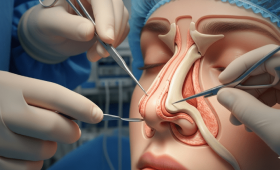
Correcting capsular contracture requires a higher level of surgical precision than a primary augmentation. The primary objective is the management of the “capsule”—the scar tissue sheath that forms around the implant. In cases of significant contracture, surgeons perform a capsulectomy, which involves the meticulous excision of the thickened, fibrotic tissue to eliminate the pressure causing pain and deformity.
The step-by-step surgical process typically involves:
- Implant Removal and Capsule Management: The surgeon accesses the existing incision to remove the old implant. Depending on the severity of the contracture, a capsulotomy (incising the capsule) or a full capsulectomy (removing the capsule) is performed to ensure no residual fibrosis remains to compress the new implant.
- Pocket Reformation: Once the old tissue is cleared, the surgical pocket is redefined. This is a critical phase to ensure the new implant sits naturally within the submuscular or subglandular space.
- Implant Selection: To ensure long-term safety and biocompatibility, only JCI-approved implants are utilized. Patients may choose between premium brands such as Motiva, Mentor, or Polytech, depending on their desired profile (e.g., high profile for more projection or moderate profile for a natural slope).
- Reconstruction: The new implant is positioned, and the incision is closed using advanced, multi-layer suturing techniques to minimize scarring and prevent future fluid accumulation (seroma).
For those seeking a more comprehensive aesthetic overhaul, the standard package for simple revision typically ranges from 4,500 – 7,500 USD, whereas more complex reconstructions involving tissue repositioning may fall into the higher pricing tier.
Integrated Body Contouring: The Power of Combination Surgery
The modern era of plastic surgery in Turkey is defined by “The Total Transformation.” Patients undergoing breast revision often present with secondary concerns, such as abdominal laxity or localized fat deposits. By combining breast revision with abdominal and gluteal contouring, patients can achieve a cohesive, balanced silhouette in a single anesthetic event.
A key component in these advanced cases is the Diastasis Recti repair. In many mothers, the abdominal muscles have separated during pregnancy. This procedure involves the internal corset suturing of the abdominal fascia, effectively pulling the muscles back together to create a tighter, flatter midsection. This is often paired with a Tummy Tuck, with options ranging from a Mini (for small scars) to a Full or Extended (360) approach for complete circumferential tightening. The cost for a Tummy Tuck typically ranges from 3,000 – 5,000 USD.
To further refine the contours, Vaser Liposuction is utilized. Unlike traditional liposuction, Vaser uses ultrasound energy to emulsify fat cells, allowing for high-definition contouring with minimal bruising and much more precise sculpting of the flanks and waist. This can be integrated as a standalone area for 500 – 1,500 USD per area, or part of a BBL (Brazilian Butt Lift) fat transfer, which requires harvesting fat from the abdomen and injecting it into the gluteal region, priced between 3,500 – 5,500 USD.
“The goal of a combination surgery is not just to fix what is broken, but to optimize the entire anatomical landscape. By addressing the capsular contracture alongside abdominal reconstruction, we treat the patient’s physical discomfort and their aesthetic confidence simultaneously.”
JCI Safety Standards and Clinical Excellence
When undergoing complex revisionary surgeries, the margin for error is slim. This is why adherence to JCI (Joint Commission International) safety standards is non-negotiable. These global benchmarks ensure that every stage of the surgical journey—from preoperative sterilization protocols to intraoperative anesthesia monitoring—meets the highest international-grade safety requirements.
Safety in Turkey is bolstered by the use of advanced technology and rigorous surgeon training. The use of Motiva or Mentor implants, for example, ensures that patients are receiving devices that have undergone rigorous clinical testing for stability and shell integrity. Furthermore, the integration of Vaser technology ensures that even the most delicate fat grafting or liposuction procedures are performed with minimal trauma to the surrounding vasculature, significantly reducing the risk of postoperative hematoma.
The Patient Journey: From Consultation to Recovery
The transformation begins long before the patient arrives in Turkey. To ensure transparency and clinical alignment, Cure Holiday specialists facilitate free online video assessments with board-certified plastic surgeons. This allows the surgical team to review previous medical records, examine the current state of the contracture via high-resolution imagery, and provide an accurate, personalized surgical roadmap.
Upon arrival, the logistics are designed to minimize stress and focus entirely on healing. Whether landing at Istanbul (IST) or Antalya (AYT), patients are met with VIP private transfers that transport them directly from the airport to their clinic and accommodation.
The post-operative period is managed within 5-star recovery suites, where a companion stay is included to ensure the patient has constant support. The recovery timeline is structured as follows:
- The Intensive Phase (7-10 days): This period is spent in Turkey, focusing on wound care, monitoring for any signs of complications, and initial swelling management.
- The Transition Phase: Patients are usually cleared for light walking and daily activities within a week, though they must avoid heavy lifting.
- The Full Return (6 weeks): It takes approximately 6 weeks for a full return to strenuous exercise and heavy lifting, allowing the new implants and abdominal sutures to settle into their permanent positions.
By integrating high-level medical expertise with a luxury recovery experience, the journey from the pain of capsular contracture to a restored, sculpted physique becomes a seamless, professionally managed transition.
The Post-Operative Sanctuary: 5-Star Recovery and Companion Logistics
Correcting capsular contracture is a significantly more complex physiological undertaking than a primary augmentation. The surgical management of fibrosis—the thickening of the fibrous capsule around the implant—requires meticulous dissection of the surrounding subcutaneous tissue. Because revision surgery involves managing scar tissue and potentially adjusting the pocket size, the post-operative inflammatory response can be more pronounced. Consequently, the recovery environment in Turkey is designed around the concept of a “medical sanctuary” rather than mere convalescence.
For patients arriving via Istanbul (IST) or Antalya (AYT), the logistics are orchestrated to minimize physical exertion from the moment of arrival. The transition from the airport involves VIP private transfers, ensuring that the patient avoids the physiological stress of navigating crowded public transport or managing heavy luggage. This is a critical component of managing lymphatic drainage and reducing the risk of edema in the surgical site.
The accommodation standard is centered around 5-star recovery suites. These are not merely hotel rooms but curated environments optimized for healing. A distinguishing feature of the premium care model in Turkey is the companion stay included within the package. For revision patients, having a trusted individual present to assist with mobility and monitoring for signs of seroma or hematoma is clinically advantageous. These suites provide the necessary space for the specialized post-operative garment (compression bra) to be worn comfortably without restriction.
“The success of a revision procedure is heavily dependent on the stability of the wound edges during the initial inflammatory phase. The presence of a companion in a controlled, 5-star environment allows for the seamless integration of wound care and rest, reducing the risk of post-surgical complications.”
The Clinical Timeline: Navigating the Fly-Home Window
One of the most critical logistical questions for international patients is the “fly-home” timeline. While the surgical intervention occurs within a single intensive session, the physiological window for safe air travel is strictly regulated. The standard protocol involves a stay of 7-10 days in Turkey. This period allows the surgical team to perform essential follow-up assessments, ensuring that the implant positioning is stable and that any significant swelling is subsiding.
However, patients must distinguish between the “Turkey stay” and the “full recovery” period. While you may be cleared to fly after approximately one week, the internal biological healing—particularly the stabilization of the new implant pocket—continues for much longer. It is vital to note that while you can return to sedentary activities shortly after your flight, a 6 weeks for full exercise return is the mandatory clinical benchmark to prevent the disruption of the internal sutures or the sudden onset of pressure-induced contracture.
To prepare for this timeline, Cure Holiday specialists facilitate free online video assessments with board-certified plastic surgeons. This allows for a pre-travel audit of your medical history, ensuring that your itinerary aligns with your physiological ability to endure long-haul flights following the manipulation of the breast tissue.
Managing Domestic Logistics: Childcare and Support Systems
For many patients, the primary barrier to seeking corrective surgery for capsular contracture is not the cost, but the logistical challenge of managing family responsibilities. Revision surgery, by its nature, requires a period of “care-dependency.” Managing childcare and household duties during the first two weeks of the 6-week recovery window requires meticulous planning.
The strategy for successful domestic reintegration involves a phased approach. During the 7-10 days in Turkey, the focus is on intensive clinical aftercare. Upon returning home, the patient enters a “restricted mobility phase.” If the procedure involved more extensive work—such as a tummy tuck or Diastasis Recti repair—the logistical burden is higher. In cases where Diastasis Recti repair involves internal corset suturing of the abdominal fascia, the patient must avoid any lifting or abdominal straining, making the presence of a secondary caregiver or childcare professional essential during the first 14 days post-flight.
2026 Cost Breakdown: Turkey vs. UK/USA Financial Landscape
As we look toward the 2026 fiscal year, the economic disparity between surgical care in Turkey and the UK/USA continues to widen. The primary driver of this gap is not merely the lower cost of local labor, but the “all-inclusive” logistical model used in Turkey, which absorbs the costs of transfers, 5-star accommodation, and post-operative monitoring.
Below is the projected 2026 cost breakdown for surgical interventions in Turkey compared to the significantly higher-cost benchmarks found in the UK and USA:
- Standard Revision Package (Implant replacement/Capsule removal): 4,500 – 7,500 USD (vs. £12,000 – £18,000 in the UK)
- Advanced Combination (Revision + Contouring): 8,000 – 12,000 USD
- Tummy Tuck (Full, Mini, or Extended 360): 3,000 – 5,000 USD (vs. $15,000+ in the USA)
- Breast Lift (Mastopexy) integration: 2,500 – 4,500 USD
- Vaser Liposuction (High-definition contouring): 500 – 1,500 USD per area
- BBL/Fat Transfer (Autologous fat grafting): 3,500 – 5,500 USD
When calculating the total investment, it is crucial to factor in the “hidden” costs of domestic surgery. In the UK and USA, the patient is responsible for all post-operative logistics, including hotel stays, private nursing, and transport. In the Turkish model, these are integrated into the primary standard package, often resulting in a total net saving of over 60% even when including international airfare.
Technical Precision in Integrated Procedures
The logistical planning must also account for the technical complexity of the chosen procedure. For patients opting for a multi-disciplinary approach—for example, correcting capsular contracture while simultaneously addressing abdominal laxity—the recovery period requires even more stringent oversight. The use of advanced technologies such as Vaser Liposuction allows for high-definition contouring with minimal bruising, which is a key factor in making the 7-10 day Turkey stay feasible and comfortable.
Furthermore, the quality of the hardware is non-negotiable. All surgical interventions in the premium Turkish sector utilize JCI-approved implants, specifically Mentor, Motiva, or Polytech. The selection of these high-grade, cohesive silicone implants is fundamental to preventing the recurrence of contracture, thereby ensuring that the logistical and financial investment in revision surgery is a long-term solution rather than a temporary fix.
Considering a Mommy Makeover in Turkey? Get a Free Quote for your Correcting Capsular Contracture from Previous Breast Implants in Turkey Transformation with cureholiday.com
Free Consultation
Fill out the form below to get your free medical travel plan and price quote.
Sources and how to verify this yourself
- Howe M-S, Keys W, Richards D. Long-term (10-year) dental implant survival: a systematic review and sensitivity meta-analysis. Journal of Dentistry, 2019 — pooled 10-year implant survival 96.4% (95% CI 95.2–97.5%); conservative sensitivity estimate 93.2%. source
- Ministry of Health, Regulation on International Health Tourism and Tourist Health, Official Gazette 26 April 2025, No. 32882 — authorisation requirement for facilities and intermediaries, TÜSKA accreditation, compulsory complication insurance (deadline 31 December 2025 for insurance, 31 December 2026 for accreditation). source
- Ministry of Health, Regulation on Promotion and Information Activities in Health Services, Official Gazette 12 November 2025, No. 33075 — treatment promises and guarantees are prohibited; price and campaign announcements are permitted only within international health tourism. source