About the prices on this page. The figures below are indicative market prices and country comparisons, not a quote. Our own current, all-inclusive prices are published on our cosmetic surgery in Turkey page, and we confirm your figure in writing before you commit to anything.
Cost and planning note (2026)
The figures below are indicative market ranges for 2026, not a quote: your own price depends on the clinic, the surgeon and your clinical assessment.
Indicative price range: Rhinoplasty: 2,800 – 4,500 USD | Facelift Deep Plane: 4,500 – 8,000 USD | Liposuction Vaser: 2,500 – 4,000 USD | Mommy Makeover: 6,000 – 10,000 USD
Facility standards: In Türkiye, any facility treating international patients must hold the Ministry of Health’s international health tourism authorisation; hospitals and medical centres must also be accredited by TÜSKA, and complication insurance is compulsory for procedures carried out in an operating theatre (Regulation of 26 April 2025). Ask us for the authorisation of the facility you are matched with.
Currency: USD / EUR / GBP accepted at all clinics.
Breast Lift with Auto-Augmentation: Using Your Own Tissue for Natural Volume in Izmir
Breast Lift with Auto-Augmentation: A Technical Overview
The breast lift, or mastopexia, remains a cornerstone of aesthetic breast surgery. However, evolving patient desires increasingly prioritize natural-looking results and avoidance of synthetic implants. This has led to a resurgence and refinement of techniques leveraging autologous tissue transfer – commonly referred to as auto-augmentation – integrated into the mastopexia procedure. This pillar will detail the ‘what’ and ‘why’ behind this combined approach, specifically as practiced in Izmir, Turkey, examining the surgical principles, patient selection, and the advantages offered by this approach.
Understanding Mastopexia and the Limitations of Traditional Techniques
A breast lift addresses ptosis – the descent of breast tissue – restoring a more youthful contour. Traditional mastopexia techniques involve removing excess skin and reshaping the glandular tissue to elevate the nipple-areolar complex (NAC). While effective for lift, these techniques often fail to address volume loss, a common concern particularly after weight loss, pregnancy, or with natural aging. Historically, patients desiring both lift and volume relied on the insertion of breast implants. However, implants carry inherent risks, including capsular contracture, implant rupture, and the potential for biofilm formation, necessitating potential revision surgeries. Furthermore, achieving a truly natural feel can be challenging.
Auto-Augmentation: The Principles of Tissue Redistribution
Auto-augmentation, in the context of breast lift surgery, is not simply adding fat; it’s a precise redistribution of existing breast tissue. The principle relies on maximizing the available glandular tissue by skillfully mobilizing and repositioning it. This is achieved through a careful understanding of breast anatomy and employing specific surgical maneuvers. The inferior pole of the breast, often characterized by fullness, is decongested and a significant portion of this volume is then meticulously tunneled and transferred to the upper pole – essentially ‘borrowing’ from the bottom to enhance the top and fill out the fullness lost over time.
This redistribution requires a meticulous dissection technique. The surgeon must isolate and protect the integrity of the dermal vascular plexus – the network of blood vessels supplying the skin – to ensure adequate perfusion of the repositioned tissue. This is crucial for graft viability. Additionally, careful consideration must be given to the lymphatic drainage pathways to minimize seroma formation (fluid accumulation) post-operatively. The volume transfer isn’t always limited to the upper pole; it can also be directed towards the lateral aspects of the breast to restore projection and improve breast shape. This is often coupled with a Wise pattern mastopexia or a modified vertical scar technique to allow for optimal tissue manipulation.
Patient Selection for Combined Mastopexia and Auto-Augmentation
Not all patients are suitable candidates for auto-augmentation. Ideal patients typically present with:
- Mild to moderate ptosis (sagging).
- Good overall breast volume – sufficient tissue must be present to allow for effective redistribution. Patients with significant volume loss may still require implant augmentation as an adjunct.
- Desire for a natural-feeling and looking result, avoiding implants.
- Realistic expectations regarding the degree of volume achievable. Auto-augmentation cannot replicate the dramatic results sometimes seen with implants.
A thorough pre-operative assessment is paramount. This includes a detailed medical history, physical examination (including breast tissue density assessment via palpation and potentially mammography/ultrasound), and a discussion of the patient’s aesthetic goals. 3D imaging can be a valuable tool to visualize potential outcomes and facilitate shared decision-making.
Surgical Technique: Key Considerations
The surgical approach to combined mastopexia and auto-augmentation varies depending on the degree of ptosis and the patient’s anatomy. However, several key technical aspects are consistent:
- Dissection Plane: A subdermal plane is typically preferred to preserve the dermal vascular plexus.
- NAC Mobilization: Complete or partial NAC mobilization, depending on the degree of repositioning required. The technique chosen impacts the long-term viability of the nipple and areola.
- Tissue Mobilization & Transfer: This is the critical step. Inferior pole tissue is carefully dissected, de-epithelialized (skin removed), and meticulously tunneled to the upper pole. The surgeon must ensure adequate blood supply is maintained throughout the process.
- Mastopexia Completion: Once the volume transfer is complete, the remaining breast tissue is reshaped and secured. The skin is redraped, and excess skin is removed.
- Wound Closure: Layered closure with absorbable sutures to minimize tension and optimize healing.
Izmir as a Destination for Breast Surgery
Izmir, located on the Aegean coast of Turkey, is increasingly recognized as a medical tourism hub. It offers a compelling combination of highly skilled surgeons, modern medical facilities, and a more relaxed, culturally enriching recovery experience compared to the bustling city of Istanbul. The region boasts a temperate climate and access to thermal spas, potentially aiding in post-operative recovery. For international patients, the costs associated with medical procedures in Izmir are significantly lower than in many Western countries. For example, a similar deep plane facelift in the US may range between $15,000 – $25,000 USD, while comparable procedures like rhinoplasty cost $2,800 – $4,500 USD in Turkey. A full mommy makeover can be achieved for $6,000 – $10,000 USD.
Furthermore, Turkish medical standards are internationally recognized. Facilities are frequently JCI (Joint Commission International) Accredited and operate under strict regulation by the Ministry of Health. Patients travelling from the UK, US, and EU benefit from convenient E-visa access for stays of up to 90 days. Izmir offers a uniquely appealing Aegean/Thermal recovery environment alongside Istanbul’s City/Boutique and Antalya’s Resort/Beach options.
Post-Operative Care and Recovery
The recovery period following combined mastopexia and auto-augmentation is typically 7-10 days in Turkey, with final results becoming fully apparent after 3-6 months. Post-operative care includes compression garments, activity restrictions, and regular follow-up appointments to monitor healing and address any concerns. Minimizing swelling and maintaining proper wound care are crucial for optimal outcomes. Techniques like Vaser Hi-Def liposuction are often employed adjacently to refine the body contour and further enhance the overall aesthetic result, alongside other procedures like Piezo Rhinoplasty and Deep Plane Facelift for a more comprehensive rejuvenation.
Breast Lift with Auto-Augmentation: The Surgical Journey in Izmir
The breast lift with auto-augmentation is a sophisticated surgical procedure gaining prominence at CureHoliday clinics in Izmir, Turkey. This technique moves beyond traditional mastopexy by cleverly utilizing existing breast tissue to restore volume, often negating the need for implants. This pillar details the surgical journey, focusing on technical aspects, a representative case study, and a comprehensive approach to risk mitigation. Izmir, with its burgeoning medical tourism sector and focus on recovery hubs, offers an ideal location for this procedure.
Surgical Technique: A Step-by-Step Breakdown
The auto-augmentation breast lift is not a single technique, but rather a versatile set of principles applied based on individual patient anatomy. The core concept involves reshaping and redistributing ptotic (sagging) breast tissue to fill out the upper pole and create a more youthful contour. Unlike traditional lifts that merely remove excess skin, auto-augmentation aims to ‘borrow’ from lower breast volume to replenish volume lost in the upper breast. Here’s a detailed breakdown of the commonly employed surgical steps:
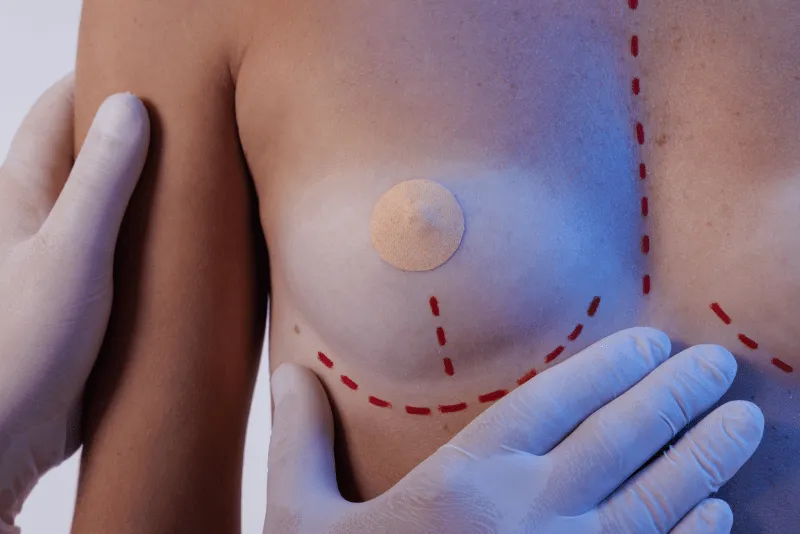
- Incision Planning: The choice of incision pattern (donut/circumareolar, vertical/lollipop, or Wise pattern) is meticulously planned during pre-operative consultation and marking. The decision is driven by the degree of ptosis, desired lift, and patient preference. Precise markings dictate the re-draping of the breast tissue.
- Tissue Dissection: Following local anesthesia with tumescent fluid (containing lidocaine and epinephrine for vasoconstriction and pain control), a carefully planned dissection is performed, separating the breast tissue from the underlying pectoralis major muscle. The dissection extends superiorly and laterally, freeing the breast parenchyma to allow for maximal reshaping.
- Central Pedicle Mobilization & Repositioning: The most critical step involves the mobilization of the central pedicle – the blood supply that nourishes the areola-nipple complex (ANC). A central pedicle preserves vascularity to the ANC, but requires careful dissection to allow for adequate repositioning. In cases of significant ptosis, a superomedial pedicle may be considered for greater reach.
- Volume Redistribution & Shaping: This is where auto-augmentation takes centre stage. Excess tissue from the lower and lateral aspects of the breast is carefully advanced and sutured to augment the upper pole. This is achieved through layered closures, strategically plicating (folding and suturing) the tissue to create a natural, long-lasting volume. The surgeon visualizes the final contour intraoperatively, making adjustments as needed.
- Skin Resection and Closure: After reshaping and volume transfer, redundant skin is excised. The amount of skin removed is precisely calibrated to avoid excessive tension on the closure, which could compromise vascularity or healing. The incisions are then closed in multiple layers using absorbable sutures, ensuring optimal cosmesis.
- Drainage and Dressing: Closed-suction drains are typically placed to prevent seroma formation. A surgical bra is immediately applied to support the breasts and minimize swelling.
Persona Case Study: Ms. Eleanor Vance, 45, from the UK
Ms. Vance, a 45-year-old mother of two from the UK, presented with moderate ptosis following two pregnancies and subsequent weight fluctuations. She desired a natural-looking lift without the risks associated with implants. Her pre-operative measurements were: breast width 14 cm, breast projection 18 cm, nipple-to-inframammary fold distance 22 cm. She was a good candidate for auto-augmentation due to sufficient lower breast volume to redistribute.
The surgical plan involved a vertical/lollipop incision technique. Intraoperatively, approximately 150g of tissue was transferred from the lower breast to augment the upper pole on each side. A meticulous layered closure was performed. Ms. Vance stayed in Izmir for 7 days post-operatively, utilizing one of the city’s dedicated recovery hubs. Her post-operative measurements (6 months) revealed: breast width 13.5 cm, breast projection 20 cm, nipple-to-inframammary fold distance 19 cm – demonstrating a significant lift and restored volume. Ms. Vance expressed high satisfaction with the natural aesthetic outcome, stating, “It feels like my breasts were never this full, even before having children.”
Risk Mitigation Strategies
While breast lift with auto-augmentation offers numerous advantages, it’s vital to acknowledge and mitigate potential risks. CureHoliday clinics in Izmir adhere to stringent safety protocols:
- Pre-Operative Assessment: A comprehensive medical history, physical examination, and mammogram (where indicated) are mandatory. Blood tests are conducted to assess overall health and coagulation status. Detailed discussions regarding patient expectations and realistic outcomes are paramount.
- Surgical Planning & Experience: The procedure is performed by board-certified plastic surgeons with extensive experience in breast surgery and auto-augmentation techniques. Meticulous pre-operative planning, including 3D imaging, helps visualize the final result and minimize complications.
- Intraoperative Monitoring: Continuous monitoring of vital signs is maintained throughout the procedure. The use of ultrasonic scalpels minimizes tissue trauma and blood loss.
- Vascularity Assurance: Intraoperative Doppler ultrasound may be used to assess the viability of the ANC after repositioning. If compromise is detected, immediate corrective measures are taken.
- Post-Operative Care: Close post-operative monitoring for signs of infection, hematoma, or seroma is crucial. Patients are provided with detailed wound care instructions and encouraged to report any concerns promptly. We also offer a full package including accommodation, aftercare and transfer, starting at 6,000 USD, depending on length of stay.
- Addressing Potential Complications: Should complications arise (e.g., wound dehiscence, hematoma), prompt and effective management is provided. Our Izmir facilities are equipped to handle a range of surgical emergencies.
Furthermore, CureHoliday benefits from the high standards of Turkish medical care. Clinics are typically JCI (Joint Commission International) Accredited and regulated by the Ministry of Health. Patients can confidently travel knowing they are receiving care within a well-established and monitored framework. Complementary procedures readily available include rhinoplasty (2,800 – 4,500 USD), liposuction (Vaser Hi-Def) (2,500 – 4,000 USD), and even a full mommy makeover (6,000 – 10,000 USD)) should patients desire a complete transformation. Recovery typically takes 7-10 days in Turkey, with final results apparent within 3-6 months.
Breast Lift with Auto-Augmentation: Recovery Logistics & Cost Analysis – Izmir, Turkey
Following successful breast lift procedures incorporating auto-augmentation techniques in Izmir, a comprehensive understanding of recovery logistics and a detailed cost audit – comparing Turkish pricing to Western equivalents – is paramount for prospective patients. This pillar focuses specifically on optimizing the post-operative experience, projecting realistic timelines, and providing a transparent financial overview. We will also address the final medical verdict surrounding the efficacy and long-term outcomes of this increasingly popular approach.
Post-Operative Recovery in Izmir: A Detailed Timeline
The breast lift with auto-augmentation procedure, while yielding aesthetically pleasing results, necessitates diligent post-operative care. Unlike standard breast augmentation which relies solely on implant volume, auto-augmentation utilizes the patient’s existing breast tissue, repositioning and reshaping it to achieve a natural-looking lift and increase in projection. This nuanced technique often translates to a slightly different recovery profile.
The immediate post-operative period (days 1-3) in Izmir involves close monitoring at a recovery facility. Expect discomfort managed with prescribed analgesics, ranging from non-opioid options to short-term opioid use as needed. Compression garments are crucial, applied immediately after surgery and worn consistently for at least six weeks. These garments minimize edema, support the remodeled tissues, and contribute to optimal skin contraction. Lymphatic drainage massage, initiated by a trained therapist during this phase, is pivotal in reducing swelling and minimizing the risk of seroma formation – a collection of serous fluid around the surgical site.
Phase two (days 4-7) focuses on transitioning to ambulatory care. Patients are typically discharged from the hospital within 7-10 days, but this can vary based on individual healing rates and the extent of tissue rearrangement. Pain levels subside considerably, allowing for gentle ambulation. Wound care instruction, including proper cleaning and dressing changes, is rigorously reinforced. Continued lymphatic drainage is vital during this period. Patients will be seen for post-operative check-ups to assess wound healing and manage any minor complications such as bruising or hematoma.
The intermediate recovery phase (weeks 2-8) sees a gradual return to normal activity. Strenuous exercise is strictly prohibited during this time, limiting activity to walking and light household chores. Nipple and breast sensation often fluctuates during this phase – a transient paresthesia is common due to nerve disruption during the procedure. Full sensation typically returns, but the timeframe varies. Scar management protocols are initiated, incorporating silicone sheeting or gel to minimize hypertrophic scarring.
Final results, however, are not immediately apparent. True assessment requires 3-6 months to allow for complete tissue settling, scar maturation, and resolution of any residual edema. Patients are advised to attend follow-up appointments at 1, 3, and 6 months post-surgery, and annually thereafter to monitor long-term outcomes.
Cost Audit: Turkey (Izmir/Antalya/Istanbul) vs. Western Nations
The economic advantages of undergoing cosmetic surgery in Turkey are well-documented. However, a detailed cost comparison requires considering not only the surgical fee but also ancillary expenses such as travel, accommodation, and post-operative care. Izmir, Antalya and Istanbul each offer distinct advantages in terms of recovery environment.
- Izmir (Aegean/Thermal): Known for its tranquil Aegean coast and thermal spas, Izmir offers a restorative recovery environment. Accommodation options range from boutique hotels to thermal resorts.
- Antalya (Resort/Beach): Favored for its resort infrastructure and beaches, Antalya provides a relaxing atmosphere conducive to recovery.
- Istanbul (City/Boutique): A vibrant cosmopolitan city with a wide range of accommodation and cultural experiences, Istanbul caters to patients seeking a more active recovery.
Here’s a comparative analysis (figures approximate and subject to individual surgeon fees and facility selection):
| Procedure | Turkey (Izmir/Antalya/Istanbul) | United States (Average) | United Kingdom (Average) |
|---|---|---|---|
| Rhinoplasty | 2,800 – 4,500 USD | $5,500 – $12,000 | £4,000 – £8,000 |
| Deep Plane Facelift | 4,500 – 8,000 USD | $12,000 – $20,000 | £8,000 – £15,000 |
| Liposuction (Vaser Hi-Def) | 2,500 – 4,000 USD | $4,000 – $8,000 (per area) | £3,000 – £6,000 (per area) |
| Mommy Makeover | 6,000 – 10,000 USD | $10,000 – $25,000 | £7,000 – £18,000 |
When factoring in travel ($800 – $1500) and accommodation ($500 – $1000 for a 7-10 day stay), the total cost for a breast lift with auto-augmentation in Turkey remains significantly lower. The use of technologies like Vaser Hi-Def for potential concurrent liposuction and the availability of advanced techniques such as Deep Plane Facelift alongside the breast lift provide a comprehensive aesthetic solution.
Final Medical Verdict: Auto-Augmentation – Efficacy and Long-Term Outcomes
The auto-augmentation technique, when performed by a skilled and experienced surgeon, offers demonstrable advantages over traditional implant-based breast lifts. The avoidance of implants eliminates the risk of capsular contracture, implant rupture, and biofilm formation – complications inherent to implant-based surgery. Furthermore, the resulting aesthetic is often perceived as more natural, with improved breast texture and a more harmonious fit with the patient’s body type.
Long-term studies are ongoing, but initial data suggests comparable lift longevity to traditional techniques. The success of auto-augmentation hinges on adequate breast tissue volume and appropriate patient selection. Patients with limited breast tissue may not be suitable candidates. Thorough pre-operative evaluation, including 3D imaging and meticulous surgical planning, are crucial to optimize outcomes and minimize the risk of complications. Clinics in Turkey adhering to JCI (Joint Commission International) accreditation and regulated by the Ministry of Health uphold rigorous medical standards, ensuring patient safety and quality of care. Citizens of the UK, US and EU benefit from convenient E-visa access for stays up to 90 days, facilitating a streamlined travel experience.
Ready to consult a specialist? Schedule a Free Consultation for Breast Lift with Auto-Augmentation in Turkey with cureholiday.com
Free Consultation
Fill out the form below to get your free medical travel plan and price quote.
Sources and how to verify this yourself
- Ministry of Health, Regulation on International Health Tourism and Tourist Health, Official Gazette 26 April 2025, No. 32882 — authorisation requirement for facilities and intermediaries, TÜSKA accreditation, compulsory complication insurance (deadline 31 December 2025 for insurance, 31 December 2026 for accreditation). source
- Ministry of Health, Regulation on Promotion and Information Activities in Health Services, Official Gazette 12 November 2025, No. 33075 — treatment promises and guarantees are prohibited; price and campaign announcements are permitted only within international health tourism. source