Cost and planning note (Mommy Makeover 2026)
The figures below are indicative market ranges, not a quote: your own price is confirmed after a clinical assessment.
Indicative price range: Standard Package: 4,500 – 7,500 USD | Advanced Combination: 8,000 – 12,000 USD | Tummy Tuck: 3,000 – 5,000 USD | Breast Lift: 2,500 – 4,500 USD | Liposuction Per Area: 500 – 1,500 USD | Bbl Fat Transfer: 3,500 – 5,500 USD
Facility standards: In Türkiye, any facility treating international patients must hold the Ministry of Health’s international health tourism authorisation; hospitals and medical centres must also be accredited by TÜSKA, and complication insurance is compulsory for procedures carried out in an operating theatre (Regulation of 26 April 2025).
Recovery Focus: Post-pregnancy body restoration & safety first.
Currency: GBP, EUR, USD accepted.
Dealing with the “Post-Op Pooch”: Why Swelling makes your Tummy look Big at First
The Science of the “Post-Op Pooch”: Understanding Post-Surgical Edema
One of the most common sources of anxiety for patients undergoing a Mommy Makeover is the phenomenon known as the “post-op pooch.” Shortly after undergoing an abdominoplasty or even liposuction, many patients observe an unexpected increase in abdominal circumference. To the untrained eye, it may appear as though the surgery has failed or that fat has been added; however, this is a physiological certainty known as post-operative edema.
Following surgical trauma, the body initiates a complex inflammatory cascade. This response involves the migration of white blood cells to the surgical site and an increase in capillary permeability. As a result, interstitial fluid accumulates within the subcutaneous tissues. In the context of a tummy tuck, where skin and underlying fat may have been resected, the remaining tissue must “settle” into its new position. This fluid accumulation, often accompanied by seroma formation (small pockets of fluid under the skin), can create a localized swelling that mimics the very protrusion the patient sought to eliminate.
“The initial swelling is not a regression of results, but rather the biological cost of tissue remodeling. Understanding that this ‘pooch’ is transient fluid, not permanent fat, is essential for patient psychological well-being during the first 14 days.”
This swelling typically peaks between days 3 and 7 and gradually subsides as the lymphatic system begins to effectively drain the excess fluid. For patients utilizing Vaser Liposuction, the inflammatory response is often more controlled. Because Vaser technology uses ultrasonic energy to emulsify fat cells with minimal thermal damage to surrounding structures, patients frequently experience significantly less bruising and a more rapid reduction in edema compared to traditional mechanical liposuction.
Reconstructing the Core: Diastasis Recti and Abdominal Foundations
A successful post-pregnancy restoration is not merely about skin removal; it is about structural reconstruction. The foundation of a flat abdomen lies in the repair of the rectus abdominis muscle. Many women suffer from Diastasis Recti, a condition where the medial edges of the abdominal muscles separate, leaving a gap that prevents the core from providing natural tension.
In advanced restorative procedures, surgeons perform Diastasis Recti repair, which involves internal corset suturing of the abdominal fascia. By suturing the separated muscle bellies back together, the surgeon creates a biological “corset” that provides intra-abdominal pressure and structural integrity. This is the fundamental difference between a cosmetic skin tightening and a true restorative procedure.
Depending on the extent of skin laxity and muscle separation, surgeons may recommend different surgical approaches:
- Mini Abdominoplasty: Focused on the lower abdomen, ideal for patients with minimal umbilical displacement.
- Full Abdominoplasty: Involves a larger incision, allowing for the repositioning of the umbilicus (belly button) and addressing the entire abdominal wall.
- Extended (360) Tummy Tuck: A comprehensive approach that includes the flanks, often paired with liposuction to create a seamless, circumferential contour.
The investment for these foundational repairs varies based on the complexity of the tissue reconstruction. A tummy tuck typically ranges from 3,000 – 5,000 USD, while more comprehensive standard packages for abdominal restoration can range from 4,500 – 7,500 USD.
Advanced Sculpting: High-Definition Contouring and Volume Transfer
To achieve the “sculpted” look characteristic of a modern Mommy Makeover, surgeons often integrate liposuction with fat transfer. The goal is to address the “spillover” areas—the flanks and hips—that a tummy tuck alone cannot reach. As mentioned, the use of Vaser Liposuction allows for high-definition contouring with minimal bruising, making it the gold standard for patients seeking sharp, athletic abdominal definition.
Once the necessary volume of adipose tissue is harvested, it can be processed and re-injected into the gluteal region via BBL (Brazilian Butt Lift) fat transfer. This creates a synergistic effect: the waist is narrowed through fat removal, and the posterior profile is enhanced through fat augmentation. The cost of liposuction per area typically falls between 500 – 1,500 USD, while a BBL fat transfer is priced between 3,500 – 5,500 USD.
Restoring the Upper Profile: Breast Augmentation and Lifting
The “foundation” of the makeover extends upward. Post-pregnancy, breast tissue often loses its volume (ptosis) and projection. Restoring the upper silhouette requires a combination of mastopexy (breast lift) and, if necessary, augmentation. To ensure long-term safety and aesthetic naturalism, premium clinics utilize only JCI-approved implants, such as Mentor, Motiva, or Polytech.
A breast lift, which removes excess glandular tissue and reshapes the areola, is a vital component for those with significant skin laxity. This procedure can be paired with implants to restore the “top” of the silhouette. A breast lift typically ranges from 2,500 – 4,500 USD. For patients seeking a total transformation, an advanced combination package—incorporating tummy tuck, breast lift, and liposuction—can range from 8,000 – 12,000 USD.
Turkey: The Global Hub for Surgical Excellence and Logistics
Turkey has emerged as the premier global destination for Mommy Makeovers, not merely due to cost-efficiency, but because of the unparalleled integration of surgical technology and luxury recovery logistics. The country offers a unique ecosystem where high-tier medical expertise meets 5-star hospitality.
The logistical framework in Turkey is designed to minimize patient stress, which is critical for managing post-operative inflammation. Most premium-tier medical journeys include:
- Seamless Access: Arrivals are managed through major international hubs such as Istanbul (IST) or Antalya (AYT).
- VIP Logistics: Patients are met with VIP private transfers from the airport to the clinic and their accommodations.
- Premium Recovery: Recovery is centered in 5-star recovery suites with companion stay included, ensuring that the patient has a serene, sterile, and comfortable environment to manage the initial stages of edema.
- Pre-Operative Precision: Before ever boarding a flight, patients can undergo free online video assessments with board-certified plastic surgeons to establish a surgical roadmap.
While the physical recovery in Turkey typically lasts 7-10 days, it is imperative to understand the long-term timeline. While the “pooch” begins to subside within weeks, patients should anticipate a 6 weeks period for full exercise return to ensure the internal sutures of the diastasis recti repair and the new abdominal wall are sufficiently stabilized. This period of patience is the final step in ensuring the permanent success of the restoration.
The Illusion of the Post-Operative “Pooch”: Understanding Edema and Inflammation
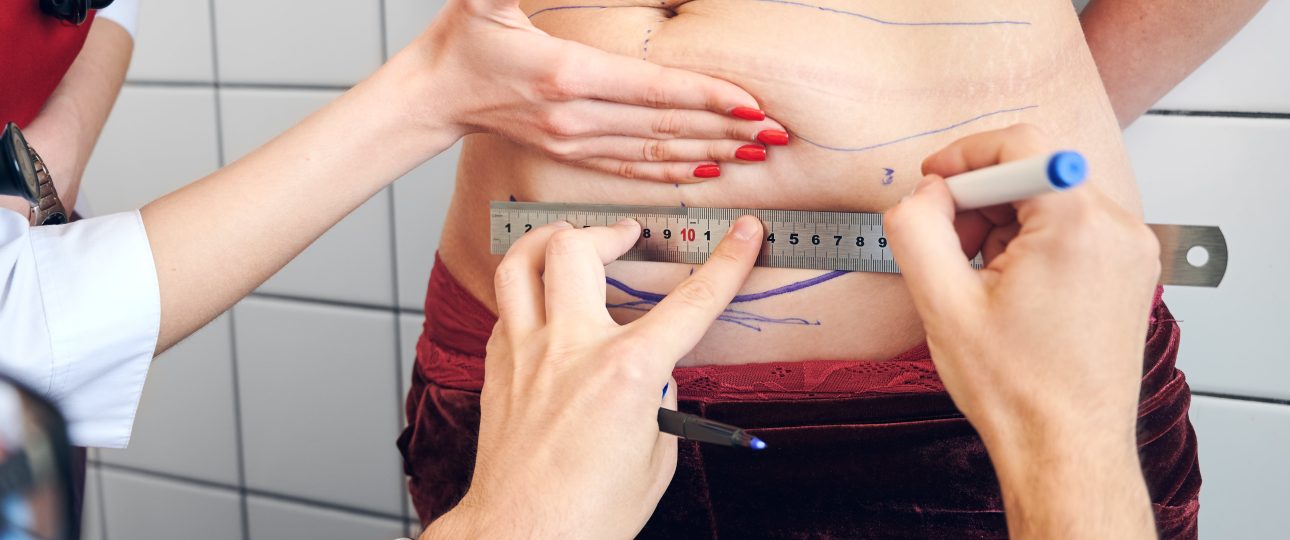
One of the most common sources of anxiety for patients emerging from a major abdominal contouring procedure is the “post-op pooch.” It is a phenomenon where, despite undergoing a significant abdominoplasty, the patient perceives their abdomen to be larger, more protruded, or more swollen than it was pre-surgery. To the untrained eye, it may look as though the surgery has failed; however, from a clinical perspective, this is a standard physiological response to surgical trauma.
This protrusion is primarily driven by edema—the accumulation of interstitial fluid in the subcutaneous tissues. Following the dissection of the abdominal wall and the mobilization of the skin, the body initiates an inflammatory cascade to facilitate healing. This process increases capillary permeability, allowing fluid to seep into the surgical site. Furthermore, the risk of a seroma—a collection of sterile fluid between the skin flap and the underlying muscle—can contribute to this temporary fullness. It is essential to understand that this “swelling” is not adipose tissue (fat), but rather the biological engine of recovery working at maximum capacity.
“The key to a successful surgical outcome is not found in the immediate post-operative appearance, but in the patience allowed during the remodeling phase of wound healing.”
Anatomy of a Transformation: The Mechanics of Combination Surgery
Modern aesthetic surgery has moved beyond single-area corrections toward highly customized, multi-dimensional contouring. A “combination surgery” is designed to address the entire silhouette, rather than just a single localized concern. This often involves a sophisticated integration of abdominal tightening, fat redistribution, and breast augmentation.
At the core of a high-definition tummy tuck is the Diastasis Recti repair. This is not merely a skin tightening procedure; it is a fundamental structural reconstruction. It involves the internal corset suturing of the abdominal fascia, effectively pulling the separated rectus abdominis muscles back into a central, tight alignment. This provides the internal structural integrity required to support a flat profile.
To complement this, surgeons often utilize Vaser Liposuction. Unlike traditional aspiration, Vaser technology uses ultrasound energy to emulsify fat cells before removal. This allows for much higher precision in high-definition contouring with minimal bruising, enabling the surgeon to sculpt the flanks and lateral abdominal walls to create a more dramatic “V-taper.”
For patients seeking total body rejuvenation, this can be combined with:
- Breast Augmentation: Utilizing high-quality, JCI-approved implants such as Mentor, Motiva, or Polytech to restore volume lost through breastfeeding or aging.
- BBL (Brazilian Butt Lift): Where processed fat is transferred via BBL fat transfer to the gluteal region for enhanced projection.
- Liposuction: Targeted liposuction per area to refine the waistline and submental (under chin) regions.
le li>
The Patient Journey: A Case Study in Restoring Silhouette
To understand the transition from surgical trauma to aesthetic excellence, consider the journey of a 34-year-old Irish mother of three. Following three pregnancies, she presented with significant abdominal skin laxity, muscular separation (diastasis recti), and a loss of upper body volume. Her goal was not just “weight loss,” but a complete structural recalibration.
Her journey began with free online video assessments with board-certified plastic surgeons via Cure Holiday specialists. This allowed for a preliminary evaluation of her skin elasticity and medical history before she ever left Ireland. Once her customized surgical plan was finalized, her logistics were seamlessly managed.
Upon arrival at either Istanbul (IST) or Antalya (AYT), she was met with VIP private transfers that transported her directly to her 5-star recovery suite. Her recovery package included a companion stay, ensuring she had the necessary support during the first critical days of healing. During the first 7-10 days in Turkey, her primary focus was managing the “post-op pooch” through compression garments and controlled movement. While the initial swelling was significant, the underlying structural repair—the internal corset—was already providing the foundation for her new shape. By the time she returned to Ireland and reached the 6 weeks for full exercise return milestone, the edema had subsided, revealing the sculpted, tightened abdomen she had envisioned.
The Economics of Aesthetic Excellence: Transparent Costing
Planning a surgical transformation requires clear financial transparency. The complexity of a combination procedure is reflected in the investment required, as it involves more operating time, advanced technology like Vaser, and longer recovery monitoring. Below is a breakdown of the standard investment tiers for these procedures:
- Standard Package (Single Area): 4,500 – 7,500 USD
- Advanced Combination (Multi-Area): 8,000 – 12,000 USD
- Abdominoplasty (Tummy Tuck) options: 3,000 – 5,000 USD (Available in Full, Mini, or Extended (360) formats)
- Breast Augmentation: 2,500 – 4,500 USD
- Liposuction (per area): 500 – 1,500 USD
- BBL (Fat Transfer): 3,500 – 5,500 USD
Safety Standards and Clinical Rigor
The foundation of any surgical intervention must be uncompromising safety. For all procedures coordinated through Cure Holiday, we prioritize facilities that adhere to JCI (Joint Commission International) safety standards. This ensures that the surgical theatre, anesthesia protocols, and post-operative care units meet the same rigorous benchmarks found in the world’s leading medical institutions.
This commitment to safety extends to the hardware used in your transformation. Whether it is the Mentor, Motiva, or Polytech implants used in breast reconstruction or the specialized cannulas used in Vaser technology, every component is vetted for biocompatibility and long-term durability. When navigating the complexities of post-operative swelling and the long road to recovery, knowing that your surgical foundation is built on JCI-compliant precision is the ultimate peace of mind.
The Physiological Reality of Post-Surgical Edema
For many patients undergoing abdominoplasty or liposuction, the immediate post-operative period can be psychologically jarring. After months of anticipation, seeing a silhouette that appears more “distended” or “inflated” than before the procedure can trigger significant anxiety. This phenomenon, colloqually known as the “post-op pooch,” is not a failure of the surgical technique, but rather a predictable physiological response to surgical trauma and tissue manipulation.
The primary driver of this temporary protrusion is edema—the accumulation of interstitial fluid within the subcutaneous layers. When a surgeon performs a tummy tuck, particularly one involving Diastasis Recti repair, the body initiates an acute inflammatory cascade. This repair process, which involves the internal corset suturing of the abdominal fascia, requires the body to direct white blood cells and plasma to the site of the surgical tension. This fluid retention increases intra-abdominal pressure and can cause the skin to appear tight, shiny, and voluminous.
“The ‘pooch’ is often an illusion of volume created by fluid, not fat. Understanding that this is a transient stage of the healing cascade is essential for patient mental health during the first 14 days.”
Furthermore, if Vaser Liposuction has been utilized for high-definition contouring, the ultrasonic energy used to emulsify fat cells can lead to localized swelling as the body processes the disrupted lipids. While the skin may feel thicker, this is a temporary state as the lymphatic system works to reabsorb the excess fluid. This stage of recovery is why the 7-cap-10 days in Turkey is so critical; it allows the most intense phase of inflammation to subside under professional observation before the patient undertakes long-haul travel.
Navigating the Surgical Spectrum: From Mini to 360
The morphology of your post-operative swelling is heavily dependent on the specific surgical approach chosen. Not all tummy tucks are created equal, and the complexity of the procedure dictates the intensity of the recovery period.
- Mini Abdominoplasty: Focused on the lower abdomen, involving smaller incisions and less disruption to the abdominal wall.
- Full Abdominoplasty: A comprehensive approach involving the removal of excess skin and significant tension on the fascia.
- Extended (360) Tummy Tuck: An anatomical remodeling that encompasses the entire circumference of the abdomen, often paired with liposuction to create a seamless transition from the flanks to the front.
When complications like skin laxity are paired with fat deposits, surgeons often recommend an advanced combination approach. This may include liposuction per area (ranging from 500 USD – 1,500 USD) to refine the flanks, alongside the primary procedure. For those seeking maximum volumetric change, the BBL (Brazilian Butt Lift) fat transfer, costing between 3,500 USD – 5,500 USD, can be integrated. In these complex cases, the “pooch” may be more pronounced due to the sheer amount of tissue manipulation involved.
The Logistics of Premium Recovery and Aftercare
Recovery from major body contouring is not merely about healing; it is about managing the logistics of a post-operative lifestyle. A critical component of the Turkish medical model is the “Post-Op Villa” concept. Unlike the UK or USA, where patients often return to domestic responsibilities immediately, the premium recovery model in Turkey focuses on a controlled environment.
Patients typically arrive via Istanbul (IST) or Antalya (AYT), where VIP private transfers ensure that the physical strain of travel is minimized. The transition from airport to clinic is seamless, removing the stress of navigating unfamiliar transit while in a post-surgical state.
The accommodation standard is a cornerstone of the aftercare. We facilitate stays in 5-star recovery suites with companion stay included. This is a vital logistical consideration for patients with childcare responsibilities or those who require a dedicated caregiver for the first few days of the 7-10 day Turkey stay. Having a companion present allows for the monitoring of wound sites and assistance with mobility, which is essential during the period when Diastacle Recti repair tension is at its peak.
While the initial 10 days are spent in local luxury, the long-term timeline remains universal: 6 weeks for full exercise return. During this window, the focus shifts from acute wound care to lymphatic drainage and the gradual reintroduction of physical activity.
2026 Cost Breakdown: Turkey vs. UK/USA
As we look toward the 2026 medical tourism landscape, the cost differential between Turkey and Western healthcare remains the primary driver for international patients. However, it is crucial to view these costs through the lens of “value-added” services, including the high-end recovery logistics and the use of JCI-approved implants (such as Mentor, Motiva, or Polytech).
Below is the projected breakdown for 2026 surgical packages:
| Procedure Type | Estimated 2026 Cost (USD) |
|---|---|
| Standard Package (Single Area) | 4,500 USD – 7,500 USD |
| Advanced Combination (e.g., Tummy + Lipo) | 8,000 USD – 12,000 USD |
| Tummy Tuck (Full/Extended) | 3,000 USD – 5,000 USD |
| Breast Lift (Mastopexy) | 2,500 USD – 4,500 USD |
| Liposuction (Per Area) | 500 USD – 1,500 USD |
| BBL (Fat Transfer) | 3,500 USD – 5,500 USD |
When comparing these figures to the UK or USA, where a single tummy tuck can exceed 15,000 USD (excluding anesthesia and hospital fees), the savings in Turkey are substantial. However, the 2026 value proposition lies in the inclusion of free online video assessments with board-certified plastic surgeons, ensuring that the surgical plan is meticulously vetted long before you ever step foot on a plane.
By leveraging Cure Holiday specialists, patients can navigate these complex financial and medical decisions, ensuring that their journey from initial consultation to the final, non-swollen result is both medically sound and logistically seamless.
Considering a Mommy Makeover in Turkey? Get a Free Quote for your Dealing with the “Post-Op Pooch” Transformation with cureholiday.com
Free Consultation
Fill out the form below to get your free medical travel plan and price quote.
Sources and how to verify this yourself
- Ministry of Health, Regulation on International Health Tourism and Tourist Health, Official Gazette 26 April 2025, No. 32882 — authorisation requirement for facilities and intermediaries, TÜSKA accreditation, compulsory complication insurance (deadline 31 December 2025 for insurance, 31 December 2026 for accreditation). source
- Ministry of Health, Regulation on Promotion and Information Activities in Health Services, Official Gazette 12 November 2025, No. 33075 — treatment promises and guarantees are prohibited; price and campaign announcements are permitted only within international health tourism. source