Cost and planning note (Mommy Makeover 2026)
The figures below are indicative market ranges, not a quote: your own price is confirmed after a clinical assessment.
Indicative price range: Standard Package: 4,500 – 7,500 USD | Advanced Combination: 8,000 – 12,000 USD | Tummy Tuck: 3,000 – 5,000 USD | Breast Lift: 2,500 – 4,500 USD | Liposuction Per Area: 500 – 1,500 USD | Bbl Fat Transfer: 3,500 – 5,500 USD
Facility standards: In Türkiye, any facility treating international patients must hold the Ministry of Health’s international health tourism authorisation; hospitals and medical centres must also be accredited by TÜSKA, and complication insurance is compulsory for procedures carried out in an operating theatre (Regulation of 26 April 2025).
Recovery Focus: Post-pregnancy body restoration & safety first.
Currency: GBP, EUR, USD accepted.
Managing “Posture” after a Tummy Tuck: Avoiding the “Permanent Hunch”
The “post-pregnancy slump” is more than a psychological phenomenon; it is a physical manifestation of structural changes within the abdominal wall. For many women, the combination of weight fluctuations and the biological demands of childbirth leads to a loss of core stability, often resulting in a guarded, forward-leaning posture. This “permanent hunch” is frequently the result of untreated Diastasis Recti—the separation of the rectus abdominis muscles—which compromises the body’s ability to maintain an upright, confident stance. While many focus solely on the aesthetic surface of a tummy tuck, the true foundation of post-pregnancy restoration lies in the internal reconstruction of the abdominal architecture.
The Anatomical Core: Diastasis Recti Repair and the Internal Corset
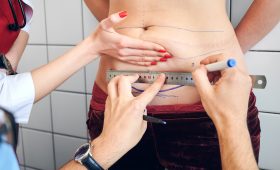
To avoid the postural pitfalls of abdominoplasty, surgical intervention must go beyond skin excision. The gold standard for restoring the abdominal profile involves a meticulous Diastasis Recti repair, which involves internal corset suturing of the abdominal fascia. This procedure is not merely cosmetic; it is a functional reconstruction. By re-approximating the separated muscle bellies and securing the fascia, surgeons create a biological “internal corset.” This tensioned layer provides the necessary intra-abdominal pressure to support the spine and prevent the midsection from protruding forward.
Without this deep-tissue reinforcement, even the most aesthetically pleasing skin excision may fail to prevent a “pooch” or a lack of core stability. When patients undergo an Extended (360) tummy tuck, the scope of this repair is expanded to encompass the flanks and the posterior abdominal wall, ensuring that the structural integrity of the entire torso is addressed. The choice between Full, Mini, or Extended (360) tummy tuck options depends heavily on the degree of muscle separation and the amount of redundant skin present.
“A successful abdominoplasty is measured not by the smoothness of the skin, but by the restoration of the patient’s center of gravity and core stability.”
Advanced Morphological Sculpting: High-Definition Contour and Mastopexy
Achieving a balanced, upright silhouette requires a multi-dimensional approach to body contouring. Often, the abdominal repair is paired with Vaser Liposuction, which is used for high-definition contouring with minimal bruising. Unlike traditional liposuction, Vaser technology uses ultrasound energy to emulsify fat cells selectively, allowing the surgeon to sculpt the subcutaneous layers with extreme precision. This is particularly effective in defining the flanks and creating the “V-taper” that complements a repaired abdominal wall.
Furthermore, the “hunch” is often exacerbated by the loss of volume and ptosis (sagging) in the breasts following breastfeeding and weight changes. A breast lift (mastopexy) is a critical component of the Mommy Makeover, repositioning the nipple-areola complex and restoring the upper pole of the breast. To ensure long-term safety and aesthetic naturalism, the use of high-tier, JCI approved implants is paramount. Patients can expect the use of premium brands such as Mentor, Motiva, or Polytech, which are engineered to provide a smooth, anatomical profile while minimizing the risk of capsular contracture.
In cases where tissue volume loss is significant, a BBL (Brazilian Butt Lift) fat transfer may be integrated into the plan. This utilizes the harvested fat from the liposuction process to augment the gluteal region, effectively shifting the body’s proportions to create a more dynamic, athletic curvature.
The Economic Landscape of Post-Pregnancy Reconstruction
The financial investment for these complex, multi-component procedures varies significantly based on the complexity of the anatomical repair required. Turkey has emerged as the global epicenter for these transformations due to the ability to bundle advanced surgical techniques into highly competitive pricing models. Below is a breakdown of the current market valuations for these essential restorative procedures:
- Standard Package (e.g., Tummy Tuck + Breast Lift): 4,500 – 7,500 USD
- Advanced Combination (e.g., Full Reconstruction + Liposuction): 8,000 – 12,000 USD
- Tummy Tuck (Abdominoplasty) alone: 3,000 – 5,000 USD
- Breast Lift (Mastopexy) alone: 2,500 – 4,500 USD
- Liposuction (per targeted area): 500 – 1,500 USD
- BBL (Fat Transfer to Gluteal Region): 3,500 – 5,500 USD
The Turkish Hub: Safety Benchmarks and Premium Logistics
The global shift toward Turkey for “Mommy Makeovers” is driven by a unique convergence of surgical expertise and luxury medical infrastructure. The primary benchmark for safety in this region is the rigorous adherence to international accreditation standards, particularly regarding the use of JCI approved medical devices and the oversight of board-certified surgeons who specialize in reconstructive techniques.
The logistical framework is designed to minimize patient stress, which is vital during the sensitive post-operative period. The medical journey typically begins with free online video assessments with board-certified plastic surgeons, allowing for a preliminary evaluation of the diastasis recti and skin laxity before any travel occurs.
Upon arrival, the patient experience is managed through a high-touch, premium service model:
- Arrival Logistics: VIP private transfers are provided from major international hubs, specifically Istanbul (IST) or Antalya (AYT), directly to the clinic or recovery location.
- Post-Operative Care: Patients are accommodated in 5-star recovery suites with companion stay included, ensuring that the delicate 7-10 days in Turkey required for initial healing is spent in an environment conducive to rest and wound monitoring.
- Long-term Recovery: While the initial healing phase is handled in Turkey, patients should prepare for a 6 weeks for full exercise return, during which time the internal sutures and the new abdominal architecture stabilize.
By integrating advanced internal repair with sophisticated external contouring, the modern Mommy Makeover offers a pathway to reclaiming not just a physical aesthetic, but the structural foundation of a healthy, upright, and confident posture.
The Biomechanics of the “Guarded Gait”: Why Post-Surgical Posture Occurs
Following an abdominoplasty, many patients report a temporary period of “postural guarding,” often characterized by a slight forward lean or a “hunched” appearance. From a physiological perspective, this is not merely a psychological hesitation to move; it is a protective neuromuscular response to the surgical alteration of the abdominal wall. During the procedure, the surgeon performs a significant reconfiguration of the tension lines across the midsection.
When the skin and underlying subcutaneous fat are removed, the structural integrity of the torso is momentarily altered. The patient’s nervous system responds to the sensation of increased tension across the incision site by inducing a slight flexion of the thoracic spine. This “hunch” is a natural attempt to minimize the stretching of the new, tighter abdominal plane. While this state is transient, understanding the surgical mechanics can help patients navigate the recovery period without developing long-term muscular habits.
Advanced Surgical Techniques: The Foundation of Core Stability
To prevent the “permanent hunch” and ensure the abdominal wall regains its functional strength, modern surgical intervention focuses on more than just skin excision. The goal is to reconstruct a stable, anatomical foundation that supports an upright posture.
- Diastasis Recti Repair: A critical component of a high-quality tummy tuck is the management of muscle separation. Diastasis Recti repair involves internal corset suturing of the abdominal fascia. By re-approximating the separated rectus abdominis muscles, the surgeon creates a biological “corset” that reinforces the midline. This internal reinforcement is what allows the patient to eventually stand tall without the feeling of “instability” in the core.
- High-Definition Contouring: To ensure the tension is distributed evenly across the abdomen, Vaser Liposuction is used for high-definition contouring with minimal bruising. By precisely sculpting the flanks and flanks, the surgeon avoids “bulges” that could create an asymmetrical weight distribution, which often contributes to pelvic tilting and postural imbalance.
- Tailored Approaches: Depending on the patient’s anatomy, the surgeon may utilize Full, Mini, or Extended (360) tummy tuck options. An Extended (360) approach is particularly beneficial for patients concerned about postural stability, as it addresses the tension around the entire circumference of the waist, providing a more holistic structural reinforcement.
Case Study: Restoring the Maternal Silhouette
To understand the real-world application of these techniques, consider the journey of a 34-year-old Irish mother of three. Following three pregnancies, she presented with significant abdominal laxity and severe Diastasis Recti. Her primary concern was not just the aesthetic “apron” of skin, but the physical sensation of weakness in her core, which had begun to manifest as lower back pain and a slumped posture.
For this patient, a simple skin excision would have been insufficient. Cure Holiday specialists coordinated a comprehensive body transformation. The surgical plan included a combination of an extended tummy tuck, liposuction to refine the flanks, and a breast lift to restore the upper torso’s proportion. This integrated approach addressed the vertical “line” of her body, ensuring that the tension from the chest to the hips was balanced.
The transformation required a meticulous recovery protocol. By focusing on the internal corset suturing, the surgical team ensured that her new abdominal wall could support the weight of her upright posture. As the fascia healed, the “guarding” instinct subsided, replaced by a newfound core stability that corrected her previously slumped gait.
Comprehensive Body Recontouring: Cost and Logistics
Achieving a balanced, upright silhouette often requires a combination of procedures to ensure the entire “kinetic chain” of the body is addressed. Patients should view the investment not just as an aesthetic upgrade, but as a structural reconstruction.
The financial investment varies significantly based on the complexity of the reconstruction. For a patient requiring only the abdominal repair, a tummy tuck ranges from 3,000 USD – 5,000 USD. However, for more intensive transformations involving fat transfer or breast reconstruction, the standard package typically falls between 4,500 USD – 7,500 USD.
For a full-scale transformation—similar to our case study involving abdominoplasty, liposuction, and breast augmentation—the advanced combination package ranges from 8,000 USD – 12,000 USD. Breaking down the individual components, patients may see costs such as a breast lift at 2,500 USD – 4,500 USD, BBL fat transfer at 3,500 USD – 5,500 USD, or liposuction per area at 500 USD – 1,500 USD.
To facilitate a seamless journey, the logistics are designed to minimize stress, which is vital for post-operative healing. The process begins with free online video assessments with board-certified plastic surgeons, allowing for precise preoperative planning. Upon arrival, patients are met with VIP private transfers from the airport (either Istanbul [IST] or Antalya [AYT]) to their destination. Post-operative care is conducted in 5-star recovery suites, with a companion stay included to assist with mobility during the initial healing phase.
Adhering to JCI Excellence and Post-Operative Milestones
The prevention of long-term postural issues is heavily dependent on the quality of the materials used and the adherence to international safety protocols. All surgical implants utilized in our partner networks—whether for breast augmentation or reconstruction—are JCI approved, specifically using industry-leading brands such as Mentor, Motiva, or Polytech. The use of these high-grade, medical-grade implants ensures that the weight and density of the implants do not create an asymmetrical load on the spine.
Recovery is a phased process that requires patience to avoid the “permanent hunch.” The timeline is generally structured as follows:
- Days 1-10: The acute recovery phase. Patients remain in Turkey for 7-10 days, focusing on gentle movement to prevent stiffness and managing the initial tension of the abdominal fascia.
- Weeks 2-6: The remodeling phase. This involves gradual increases in mobility, ensuring the “internal corset” is adapting to the body’s upright position.
- Week 6 and Beyond: The return to functionality. Patients are cleared for a full return to exercise, at which point the new muscular and skin tension should feel natural and supportive rather than restrictive.
By following the rigorous safety standards of Ministry of Health–authorised facilities and adhering to the specialized post-operative instructions provided by Cure Holiday specialists, patients can transition from the “guarded” state of early recovery to a confident, upright, and structurally sound new silhouette.
The Biomechanics of the Post-Operative “Hunch”
One of the most common anxieties for patients undergoing an abdominoplasty is the fear of a permanent change in physical gait. The sensation of being “locked” in a slightly forward-leaning position—often referred to as the “post-op hunch”—is a physiological response to the surgical tensioning of the abdominal wall. To understand how to manage this, one must understand the internal mechanics of the procedure.
During a Full, Mini, or Extended (360) tummy tuck, the surgeon is not merely removing redundant skin; they are performing a structural reconfiguration of the midsection. If Diastasis Recti repair is required, the surgeon performs internal corset suturing of the abdominal fascia. This process pulls the separated muscle groups back toward the midline, creating a tighter, more stable abdominal wall. While this provides the desired aesthetic “cinch,” the immediate result is increased tension across the anterior abdominal wall, which naturally encourages a protective, slight flexion of the spine.
This posture is a temporary biological safeguard. The tension is most acute during the first 14 days. However, the quality of the surgical technique plays a vital role in how quickly this tension dissipates. For instance, when Vaser Liposuction is used for high-definition contouring alongside the abdominoplasty, the use of ultrasonic technology allows for fat cell disruption with minimal bruising. Reduced subcutaneous trauma means less inflammatory edema, which in turn reduces the localized swelling that can contribute to the sensation of tightness and restricted movement.
Clinical Insight: The “hunch” is rarely a permanent skeletal change but rather a muscular response to skin tension and fascial suturing. Following the prescribed movement protocols is essential to transitioning back to an upright gait.
The 7-10 Day Turkish Recovery Ecosystem: Managing the Transition
The success of a surgical journey in Turkey is not solely defined by the operating theatre, but by the precision of the 7-10 days in Turkey spent in controlled recovery. The logistics of post-operative care in Turkey are designed to mitigate the physical strain that leads to postural stiffness. Unlike the UK or USA, where patients often manage the immediate post-op period alone, the Turkish model utilizes 5-star recovery suites with companion stay included.
These recovery environments are engineered for low-impact mobility. The primary goal during the first week is to encourage “micro-movements”—short, frequent walks within the suite to prevent deep vein thrombosis (DVT) and to gradually desensitize the nervous system to the new tension on the abdominal fascia. The availability of VIP private transfers from Istanbul (IST) or Antalya (AYT) ensures that the patient is not subjected to the physical rigors of public transport or long, unmanaged walks, which can exacerbate abdominal swelling and postural guarding.
While the initial period focuses on healing, the long-term timeline is critical. Patients must prepare for a 6 weeks for full exercise return. This window is non-negotiable; returning to high-impact core training or heavy lifting before the 6-week mark can compromise the integrity of the internal corset suturing and potentially lead to permanent scarring or hypertrophy of the scar tissue.
Navigating Post-Operative Logistics: Travel, Childcare, and Companion Care
For many international patients, the primary barrier to choosing medical tourism is the logistical complexity of managing a household and children while recovering from major surgery. The “post-op hunch” is not just a physical challenge, but a logistical one. Managing childcare during the 6-week period of restricted movement requires meticulous planning.
The Turkish recovery model addresses this through the integration of companion logistics. Because the 5-star recovery suites allow for a companion to stay, the burden of post-operative care—such as managing medication schedules, assisting with wound dressings, and navigating VIP private transfers—is shared. This allows the patient to focus entirely on the physiological necessity of rest. When planning the “fly-home” timeline, patients should schedule their return flight at the end of the 10-day Turkish window, ensuring they are stable enough for the flight pressure changes but still within a period where intensive nursing care is available in a luxury setting.
Before the journey begins, Cure Holiday specialists recommend utilizing free online video assessments with board-certified plastic surgeons. These consultations allow patients to discuss their specific home-care limitations, such as the need for help with lifting or mobility, ensuring that the surgical plan (whether Full, Mini, or Extended 360) aligns with their post-operative lifestyle.
2026 Economic Projection: Turkey vs. UK/USA Cost Analysis
As we approach 2026, the disparity in surgical costs between Turkey and Western nations continues to widen, driven by inflation and the high overheads of private healthcare in the UK and USA. For patients managing the costs of recovery and long-term aftercare, the Turkish “package” model offers a significant financial advantage by bundling surgical fees, luxury accommodation, and transfers into a single, transparent figure.
Below is the projected cost breakdown for 2026, illustrating the savings achievable when opting for a comprehensive Turkish recovery package:
- Standard Package (Includes Tummy Tuck + Recovery Suite + Transfers): 4,500 – 7,500 USD
- Advanced Combination (Tummy Tuck, Lipo, and BBL): 8,000 – 12,000 USD
- Standalone Abdominoplasty (Full/Extended): 3,000 – 5,000 USD
- Breast Lift (Mastopexy) using Mentor, Motiva, or Polytech (JCI approved) implants: 2,500 – 4,500 USD
- Liposuction (Per targeted area): 500 – 1,500 USD
- BBL (Brazilian Butt Lift/Fat Transfer): 3,500 – 5,500 USD
When comparing these figures to the UK or USA, where a single abdominoplasty can easily exceed 15,000 – 25,000 USD (excluding the cost of specialized aftercare and much higher anesthesia fees), the Turkish model provides not just a reduction in surgical price, but a reduction in the total “cost of recovery.” By budgeting for the 8,000 – 12,000 USD advanced package, patients can secure a multi-area transformation including high-definition contouring while maintaining a level of luxury and logistical support that is financially inaccessible in Western healthcare systems.
Considering a Mommy Makeover in Turkey? Get a Free Quote for your Managing “Posture” after a Tummy Tuck Transformation with cureholiday.com
Free Consultation
Fill out the form below to get your free medical travel plan and price quote.
Sources and how to verify this yourself
- Ministry of Health, Regulation on International Health Tourism and Tourist Health, Official Gazette 26 April 2025, No. 32882 — authorisation requirement for facilities and intermediaries, TÜSKA accreditation, compulsory complication insurance (deadline 31 December 2025 for insurance, 31 December 2026 for accreditation). source
- Ministry of Health, Regulation on Promotion and Information Activities in Health Services, Official Gazette 12 November 2025, No. 33075 — treatment promises and guarantees are prohibited; price and campaign announcements are permitted only within international health tourism. source