Cost and planning note (Mommy Makeover 2026)
The figures below are indicative market ranges, not a quote: your own price is confirmed after a clinical assessment.
Indicative price range: Standard Package: 4,500 – 7,500 USD | Advanced Combination: 8,000 – 12,000 USD | Tummy Tuck: 3,000 – 5,000 USD | Breast Lift: 2,500 – 4,500 USD | Liposuction Per Area: 500 – 1,500 USD | Bbl Fat Transfer: 3,500 – 5,500 USD
Facility standards: In Türkiye, any facility treating international patients must hold the Ministry of Health’s international health tourism authorisation; hospitals and medical centres must also be accredited by TÜSKA, and complication insurance is compulsory for procedures carried out in an operating theatre (Regulation of 26 April 2025).
Recovery Focus: Post-pregnancy body restoration & safety first.
Currency: GBP, EUR, USD accepted.
Managing Medication: Avoiding Blood Thinners before your Flight to Turkey
Foundations of Post-Pregnancy Restoration: Reconstructing the Maternal Silhouette
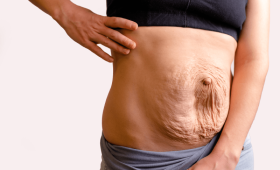
The physiological transformation experienced during pregnancy and the subsequent postpartum period is profound. Beyond the visible changes in skin elasticity, the internal structural integrity of the maternal anatomy often undergoes significant remodeling. For many women, the biological reality of pregnancy involves the stretching of the abdominal wall and the redistribution of adipose tissue, leading to a loss of the firm, toned silhouette that existed pre-pregnancy. Reclaiming this anatomy—often referred to in the aesthetic industry as a “Mommy Makeover”—requires more than mere surface-level fat removal; it necessitates a sophisticated, multi-layered approach to tissue reconstruction and muscular reinforcement.
The Anatomical Core: Diastasis Recti Repair and Abdominal Reconstruction
The cornerstone of post-pregnancy restoration is the management of the abdominal wall. One of the most prevalent clinical challenges is Diastasis Recti, a condition characterized by the separation of the rectus abdominis muscles along the linea alba. This separation is not merely an aesthetic concern; it compromises the core’s ability to support the spine and pelvic floor, often resulting in a persistent “pooch” or protrusion that cannot be resolved through diet or exercise alone.
Modern surgical excellence in Turkey focuses on advanced Diastasis Recti repair, which involves internal corset suturing of the abdominal fascia. During this procedure, the surgeon uses high-strength, absorbable or non-absorbable sutures to pull the separated muscle bellies back toward the midline, effectively “re-tightening” the natural internal corset of the body. This deep structural repair is paired with advanced skin excision techniques. Depending on the degree of skin laxity and the presence of striae (stretch marks), patients can choose from several surgical modalities:
- Mini Abdominoplasty: Targeted at patients with localized laxity in the lower abdomen, preserving the umbilical position.
- Full Abdominoplasty: A comprehensive approach involving the removal of excess skin and fat, alongside the aforementioned fascial tightening.
- Extended (360) Tummy Tuck: The most rigorous form of reconstruction, addressing the abdominal area from the flanks to the flanks, providing a circumferential tightening of the midsection.
The investment for these procedures is highly competitive. A localized tummy tuck typically ranges from 3,000 – 5,000 USD, while integrated standard packages, which often combine abdominal work with other refinements, range between 4,500 – 7,500 USD. For those requiring significant lateral contouring, an advanced combination package—encompassing abdominal reconstruction, breast augmentation, and liposuction—can range from 8,000 – 12,000 USD.
Mastopexy and Volumetric Restoration: Restoring the Bust
The hormonal shifts and mechanical stretching of breastfeeding often lead to ptosis (sagging) and a loss of glandular volume in the breast tissue. Restoring the bust involves a delicate balance of skin excision and volume augmentation to recreate a youthful projection. The choice of surgical technique—whether a submuscular or subglandular approach—depends heavily on the patient’s existing tissue density and the desired degree of lift.
A critical component of safety and longevity in breast reconstruction is the quality of the implants utilized. To ensure the highest biocompatibility and prevent complications such as capsular contracture, surgeons utilize only premium, JCI-approved implants, including Mentor, Motiva, or Polytech. These implants are engineered with advanced shell textures to minimize movement and integrate seamlessly with the surrounding tissue.
A breast lift (mastopexy), which focuses on repositioning the nipple-areola complex and removing excess dermal tissue, generally costs between 2,500 – 4,500 USD. When combined with augmentation, the procedure allows for a complete architectural overhaul of the upper torso.
Precision Liposculpture: Vaser Technology and Fat Transfer
To achieve a truly sculpted physique, many patients opt for advanced liposuction techniques to refine the flanks, hips, and thighs. The gold standard in modern Turkish clinics is Vaser Liposuction. Unlike traditional mechanical liposuction, Vaser technology uses ultrasonic-assisted emulsification to target only the fat cells (adipocytes) while leaving the surrounding connective tissue, nerves, and blood vessels intact. This precision allows for high-definition contouring with minimal bruising and significantly reduced downtime.
The versatility of this technology enables the concept of “autologous fat transfer,” or the BBL (Brazilian Butt Lift). In this procedure, the fat harvested via Vaser technology is processed and reinjected into the gluteal region to create anatomical curves. The costs for these refinements are highly scalable:
- Liposuction per area: 500 – 1,500 USD
- BBL fat transfer: 3,500 – 5,500 USD
“The success of a Mommy Makeover lies in the synergy of the procedures. It is not about changing the patient’s identity, but about restoring the anatomical landmarks that pregnancy has altered.” — Cure Holiday specialists
The Turkey Advantage: Safety, Logistics, and Recovery
Turkey has emerged as the global epicenter for high-end aesthetic reconstruction due to its unique intersection of surgical expertise and logistical sophistication. The medical infrastructure in hubs like Istanbul (IST) and Antalya (AYT) is designed to cater to an international clientele, emphasizing patient safety and seamless-integrated care.
The recovery journey is meticulously managed to ensure patient comfort and minimize the physiological stress of travel. Upon arrival, patients are met with VIP private transfers from the airport to the clinic and their accommodations. The standard of care includes stays in 5-star recovery suites with companion stay included, ensuring that the post-operative period is characterized by luxury and clinical monitoring.
While the intensive post-operative care occurs within the first 7-10 days in Turkey, patients must plan for a broader recovery window. While walking is encouraged almost immediately to prevent deep vein thrombosis (DVT), a period of 6 weeks for full exercise return is typically required to allow the internal suturing—particularly the abdominal fascia—to stabilize.
To ensure transparency and clinical readiness, Cure Holiday specialists facilitate free online video assessments with board-certified plastic surgeons. This allows for a pre-operative evaluation of tissue elasticity and anatomical suitability, ensuring that when you arrive in Turkey, your customized surgical blueprint is already finalized.
The Pharmacological Mandate: Balancing Thrombosis and Hemorrhage
The primary clinical concern during the pre-flight period is the dual risk of Deep Vein Thrombosis (DVT) during long-haul travel and postoperative hemorrhage during the procedure. While blood thinners are prescribed to prevent clotting, their presence in the bloodstream during invasive procedures such as a Full or Extended (360) Tummy Tuck significantly increases the risk of hematoma formation—a collection of blood within the tissue that can compromise the surgical result and delay healing.
When undergoing a combined transformation, such as a combination of liposuction and abdominal reconstruction, the surgeon must precisely time the cessation of antiplatelet therapy. This process is initiated during the Free online video assessments with board-certified plastic surgeons, where Cure Holiday specialists review your current medication profile. The goal is to reach a state of “hemostatic equilibrium”—where the blood is thin enough to mitigate the risk of clotting during the seated flight to Turkey, yet thick enough to ensure that the internal suturing of the abdominal fascia remains secure.
“The management of anticoagulant medication is a cornerstone of the JCI safety protocols. Our priority is ensuring that the physiological transition from your home country to our surgical suites is seamless, minimizing the risk of both thromboemological events during transit and intraoperative bleeding.”
Case Study: The Journey of a 34-Year-Old Irish Mother of Three
To understand the clinical application of these protocols, consider the journey of a 34-year-old Irish mother of three. Her clinical presentation involved significant abdominal laxity due to multiple pregnancies, specifically diagnosed as Diastasis Recti, alongside stubborn subcutaneous adipose tissue in the flanks.
Her surgical roadmap was meticulously planned via a remote consultation. Her transformation required an advanced_combination package, estimated between 8,000 – 12,000 USD. This procedure was not merely aesthetic but reconstructive, involving the following technical components:
- Diastasis Recti Repair: A complex internal procedure involving internal corset suturing of the abdominal fascia to restore the structural integrity of the core.
- Vaser Liposuction: Utilized for high-definition contouring of the flanks, specifically chosen for its ability to target fat cells with minimal bruising, which is essential for her rapid recovery timeline.
- Tummy Tuck (Extended 360): A comprehensive abdominal tightening to address both the upper and lower quadrants.
The patient’s medication management was critical. Because she was managing minor inflammatory issues with low-dose aspirin, her surgeon implemented a strict tapering schedule. This ensured that by the time she arrived at her 5-star recovery suite, her coagulation profile was optimal for the internal corset suturing required for her Diastasis Recti repair.
The Mechanics of the Combined Transformation
The surgical transformation is often a multi-layered technical event. When a patient opts for a combination approach, the surgeon is managing multiple anatomical planes simultaneously. For instance, combining a tummy_tuck (costing between 3,000 – 5,000 USD) with liposuction_per_area (ranging from 500 – 1,500 USD) requires precise hemodynamic control.
The use of advanced technologies like Vaser Liposuction allows for “high-definition” sculpting. Unlike traditional methods, Vaser uses ultrasound energy to emulsify fat, which preserves the surrounding connective tissue. This is particularly important when the patient is also undergoing a breast augmentation or lift, where the stability of the surgical site is paramount. In cases where patients choose to enhance their silhouette further, a bbl_fat_transfer (priced between 3,500 – 5,500 USD) may be integrated into the session.
Furthermore, the choice of medical-grade hardware is a non-negotiable aspect of the JCI safety standard. All implants used in breast augmentation or lifts—whether breast_lift costs between 2,500 – 4,500 USD—are sourced from premium, JCI-approved manufacturers such as Mentor, Motiva, or Polytech. These implants are engineered for biocompatibility and long-term structural integrity, reducing the risk of capsular contracture.
Logistics and the Post-Operative Recovery Window
The patient journey does not end in the operating theatre; it extends into a structured recovery phase designed to minimize physiological stress. Upon arrival at Istanbul (IST) or Antalya (AYT), the logistics are managed to ensure the patient remains in a low-stress environment. This includes VIP private transfers from airport to clinic and seamless transitions to 5-star recovery suites with companion stay included.
The recovery timeline is strictly monitored to ensure the integrity of the surgical work, particularly regarding the abdominal fascia. The standard protocol includes:
- 7-10 days in Turkey: This period is dedicated to wound monitoring, managing any post-operative edema, and ensuring the patient is stable for the flight home.
- 6 weeks for full exercise return: This period allows the internal sutures of the Diastasis Recti repair and the subcutaneous layers of the Vaser Lipo to fully integrate with the surrounding tissue.
By adhering to the strict medication-management protocols and following the structured surgical journey, patients can navigate the complexities of international surgery with the confidence that their safety and aesthetic outcomes are governed by the highest clinical standards.
The Clinical Significance of Medication Management Pre-Surgery
When preparing for elective plastic surgery in Turkey, the management of your pharmacological profile is as critical as the surgical technique itself. One of the most vital instructions provided during your free online video assessment with board-certified plastic surgeons is the cessation of certain medications, specifically anticoagulants and antiplatelet agents. The physiological objective is to maintain hemostasis—the body’s ability to stop bleeding—and to minimize the risk of post-operative hematoma formation.
Blood thinners, including prescription anticoagulants (such as Warfarin or Rivaroxaban) and over-the-counter antiplatelet medications like Aspirin, inhibit platelet aggregation. During complex procedures like Vaser Liposuction, which uses ultrasound energy for high-definition contouring with minimal bruising, any residual interference with the clotting cascade can lead to significant subcutaneous bleeding or hematomas. This is particularly critical in procedures involving large surface areas, such as a BBL fat transfer or a 360 Extended Tummy Tuck, where the vascularity of the treated area is high.
Beyond prescription drugs, patients must also moderate their intake of certain nutraceuticals and supplements. Many patients are unaware that high doses of Vitamin E, Omega-3 fatty acids (fish oil), Ginkgo Biloba, and Garlic supplements possess mild anticoagulant properties. These can exacerbate vasodilation and increase the risk of intraoperative hemorrhage. We recommend a coordinated tapering schedule, managed in consultation with your surgeon, to ensure your blood’s viscosity is optimal for surgical recovery.
Post-Operative Recovery Logistics: The Luxury Villa Experience
The recovery phase in Turkey is designed to transcend the traditional clinical setting, focusing instead on a seamless transition from the operating theatre to high-end convalescence. For those undergoing significant reconstructive or aesthetic changes—such as Diastasis Recti repair, which involves internal corset suturing of the abdominal fascia—the environment of recovery is paramount to wound healing and patient comfort.
Our recovery logistics framework utilizes 5-star recovery suites with companion stay included. This is specifically designed for patients traveling with family or caregivers, addressing the logistical challenge of post-operative mobility. These suites are not merely hotel rooms; they are medically-optimized environments that provide the privacy required for the initial 7-10 days in Turkey while ensuring access to premium amenities.
To facilitate a stress-free transition, VIP private transfers from airport to clinic and subsequently to your recovery suite are standard. Whether you are landing at Istanbul (IST) or Antalya (AYT), the logistics are handled with clinical precision, ensuring that your physical state is protected from the rigors of transit. This level of care is essential during the first week when managing edema (swelling) and the initial stages of tissue integration is most sensitive.
Flight Timelines and Post-Surgical Travel Safety
A critical component of this section is the “fly-home” timeline. While the immediate post-operative period requires staying in Turkey for a minimum of 7-10 days, patients must understand the physiological implications of long-haul flights. The primary concern during air travel following surgery is the risk of Deep Vein Thrombosis (DVT) due to the low pressure and sedentary nature of flight.
Patients undergoing extensive lipoplasty or abdominal procedures should be prepared for a period of restricted movement. While the surgical recovery in Turkey is focused on the acute phase, it is important to note that a 6 weeks for full exercise return is the clinical standard for most major procedures. During your flight home, the use of medical-grade compression garments is non-negotiable to support the healing of the Motiva, Mentor, or Polytech (JCI approved) breast implants and to prevent fluid accumulation.
For those managing childcare logistics, the inclusion of companion stays in our recovery suites allows for a more manageable transition. This ensures that while the patient focuses on the delicate stages of healing, the logistical burden of traveling with dependents is mitigated by professional transfer services and a stabilized recovery environment.
2026 Cost Breakdown: Turkey vs. UK/USA
The decision to undergo surgery in Turkey is often driven by the profound cost-efficiency found in the Turkish healthcare sector, without the sacrifice of clinical excellence. As we look toward 2026, the price differential remains a significant factor for patients from the UK and USA. The following breakdown illustrates the comparative value of choosing a specialized Turkish surgical package.
Projected 2026 Surgical Investment Estimates:
- Standard Package (Comprehensive care): 4,500 – 7,500 USD
- Advanced Combination (Multi-area contouring): 8,000 – 12,000 USD
- Tummy Tuck (Full, Mini, or Extended 360): 3,000 – 5,000 USD
- Breast Lift (Mastopexy): 2,500 – 4,500 USD
- Liposuction (Per targeted area): 500 – 1,500 USD
- BBL Fat Transfer (Brazilian Butt Lift): 3,500 – 5,500 USD
When comparing these figures to the UK or USA, where a single Tummy Tuck can easily exceed 15,000 USD, the savings are substantial. However, the true value lies in the integration of these costs. The Turkish model includes the 5-star accommodation, VIP transfers, and the expertise of board-certified surgeons within a much more competitive global price point. This allows patients to allocate more resources toward post-operative care, higher-grade implants, and a more luxurious recovery experience, ensuring that the 6-week journey to full physical return is as comfortable and efficient as possible.
Considering a Mommy Makeover in Turkey? Get a Free Quote for your Managing Medication Transformation with cureholiday.com
Free Consultation
Fill out the form below to get your free medical travel plan and price quote.
Sources and how to verify this yourself
- Ministry of Health, Regulation on International Health Tourism and Tourist Health, Official Gazette 26 April 2025, No. 32882 — authorisation requirement for facilities and intermediaries, TÜSKA accreditation, compulsory complication insurance (deadline 31 December 2025 for insurance, 31 December 2026 for accreditation). source
- Ministry of Health, Regulation on Promotion and Information Activities in Health Services, Official Gazette 12 November 2025, No. 33075 — treatment promises and guarantees are prohibited; price and campaign announcements are permitted only within international health tourism. source