Smile aesthetics is one of the most dynamic fields of modern dentistry. Many people desire whiter, more symmetrical, and aesthetic teeth, yet they hold a justifiable concern regarding the preservation of their natural tooth structure. In traditional porcelain veneer applications, a certain amount of abrasion (cutting) of the teeth may be required. However, advancing technology has introduced the “prepless” or “non-prep” laminate method to the dental literature. In this guide, we will examine in detail how you can achieve the smile of your dreams without touching the tooth tissue.
Is It Possible to Achieve an Aesthetic Smile Without Cutting the Teeth?
In contemporary dentistry, the “minimal invasive” approach is adopted, aiming to preserve the natural tooth structure to the maximum extent. Achieving an aesthetic smile without cutting the teeth is definitely possible, provided that the appropriate case selection is made. Prepless (non-prep) porcelain laminates are ultra-thin ceramic layers bonded directly to the front surface of the tooth without any abrasion. This method preserves the tooth enamel while eliminating color, shape, and minor crowding issues, offering the patient a completely new smile design.
What Is a Laminate Veneer and How Does It Change Tooth Structure?
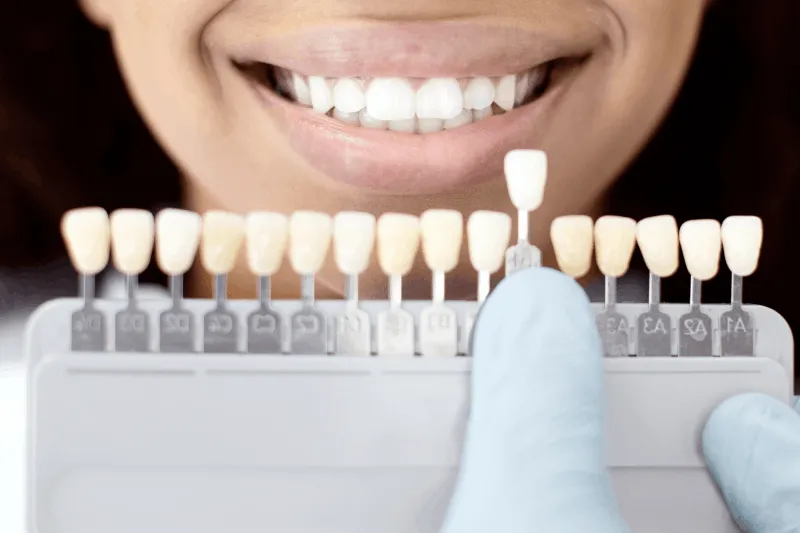
A laminate veneer, also known among the public as “leaf porcelain,” is a thin porcelain layer approximately 0.3 mm to 0.7 mm thick. These restorations are designed to change the color, size, and shape of the tooth by being applied only to the front surface. Their effect on the tooth structure is indistinguishable from natural tooth enamel due to their light transmission properties. These materials, which bond chemically to the tooth tissue, provide both durability and hide imperfections by creating an aesthetic illusion.
Is It Always Mandatory to Cut Teeth for Porcelain Laminates?
The information that teeth must always be cut for porcelain laminates to be applied is now a misconception. The necessity of cutting depends entirely on the patient’s existing tooth alignment, the color of the tooth, and the desired result. If the teeth are positioned towards the back, if there are gaps (diastema) between them, or if the tooth volume is small, cutting is not needed because it is possible to provide aesthetics by adding material. However, if the teeth are very prominent or if there is serious crowding, minimal abrasions may be required to ensure harmony.
How Is Laminate Application Performed Without Damaging Tooth Enamel?
In applications performed without damaging the tooth enamel, “bonding” principles are essential. The dentist prepares a surface where the porcelain can hold by only roughening the tooth surface at a microscopic level. This process does not disturb the integrity of the enamel layer. The ultra-thin porcelains added by preserving the natural structure of the tooth integrate with the tooth thanks to special adhesive agents. In this way, the enamel tissue is protected, and the process can become reversible if desired, because the original shape of the tooth has not changed.
What Is Prepless Laminate and for Whom Is It Suitable?
Prepless laminate is a special type of porcelain veneer applied without removing any substance from the tooth surface. This method is ideal particularly for those with gaps between their teeth, those with small tooth sizes, individuals with genetically thin tooth structures, or those who only want a color change. Additionally, patients who want minor corrections in their tooth form after orthodontic treatment also benefit greatly from the prepless method. Everyone whose tooth volume is suitable for addition is a candidate for this process following a dentist’s examination.
In Which Situations Should Non-Prep Dental Aesthetics Be Preferred?
Non-prep dental aesthetics should be preferred in any situation where the preservation of the natural form of the teeth is a priority. Especially in young patients, the lifelong preservation of the tooth enamel is of critical importance. This method gives excellent results in individuals who have wear on their teeth, whose teeth are tilted inwards, or whose teeth are not sufficiently visible during a smile. Furthermore, this is the most comfortable aesthetic solution for patients who have a fear of dentists or who do not want needles or anesthesia.
What Are the Differences Between Traditional Porcelain Crowns and Prepless Laminates?
While the entire circumference of the tooth is reduced in traditional porcelain crowns, in laminates, only the front surface is involved. Prepless laminates, on the other hand, are even more protective than traditional laminates. The biggest difference is “reversibility” and “enamel protection.” While 0.5-1.5 mm of tissue is removed from the tooth in the traditional method, this rate is close to zero in the prepless method. Moreover, prepless laminates are produced much thinner (contact lens thickness) and provide a fuller smile by giving extra volume to the tooth.
How Does Not Cutting the Teeth Affect the Treatment Process?
Not cutting the teeth makes the treatment process both faster and much more comfortable. Since tissue is not removed from the tooth, anesthesia is not needed; therefore, it is a great advantage for patients with a fear of needles. Additionally, because the teeth are not reduced, the necessity of using “temporary teeth” during the treatment is eliminated. Patients can continue their normal lives with their own natural teeth until their permanent porcelains are fitted. The risk of sensitivity is minimum, and session durations are shorter.
Why Is Tooth Sensitivity Important in Laminate Treatment?
Tooth sensitivity usually occurs with the thinning of the enamel layer and the exposure of the underlying dentin tissue. Since the enamel tissue is completely preserved in prepless laminate applications, hot-cold sensitivity is almost never seen after the operation. In traditional cutting methods, there is a risk of sensitivity, even if minimal. The absence of sensitivity directly increases the patient’s comfort after treatment and guarantees the preservation of the vitality of the tooth’s nerve structure (pulp) in the long term.
What Is the Lifespan of Prepless Laminates?
The lifespan of prepless laminates can vary between 10 to 20 years with correct oral care and the use of quality materials. Since these restorations bond very strongly to the tooth enamel, the risk of falling off or coming out is quite low. The porcelain material is resistant to wear and color changes. However, factors such as the patient not breaking hard foods with their teeth, not biting nails, and going to regular dentist check-ups are the most important elements that maximize this period.
Which Dental Imperfections Can Be Corrected with Prepless Laminates?
Prepless laminates successfully solve a wide range of aesthetic problems. Gaps between teeth (diastemas), small chips or wear at the tips of the teeth, developmental form disorders, and stubborn tooth stains that do not clear with whitening can be covered with this method. Additionally, it is possible to provide a more symmetrical appearance by equalizing tooth lengths in cases where the smile line is irregular. In cases where the teeth are slightly turned inwards, the lip support can also be increased by moving the teeth further forward.
Can Gaps Between Teeth Be Closed Without Cutting?
Yes, closing the gaps between teeth (diastema) is one of the areas where the prepless laminate application is most successful. In this method, porcelains designed to fill only the gaps are added to the tooth surface without any intervention to the teeth. Since the teeth are not cut, a natural appearance is obtained when the gaps are closed. This procedure can also be considered an aesthetic alternative to orthodontic treatment (braces) and gives results in a much shorter time.
Can Laminates Be Applied to Crowded Teeth Without Cutting the Teeth?
The applicability of prepless laminates to crowded teeth depends entirely on the degree of crowding. If the teeth are positioned “backwards,” the teeth can be brought to the same alignment with porcelain addition, and in this case, cutting is not necessary. However, if a tooth is too far forward, minimal abrasion on that tooth might be inevitable to align it with the others. In light and moderate crowding cases, digital planning determines which tooth will be prepless and which will have minimal cutting, demonstrating the most protective approach.
How Are Stubborn Stains on Tooth Color Hidden with Laminates?
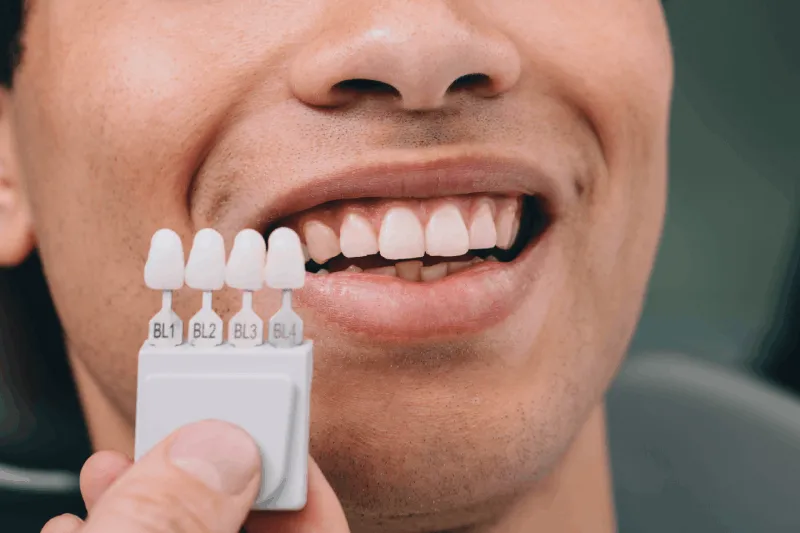
Stubborn discolorations caused by antibiotic use (tetracycline stains), fluorosis, or after root canal treatment sometimes cannot be resolved with whitening. Prepless laminates serve as an excellent barrier to mask these stains. By adjusting the opacity level of the porcelain by the dentist, the underlying dark color is completely hidden while a natural brightness and whiteness are created on the surface. Even though the laminates are very thin, they have the power to close even the darkest stains without reflecting them outwards, thanks to high-tech ceramics.
Do Teeth Look Natural After Laminate Application?
The biggest advantage of the prepless laminate application is that the result obtained is extremely natural. Porcelain reflects and transmits light just like natural enamel. Since no cutting is performed, the junction line of the porcelain with the gum is extremely smooth and healthy. Thanks to digital smile design, the form of the teeth is determined in accordance with your facial features. In this way, those around you do not realize that there is a restoration in your teeth; they only notice that you have a very beautiful and healthy smile.
Do Laminates Put Pressure on the Gums When the Tooth Is Not Cut?
A correctly planned prepless laminate never puts pressure on the gums. In the prepless method, the finishing line (margin) of the porcelain is designed very precisely to be compatible with the gums. If a mistake is made in the design, a feeling of thickness may occur in the gums; however, when working with a specialist dentist and an experienced laboratory, the laminates appear as a natural continuation of the tooth. This smooth transition is critical for preserving gum health and preventing plaque accumulation.
How Is Porcelain Material Bonded to Tooth Enamel?
The adherence of porcelain laminates to the tooth occurs with a high-tech bonding system called “adhesive bonding.” First, the tooth surface and the inner part of the porcelain are roughened at a micro-level with special acids. Then, special light-curing resin adhesives are used. This bond is a chemical integration rather than a physical hold. When the bonding process is finished, the porcelain and the tooth act as a single body; this ensures that even though the laminates are very thin, they have incredible durability.
Is Pain or Ache Felt During Prepless Laminate Application?
One of the most attractive aspects of the prepless laminate application is that it is a completely painless procedure. There are no nerve endings in the outermost layer of the tooth enamel, and since even the enamel is not intervened with in this method, it is not possible to feel pain. Anesthesia needles are not used, and abrasion tools called burs are not employed. Patients can complete the process by reading a book or listening to music in the chair. Since there is no sensitivity that may occur after treatment, there is no need even for the use of painkillers.
Is the Necessity of Using Temporary Teeth Eliminated?
In traditional tooth-cutting methods, “temporary crowns” are fitted to protect the teeth and provide aesthetics until the permanent porcelains are prepared, because the teeth are reduced. However, since the form of the teeth does not change in the prepless method, there is no need for temporary teeth. After the impression is taken, the patient leaves the clinic with their own natural teeth. While the laboratory stage continues, the patient can continue their social life without any restrictions. This situation brings psychological and physical comfort during the treatment process to the peak.
Is a Change in Eating Habits Required After Treatment?
Normal eating habits can be resumed immediately after the laminates are bonded. Porcelain is quite a hard substance, but it can be sensitive to “point impacts.” For this reason, habits such as biting pens, breaking nuts, or tearing hard objects with front teeth should be avoided. Other than that, there is no harm in consuming foods like apples and sandwiches. Although porcelain laminates hold fewer stains than your natural teeth, it is always recommended to avoid excessive consumption of acidic beverages for general oral health.
Does Smoking and Coffee Consumption Change the Color of Laminates?
One of the greatest superiorities of porcelain laminates is their non-porous structure. While natural tooth enamel can change color over time due to coffee, tea, or smoking, high-quality porcelain surfaces are extremely resistant to these external factors. The color of your laminates remains as white as the first day, even after years. However, routine brushing and dental floss use should not be neglected so that staining does not occur in the boundary areas where the laminates meet the tooth and in your own natural teeth.
Is There a Special Method for the Maintenance of Laminates?
The maintenance of laminates is not different from the maintenance of natural teeth, but it requires a bit more care. It is mandatory to brush teeth at least twice a day and to use dental floss every day without fail. Dental floss preserves gum health by providing hygiene in the interfaces of the laminates. Soft or medium-hard brushes should be preferred instead of hard toothbrushes. Additionally, it is strongly recommended by dentists that individuals with the habit of teeth grinding at night (bruxism) use a night guard to protect the laminates.
How Are Broken or Cracked Laminates Repaired?
If a laminate breaks or cracks as a result of impact or incorrect use, it is generally preferred to replace it with a new one instead of repairing it. This is because patches on porcelain (with composite) can disturb the aesthetic integrity. The advantage of the prepless method comes into play here as well: since the tooth is not cut, removing the broken laminate and making a new one causes no harm to the tooth. The renewal process is quite simple and can be restored to its original appearance in a short time by taking a new impression.
Is Prepless Laminate Treatment a Reversible Procedure?
Theoretically, yes, prepless laminate treatment is a reversible procedure. Since your teeth are not cut and the enamel tissue is preserved as it is, your own natural teeth emerge from underneath when the laminates are removed with special methods. However, the tooth surface needs to be professionally polished because of the agents used during the bonding process. Most patients are so satisfied with their new smile that they do not think about going back; but the existence of this option provides the patient with great psychological trust and freedom.
How Is the Form of the Teeth Designed Without Cutting?
In designs made without cutting, a trial method called “Mock-up” is used. The dentist applies the imagined form onto your teeth with a temporary material. In this way, before any procedure is performed, you can see the finished version of your teeth in your mouth, talk, and examine them in the mirror. If you feel that your teeth will be too large or thick, the design can be changed at this stage. This guided approach ensures that the result is not a surprise and allows both parties (patient and dentist) to reach an agreement.
What Role Does Digital Smile Design Play in Prepless Treatments?
Digital smile design is the heart of prepless laminate applications. Using special software and intraoral scanners (CAD/CAM), golden ratio calculations are made on the patient’s photos. The harmony of the teeth with facial features, lip structure, and even skin tone is analyzed in a digital environment. Thanks to this technology, porcelains are produced with a precision of one-tenth of a millimeter. Digital planning minimizes the margin of error by mathematically calculating how the tooth can look perfect without being cut.
Does Laminate Thickness Increase the Volume of the Tooth Too Much?
The biggest fear of many patients is that teeth will look “thick” or “protruding” when they are not cut. However, today porcelains can be produced so thin (contact lens thickness) that the increase in tooth volume is almost imperceptible to the naked eye. Especially in cases where the teeth are slightly towards the back, this small volume increase actually creates an anti-aging effect by showing the lips fuller. A specialist dentist adjusts the finishing points of the porcelain so well that the natural contour of the tooth is not disturbed.
Is Prepless Laminate Successful If the Structure of the Teeth Is Very Dark?
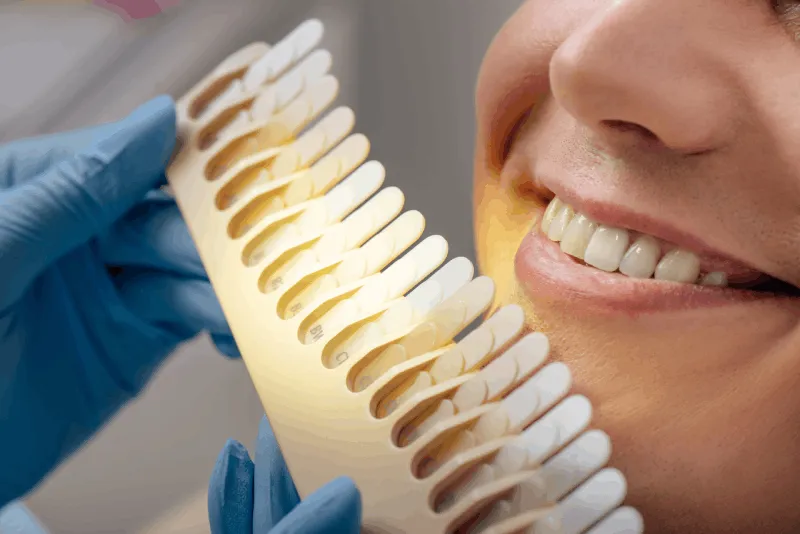
In patients with very dark tooth color, the success of prepless laminates depends on the dentist’s choice of porcelain. If a very transparent porcelain is used, the underlying dark color may reflect. To prevent this situation, “opaque” porcelains or special adhesives with color masking properties are preferred. In some very advanced cases, a very light color opening process at the micron level (0.1 – 0.2 mm) from the tooth surface may be required to get the best result. However, in most cases, a prepless solution can be produced with the correct material choice.
Can Those with Teeth Grinding Problems Have Laminates?
Teeth grinding or clenching (bruxism) is a risk factor for laminates but not an obstacle. Patients who grind their teeth must definitely use a “night guard” after having their laminates done. The night guard protects the porcelains from breaking or moving out of place by absorbing the excessive load placed on the teeth during sleep. Additionally, in some cases, protection can be provided by reducing the power of the chewing muscles with masseter botox. As long as these precautions are taken, individuals who grind their teeth can also safely have laminates.
Does the Age Factor Affect Laminate Treatment?
The lower age limit for laminate treatment is usually 18-20 years, when tooth eruption and jaw development are completed. There is no upper age limit; every individual of any age with healthy tooth and gum tissue can have this treatment. At advanced ages, the wearing and shortening of teeth is a common problem; prepless laminates can replace this worn tissue and give the patient a 10-15 year younger appearance. As long as the health of the teeth is in place, age is just a number.
What Are the Elements Affecting Porcelain Laminate Prices?
Porcelain laminate prices vary according to the brand and quality of the porcelain used, the experience of the dentist, the technological facilities of the laboratory, and the difficulty level of the case. Prepless laminates can sometimes be slightly more costly than traditional methods because they require precise work and high technology. However, when the preservation of the tooth tissue and the absence of a need for anesthesia are considered, it is quite economical as a long-term investment. Choosing the highest quality option for your health and smile is always the most profitable way.
How Does the Dental Aesthetic Journey Start with Cure Holiday?
The path leading to the smile of your dreams starts with the professional consultancy service of Cure Holiday. When you reach out to us, our expert team examines your existing tooth photos and X-rays, if any, and offers you a special preliminary assessment. Cure Holiday plans not just a treatment, but also a comfortable experience. After your needs are determined, the most suitable treatment calendar for you is created, and you are brought together with the best dentists in Turkey.
Why Should You Choose the Specialist Physicians of Cure Holiday?
Cure Holiday works with physicians who are specialized in their fields, hold international certificates, and have performed thousands of successful cases regarding aesthetic dentistry. Procedures requiring high precision, such as prepless laminates, give perfect results only with deep experience and an artistic point of view. Cure Holiday physicians design the most natural and healthy smile for you using the most modern digital technologies. Trust, transparency, and quality are the cornerstones of the healthcare service you will receive with Cure Holiday.
Which Services Are Included in Cure Holiday Packages?
Cure Holiday offers comprehensive packages where every detail is thought of for its guests coming from abroad. These packages include VIP transfer services, comfortable accommodation options, professional guidance, and all treatment processes. During your treatment, language support and 24/7 assistance services are provided so that you feel at home. With Cure Holiday, you do not just have your teeth done; at the same time, you experience a peaceful holiday where you will discover the beauties of Turkey.
How Can You Achieve the Smile of Your Dreams with Cure Holiday?
It is now very easy to have a magnificent smile by not having your teeth cut, without feeling pain, and by preserving your natural structure. Cure Holiday offers you the most modern “prepless laminate” techniques at accessible prices and with high quality standards. You can contact us immediately to receive free consultancy and start your smile design journey. Remember, a confident smile changes your life; Cure Holiday makes this change possible for you.
Free Consultation
Fill out the form below to get your free medical travel plan and price quote.
Sources and how to verify this yourself
- Howe M-S, Keys W, Richards D. Long-term (10-year) dental implant survival: a systematic review and sensitivity meta-analysis. Journal of Dentistry, 2019 — pooled 10-year implant survival 96.4% (95% CI 95.2–97.5%); conservative sensitivity estimate 93.2%. source
- Ministry of Health, Regulation on International Health Tourism and Tourist Health, Official Gazette 26 April 2025, No. 32882 — authorisation requirement for facilities and intermediaries, TÜSKA accreditation, compulsory complication insurance (deadline 31 December 2025 for insurance, 31 December 2026 for accreditation). source
- Ministry of Health, Regulation on Promotion and Information Activities in Health Services, Official Gazette 12 November 2025, No. 33075 — treatment promises and guarantees are prohibited; price and campaign announcements are permitted only within international health tourism. source