Cost and planning note (Mommy Makeover 2026)
The figures below are indicative market ranges, not a quote: your own price is confirmed after a clinical assessment.
Indicative price range: Standard Package: 4,500 – 7,500 USD | Advanced Combination: 8,000 – 12,000 USD | Tummy Tuck: 3,000 – 5,000 USD | Breast Lift: 2,500 – 4,500 USD | Liposuction Per Area: 500 – 1,500 USD | Bbl Fat Transfer: 3,500 – 5,500 USD
Facility standards: In Türkiye, any facility treating international patients must hold the Ministry of Health’s international health tourism authorisation; hospitals and medical centres must also be accredited by TÜSKA, and complication insurance is compulsory for procedures carried out in an operating theatre (Regulation of 26 April 2025).
Recovery Focus: Post-pregnancy body restoration & safety first.
Currency: GBP, EUR, USD accepted.
Managing “Fluid Retention” in the Ankles: Simple Exercises in the Hotel
Restoring the Post-Pregnancy Silhouette: Advanced Abdominal and Mammary Reconstruction
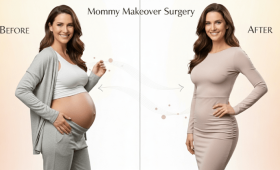
The physiological transformation experienced during pregnancy is one of the most profound biological events a human body can undergo. While the process is a marvel of nature, the mechanical stresses placed upon the dermal layers, subcutaneous adipose tissue, and the musculoskeletal framework often leave permanent structural changes. For many women, the postpartum period is marked by skin laxity, tissue ptosis, and a loss of core integrity. Achieving a “post-erasure” of these changes requires more than simple fitness; it requires sophisticated surgical intervention designed to reconstruct the anatomical foundations of the abdomen and breasts.
At the forefront of this restorative movement is the management of the abdominal wall, specifically addressing the separation of the rectus abdominis muscles, known clinically as Diastasis Recti. This condition occurs when the tension of the pregnancy-stretched abdominal wall leads to a widening of the linea alba. While often managed through physical therapy, severe cases require surgical stabilization. Diastasis Recti repair involves internal corset suturing of the abdominal fascia, a technique where the surgeon pulls the separated muscle layers back toward the midline and secures them with high-strength, absorbable sutures. This creates a “biological corset” that restores intra-abdominal pressure and flattens the midsection.
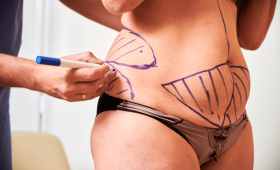
When paired with skin excision, this repair becomes part of a comprehensive abdominoplasty. Depending on the degree of skin redundancy and the patient’s anatomical goals, surgeons offer several distinct pathways. Tummy tuck options include the Mini-Abdominoplasty, which focuses on the infraumbilical region (below the navel), the Full Abdominoplasty, which addresses the entire abdominal expanse, and the Extended (360) technique, which incorporates the flanks to provide a complete circumferential contour. The objective is not merely the removal of excess skin but the restoration of a cohesive, structural tension across the entire anterior trunk.
“The true mastery of post-pregnancy restoration lies in the synergy between tissue excision and muscular re-tensioning; we are not just removing skin, we are rebuilding the anatomical foundation.”
Precision Contouring and Mammary Reconstruction
Parallel to the abdominal challenges is the phenomenon of mammary ptosis—the downward displacement of the breast tissue caused by the stretching of Cooper’s ligaments during pregnancy and lactation. To restore a youthful, lifted appearance, surgeons utilize mastopexy (breast lift) techniques. This procedure involves the repositioning of the nipple-areola complex and the removal of excess glandular or skin tissue to create a more percutaneous, elevated silhouette.
In modern reconstructive surgery, the choice of prosthetic augmentation is critical for long-term aesthetic stability. For patients seeking to restore volume alongside a lift, the use of high-quality, JCI-approved implants is the industry standard. Surgeons frequently utilize implants from premium manufacturers such as Mentor, Motiva, or Polytech. These implants are engineered with advanced shell textures and cohesive gel formulations to minimize the risk of capsular contracture and ensure a natural, soft-tissue feel.
For patients seeking more dramatic body sculpting, the integration of lipoplasty is essential. The advent of Vaser Liposuction has revolutionized the “Mommy Makeover” by allowing for ultrasound-assisted fat emulsification. Vaser Liposuction is used for high-definition contouring with minimal bruising, as it specifically targets adipocytes while sparing more sensitive structures like nerves and blood vessels. This allows for the precise sculpting of the waistline and flanks, providing a seamless transition between the abdominal repair and the lateral hip area.
The Global Standard: Why Turkey is the Epicenter for Mommy Makeovers
The landscape of aesthetic surgery has shifted significantly toward Turkey, which has emerged as the global hub for complex, multi-procedure transformations. This prominence is not accidental; it is the result of a highly specialized medical infrastructure that combines advanced surgical technology with an unparalleled level of patient care. Turkey offers a unique ecosystem where high-level surgical precision meets luxury recovery protocols.
The logistical excellence of the Turkish medical model is designed to minimize patient stress and maximize the success of the recovery phase. The journey typically begins with free online video assessments with board-certified plastic surgeons, allowing for remote preoperative planning and customized surgical blueprints. Upon arrival, the experience is characterized by seamless, VIP private transfers from the airport—either Istanbul (IST) or Antalya (AYT)—directly to the clinical care team.
Post-operative care is equally sophisticated. Recognizing that the healing process is as critical as the surgery itself, the standard of care involves stays in 5-star recovery suites with companion stay included. This environment allows for the controlled, sterile, and comfortable healing required for major procedures. While the acute surgical recovery period in Turkey typically spans 7-10 days, patients should plan for a broader window of physiological healing, with a 6 weeks timeframe required for a full return to intensive exercise.
The Economic Landscape of Post-Pregnancy Restoration
One of the primary drivers behind the global movement to Turkey is the exceptional value proposition. The ability to access high-definition, multi-stage reconstructive surgery at a fraction of Western costs allows patients to opt for more advanced, comprehensive combinations that might otherwise be financially inaccessible. The following represents the current market landscape for these transformative procedures:
- Standard Abdominoplasty/Restoration Package: 4,500 – 7,500 USD
- Advanced Combination (Multi-procedure) Package: 8,000 – 12,000 USD
- Abdominoplasty (Tummy Tuck) specific: 3,000 – 5,000 USD
- Mastopexy (Breast Lift) specific: 2,500 – 4,500 USD
- Liposuction (per targeted area): 500 – 1,500 USD
- BBL (Brazilian Butt Lift) with Fat Transfer: 3,500 – 5,500 USD
When evaluating these costs, it is imperative to consider the “all-inclusive” nature of the Turkish medical model. The price points often encompass not only the surgical fee and anesthetic costs but also the high-end logistics, including the aforementioned 5-star accommodations and VIP transfers. This transparency allows patients to budget for a holistic recovery experience that prioritizes both clinical excellence and personal well-being.
The Physiological Reality of Post-Operative Edema
Following extensive body contouring procedures, patients often report a sensation of heaviness or visible swelling around the lower extremities, specifically the ankles. In clinical terms, this is known as post-operative edema. This phenomenon is not merely a cosmetic concern but a physiological response to surgical trauma and fluid shifts within the interstitial spaces. When undergoing high-volume lipoplasty or major abdominal reconstruction, the lymphatic system and circulatory pathways undergo a period of recalibration. Gravity, acting upon the increased interstitial fluid, causes this fluid to settle in the lowest possible point—the ankles.
Managing this fluid retention is a critical component of the recovery journey. While much of the focus during a medical holiday in Turkey is on the surgical transformation itself, the management of lymphatic drainage through gentle, controlled movement is what ensures a seamless transition from the 5-star recovery suite back to daily life. Addressing this through specific, low-impact exercises can mitigate the risk of venous stasis and promote the efficient return of systemic circulation.
Case Study: Restoring the Maternal Silhouette
To understand the complexity of managing recovery alongside major surgical transformation, we look at the journey of a 34-year-old Irish mother of three. Her clinical presentation involved significant Diastasis Recti (separation of the abdominal muscles) and localized adipose deposits following three pregnancies. Her transformation was not a single-procedure event but a sophisticated, multi-layered combination surgery designed to restore both structural integrity and aesthetic contour.
Her surgical itinerary included a comprehensive approach:
- Diastasis Recti Repair: A technical procedure involving the internal corset suturing of the abdominal fascia to close the muscle gap.
- Vaser Liposuction: Utilized for high-definition contouring of the flanks and flanks, ensuring minimal bruising through ultrasonic cavitation.
- BBL (Brazilian Butt Lift): The transfer of processed autologous fat to the gluteal region to enhance projection.
For a patient like this, the recovery phase is as intensive as the surgery. During her 7-10 days in Turkey, the focus shifted from the operating theatre to the 5-star recovery suite, where managing the aforementioned ankle edema became a daily priority to ensure her mobility remained optimal for her follow-up consultations.
The Technical Precision of Combination Surgery
The success of a “combination” procedure lies in the surgeon’s ability to manage different tissue types simultaneously. For instance, while the Vaser Liposuction targets subcutaneous fat using low-frequency ultrasound to emulsify fat cells without damaging surrounding structures, the Diastasis Recti repair requires deep, structural precision. The use of internal corset suturing provides a biological “corset” that stabilizes the core, which is essential for the patient’s long-term physical stability.
Furthermore, when breast augmentation is integrated into these journeys, the choice of medical-grade implants is paramount. To meet JCI (Joint Commission International) safety standards, only the highest tier of devices are utilized, including Motiva, Mentor, or Polytech implants. These are chosen for their cohesive gel properties and their ability to integrate naturally with the patient’s anatomy, minimizing the risk of capsular contracture.
“The integration of high-definition liposculpture with structural abdominal repair requires a meticulous approach to lymphatic preservation. The goal is not just contour, but the maintenance of physiological homeostasis during the inflammatory phase of healing.”
Hotel-Based Recovery: Managing Edema through Movement
While residing in your 5-star recovery suite, the following exercises should be performed 3-4 times daily to facilitate lymphatic drainage and prevent the accumulation of fluid in the ankles. These are designed to be performed in a reclined position, making them ideal for the early post-operative days.
1. Ankle Pumps (The most critical movement)
While lying on your back with legs elevated, slowly point your toes away from your body, then flex them back toward your shins. This engages the gastrocnemius (calf) muscle, which acts as a secondary heart to pump venous blood back toward the torso.
2. Ankle Rotations
Slowly rotate your feet in a clockwise direction for 10 repetitions, then counter-clockwise. This multi-directional movement helps break up stagnant fluid in the ankle joint capsule.
3. Alphabet Tracing
Using only your big toe, “write” the letters of the alphabet in the air. This complex movement pattern ensures that all planes of the ankle joint are engaged, stimulating micro-circulation in the lower extremities.
4. Heel Slides
While lying supine, slowly slide your heel toward your buttocks, bending the knee, and then slide it back out. This assists in reducing the overall systemic inflammatory response by promoting mobility.
Investment and Logistics in the Patient Journey
Planning a surgical transformation requires transparent financial and logistical mapping. The complexity of the procedure directly correlates to the investment required. Below is a breakdown of the typical cost structures for these advanced procedures:
- Standard Package (Single Area): 4,500 – 7,500 USD
- Advanced Combination Surgery: 8,000 – 12,000 USD
- Tummy Tuck (Full, Mini, or Extended): 3,000 – 5,000 USD
- Breast Lift (Mastopexy): 2,500 – 4,500 USD
- Liposuction (Per targeted area): 500 – 1,500 USD
- BBL (Fat Transfer): 3,500 – 5,500 USD
The logistical framework is designed to minimize patient stress. Upon arrival at Istanbul (IST) or Antalya (AYT), patients are met by VIP private transfers that transport them directly to their accommodation. The choice of 5-star recovery suites is intentional, as these environments often include a companion stay included, ensuring that the patient has constant support during the initial 7-10 days of healing. Prior to travel, free online video assessments with board-certified plastic surgeons allow for a precise surgical plan to be established, ensuring that all technical requirements, from implant type to suture technique, are finalized before the patient ever leaves their home.
Understanding Post-Operative Peripheral Edema
Following significant aesthetic procedures—such as Vaser Liposuction for high-definition contouring or a BBL fat transfer—patients frequently experience a phenomenon known as peripheral edema. This is the medical term for the accumulation of interstitial fluid in the lower extremities, commonly manifesting as swelling in the ankles and feet. This physiological response is a natural part of the inflammatory cascade; the body directs fluids to the surgical site to facilitate tissue repair and cellular regeneration.
In the context of complex procedures like Diastasis Recti repair, which involves the internal corset suturing of the abdominal fascia, the systemic inflammatory response can be more pronounced. As the body manages the internal healing of the muscular wall, systemic fluid shifts can lead to increased hydrostatic pressure in the lower limbs. When combined with the relative immobility of the initial recovery phase, this can lead to venous stasis, where blood and lymph fluid struggle to return to the heart against the force of gravity.
“The primary goal during the first 7-10 days in Turkey is to manage lymphatic drainage and prevent venous stasis through controlled, low-impact movement, ensuring that the surgical site remains stable while reducing distal swelling.”
Low-Impact Mobility Protocols in the Recovery Suite
While your recovery in a 5-star recovery suite is designed for maximum rest, complete stasis is detrimental to the healing process. To mitigate ankle swelling and promote circulation, the following “hotel-friendly” exercises should be performed every two hours during waking periods. These movements are designed to engage the “calf muscle pump,” which is essential for venous return.
- Ankle Pumps (Plantar Flexion and Dorsiflexion): While lying supine or seated, slowly point your toes away from your shin, then pull them back toward your knee. This rhythmic contraction of the gastrocnemius and soleus muscles helps push stagnant fluid upward.
- Ankle Circles: Rotate the feet in large, slow clockwise and counter-clockwise circles. This engages the smaller stabilizing muscles around the talocrural joint and stimulates lymphatic flow.
- Alphabet Tracing: Using only your big toe, “write” the letters of the alphabet in the air. This multi-planar movement ensures that the ankle joint moves through its full range of motion, preventing stiffness.
- Seated Leg Extensions: While seated in your recovery suite, slowly straighten the knee and hold for three seconds before lowering. This assists in reducing the gravitational pooling of fluid in the subcutaneous tissues.
It is critical to remember that while these exercises are vital for circulation, they must be performed with caution. The transition back to physical activity is a phased process; while you may feel mobile within your first week, the clinical standard for full exercise return is 6 weeks post-surgery. Overexertion during this period could compromise the integrity of incisions, particularly in Full, Mini, or Extended (360) Tummy Tuck patients.
Optimising the Post-Op Environment: Logistics of Healing
The success of surgical recovery is heavily dependent on the “recovery logistics” established prior to arrival. Managing edema is significantly easier when the patient’s environment is controlled and optimized for comfort. This begins with the seamless transition from the clinic to your accommodation via VIP private transfers from Istanbul (IST) or Antalya (AYT). Reducing the physiological stress of travel and navigation is paramount in preventing post-surgical hypertension and increased swelling.
The selection of 5-star recovery suites with companion stay included is not merely a luxury, but a clinical advantage. A companion can assist with monitoring compression garment application and ensuring that leg elevation protocols—specifically keeping the ankles above the level of the heart—are maintained during sleep. Furthermore, the ability to engage in free online video assessments with board-certified plastic surgeons prior to travel ensures that all post-operative protocols, including specific instructions for managing swelling, are personalized to the patient’s surgical plan.
The 2026 Financial Roadmap for Aesthetic Surgery in Turkey
Planning for recovery requires a transparent understanding of the long-term financial commitment. As we look toward 2026, the cost-efficiency of Turkey remains unparalleled when compared to the UK or USA, even when factoring in the premium 5-star logistics and recovery-focused care. Below is a detailed breakdown of the projected investment for various surgical combinations:
Standard Package Estimates:
A comprehensive approach for patients seeking foundational contouring typically ranges between 4,500 – 7,500 USD. This includes the primary surgical procedure and essential post-operative care.
Advanced Combination Packages:
For patients undergoing multi-area transformations—such as combining Vaser Liposuction with a BBL fat transfer or a Tummy Tuck—the advanced packages range from 8,000 – 12,000 USD. This tier often includes enhanced recovery amenities and extended support.
Individual Procedure Breakdown:
- Tummy Tuck (Full, Mini, or Extended 360): 3,000 – 5,000 USD
- BBL Fat Transfer: 3,500 – 5,500 USD
- Breast Lift (Mastopexy): 2,500 – 4,500 USD (Utilising JCI-approved implants such as Mentor, Motiva, or Polytech)
- Liposuction (Per Area): 500 – 1,500 USD
When calculating these figures, patients should consider the “all-inclusive” nature of the Turkish model. Unlike the fragmented billing seen in Western healthcare, the Turkish luxury model integrates the surgical fee, the 5-star recovery suite, VIP transfers, and the specialized post-operative nursing care into a single, predictable cost. This allows for precise financial planning and ensures that the focus remains entirely on the biological requirements of healing and the management of post-operative edema.
Considering a Mommy Makeover in Turkey? Get a Free Quote for your Managing “Fluid Retention” in the Ankles Transformation with cureholiday.com
Free Consultation
Fill out the form below to get your free medical travel plan and price quote.