Cost and planning note (Mommy Makeover 2026)
The figures below are indicative market ranges, not a quote: your own price is confirmed after a clinical assessment.
Indicative price range: Standard Package: 4,500 – 7,500 USD | Advanced Combination: 8,000 – 12,000 USD | Tummy Tuck: 3,000 – 5,000 USD | Breast Lift: 2,500 – 4,500 USD | Liposuction Per Area: 500 – 1,500 USD | Bbl Fat Transfer: 3,500 – 5,500 USD
Facility standards: In Türkiye, any facility treating international patients must hold the Ministry of Health’s international health tourism authorisation; hospitals and medical centres must also be accredited by TÜSKA, and complication insurance is compulsory for procedures carried out in an operating theatre (Regulation of 26 April 2025).
Recovery Focus: Post-pregnancy body restoration & safety first.
Currency: GBP, EUR, USD accepted.
The “Tummy Tuck vs. Lipo Only” Debate: Making the Right Clinical Choice
The Anatomical Reality of Post-Pregnancy Body Contouring
When patients approach a clinical consultation regarding post-pregnancy restoration, the central debate often gravitates toward a single question: Can liposuction alone resolve my concerns, or is an abdominoplasty (tummy tuck) medically necessary? To make an informed decision, one must move beyond aesthetic desires and understand the underlying physiological changes in the abdominal wall and mammary tissues following gestation and lactation.
Liposuction is a highly effective modality for removing excess adipose tissue (fat) and refining the contour of specific areas. However, liposuction possesses a significant clinical limitation: it cannot address skin laxity or structural muscular weakness. In the post-pregnancy context, the skin often loses its elastin integrity, resulting in a “deflated” appearance once the fat is removed. Therefore, if the patient presents with significant dermal redundancy, a liposuction-only approach may inadvertently worsen the appearance of sagging skin.
Addressing the Core: Diastasis Recti and the “Internal Corset”
A fundamental component of the “Post-Pregnancy Restoration” pillar is the treatment of Diastasis Recti. This condition involves the separation of the rectus abdominis muscles, creating a protrusion or “pooch” that is often resistant to diet and exercise. A standard liposuction procedure cannot address this separation; it only targets the subcutaneous fat layer.
True abdominal restoration requires a surgical intervention where Diastasis Recti repair involves internal corset suturing of the abdominal fascia. By tightening the underlying muscle layers and reapproximating the separated edges of the rectus abdominis, surgeons create a structural “internal corset.” This stabilizes the core, flattens the midsection, and restores the natural physiological taper of the waist. Depending on the extent of the separation and skin laxity, surgeons may recommend one of several tummy tuck options: Full, Mini, or Extended (360).
- Mini Abdominoplasty: Targeted at patients with localized skin laxity in the lower abdomen.
- Full Abdominoplasty: Addresses the entire abdominal region, including the umbilical area.
- Extended (360) Tummy Tuck: Provides comprehensive contouring, encompassing the flanks and sides of the torso for a seamless transition.
Advanced Contouring: The Role of Vaser Liposuction
For patients who do not present with significant skin laxity or muscle separation, Vaser Liposuction is used for high-definition contouring with minimal bruising. Unlike traditional suction-assisted lipectomy, Vaser technology uses ultrasound to selectively emulsify fat cells while preserving the integrity of surrounding tissues, such as blood vessels and nerves. This precision allows for more aggressive fat removal in specific zones—such as the flanks or lower abdomen—while maintaining a smooth, natural-looking result.
In many advanced “Mommy Makeover” protocols, a hybrid approach is utilized. This involves using Vaser Lipo to sculpt the flanks and waistline, followed by an abdominoplasty to address the skin and muscle foundation. This combination ensures that the patient receives both volumetric reduction and structural tightening.
The Upper Foundation: Mastopexy and Augmentation
Post-pregnancy restoration is rarely limited to the abdomen. The hormonal and physical changes of breastfeeding often lead to ptosis (sagging) of the breast tissue. A breast lift (mastopexy) is often the necessary companion to abdominal surgery to achieve a cohesive aesthetic result. This procedure repositions the nipple-areola complex and removes excess skin to restore a youthful projection.
When volume loss is also present, augmentation may be required. To ensure the highest safety benchmarks, premium surgical centers utilize only the most trusted, JCI-approved materials. Breast implants used include Mentor, Motiva, or Polytech (JCI approved), each offering different profiles and tissue-interfacing capabilities to suit the patient’s unique anatomy.
Why Turkey is the Global Hub for Specialized Reconstruction
Turkey has emerged as the undisputed global leader in high-end, complex aesthetic reconstruction. This is not merely due to competitive pricing, but rather the convergence of advanced surgical training, state-of-the-art medical technology, and a specialized infrastructure designed for international patient recovery. The Turkish medical model focuses on “surgical excellence paired with luxury convalescence.”
The logistics of a medical journey to Turkey are engineered to minimize patient stress and maximize safety. The process often begins with free online video assessments with board-certified plastic surgeons, allowing for a precise clinical evaluation before any travel occurs. Upon arrival, patients are met with VIP private transfers from the airport (typically Istanbul [IST] or Antalya [AYT]) to their designated care facility.
The recovery experience is integrated into the medical plan. Patients are typically accommodated in 5-star recovery suites with companion stay included, ensuring that the post-operative period—which involves 7-10 days in Turkey—is spent in a controlled, sterile, yet luxurious environment. While the physical wounds heal relatively quickly, patients are advised that 6 weeks is required for a full return to strenuous exercise.
Clinical Investment Breakdown
Transparency in medical budgeting is essential for long-term planning. Below is a breakdown of the estimated costs associated with various stages of post-pregnancy restoration. Please note that these figures represent the surgical and clinical components of the procedures.
Standard Surgical Packages:
- Standard Package (Comprehensive): 4,500 – 7,500 USD
- Advanced Combination (Multifaceted Restoration): 8,000 – 12,000 USD
Individual Procedure Estimates:
- Tummy Tuck: 3,000 – 5,000 USD
- Breast Lift: 2,500 – 4,500 USD
- Liposuction (Per targeted area): 500 – 1,500 USD
- BBL (Fat Transfer/Brazilian Butt Lift): 3,500 – 5,500 USD
Clinical Note: The choice between liposuction and abdominoplasty should never be based solely on cost, but on a structural assessment of the abdominal wall and skin elasticity. Consult with Cure Holiday specialists to understand which surgical pathway aligns with your anatomical requirements.
The Anatomical Divide: Liposuction vs. Abdominoplasty
In the realm of aesthetic body contouring, patients often arrive at a clinical crossroads: the choice between liposuction and an abdominoplasty (tummy tuck), or the decision to pursue a synergistic combination of both. While the terms are often used interchangeably in casual conversation, the surgical indications for each are fundamentally different. The decision-making process is not merely about aesthetic preference but about addressing the specific anatomical deficits present in the patient’s tissue—specifically, the presence of subcutaneous adipose tissue versus skin laxity and muscular separation.
Liposuction is a specialized procedure designed to address localized fat deposits. Using advanced technology such as Vaser Liposuction, surgeons utilize ultrasonic energy to emulsify fat cells, allowing for precise, high-definition contouring with minimal bruising and improved skin adherence. However, liposuction cannot address skin redundancy or the structural weakness of the abdominal wall. This is where the abdominoplasty becomes essential. Unlike liposuction, which focuses on volume reduction, a tummy tuck focuses on structural reconstruction.
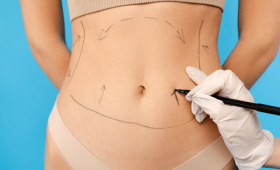
A critical component of the abdominoplasty is the Diastasis Recti repair. This involves the internal corset suturing of the abdominal fascia, effectively pulling the separated rectus abdominus muscles back into a centralized, firm position. Without this muscular reinforcement, even the most successful fat removal will fail to produce a flat, toned appearance. Depending on the patient’s degree of skin laxity, surgeons may recommend Full, Mini, or Extended (360) tummy tuck options to ensure comprehensive coverage of the abdominal, flank, and lateral trunk areas.
Case Study: Post-Partum Reconstruction in a 34-Year-Old Patient
To understand the clinical necessity of the “Advanced Combination” approach, consider the case of a 34-year-old female from Ireland, a mother of three, who presented with significant postpartum changes. The patient’s primary concerns were not merely weight-related, but structural. Clinical examination revealed moderate skin ptosis (sagging) in the lower abdomen and significant muscle separation (diastument) following multiple pregnancies.
A “Lipo Only” approach would have been contraindicated in this instance. While liposuction could have reduced the adipose volume in the flanks, it would have left the patient with increased skin laxity, potentially worsening the “deflated” appearance of the abdomen. Instead, Cure Holiday specialists facilitated a multi-layered surgical plan. The procedure integrated Vaser Liposuction to contour the waistline, paired with an Extended (360) Abdominoplasty to address the skin excess and perform the necessary Diastasis Recti repair through fascial suturing.
The outcome for this patient demonstrated the profound impact of combination surgery. By addressing both the fat volume and the underlying muscular integrity, the patient achieved a stable, tightened abdominal wall that liposuction alone could never have provided. This case exemplifies why the “Advanced Combination” is the gold standard for patients experiencing both subcutaneous fat accumulation and structural tissue compromise.
Transparent Clinical Investment: Cost Analysis
Deciding on a surgical pathway requires a clear understanding of the financial commitment involved. The complexity of the procedure directly correlates with the surgical time, anesthesia requirements, and the advanced technology utilized. Below is a breakdown of the current clinical pricing structures for these transformative procedures:
- Standard Package (Single Procedure): 4,500 – 7,500 USD
- Advanced Combination (e.g., Tummy Tuck + Lipo): 8,000 – 12,000 USD
- Abdominoplasty (Tummy Tuck) only: 3,000 – 5,000 USD
- Breast Augmentation (using Mentor, Motiva, or Polytech): 2,500 – 4,500 USD
- Liposuction (per targeted area): 500 – 1,500 USD
- BBL (Brazilian Butt Lift) via Fat Transfer: 3,500 – 5,500 USD
It is important to note that the “Advanced Combination” often represents a more cost-effective way to achieve a total body transformation, as it optimizes a single period of anesthesia and a single recovery window.
The Surgical Journey: From Consultation to Recovery
The transition from a clinical inquiry to a successful surgical outcome is a highly structured process, designed to prioritize patient safety and comfort. The journey begins long before the patient reaches the operating theater.
Phase 1: Digital Clinical Assessment
The process commences with free online video assessments. During these sessions, board-certified plastic surgeons review the patient’s medical history, analyze photographic evidence of the target areas, and discuss the feasibility of various surgical techniques. This allows for an initial surgical roadmap to be established without the need for immediate travel.
Upon arrival, the patient is met at Istanbul (IST) or Antalya (AYT) airports by VIP private transfers. This seamless transit ensures that the patient’s stress levels remain low, which is clinically beneficial for post-operative vascular stability. The patient is then escorted to 5-star recovery suites, which are designed to provide a sterile yet luxury environment. These suites are curated to include companion stay options, ensuring that the patient has continuous support during the acute recovery phase.
Phase 3: The Post-Operative Recovery Window
The recovery period is divided into two distinct stages. The first 7-10 days in Turkey are focused on wound care, monitoring for any signs of edema or hematoma, and managing the initial inflammatory response. During this time, the patient remains in a controlled, high-end environment with access to medical monitoring. The second stage occurs back in the patient’s home country. While the patient can resume light daily activities almost immediately, a period of 6 weeks is required before a full return to strenuous exercise is clinically permitted, ensuring the integrity of the internal sutures and the new abdominal contour.
Uncompromising Safety Standards and Implant Integrity
In any surgical transformation, the technical specifications of the materials used are non-negotiable. For procedures involving breast augmentation or reconstruction, the clinic adheres strictly to JCI (Joint Commission International) approved standards. The surgical arsenal includes only the highest-tier implants, such as Mentor, Motiva, or Polytech, ensuring biocompatibility, long-term stability, and minimal capsular contracture risk.
“The hallmark of a premium surgical experience is the intersection of advanced technology—such as Vaser ultrasonic emulsification—and the rigorous application of international safety protocols. We do not just aim for aesthetic excellence; we aim for clinical permanence.”
By combining these high-specification medical devices with a highly structured patient journey, the surgical transformation becomes more than a cosmetic change; it becomes a medically supervised reconstruction of the patient’s physical confidence.
The “Tummy Tuck vs. Lipo Only” Debate: Making the Right Clinical Choice
The Clinical Divergence: Evaluating Tissue Remodeling vs. Adipose Reduction
When approaching body contouring, the fundamental clinical distinction lies in the state of the integumentary system and the underlying musculature. The debate between Liposuction and Abdominoplasty (Tummy Tuck) is not merely a matter of preference, but a structural necessity dictated by the patient’s anatomy. For patients presenting with localized subcutaneous adipose tissue but intact skin elasticity, Vaser Liposuction remains the gold standard. This ultrasonic-assisted technique utilizes high-frequency vibrations to emulsify fat cells, allowing for high-definition contouring with significantly reduced micro-vascular trauma and minimal bruising.
Conversely, where there is evidence of skin laxity or Diastasis Recti—the separation of the rectus abdominis muscles—liposuction alone will fail to provide a flat profile. An abdominoplasty addresses this through the surgical tensioning of the abdominal wall. This involves Diastasis Recti repair, which utilizes internal corset suturing of the abdominal fascia to re-establish midline tension. Depending on the degree of laxity, surgeons may recommend Full, Mini, or Extended (360) tummy tuck options. While a Mini Abdominoplasty targets the infraumbilical region, the Extended (360) approach is essential for patients requiring circumferential remodeling of the flanks and lower back.
“The choice between liposuction and abdominoplasty is a decision between volume reduction and structural reconstruction. One targets the fat; the other targets the framework.”
2026 Projected Cost Breakdown: Turkey vs. UK/USA Market Analysis
As we approach the 2026 surgical season, the economic disparity between domestic procedures in the UK/USA and medical tourism in Turkey continues to widen. For patients planning high-complexity procedures, the cost-benefit analysis extends beyond the surgical fee to include the total “all-inclusive” recovery ecosystem. The following breakdown represents projected clinical costs for 2026:
- Standard Surgical Packages: 4,500 – 7,500 USD (Typically including Lipo and minor contouring)
- Advanced Combination Procedures: 8,000 – 12,000 USD (e.g., Combined Abdominoplasty, BBL, and Breast Augmentation)
- Abdominoplasty (Tummy Tuck): 3,000 – 5,000 USD
- Breast Augmentation (using Mentor, Motiva, or Polytech JCI-approved implants): 2,500 – 4,500 USD
- Liposuction (per targeted area): 500 – 1,500 USD
- BBL (Brazilian Butt Lift/Fat Transfer): 3,500 – 5,500 USD
ary
While UK and USA private healthcare costs for a single abdominoplasty can exceed 15,000 – 20,000 USD, the Turkish model leverages integrated logistics to maintain lower price points without compromising the quality of the medical implants or the expertise of board-certified surgeons.
The Recovery Ecosystem: Post-Op Villa Logistics and 5-Star Care
The logistical success of a surgical journey in Turkey is predicated on the “Recovery Ecosystem.” Unlike the fragmented care experienced in domestic settings, the Turkish model integrates clinical aftercare with luxury hospitality. Upon arrival at Istanbul (IST) or Antalya (AYT), patients are met with VIP private transfers that ensure safe, pressurized, and comfortable transit to their recovery location.
For patients undergoing more invasive reconstructive procedures, such as an Extended (360) Tummy Tuck, the recovery requirement is more intensive. This often necessitates a stay in 5-star recovery suites. These suites are designed specifically for post-surgical stability, featuring medical-grade monitoring capabilities and 24/7 nursing access. A critical feature of these packages is the companion stay included, which allows a partner or caregiver to reside in the suite. This is vital for managing the early-stage mobility limitations associated with abdominal fascia suturing.
In cases where extreme privacy and intensive nursing care are required, many patients opt for Post-op Villa Recovery. These luxury villas provide a controlled, sterile-adjacent environment where personalized physiotherapy and wound care can be administered away from the clinical setting, facilitating a smoother transition toward the “fly-home” phase.
The Fly-Home Timeline and Post-Operative Physicality
One of the most complex logistical hurdles is the “Fly-Home” window. Clinical protocols dictate a mandatory 7-10 day stay in Turkey to ensure that the initial inflammatory phase and the risk of hematoma or seroma are monitored by the surgical team. The timing of the return flight is calculated to mitigate the risks of venous thromboembolism (VTE) and to ensure that the patient’s pressure-suit (compression garment) is correctly fitted for altitude changes.
Patients must also plan their domestic lives around the 6-week window for full exercise return. This period is a period of biological stabilization where the internal sutures are integrating with the tissue. Logistics regarding childcare and professional commitments must be synchronized with this 42-day period of restricted movement. Because the physical load-bearing capacity is significantly reduced following an abdominoplasty, the “logistics of care” at home is just as important as the clinical care received in Turkey.
To mitigate these complexities, Cure Holiday specialists recommend utilizing the free online video assessments available prior to travel. This allows for a digital pre-consultation with board-certified plastic surgeons to determine if your post-op recovery plan—including the necessity for a companion or a specific recovery suite—is appropriately scaled to the complexity of your chosen procedure.
Considering a Mommy Makeover in Turkey? Get a Free Quote for your The “Tummy Tuck vs. Lipo Only” Debate Transformation with cureholiday.com
Free Consultation
Fill out the form below to get your free medical travel plan and price quote.
Sources and how to verify this yourself
- Ministry of Health, Regulation on International Health Tourism and Tourist Health, Official Gazette 26 April 2025, No. 32882 — authorisation requirement for facilities and intermediaries, TÜSKA accreditation, compulsory complication insurance (deadline 31 December 2025 for insurance, 31 December 2026 for accreditation). source
- Ministry of Health, Regulation on Promotion and Information Activities in Health Services, Official Gazette 12 November 2025, No. 33075 — treatment promises and guarantees are prohibited; price and campaign announcements are permitted only within international health tourism. source