Cost and planning note (Mommy Makeover 2026)
The figures below are indicative market ranges, not a quote: your own price is confirmed after a clinical assessment.
Indicative price range: Standard Package: 4,500 – 7,500 USD | Advanced Combination: 8,000 – 12,000 USD | Tummy Tuck: 3,000 – 5,000 USD | Breast Lift: 2,500 – 4,500 USD | Liposuction Per Area: 500 – 1,500 USD | Bbl Fat Transfer: 3,500 – 5,500 USD
Facility standards: In Türkiye, any facility treating international patients must hold the Ministry of Health’s international health tourism authorisation; hospitals and medical centres must also be accredited by TÜSKA, and complication insurance is compulsory for procedures carried out in an operating theatre (Regulation of 26 April 2025).
Recovery Focus: Post-pregnancy body restoration & safety first.
Currency: GBP, EUR, USD accepted.
The Final Verdict: Is a Mommy Makeover “Safe” in Turkey? A Data-Driven Audit
The Physiological Reality: Reconstructing the Postpartum Foundation
The biological aftermath of pregnancy extends far beyond the superficial layers of the dermis. For many women, the structural integrity of the abdominal wall and the mammary tissue undergoes profound changes that are not easily rectified through caloric deficit or targeted hypertrophy exercises. This structural degradation—characterized by the separation of the rectus abdominis muscles and the loss of glandular volume in the breasts—forms the clinical basis for the “Mommy Makeover.” In the context of advanced reconstructive surgery, this is not merely an aesthetic endeavor; it is a technical restoration of the body’s anatomical equilibrium.
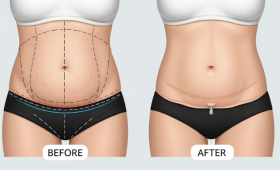
At the core of this restorative process is the management of Diastasis Recti. This condition involves the longitudinal separation of the rectus abdominis muscles, creating a protrusion or “pooch” that persists even in lean individuals. The surgical gold standard for addressing this is the implementation of an internal corset. During the procedure, the surgeon performs a meticulous suturing of the abdominal fascia, pulling the separated muscle bellies back toward the midline. This reinforcement of the linea alba provides the necessary tension to stabilize the core and restore a flat, firm abdominal profile.
The Spectrum of Abdominoplasty: From Mini to 360
A common misconception in reconstructive surgery is that all tummy tucks are identical. In reality, the surgical approach is highly individualized based on the degree of skin laxity and muscular separation. The technical specifications for these procedures generally fall into three distinct categories:
- Mini Abdominoplasty: Targeted primarily at the lower abdomen, ideal for patients with minimal skin redundancy and localized umbilical issues.
- Full Abdominoplasty: A comprehensive approach involving a larger incision to address skin laxity from the pubic area up to the umbilicus, allowing for significant muscle tightening.
- Extended (360) Tummy Tuck: The most advanced tier, which extends the excision and tightening laterally toward the flanks, often integrated with liposuction to create a seamless, circumferential contour.
When paired with Vaser Liposuction, the results of an abdominoplasty are significantly enhanced. Unlike traditional cannula-based liposuction, Vaser technology uses ultrasound frequency to emulsify fat cells with extreme precision. This allows for high-definition contouring of the flanks and waistline with minimal trauma to the surrounding vasculature, which drastically reduces the incidence of post-operative bruising and edema.
Mastopexy and Volumetric Restoration
The upper portion of a Mommy Makeover focuses on addressing breast ptosis (sagging) and volume loss. The surgical correction, known as a Mastopexy (breast lift), involves the repositioning of the nipple-areola complex and the removal of excess glandular and dermal tissue to redefine the breast mound. Depending on the degree of ptosis, surgeons may utilize various incision patterns—such as the Wise Pattern or vertical techniques—to ensure optimal scarring camouflage.
To restore the projection lost during breastfeeding, augmentation is often necessary. The safety and longevity of these results depend heavily on the quality of the prosthetics used. In Turkey’s premier surgical centers, only JCI-approved implants are utilized, specifically brands such as Mentor, Motiva, or Polytech. These implants are engineered with advanced shell textures and cohesive gel formulations to minimize the risk of capsular contracture and displacement.
The Data-Driven Audit: Cost Efficiency vs. Clinical Excellence
The global shift of medical tourism toward Turkey is driven by a unique intersection of high-tech surgical infrastructure and significant cost-arbitrage. When auditing the financial aspect of a Mommy Makeover, it is essential to view the pricing through the lens of the “Total Care Package” rather than isolated procedures.
“The economic advantage of undergoing restorative surgery in Turkey is not found in ‘cheap’ procedures, but in the ability to access high-end, multi-operative surgical packages that would be financially prohibitive in Western markets.”
A detailed breakdown of the current market rates for these procedures in Turkey is as follows:
- Standard Package (Primary Restorative): 4,500 – 7,500 USD
- Advanced Combination (Multi-area Reconstruction): 8,000 – 12,000 USD
- Tummy Tuck (Abdominoplasty) alone: 3,000 – 5,000 USD
- Breast Lift (Mastopexy) alone: 2,500 – 4,500 USD
- Liposuction (per specific area): 500 – 1,500 USD
- BBL (Brazilian Butt Lift) / Fat Transfer: 3,500 – 5,500 USD
This pricing structure allows patients to allocate funds toward more complex, multi-stage reconstructions, such as combining a full abdominoplasty with fat transfer to the gluteal region, which provides a more holistic anatomical restoration.
Logistical Framework and Post-Operative Recovery
Safety in medical tourism is predicated on the seamlessness of the logistical chain. The infrastructure in Turkey is designed to mitigate the stress of international travel, which is critical for post-surgical stability. The journey typically begins with free online video assessments with board-certified plastic surgeons, allowing for a preliminary clinical evaluation of the patient’s anatomy and surgical candidacy.
Upon arrival, the logistical protocol is highly standardized:
- Transit: Patients are met with VIP private transfers arriving at Istanbul (IST) or Antalya (AYT), ensuring a controlled, low-stress transition from the airport to the medical facility.
- Accommodation: Recovery takes place in 5-star recovery suites. These facilities are specifically designed for post-operative care, often including a companion stay included in the package to ensure the patient has 24/7 support during the initial inflammatory phase.
- Recovery Timeline: The acute post-operative phase requires 7-10 days in Turkey for follow-up assessments and wound checks. However, patients must plan for a 6-week period before a full return to strenuous physical exercise.
By integrating high-specification surgical techniques, such as the internal corset suturing and Vaser contouring, with a robust logistical framework, Turkey has established itself as the global benchmark for postpartum restorative surgery. The data suggests that when the audit is performed on technical capability, surgeon accreditation, and post-operative infrastructure, the “safety” of the procedure is underpinned by a highly regulated and technologically advanced medical ecosystem.
The Surgical Architecture: Deconstructing the Multi-Regional Transformation
A “Mommy Makeover” is a clinical misnellen; it is not a single procedure, but a highly orchestrated combination of surgical interventions designed to address the morphological changes caused by pregnancy and lactation. To the uninitiated, it may appear as a simple aesthetic enhancement, but from a surgical perspective, it is an intricate reconstruction of the abdominal wall, mammary tissue, and subcutaneous fat distribution.
The cornerstone of this transformation often lies in the abdominoplasty (tummy tuck). Depending on the patient’s degree of skin laxity and tissue redundancy, surgeons may utilize Full, Mini, or Extended (360) techniques. For patients experiencing significant postpartum changes, the procedure goes far beyond skin excision. A critical component of a high-quality abdominoplasty is the Diastasis Recti repair, which involves internal corset suturing of the abdominal fascia. This technique re-approximates the separated rectus abdominus muscles, effectively narrowing the waistline and restoring the structural integrity of the midsection through tension-based reinforcement.
Complementing the abdominal reconstruction is the refinement of the bust and body contour. When addressing breast ptosis (sagging), a mastopexy (breast lift) is paired with augmentation to restore volume and projection. Precision in this stage is dictated by the choice of biomaterials; premium clinics in Turkey utilize JCI-approved implants, including Mentor, Motoli, or Polytech, ensuring biocompatibility and long-term structural stability.
To finalize the silhouette, advanced lipoplasty techniques are employed to target stubborn adipose deposits. Rather than traditional suction-assisted methods, many top-tier surgeons now implement Vaser Liposuction. This ultrasound-assisted technology uses low-frequency energy to emulsify fat cells selectively, allowing for high-definition contouring with minimal bruising and much smoother skin retraction. When combined with BBL (Brazilian Butt Lift) fat transfer, the surgeon can redistribute harvested subcutaneous fat to the gluteal region, creating a seamless transition from the waist to the hips.
A Case Study in Precision: The Journey of a 34-Year-Old Mother
“The goal was not to look like a different person, but to reclaim the structural silhouette I possessed prior to my third pregnancy.”
Consider the clinical profile of a 34-year-old Irish mother of three. Upon her initial free online video assessment with board-certified plastic surgeons, her primary concerns were identified as significant abdominal diastasis, bilateral breast ptosis, and loss of lateral hip contour. Her journey provides a blueprint for the standard of care provided in Turkey’s premier medical hubs.
The surgical plan was a multi-stage integration: an Extended (360) abdominoplasty to address the abdominal fascia, a mastopexy with Motiva implants to restore upper pole fullness, and Vaser Liposuction of the flanks to facilitate a more pronounced hip-to-waist ratio. The success of such a complex intervention relies heavily on the postoperative protocol. Her recovery was staged into two distinct phases: an initial 7-10 days in Turkey, spent in a high-end recovery environment, followed by a 6-week period for full exercise return in Ireland.
The Financial Audit: Transparent Cost Structures
One of the primary drivers for seeking surgical excellence in Turkey is the significant reduction in cost without a concomitant reduction in surgical quality. By eliminating the massive overhead associated with Western healthcare systems, the “advanced combination” procedures remain accessible. Below is a data-driven breakdown of the current market rates for these specialized procedures:
- Standard Package (Single area focus): 4,500 – 7,500 USD
- Advanced Combination (Full Mommy Makeover): 8,000 – 12,000 USD
- Abdominoplasty (Tummy Tuck): 3,000 – 5,000 USD
- Mastopexy (Breast Lift): 2,500 – 4,500 USD
- Liposuction (Per specific area): 500 – 1,500 USD
- BBL (Fat Transfer/Gluteal Augmentation): 3,500 – 5,500 USD
It is essential to note that these figures represent a comprehensive approach to care, encompassing surgical fees, anesthesia, and the specialized postoperative logistics detailed below.
The Logistics of Safety: From Arrival to Recovery
The safety of a Mommy Makeover is not merely determined by the surgeon’s skill, but by the rigorous adherence to international medical standards. For a procedure of this magnitude, JCI (Joint Commission International) accreditation is the gold standard. This ensures that every facet of the surgical environment—from sterilization protocols to anesthetic monitoring—meets global benchmarks.
The patient journey is designed to minimize physiological stress through seamless logistics. Upon arrival at Istanbul (IST) or Antalya (AYT), patients are met with VIP private transfers that transport them directly from the airport to their designated recovery suites. These are not merely hotels, but 5-star recovery suites with companion stay included, specifically designed to facilitate the early postoperative stages of healing.
This logistical precision ensures that the patient’s focus remains entirely on the physiological demands of recovery. The integration of luxury hospitality with clinical excellence is what allows the “Turkey model” to maintain high-tier safety outcomes. From the moment of the free online video consultation to the final follow-up, the emphasis remains on a controlled, sterile, and highly supported surgical pathway.
The Technical Architecture of a Safe Mommy Makeover
When evaluating the safety of a Mommy Makeover in Turkey, the audit must move beyond surface-level aesthetics and into the precision of surgical execution. Safety in high-end Turkish plastic surgery is predicated on the integration of advanced technology and anatomical reconstruction. A “Mommy Makeover” is rarely a single procedure; it is a complex, multi-layered surgical event designed to address the physiological changes following pregnancy.
A critical component of the surgical safety profile is the management of Diastasis Recti. This condition, characterized by the separation of the rectus abdominis muscles, requires more than simple skin excision. Precision-driven clinics utilize internal corset suturing of the abdominal fascia to re-approximate the muscle wall, restoring core stability and preventing future herniation. This internal structural repair is the cornerstone of a functional, long-lasting result.
Furthermore, the methodology of fat processing significantly dictates the post-operative inflammatory response. The use of Vaser Liposuction is now the gold standard in advanced Turkish clinics, utilizing ultrasonic technology to emulsify adipose tissue. This method allows for high-definition contouring with minimal bruising, as it targets fat cells with extreme specificity while preserving surrounding neurovascular structures. This precision reduces the risk of subcutaneous hematomas and accelerates the lymphatic drainage process.
The integrity of reconstructive surgery also relies on the biocompatibility of prosthetic materials. Safety audits must confirm that all implants used are JCI approved, specifically focusing on industry leaders such as Motiva, Mentor, or Polytech. These implants are engineered to minimize capsular contracture and provide predictable anatomical integration.
The 7-10 Day Recovery Protocol: Navigating Post-Op Logistics
The “safety” of a medical tourism itinerary is fundamentally tied to the recovery timeline. The logistical window in Turkey is strategically designed to balance the necessity of clinical monitoring with the physiological requirements of flight. The standard protocol involves a 7-10 day residency in Turkey, a period critical for managing the initial inflammatory phase and ensuring that any early post-operative complications, such as seromas or minor hematomas, are identified and managed by the surgical team.
“The transition from the operating theatre to the recovery suite is the most critical period in the post-operative timeline. Safety is not merely about the surgery itself, but the continuity of care during the first 168 hours post-insult.”
Logistical excellence begins at the point of entry. Patients typically arrive via Istanbul (IST) or Antalya (HDT), where VIP private transfers are arranged to ensure a low-stress transit to the clinic. The post-operative period is spent in 5-star recovery suites, with companion stay included. These suites are not merely luxury accommodations; they function as semi-clinical environments where the patient is buffered from the physical rigors of travel. This period allows for the stabilization of surgical sites before the patient undergoes the pressure changes associated with long-haul flights.
A significant concern for many patients is the “Fly-Home” timeline. While the initial 7-10 days are spent in Turkey, the biological reality of healing extends much further. Patients must prepare for a 6-week window before a full return to strenuous exercise. This period requires careful planning regarding physical activity and the avoidance of heavy lifting, which could compromise the tension of the abdominal sutures or the placement of fat grafts.
2026 Financial Audit: Comparative Cost Analysis
To understand the economic viability of a Mommy Makeover in Turkey, one must analyze the breakdown of surgical components against the global market. The following data represents the projected 2026 cost breakdown for high-end, all-inclusive packages in Turkey, compared to the standard inflated pricing found in the UK and USA.
- Standard Package (Comprehensive): 4,500 – 7,500 USD
- Advanced Combination (Complex Reconstruction): 8,000 – 12,000 USD
- Tummy Tuck Options: (Includes Full, Mini, or Extended 360) 3,000 – 5,000 USD
- Breast Lift (Mastopexy): 2,500 – 4,500 USD
- Liposuction (Per targeted area): 500 – 1,500 USD
- BBL (Fat Transfer to Buttocks): 3,500 – 5,500 USD
When conducting this audit, it is imperative to note that these figures typically encompass the “all-inclusive” model, which includes the 5-star recovery suite, VIP transfers, and the surgical fees. In the UK or USA, the cost for a similar combination of procedures—including a Tummy Tuck, Breast Lift, and Liposuction—would frequently exceed 25,000 – 40,000 USD, even before accounting for the high costs of post-operative nursing care and hospital stays.
Managing the Transition: Childcare and Long-Term Aftercare
The logistical complexity of a Mommy Makeover extends beyond the surgical theater to the management of domestic life. For many patients, the primary “aftercare” challenge is childcare logistics. Because the physical recovery requires a 6-week period of restricted movement, patients must coordinate a support system at home. The 7-10 day window in Turkey is designed to allow the patient to return home once the most acute period of pain and swelling has subsided, but the responsibility of managing young children requires a premeditated plan to avoid accidental strain on the abdominal fascia.
To mitigate the risks of international surgery, the pre-operative phase must be rigorous. High-tier Turkish surgical teams facilitate free online video assessments with board-certified plastic surgeons. This allows for a preliminary anatomical audit, where surgeons can evaluate skin elasticity, muscle separation, and fat distribution via high-definition imaging before the patient even departs for the airport. This digital consultation serves as the first line of defense in ensuring the patient’s expectations and physiological capabilities align with the proposed surgical plan.
Ultimately, the “safety” of the Turkish Mommy Makeover is found in the intersection of technical proficiency—such as Vaser Lipo and diastasis repair—and a highly structured logistical framework that prioritizes patient stability and long-term recovery monitoring.
Considering a Mommy Makeover in Turkey? Get a Free Quote for your The Final Verdict Transformation with cureholiday.com
Free Consultation
Fill out the form below to get your free medical travel plan and price quote.
Sources and how to verify this yourself
- Ministry of Health, Regulation on International Health Tourism and Tourist Health, Official Gazette 26 April 2025, No. 32882 — authorisation requirement for facilities and intermediaries, TÜSKA accreditation, compulsory complication insurance (deadline 31 December 2025 for insurance, 31 December 2026 for accreditation). source
- Ministry of Health, Regulation on Promotion and Information Activities in Health Services, Official Gazette 12 November 2025, No. 33075 — treatment promises and guarantees are prohibited; price and campaign announcements are permitted only within international health tourism. source