Hair transplant operations are among the most permanent solutions offered by aesthetic interventions today for the problem of baldness and hair thinning. However, the success of the operation is not limited only to the placement of grafts at the correct angle; the real success is determined by how quickly the transplanted roots adapt to their new locations and their survival rate. This is where the miraculous touch of modern medicine, PRP (Platelet-Rich Plasma) treatment, comes into play. This rich plasma obtained from your own blood transforms the hair transplant process from a surgical intervention into a biological renewal process. In this guide, we will detail how PRP takes hair transplant success to the peak with scientific facts and expert opinions.
What Is PRP Treatment?
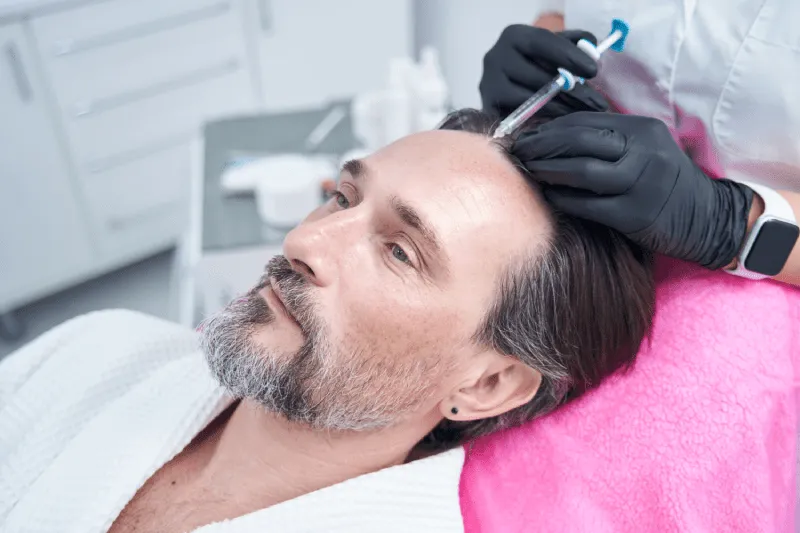
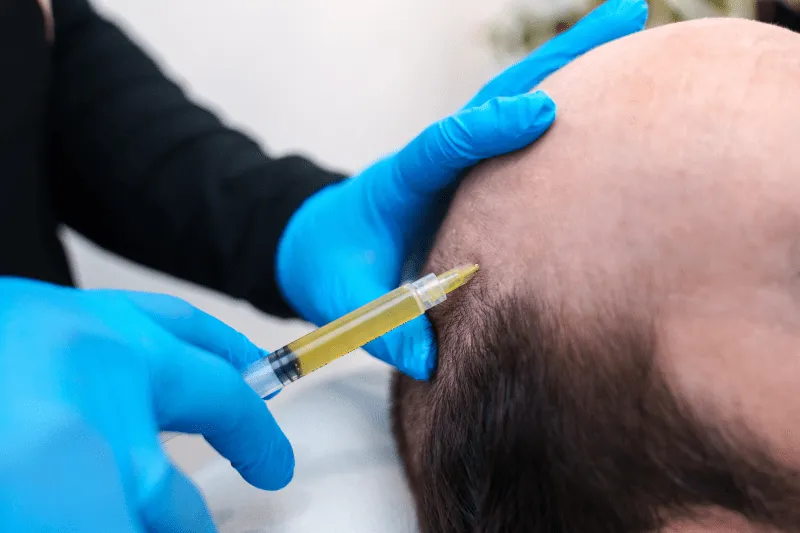
Platelet Rich Plasma, or PRP, is a concentrated component obtained from a person’s own blood. By centrifuging the blood, the plasma part is separated from the red blood cells, and it has 5 to 10 times the amount of platelets that normal blood can contain. These platelets are incredibly rich in growth factors that trigger the body’s natural healing mechanism. Used for tissue repair in many fields of medicine, this method is accepted as the most effective supportive treatment in the field of hair transplantation to accelerate tissue healing and increase the biological vitality of the transplanted grafts.
How Does a Hair Transplant Operation Basically Occur?
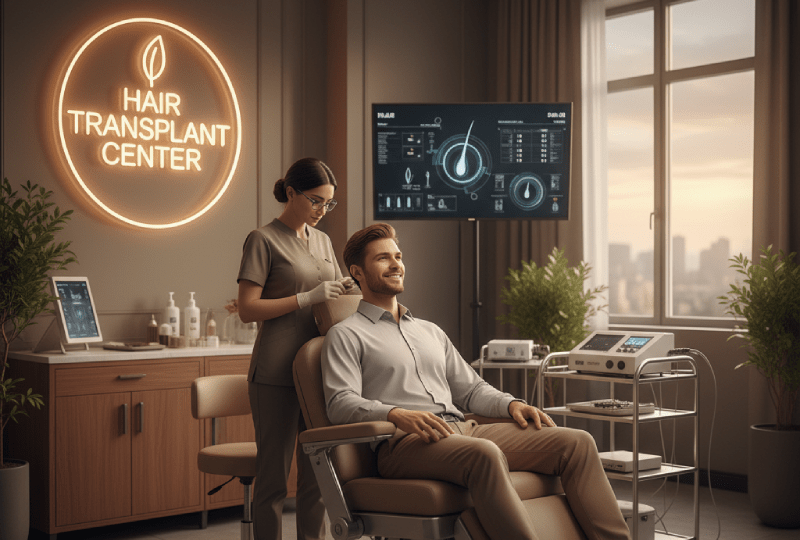
A hair transplant is basically the process of transferring healthy hair follicles taken from the nape area, called the donor area, to the areas with baldness. This operation, performed with modern techniques such as FUE, DHI, or Sapphire FUE, requires millimetric and sensitive work. The process consists of three main stages: collecting the grafts, opening channels, and placement. Throughout this process, hair follicles are deprived of nutrition from the moment they are removed from the body. During this temporary process and the subsequent adaptation period, the health of the follicles directly affects the ultimate aesthetic result of the operation.
What Kind of Effect Does PRP Have on Hair Follicles?
The primary effect of PRP on hair follicles is called “biostimulation.” The growth factors it contains encourage the division and proliferation of hair follicle cells. It specifically ensures that hair grows thicker and healthier by extending the anagen (growth) phase. Thanks to its properties that support the formation of blood vessels (angiogenesis), the micro-blood circulation around the transplanted follicles accelerates. This means that the hair follicles receive more oxygen and nutrients. PRP awakens dormant follicles while maximizing the lifespan of existing follicles in a scientifically proven way.
What Are the Growth Factors Inside PRP?
The main growth factors found in PRP include PDGF (Platelet-Derived Growth Factor), VEGF (Vascular Endothelial Growth Factor), TGF-β (Transforming Growth Factor), and EGF (Epidermal Growth Factor). These components work like an orchestra. While VEGF provides new vessel formation, PDGF manages tissue repair and cell growth. EGF supports wound healing by accelerating the renewal of epithelial cells. The synergistic effect of these factors offers all the biological support needed by the scalp and hair follicles after a hair transplant in a single injection.
How Is PRP Treatment Prepared?
The preparation process is a simple but technically sensitive procedure. First, about 10-20 ml of blood is taken from the patient. This blood is placed in a centrifuge device rotating at high speed inside special kits. The centrifugation process ensures the separation of the blood into its components: red blood cells gather at the bottom, and plasma at the top. Then, the “buffy coat” layer, which is richest in growth factors, is carefully separated. This obtained concentrated liquid is activated and made ready for the application area. This whole process takes about 15-20 minutes and is carried out under completely sterile conditions.
Is It Beneficial to Have PRP Before a Hair Transplant?
PRP performed before the operation is of great importance for “preparing” the ground where the hair transplant will be performed. If the person’s existing hair is very weak or the blood circulation in the scalp is insufficient, PRP revitalizes the tissue before the operation. This situation can increase the quality of the follicles in the donor area and ensure that the grafts come to a more sustainable environment by improving the tissue health of the area where the transplant will be performed. Experts state that a session performed a few weeks before the operation is a strategic step that lays the groundwork for surgical success.
Why Is PRP Used During the Operation?
The use of PRP during hair transplantation usually occurs in two ways: either the collected grafts are kept in a special PRP solution while waiting for transplantation, or it is injected directly into the area during the channel opening phase. Keeping the grafts nourished with PRP during the time they remain outside the body maintains the metabolic rate of the follicles and prevents cell death (apoptosis). Application to the scalp during the operation minimizes surgical trauma. This is the most modern approach that guarantees the hair transplant operation is not just a mechanical relocation but a biological integration process.
Does PRP Accelerate Healing After a Hair Transplant?
The microscopic wound and crusting process that occurs on the scalp after surgical procedures is a stage that the patient wants to get over as soon as possible. PRP accelerates the epithelialization process thanks to the restorative proteins it contains. In this way, side effects such as edema, redness, and crusting decrease much faster than standard healing times. The rapid tissue repair provided by PRP shortens the patient’s return to social life while minimizing the risk of infection by creating a natural protective shield.
Does PRP Increase the Attachment Rate of Grafts?
Yes, this is one of the most fundamental benefits of PRP in hair transplantation. The greatest risk in hair transplantation is that the transferred follicles die by failing to adapt to their new locations. Since micro-vascularization starts rapidly in the area where PRP is injected, the grafts are connected to the body’s general circulation in a much shorter time. Scientific studies show that graft attachment success in PRP-supported hair transplant procedures can be between 15% and 30% higher compared to standard procedures. This is a result that directly increases the efficiency of the operation and protects the value of each follicle taken.
Does PRP Help in the Healing of the Donor Area?
In hair transplant operations, focus is usually only on the transplanted area, but the health of the donor area is also very critical. The small wounds formed in the nape area where the follicles are taken close much faster with PRP application. The regenerative effect of PRP heals the tissue trauma in the donor area, reducing the risk of scarring and protecting the health of the remaining hair in that area. This provides an invaluable advantage for the donor area to look homogeneous and healthy, especially for patients who want to cut their hair short.
How Many Sessions of PRP Are Recommended?
The ideal PRP protocol after a hair transplant usually starts on the day of the operation and continues at periodic intervals throughout the following year. Most experts recommend one session in the 1st, 3rd, and 6th months after transplantation. This periodic application ensures that the hair emerges stronger from the “shock loss” phase and the growth rate remains stable. Of course, the patient’s genetic structure, hair quality, and healing speed can be decisive in extending the number of sessions up to 6 sessions. Regular sessions increase the permanence of the result.
Are There Any Side Effects of PRP?
One of the greatest advantages of PRP treatment is that it is an autologous method. In other words, the raw material is the patient’s own blood. This situation completely eliminates the risk of allergic reaction, tissue rejection, or infectious disease. A slight sensitivity at the injection points, a temporary feeling of fullness, or very rarely, small bruises may be seen after the application. However, these symptoms usually disappear spontaneously within a few hours or a day. Being a natural treatment that does not contain chemicals, it is one of the aesthetic applications with the lowest side effect profile.
Is PRP Treatment Painful?
Thanks to modern techniques and very fine-tipped mesotherapy needles, PRP application is quite comfortable. Most patients describe the process as a “slight tingling” or “pressure.” If it is done immediately after the hair transplant operation, the patient does not feel anything because the scalp is already under local anesthesia. In follow-up sessions, comfort is maximized by using anesthetic sprays or creams before the application. The fact that there is no need for any painkillers after the procedure is a proof of how gentle the method is.
Who Is PRP Not Applied To?
Although PRP is extremely safe, there are some exceptional cases. It is not recommended for active cancer patients, those with a low platelet count (thrombocytopenia), those with chronic liver disease, or those experiencing serious blood clotting problems. Also, if there is an active infection in the area to be applied, the procedure should be started after waiting for healing. It may also be recommended to postpone it as a general precaution during pregnancy and breastfeeding unless there is a medical necessity. Therefore, a full blood count and health history check before the procedure is a must.
When Should the First PRP Session Be Done After Hair Transplant?
The first session is usually performed immediately at the end of the operation or on the first washing day. The application performed on the operation day facilitates the absorption of plasma from the open micro-channels, ensuring it reaches the follicles directly. The PRP performed at this stage is the most critical intervention to reduce “graft shock.” If it was not done on the operation day, an application performed after the first 10-day crust shedding process is an ideal timing to support new cell formation and reduce tissue tension.
Does PRP Increase Hair Thickness?
Absolutely yes. PRP not only ensures the attachment of newly transplanted hair but also strengthens the existing thin (miniaturized) hair in that area. Growth factors expand the diameter of the hair follicle, ensuring that each hair strand comes out thicker and more resistant. This situation contributes to the hair transplant result looking much denser and more voluminous. Not only the increase in hair as a quantity but also the increase as quality is the key to a natural and satisfying aesthetic appearance.
Does PRP Stop Hair Loss?
Although PRP cannot completely stop the genetic shedding process (androgenetic alopecia), it significantly slows down this process. By nourishing the hair follicles, it keeps them in the growth phase for a longer period. By extending the life of weakened hair in areas where hair transplant is not performed, it prevents new gaps that may occur in the future. For this reason, patients who have a hair transplant should see PRP as a protective shield to maintain their existing hair. It should not be forgotten that although a hair transplant is a solution, maintaining the health of existing hair is a matter of care.
What Is the Difference Between Mesotherapy and PRP?
Hair mesotherapy is the injection of ready-made mixtures of vitamins, minerals, amino acids, and enzymes into the scalp. PRP, on the other hand, uses natural growth factors obtained entirely from the patient’s own blood. While mesotherapy provides nutritional support from the outside, PRP activates the body’s own repair potential. In hair transplant success, PRP is generally seen as “starting the biological engine,” while mesotherapy can be described as “fuel support.” In most successful clinics, these two methods are applied in combination to complement each other.
Is PRP Treatment Permanent?
The effect of PRP is directly proportional to the body’s biological speed, and its effect begins to decrease after a certain period. The effect of intensive cures performed in the first year after hair transplant is long-lasting; because the aim in this period is graft attachment, and attached grafts remain there for life. However, for the health of existing hair and the continuity of hair quality, it is recommended to perform PRP once or twice a year in the form of reminder sessions. This is the best “anti-aging” strategy to maintain the vitality and shine obtained.
Which Are the Best PRP Kits?
The success of PRP depends on the platelet concentration obtained after centrifugation. Procedures performed with ordinary laboratory tubes do not create a real PRP effect; these are just plasma injections. High-quality PRP kits have special separators that can separate platelets at a purity over 90% and a density of 5-7 times. FDA-approved and closed-system kits are the gold standard in terms of both sterilization and efficiency. Questioning which technology your clinic uses will directly affect the quality of the result you will receive.
According to What Do PRP Prices Change?
Pricing usually varies according to the quality of the kit used, the number of sessions, and the expertise of the clinic performing the application. Cheap applications are usually made with low-concentration kits or insufficient technical equipment, which may prevent the expected effect from being seen. In an investment that will last a lifetime like a hair transplant, not compromising on PRP quality is a more economical choice in the long run. Often, including it in hair transplant packages can offer a more advantageous cost for the patient.
What Are Other Factors Affecting Hair Transplant Success?
PRP is a tremendous supporter, but it is not the only component of success. Smoking (because it disrupts blood circulation), nutritional habits, sleep patterns, and care after the first wash are also very important. Also, the experience of the specialist physician, donor area management, and sterilization standards form the basic columns of success. PRP creates miracles in an environment where all these factors are optimized in the best way. Success is the perfect harmony of surgical excellence and biological support.
Is PRP a Natural Treatment Method?
It is absolutely 100% natural. It contains no synthetic substances, drugs, or chemicals. We offer the natural coagulation and repair mechanism that your body uses to heal a place when it is cut, in a concentrated way to the scalp. This naturalness increases the speed of the body’s response to treatment while reducing risks such as allergy and irritation to zero. To have bushier hair using the healing of your own blood is one of the safest points medicine has reached.
Is There an Age Limit for PRP?
There is no strict upper age limit for PRP application; it can be applied to anyone whose general health status is suitable. However, since the body’s regeneration rate slows down with age, the quality of growth factor obtained in very elderly patients may be slightly lower than in younger patients. As a lower limit, usually, individuals aged 18 and over who need a hair transplant or hair treatment are targeted. The important thing is that there is no chronic disease and blood values are within normal limits.
Are Hair Transplant and PRP Effective in Women?
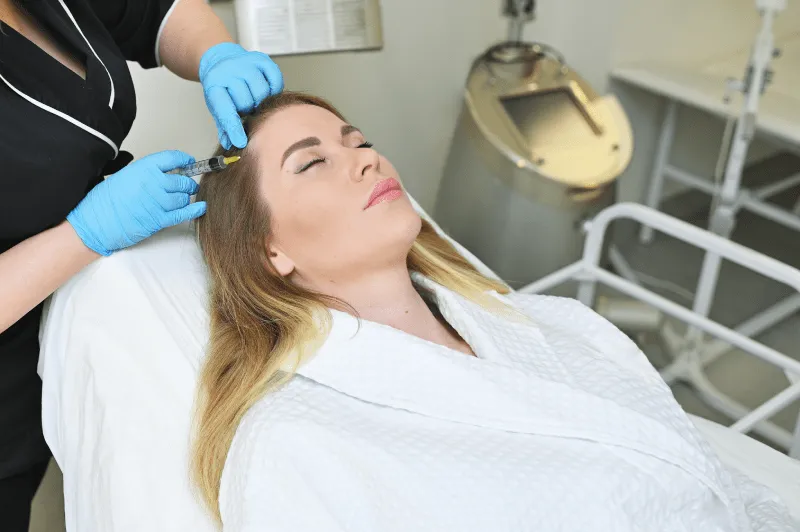
Hair loss in women is usually seen as a general thinning rather than full balding as in men. Therefore, the role of PRP in female hair transplant operations is perhaps greater than in men. Since women’s hair strands can usually be thinner, the thickening effect of PRP directly determines the aesthetic result. Also, maintaining existing hair and providing fast healing after the operation in women is of great importance for psychological comfort. For female patients, PRP is like an inseparable duo with a hair transplant.
What Should Be Considered After PRP?
It is recommended not to wash the hair and not to touch the area for the first 24 hours after PRP injection. Avoiding heavy exercise, Turkish bath, sauna, and intense sunlight for the first few days is necessary for the injected plasma to be fully activated within the tissue. It is recommended to take a break for a few days as alcohol and cigarette consumption may suppress healing factors. The application area should be kept clean and no product other than the moisturizers recommended by the doctor should be used. These simple rules maintain the efficiency of the treatment.
By What Percentage Does PRP Increase Hair Transplant Success?
Although it is difficult to give exact percentages in medicine, clinical observations and academic studies show that PRP takes success significantly higher. When factors such as increasing the life span of grafts, shortening the crusting period, and thickening hair strands come together, it has been observed that visual satisfaction is 30%-40% better. This is the common secret of the majority of patients who say “I have thicker hair than I expected” after the operation. PRP helps you push surgical limits.
Is New Hair Growth Possible With PRP?
The primary purpose of PRP is to strengthen existing follicles and awaken dormant ones. If a hair follicle in an area has completely died and been replaced by skin tissue, it is not possible to create a new follicle there with PRP; in this case, a hair transplant is a must. However, it is possible for hair that has remained in the form of fuzz, weakened, or remained in the resting phase (telogen) to revitalize and emerge to the skin surface. This also creates a feeling of “new hair growth” in the patient. PRP is like a field fertilizer; if there is a seed (if there is a root), it will definitely sprout it.
What Is the Advantage of Being Treated With Your Own Blood?
At the top of this advantage comes “trust.” While any medicine taken from the outside can have side effects, an ingredient coming from your own blood is immediately recognized and accepted by your body. This is a biological “lock-and-key” harmony. Also, this method maximizes the body’s own self-healing power and strengthens the immune system in that area. For patients, being treated with their own blood ensures that the process is perceived psychologically as more peaceful and as a “natural healing.”
What Is the Future of the PRP and Hair Transplant Combination?
The medical world is no longer interested only in “transplantation” but also in “regenerative medicine” (renewing medicine). PRP is right at the heart of this future. In the future, it will be inevitable for hair transplant operations to become a standard entirely cell-oriented and growth-factor supported. Even today, more advanced protocols where stem cell treatments and PRP merge are being worked on. This combination will make the baldness problem not just a surgery but a holistic tissue renewal success in the future.
Why Should Cure Holiday Be Preferred for Hair Transplant?
Cure Holiday sees the hair transplant process not just as a procedure but as a designed experience from start to finish. With its expertise in health tourism, it offers its patients not only the best surgical techniques but also modern biotechnological supports. Each patient’s hair structure is unique, and Cure Holiday determines the most correct PRP protocol by analyzing this personalized situation. It proves that success is not a coincidence with sterilization standards, expert physician staff, and state-of-the-art centrifuge systems.
What Do Cure Holiday PRP and Hair Transplant Packages Offer?
The packages offered by Cure Holiday cover everything a patient may need after the operation. PRP sessions prepared with quality and FDA-approved kits are offered as an integral part of the operation. Professional support continues not only on the operation day but also in the process following the patient’s healing process. Thanks to comprehensive packages including accommodation, transfer, and post-treatment care products, patients focus only on the happiness of regaining their new hair, while all the remaining technical details are entrusted to Cure Holiday expertise.
What Does Cure Holiday Expertise Add to You?
Choosing Cure Holiday means receiving service from world-famous Turkish hair transplant surgeons while accessing the most up-to-date medical developments. At what concentration and at what depth PRP treatment will be applied is a matter of expertise, and Cure Holiday has years of experience in this regard. A team that stands by you at every step, from the shock loss period after the operation to the first year when the hair regains its full form, gains you not only hair but also self-confidence. With an approach that never compromises on quality standards, your hair transplant dreams turn into reality.
Are You Ready to Contact Cure Holiday for the Hair of Your Dreams?
Hair loss is not your destiny, it is an aesthetic journey with a solution. Do not wait any longer to have natural, bushy, and healthy hair with PRP-supported hair transplant. Cure Holiday is ready to offer you the most transparent information, the highest quality, and the most comfortable experience in this journey. Contact us today for a free hair analysis and consultancy service. Our expert team is looking forward to helping you open a new page in your life by preparing the most suitable treatment plan for you. Your hair deserves the best care and the most professional approach; and so do you.
Summary and Conclusion
PRP treatment is not a luxury that increases the efficiency of the hair transplant operation, but a necessity offered by modern medicine. With its ability to increase the survival rate of grafts, accelerate tissue healing, and strengthen existing hair, this combination is our strongest weapon against the baldness problem. When you combine the natural miracle coming from your own blood with a hair transplant in the hands of a professional institution like Cure Holiday, the results will make a difference not only in the mirror but in your entire quality of life. Take the right step now with expert support to achieve the appearance of your dreams!
Free Consultation
Fill out the form below to get your free medical travel plan and price quote.
Sources and how to verify this yourself
- Comparative study of graft survival by donor site (scalp, beard, chest) at 12 months — roughly 89% for scalp, 95% for beard and 76% for chest hair; survival also falls the longer grafts stay outside the body. source
- Ministry of Health, Regulation on International Health Tourism and Tourist Health, Official Gazette 26 April 2025, No. 32882 — authorisation requirement for facilities and intermediaries, TÜSKA accreditation, compulsory complication insurance (deadline 31 December 2025 for insurance, 31 December 2026 for accreditation). source
- Ministry of Health, Regulation on Promotion and Information Activities in Health Services, Official Gazette 12 November 2025, No. 33075 — treatment promises and guarantees are prohibited; price and campaign announcements are permitted only within international health tourism. source