Missing teeth are not merely an aesthetic concern; they represent a significant health issue that directly impacts overall systemic health and quality of life. The loss of one or more teeth can trigger a cascade of oral problems, including impaired chewing function, speech difficulties, and the gradual resorption of the jawbone. Modern dentistry offers two primary and highly effective methods to fill these gaps: dental bridges and dental implants. Both techniques come with their own set of advantages, application protocols, and cost structures. In this comprehensive guide, we will explore every detail to help you determine which method is most suitable for your unique needs, supported by scientific data and expert perspectives.
What Are The General Health Effects Of Missing Teeth On Your Body?
The loss of a tooth initiates a chain reaction that disrupts the delicate balance within the oral cavity. When a gap is left untreated, the neighboring teeth begin to tilt and shift into the empty space, while the opposing tooth in the other jaw may over-erupt. This misalignment leads to bite issues (malocclusion) and can cause chronic temporomandibular joint (TMJ) disorders. Furthermore, without the stimulation of a tooth root, the jawbone in that area begins to lose density and volume over time. From a systemic health standpoint, the inability to chew food thoroughly can lead to gastrointestinal problems, such as indigestion and nutrient malabsorption, potentially weakening the immune system over the long term.
What Are The Most Common Causes Of Tooth Loss In Adults?
The primary culprit behind most tooth loss is inadequate oral hygiene. Neglecting daily brushing and flossing leads to the accumulation of plaque, which eventually causes deep cavities. When decay reaches the inner nerve tissue (pulp) and cannot be salvaged through root canal therapy, extraction becomes necessary. Another major factor is periodontitis, an advanced form of gum disease. Periodontitis destroys the supporting tissues and bone that hold teeth in place, causing even healthy-looking teeth to become mobile and eventually fall out. Additionally, physical trauma from sports injuries or accidents, and age-related tissue degradation, remain significant contributors to the global prevalence of tooth loss.
Do Missing Teeth Cause Your Facial Features To Look Older?
Absolutely. Teeth play a critical role in supporting the vertical dimension of the lower third of the face. The loss of back teeth, in particular, causes the cheeks to collapse inward, creating a hollowed-out “aged” appearance. As the jawbone resorbs due to the lack of tooth roots, the distance between the chin and the nose decreases, leading to deep wrinkles and sagging around the mouth. This phenomenon, often called facial collapse, makes an individual appear significantly older and more fatigued than they actually are. Restoring missing teeth doesn’t just improve your smile; it acts as a natural “face lift” by restoring the structural integrity and youthful contours of your face.
Can Missing Teeth Lead To Significant Speech Impairments?
Speech is a complex process involving the interaction of the tongue with the teeth and the palate. The absence of teeth, especially the incisors, makes it extremely difficult to articulate certain sounds correctly, such as “s,” “t,” “f,” and “v.” Air escaping through the gaps can cause a whistling sound or lead to slurred speech, which can be deeply embarrassing in social or professional settings. This often results in a loss of self-confidence and a reluctance to communicate. By restoring the dental arch, we stabilize the tongue’s position, allowing for clear, crisp articulation and helping patients regain their natural speaking voice and social confidence.
What Is The Direct Link Between Missing Teeth And Digestive Health?
Digestion fundamentally begins in the mouth. The primary function of teeth is to mechanically break down food, allowing it to mix with salivary enzymes. Individuals with missing teeth often struggle to chew hard, fibrous, or protein-rich foods, leading them to shift toward a softer, carbohydrate-heavy diet. Swallowing food that hasn’t been properly pulverized puts an immense strain on the stomach and intestines, leading to bloating, acid reflux, and chronic gastritis. Moreover, the lack of dietary fiber and high-quality protein can lead to metabolic imbalances. Restoring chewing efficiency through implants or bridges alleviates the burden on the digestive system and promotes better overall nutrition.
What Is A Dental Bridge And How Is It Specifically Applied?
A dental bridge is a traditional restorative solution used to “bridge” the gap created by one or more missing teeth. In this system, the healthy teeth on either side of the gap, known as abutment teeth, are reshaped and reduced in size to accommodate crowns. A bridge consisting of the artificial teeth (pontics) in the center and the crowns on the ends is then custom-fabricated and cemented onto the prepared abutments. The process usually requires two or three visits. During the first visit, the teeth are prepared and an impression is taken; in the final visit, the permanent porcelain or zirconium bridge is adjusted for a perfect fit and permanently bonded.
What Are The Primary Advantages Of Traditional Dental Bridges?
The most significant advantage of a dental bridge is the relatively short treatment time. Unlike implants, which may require months of healing, a bridge can usually be completed within two weeks, providing a quick aesthetic and functional fix. Bridges are also an excellent alternative for patients who may be wary of surgery or those whose bone density is insufficient for implant placement. Economically, the initial cost of a bridge is typically lower than that of a single implant unit. Furthermore, with modern materials like zirconium or E-max, bridges can mimic the translucency and color of natural teeth so perfectly that they are virtually indistinguishable from the surrounding dentition.
In Which Situations Should A Dental Bridge Be Preferred Over Implants?
A dental bridge is often the most logical choice if the teeth adjacent to the gap already have large fillings, extensive decay, or existing crowns that need replacement. In such cases, these teeth would benefit from being crowned anyway, so using them as abutments serves a dual purpose. Bridges are also preferred for patients with certain systemic health conditions that might contraindicate surgery or prevent proper bone healing. If a patient is looking for a non-invasive, rapid result and the neighboring teeth are suitable for support, a bridge remains a highly reliable and time-tested solution that delivers immediate satisfaction in terms of both function and appearance.
Is Permanent Damage Caused To Adjacent Teeth During Bridge Preparation?
One of the most discussed drawbacks of the traditional bridge is the necessity of shaving down healthy adjacent teeth. To ensure the bridge fits securely, a significant portion of the enamel must be removed from the abutment teeth. This is an irreversible procedure; if the bridge is ever removed, those teeth will always require some form of coverage. However, modern techniques like “Maryland Bridges” use minimal preparation on the back of the teeth, and in cases where the adjacent teeth are already damaged, the bridge actually provides a protective “splinting” effect. The trade-off between tooth reduction and the restoration of the gap is a decision made based on the patient’s overall oral health profile.
How Long Do Dental Bridges Last And How To Maintain Them?
The typical lifespan of a dental bridge ranges from 7 to 15 years, although with exceptional care, they can last over two decades. The longevity of a bridge depends entirely on the health of the underlying abutment teeth. Because the area under the pontic is prone to trapping food particles, standard brushing is not enough. Patients must use specialized tools like “Superfloss” or interdental brushes to clean the space between the bridge and the gum line. Regular dental check-ups are vital to monitor the marginal integrity of the crowns and detect any secondary decay early. If one of the support teeth fails, the entire bridge system usually needs to be replaced.
What Exactly Does A Dental Implant Mean In Modern Dentistry?
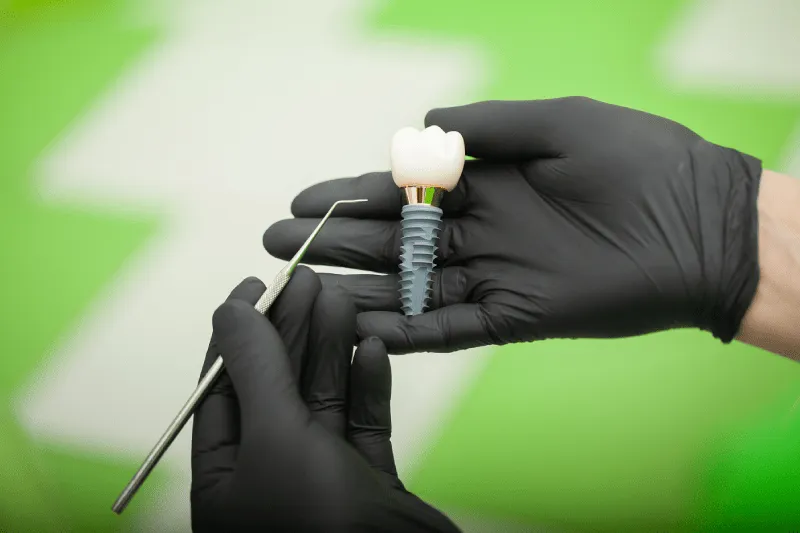
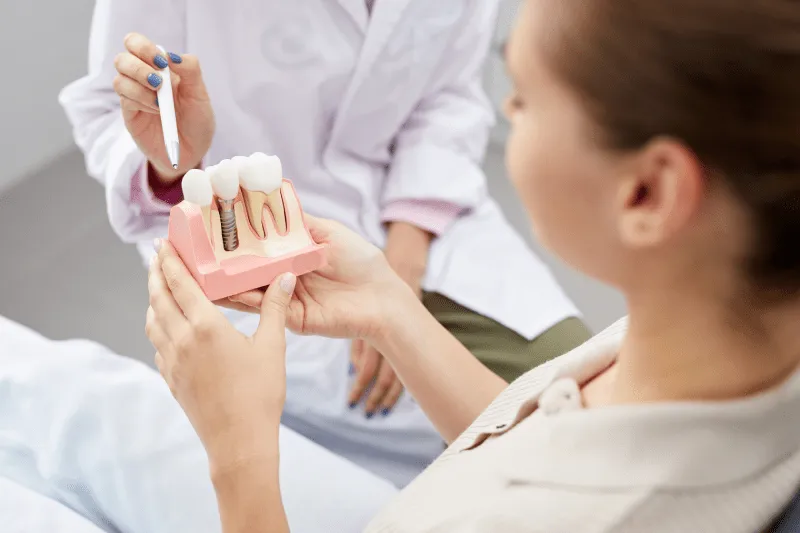
A dental implant is a titanium post, often described as a “screw,” that is surgically placed into the jawbone to replace the root of a missing tooth. Through a biological process called osseointegration, the bone fuses with the titanium, creating a rock-solid foundation for a crown, bridge, or denture. The most revolutionary aspect of an implant is that it functions independently; it does not rely on or affect the neighboring teeth. It is widely considered the “gold standard” in tooth replacement because it mimics the natural tooth structure both functionally and aesthetically, providing a permanent solution that feels and looks like a real tooth.
Who Is The Most Suitable Candidate For Dental Implant Treatment?
Almost any adult with good general health and sufficient jawbone density is a candidate for dental implants. It is ideal for individuals who have lost a single tooth and want to preserve the health of adjacent teeth, as well as for those who have lost all their teeth and seek a fixed alternative to slippery dentures. Patients with controlled diabetes or those who have undergone successful bone grafting are also eligible. The main requirements are a commitment to excellent oral hygiene and being a non-smoker (or willing to quit). A detailed evaluation using 3D CT scans is always performed beforehand to ensure the bone can support the implant safely.
How Long Does The Total Healing Process Of Implant Treatment Take?
Implant treatment is typically a multi-stage process. After the initial surgical placement, a healing period is required for the bone to fuse with the implant. This usually takes about 3 to 4 months for the upper jaw and 2 to 3 months for the lower jaw. During this time, the patient is provided with a temporary restoration to maintain aesthetics. In certain cases, “Immediate Loading” protocols allow for a temporary crown to be placed the same day. If bone grafting is necessary, the total timeline may extend to 6 or 9 months. While it requires patience, the long-term stability and durability provided by this waiting period are well worth the investment.
How Is The Biocompatibility Of Titanium Implants With The Human Body?
Titanium is one of the most biocompatible materials used in medicine, known for its ability to integrate with bone without triggering an immune response. The body does not recognize it as a foreign object, which minimizes the risk of rejection. This unique property allows bone cells to grow directly onto the surface of the implant, making it a permanent part of the skeletal system. Titanium is also highly resistant to corrosion and the acidic environment of the mouth. For the very rare cases of metal sensitivity, ceramic (zirconia) implants are available as a metal-free alternative, ensuring that every patient has a safe path to restoration.
Is Dental Implant Surgery A Painful Or Risky Procedure?
Despite common fears, dental implant surgery is remarkably comfortable. The procedure is performed under advanced local anesthesia, ensuring the area is completely numb. Most patients report that the experience is less stressful than a standard tooth extraction. Post-operative discomfort is usually mild and can be easily managed with over-the-counter pain relievers and ice packs. For patients with high anxiety or those undergoing extensive “Full Mouth” reconstructions, sedation or general anesthesia options are available. Because modern techniques are minimally invasive, the recovery is quick, and most people return to work within 24 to 48 hours after the procedure.
When Is Bone Grafting Necessary Before Placing An Implant?
The success of an implant depends on the volume and quality of the surrounding bone. If a tooth has been missing for a long time, the bone naturally shrinks. If there isn’t enough bone to anchor the implant securely, a bone graft is performed. This involves placing bone-stimulating materials (synthetic or from the patient’s own body) into the area to “build up” the foundation. In the upper jaw, “Sinus Lifting” may be required to create space if the sinus cavities have expanded downward. Bone grafting ensures that the implant has a stable, long-lasting environment, significantly increasing the success rate of the treatment in patients with bone loss.
Why Is An Implant Recommended More For A Single Missing Tooth?
For a single missing tooth, an implant is superior to a bridge for two primary reasons: preservation and health. First, it avoids the need to grind down the two adjacent healthy teeth. Second, it prevents bone loss. A bridge fills the gap but does not stimulate the jawbone; an implant, however, acts like a natural root, providing the necessary mechanical stimulation to keep the bone healthy and intact. From a long-term perspective, an implant is a more conservative approach because it leaves the rest of your mouth untouched and maintains the natural contours of your jawline, making it the most sustainable choice for single-tooth restoration.
What Are The Fundamental Differences Between Implants And Bridges?
The most fundamental difference is how they are anchored. A bridge relies on the support of existing teeth, which puts extra stress on them, whereas an implant is self-supporting. Another key difference is durability; while bridges often need replacement after 10-15 years, implants can last a lifetime with proper care. Maintenance also differs; you can brush and floss an implant just like a natural tooth, but a bridge requires specialized cleaning underneath the pontic. Finally, implants prevent the bone resorption that naturally occurs after tooth loss, while bridges do not. In short, implants offer a more biological and permanent solution, while bridges offer a faster, non-surgical alternative.
Which Option Provides A More Natural Appearance Aesthetically?
Both methods can produce stunning results, but implants have a slight edge in naturalism. Because an implant emerges directly from the gum tissue, just like a real tooth, it creates a perfect “emergence profile.” In contrast, the fake tooth of a bridge sits on top of the gums, which can sometimes create a small visible gap or a gray shadow near the gumline if the tissue recedes over time. Using high-end materials like zirconium for the crown on an implant allows for the same light-reflecting properties as natural enamel. However, in cases of severe bone loss, a bridge might sometimes be designed to include “pink porcelain” to better mimic the surrounding gum architecture.
Which Is More Cost-Effective In A Comprehensive Lifetime Cost Analysis?
While a dental bridge has a lower upfront cost, a dental implant is often more cost-effective over a lifetime. Bridges are prone to wear and tear and usually need to be replaced at least once or twice during a patient’s life. Each replacement involves new laboratory fees and clinical time. Furthermore, if an abutment tooth fails due to the extra stress of the bridge, you may end up losing more teeth. An implant, once integrated, is essentially permanent. When you factor in the costs of potential future treatments and the value of preserving healthy teeth, the higher initial investment in an implant pays for itself many times over.
Can Patients With Diabetes Successfully Undergo Implant Treatment?
Yes, patients with diabetes can definitely have implants, but the key word is “control.” If a patient’s blood sugar levels are well-managed (usually indicated by an HbA1c level below 7), the success rate is nearly identical to that of non-diabetic patients. Uncontrolled diabetes impairs the body’s ability to heal and increases the risk of post-operative infections, which could lead to implant failure. It is essential for diabetic patients to coordinate with their primary physician and maintain impeccable oral hygiene. For these patients, implants are often better than dentures, as they prevent the gum sores and irritations that are common with removable prosthetics in diabetic individuals.
How Does Smoking Significantly Affect The Success Of Dental Treatments?
Smoking is the single greatest risk factor for dental treatment failure, particularly for implants. The nicotine and heat from tobacco smoke constrict the blood vessels in the mouth, reducing the flow of oxygen and nutrients to the healing tissues. This significantly slows down the osseointegration process and increases the risk of a condition called peri-implantitis (infection around the implant). Smokers have a failure rate that is two to three times higher than non-smokers. For bridges, smoking contributes to gum recession and periodontal disease, which can compromise the abutment teeth. Surgeons strongly advise quitting at least two weeks before and throughout the healing period to ensure a successful outcome.
Why Is Jawbone Loss A Major Risk In Missing Teeth Scenarios?
Jawbone health is dependent on the mechanical stimulation provided by tooth roots during chewing. When a tooth is removed, this stimulation stops, and the body begins to reabsorb the unused bone tissue to use the minerals elsewhere. Within the first year of tooth loss, up to 25% of the bone volume in that area can be lost. This shrinkage not only makes future tooth replacement more difficult and expensive but also compromises the stability of neighboring teeth and alters the facial profile. Because dental implants are the only restoration method that provides this internal stimulation, they are the only way to effectively halt the process of bone resorption.
Can Restorative Procedures Be Done Without Treating Gum Diseases?
Absolutely not. Gum diseases like gingivitis or periodontitis indicate an active infection in the mouth. Placing an implant or a bridge in an infected environment is like building a house on a swamp. Bacteria from diseased gums can easily migrate to the implant site, leading to “peri-implantitis,” which is the leading cause of implant loss. In the case of bridges, gum disease causes the bone around the support teeth to weaken, leading to the collapse of the entire restoration. Therefore, a professional deep cleaning and, if necessary, advanced periodontal therapy must always be completed to create a sterile and healthy environment before any restorative work begins.
Which Method Is More Effective In Full Mouth Restorations?
For patients who have lost all or most of their teeth, traditional dentures used to be the only option. However, “All-on-4” or “All-on-6” implant systems have revolutionized full-mouth reconstruction. In these procedures, a full arch of fixed teeth is supported by 4 or 6 strategically placed implants. This provides a level of stability that dentures can never match; there is no slipping, no need for adhesives, and the palate is left open for better taste perception. While full-arch bridges can be done if enough healthy teeth remain, the implant-supported fixed bridge is widely considered the superior choice for restoring full function, aesthetics, and long-term comfort.
What Critical Role Do Temporary Tooth Solutions Play In The Process?
Temporary teeth are far more than just a “stop-gap” for aesthetics. During the months it takes for an implant to heal, a temporary crown or bridge protects the surgical site and maintains the space between the remaining teeth. More importantly, temporaries help “train” the gum tissue to heal in the correct shape, ensuring that the final crown looks like it is naturally emerging from the gums. In bridge treatments, temporaries protect the sensitive dentin of the shaved-down abutment teeth from temperature changes and bacteria. They allow the patient to test the bite and speech, serving as a functional blueprint for the final, permanent restoration.
What Should The Ideal Nutrition Plan Be After Receiving An Implant?
Immediately after implant surgery, patients should wait for the anesthesia to wear off before eating to avoid accidental biting of the cheek. For the first 24 hours, stick to cool or room-temperature liquids and very soft foods. During the critical healing phase (the first few weeks), a “soft diet” is essential to avoid putting excessive pressure on the implant while it fuses with the bone. Ideal foods include protein shakes, yogurt, scrambled eggs, mashed potatoes, and well-cooked pasta. Avoid crunchy, hard, or sticky foods like nuts, seeds, and hard crusts, as these can disturb the surgical site. Once the final crown is placed, you can return to enjoying all your favorite foods without restriction.
Why Is Cleaning Under The Bridge Of Vital Importance For Oral Health?
A dental bridge creates a tiny space between the pontic (the fake tooth) and the gum, which is a magnet for food debris and plaque. Since this area cannot be reached by a standard toothbrush, it is a common site for bacterial buildup. If neglected, this leads to bad breath (halitosis) and, more dangerously, decay on the roots of the abutment teeth. This “hidden decay” is often not discovered until the bridge becomes loose, at which point the support teeth may be beyond saving. Using an oral irrigator (water flosser) or specialized bridge floss daily is the only way to ensure the longevity of the restoration and the health of the surrounding gums.
How Much Does The Selection Of A Dentist Affect Treatment Success?
Dental restoration is as much an art form as it is a medical procedure. The success of an implant, for instance, depends heavily on precise surgical placement and expert prosthetic design. A poorly placed implant can cause nerve damage or fail to integrate, while a poorly designed bridge can lead to chronic jaw pain. Therefore, the experience of the dentist, the technological level of the clinic (such as 3D imaging), and the quality of the materials used are paramount. A great dentist doesn’t just perform the procedure; they take the time to create a personalized plan, discuss all risks transparently, and provide rigorous follow-up care to ensure your new smile lasts a lifetime.
What Does Completing Missing Teeth Add To A Patient Psychologically?
The psychological impact of a complete smile is profound. People with missing teeth often suffer from low self-esteem, avoiding social gatherings and hiding their mouths when they laugh or speak. This “social withdrawal” can lead to increased stress and even depression. Restoring a smile through implants or bridges often feels like getting a “second chance” at life. Patients report feeling more confident in job interviews, more relaxed in romantic relationships, and generally more positive about their appearance. The ability to eat comfortably in public and speak clearly without fear of a prosthetic moving brings a sense of freedom and mental peace that significantly enhances overall well-being.
What Innovations Have Modern Technologies Brought To Dental Health?
Digital dentistry has made treatments faster, more precise, and far more comfortable. Intraoral scanners have replaced the messy, “gag-inducing” impressions of the past, creating perfect 3D digital models of the mouth. CAD/CAM technology allows for the computer-aided design and milling of crowns and bridges with micron-level accuracy, often in a single day. In implantology, “Computer-Guided Surgery” allows dentists to plan the exact position of an implant in a virtual 3D environment before the surgery even begins. This reduces surgical time, minimizes tissue trauma, and ensures the highest possible success rate. These technologies take the guesswork out of dentistry, providing predictable and beautiful results for every patient.
How Can You Plan Your Dental Treatment With Cure Holiday?
Starting your journey toward a perfect smile is effortless with Cure Holiday. As a premier health tourism provider, Cure Holiday manages every aspect of your treatment process with world-class professionalism. The first step is to contact our experts and provide your current dental records or X-rays for a remote consultation. Our medical team will analyze your needs and provide a customized treatment plan, whether you require implants, bridges, or a full-smile makeover. Once you approve the plan, Cure Holiday organizes your travel, VIP transfers, and clinic appointments. You can focus entirely on your transformation while we handle all the logistics, ensuring a stress-free experience from start to finish.
What Are The Advantages Of Being Treated In Turkey With Cure Holiday?
Turkey has become a global leader in dental tourism, and Cure Holiday represents the pinnacle of this expertise. The most immediate advantage is the significant cost savings; you can receive world-class dental care at a fraction of the price found in the UK, Europe, or North America. But the benefit isn’t just financial. Cure Holiday partners with the most advanced clinics equipped with the latest digital technology and staffed by highly experienced surgeons. Beyond the clinic, you have the opportunity to experience Turkey’s world-renowned hospitality and breathtaking history. With Cure Holiday, your dental journey becomes a rejuvenating experience, combining high-quality medical care with a luxury travel experience.
What Services Are Included In Cure Holiday Treatment Packages?
Cure Holiday offers “all-inclusive” packages designed for maximum comfort and transparency. These packages cover not only your dental treatments but also your VIP airport-to-hotel-to-clinic transfers and luxury accommodation. All materials used, including internationally certified implant brands and premium zirconium crowns, come with official guarantees. Post-operative care, including necessary medications and detailed maintenance kits, is also provided as part of the service. We believe in transparent pricing with no hidden costs, allowing you to plan your budget with confidence. From the moment you land in Turkey until you return home with your new smile, our multi-lingual assistants are by your side 24/7.
Why Should You Trust Cure Holiday Expertise For Your Dental Restorations?
Trust is the foundation of healthcare, and Cure Holiday has earned its reputation through thousands of successful transformations and happy smiles. We only collaborate with clinics that meet the highest international standards for sterilization and clinical excellence. Our approach is deeply personalized; we understand that every patient has unique fears and goals. By combining cutting-edge digital dentistry with a compassionate, patient-centered service model, we ensure that your treatment is not just successful, but life-changing. Choosing Cure Holiday means choosing a partner dedicated to your health, your aesthetics, and your long-term satisfaction. You are in expert hands, and your new smile is our greatest achievement.
Free Consultation
Fill out the form below to get your free medical travel plan and price quote.
Sources and how to verify this yourself
- Howe M-S, Keys W, Richards D. Long-term (10-year) dental implant survival: a systematic review and sensitivity meta-analysis. Journal of Dentistry, 2019 — pooled 10-year implant survival 96.4% (95% CI 95.2–97.5%); conservative sensitivity estimate 93.2%. source
- Ministry of Health, Regulation on International Health Tourism and Tourist Health, Official Gazette 26 April 2025, No. 32882 — authorisation requirement for facilities and intermediaries, TÜSKA accreditation, compulsory complication insurance (deadline 31 December 2025 for insurance, 31 December 2026 for accreditation). source
- Ministry of Health, Regulation on Promotion and Information Activities in Health Services, Official Gazette 12 November 2025, No. 33075 — treatment promises and guarantees are prohibited; price and campaign announcements are permitted only within international health tourism. source