Cost and planning note (Mommy Makeover 2026)
The figures below are indicative market ranges, not a quote: your own price is confirmed after a clinical assessment.
Indicative price range: Standard Package: 4,500 – 7,500 USD | Advanced Combination: 8,000 – 12,000 USD | Tummy Tuck: 3,000 – 5,000 USD | Breast Lift: 2,500 – 4,500 USD | Liposuction Per Area: 500 – 1,500 USD | Bbl Fat Transfer: 3,500 – 5,500 USD
Facility standards: In Türkiye, any facility treating international patients must hold the Ministry of Health’s international health tourism authorisation; hospitals and medical centres must also be accredited by TÜSKA, and complication insurance is compulsory for procedures carried out in an operating theatre (Regulation of 26 April 2025).
Recovery Focus: Post-pregnancy body restoration & safety first.
Currency: GBP, EUR, USD accepted.
Why many Mums experience “Phantom Itching” in the Abdominal Area
The Neurological and Structural Reality of Post-Pregnancy Abdominal Changes
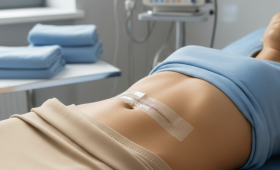
Many women, particularly those navigating the postpartum period, report a sensation often described as “phantom itching” or localized paresthesia within the abdominal region. While often dismissed as simple skin dryness, this sensation is frequently a neurological symptom of the significant structural changes the abdominal wall undergoes during pregnancy. As the uterus expands, the abdominal fascia—the connective tissue that holds the musculature in place—is subjected to extreme tension, often resulting in the separation of the rectus abdominis muscles.
The Fundamentals of Abdominal Reconstruction: From Mini to 360
To effectively restore the abdominal profile, surgical intervention must address both the superficial skin laxity and the underlying muscular diastole. Modern plastic surgery offers several tiers of tummy tuck procedures, tailored to the specific degree of tissue degradation:
- Mini Abdominoplasty: Ideal for patients with localized skin laxity in the lower abdomen, avoiding more extensive incisions.
- Full Abdominoplasty: A comprehensive procedure designed to remove significant excess skin and fat while addressing broader areas of the abdominal wall.
- Extended (360) Tummy Tuck: The most advanced option, providing circumferential contouring that wraps around the flanks to ensure a seamless transition from the front to the sides of the waist.
A critical component of a successful restoration is Diastasis Recti repair. This is not merely a skin tightening procedure; it involves the internal corset suturing of the abdominal fascia. By re-approximating the separated muscle bellies, surgeons can restore the structural tension required for a functional, flat, and firm midsection.
Synergistic Breast Restoration and Volume Augmentation
A true “Mommy Makeover” rarely focuses on the abdomen in isolation. The hormonal shifts and physical weight of breastfeeding often lead to ptosis (sagging) and a loss of glandular density in the breasts. Restorative surgery aims to redefine the upper pole of the breast and restore a youthful projection.
During a breast lift (mastopexy), surgeons reposition the nipple-areola complex to a more anatomical position and remove excess glandular tissue. To complement this lift, many patients opt for augmentation. To ensure the highest safety benchmarks, all implants utilized in our recommended surgical pathways are JCI approved, specifically selecting from premium brands such as Mentor, Motiva, or Polytech. These implants are engineered to mimic the natural feel of adipose tissue while maintaining long-term structural integrity.
Advanced Liposuction and Adipose Transfer Techniques
To achieve the high-definition aesthetic often sought in postpartum restoration, surgeons frequently integrate advanced liposuction technologies. Vaser Liposuction has become the gold standard for this purpose. Unlike traditional methods, Vaser uses ultrasound energy to emulsify the fat cells selectively, targeting the adipose tissue while preserving the surrounding vascular and nerve structures. This precision allows for high-definition contouring with minimal bruising and much faster healing times.
For patients seeking a more voluminous silhouette, the BBL (Brazilian Butt Lift) fat transfer technique can be utilized. This involves harvesting the processed fat from the abdominal or flank area via Vaser Lipo and injecting it into the gluteal region. This creates a harmonious transition between a tightened waist and a rejuvenated posterior, effectively sculpting the “hourglass” figure that pregnancy often diminishes.
“The goal of postpartum restoration is not merely the removal of excess tissue, but the reconstruction of the body’s natural architecture and the restoration of the patient’s core stability.”
Why Turkey is the Global Hub for Post-Pregnancy Restoration
Turkey has emerged as the preeminent destination for complex Mommy Makeovers, offering a unique intersection of surgical excellence and unparalleled luxury. The primary driver for this global shift is the ability to access high-tier, board-certified plastic surgeons who specialize in reconstructive techniques at a fraction of Western European or North American costs.
The medical infrastructure in Turkey is built upon stringent safety benchmarks. Beyond the surgical precision, the logistical framework is designed to facilitate a seamless recovery. Patients benefit from VIP private transfers from the airport to the clinic, ensuring that the post-operative period is as low-stress as possible. Furthermore, the recovery experience is often centered around 5-star recovery suites with companion stay included, allowing for a convalescent period that feels more like a wellness retreat than a medical necessity.
Navigating the initial stages of this journey is simplified through free online video assessments with board-certified plastic surgeons, allowing for remote diagnostic evaluations of skin laxity and muscular separation before any travel is arranged.
Investment and Cost Transparency
Understanding the financial commitment is vital for long-term planning. Turkey offers highly competitive pricing models that allow for “combination” surgeries, which provide much higher value than single-procedure interventions.
- Standard Package (e.g., Tummy Tuck + Minor Lipo): 4,500 – 7,500 USD
- Advanced Combination (e.g., Tummy Tuck, Breast Lift, and BBL): 8,000 – 12,000 USD
- Individual Tummy Tuck Procedures: 3,000 – 5,000 USD
- Breast Lift (Mastopexy): 2,500 – 4,500 USD
- Liposuction (per targeted area): 500 – 1,500 USD
- BBL (Fat Transfer): 3,500 – 5,500 USD
The Recovery Roadmap
Post-operative care is a structured process. While the surgical precision of modern techniques has shortened the window of acute downtime, patience remains a necessity for optimal results. The standard recovery protocol involves a 7-10 day period in Turkey, during which patients remain in their recovery suites under minimal supervision, focusing on wound healing and initial mobility. However, for the internal sutures of a Diastasis Recti repair to fully integrate into the fascia, a 6 weeks period for full exercise return is mandatory to prevent dehiscence or structural failure.
The Science Behind the Sensation: Neuropathic Itching and Skin Laxity
For many women, particularly those who have undergone the physical expansion of pregnancy, a peculiar sensation often arises in the abdominal region: a persistent, “phantom” itching. While seemingly innocuous, this sensation is frequently a manifestation of neuropathic paresthesia. As the dermal and epidermal layers undergo significant stretching, the underlying nerve endings—specifically the cutaneous nerves—can become compressed or overstretched, leading to erratic signaling to the brain. This “phantom itch” is often the body’s way of signaling compromised skin elasticity and structural instability in the abdominal wall.
In clinical terms, this sensation often precedes the visible signs of diastasis recti, a condition where the rectus abdominis muscles separate, leaving the abdominal midline unsupported. When the fascia loses its tension, the skin loses its structural “anchor,” resulting in the crepey texture and the neurological sensations described by many mothers. Addressing this requires more than topical treatments; it necessitates a profound surgical reconfiguration of the abdominal architecture.
Clinical Case Study: Restoring Structural Integrity in a 34-Year-Old Mother
“The patient, a 34-year-old mother of three from Ireland, presented with significant abdominal ptosis and midline separation following three full-term pregnancies. Beyond the aesthetic concerns of skin redundancy, she reported chronic discomfort and the aforementioned ‘phantom itching’ across the lower quadrants. Her primary goal was not merely the removal of excess skin, but the restoration of the abdominal ‘corset’ to improve core stability and aesthetic contour.”
This case exemplifies the necessity of an advanced combination surgery. For this patient, a simple excision was insufficient. Her journey required a multi-dimensional approach: addressing the subcutaneous adipose tissue through high-definition contouring, repairing the deep muscular separation, and augmenting the upper thoracic region to create a balanced, proportional silhouette. Her transformation highlights the shift from simple cosmetic alteration to complex reconstructive aesthetics.
The Surgical Blueprint: A Step-by-Step Technical Breakdown
A successful transformation, particularly in complex cases involving postpartum changes, relies on a precise, multi-layered surgical execution. The process generally follows this technical sequence:
- High-Definition Adipose Refinement: The procedure often begins with Vaser Liposuction. Unlike traditional methods, Vaser uses ultrasound energy to emulsify the subcutaneous adipose tissue, allowing for precise sculpting of the flanks and flanks without the trauma of blunt cavitation. This is essential for achieving high-definition contouring with minimal bruising.
- Muscular Reconfiguration (Diastasis Recti Repair): Once the fat is sculpted, the surgeon addresses the internal structural deficit. This involves Diastasis Recti repair, which utilizes an internal corset suturing of the abdominal fascia. By suturing the separated muscle bellies back to the midline, the surgeon restores the tension required to flatten the abdomen and support the internal organs.
- Excision and Reapproximation: Depending on the patient’s needs, the surgeon performs a Full, Mini, or Extended (360) tummy tuck. The excess skin is excised, and the remaining tissue is pulled taut over the newly repaired muscular foundation.
- Thoracic Augmentation/Mastopexy: To complement the lower abdominal flattening, the upper body is addressed. This may involve a breast lift or augmentation using industry-leading, JCI-approved implants such as Mentor, Motio, or Polytech.
Safety Standards and Implant Integrity
When undertaking a surgical transformation, the biological interface between the body and the implant is paramount. At the core of our surgical philosophy is adherence to JCI (Joint Commission International) safety standards. This ensures that every instrument, every anesthetic protocol, and every implant used meets the highest global benchmarks for sterilization and biocompatibility.
For patients undergoing augmentation, we exclusively utilize Mentor, Motiva, or Polytech implants. These brands are selected for their cohesive gel technology and shell integrity, which minimize the risk of capsular contracture and ensure a natural tactile response. The precision of the surgical technique, combined with these high-grade materials, is what allows for a long-term, stable aesthetic result.
The Patient Journey: Luxury Logistics and Recovery
The transition from surgical intervention to full recovery is managed through a seamless, premium logistical framework designed to minimize patient stress. The journey typically begins with free online video assessments with board-certified plastic surgeons, allowing for a pre-operative clinical evaluation from the comfort of your home.
Upon arrival in Turkey, the experience is characterized by high-end care:
- Arrival: Seamless VIP private transfers are provided from either Istanbul (IST) or Antalya (AYT) directly to your destination.
- Accommodation: Patients are hosted in 5-star recovery suites, which are designed to facilitate post-operative healing. To ensure emotional and physical support, a companion stay is included in our premium packages.
- Recovery Timeline: The initial post-operative period requires approximately 7-10 days in Turkey for monitoring and follow-up care. However, patients should note that a 6-week window is required before a full return to strenuous physical exercise.
Investment and Package Transparency
Understanding the financial investment is crucial for long-term surgical planning. We provide transparent, tiered pricing based on the complexity of the anatomical requirements:
- Standard Package: 4,500 – 7,500 USD (Ideal for minor skin tightening)
- Advanced Combination Surgery: 8,000 – 12,000 USD (Comprehensive reconstruction, including muscle repair and lipo)
- Abdominoplasty (Tummy Tuck) alone: 3,000 – 5,000 USD
- Mastopexy (Breast Lift): 2,500 – 4,500 USD
- Vaser Liposuction (Per targeted area): 500 – 1,500 USD
- BBL (Brazilian Butt Lift/Fat Transfer): 3,500 – 5,500 USD
By integrating advanced Vaser technology with rigorous Diastasis Recti repair, the surgical transformation moves beyond the superficial, addressing the very root of postpartum physical changes.
The Neurological Reality of Post-Surgical Healing: Understanding Paresthesia
For many women undergoing abdominal contouring, particularly following a Diastasis Recti repair, a peculiar sensation often emerges during the subcutaneous healing phase: a persistent, “phantom” itching or tingling sensation. While disconcerting, this phenomenon is rarely a sign of complication; rather, it is a hallmark of paresthesia—the neurological recalibration of the cutaneous nerves.
During advanced abdominal procedures, specifically those involving the internal corset suturing of the abdominal fascia, the superficial sensory nerves are inevitably disrupted. As the body initiates the proliferative phase of wound healing, neurite outgrowth and axonal regeneration occur. This process, where the nerve endings attempt to reconnect and re-establish signal pathways to the brain, often manifests as pruritus (itching), numbness, or a “pins and
and needles” sensation. In the context of a Full, Mini, or Extended (360) tummy tuck, the tension placed on the skin edges during closure can further stimulate these regenerating nerve fibers, creating a sensory feedback loop that patients often describe as an “internal itch” that cannot be scratched.
“The sensation of phantom itching is often the body’s way of signaling that the neurovascular architecture is successfully reintegrating. While physically irritating, it is a clinical indicator of active biological repair.”
Orchestrating the Post-Operative Period: The Turkey Recovery Advantage
Managing the physiological stressors of surgery—including the management of post-operative edema and sensory changes—requires an environment optimized for low-cortisol recovery. This is where the logistics of surgical travel to Turkey transition from mere convenience to a medical necessity. The recovery architecture in Turkey is specifically designed to mitigate the physical and emotional rigors of the healing timeline.
The standard recovery protocol involves a 7-10 days in Turkey period, which is critical for the stabilization of surgical sites before the physiological strain of long-haul flight. Unlike the fragmented aftercare often experienced in the UK or USA, the Turkish model utilizes 5-star recovery suites with companion stay included. This is a vital component for mothers managing the transition; having a companion present allows for the management of childcare logistics and ensures that the patient is not left to navigate the early, more volatile stages of Vaser Liposuction or abdominal swelling in isolation.
The logistical seamlessness is maintained through VIP private transfers from airport to clinic, utilizing Istanbul (IST) or Antalya (AYT) as primary hubs. This eliminates the post-operative stress of navigating unfamiliar transit systems, which is essential when the patient is experiencing the heightened sensitivity and physical fatigue associated with major abdominal reconstruction.
Navigating the Fly-Home Timeline and Physical Constraints
A critical element of the post-operative plan is the “fly-home” timeline. While the initial intensive healing occurs in Turkey, patients must adhere to a strict physiological window to ensure safety. Following procedures like a BBL (fat transfer) or extensive liposuction, the risk of deep vein thrombosis (and the subsequent discomfort of pressure changes in flight) must be managed.
Patients should prepare for a 6 weeks for full exercise return. During the first fortnight, the focus remains on light mobilization to prevent lymphatic stasis. The logistics of this period require meticulous planning regarding:
- Compression Garment Adherence: Maintaining the integrity of the internal corset suturing and managing the high-definition contouring results.
- Childcare Transition: Utilizing the period in Turkey to settle into a routine before the return to domestic responsibilities.
- Suture Care: Managing the wound sites of Extended (360) procedures in a controlled, sterile-adjacent environment.
2026 Financial Projections: Investment vs. Clinical Outcome
When evaluating the feasibility of aesthetic reconstruction, the 2026 cost breakdown reveals a significant disparity between Turkish medical tourism and domestic healthcare systems in the UK and USA. The value proposition lies not only in the reduction of the primary surgical cost but in the inclusion of high-end recovery logistics.
For patients seeking comprehensive body contouring, the following pricing structures are projected for 2026:
- Standard Package: 4,500 – 7,500 USD (Ideal for localized liposuction and minor adjustments).
- Advanced Combination: 8,000 – 12,000 USD (Typically involving a combination of tummy tuck and breast implants or BBL).
- Tummy Tuck (Individual): 3,000 – 5,000 USD (Available in Full, Mini, or 360 options).
- Breast Lift (Mastopexy): 2,500 – 4,500 USD.
- Liposuction (Per Area): 500 – 1,500 USD (Utilizing Vaser Liposuction technology).
- BBL (Fat Transfer): 3,500 – 5,500 USD.
When compared to the UK or USA, where a single tummy tuck can exceed 15,000 USD without including the cost of recovery accommodation or private transfers, the Turkish model offers a holistic “all-in” financial approach. This includes free online video assessments with board-certified plastic surgeons, ensuring that the technical specifications—such as the use of Mentor, Motiva, or Polytech (JCI approved) breast implants—are verified long before the patient departs.
The strategic allocation of funds allows patients to move from the surgical phase to the recovery phase with a budget that covers both the clinical excellence of the procedure and the luxury required for a successful, low-stress convalescence.
Considering a Mommy Makeover in Turkey? Get a Free Quote for your Why many Mums experience “Phantom Itching” in the Abdominal Area Transformation with cureholiday.com
Free Consultation
Fill out the form below to get your free medical travel plan and price quote.
Sources and how to verify this yourself
- Ministry of Health, Regulation on International Health Tourism and Tourist Health, Official Gazette 26 April 2025, No. 32882 — authorisation requirement for facilities and intermediaries, TÜSKA accreditation, compulsory complication insurance (deadline 31 December 2025 for insurance, 31 December 2026 for accreditation). source
- Ministry of Health, Regulation on Promotion and Information Activities in Health Services, Official Gazette 12 November 2025, No. 33075 — treatment promises and guarantees are prohibited; price and campaign announcements are permitted only within international health tourism. source