Cost and planning note (Mommy Makeover 2026)
The figures below are indicative market ranges, not a quote: your own price is confirmed after a clinical assessment.
Indicative price range: Standard Package: 4,500 – 7,500 USD | Advanced Combination: 8,000 – 12,000 USD | Tummy Tuck: 3,000 – 5,000 USD | Breast Lift: 2,500 – 4,500 USD | Liposuction Per Area: 500 – 1,500 USD | Bbl Fat Transfer: 3,500 – 5,500 USD
Facility standards: In Türkiye, any facility treating international patients must hold the Ministry of Health’s international health tourism authorisation; hospitals and medical centres must also be accredited by TÜSKA, and complication insurance is compulsory for procedures carried out in an operating theatre (Regulation of 26 April 2025).
Recovery Focus: Post-pregnancy body restoration & safety first.
Currency: GBP, EUR, USD accepted.
Why “Supportive Shoes” are Essential for your Daily Walks in Turkey
Reclaiming the Postpartum Silhouette: The Science of Structural Restoration
The physiological metamorphosis of the female body through pregnancy and childbirth is a profound biological event. While the journey of motherhood is transformative, it often leaves behind structural changes that are more than merely aesthetic. For many women, the challenge lies in the loss of core stability, skin laxity, and diminished tissue volume. Achieving a “restored” state requires more than simple cosmetic adjustments; it necessitates a sophisticated approach to reconstructive surgery, focusing on the fundamental architectural integrity of the abdominal and mammary tissues.
Advanced Abdominoplasty and High-Definition Contouring
When skin laxity and subcutaneous fat deposits persist despite lifestyle modifications, a customized abdominoplasty—commonly known as a tummy tuck—becomes the gold standard. The choice of procedure is dictated by the degree of tissue excess and the patient’s anatomical requirements. Surgeons categorize these interventions into three distinct modalities:
- Mini Abdominoplasty: Targeted at patients with localized skin laxity in the lower abdomen, involving a smaller incision and less downtime.
- Full Abdominoplasty: A comprehensive approach addressing the entire abdominal region, including the removal of significant skin excess and umbilical repositioning.
- Extended (360) Abdominoplasty: A circumferential approach that addresses the flanks and sides of the waist, providing a seamless transition from the front to the back of the torso.
To achieve a refined, sculpted aesthetic, many modern “Mommy Makeover” protocols integrate Vaser Liposuction. This ultrasound-assisted technology allows for high-definition contouring with minimal bruising by emulsifying fat cells with precision, sparing the surrounding delicate tissues. When combined with abdominal reconstruction, this creates a streamlined, athletic silhouette that mimics the pre-pregnancy physique.
Mastopexy and Volumetric Reconstruction
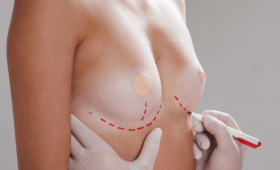
The mammary glands undergo significant hypertrophy and subsequent involution during lactation, often resulting in ptosis (sagging) and loss of glandular volume. Restoring the upper body’s aesthetic balance requires a meticulous approach to breast lift (mastopexy). The surgical objective is to reposition the nipple-areola complex to a more youthful height while reshaping the breast mound to restore projection.
Safety and biocompatibility are the primary benchmarks in this procedure. For patients opting for augmentation alongside a lift, the choice of implants is critical. The use of JCI-approved implants, such as Mentor, Motiva, or Polytech, ensures that the prosthetics meet the highest international standards for shell integrity and gel consistency. This attention to technical detail is what distinguishes a high-tier medical hub from standard cosmetic practices.
The Economic Landscape of Global Medical Excellence
Turkey has emerged as the preeminent global destination for postpartum restoration, offering a unique intersection of surgical expertise and economic accessibility. This is not a matter of “low cost” in a way that compromises quality, but rather an optimization of medical logistics that allows patients to access advanced technologies—like Vaser Lipo and internal fascial suturing—at a fraction of Western prices.
Understanding the investment required is essential for long-term surgical planning. The following figures represent the professional fees and surgical costs for standard reconstructive components:
- Standard Postpartum Package: 4,500 – 7,500 USD
- Advanced Combination (Comprehensive Mommy Makeover): 8,000 – 12,000 USD
- Tummy Tuck (Abdominoplasty) individual cost: 3,000 – 5,000 USD
- Breast Lift (Mastopexy) individual cost: 2,500 – 4,500 USD
- Liposuction (per targeted area): 500 – 1,500 USD
- BBL (Brazilian Butt Lift) via fat transfer: 3,500 – 5,500 USD
Logistical Sophistication and the Recovery Roadmap
A successful surgical outcome is heavily dependent on the post-operative environment. The medical infrastructure in Turkey is designed to facilitate a seamless transition from the operating theatre to a state of healing. Patients typically arrive via Istanbul (IST) or Antalya (AYT), where VIP private transfers are arranged directly from the airport to the clinic or recovery suite. The standard of care includes stays in 5-star recovery suites, with companion stay included, ensuring that the patient’s caregiver is present to assist during the initial stages of healing.
The recovery timeline is a critical component of the surgical plan. Patients should anticipate a period of 7-10 days in Turkey for their initial post-operative monitoring and wound care. While the superficial healing may appear complete relatively quickly, it is vital to understand that full exercise return typically requires 6 weeks to ensure the structural integrity of the internal sutures—particularly in Diastasis Recti repair—is not compromised by undue intra-abdominal pressure.
To initiate this restorative journey, Cure Holiday specialists offer free online video assessments with board-certified plastic surgeons. This allows for a preliminary clinical evaluation of tissue elasticity, ptosis levels, and surgical candidacy from the comfort of one’s home, establishing a personalized roadmap toward postpartum reconstruction.
The Architecture of Transformation: Navating Advanced Combination Surgery and the Patient Journey
The pursuit of aesthetic reconstruction often transcends simple cosmetic enhancement, moving into the realm of complex, multi-dimensional surgical planning. For patients seeking to address multiple anatomical concerns—such as abdominal laxity, loss of breast volume, and adipose irregularities—the “Advanced Combination” approach represents the pinnacle of modern plastic surgery. This process is not merely about localized changes; it is a calculated, surgical reconfiguration of the body’s silhouette, requiring extreme technical precision and a rigorous adherence to JCI-ac于 (Joint Commission International) safety standards.
When planning a multi-stage or combination procedure, the financial investment reflects the complexity of the surgical theatre, the specialized anesthesia required, and the high-specification medical consumables used. A standard_package, typically involving single-area contouring, ranges from 4,500 – 7,500 USD. However, for those requiring a comprehensive overhaul, the advanced_combination, which integrates liposuction, abdominoplasty, and breast reconstruction, is valued between 8,000 – 12,000 USD.
Technical Precision: The Science of Reconstructive Sculpting
The success of a combined procedure relies on the integration of diverse surgical modalities. One of the most significant advancements in modern contouring is Vaser Liposuction. Unlike traditional mechanical aspiration, Vaser technology utilizes low-frequency ultrasonic vibrations to induce ultrasonic cavitation. This process specifically targets the adipose tissue (fat cells) while leaving the surrounding connective tissue, nerves, and blood vessels intact. The result is high-definition contouring with significantly reduced post-operative edema and minimal bruising.
For patients experiencing postpartum physical changes, the surgical focus often shifts toward abdominal wall reconstruction. A critical component of the modern tummy tuck is the Diastasis Recti repair. This is not a simple skin excision; it involves a complex internal procedure where the surgeon performs internal corset suturing of the abdominal fascia. By re-approximating the separated rectus abdominus muscles, the surgeon restores the structural integrity of the core, providing a permanent, functional tightening that surface-level procedures cannot achieve.
Patients may choose from various abdominal surgical depths depending on their anatomical needs:
- Mini Abdominoplasty: Targeted at patients with localized laxity below the navel.
- Full Abdominoplasty: Addressing the entire abdominal region, including the umbilical area.
- Extended (360) Tummy Tuck: A comprehensive circumferential reconstruction of the entire abdominal wall.
In conjunction with abdominal work, breast augmentation or lifting is frequently integrated. To ensure long-term biocompatibility and safety, only JCI-approved implants are utilized, specifically those from industry leaders such as Mentor, Motiva, or Polytech. The cost of these specific augmentations varies: a breast_lift typically ranges from 2,500 – 4,500 USD, while integrated fat transfer, such as a BBL_fat_transfer, ranges from 3,500 – 5,500 USD. For localized fat removal, liposuction_per_area is priced between 500 – 1,500 USD.
Case Study: Restoring Maternal Silhouette
To understand the profound impact of these combined procedures, one must look at the clinical journey of a representative patient. Consider the case of a 34-year-old Irish mother of three. Following three pregnancies, she presented with significant diastasis recti (abdominal separation) and bilateral ptosis (sagging of the breast tissue), alongside stubborn subcutaneous fat deposits in the flanks.
The surgical plan involved an advanced combination approach. The surgeon performed an extended abdominoplasty to address the fascial separation, integrated with Vaser Liposuction to sculpt the flanks, and a mastopexy (breast lift) to restore upper-pole fullness. This patient’s journey was not just about aesthetics, but about reclaiming the structural stability of her core. Her recovery required strict adherence to post-operative protocols, including the use of medical-grade compression garments to ensure the new contours remained stabilized during the 6 weeks required for full exercise return.
The Patient Journey: Logistics and Clinical Safety
The transition from initial inquiry to surgical recovery is managed through a highly structured logistical framework designed to minimize patient stress and maximize safety. The journey begins long before arrival in Turkey, through free online video assessments with board-certified plastic surgeons. These tele-consultations allow for a preliminary clinical evaluation of skin elasticity, BMI, and anatomical feasibility.
Upon arrival, the logistics are handled with a focus on “white-glove” medical tourism standards. Patients typically land at either Istanbul (IST) or Antalya (AYT), where they are met by VIP private transfers that provide direct transit from the airport to their designated medical facility or recovery suite.
“Safety is the non-negotiable foundation of the surgical experience. Every aspect of the patient journey, from the sterile processing of Vaser instruments to the post-operative nursing care in 5-star suites, is governed by international JCI-accredited protocols.”
The recovery phase is partitioned into two distinct stages. The first 7-10 days in Turkey are spent in 5-star recovery suites, which are designed to facilitate healing in a controlled, luxury environment. These suites are specifically curated to include companion stay options, allowing family members to support the patient during the immediate post-operative period. These suites provide the necessary environment for managing post-surgical lymphatic drainage and wound care monitoring.
Following the departure from Turkey, the patient enters the long-term healing phase. While the acute surgical wounds may appear closed, the internal biological remodeling—specifically the integration of the internal corset suturing and the settling of the Motiva or Mentor implants—continues for several months. This structured approach, combining high-end hospitality with rigorous surgical science, ensures that the transformation is both aesthetically breathtaking and clinically permanent.
The Physiological Imperative of Controlled Mobility
Post-operative recovery is often misconstrued as a period of total stasis. However, in the context of advanced aesthetic procedures—ranging from high-definition Vaser Liposultion to complex abdominoplasty—controlled, low-impact mobility is a clinical necessity. While the temptation during your stay in a 5-star recovery suite may be to remain sedentary, “walking” is the primary mechanism for preventing Deep Vein Thrombosis (DVT) and managing post-surgical edema. The “supportive shoes” mentioned in our title are not merely a fashion recommendation; they are a tool for stabilizing the body’s center of gravity to protect surgical integrity.
When navigating the manicured grounds of your recovery villa or the luxury hotel environs in Turkey, the stability provided by orthopaedic or highly supportive footwear reduces the micro-trauma caused by sudden shifts in weight. This is particularly critical when the body is managing the inflammatory response following significant tissue manipulation. Proper footwear ensures that the gait is even, reducing the lateral torsion that can place undue stress on healing incisions and newly transferred adipose tissue.
Stabilizing the Surgical Site: From Diastasis Recti to Liposuction
The technical complexity of modern plastic surgery requires a heightened awareness of biomechanics during the healing phase. For patients undergoing Diastasis Recti repair, the physiological stakes are particularly high. This procedure involves internal corset suturing of the abdominal fascia to close the separation of the rectus abdominis muscles. Any sudden, unstable movement—caused by slipping or uneven footing in unsupportural footwear—can create intra-abdominal pressure spikes that potentially compromise the tension of these internal sutures.
Similarly, for those undergoing Vaser Liposuction, which utilizes ultrasonic technology for high-definition contouring with minimal bruising, the goal is to maintain the smooth contours achieved in the operating theatre. While Vaser technology minimizes trauma to the surrounding adipose and dermal layers, the lymphatic system requires gentle, rhythmic movement to facilitate the drainage of interstitial fluids. Supportive footwear facilitates this “lymphatic pump” by allowing for a steady, rhythmic walking cadence without the jarring impact of flat or unstable shoes.
Furthermore, patients recovering from a BBL (fat transfer) must be acutely aware of the “no-pressure” protocols regarding the gluteal region. Walking in shoes that provide excellent arch support and cushioning helps distribute weight more effectively across the lower extremities, reducing the necessity for compensatory movements that might inadvertently place pressure on the transferred fat cells in the buttocks.
“The success of aesthetic surgery is not solely determined in the operating theatre, but in the precision of the post-operative recovery period. Controlled mobility, supported by appropriate biomechanical aids, is essential for long-term structural stability.”
Navigating the Recovery Landscape: Luxury Logistics and Movement
The logistics of a Turkish recovery journey are designed to minimize physical strain while maximizing the ability to engage in restorative movement. Your journey typically commences upon arrival at Istanbul (IST) or Antalya (AYT), where VIP private transfers await to transport you directly to your recovery destination. This seamless transition is vital, as it eliminates the physiological stress of navigating crowded public transport or long, unpredictable walks through bustling terminals.
The accommodation element of your recovery focuses on 5-star recovery suites with companion stay included. These environments are specifically curated to facilitate a “controlled walking” protocol. The flat, even surfaces of luxury villas and hotel grounds are ideal for the prescribed daily walks. Because these suites are designed for high-end aftercare, they provide a sanctuary where you can focus on the 7-10 days in Turkey required for initial healing, before the transition to the 6 weeks required for a full exercise return.
For those managing more complex transformations—such as the Full, Mini, or Extended (360) tummy tuck options—the luxury of a private villa allows for a controlled environment where the “walking” can be monitored and adjusted. The presence of a companion in your suite also ensures that your mobility remains within the safety parameters set by your surgical team, particularly when navigating the different levels of a premium villa.
2026 Financial Projections: The Value of the Turkish Recovery Model
When planning a surgical journey, the financial architecture is as important as the clinical one. As we look toward 2026, the cost-to-value ratio in Turkey remains unparalleled compared to the UK or USA, especially when considering the all-inclusive nature of the logistics, including 5-star accommodation and VIP transfers.
The following breakdown outlines the projected costs for various procedures, allowing for precise budgetary planning:
- Standard Package: 4,500 – 7,500 USD (Ideal for single-area contouring)
- Advanced Combination: 8,000 – 12,000 USD (Comprehensive body sculpting)
- Tummy Tuck (Full, Mini, or 360): 3,000 – 5,000 USD
- Breast Lift: 2,500 – 4,500 USD (Utilising Mentor, Motiva, or Polytech (JCI approved) implants)
- Liposuction (Per Area): 500 – 1,500 USD
- BBL (Fat Transfer): 3,500 – 5,500 USD
While the UK and USA offer similar clinical standards, the “hidden” costs of recovery—such as private nursing, luxury post-op lodging, and specialized aftercare—often double the total expenditure. In Turkey, these elements are integrated into the initial package. To ensure your surgical plan is tailored to your specific anatomical needs, Cure Holiday specialists recommend scheduling free online video assessments with board-certified plastic surgeons. This allows for a meticulous review of your medical history and a personalized movement and recovery protocol, ensuring that your footwear, your walking, and your wealth all align for a successful transformation.
Considering a Mommy Makeover in Turkey? Get a Free Quote for your Why “Supportive Shoes” are Essential for your Daily Walks in Turkey Transformation with cureholiday.com
Free Consultation
Fill out the form below to get your free medical travel plan and price quote.
Sources and how to verify this yourself
- Ministry of Health, Regulation on International Health Tourism and Tourist Health, Official Gazette 26 April 2025, No. 32882 — authorisation requirement for facilities and intermediaries, TÜSKA accreditation, compulsory complication insurance (deadline 31 December 2025 for insurance, 31 December 2026 for accreditation). source
- Ministry of Health, Regulation on Promotion and Information Activities in Health Services, Official Gazette 12 November 2025, No. 33075 — treatment promises and guarantees are prohibited; price and campaign announcements are permitted only within international health tourism. source