About the prices on this page. The figures below are indicative market prices and country comparisons, not a quote. Our own current, all-inclusive prices are published on our dental treatment in Turkey page, and we confirm your figure in writing before you commit to anything.
What is a Dental Implant?
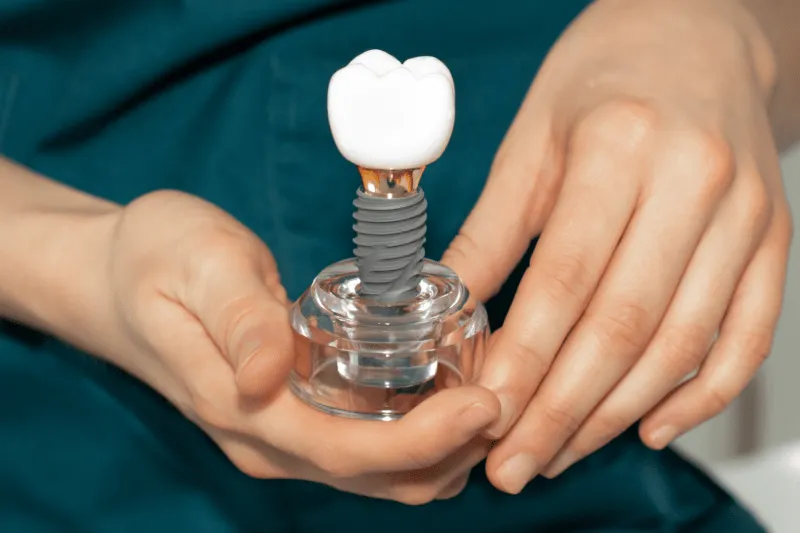
A dental implant is a titanium or ceramic-based screw placed into the jawbone to serve as a replacement for a missing tooth’s root. This structure provides a solid foundation for the prosthetic tooth that will be placed on top of it. Unlike traditional bridge applications, it can stand alone without damaging neighboring teeth. In modern dentistry, implants are the most effective treatment method that gives a result closest to the natural tooth feeling, prevents bone loss, and can be used for a lifetime. For patients experiencing tooth loss, it is not only an aesthetic solution but also a vital surgical procedure to regain chewing function.
What is the Cost of a Single Tooth Implant?
The cost of a single tooth implant varies across a wide range depending on the country where the operation will be performed, the equipment of the clinic, and the brand of the material used. As of 2026, the price of a single implant in Turkey averages between 400 and 800 dollars, while in the USA or European countries, this figure can reach 3,000 to 5,000 dollars. This cost usually covers not only the implant screw but also the connection piece called the abutment and the porcelain or zirconium crown that will be placed on it. However, in cases where the bone structure is insufficient, additional procedures such as bone grafting can push this base cost upward.
What is the All-on-4 Implant Technique?
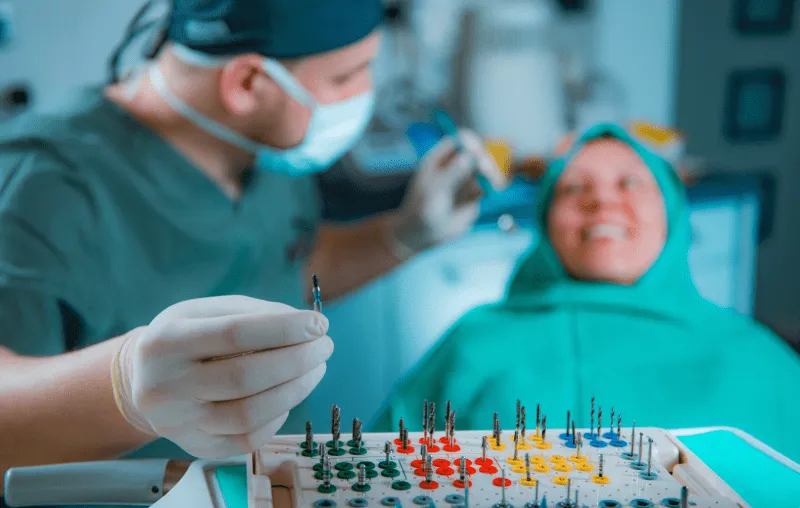
The All-on-4 technique is an advanced method that allows the stabilization of an entire tooth row by placing only four implants in a single jaw in cases of total toothlessness or cases where existing teeth cannot be saved. In this method, the two implants in the posterior region are placed at an angle, so treatment can be completed without the need for bone grafts even in patients with low bone volume. All-on-4 forms the basis of the “Teeth in a Day” concept, which allows patients to reach their temporary teeth on the same day. It is one of the most preferred full-mouth restoration methods worldwide due to both shortening the surgical process and its aesthetic success.
How Much Do All-on-4 Implant Prices Cost?
The price of All-on-4 implant treatment is determined according to the brand of the four implants used for a single jaw and the material of the fixed prosthesis to be made on it. According to 2026 data, All-on-4 packages in Turkey are generally between 3,000 and 6,500 dollars. This price includes the surgical procedure, implants, and hybrid prostheses usually made of acrylic or zirconium. Abroad, this process can start from 20,000 dollars and go up to 35,000 dollars. The fact that the cost is more collective compared to making implants one by one provides a significant financial advantage, especially for patients who require full-mouth restoration.
Is a Single Tooth Implant More Advantageous?
If the patient has only one or two missing teeth, single-tooth implant application is arguably more advantageous. This method targets only the missing area without touching the healthy neighboring teeth. Turning to systems like All-on-4 for a single tooth means both an unnecessary cost and an unnecessary surgical intervention. Single tooth implants are solutions that are easy to clean, have maintenance closest to the natural tooth, and provide perfect harmony with the surrounding tissues. The preservation of the natural gum form in missing areas in the aesthetic zone is the greatest medical and cosmetic superiority of single implants.
Why Can All-on-4 Be More Economical?
All-on-4 is a system that reduces total costs, especially in patients with more than 5-6 missing teeth. Making ten single implants for a patient with ten missing teeth is both surgically very heavy and financially extremely costly. Thanks to All-on-4, a jaw full of teeth is obtained with only four implants. In addition, this technique eliminates additional and expensive surgical procedures such as bone grafting and sinus lifting in most cases. Fewer implants, fewer surgical sessions, and lower laboratory costs make All-on-4 an economic hero in full-mouth cases where efficiency and budget management are top priorities.
Which Treatment Lasts Longer?
Both treatment methods can offer lifelong permanence with correct oral care and an experienced physician’s application. However, statistically, while the success rate of single tooth implants is around 98%, this rate is 95% and above in All-on-4 systems. While failure in a single tooth implant only affects that tooth, the loss of a strategic implant in the All-on-4 system can disrupt the balance of the entire prosthesis. Nevertheless, the integration of the used titanium screws with the jawbone (osseointegration) occurs with similar principles in both methods. The key to longevity is not price but rather the patient’s smoking and hygiene habits.
How Do Implant Brands Affect the Price?
There are hundreds of implant brands in the market, and these brands are categorized as “economic,” “mid-segment,” and “premium.” Premium Swiss and Swedish brands like Nobel Biocare or Straumann are more expensive because they offer long-term clinical research data and global parts support. Domestic brands or brands that have recently entered the market offer more affordable options. A single tooth implant made with a premium brand can sometimes cost close to an All-on-4 surgery performed with an economic brand. The right choice for the patient is to determine a brand that is reliable but fits their budget together with their physician.
How Does Material Choice Change the Cost?
The material of the crown or prosthesis to be attached to the implant plays a decisive role in the total bill. Classic metal-supported porcelains are the most economical option, while zirconium or full ceramic (E-max) structures that offer light transmission closest to natural teeth increase the cost. In All-on-4 systems, the price increases when the body of the hybrid prostheses is made of special materials such as titanium or PEEK. While more expensive materials are preferred for front teeth where aesthetics are at the forefront, more affordable options focused on durability for back teeth can be used to provide a cost balance.
Is Bone Grafting Necessary?
When a long time has passed since tooth extraction, melting occurs in the jawbone. If the existing bone is not at the width or height to support the implant, “bone grafting,” commonly known as “bone powder” application, is required. This situation frequently occurs in single tooth implants and adds an extra cost to the price. The main starting point of the All-on-4 technique is to use the anterior region where the bone is most dense; therefore, savings are made on bone graft costs in most All-on-4 patients. This difference puts All-on-4 in a more competitive position in the total cost analysis for full-arch cases.
What Does Sinus Lifting Add to the Cost?
In the upper jaw, the sinus cavities located just above the molars can sag downward as we age. To place a single implant in this area, a sinus floor elevation (sinus lifting) operation may be required. This is an additional surgical procedure requiring expertise and can increase the cost by 400-800 dollars depending on the membrane and the amount of bone graft used. In the All-on-4 method, implants are placed at an angle to avoid the sinus cavities, so sinus lifting is usually not needed. This saves the patient from both an additional surgical operation and the associated costs.
Does Treatment Duration Affect the Cost?
Although the treatment duration does not appear to be a direct cost item, the number of patient visits to the clinic, the duration of temporary prosthesis use, and loss of labor create indirect costs. In a single tooth implant, there is usually a waiting period of 3-6 months, and a temporary solution may be required during this process. The All-on-4 technique offers an “immediate loading” advantage, allowing the patient to get teeth on the same day. This fast result can be considered a savings item in the total budget, as it optimizes accommodation and transportation costs, especially for patients coming from abroad.
Why is Dentist Experience Important?
Implant surgery is not a simple screwing process; it is a combination of biomechanical, anatomical, and aesthetic knowledge. An experienced oral surgeon or prosthodontist reduces the risk of complications and the probability of treatment failure (and therefore re-treatment costs). The service fee of a specialist physician may be higher than a general dentist, but this difference is actually a long-term insurance policy. Especially in complex cases like All-on-4, the number of cases the physician has in this technique is the most basic factor that determines whether you will get the value for the money you paid.
Does Clinic Equipment Determine the Price?
The use of 3D jaw tomography (CBCT), digital intraoral scanners, and guided surgery systems in modern dental clinics increases the precision of the treatment. Since clinics with these technologies make extra investments for digital planning, this may be reflected in the prices. However, thanks to digital planning, high-cost errors such as placing the implant in the wrong place are prevented. The sterilization standards and technological infrastructure of a clinic are not only an indicator that determines the price but also a quality indicator necessary for the protection of your health and money.
Why are Implant Prices More Affordable in Turkey?
Turkey has become one of the centers offering the highest quality dental treatments at the most affordable prices worldwide. The main reason for this is that operational costs (clinic rents, laboratory expenses, personnel salaries) are lower than in Europe and America. In addition, the state of the Turkish Lira against foreign currencies creates a great purchasing power for foreign patients. Affordable price does not mean quality is compromised; many clinics in Turkey have international accreditation and use the best implant brands in the world. This economic advantage allows patients to get even the most luxurious implant packages at affordable prices.
What is the Cost Advantage for International Patients?
For patients coming from abroad, implant treatment in Turkey is more than 50% cheaper than the price in their own countries, even if flight tickets and accommodation are included. For example, instead of paying 15,000 pounds for an All-on-4 treatment in the UK, it is possible to have treatment for 4,000-5,000 euros in Turkey and have a vacation on top of it. Packages offered within the scope of “health tourism” usually include airport transfers, hotel accommodation, and translation services. This transparent pricing prevents the patient from encountering a surprise expense at the end of the treatment and allows them to plan their total expenditure clearly.
Does Insurance Cover the Cost of Implants?
General health insurance or state-supported systems like the NHS usually do not cover the full cost of implant treatment because they see it as an “aesthetic operation.” Some special supplementary health insurances may support a portion of implant costs within a certain limit or at contracted institutions. However, comprehensive prosthetic systems like All-on-4 are generally outside the scope of insurance. It is important for patients to carefully review their insurance policies and query “dental coverage” details before starting treatment to balance their budgets. Medical reports proving that the implant is a necessity can sometimes help in obtaining partial payment.
What Could Be the Hidden Costs?
When getting a price quote from a clinic, focusing only on the “implant screw” price can be misleading. In some clinics, items such as examination fees, panoramic X-rays, 3D tomography scans, and local anesthesia are not included in the price, while in others, they are part of the package. In addition, it should definitely be asked whether a separate fee is requested for the abutment and crown that will come on top of the implant. Medications to be used during the healing process or extra checks that may be required after the operation can also bring small but additional expenses to the budget. Transparent pricing should be a “turnkey” offer covering this whole process.
Are There Extra Costs During the Healing Process?
Under normal conditions, an extra payment is not expected from the patient during the healing process of the implant. However, infections (peri-implantitis) that may occur as a result of the patient not paying attention to oral hygiene may lead to additional treatments and antibiotic costs. In addition, if temporary prostheses break or need adjustment, laboratory costs may arise. In All-on-4 patients, the stage of replacing the temporary prosthesis attached on the first day with a permanent prosthesis after 6 months should have been included in the price at the very beginning. If not included, this stage can become an expected but budget-shaking “second payment” for the patient.
How Do Aesthetic Expectations Increase the Price?
If the patient demands a very high aesthetic result like a “Hollywood Smile,” the quality of the material to be used and the mastery of the technician are reflected in the price. Especially in All-on-4 systems, the artistic processing of pink porcelains that mimic the gums is more expensive than a standard prosthesis. In single tooth implants, the cost increases when high-handicraft zirconium crowns that are 100% compatible with the color of the neighboring teeth are preferred. Since an aesthetic smile design is not only a medical procedure but also an art, patients who want this level of service may need to stretch their budgets a bit.
How Many Missing Teeth Justify All-on-4?
The answer to this question is usually hidden at the limit of 5-6 teeth. If 1-3 teeth are missing in a jaw, single implants or implant-supported bridges make more sense. However, if more than 6 teeth have been lost and the condition of the remaining teeth is also shaky, All-on-4 becomes both a more aesthetic and a more economical option. Instead of making separate implants for each missing tooth, making a load distribution over four strategic points also tires the jawbone less. Physicians usually present the most accurate limit to the patient by performing a “cost/benefit” analysis according to the patient’s oral situation.
Which is More Profitable for Full Arch Restoration?
In a full arch restoration (12-14 missing teeth), the total cost of single tooth implants can easily exceed 10,000 dollars. In contrast, the All-on-4 system can be completed for 4,000-5,000 dollars in centers like Turkey. Profitability here should be measured not only with money but also with time and comfort. In the All-on-4 technique, the number of surgical interventions is minimum, which means the patient uses fewer painkillers and undergoes less healing process. Therefore, in a state of total toothlessness, All-on-4 is a much more profitable and logical investment for both your wallet and your physical health.
What are the Maintenance Costs for Implants?
Although implants do not decay, the gums around them are open to infection. Therefore, it is of vital importance to have professional dental cleaning and implant control every 6 months. The annual cost of these controls is usually between 100-200 dollars. Daily maintenance equipment such as special interdental brushes, oral irrigators, and quality toothpastes should also be considered as a continuous expense item. For All-on-4 users, cleaning under the prosthesis may require professional help; if these periodic maintenances are neglected, there is a risk of losing the investment of thousands of dollars, which is the biggest hidden cost.
Is the Success Rate Related to Cost?
Cheap and poor-quality implants may seem like they are providing savings initially, but they can be much more expensive in the long run due to high failure rates. In case of rejection or breakage of an implant by the body, removing that implant and replacing it requires a surgical process that is sometimes more difficult and expensive than the first operation. “Cost-effectiveness” is measured not only by the price of a procedure at that moment but also by how long it will serve. Therefore, paying a little more for brands that have solid clinical data and provide a warranty is actually a savings move that prevents possible future expenses.
Are Zirconium Implants More Expensive?
Traditional implants are made of titanium, but in recent years, zirconium (ceramic) implants have gained popularity for patients who have metal allergies or who care a lot about aesthetics. Zirconium implants do not cause metal reflection due to their biological harmony and white color. However, since their production technologies are more complex, they are 30% to 50% more expensive than classic titanium implants. If you have a thin gum structure in the aesthetic zone (front teeth), it can be a logical investment to pay the difference for a zirconium implant. However, in All-on-4 systems, titanium infrastructures are usually preferred because durability is the priority in this system.
Does Digital Implant Planning Increase the Price?
Digital methods known as “navigated implant” or “guided surgery” cover 3D simulations made in a computer environment before the operation. For this process, special surgical guides (stents) need to be produced with 3D printers. This technological process can add an extra cost between 200-500 dollars to the treatment price. However, this investment guarantees the placement of the implant into the bone at the most accurate angle, reduces the risk of nerve damage to near zero, and increases healing comfort by providing the possibility of sutureless operation. For patients who prioritize safety and speed, this extra cost is quite reasonable considering the peace of mind it offers.
What is the Cost of Temporary Prostheses?
In the 3-6 month period when the implant needs to fuse with the bone, temporary solutions are offered so that the patient does not walk around toothless. “Temporary crowns” or removable “partial dentures” are used for single tooth implants, and their cost is usually around 50-150 dollars. In the All-on-4 system, the “temporary fixed hybrid prosthesis” attached on the same day is the most important part of the system and is usually included in the main treatment package. These temporary teeth offer a priceless value as they allow the patient to return to social life immediately. Asking if these temporary solutions are included when getting a price prevents last-minute surprises.
What are the Implant Warranty Terms?
Prestigious implant brands usually offer a “lifetime parts warranty” for the implant screw. This means that if the screw breaks or a manufacturing defect occurs, the company will provide a new screw. However, the surgical warranty offered by the clinic is different; it is usually expected that the clinic will repeat the operation without taking a labor fee in case of implant losses within the first 2-5 years. In order for the warranty to be valid, it is stipulated that the patient goes for regular checks. The wider the warranty coverage, the higher the service fee can be. For patients who want to feel safe in the long run, warranty terms are as important as the material in price comparison.
What are the Risks of Getting Cheap Implants?
In places that give prices much below the market value, “under the counter” implants without international certificates can be used. The surface properties of such implants can make fusion with the bone difficult or lead to allergic reactions because the purity of the metal used is low. The biggest risk is that when the part of the implant (abutment or screw) breaks 5 years later, spare parts cannot be found; because these companies usually withdraw from the market after a short time. In this case, the entire implant may need to be surgically removed, which is a devastating result both in terms of health and financial aspects.
What are the Dental Implant Trends in 2026?
By the time we reach 2026, “personalized implants” and “fast-healing surface technologies” (such as SLActive) are coming to the fore. Nano-technological coatings applied to the surfaces of implants can reduce the fusion period with the bone from 6 months to as low as 3 weeks. In addition, thanks to artificial intelligence-supported diagnostic systems, it is determined with millimetric precision which patient is more suitable for All-on-4 and which is more suitable for single implants. Although these trends are technology-oriented and push costs up slightly, they are seen as a “smart investment” by patients because they reduce the risk of failure and are preferred.
What are the Payment Options and Installment Plans?
Since implant treatment creates a serious financial burden, clinics offer various payment facilities to their patients. Many clinics provide installment opportunities for credit cards or special “health loans” in agreement with banks. In addition, in two-stage treatments (cases where there are 3-6 months between surgery and prosthesis), it is common to offer the option of paying half of the total fee on the operation day and the remaining half when the teeth are attached. In Turkey, special discounts can sometimes be applied for cash payments for international patients. Creating a payment plan before starting treatment reduces your financial stress and allows you to focus on the treatment.
Does Gum Treatment Affect the Cost?
It is essential that the gums in the area where the implant will be placed are healthy. If the patient has gum recession, inflammation (periodontitis), or a “thin gum phenotype,” gum operations may be required before the implant. Procedures such as laser gum cleaning or gum grafting (transplant made by taking a piece from the palate) can increase the total cost between 200-600 dollars. However, an implant without a healthy gum socket is doomed to fall, no matter how expensive it is. Therefore, it is necessary to see the gum treatments recommended by the physician not as an “extra expense” but as a necessity that strengthens the foundation of the implant.
Does the Age Factor Change the Implant Cost?
Although age alone is not a factor determining the price, bone quality and general health status changing with age indirectly affect the cost. While the completion of jaw development is expected in very young patients, extra medical preparations may be needed to keep chronic diseases such as diabetes or osteoporosis under control in elderly patients. Elderly patients usually face the risk of total toothlessness, so they turn more to systems like All-on-4. This allows them to encounter a more advantageous picture in total cost compared to single implants. In the end, there is no upper age limit for implants; as long as there is sufficient bone and health, the investment can be made at any age.
Will Implant Prices Drop in the Future?
With the development of technology and the mass production of implants, a decrease in basic part costs may be observed. However, the cost of the art of medicine, surgical expertise, and digital software used is on an increasing trend. Inflation and rising energy costs are also factors that make it difficult for prices to go down. Although more “affordable premium” segments are expected after 2026, the fact that the cheapest option will not always be the safest option will not change. The real change in implant prices will not be the cheapening of the procedure, but the quality and technology offered becoming more accessible for everyone.
Which Option is More Logical Overall?
If you have a single missing tooth, a single tooth implant is both the most protective and the most logical cost item for you. However, if you have lost all your teeth or your existing teeth are unhealthy, the All-on-4 technique provides you with a tremendous savings in terms of time, comfort, and finance. When making a choice, you should focus not only on today’s label but on how you will use these teeth for the next 20 years. Which method will seem more “affordable” to you is directly proportional to the number of missing teeth in your mouth and your bone condition. Taking a personalized planning by getting an expert opinion is the first step of the most profitable investment.
Free Consultation
Fill out the form below to get your free medical travel plan and price quote.