Smile aesthetics is not merely about whitening or straightening teeth; it is a sophisticated fusion of art and engineering disciplines. Digital Smile Design (DSD) takes this discipline to the next level by creating a design that is perfectly compatible with the patient’s facial features, personality, and expectations. In this guide, you will discover all stages of digital smile design, its technological background, and why it has become the gold standard of modern dentistry.
What Exactly Is Digital Smile Design?
Digital Smile Design is a planning method that combines traditional dentistry protocols with advanced digital technology. In this process, not only the condition of the teeth inside the mouth is considered, but also lip movements, gum structure, and a comprehensive facial analysis. This design, created through specialized software, aims to produce the “ideal smile” most suitable for the patient’s physical characteristics. It is not just an aesthetic touch but also a functional restoration plan.
Why Is Seeing The Result Beforehand So Critical?
Seeing the result before the treatment begins removes the pressure of uncertainty from the patient. The biggest disappointment in dentistry is the mismatch between the patient’s dream smile and the design implemented by the dentist. Thanks to DSD, this risk is eliminated. The patient makes decisions by seeing simulations performed on their own photos and videos. This increases patient satisfaction and builds an unshakable bond of trust between the dentist and the patient.
How Does It Differ From Traditional Methods?
In traditional methods, planning was generally done through manual measurements and models based on the dentist’s manual skills. DSD, however, utilizes high-resolution digital scanners, professional photography, and specialized software. While traditional methods involve “estimation,” DSD offers “precision.” Additionally, it is difficult for patients to be involved in the process with traditional methods; in DSD, the patient has a say in every stage of the design.
Which Technologies Make This Process Possible?
The foundation of the process lies in intraoral (in-mouth) scanners, 3D modeling software, and CAD/CAM systems. Intraoral scanners replace traditional impression trays, creating a three-dimensional map of the mouth within seconds. Subsequently, this data is transferred to DSD software where facial symmetry analysis is performed. In the final stage, 3D printers transform this digital design into a physical model called a “mock-up.”
How Is Facial Analysis Reflected In The Design?
For a smile to look natural, it must be compatible with facial features. DSD specialists analyze geometric proportions between the eye line, nose tip, and chin tip. The length, shape, and inclination of the teeth are shaped according to this data. For example, more angular teeth might be planned for someone with sharper facial features, while rounded forms might be suggested for someone with softer features.
What Is A Mock-Up Application?
A mock-up is the application of the design prepared in the digital environment to the patient’s mouth using temporary materials. Without any abrasion on the teeth, a physical copy of the design is placed over the existing teeth. This “test drive” allows the patient to look at their new smile in the mirror, talk, and smile. If there is a detail they do not like, corrections can be made before any permanent procedures begin.
How Long Does The Design Process Take?
The first stage of DSD, which involves data collection (photos and scanning), usually takes about 30-40 minutes. The preparation of the digital design by a specialist may take a few days depending on the complexity of the case. During the second appointment, the patient sees the mock-up application. In total, the design approval process is completed in as little as one week, and the roadmap for the actual treatment becomes clear.
How Is Patient Participation Ensured In Treatment Planning?
DSD is an interactive process. The dentist takes the patient’s comments while creating the design on the computer screen. Questions like “Should the teeth be a bit longer?” or “Should the color tone be more natural or pearly white?” are answered together. Watching their own transformation allows the patient to better prepare for the treatment psychologically and ensures they are confident in the final result.
Which Aesthetic Problems Does DSD Solve?
Crowding, gaps (diastema), color changes, deformities, and wear in the teeth are resolved through treatments planned with DSD. Additionally, gum asymmetries are a part of this design. Not just the front teeth, but the entire area visible during a smile is handled as a whole. The result is not just straight teeth, but an aesthetic signature that reflects the individual’s character.
Is Gum Aesthetics Included In The Design?
Absolutely yes. The gum structure, which we call pink aesthetics, is the frame of the white aesthetics (the teeth). If the gums are too visible (gummy smile) or their levels are asymmetrical, these areas are also planned in the DSD software. Where the gums should end is determined digitally, and if necessary, these borders are corrected with laser or surgical intervention to ensure the design looks perfect.
Why Is DSD Essential For Porcelain Veneers?
Porcelain veneers (laminates) are one of the most sensitive aesthetic applications. Since they are applied with very little or no abrasion from the tooth, there is no room for error. DSD calculates the exact position and thickness of the veneers on the tooth at the micron level. This ensures minimum abrasion while the aesthetic result is as natural and durable as intended.
What Are The Advantages Of Taking Digital Impressions?
The putty-like impression materials used in old methods cause nausea and are prone to dimensional errors. Digital scanners eliminate this problem completely. Digital impressions are transferred to the computer environment with zero error. This precision increases the longevity by ensuring that the prepared porcelain crowns or veneers fit the gums and the teeth perfectly.
How Does It Affect The Patient Psychologically?
Individuals who are unhappy with their teeth often hide their smiles, leading to a loss of self-confidence. The DSD process is a great source of motivation as it allows the patient to see their potential change tangibly. The happiness and relief on the patient’s face when seeing their new self during the “test drive” is the greatest proof of the treatment’s success.
Does It Overcome Dental Phobia?
Phobia usually stems from “the unknown” and “pain.” Since the DSD process is entirely visual and informative, it reduces patient anxiety. The patient, knowing what will be done and what the result will be, feels safe. Furthermore, comfortable procedures like digital scanning replace old traumatic dental experiences with a modern and technological approach.
Why Is Lip Structure Critical In Design?
Lips are the frame of the teeth. The lip position at rest and while laughing is different. DSD analyzes these dynamic movements through video recordings. Details such as how much the upper lip rises and the curve of the lower lip directly determine the length and alignment of the teeth. For patients with weak lip support, it is even possible to increase this support through the tooth form.
Where Do 3D Printers Stand In The Process?
3D printers are the bridge that turns the virtual into reality. The design finished on the computer screen is sent to the 3D printer, and the mock-up model to be worn over the patient’s teeth is printed. Thanks to this rapid production, the patient can see the digital design and experience this change in their mouth on the same day. In modern dentistry, the laboratory process has been greatly accelerated this way.
How Is Color Selection Performed?
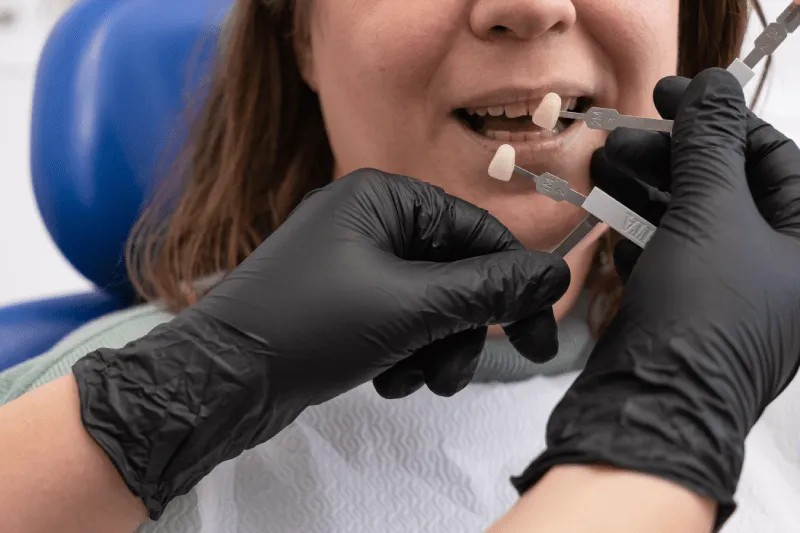
Color selection is not just about choosing the “whitest” one. Skin tone, the color of the whites of the eyes, and even the patient’s age play a role in color selection. DSD software can simulate how teeth will look under different lighting. If the patient’s expectation is a very white “Hollywood Smile,” it is planned accordingly; if a more natural look is desired, planning is based on the translucency and saturation ratios of the tooth.
What Should Post-Application Care Be Like?
Restorations made with DSD (veneers, zirconium, etc.) consist of high-quality materials. However, regular oral care is essential for longevity. In addition to toothbrushing and flossing, routine check-ups every 6 months preserve the health of the restorations. Also, for patients with a habit of grinding their teeth at night, using a night guard is of vital importance to protect the design.
Can It Be Applied To Every Age Group?
Yes, Digital Smile Design is suitable for adults of all ages. While minimal aesthetic touches and crowding corrections are at the forefront for younger individuals, for older ages, the focus is on tooth wear, tooth loss, and loss of vertical dimension. No matter the age, a design can be created that fits the anatomical structure of the face and the naturalness brought by that age.
Is DSD Used In Implant Treatment?
Certainly. In cases where teeth are missing, exactly where the implant will be placed should be determined based on where the final tooth (prosthesis) should stand. This is called “prosthetically driven implantology.” With DSD, the final smile is designed first, and then the implants are placed at the most ideal angle according to this design. This guarantees both aesthetics and function.
What Is Its Contribution To Functional Chewing Health?
Aesthetics is a failure if it does not merge with function. DSD does not just make “good-looking” teeth; it also regulates the bite (occlusion) of the upper and lower jaws. A correctly planned smile design prevents joint pain, increases chewing efficiency, and reduces the risk of breakage by ensuring a balanced distribution of the load on the restorations.
Why Are Video Recordings Necessary?
Static photos do not tell everything. How the teeth look while talking, laughing, or making facial expressions is what truly matters. In the DSD protocol, the patient’s speech and laughter moments are recorded on video. These videos are used to analyze the effect of teeth on phonetics (the correct output of sounds) and their dynamic harmony with facial muscles. A dynamic analysis produces more natural results.
How Permanent Are The Results?
DSD is a planning method; permanence depends on the materials used by adhering to this plan and the dentist’s craftsmanship. Porcelain veneers or zirconium crowns are generally used without problems for 10-15 years or more. Since the precision brought by digital planning maximizes the fit between the tooth and the restoration, it is much more durable and resistant to leaks compared to traditional methods.
How Is The Margin Of Error Minimized?
There may be small deviations in every manual process. However, in digital data, this margin is minimal. Even a 0.1-millimeter difference appears massive on the digital screen and is corrected. Working through digital files during the laboratory stage of the design completely eliminates errors caused by lack of communication between the technician and the dentist. “What Is Seen Is What Is Implemented.”
How Is DSD Cost Determined?
The cost of DSD is determined by the scope of the actual treatments (veneers, implants, zirconium, whitening, etc.) to be performed beyond the design itself. The design phase can be seen as a separate service item, but it is usually included in treatment packages. Having a design cost at the beginning is much lower than the compensation cost of an incorrectly made restoration in the future; therefore, it is a wise investment.
Is It Combined With Orthodontic Treatments?
Yes, this is done very frequently. If the crowding in the teeth is too much to be corrected only with veneers, ideal positions are first determined with DSD. The teeth are moved to their places in this digital design using clear aligners (Invisalign, etc.). When the orthodontic process is over, the design is completed with very small aesthetic touches if necessary. This approach is the most tooth-preserving (minimal invasive) method.
How Is Naturalness Preserved?
The best smile design is one that does not look “artificial.” With DSD, the microstructure (texture) of the tooth surface, light reflection, and color transitions (translucency) are planned. The slight transparency at the tips of the teeth or the natural indentations on the surface can be digitally designed and produced. As a result, the emerging teeth are perceived by others not as “newly made,” but as if they had always been there.
How Is The Shape Of The Teeth Selected?
A concept called “visagism” is used in tooth shape selection. A person’s character and the image they want to project (dominant, energetic, calm, or intellectual) affect tooth shapes. Square shapes exhibit a stronger stance, while oval shapes give a younger and softer expression. DSD combines these psychological and aesthetic data to select from the most suitable form library for the patient.
What Happens During The First Appointment?
The first appointment is entirely focused on “data collection.” Your dentist will have an in-depth conversation with you about your aesthetic expectations. Then, your photos are taken under professional studio lights, your videos are recorded, and your intraoral scan is performed. There is no pain or surgical intervention at this stage. Only your digital data is collected, and preparations for the next appointment begin.
How Does The Laboratory Phase Work?
Once the design is digitally approved, the data is sent to the laboratory. CAD/CAM machines produce your teeth by carving high-quality ceramic blocks according to this data. Thanks to digitalization, the firing times and structural properties of the porcelains have become more controllable. The technician only performs the finishing touches (glaze and coloring) by referencing the digital design.
Why Should You Invest In This Method?
Teeth are the most striking part of our face and directly affect our self-confidence. Investing in Digital Smile Design is actually investing in your self-confidence and future happiness. Seeing the result beforehand protects you from bad surprises, saves time, and ensures that your biological tissues (your teeth) are preserved in the most correct way. For aesthetic perfection, DSD is no longer a luxury, but a necessity.
What Is The Difference In Smile Design With Cure Holiday?
Cure Holiday combines digital dentistry with a wellness holiday experience. With its state-of-the-art DSD software and expert staff, it offers not just a treatment, but a story of transformation. Cure Holiday specialists produce personalized results by blending patients’ cultural and personal aesthetic understandings with technology. Here, the treatment process is a transparent and planned journey, far from stress.
What Do Cure Holiday Treatment Packages Include?
Cure Holiday offers all-inclusive packages for patients coming from abroad. Within these packages are main treatments like DSD design, porcelain veneers, or zirconium crowns; as well as accommodation, airport transfers, and personal consultancy services. Patients know their treatment costs and processes clearly from the beginning, so they achieve their new smiles without encountering any hidden costs.
How Does Cure Holiday Make The Process Easier For You?
The process begins while you are still at home. Communication starting with the preliminary evaluation through the photos you send becomes tangible with DSD planning at the clinic. Cure Holiday ensures you use time most efficiently by synchronizing your treatment appointments with your holiday plan. From the mock-up stage to permanent restorations, you can easily manage the process with support in your native language at every step.
Would You Like To Entrust Your Smile To Cure Holiday Expertise?
Do not wait any longer to achieve the smile of your dreams. With the “Digital Smile Design: See The Result Beforehand” principle, we do not leave your transformation to chance at Cure Holiday. Take the first step to meet the comfort of modern technology and the artistic touches of expert dentists. By receiving a free preliminary consultation, we can together create the first traces of your new smile in the digital world. Let your smile change the world.
Free Consultation
Fill out the form below to get your free medical travel plan and price quote.
Sources and how to verify this yourself
- Howe M-S, Keys W, Richards D. Long-term (10-year) dental implant survival: a systematic review and sensitivity meta-analysis. Journal of Dentistry, 2019 — pooled 10-year implant survival 96.4% (95% CI 95.2–97.5%); conservative sensitivity estimate 93.2%. source
- Ministry of Health, Regulation on International Health Tourism and Tourist Health, Official Gazette 26 April 2025, No. 32882 — authorisation requirement for facilities and intermediaries, TÜSKA accreditation, compulsory complication insurance (deadline 31 December 2025 for insurance, 31 December 2026 for accreditation). source
- Ministry of Health, Regulation on Promotion and Information Activities in Health Services, Official Gazette 12 November 2025, No. 33075 — treatment promises and guarantees are prohibited; price and campaign announcements are permitted only within international health tourism. source