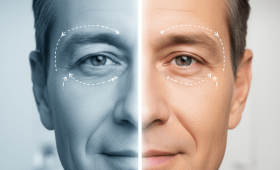
Laser hair removal is the most effective and modern way for both women and men to get rid of unwanted hair today. Unlike traditional methods, laser technology targets hair follicles to provide long-term and permanent solutions. However, the different laser types available on the market can be confusing for users. Knowing which device is suitable for your skin type, hair structure, and expectations helps you both protect your budget and get the best results. In this guide, we will deeply analyze the three most popular technologies in the world.
What is Laser Hair Removal and Why is it Popular?
Laser hair removal is a procedure in which light of a specific wavelength is absorbed by the melanin pigment in the hair, converted into heat energy, and destroys the hair follicle. Unlike temporary solutions such as waxing or shaving, this method aims to permanently stop the growth cycle of the hair. In modern society, the value of time and the rising aesthetic standards have made laser hair removal a basic personal care need rather than a luxury. The self-confidence provided by having smooth skin is the main reason why this procedure is preferred by millions of people worldwide.
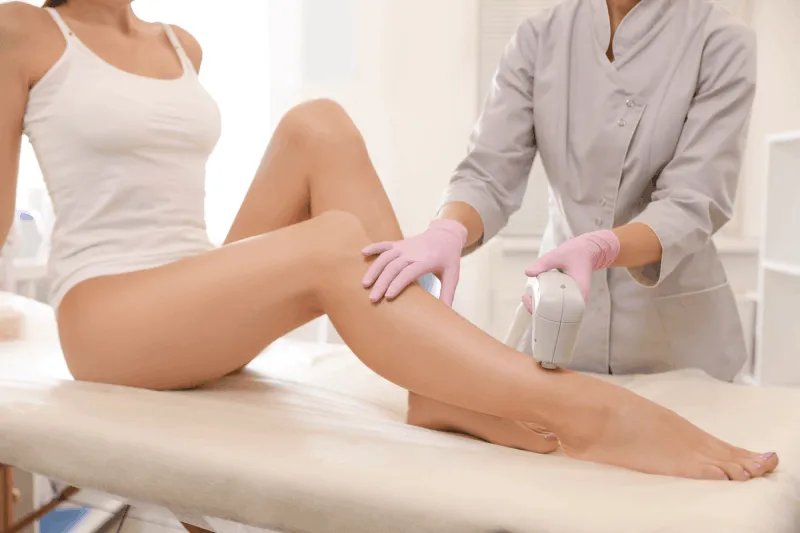
How Does Laser Hair Removal Technology Work?
Laser systems are based on a principle called “selective photothermolysis.” The light beam emitted from the device targets only the dark-colored cells (melanin) in the hair follicle without damaging the surrounding tissue. The heated hair follicle loses its ability to nourish and eventually falls out. Since not all hairs are in the growth phase at the same time, multiple sessions are required for permanent results. Thanks to advanced cooling systems, today’s devices protect the skin and ensure that the process is completed comfortably. Technological progress has allowed the production of solutions suitable for every skin color with the discovery of different wavelengths.
What is Alexandrite Laser and Which Skin Types is it Suitable For?
Alexandrite laser is a system working with a 755 nm wavelength and is considered the gold standard, especially for fair-skinned individuals. Since it is absorbed very strongly by melanin, it gives incredibly fast results on black and thick hairs. This device, which can fire from a distance without touching the skin, provides visual satisfaction by causing the hairs to evaporate instantly during the procedure. However, because melanin sensitivity is high, it should be used carefully on people with dark or tanned skin; otherwise, the risk of skin burns or spots may occur. If you have fair skin and dark hair contrast, Alexandrite may be the fastest-acting option for you.
What is Diode Laser and How Does it Differ From Others?
Diode laser is a technology working with an 800 or 810 nm wavelength that can penetrate deeper layers of the skin. Having a longer wavelength than Alexandrite allows the light to pass through the melanin in the upper layer of the skin and focus directly on the hair follicle. This feature makes Diode laser a much safer option for people with dark and olive skin. In addition, models that can be applied with the “ironing” (in-motion) method allow for a fast and less painful process in large areas. Diode has a high success rate, especially in ingrown hair problems and deeply located hairs.
Why is Ice Laser Technology Preferred?
Ice Laser (Soprano Ice) is a revolution in the world of hair removal because it takes comfort to the highest level. This technology is actually a Diode-based system but combined with a special cooling tip and a series of pulses (SHR) technique. The device tip cools down to -3 degrees during application, numbing the skin, and the person feels only a sensation of warmth instead of pain. This method, famous as “painless laser hair removal,” can be applied safely on all skin types and throughout all four seasons. Being effective on both thin and thick hairs has made Ice Laser indispensable for modern clinics.
Which Laser Type Provides More Permanent Results?
The issue of permanence is usually related to how suitable the chosen laser is for the person’s hair structure rather than the type of laser. When correctly analyzed, each of the Alexandrite, Diode, and Ice Laser systems provides a permanent hair reduction rate of 80% to 95%. While Alexandrite gives results in a shorter time for fair-skinned people, Diode and Ice Laser provide a more stable shedding in the long run for deep-rooted hairs. What matters is the complete destruction of the hair follicles. The hormonal status of the body and regular participation in sessions are factors that directly affect the permanence of the result obtained.
Which is the Best Laser for Fair-Skinned Individuals?
Fair-skinned and dark-haired individuals (Fitzpatrick Type I-II) are the most ideal candidates for laser hair removal. For this group, Alexandrite laser is generally recommended as the first choice. The 755 nm wavelength works with maximum energy efficiency on this skin type and destroys hair follicles rapidly. However, Ice Laser is also an excellent alternative for fair-skinned people with a low pain threshold. If your hairs are very thin, the deep penetration capability of the Diode laser may provide better results. An expert dermatologist will determine the most efficient device for you by examining your hair thickness.
How Should Laser Selection be for Dark-Skinned People?
The biggest risk for dark-skinned people (Fitzpatrick Type IV-VI) is the absorption of laser energy by the dense melanin in the skin instead of the hair. This situation can lead to skin burns. Therefore, Alexandrite laser is generally considered risky for dark-skinned people. Diode laser and especially Ice Laser (Soprano Ice Platinum/Titanium) are the safest technologies for dark skin. These devices deliver energy gradually and protect the upper layer of the skin. Ice Laser’s patented technology minimizes the risk of burns in dark-skinned individuals by heating the hair follicle while cooling the skin, offering effective results.
Does Laser Hair Removal Cause Pain?
The sensation of pain varies according to the technology used, the area applied, and the person’s pain threshold. While a sensation like a “rubber band snap” was felt in old-generation laser systems, modern technologies have changed this situation to a great extent. In Alexandrite laser, cold air blowing systems reduce pain. In Diode laser, a slight stinging sensation is normal. However, Ice Laser offers a massage-like comfort experience and almost completely eliminates the feeling of pain. Although a slight sensitivity is expected in sensitive areas such as the genital area and armpits, this process is quite tolerable with today’s devices.
What Determines the Number of Sessions?
The number of laser hair removal sessions varies from person to person. Generally, 6-8 sessions are recommended for body areas and 8-10 sessions for the facial area. The main factors affecting the number of sessions are the color and thickness of the hair, skin color, the hormonal sensitivity of the area applied, and the age of the person. For example, the leg area responds very quickly to laser hair removal, while the hairs on the face may require more sessions due to hormonal effects. Going to sessions at regular intervals ensures that hairs are caught in the active growth (anagen) phase, optimizing the total number of sessions.
What Should be Done During the Pre-Laser Preparation Process?
The preparation phase is critical for a successful session. At least 3-4 weeks before the application, removing hair from the root (such as waxing, tweezers, epilator) must be strictly stopped; because a hair follicle is needed for the laser to target. On the day of the session or one day before, hairs should be shortened with the help of a razor. Additionally, the area to be treated must be clean and free of cream, deodorant, or makeup residue. Sunbathing or solarium should be avoided for at least 2 weeks, as tanned skin increases the risk of burns. If you use medications, you must inform the specialist.
How Should Post-Laser Skin Care be Conducted?
It is normal to see slight redness or folliculitis (swelling of the hair follicle) on the skin after laser, and it usually passes within a few hours. To speed up this process, moisturizing and soothing creams should be applied to the area. For the first 24 hours, very hot showers should be avoided, and activities such as sauna or steam baths should be skipped. The most important rule is protection from the sun; a high-factor sunscreen should be applied to the treated area, and it should not be exposed to direct sunlight. Furthermore, irritating procedures such as scrubbing or peeling should not be performed until the hairs shed (approximately 1-2 weeks).
Which Laser is Safer for the Facial Area?
The facial area has thinner hairs and a more sensitive structure compared to the rest of the body. The biggest risk in facial epilation is “paradoxical activation,” which is the situation where hairs are triggered and increased. This risk is usually associated with the application of Alexandrite laser to thin hairs in the facial area. Therefore, Diode laser or Ice Laser is usually more recommended for the facial area. Especially Ice Laser, with its small tips suitable for the facial contours and its ability to see fine hairs, offers both a safe and comfortable application.
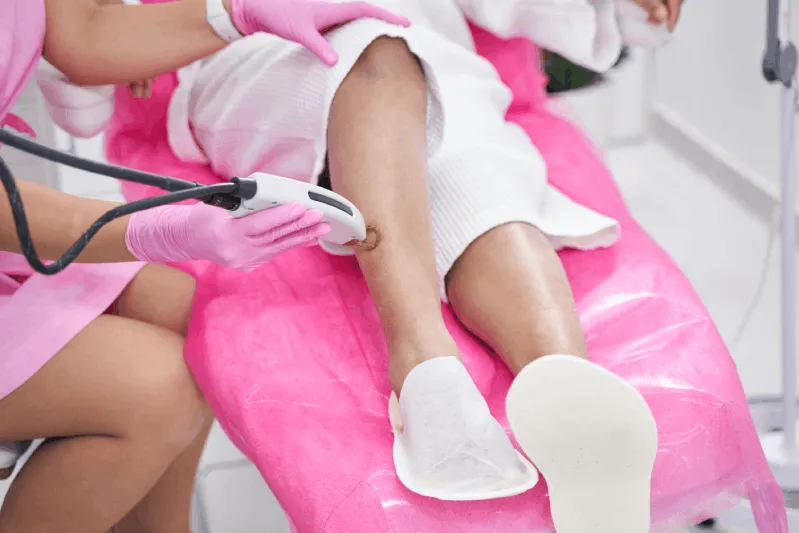
Which Body Parts Can Laser be Applied To?
Laser hair removal can be applied to almost every part of the body, except for the eye sockets and mucous layers. In women, the most popular areas are the legs, armpits, bikini area, arms, and face. In men, the back, shoulders, chest, above the beard, and nape areas are frequently preferred. Since the hair structure and skin thickness of each area are different, specialists adjust the energy level specifically for the area. While lower energy and strong cooling are used in sensitive areas, parameters that will act deeper on the hair follicle are selected in thick-skinned areas.
Is Season Selection Important in Laser Hair Removal?
There used to be a belief that laser hair removal could only be done in the winter months. However, with new technologies like Ice Laser, this situation has changed. For melanin-sensitive devices like Alexandrite laser, the winter months are still safer because the risk of sunburn is low. But Ice Laser technology can be safely applied in summer as long as the rules of sun protection are followed. Nevertheless, instead of having a procedure right before or after a vacation, it is best to wait for the skin to calm down. Starting in the fall and winter months is a strategic choice to enter the summer smooth.
What are the Side Effects of Laser Hair Removal?
When performed by expert hands, laser hair removal is a very safe procedure. The most common side effects are temporary redness, slight swelling, and itching. These usually disappear on their own within a few hours. However, when the wrong device choice or incorrect dose setting is made, skin burns, pigmentation disorders (spotting), or rarely an increase in hair amount may be seen. To minimize these risks, it is of vital importance that the process is performed by experienced professionals in a sterile clinic environment. The device being original and well-maintained is also a factor that directly reduces the risk of complications.
Can Laser Hair Removal be Performed During Pregnancy?
Medically, there is no proven data that laser beams harm the baby in the mother’s womb; because laser light only goes a few millimeters under the skin and does not reach internal organs. However, for ethical and precautionary purposes, doctors generally do not recommend laser hair removal during pregnancy. Hormonal changes during pregnancy can make the skin more sensitive and increase the risk of spot formation. Furthermore, the efficiency of the laser performed in this period may be low due to hormonal fluctuations. It is a healthier approach to start the procedure after the first months of the breastfeeding period, when hormones are balanced.
Is Laser Hair Removal a Permanent Solution?
The expression “permanent solution” is defined in medical literature as an 80-90% reduction in hair amount and the remaining hairs becoming very thin and colorless. For most people, these results last a lifetime. However, the body is a living mechanism; major hormonal changes that may be experienced in future years (pregnancy, menopause, some medications) can trigger dormant hair follicles. In such cases, a “touch-up session” once a year ensures the continuation of smoothness. Laser hair removal is the most permanent and successful method mankind has reached in the fight against unwanted hair today.
Who Should Not Have Laser Hair Removal?
Laser hair removal is generally suitable for healthy individuals, but there are some exceptions. For people with very light-colored (white, gray, red) hair structure, the chance of success is very low because laser energy cannot be absorbed. Those with active skin infections, those who have used heavy acne medication like Roaccutane in the last 6 months, and those with skin diseases like lupus or vitiligo should not have this procedure. In addition, doctor’s approval is required for those with pacemakers or epilepsy patients. Applying it to skin that has just been burned by the sun and is peeling is also inconvenient as it carries serious burn risks.
How are Laser Hair Removal Prices Determined?
Pricing depends on many variables and is usually offered in the form of package programs. The size of the area to be treated (entire body vs. just armpits), the chosen laser technology (Ice Laser is usually more costly), the location of the clinic, and the experience of the specialist affect the price. Under-the-counter businesses offering cheap prices should be avoided; because the poor quality of the device used or the procedure being done by non-experts can both harm your health and lead to spending more money since you won’t get results. A high-quality service is the most economical choice in the long run.
Are Home-Type Laser Devices as Effective as Professional Ones?
Home-type devices usually use IPL (Intense Pulsed Light) technology rather than true laser. These devices work at much lower energy levels than clinic-type devices for safety reasons. Therefore, rather than permanently eliminating hair, they help slow down the growth rate. Devices such as Alexandrite or Ice Laser used in professional clinics have the power to permanently destroy the hair follicle. Home-type devices can be used as support to keep hair under control after professional sessions, but they do not provide clinic results on their own.
Which Laser is More Successful on Fine Hairs?
Fine and light-colored hairs are the hardest for laser systems to see because they contain small amounts of melanin. Alexandrite laser can sometimes fail on these hairs and even cause hair triggering. Generally, Diode laser and Ice Laser give more successful results on fine hairs. Especially Ice Laser, thanks to its ability to deliver low energy at high frequency, can destroy the follicles of fine hairs by heating them gradually. However, you should know that if your hairs are completely blonde or white, no laser system will be effective, and needle epilation is the only solution.
What is the Best Solution for Thick and Coarse Hair?
Thick and black hairs are the hair type that best absorbs laser energy and responds fastest to treatment. If your skin tone is also fair, Alexandrite laser can create miracles in the first sessions. However, if these hairs are deep-seated (for example, the male back area or female bikini line), the deep-reaching wavelength of the Diode laser provides more permanent results. Ice Laser, on the other hand, offers high comfort in thick hairs and allows large areas to be scanned quickly. Usually, starting with thick hairs and changing technology for the thinning hairs as sessions progress is the most professional approach.
How Does the Laser Hair Removal Process Work for Men?
In men, hair follicles are thicker and deeper than in women. Also, male skin may have a more oily structure. Men usually prefer laser for the back, chest, and above-the-beard areas. Since the sensation of pain may be higher in these areas, Ice Laser technology is the most popular choice among men. In male epilation, the goal may not always be complete smoothness; sometimes thinning the hair and preventing ingrowns is considered sufficient. Due to the hormonal structure of men, 1-2 sessions more application may be required compared to women.
Why is Wavelength Important in Laser Hair Removal?
The wavelength (nanometers – nm) determines how deep the light will penetrate the skin and which structure it will be absorbed by. Short wavelengths (like 755 nm) are held very strongly by melanin but cannot go deep. Long wavelengths (like 810 nm or 1064 nm) can reach deeper hair follicles and are less held by the melanin on the skin surface, which increases safety in dark-skinned people. Modern clinics design the safest and most effective hair removal experience by offering different wavelengths together or by selecting the wavelength according to the person’s needs.
What Should be Considered to Prevent Skin Burns?
The risk of burns in laser hair removal occurs when the wrong energy level is used or when it is applied to tanned skin. The first rule for protecting against burns is to tell the specialist your sunbathing history with honesty. If your skin tone is darker than the device’s settings, the risk increases. Additionally, the skin must be cooled very well during the application. The continuous cooling in Ice Laser technology is very critical for this reason. Protecting from the sun after the session and keeping the skin moist also prevent possible heat damage from turning into permanent spots. Always choosing certified experts and FDA-approved devices is your greatest assurance.
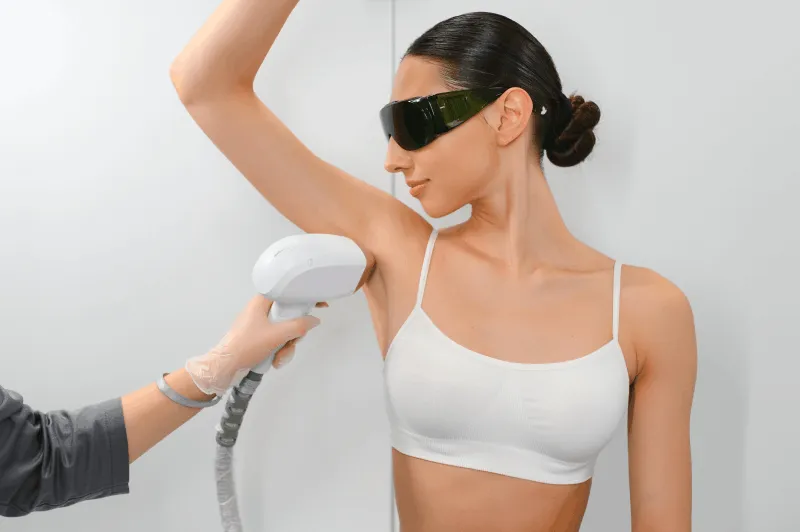
What is the Relationship Between Laser and Sunscreen Use?
The laser hair removal procedure creates heat damage in the lower layers of the skin, and this situation temporarily makes the skin more sensitive to external factors. After the procedure, the melanin production mechanism of the skin is stimulated. If you are exposed to sunlight without protection during this period, the skin may produce irregular pigment to protect itself and sunspots (hyperpigmentation) may form. Therefore, an individual undergoing laser hair removal should add a sunscreen with at least SPF 30 (preferably 50+) to their daily routine, regardless of the season. This not only prevents the risk of spotting but also supports the skin’s healing process.
Does the Brand of the Device Used Affect the Result?
Yes, the device brand and quality are 100% effective on the results. There are many imitation devices on the market sold under the name “Ice Laser” but are not the original Soprano Ice series. Non-original devices cannot deliver stable energy, their cooling systems are insufficient, and this leads to both the failure of the result and an increase in the risk of burns. Brands with FDA (U.S. Food and Drug Administration) approval have proven their safety by passing through thousands of clinical tests. Do not hesitate to ask the clinic about the brand and model of the device; because the path to smoothness passes through quality technology.
Do Hormonal Disorders Decrease Laser Efficiency?
Hormonal imbalances such as polycystic ovary syndrome (PCOS) or thyroid problems are the primary elements that trigger hair production in the body. If you have a fundamental hormonal problem, even if laser hair removal sheds the hair, the body may continue to produce new follicles. In such cases, a medical treatment should be maintained in parallel with laser hair removal. In people with hormonal disorders, the number of sessions is usually higher and interim sessions are needed more often. However, this does not mean that laser is ineffective; with correct planning, excellent results can be obtained in these people as well.
How Long Should the Intervals Between Laser Sessions Be?
Session intervals are adjusted according to the hair cycle. Since hair grows slower in the body area, session intervals should generally be 6 to 8 weeks. In the facial area, hair grows very fast, so sessions are performed at 4 to 5-week intervals. Going to sessions too early causes hairs that have not yet entered the growth phase to be scanned in vain. Going too late may cause you to miss the anagen phase of the hair. Your specialist will create the most ideal appointment schedule for you by monitoring your hair growth rate. Regular follow-up shortens the total process.
Does Laser Hair Removal Have Long-Term Effects on Health?
Laser hair removal technology has been used in the medical and aesthetic world for over 30 years, and no long-term health risks (for example, cancer risk) have been identified to date. Laser light is non-ionizing radiation, meaning it does not have the power to disrupt the cell’s DNA. It only focuses on the melanin pigment in the hair follicle and finishes its energy there. It is physically impossible for it to reach internal organs, lymph nodes, or the reproductive system. When applied with correct parameters, it is a much healthier personal care method than the irritation created by a razor or the sagging caused by waxing.
What are the Advantages of Receiving Treatment With Cure Holiday?
In a sensitive process like laser hair removal, choosing the right clinic is the most important factor determining the quality of the result you will get. Cure Holiday offers you the highest segment laser technologies with its global experience in health tourism and aesthetic applications. When you choose to be treated with us, you not only get rid of unwanted hair but also feel special in a luxurious and hygienic clinic environment. Our protocols serving at international standards ensure the determination of parameters specific to each individual’s skin type. With Cure Holiday quality, the laser hair removal process turns into a pleasant personal care transformation rather than a source of stress.
Why Should You Choose Cure Holiday’s Expert Staff?
No matter how advanced the technology is, the expertise of the person using it determines the success. The aestheticians and specialists working within Cure Holiday are professionals who have received advanced training in laser technologies and have experience in thousands of different cases. They make the most accurate skin analysis and decide which of the Alexandrite, Diode, or Ice Laser options will provide maximum efficiency for you. Thanks to our careful working principle that minimizes all possible risks, you enjoy the peace of knowing you are in safe hands. We aim not only to shed hair but also to protect your skin health in the long run.
How Can You Achieve Smooth Skin With Cure Holiday?
Your journey to a smooth skin starts with a detailed consultation with Cure Holiday experts. Your hair structure, hormonal history, and skin sensitivity are meticulously evaluated. Then, a specific session schedule is created for you with our FDA-approved systems, which are the best devices in the world. Your care processes during and after the treatment are followed by our team. Bringing together the comfort of modern technology and the trust provided by expertise, Cure Holiday offers you the smooth and silky skin you have dreamed of for years as a promise. The most professional way to say goodbye to unwanted hair starts here.
How Can You Book Your Cure Holiday Appointment for Your Dream Look?
You no longer need to wait any longer for this valuable investment you will make for your body. To step into the privileged world of Cure Holiday and learn about the laser hair removal package most suitable for you, you can contact us immediately. By booking an appointment through our website or contact numbers, you can ask our experts anything you are curious about. By starting your sessions early, it is in your hands to enjoy smoothness to the fullest. Simplify your life with Cure Holiday, break free from the bondage of hair, and refresh your self-confidence. Take your place among our thousands of happy guests right now!
Free Consultation
Fill out the form below to get your free medical travel plan and price quote.
Sources and how to verify this yourself
- Ministry of Health, Regulation on International Health Tourism and Tourist Health, Official Gazette 26 April 2025, No. 32882 — authorisation requirement for facilities and intermediaries, TÜSKA accreditation, compulsory complication insurance (deadline 31 December 2025 for insurance, 31 December 2026 for accreditation). source
- Ministry of Health, Regulation on Promotion and Information Activities in Health Services, Official Gazette 12 November 2025, No. 33075 — treatment promises and guarantees are prohibited; price and campaign announcements are permitted only within international health tourism. source