Cost and planning note (2026)
The figures below are indicative market ranges for 2026, not a quote: your own price depends on the clinic, the surgeon and your clinical assessment.
Indicative price range: Rhinoplasty: 2,800 – 4,500 USD | Facelift Deep Plane: 4,500 – 8,000 USD | Liposuction Vaser: 2,500 – 4,000 USD | Mommy Makeover: 6,000 – 10,000 USD
Facility standards: In Türkiye, any facility treating international patients must hold the Ministry of Health’s international health tourism authorisation; hospitals and medical centres must also be accredited by TÜSKA, and complication insurance is compulsory for procedures carried out in an operating theatre (Regulation of 26 April 2025). Ask us for the authorisation of the facility you are matched with.
Currency: USD / EUR / GBP accepted at all clinics.
Rhinoplasty for Wide Nostrils: Achieving Balance with Alar Base Reduction in Turkey
Rhinoplasty for Wide Nostrils: Achieving Balance with Alar Base Reduction
Wide nostrils, or flared nasal base, represent a common aesthetic concern, often disproportionate to other facial features. Rhinoplasty addressing this concern – specifically, alar base reduction – is a frequently sought-after procedure within the field of facial plastic surgery. This pillar will delve into the medical foundations, technical definitions, and global standards governing this specific rhinoplasty technique, with a particular focus on its execution in Turkey.
Understanding Alar Base Anatomy & Disproportion
The alar base refers to the lower lateral cartilage framework of the nose, which defines the nostril width. A naturally wide alar base isn’t inherently pathological; however, when it appears excessively broad in relation to the nasal length, bridge height, and overall facial harmony, it can detract from aesthetic balance. This disproportion can be due to several factors, including genetics, cartilaginous laxity, or prior trauma. Assessing this requires a meticulous pre-operative evaluation focusing on the nasolabial angle (the angle between the base of the nose and the upper lip), nasal length-to-width ratio, and the projection of the nasal tip.
It’s crucial to differentiate between a genuinely wide alar base and the *illusion* of width created by a weak or poorly defined nasal tip. Often, addressing tip definition and projection simultaneously with alar base reduction yields the most aesthetically pleasing results. A comprehensive evaluation will distinguish between these scenarios using both clinical examination and, increasingly, 3D imaging to accurately model predicted outcomes.
Surgical Techniques for Alar Base Reduction
Several techniques are employed for alar base reduction, each with its own advantages and limitations. Historically, simple wedge resections were common; however, these could lead to a “pinched” or unnatural nostril appearance due to excessive scar contraction. Modern techniques prioritize preservation of nasal function and natural aesthetics.
- Cartilage Reshaping: This involves meticulously reshaping and re-suturing the alar cartilages. Using techniques like lateral crural cinch sutures or scoring of the cartilage, surgeons can narrow the nostril width without removing cartilage. This preserves structural integrity and minimizes the risk of collapse.
- Cartilage Grafting: In cases of significant weakness or asymmetry, cartilage grafts – often harvested from the septum, ear, or rib – can be used to provide structural support and refine the alar base contour. Spreader grafts, meticulously placed along the nasal dorsum, can indirectly influence alar base width by providing support to the middle vault.
- Wedge Resection (Modified): While often avoided as a standalone procedure, a carefully planned, minimal wedge resection can be integrated into a broader rhinoplasty strategy. Precise measurements and careful wound closure are paramount to prevent noticeable scarring or distortion.
- Piezo Rhinoplasty: This technique, utilizing ultrasonic vibrations, allows for incredibly precise cartilage reshaping. The Piezo Rhinoplasty technology employed by surgeons in Turkey allows for refined sculpting of the alar cartilages with minimal trauma to surrounding tissues, resulting in reduced swelling and faster recovery. This is becoming an increasingly popular choice for patients seeking natural-looking results.
Surgical Planning & Considerations
Pre-operative planning is paramount. Surgeons utilize nasal analysis to identify the specific anatomical factors contributing to the wide nostrils. This includes evaluating the shape and size of the alar cartilages, the width of the nasal base, and the relationship between the nostrils and the surrounding facial structures. Digital imaging allows for visualization of potential outcomes and facilitates communication between the surgeon and the patient.
Crucially, a realistic assessment of skin thickness is essential. Thin skin may exhibit more contour irregularities after surgery, while thicker skin can camouflage subtle imperfections but may also be more prone to long-term settling and asymmetry. Furthermore, patients with pre-existing nasal obstruction or breathing difficulties require careful evaluation to ensure that the rhinoplasty doesn’t exacerbate these issues. Sometimes a septoplasty or turbinate reduction is incorporated alongside alar base reduction to address functional concerns.
Turkey as a Destination for Rhinoplasty: Standards & Costs
Turkey has emerged as a prominent destination for medical tourism, including rhinoplasty. This is driven by a combination of highly skilled surgeons, state-of-the-art facilities, and significantly lower costs compared to Western countries. Rhinoplasty costs in Turkey range from 2,800 – 4,500 USD. It’s essential, however, to verify the surgeon’s credentials and the facility’s accreditation. Reputable clinics in Turkey adhere to rigorous JCI (Joint Commission International) Accredited standards, as well as regulations set by the Turkish Ministry of Health.
Patients should prioritize facilities that offer comprehensive care, including pre-operative medical evaluations, surgical procedures performed by board-certified plastic surgeons, and post-operative follow-up. The currency accepted is predominantly USD, EUR, and GBP, providing convenience for international patients.
Post-Operative Care & Recovery in Turkey
Following alar base reduction, patients typically remain in Turkey for 7-10 days for initial recovery and wound monitoring. Post-operative instructions include strict adherence to nasal splint and taping protocols, gentle wound care, and avoidance of strenuous activities. Minor swelling and bruising are common and typically subside within the first few weeks. However, final results are not fully apparent for 3-6 months, as the tissues continue to settle and remodel. Recovery hubs in Turkey, like those in Istanbul (City/Boutique), Antalya (Resort/Beach), and Izmir (Aegean/Thermal), offer varying levels of comfort and support during the recovery period, allowing patients to combine their medical journey with a relaxing vacation.
Long-term follow-up is crucial to monitor for any potential complications, such as nasal obstruction, asymmetry, or scarring. While rare, these can often be addressed with minor revision surgery.
Alar Base Reduction: The Surgical Technique
Rhinoplasty addressing wide nostrils, specifically through alar base reduction, is a nuanced procedure requiring meticulous surgical planning and execution. While seemingly a focused refinement, successful alar base reduction isn’t isolated; it’s intrinsically linked to overall nasal harmony and aesthetic principles. This section details the surgical journey, employing techniques commonly utilized in accredited Turkish facilities. The goal is not simply to narrow the nostrils, but to create a proportionate and natural-appearing nasal base.
Pre-Operative Planning & Assessment
Thorough pre-operative assessment is paramount. Beyond standard photographic analysis, including oblique and basal views, we utilize 3D facial imaging (morphometry) to quantify nostril width and project potential reductions. This digital modeling allows for precise surgical planning and patient visualization of expected outcomes. Key considerations include the patient’s nasal tip projection, lobule size and shape, and the overall relationship of the nasal base to the lip and philtrum. Patients with significant nasal asymmetry require meticulous planning to ensure balanced correction.
Surgical Techniques – Alar Base Reduction Methods
Several techniques can be employed for alar base reduction. The chosen method is dictated by the degree of reduction needed and the patient’s anatomical characteristics.
- Wedge Resection: This remains a gold standard. A carefully planned wedge of tissue is removed from the alar base, bringing the nostrils closer together. The incision is typically placed along the natural alar crease to minimize visible scarring. Precise measurement and symmetrical excision are crucial to avoid asymmetry and a “pinched” nasal appearance.
- Cartilage Modification: In some cases, especially where minimal reduction is desired, cartilage modification is preferred. This involves reshaping the alar cartilages – the structural framework of the nostrils – to reduce their flare. Techniques include suture repositioning (alar cartilage suturing) and, less commonly, cartilage grafting.
- Composite Alar Reduction: This more complex technique combines wedge resection with cartilage reshaping. It’s often reserved for patients requiring significant reduction or those with compromised alar cartilage.
- Piezo Rhinoplasty Application: Though not exclusively for alar base reduction, Piezo Rhinoplasty technology allows for precise bone and cartilage remodeling with minimal trauma. Using ultrasonic vibrations, it can subtly refine the nasal base, creating a more natural contour. This is becoming increasingly popular in Turkish clinics due to its reduced morbidity and faster recovery.
A Persona Case Study: Mrs. Eleanor Vance, 45yo from the UK
Mrs. Vance presented with a primary concern regarding the width of her nostrils, which she felt disproportionate to her other facial features. Clinical examination revealed a mild-to-moderate degree of alar flaring. 3D imaging confirmed a nostril width exceeding ideal aesthetic ratios. She had no significant medical history and was a non-smoker.
Surgical Plan: A modified wedge resection, coupled with alar cartilage suturing, was chosen to achieve a natural and balanced result. The planned reduction was 1.5mm per nostril. The procedure was performed under local anesthesia with intravenous sedation, minimizing discomfort and recovery time.
Procedure Steps:
- Infiltration with tumescent anesthesia containing epinephrine to minimize bleeding.
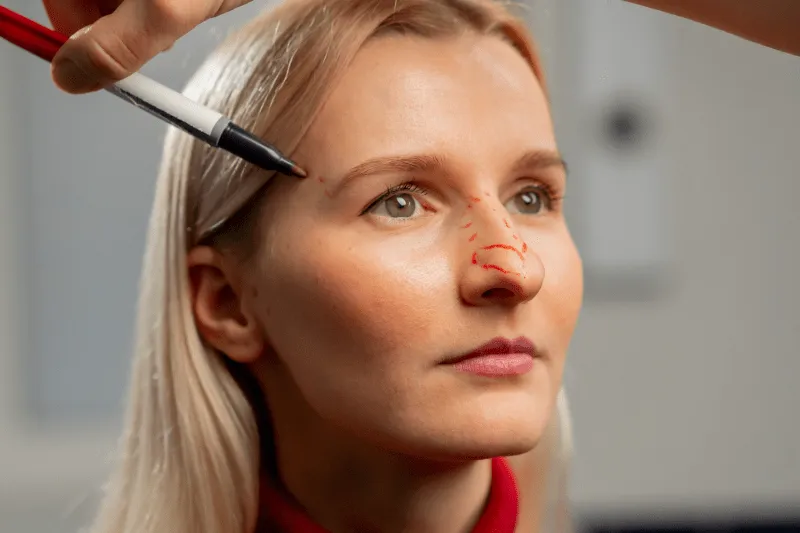
- Careful measurement and marking of the wedge resection area, ensuring symmetrical excision.
- Incision along the alar crease, meticulously following natural skin lines.
- Wedge resection of the alar base tissue.
- Suturing of the alar cartilages to provide additional support and refine the nostril shape.
- Skin closure with fine, absorbable sutures.
- Application of a splint and external taping to support the healing process.
Post-Operative Care: Mrs. Vance stayed in Istanbul for 7 days, utilizing a boutique recovery hub focused on personalized care. Regular wound checks and splint removal were performed. She was instructed on gentle wound care and avoidance of strenuous activity for 4-6 weeks. Follow-up photographs were exchanged with the surgeon at 1 week, 1 month, 3 months, and 6 months post-operatively.
Risk Mitigation and Potential Complications
As with any surgical procedure, alar base reduction carries inherent risks. Our Turkish facilities prioritize patient safety through stringent protocols and highly qualified surgeons. Potential complications include:
- Wound Healing Issues: Infection or delayed wound healing, particularly in smokers or patients with compromised immune systems. Pre-operative optimization of health and meticulous surgical technique minimize this risk.
- Asymmetry: Despite careful planning, subtle asymmetries can occur. Revision surgery may be necessary in some cases.
- Notch Deformity: Excessive tissue removal can lead to a noticeable “notch” at the alar base. Conservative excision and appropriate cartilage support are crucial for prevention.
- Altered Nasal Tip Support: Excessive manipulation of the alar cartilages can affect nasal tip projection. Cartilage grafting may be used to address this.
- Sensory Changes: Temporary numbness or altered sensation around the nostrils can occur. This typically resolves within several months.
Mitigation Strategies: We employ meticulous surgical technique, prophylactic antibiotics, and comprehensive post-operative care to minimize these risks. Patients are thoroughly informed about potential complications during the pre-operative consultation, and a contingency plan is established should any issues arise. All facilities are JCI (Joint Commission International) Accredited and strictly adhere to Ministry of Health regulations.
Financial Considerations & Logistics
The cost of rhinoplasty for wide nostrils in Turkey generally ranges from 2,800 – 4,500 USD, depending on the surgeon’s experience, the complexity of the case, and the chosen recovery package. This typically includes surgeon’s fees, anesthesia, hospital stay, and post-operative care. Package options offering accommodation and airport transfers are readily available. Patients can remit payment in USD, EUR, or GBP. Most UK/US/EU citizens are eligible for an E-visa for a 90-day stay in Turkey. Recovery hubs are available in various locations, including cosmopolitan Istanbul, resort-style Antalya, and the thermal spas of Izmir, offering diverse recovery experiences.
Recovery Logistics: Navigating Post-Operative Care in Turkey
Following alar base reduction rhinoplasty – a procedure specifically addressing wide nostrils to achieve facial harmony – the recovery phase is paramount. While the surgical technique itself, increasingly employing methods like Piezo Rhinoplasty for its precision, minimizes trauma, a comprehensive understanding of the post-operative period is crucial for optimal healing and aesthetically pleasing results. This section details the logistical considerations and recovery timeline for patients undergoing this procedure in Turkey, alongside a detailed cost audit comparing Turkish pricing with Western alternatives.
Immediate Post-Operative Phase (Days 1-3)
The initial 72 hours post-surgery are focused on managing acute inflammation and ensuring haemostasis. Patients will typically remain under observation in a private recovery suite within the chosen clinic. Expect the application of a splint and potentially internal nasal splints (sutures) to maintain nasal structure during the initial healing phase. These splints are typically composed of absorbable materials or are removed at a follow-up appointment around day 5-7. Expect mild to moderate discomfort, effectively managed with prescribed analgesics – often a combination of opioid and non-opioid options, tailored to individual pain thresholds. Strict adherence to head elevation (at least 30 degrees) is vital to minimize edema (swelling). Oral hygiene protocols, including gentle saline nasal irrigation, are initiated to prevent secondary infection. The nasal dressing change schedule will be meticulously outlined by the surgeon, emphasizing aseptic technique.
Intermediate Recovery (Days 4-10): Antalya vs. Istanbul Considerations
This phase marks a transition to outpatient care. For patients electing to recover in Antalya, the resort environment offers a unique advantage. The warmer climate, coupled with access to coastal breezes, can subtly aid lymphatic drainage, reducing post-operative swelling. However, it’s essential to avoid prolonged direct sun exposure, which can exacerbate inflammation and pigmentation changes. Clinics in Antalya often partner with hotels offering dedicated post-operative care packages, including nursing visits and transportation to follow-up appointments.
Istanbul, conversely, provides a more cosmopolitan experience. Clinics in the city center or boutique districts offer a higher density of specialist care, beneficial for patients requiring more complex post-operative management. However, the bustling urban environment may necessitate more planning to ensure convenient access to appointments and a peaceful recovery environment. Clinics often offer drivers to facilitate transportation, and pre-booked appointments are essential. Post-operative compression garments, often overlooked, are strongly recommended for managing subtle facial swelling. Lymphatic drainage massage, performed by a qualified therapist, can be initiated from day 7, further enhancing edema resolution.
Long-Term Healing and Cost Audit (3-6 Months)
Complete resolution of swelling and final aesthetic assessment typically occurs between 3-6 months post-surgery. While minor residual swelling may persist for up to a year, the majority of the aesthetic refinement is visible within this timeframe. During this period, patients are advised to avoid strenuous physical activity, impact sports, and excessive sun exposure. Follow-up appointments, initially weekly, then monthly, are crucial to monitor healing progression and address any concerns. Scar management protocols, if applicable (small alar base incisions are often used), may involve silicone sheeting or topical scar revision creams.
2026 Cost Audit: Turkey vs. Western Countries
The economic advantage of undergoing alar base reduction rhinoplasty in Turkey remains significant. Based on current data and projected market trends, a comparative analysis reveals the following (all costs in USD):
- Rhinoplasty (Alar Base Reduction) – Turkey: 2,800 – 4,500
- Rhinoplasty (Alar Base Reduction) – United States: 6,000 – 12,000
- Rhinoplasty (Alar Base Reduction) – United Kingdom: 5,000 – 9,000
- Rhinoplasty (Alar Base Reduction) – Germany: 4,000 – 8,000
This price differential isn’t solely due to lower labor costs. Turkish clinics often operate with streamlined administrative structures and benefit from favorable exchange rates. The package price typically includes surgeon’s fees, anesthetic fees, facility costs, pre-operative assessments, post-operative care, and accommodation. However, patients must factor in the cost of flights, visa (typically manageable at 50-100 USD for an e-visa for eligible citizens), and incidental expenses.
Technological Advancements and Recovery Synergies
The integration of advanced surgical technologies, such as Piezo Rhinoplasty, contributes to a smoother recovery process. Piezo Rhinoplasty utilizes ultrasonic vibrations to precisely reshape nasal cartilage and bone, minimizing trauma to surrounding tissues and reducing post-operative bruising and swelling. Furthermore, clinics in Turkey are increasingly adopting complementary modalities like Vaser Hi-Def liposuction (ranging from 2,500 – 4,000 USD) and Deep Plane Facelifts (4,500 – 8,000 USD), allowing patients to potentially combine procedures and optimize recovery time. A “Mommy Makeover” package, encompassing multiple procedures, is frequently available at a cost of 6,000 – 10,000 USD.
Medical Verdict: Assessing Quality and Safety
The quality of medical care in Turkey is rigorously regulated. Clinics offering medical tourism services are increasingly focused on international accreditation, with many holding JCI (Joint Commission International) accreditation, signifying adherence to global best practices. The Turkish Ministry of Health maintains strict oversight of medical facilities and practitioners. Patients are encouraged to verify the surgeon’s qualifications, board certification, and experience in alar base reduction rhinoplasty. Pre-operative medical evaluations, including blood tests and a thorough medical history review, are standard procedure. Furthermore, the availability of multilingual staff and translation services ensures clear communication and addresses any linguistic barriers.
The recovery hubs of Istanbul, Antalya, and Izmir each offer unique benefits. Izmir, known for its Aegean coastline and thermal spas, provides a quieter recovery environment, suitable for patients prioritizing tranquility. Ultimately, the optimal choice depends on individual preferences and post-operative care requirements. However, regardless of the location, a proactive approach to recovery, coupled with adherence to the surgeon’s instructions, is paramount for achieving a successful outcome.
Ready to consult a specialist? Schedule a Free Consultation for Rhinoplasty for Wide Nostrils in Turkey with cureholiday.com
Free Consultation
Fill out the form below to get your free medical travel plan and price quote.
Sources and how to verify this yourself
- Ministry of Health, Regulation on International Health Tourism and Tourist Health, Official Gazette 26 April 2025, No. 32882 — authorisation requirement for facilities and intermediaries, TÜSKA accreditation, compulsory complication insurance (deadline 31 December 2025 for insurance, 31 December 2026 for accreditation). source
- Ministry of Health, Regulation on Promotion and Information Activities in Health Services, Official Gazette 12 November 2025, No. 33075 — treatment promises and guarantees are prohibited; price and campaign announcements are permitted only within international health tourism. source