About the prices on this page. The figures below are indicative market prices and country comparisons, not a quote. Our own current, all-inclusive prices are published on our cosmetic surgery in Turkey page, and we confirm your figure in writing before you commit to anything.
Cost and planning note (2026)
The figures below are indicative market ranges for 2026, not a quote: your own price depends on the clinic, the surgeon and your clinical assessment.
Indicative price range: Rhinoplasty: 2,800 – 4,500 USD | Facelift Deep Plane: 4,500 – 8,000 USD | Liposuction Vaser: 2,500 – 4,000 USD | Mommy Makeover: 6,000 – 10,000 USD
Facility standards: In Türkiye, any facility treating international patients must hold the Ministry of Health’s international health tourism authorisation; hospitals and medical centres must also be accredited by TÜSKA, and complication insurance is compulsory for procedures carried out in an operating theatre (Regulation of 26 April 2025). Ask us for the authorisation of the facility you are matched with.
Currency: USD / EUR / GBP accepted at all clinics.
Rhinoplasty for Deviated Septum: Combining ENT Expertise with Aesthetic Skill
Rhinoplasty for Deviated Septum: A Foundation in ENT and Aesthetic Principles
Rhinoplasty, commonly known as a “nose job,” extends far beyond purely cosmetic considerations. While aesthetic refinement is frequently sought, a significant proportion of rhinoplasty procedures address functional impairments, particularly those stemming from a deviated nasal septum. This pillar focuses on the ‘What’ and ‘Why’ of rhinoplasty performed specifically to correct a deviated septum, detailing the medical foundation, technical nuances, and global standards surrounding this complex procedure. Understanding the interplay between anatomical correction and aesthetic optimization is paramount for successful outcomes.
Understanding Septal Deviation: Etiology and Impact
The nasal septum, composed of cartilage and bone, divides the nasal cavity into two passages. A deviated septum occurs when this central wall is significantly displaced to one side. This displacement can be congenital – present at birth – or acquired through trauma, such as a nasal fracture. Even minor deviations are common, but when substantial, they can lead to significant respiratory obstruction, chronic sinusitis, nosebleeds (epistaxis), and even sleep disturbances. The degree of deviation is assessed through clinical examination, including nasal endoscopy, and potentially, a CT scan of the paranasal sinuses to visualize the extent of the structural abnormality and rule out other contributing factors like turbinate hypertrophy.
Surgical Techniques: From Traditional to Piezo
Historically, septoplasty – the surgical correction of a deviated septum – was performed using a combination of techniques involving submucosal resection (removal of deviated cartilage and bone) and septal reconstruction. Modern rhinoplasty, however, often integrates septoplasty as a core component within a holistic approach. This allows for simultaneous functional correction and aesthetic refinement. The surgeon aims to straighten the septum without excessively weakening the nasal structure. Techniques include:
- Septal Spreader Grafts: These cartilage grafts, often harvested from the septum itself or the ear, are placed along the dorsal septum to widen the internal nasal valve, improving airflow and preventing collapse. They’re crucial in cases where spreader graft placement is complicated by a severely deviated and unstable septum.
- Dorsal Onlay Grafts: Similar to spreader grafts, these are used to augment the dorsal septum, providing structural support and correcting external dorsal irregularities.
- Cartilage Scoring and Suturing: In less severe deviations, carefully placed cartilage scores (weakening the cartilage to allow reshaping) and sutures can effectively redirect and stabilize the septum.
- Piezo Rhinoplasty: A relatively recent advancement, Piezo rhinoplasty utilizes ultrasonic vibrations to precisely reshape the nasal bone and cartilage. This technique minimizes trauma to surrounding tissues, leading to reduced swelling, bruising, and faster recovery. It’s particularly beneficial when addressing complex septal deviations as the precision allows for minimal disruption of the remaining supportive structures. This is a key technology offered alongside traditional approaches.
The Interplay of Function and Aesthetics
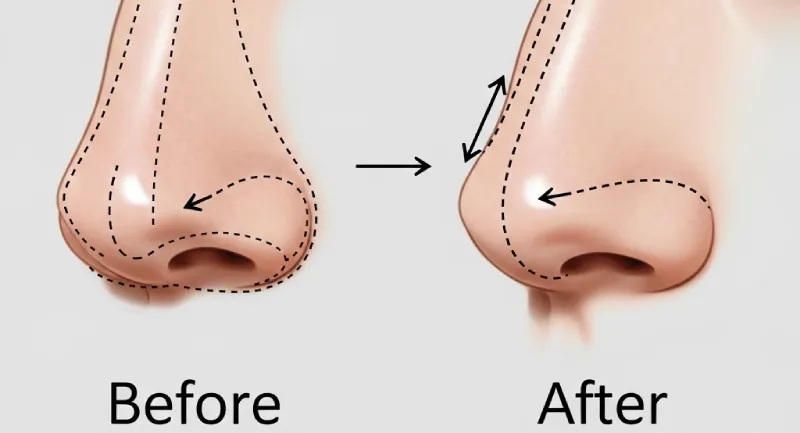
Correcting a deviated septum isn’t simply about ‘straightening’ the nose. The procedure must consider the entire nasal framework. Adjusting the septum impacts the external nasal valves – the narrowest part of the nasal airway – and altering these valves without proper support can lead to nasal collapse. Furthermore, the surgeon must evaluate and address potential compensatory changes that have occurred over time. For instance, a long-standing septal deviation may cause the nasal bones to remodel, requiring osteotomies (controlled fractures of the nasal bones) to achieve symmetry and improve function. The aesthetic goals, whether refining the tip, reducing a dorsal hump, or narrowing the nasal base, must be seamlessly integrated with the functional reconstruction. This requires a surgeon with dual expertise in both Otolaryngology (ENT) and Facial Plastic Surgery.
Preoperative Evaluation & Diagnostic Tools
A comprehensive preoperative evaluation is critical. This includes a detailed medical history, physical examination (including nasal endoscopy), and potentially imaging studies. Nasal obstruction is quantified using subjective nasal obstruction scores (SNOT-22) and objective measurements like peak nasal inspiratory flow rate (PNIF). Computed Tomography (CT) scans of the paranasal sinuses are often performed to evaluate the degree of septal deviation, identify any associated sinus disease, and assess the overall nasal anatomy. 3D imaging and modeling are increasingly utilized to provide patients with a realistic preview of potential outcomes and facilitate precise surgical planning. Functional rhinoplasty also needs to rule out other causes of nasal obstruction, like allergic rhinitis or nasal polyps.
Global Standards and Considerations for Medical Tourism
For patients considering medical tourism, particularly to destinations like Turkey, understanding the prevailing standards is crucial. In Turkey, medical facilities offering rhinoplasty, including those specializing in deviated septum correction, are increasingly adhering to international accreditation standards. We prioritize clinics holding JCI (Joint Commission International) accreditation and operating under the strict regulations of the Ministry of Health. This ensures adherence to stringent protocols for patient safety, surgical technique, and post-operative care.
Costs for rhinoplasty addressing a deviated septum range from 2,800 – 4,500 USD in Turkey, offering a significant price differential compared to procedures in North America or Western Europe. Comparable costs for other procedures include a Deep Plane Facelift (4,500 – 8,000 USD) and Vaser Hi-Def Liposuction (2,500 – 4,000 USD), demonstrating the overall value proposition of seeking treatment abroad. However, cost should *never* be the sole determinant. Patients must thoroughly research the surgeon’s qualifications, review before-and-after photos, and ensure clear communication regarding their expectations.
Postoperative Care & Recovery
Following rhinoplasty for a deviated septum, patients can typically expect a recovery period of 7-10 days in Turkey. This includes initial splinting and packing, followed by gradual removal and monitoring. Swelling and bruising are common but subside over several weeks. Final results are usually apparent 3-6 months postoperatively, allowing time for the tissues to settle and the nose to achieve its final shape. Postoperative instructions emphasize nasal hygiene, gentle activity restrictions, and follow-up appointments to ensure optimal healing. Common recovery hubs within Turkey include Istanbul (City/Boutique), Antalya (Resort/Beach), and Izmir (Aegean/Thermal), providing varying levels of comfort and support during the recuperation period. Currency acceptance typically includes USD, EUR, and GBP, facilitating easy payment for international patients. Most UK/US/EU citizens can benefit from an E-visa allowing a 90-day stay for treatment and recovery.
Rhinoplasty for Deviated Septum: A Surgical & Clinical Journey
Corrective rhinoplasty addressing a deviated nasal septum represents a significant portion of functional rhinoplasty procedures, often interwoven with aesthetic refinements. This pillar details the surgical journey for patients seeking to resolve breathing difficulties caused by septal deviation while achieving optimal nasal harmony. We’ll explore the step-by-step procedure, a detailed case study, and critical risk mitigation strategies, specifically within the context of procedures performed in Turkey.
Surgical Technique: Piezo Rhinoplasty & Septoplasty
The gold standard for addressing septal deviation, particularly when combined with cosmetic rhinoplasty, is a combination of septoplasty and, increasingly, Piezo Rhinoplasty. Traditional septoplasty involves reshaping, repositioning, or reconstructing the nasal septum – the cartilage and bone dividing the nasal cavity – to improve airflow. However, achieving precise and predictable results necessitates a more sophisticated approach. This is where Piezo Rhinoplasty comes into play.
Piezo Rhinoplasty utilizes piezoelectric technology – ultrasonic vibrations – to sculpt and reshape nasal bone and cartilage. Unlike traditional osteotomies performed with a hammer and chisel, piezo techniques offer several advantages:
- Precision: The ultrasonic vibrations allow for controlled bone and cartilage remodeling, minimizing trauma to surrounding soft tissues. This translates to reduced swelling, bruising, and improved healing.
- Selectivity: The surgeon can selectively target specific areas of the septum for correction, leaving healthy tissues undisturbed. This is crucial in complex cases involving subtle deviations or prior surgical attempts.
- Reduced Morbidity: Less tissue trauma means lower pain levels and a faster recovery period.
The surgical process typically unfolds as follows:
- Anesthesia: Procedures are generally performed under either local anesthesia with intravenous sedation or general anesthesia, depending on patient preference and the complexity of the case.
- Incision & Dissection: A limited incision is made inside the nose (closed rhinoplasty) or, in some cases, a small external incision is added (open rhinoplasty) to gain optimal access. The nasal skin and soft tissues are carefully dissected from the underlying cartilage and bone framework.
- Septal Evaluation & Correction: The septum is meticulously evaluated to pinpoint the location and severity of the deviation. Techniques include septal straightening, cartilage grafting (using the patient’s own septal cartilage or a spreader graft), and, in severe cases, cartilage reconstruction.
- Turbinate Management: Often, patients with a deviated septum also experience enlarged nasal turbinates (structures inside the nose that warm and humidify air). Cauterization, submucosal resection, or radiofrequency ablation may be performed to reduce turbinate size and further improve airflow.
- Osteotomies & Cartilage Reshaping (Piezo): Using the piezo device, the nasal bones are subtly reshaped to create symmetry and improve nasal projection. Cartilage is sculpted and refined to achieve the desired aesthetic outcome.
- Wound Closure: The incisions are closed with fine sutures, and a splint and external nasal cast are applied to provide support and protect the healing tissues.
Persona Case Study: Mr. Alistair Finch, 45, UK
Mr. Finch, a 45-year-old architect from London, presented with chronic nasal obstruction and recurring sinusitis. He reported significant difficulty breathing through his nose, particularly during exercise, and had experienced several sinus infections per year. Clinical examination revealed a significant deviation of the nasal septum towards the right side, obstructing the right nasal passage. Aesthetic concerns included a mild dorsal hump and nasal asymmetry.
Following a comprehensive consultation and 3D nasal modeling, Mr. Finch opted for Piezo Rhinoplasty with septoplasty. The surgical plan included septal reconstruction using a spreader graft, dorsal hump reduction, and osteotomies to correct mild nasal asymmetry. He chose to undergo the procedure in Istanbul, attracted by the combination of highly qualified surgeons and competitive pricing.
The surgery was performed under general anesthesia. The procedure lasted approximately 3.5 hours. Post-operatively, Mr. Finch experienced moderate swelling and bruising, managed with cold compresses and pain medication. He remained in Istanbul for 7 days, allowing for initial recovery and follow-up appointments. His total cost for the procedure, including hospital stay, anesthesia, and surgeon’s fees, was 3,800 USD. Follow-up photos at 3 months demonstrated significant improvement in nasal airway patency and a harmonious aesthetic result. He reported a marked improvement in his quality of life, with a significant reduction in sinus infections and improved breathing during physical activity.
Risk Mitigation & Post-Operative Care
As with any surgical procedure, rhinoplasty carries inherent risks. These include infection, bleeding, adverse reaction to anesthesia, persistent nasal obstruction, asymmetry, and numbness. Mitigation strategies are paramount:
- Surgeon Selection: Choosing a board-certified ENT surgeon with extensive experience in rhinoplasty and septoplasty is critical. In Turkey, verifying JCI accreditation and Ministry of Health regulation is essential to ensure adherence to international medical standards.
- Pre-Operative Optimization: Addressing any underlying medical conditions and optimizing the patient’s overall health prior to surgery minimizes complications.
- Meticulous Surgical Technique: Precise surgical technique, utilizing Piezo Rhinoplasty where appropriate, reduces trauma and improves healing.
- Post-Operative Compliance: Strict adherence to post-operative instructions is vital. This includes nasal saline irrigation, avoiding strenuous activity, and attending all scheduled follow-up appointments.
In the Turkish context, CureHoliday.com prioritizes patient safety by partnering with accredited hospitals and surgeons. We facilitate seamless travel arrangements, including visa assistance (E-visa available for most UK/US/EU citizens for a 90-day stay) and accommodation in carefully selected recovery hubs within Istanbul (City/Boutique), Antalya (Resort/Beach), or Izmir (Aegean/Thermal).
It is important to note that final results are typically visible after 3-6 months, as the tissues continue to settle and the swelling subsides. While other procedures like facelifts (4,500 – 8,000 USD) or liposuction (2,500 – 4,000 USD) may offer quicker visual changes, functional rhinoplasty requires patience and diligent post-operative care.
Rhinoplasty for Deviated Septum: Recovery Logistics, Cost Audit & Medical Verdict – A Deep Dive
Following successful surgical planning and execution of septorhinoplasty addressing a deviated septum, the patient’s post-operative journey is paramount to achieving both functional relief and aesthetic harmony. This pillar focuses specifically on the intricate recovery logistics, a comprehensive cost analysis comparing procedures in Turkey (Antalya & Istanbul) with Western countries, and a final, detailed assessment of the medical outcomes and potential complications. We will delve beyond simple timelines, exploring nuanced aspects of wound healing, potential revision scenarios, and the long-term implications of combining functional correction with aesthetic refinement.
Post-Operative Recovery: A Phased Approach
The initial 7-10 days following septorhinoplasty in Turkey are critical for establishing proper healing and minimising complications. This period necessitates close adherence to the surgeon’s post-operative instructions. Immediate post-operative care involves a splint or internal splints (resorbable or non-resorbable) to provide structural support to the nasal framework. Crucially, patients will experience varying degrees of nasal congestion and potential epistaxis (nosebleeds), managed with gentle saline irrigation and avoidance of strenuous activity. Pharmacological management typically includes analgesics for pain control – ranging from non-opioid options to short-term opioid use, carefully titrated to minimize dependency – and prophylactic antibiotics to reduce the risk of infection.
Beyond the immediate post-operative period, recovery progresses in phases. Swelling, a natural inflammatory response, peaks around days 3-5 and gradually subsides over weeks to months. Bruising, if present, typically resolves within 1-2 weeks. Patients undergoing simultaneous septoplasty and rhinoplasty benefit from addressing both functional and aesthetic components concurrently, however, this can sometimes lead to prolonged swelling. We emphasize the importance of lymphatic drainage massage, initiated cautiously after the first week, to accelerate the resolution of oedema and optimise tissue contouring. The use of pulsed electromagnetic field therapy (PEMF) is increasingly explored as an adjunct to reduce swelling and promote wound healing, though evidence remains evolving.
Final results are typically visible within 3-6 months, although subtle refinements may continue for up to a year. It’s vital for patients to understand that nasal tip definition, and the ultimate assessment of the aesthetic outcome, requires complete resolution of swelling and tissue settling. Any persistent nasal obstruction warrants investigation, potentially requiring endoscopic evaluation to rule out internal valve stenosis or mucosal adhesion.
Cost Audit: Turkey vs. Western Nations
The economic advantages of undergoing septorhinoplasty in Turkey are substantial, primarily due to lower operational costs and favourable exchange rates. A septorhinoplasty procedure in Turkey ranges from 2,800 – 4,500 USD, a significant reduction compared to prices in the US, Canada, or Western Europe, where costs can easily exceed $8,000 – $15,000 USD. The cost differential extends beyond the surgical fee to encompass hospital stays, anaesthesia, and post-operative care. However, it’s crucial to account for ancillary expenses such as flights, accommodation, and travel insurance.
Here’s a comparative overview:
- Rhinoplasty: Turkey (2,800 – 4,500 USD) vs. Western Countries (8,000 – 15,000+ USD)
- Facelift (Deep Plane): Turkey (4,500 – 8,000 USD) vs. Western Countries (12,000 – 25,000+ USD) – *relevant for combination surgeries*
- Liposuction (Vaser): Turkey (2,500 – 4,000 USD) vs. Western Countries (6,000 – 12,000+ USD) – *often considered as adjunct procedures*
- Mommy Makeover: Turkey (6,000 – 10,000 USD) vs. Western Countries (15,000 – 30,000+ USD) – *illustrates overall cost savings potential.*
The recovery hubs of Istanbul and Antalya offer different cost-benefit profiles. Istanbul, a vibrant metropolitan city, generally has slightly higher accommodation and logistical costs compared to Antalya, a resort destination. Antalya’s all-inclusive hotel options can provide a streamlined and cost-effective recovery experience, particularly beneficial for patients opting for extended stays. Currency fluctuations (USD, EUR, GBP) should be monitored prior to booking to maximise savings.
The Final Medical Verdict: Assessing Outcomes and Managing Complications
While the vast majority of septorhinoplasties yield positive outcomes, potential complications, though rare, must be understood. These can be categorized as early (within the first few weeks) and late (months to years post-surgery). Early complications include haematoma formation (requiring prompt drainage), infection (managed with antibiotics), and wound dehiscence (rare, but necessitating surgical repair). Late complications encompass subtle asymmetries, tip ptosis (drooping), persistent nasal obstruction, and, in exceedingly rare cases, septal perforation.
The implementation of Piezo Rhinoplasty, a bone-reshaping technique using ultrasonic vibrations, is gaining prominence. This technology allows for more precise and controlled osteotomies (bone cuts), minimizing trauma and reducing post-operative morbidity. However, the surgeon’s skill and experience remain the most critical factor. Revision rhinoplasty, while sometimes unavoidable, is becoming less frequent due to advancements in surgical techniques and pre-operative planning (utilizing 3D imaging and virtual surgical planning).
The assessment of functional outcomes involves evaluating nasal airflow resistance using rhinomanometry and subjective patient-reported outcome measures (PROMs) assessing breathing difficulty and quality of life. Aesthetic assessment, while more subjective, relies on standardized photographic documentation and evaluation of nasal proportions, symmetry, and overall harmony with the patient’s facial features. We adhere to stringent medical protocols, including JCI (Joint Commission International) accreditation and adherence to Ministry of Health regulations, ensuring the highest standards of patient safety and care. Careful patient selection, realistic expectations, and meticulous surgical technique are the cornerstones of successful septorhinoplasty, delivering both functional restoration and aesthetic refinement.
Ready to consult a specialist? Schedule a Free Consultation for Rhinoplasty for Deviated Septum in Turkey with cureholiday.com
Free Consultation
Fill out the form below to get your free medical travel plan and price quote.
Sources and how to verify this yourself
- Ministry of Health, Regulation on International Health Tourism and Tourist Health, Official Gazette 26 April 2025, No. 32882 — authorisation requirement for facilities and intermediaries, TÜSKA accreditation, compulsory complication insurance (deadline 31 December 2025 for insurance, 31 December 2026 for accreditation). source
- Ministry of Health, Regulation on Promotion and Information Activities in Health Services, Official Gazette 12 November 2025, No. 33075 — treatment promises and guarantees are prohibited; price and campaign announcements are permitted only within international health tourism. source