
What is sexual orientation?
Sexual orientation is an internal state that defines which gender an individual feels emotional, romantic, or sexual attraction toward. This can be an inherent part of a person from birth, or it may be a process of self-discovery that unfolds over time. Sexual orientation covers a wide spectrum, including heterosexuality, homosexuality, bisexuality, and asexuality. Being gay simply means that a man is attracted primarily to other men. This situation is entirely personal and does not always carry definitive signs that can be easily noticed from the outside by observers.
Is physical appearance a clue?
There is a widespread belief in society that gay men have a specific physical appearance; however, this is a major misconception. Appearance reflects a person’s fashion sense, cultural identity, or simply their mood on a given day. Being well-groomed, exercising, or having a certain haircut does not mean a man is gay. Many heterosexual men also pay extreme attention to their physical appearance. Therefore, reaching a definitive judgment about someone’s sexual orientation based solely on their looks lacks a scientific or logical foundation for any observer.
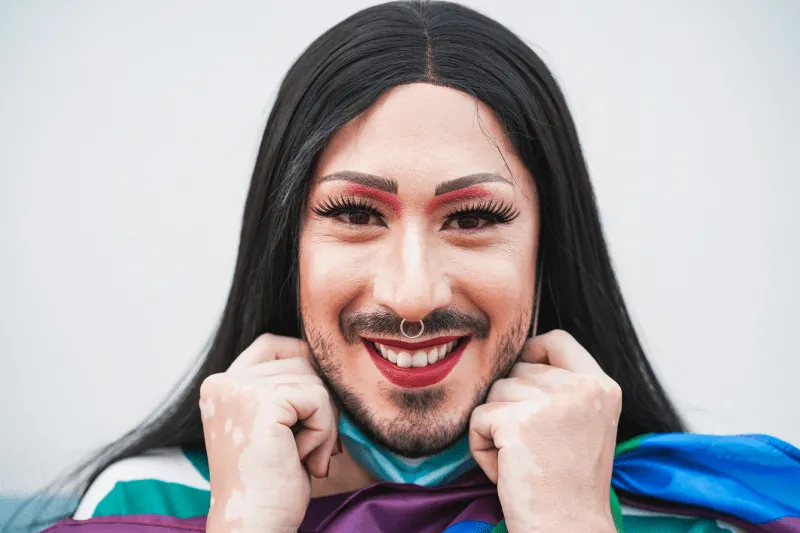
Does clothing style count as a sign?
Clothing style is one of the ways individuals express themselves to the world. Although some clothing styles were associated with gay subculture in the past, these boundaries have completely disappeared in today’s globalized fashion world. Wearing skinny jeans, colorful shirts, or specific accessories does not provide clear evidence of a person’s orientation. Fashion trends change very rapidly, and concepts like “metrosexuality” have popularized the importance of aesthetics among heterosexual men as well. Consequently, clothing is not a reliable data source for determining someone’s sexual orientation.
What do grooming habits reveal?
Personal grooming has become a topic that every man cares about in the modern world. Habits such as skincare, getting a manicure, or plucking eyebrows were once attributed only to gay men, but this situation has completely changed today. The growth of the male cosmetics industry shows that men of all orientations invest in their self-care. A man being very well-groomed may indicate that he has high aesthetic concerns or cares about his social status; however, this cannot be accepted as a criterion that determines his sexual preferences or identity.
How should body language be interpreted?
Body language is a powerful communication tool that carries subconscious messages. Some people claim that gay men have softer movements or a different posture than others. However, body language is largely related to upbringing, character structure, and social environment. A man acting gently or using his hands in a certain way may indicate a feminine nature, but femininity and homosexuality are completely different concepts. Just as there are many gay men with tough and masculine attitudes, there are also many heterosexual men with naive and gentle manners.
Does eye contact mean anything?
Eye contact is an indicator of interest and attention. The duration of a man’s gaze at another man, or the depth in his eyes, can sometimes be an indicator of attraction. It is known that there is a “cruising” culture used by gay men to notice each other in social settings. However, long-term eye contact does not always mean sexual interest; it could also be admiration, curiosity, or simply a social habit. For such a sign to gain meaning, it must be supported by the quality of the gaze and other non-verbal communication elements.
Is speaking style a determinant?
Some people think that gay men have a specific tone of voice or speaking rhythm (often referred to as the “gay accent”). Linguistic studies have revealed that such speech patterns are sometimes adopted as a symbol of belonging to a subculture, but this is not a biological reality. Many gay men have quite deep and masculine voices, while some heterosexual men may speak in a more high-pitched or emphatic manner. Speaking style is certainly insufficient data to determine someone’s sexual orientation and should not be used as a primary factor.
Do interests provide clues?
There is a prejudice in society that men interested in fields such as art, fashion, theater, or dance are more likely to be gay. However, interests are shaped by individual talents and curiosities. Preferring opera over a football match does not make a man gay, just as it is not surprising for a gay man to be a die-hard football fan. Hobbies and interests enrich a person’s inner world, but they do not stick to their sexual identity like a label or a definitive proof of preference.
How is social media used?
Social media is a digital showcase where people display or hide their identities. The accounts a man follows, the photos he likes, or the content he shares can sometimes give ideas about his interests. For example, someone who follows LGBTQ+ themed pages or supports this community may be part of the community himself. However, this is just an assumption; the person could simply be an ally. While digital footprints on social media sometimes provide clues, people can wear many different masks in the digital world.
Is the circle of friends an indicator?
A man having many female friends or usually spending time with gay individuals may raise questions about his sexual orientation. However, this is only about whom that person feels more comfortable with in their daily life. Some men prefer to be friends with women because they can establish deeper emotional bonds with them. A circle of friends shows a person’s social comfort zone; however, this comfort zone does not always have to reflect the group to which the person feels a sexual attraction.
How are relationships with women?
The relationship of a gay man with women is usually based on a pure friendship that does not carry romantic expectations. They can be more sincere because they feel they are in a less “competitive” environment around women. However, in some cases, gay men who have not yet come out may appear to be in a heterosexual relationship due to social pressure. Therefore, the fact that a man has a girlfriend or gets along very well with women is not enough to draw a definitive conclusion about his orientation.
What is the perspective on other men?
A man’s approach to his peers can provide the most organic clues about his orientation. It may be noteworthy if he makes detailed comments on the physical characteristics of other men, evaluates them deeply from an aesthetic point of view, or exhibits a different energy in environments where men are present. However, this situation may also remain at the level of professional admiration or just a “bromance” (close friendship between men). The line between attraction and appreciation is sometimes very thin and only the person himself can clarify it.
Does emotional depth make a difference?
There is a perception that gay men are generally more emotional or have a more developed sense of empathy. This situation may stem from the freedom to step outside the “tough guy” patterns imposed by society. If a man can express his emotions easily, cry, or show deep sensitivity to the pain of others, this shows that his emotional intelligence (EQ) is high rather than his sexual orientation. Emotionality is a universal human trait independent of gender or orientation and cannot be a marker on its own for identification.
Are cultural preferences important?
Cultural preferences cover a wide range from movies watched to books read. A special interest in LGBTQ+ themed productions may show a closeness to this culture. However, cinema, literature, and art are universal. A man watching “RuPaul’s Drag Race” does not make him gay; he might just find the show entertaining. Cultural tastes say a lot about a person’s character, but they do not provide definitive information about whom they want to share their private lives or intimacy with in a romantic sense.

How is the sense of art and aesthetics?
High aesthetic sensitivity, importance given to details, and a passion for visual beauty are cliché-like associated with homosexuality. The orientation of a man interested in interior architecture, graphic design, or floral arrangement may be questioned. However, the perception of aesthetics is related to how active the right lobe of the brain is and visual intelligence. Just as many genius artists and designers are heterosexual, there are many gay men who are not interested in aesthetics at all. Therefore, aesthetic perception cannot be used as a criterion.
How to understand flirting signs?
Flirting is the rising of energy between two people. A man’s flirtatious behavior toward another man can manifest itself through light touches, special compliments, and constant efforts to communicate. However, some people are naturally “friendly” and have a flirtatious nature toward everyone. These people act warmly toward everyone, and this situation can sometimes be misunderstood. To understand whether flirting signs are a real sexual interest or a general courtesy, one should look at whether this behavior is directed only at a specific person or at everyone.
What do jokes and humor tell us?
Humor is a way for people to reflect their taboos or real thoughts. The quality of a man’s jokes about the LGBTQ+ community can show his attitude toward this issue. A gay man who is at peace with himself can make clever and ironic jokes about this subject. On the other hand, it is a psychological fact that some men who make extremely homophobic jokes are actually trying to screen their own repressed feelings. A sense of humor can be a clue, but it is a very indirect way to determine a person’s real identity.
What is the approach to LGBTQ+ rights?
Ardent defense of gay rights may suggest that a person is part of this community. Many activists fight for their own identities. However, the concept of “ally” is very common today. Many heterosexual individuals support LGBTQ+ rights because of their belief in justice. Conversely, some gay individuals may choose to remain completely silent on these issues to hide themselves. Therefore, an ideological stance may not always coincide with sexual orientation in a way that provides a definitive answer.
What is learned from past relationships?
The fact that a man has lived only with women or only with men in the past is a strong indicator. However, life is dynamic. Some people may discover their sexual identity later in their lives, perhaps after a marriage. Although past relationships are a point of reference, they do not 100% determine a person’s current feelings or future tendencies. Additionally, the existence of bisexual individuals makes the presence of partners of different genders in the past completely normal and expected.
How is the view on marriage and family?
Extreme resistance to the traditional family structure or reluctance to have children is sometimes interpreted as a sign. However, in the modern world, many heterosexuals are also against marriage or having children. On the other hand, many gay men also dream of becoming fathers and starting a peaceful family. The desire to start a family is related to a person’s values and vision for the future, rather than their sexual orientation. Therefore, the perspective on marriage is not a valid way to understand if someone is gay.
How is the use of personal space?
Physical distance between people (proxemics) determines the quality of relationships. In some cultures, men standing close to each other, holding hands, or kissing is completely normal and asexual. In Western culture, the narrowing of this distance is usually perceived as a sign of attraction. A man entering another man’s personal space, sitting very close to him, or making frequent physical contact is an indication of proximity. However, it is difficult to distinguish whether this proximity is brotherly or romantic without further context.
What is the frequency of touch?
Physical contact is the most basic expression of love and interest. A man holding your hand while talking, touching your shoulder, or staying a little longer than usual while hugging may be a signal that he has a special interest in you. Some gay men may test the waters with these types of small touches toward the people they are interested in. However, tactility is a personal character trait; some people are very tactile regardless of their sexual orientation, while others are very distant and prefer no touch.
What are nightlife preferences?
The venues visited can provide serious data about a person’s social circle and orientation. Someone who generally prefers LGBTQ+ friendly venues is likely to belong to this community. However, these venues are also preferred by heterosexuals because they are generally safer, fun, and offer high-quality music. It is wrong to label someone just by looking at their nightlife; however, a man who is constantly seen in “gay bars” can be thought to have an affiliation with this culture and community.
What are travel and holiday habits?
Some holiday destinations (e.g., Mykonos, Ibiza, or Provincetown) are popular centers for gay tourists. A man’s use of his holiday preferences in favor of such places may be an indicator of curiosity or belonging. Also, who he goes with on his travels and what he does there is important. Assumptions can be made about someone who likes to travel alone or always travels with male groups; but this situation may also reflect the person’s adventurous spirit or loyalty to his friends rather than a sexual preference.
Is music taste a criterion?
Extreme admiration for pop divas (Madonna, Lady Gaga, Beyoncé, etc.) is an iconic part of gay culture. The messages of freedom and acceptance in the songs of these artists resonate with gay individuals. However, good music appeals to every ear. The presence of these artists on a man’s playlist does not prove he is gay. Music taste is completely subjective and is not a scientific tool that can be used to determine a person’s sexual orientation or any other personal characteristic.
What do sports and activities say?
In the past, it was thought that some sports (gymnastics, figure skating) were “feminine” or “gay work”, while others (boxing, football) were “manly”. Today, this distinction has completely lost its validity. There are boxers, rugby players, and football players who have announced their homosexuality among world-famous professional athletes. Which sport a man plays is related to his physical abilities and competitive style; it is not related to his choices in the bedroom or his romantic life.
How is technology and app usage?
Today, there are special mobile applications (Grindr, Scruff, Hornet, etc.) designed for men who want to discover their sexual orientation or socialize. Having these applications installed on a man’s phone can be one of the most concrete proofs that he is gay or bisexual. However, this is a situation that enters into a person’s area of privacy, and it is not ethical to try to access this information without permission. Digital tools are the clearest indicators that eliminate uncertainty in the real world.
What is the level of self-confidence?
Men who have accepted their sexual identity and are at peace with it generally have high self-confidence. People who act as they are without caring what society thinks exhibit a kind of inner freedom. This freedom is sometimes expressed as “relaxed manners.” On the other hand, a person who hides their identity may observe a constant state of tension, defense mechanisms, or being overly controlled. Self-confidence does not determine orientation on its own, but it is a reflection of the peace in one’s inner world.
Is empathy a sign?
Some research suggests that gay individuals may harbor higher empathy for other people because of the challenges of being a social minority. A man who is extremely sensitive to the exclusion or injustice of others may have gone through similar processes himself. However, empathy is a universal virtue related to conscience and education. A man being very understanding and compassionate does not make him gay; it just shows that he is a good person with a strong moral compass.

What is the view on gender roles?
Men who oppose stereotyped gender roles such as “men don’t cry” or “men don’t cook” are generally more open-minded and free-spirited. Gay men may be more inclined to step outside these roles because they already live a life outside the “standard” expectations of society. If a man lives masculinity not as a performance but as a natural state and can stretch these roles, this shows that he has a wide perspective. This openness is often found in the LGBTQ+ community.
What is the sense of privacy?
Some men avoid talking about their private lives. Behaviors such as giving evasive answers to questions, hiding relationships with their family, or not inviting anyone to their home may arouse the feeling that the person has something to hide. This “something” could be sexual orientation, or another personal problem. Assuming that someone who is extremely fond of their privacy is gay may be a “guess,” but it should be remembered that not every mysterious person is gay and everyone has a right to privacy.
Is the outlook on life different?
Gay individuals generally tend to see life as more colorful, questioning, and beyond norms. They may approach the “school, job, marriage, child, retirement” cycle imposed by society more critically. This difference in vision is also reflected in their expectations from life and career choices. However, the outlook on life is a philosophical depth; although some tendencies overlap, this situation is not a specific enough criterion to diagnose a man’s sexual orientation or identify him as gay.
What do future plans include?
Where a person sees himself 10 years later gives a clue about his values. If a man does not imagine being married to a woman and raising children at all in his future, this could be an indicator. However, today many gay people also dream of getting married and having children (through surrogacy or adoption). Future plans reflect a person’s individual recipe for happiness rather than just their orientation. A life without traditional family plans is common across all sexualities in modern times.
Is it right to trust intuitions?
Social intuition, known among the public as “gaydar” (gay + radar), is the ability of some people to feel if someone is gay. Psychological studies have shown that people can predict someone’s orientation with 60-70% accuracy from very short videos or photos. However, intuitions can always be wrong. Our prejudices and past experiences can cloud our intuitions. Feeling something does not mean it is true; intuitions only offer a “possibility” and should never be taken as absolute facts.
When is it appropriate to ask directly?
The most definitive and respectful way to learn someone’s sexual orientation is to ask them if there is enough trust relationship between you. However, this question should not be asked in a judgmental tone like “Are you gay?”, but as part of a sincere conversation. Asking this question in an environment where the person does not feel safe can corner them. If the person does not say it themselves, it is necessary to respect this and not force them. Remember, no one has to make a statement about their identity.
How to avoid wrong assumptions?
Labeling people is our brain’s way of simplifying the world, but it is always misleading. Reaching a conclusion based on singular characteristics such as a man’s soft speech or being well-groomed is to fall into the “halo effect” error (judging the whole character by looking at one feature). The best way to avoid wrong assumptions is to accept that sexual orientation is a multi-dimensional spectrum and focus on getting to know people as they are. Unproven assumptions can damage relationships significantly.
What should a respectful approach be?
In conclusion, it is difficult to know for sure if a man is gay unless that person tells you, and in fact, it is often not necessary. What is important is to value the person as an individual, regardless of their sexual orientation. Keeping your curiosity within respectful limits, not violating anyone’s privacy, and allowing people to come out when they feel ready is the most mature approach. When we evaluate people by their character, not their sexual identity, we can build a much healthier and more inclusive society.
Free Consultation
Fill out the form below to get your free medical travel plan and price quote.