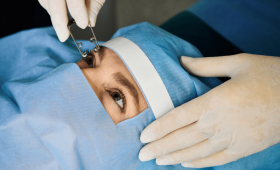
Modern medical technology has revolutionized the world of cosmetic surgery, allowing patients to see the results before they even step onto the operating table. However, many patients ask: “How much will the face or body I see on the screen match my post-operative self?” In cosmetic surgery, 3D simulations are not just a visualization tool; they are the strongest bridge of communication between the patient and the doctor. In this guide, we will dive deep into digital aesthetics and discover how technology will guide you as you reach your dream appearance.
Why Are Pre-Operative Simulations Important In Cosmetic Surgery?
Pre-operative simulations in cosmetic surgery are critically important for the patient to solidify their expectations and for the surgeon to clarify the operation plan. Making the decision for surgery is a life-changing process for most individuals, and the biggest obstacle in this process is uncertainty. Simulation technologies eliminate this uncertainty by allowing the patient to see how they will change on a three-dimensional model. This visual tool increases the patient’s self-confidence while providing the surgeon with a digital roadmap of which techniques to use during the operation. Therefore, the first step of a successful cosmetic operation begins with a correctly constructed simulation process.
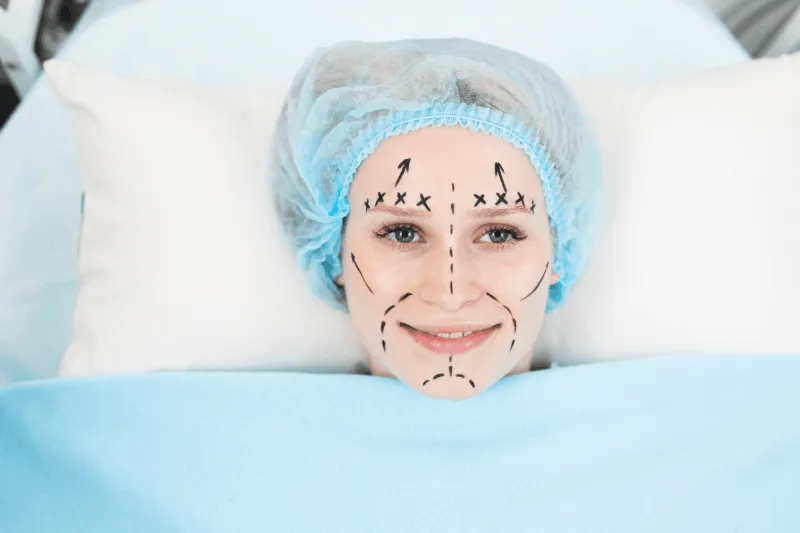
What Exactly Is A 3D Aesthetic Simulation?
3D aesthetic simulation is the process of scanning a patient’s existing anatomical structure via special cameras or software, transferring it to a computer environment, and digitally applying surgical changes to it. This technology is not just a simple photo editing tool; it is an engineering marvel that uses advanced algorithms. Data such as the patient’s body measurements, skin quality, and tissue volume are entered into the system, creating a mathematical equivalent of the possible changes. For example, in a breast augmentation simulation, the volume and shape of the implant to be placed are visualized in harmony with the patient’s chest wall structure. This results in a “feasible” outcome rather than an “imaginary” image.
How Does Virtual Imaging Technology Work For Patients?
The virtual imaging process usually begins with taking high-resolution photographs. In modern systems, multi-camera arrays that rotate around the patient are used to collect thousands of data points in seconds. These data points are combined to create a digital twin of the patient. The surgeon can then reduce a nasal hump, define the jawline, or reshape body contours on this digital model. The patient can watch this entire process with the surgeon and provide feedback such as “make it less curved” or “let it look a bit more upturned.” This interactive process is a factor that directly affects the patient’s post-operative happiness rate.
Can Simulations Predict The Final Result Of The Surgery?
Although simulations have an accuracy rate of over 90% in predicting the final result of the surgery, it should be remembered that these visuals are a “target,” not a “guarantee.” The human body is a dynamic structure; the healing process, tissue elasticity, and the patient’s general health status shape the actual result of the surgery. While simulation software reflects bone structure and general volume changes perfectly, it may not fully simulate biological factors such as thin skin structure and edema (swelling). However, a simulation prepared by a realistic surgeon is the tool that gives the patient the most honest information about what the surgery can and cannot achieve.
Which Visualization Technologies Are Used In Plastic Surgery?
Today, the most commonly used technologies in plastic surgery include systems like Vectra 3D, Crisalix, and Mirror Imaging. Vectra generally uses a hardware system consisting of multiple cameras to perform ultra-high-resolution body scans. Crisalix is a cloud-based software capable of converting 2D photos into 3D models for both body and facial aesthetics. These technologies can be integrated with augmented reality (AR) and virtual reality (VR) glasses, allowing patients to see their new appearance as if they were looking into a mirror. Each technology offers algorithms optimized for different types of operations, strengthening the surgeon’s hand.
Is Crisalix 3D Simulation Accurate For Breast Augmentation?
Crisalix is one of the world’s most preferred simulation softwares for breast augmentation operations, and its accuracy rate is quite high. The software analyzes the patient’s existing breast tissue, chest wall width, and skin tension. Then, it realistically simulates how different brands and models of implants (round, teardrop, high profile, etc.) will look on the patient. Patients can compare the appearance of implants with different CC (cubic centimeter) values under clothing or on a naked body. This provides a revolutionary convenience in eliminating the “will the implant be too big?” concern.
How Realistic Results Do Rhinoplasty Simulations Provide?
Rhinoplasty, or nose surgery, is one of the areas where simulation technology is most frequently used. Since the nose is at the very center of the face, even millimetric changes make a big difference. 3D simulations clearly show procedures such as removing a nasal hump, lifting the nasal tip, or narrowing the nasal wings from profile and front angles. However, cartilage memory and thick skin structure within the nose may follow a slightly different healing course than predicted by the simulation. Nevertheless, these simulations provide a unique reality for the patient to explain the “aesthetic line” they want to the surgeon and to find common ground.
Why Do Surgeons Prefer Vectra 3D Imaging Systems?
Vectra 3D systems are considered the “gold standard” for professional clinics. This is because the system is not just software but also features highly advanced optical hardware. Vectra captures the patient’s skin color, skin texture, and body contours down to the smallest pores. The advantage of this system for surgeons is that the changes made can be measured volumetrically. For example, how much fat will be injected into the face or how much fat will be removed from which area with liposuction can be planned on the simulation in cubic centimeters. This precision maximizes surgical success and the simulation’s proximity to reality.
Can Simulations Show How The Skin Will Heal?
The most challenging point for simulation technologies is individual biological healing processes. Software cannot fully predict how long the post-operative edema (swelling) will last or how long it will take for the skin to adapt to the new structure. Factors such as smoking, genetic factors, and nutritional habits directly affect healing. For this reason, simulation visuals usually represent the “settled” result 6 months or 1 year after the surgery. It is important for patients not to expect the smooth image in the simulation immediately after surgery and to know that it requires a healing process.
How Are Body Proportions Calculated In Virtual Imaging?
Modern simulation softwares operate based on the principles of the golden ratio and biometric measurement. Mathematical relationships between the patient’s shoulder width, hip circumference, leg length, and facial features are analyzed. The harmony of a change made in one area with the rest of the body is automatically calculated. For example, when a very wide breast prosthesis simulation is performed on a patient with very narrow shoulders, the software can make the surgeon and the patient realize that the visual is disproportionate. In this way, instead of focusing on only one organ, the aesthetic balance of the body as a whole is preserved.
What Are The Technical Limitations Of Cosmetic Surgery Software?
Although technology is very advanced, software has certain limitations. The most fundamental limitation is tissue dynamism; that is, a static simulation may not 100% reflect how tissues will behave while the body is in motion (smiling, walking). Additionally, the development of scar tissue (fibrosis) under the skin or the body’s immune response to implants cannot be predicted by the software. Software does not create an illusion; it manipulates existing data. Therefore, a surgeon’s warning that “the result in this simulation pushes your anatomical limits” is more valuable than technical data.
How Do Simulations Strengthen Patient And Doctor Communication?
The greatest disappointments in cosmetic surgery usually stem from a “lack of communication.” What a patient understands by “a natural nose” and what the surgeon understands can be different, just as what a surgeon means by “an upturned nose” might be different from what the patient imagines. 3D simulation transforms these abstract concepts into a concrete visual. Reaching an agreement on a visual that makes the patient say “this is exactly what I want” prevents post-operative surprises. When a patient is sure that their doctor understands them, they enter the operation much more peacefully and confidently. This psychological comfort is also reflected positively in the healing process.
Is It Possible To See Different Surgical Options In Simulation?
Yes, one of the greatest strengths of simulation is being able to answer the question “what if?” A patient can be shown both a silicone and non-silicone breast lift (mastopexy) simulation in the same session. Or, in rhinoplasty, the difference between a curved bridge and a straight bridge can be compared in seconds. This comparison of “before and possible afters” speeds up the patient’s decision-making process and helps them choose the most accurate method. Performing the trial-and-error method in a digital environment rather than the operating room is a great luxury for both the surgeon and the patient.
Do Simulations Help Reduce Pre-Operative Anxiety?
Research shows that patients who use 3D simulations have much lower pre-operative stress levels. Uncertainty creates fear in the human mind. A patient who knows visually what they will encounter feels more in control of the process. Concerns such as “will I change too much after surgery?” or “will my facial expression be distorted?” find answers thanks to simulation. Visual evidence reinforces the patient’s trust in their surgeon, and this combines with the placebo effect to provide a more positive surgical experience. Technology acts here not just as a tool, but also as a sedative.
How Does Lighting And Shading Affect Simulation Realism?
The key to realism is light and shadow. Quality 3D simulation software calculates the effect of ambient light on body contours. For example, in a tummy tuck (abdominoplasty) simulation, the depth of the newly created belly button or the prominence of abdominal muscles (six-pack) is presented to the patient using shading techniques. If the lighting is not calculated correctly, the results may look artificial or “caricaturized.” Advanced systems mimic light angles in real-life scenarios, allowing the patient to get an idea of how the result will look in different environments (at the beach, at a dinner).
Why Is The Surgeon’s Skill More Important Than The Software?
No matter how advanced a simulation software is, the surgical experience of the person using it is the real factor that determines the result. It is possible to do anything in the software; you can completely eliminate a nose or put the body into an impossible shape. However, an “ethical and realistic” surgeon only simulates changes that they can perform on the operating table. Software is a pen, and the surgeon is an artist. An experienced surgeon takes tissue thickness, blood circulation, and anatomical obstacles into account while performing the simulation. Therefore, the realism of the simulation is directly proportional to the honesty and skill of the surgeon.
Can Simulations Account For The Effects Of Aging?
Some advanced simulation softwares have started to offer “aging simulation” features. This feature provides a projection of how the aesthetic intervention performed might look 5, 10, or 20 years later when exposed to facial gravity. For example, how the effects of a facelift surgery will change over time or the long-term posture of placed implants can be analyzed. This allows the patient to plan not only for today but also for their future. Aesthetics is an investment made against time, and simulations allow us to see the maturity of this investment.
What Role Does Artificial Intelligence Play In Predicting Aesthetic Results?
Artificial Intelligence (AI) takes simulation technologies a step further by analyzing data from thousands of similar cases. AI-supported systems can suggest the “ideal” proportions that best suit the patient’s facial structure. For example, by analyzing your facial symmetry, it calculates the amount of lip filler that will suit you best or how far forward the chin tip should be based on scientific data. AI helps produce more symmetrical and aesthetically balanced results by minimizing human error. This is transforming simulations from being a “guess” into a “precise calculation.”
How Accurate Are 2D Photos Compared To 3D Simulations?
2D photos lack depth perception and therefore remain limited in aesthetic planning. They can only provide profile or front views; however, the face and body are three-dimensional, volumetric structures. 3D simulations allow for examination of the patient from every angle (diagonal, from below, from above). While a deviation on the side of the nose might not be clearly understood in a 2D photo, how this condition will be corrected with surgery is clearly simulated in a 3D model. Therefore, 3D simulations offer a much more comprehensive, realistic, and reliable planning compared to 2D methods.
Can Virtual Reality Be Used In Surgical Planning?
Virtual Reality (VR) glasses allow the patient not just to see the simulation on a screen, but to almost live inside it. When the patient puts on the glasses, they can look down at their body in its new state or examine themselves in a three-dimensional mirror. This “immersive” experience reinforces the realism of the result at the brain level. For surgeons, VR offers the opportunity to examine complex anatomical structures by performing a “trial surgery” in a virtual environment before the actual operation. This technology is a revolutionary development that increases success rates, especially in complex reconstructive surgeries.
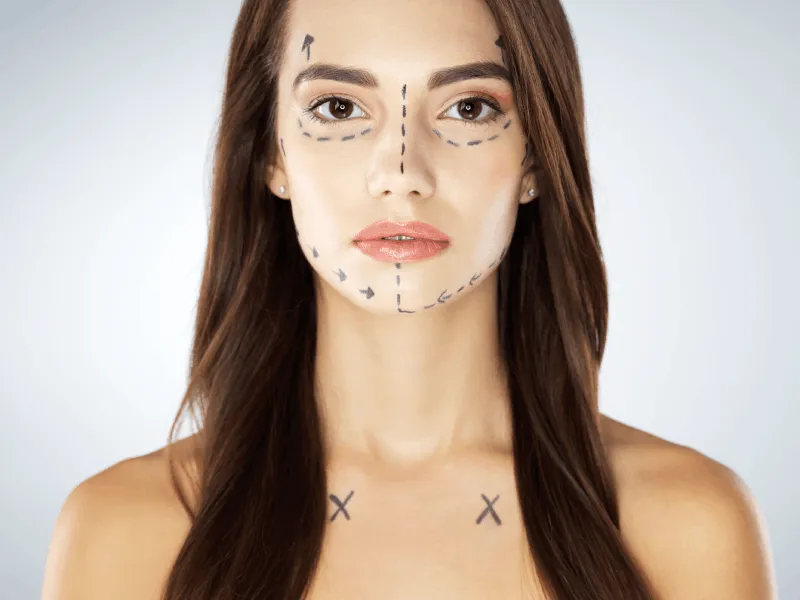
Do Simulations Analyze Muscle And Fat Tissue Structure?
Advanced 3D scanners can process certain data regarding the distribution of fat and muscle under the skin, not just the skin surface. In body contouring surgeries like liposuction or tummy tucks, the thickness of the fat layer is critical for the accuracy of the simulation. Softwares can calculate how much fat tissue will be removed and how the remaining tissue will take form over the muscle structure. This provides the patient with clear options regarding whether they want a muscular look (athletic look) after surgery. Digital analysis of muscle structure forms the basis of the “athletic aesthetics” movement.
How Long Does A Professional Simulation Preparation Take?
A professional 3D simulation process usually takes between 15 and 30 minutes, depending on the technology the clinic uses. Taking the photos and creating the 3D model by the system only takes a few minutes. The part that actually takes time is the surgeon working on the model with the patient and trying different scenarios. This duration is the most important planning stage of the surgery and should not be rushed. A quality consultation where every question of the patient is answered and every angle is examined constitutes 50% of the surgical success.
What Are The Risks Of Relying Too Much On Simulations?
The greatest risk is mistaking the simulation for “absolute reality.” Everything can look perfect in a digital environment, but human biology is full of imperfections. Surgical scars, asymmetries, or healing problems are usually not shown in the simulation. If a patient displays a rigid attitude expecting the 100% exact image in the simulation, they might not be psychologically satisfied even if the result is great. Therefore, simulation should be accepted as a guide; in the final decision, the surgeon’s verbal explanations and clinical experience should be evaluated with equal weight.
How Does Texture Mapping Technology Increase Realism?
Texture mapping is the overlaying of the patient’s own skin texture onto the simulation model. Thanks to this technology, the created 3D model does not look like a mannequin, but directly like you. Your pores, any moles you have, or stretch marks appear on the model. This reinforces the “this is really me” feeling. The higher the quality of the texture mapping, the clearer it is understood how the surgical change made will look with your unique structure. This level of realism helps patients internalize the operation results and prevents a feeling of alienation.
Why Should Patients Request Multiple Simulations?
A single simulation can sometimes trap the patient into a single outcome. Seeing multiple simulations from different angles, in different lightings, and with different surgical intensities (for example, a more or less curved nose) also helps the patient understand what they do not like. Sometimes a change said to be “very much wanted” may not be liked by the patient when seen in the simulation. This “elimination” process prevents post-operative regrets. Asking your surgeon to show at least two or three different variations allows you to make the most conscious decision.
How Do Simulations Guide Implant Size Selection?
Implant selection in breast aesthetics is one of the most difficult decisions. It is hard to imagine the difference between 250cc and 350cc. Simulations bring these volume differences side-by-side on the patient’s own body. Moreover, it allows you to see not just the volume, but also the shape of the implant (round or teardrop?) and its profile (projection). Thanks to the simulation, patients can analyze whether a large implant will make their shoulders look wide or how it will affect their posture. This visual guidance significantly reduces revision surgeries performed due to wrong implant selection.
How Advanced Are Face Lift Simulations Today?
Face lift simulations are highly advanced thanks to algorithms that mimic skin elasticity and soft tissue movements. The software can show from which areas of the face (temple, cheek, neck) the pulling will be done and how this process will affect the eye structure or the corners of the mouth. By simulating the effect of gravity, how close the patient can get to their state from 10 years ago is analyzed. Additionally, simulations combined with fat injections to be made to the face realistically reflect not just the stretching of the face, but also its rejuvenation and gaining of volume.
Will The Final Result Always Be The Same As The Displayed Visual?
With a realistic approach, it is most accurate to say that the final result will be “very close” to the simulation but not “exactly the same.” The human body is a living organism, not a sculpting material. Post-operative tissue reactions, healing speed, and lifestyle modify results. However, in the hands of a successful surgeon, the simulation is the clearest photo of the destination to be reached. The small differences between them are usually a part of “naturalness.” The goal of simulation is not to sell you a miracle, but to show you the best possible version of yourself within anatomical limits.
What Should Be Done If Results Look Too Perfect In Simulation?
If a simulation looks too smooth and flawless to be true, there might be a “marketing filter” involved. Realistic simulations should sometimes also show the limits of the surgery and what will not be corrected. If everything is presented too perfectly, ask your surgeon this question: “What are the biological factors that could prevent me from reaching this result?” A good surgeon explains to you not only what is beautiful, but also the risks and limits. A simulation that deviates from realism is the biggest source of post-operative unhappiness.
How Do Surgeons Manage Unrealistic Expectations?
Simulations are actually also excellent tools for saying “no.” When a patient wants the nose of a celebrity that would not fit their facial structure at all, the surgeon can apply this request on the simulation and show the patient how incompatible the result is. Convincing a patient by saying, “As you can see, this nose structure aesthetically disrupts your eye spacing and face width,” is much more effective than a verbal warning. Simulation serves as a “reality check” in this sense and guides the patient towards more natural, harmonious results.
Why Is The Consultation Process Indispensable For Accurate Prediction?
Simulation does not mean anything on its own; it is just data. What gives meaning to this data is the surgeon’s knowledge and the patient’s needs. In a face-to-face consultation, the surgeon touches the patient’s tissue, measures its thickness, and builds the simulation upon these physical realities. Quick simulations made through online or automatic systems can be misleading as they lack this physical data. Therefore, for the most realistic results, a comprehensive, detailed consultation with an expert surgeon involving a physical examination is essential.
Why Should You Plan Your Aesthetic Journey With Cure Holiday?
Cure Holiday designs your cosmetic surgery journey not just as an operation, but as a holistic “healing and renewal” experience. It combines the latest possibilities of technology (3D simulations, AI-supported analyses) with world-renowned, experienced surgeons. When you choose Cure Holiday, you find not only a digital visual but also a professional team that will transform this visual into reality. With personalized treatment plans and an honest approach that respects the patient’s anatomical limits, Cure Holiday places your aesthetic dreams on a secure foundation.
What Are The Advantages Of Receiving Treatment With Cure Holiday?
The greatest advantage of receiving treatment with Cure Holiday is the flawless service concept offered “end-to-end.” Starting from the simulation stage, every detail including surgery, accommodation, and post-operative follow-up processes is planned for your comfort. You experience the peace of mind of working with expert surgeons in hospitals with the most modern technological infrastructure. Additionally, thanks to its transparent price policy and comprehensive support services, an aesthetic process is offered in the warmth of home for patients coming from abroad, without any language or coordination problems.
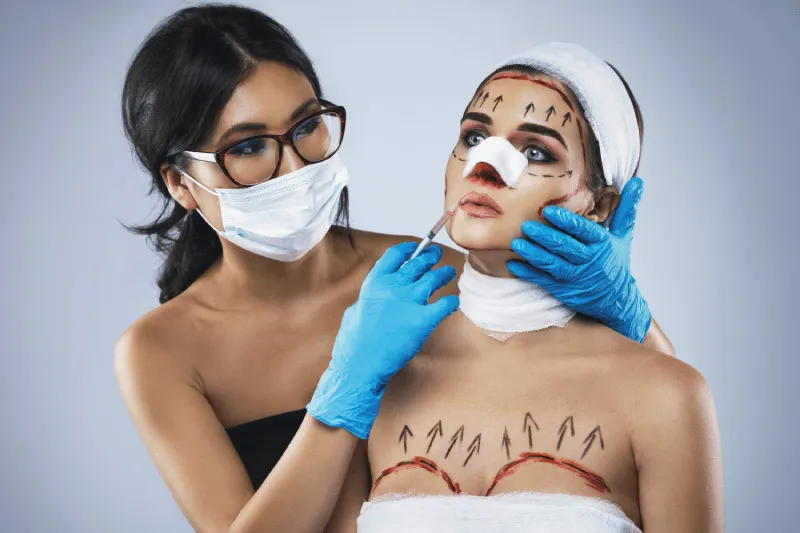
How Does Cure Holiday Use Simulation Technology?
Experts within Cure Holiday provide their patients with the opportunity for a “personalized digital preview” using the most advanced 3D imaging systems. In this process, not just a superficial image, but all parameters from bone structure to skin elasticity are meticulously examined. Cure Holiday surgeons use simulation not as a sales tool, but as a “surgical planning discipline.” By showing the patient honest and applicable results, it is aimed to keep post-operative satisfaction at the highest level. When technology combines with the expertise of Cure Holiday, the results become much more realistic.
What Should Be Done To Receive Treatment With Cure Holiday?
Starting this exciting process with Cure Holiday is quite easy. As a first step, you can request a free pre-consultation by reaching us via our website or communication numbers. Our expert consultants perform a basic evaluation over your photos after listening to your complaints and expectations. Then, your professional consultation appointment is organized where detailed simulations and surgical planning will be made. Your entire travel plan, accommodation, and appointments are meticulously prepared and presented to you by Cure Holiday.
Why Does Cure Holiday Offer A Safe Aesthetic Journey?
Trust is the cornerstone of cosmetic surgery. Cure Holiday makes you feel this trust at every stage with its hospitals holding international accreditations and surgeons with registered success rates. By using simulation technologies, it manages the patient’s expectations correctly and does not give impossible promises. With a support team by your side 24/7 in the post-operative period, it closely follows your healing process. If you want to reach the best version of yourself by utilizing all the possibilities of modern medicine with realistic expectations, Cure Holiday is the right address for you.
Conclusion and Summary: Cosmetic surgery simulations are the most important guide between your dreams and realities. 3D technologies provide over 90% accuracy, especially in areas like rhinoplasty and breast aesthetics, increasing post-operative happiness. However, it should not be forgotten that even the best technology gains meaning when combined with the experience of an expert surgeon. To not leave your change to chance and to meet the most realistic results, contact the expert staff of Cure Holiday. Take the first step today to safely reach your dream appearance!
Free Consultation
Fill out the form below to get your free medical travel plan and price quote.
Sources and how to verify this yourself
- Ministry of Health, Regulation on International Health Tourism and Tourist Health, Official Gazette 26 April 2025, No. 32882 — authorisation requirement for facilities and intermediaries, TÜSKA accreditation, compulsory complication insurance (deadline 31 December 2025 for insurance, 31 December 2026 for accreditation). source
- Ministry of Health, Regulation on Promotion and Information Activities in Health Services, Official Gazette 12 November 2025, No. 33075 — treatment promises and guarantees are prohibited; price and campaign announcements are permitted only within international health tourism. source