About the prices on this page. The figures below are indicative market prices and country comparisons, not a quote. Our own current, all-inclusive prices are published on our cosmetic surgery in Turkey page, and we confirm your figure in writing before you commit to anything.
Cost and planning note (2026)
The figures below are indicative market ranges for 2026, not a quote: your own price depends on the clinic, the surgeon and your clinical assessment.
Indicative price range: Rhinoplasty: 2,800 – 4,500 USD | Facelift Deep Plane: 4,500 – 8,000 USD | Liposuction Vaser: 2,500 – 4,000 USD | Mommy Makeover: 6,000 – 10,000 USD
Facility standards: In Türkiye, any facility treating international patients must hold the Ministry of Health’s international health tourism authorisation; hospitals and medical centres must also be accredited by TÜSKA, and complication insurance is compulsory for procedures carried out in an operating theatre (Regulation of 26 April 2025). Ask us for the authorisation of the facility you are matched with.
Currency: USD / EUR / GBP accepted at all clinics.
Liposuction for Double Chin: Achieving a Sharp Jawline in One 30-Minute Procedure
Liposuction for Submental Fat: A Comprehensive Examination
The pursuit of a well-defined jawline has driven significant advancements in facial contouring procedures. While traditionally addressed through surgical interventions like deep plane facelifts (4,500 – 8,000 USD), minimally invasive techniques are gaining prominence. This discussion centers on liposuction specifically targeting submental fat – commonly known as a double chin – and its capacity to refine the lower facial aesthetic. We’ll examine the anatomical considerations, technical approaches, and global standards pertinent to this increasingly popular procedure, particularly as offered within the burgeoning medical tourism landscape.
Anatomical Foundations & Patient Selection
The submental region is a complex anatomical zone. The double chin isn’t solely composed of adipose tissue; it involves the platysma muscle, the digastric and mylohyoid muscles, and varying degrees of skin laxity. Effective liposuction requires a nuanced understanding of these structures. A critical differential diagnosis must be performed to exclude causes of submental fullness *other* than excess fat. These include lymphatic malformations (potentially requiring lymphatic mapping prior to intervention), submandibular gland hypertrophy (often visible during salivary gland function testing), and thyroid enlargement.
Ideal candidates for submental liposuction possess good skin elasticity. Significant skin laxity necessitates consideration of a complementary neck lift (platysmaplasty or rhytidectomy) to prevent postoperative skin draping and maintain a natural contour. Liposuction excels at removing localized fat deposits, but it does *not* address skin redundancy. Furthermore, the procedure is most effective for patients with moderate amounts of submental fat; those with extensive fat or severe muscle descent may benefit more from a more comprehensive surgical approach. Body Mass Index (BMI) is also a consideration. While not a strict contraindication, higher BMI patients may experience diminished results and increased risk of complications.
Technical Aspects: Vaser Hi-Def Liposuction & Beyond
Traditional liposuction employs a suction cannula to mechanically disrupt and remove fat cells. However, for precise sculpting of the jawline, more advanced technologies, such as Vaser Hi-Def liposuction (2,500 – 4,000 USD), are often preferred. Vaser Hi-Def utilizes ultrasound energy to emulsify fat before its removal. This technology offers several advantages:
- Selective Fat Targeting: Ultrasound waves specifically target fat cells, leaving surrounding tissues – nerves, blood vessels, and connective tissue – largely unharmed. This minimizes trauma and reduces postoperative bruising and swelling.
- Skin Tightening: The ultrasound energy generates thermal energy, which promotes collagen contraction, contributing to a degree of skin tightening in the treated area. While not equivalent to a surgical neck lift, it can improve skin tone.
- Precise Sculpting: The smaller cannulas used with Vaser Hi-Def allow for meticulous sculpting of the jawline, enhancing its definition.
The procedure typically begins with local anesthesia, administered via tumescent fluid containing lidocaine and epinephrine. The tumescent fluid serves multiple purposes: it anesthetizes the area, constricts blood vessels to minimize bleeding, and creates a fluid cushion to facilitate cannula movement. The surgeon then carefully inserts the Vaser cannula beneath the skin, delivering ultrasound energy to liquefy the fat. The emulsified fat is then gently suctioned out. A meticulous layering technique is crucial to avoid irregularities and achieve a smooth, natural contour. Some surgeons also employ power-assisted liposuction (PAL) which further enhances fat removal efficiency.
Emerging technologies, while not yet widely adopted, include laser-assisted liposuction, which aims to further enhance collagen stimulation and skin tightening. However, concerns regarding thermal damage and cost-effectiveness currently limit its widespread use. Another developing technique involves the injection of deoxycholic acid (Kybella) as a non-surgical alternative, though this requires multiple treatments and yields more subtle results compared to liposuction.
Global Standards & Turkey as a Medical Hub
When considering liposuction for submental fat, particularly within the context of medical tourism, adherence to international standards is paramount. In Turkey, a rising destination for cosmetic surgery, medical facilities are increasingly subject to rigorous quality control. The Turkey medical standards are heavily influenced by accreditation from organizations like the Joint Commission International (JCI), ensuring adherence to globally recognized safety protocols and quality benchmarks. Furthermore, the Turkish Ministry of Health maintains strict regulations governing cosmetic surgery practices.
Patients considering treatment in Turkey can expect a typical recovery period of 7-10 days, with final results becoming apparent after 3-6 months. This timeframe allows for resolution of swelling and for the skin to fully contract. Postoperative care includes wearing a compression garment to minimize swelling and contour irregularities, as well as adherence to a specific diet and exercise plan to maintain the results. It is crucial to verify the surgeon’s credentials, board certification (often by relevant Turkish plastic surgery societies), and experience with facial liposuction.
The financial incentive of undergoing the procedure in Turkey is significant. Costs are generally lower compared to Western Europe and North America. For example, rhinoplasty ranges from 2,800 – 4,500 USD, while a deep plane facelift is 4,500 – 8,000 USD. This cost differential, coupled with the availability of experienced surgeons and high-quality facilities, makes Turkey an attractive option for many patients.
Logistical Considerations for International Patients
Beyond the medical aspects, logistical planning is crucial for international patients. Turkey offers convenient E-visa access for citizens of many countries including the UK, US, and EU, allowing for a 90-day stay. Major international airports provide easy access to popular recovery hubs such as Istanbul (City/Boutique), Antalya (Resort/Beach), and Izmir (Aegean/Thermal). The preferred recovery location depends on the patient’s lifestyle and preferences. Istanbul offers a vibrant cultural experience, while Antalya provides a relaxing beachside environment. The accepted currency focus for most clinics includes USD, EUR, and GBP, simplifying financial transactions.
Careful patient communication, detailed preoperative assessment, and a personalized treatment plan are vital components of achieving optimal results and ensuring patient satisfaction. Understanding the anatomical nuances of the submental region, employing advanced liposuction techniques like Vaser Hi-Def, and prioritizing adherence to international medical standards are key to delivering a sharp, refined jawline.
Liposuction for Double Chin: A Detailed Surgical Overview
The pursuit of a defined jawline is increasingly common, and for individuals with localized submental fat (double chin) resistant to diet and exercise, liposuction presents a targeted and effective solution. This pillar details the surgical journey, focusing on the technical aspects of the procedure, a representative case study, and crucial risk mitigation strategies. At CureHoliday, we prioritize patient safety and aesthetic excellence, partnering with Ministry of Health–authorised facilities in Turkey offering this procedure at competitive rates.
Step-by-Step Procedure: Technical Details
Submental liposuction, when performed using advanced techniques like Vaser Hi-Def, is considered a minimally invasive procedure, typically completed within approximately 30 minutes. However, the precision and artistry involved are far from simple. The core principle revolves around selectively removing localized fat deposits while preserving vital anatomical structures.
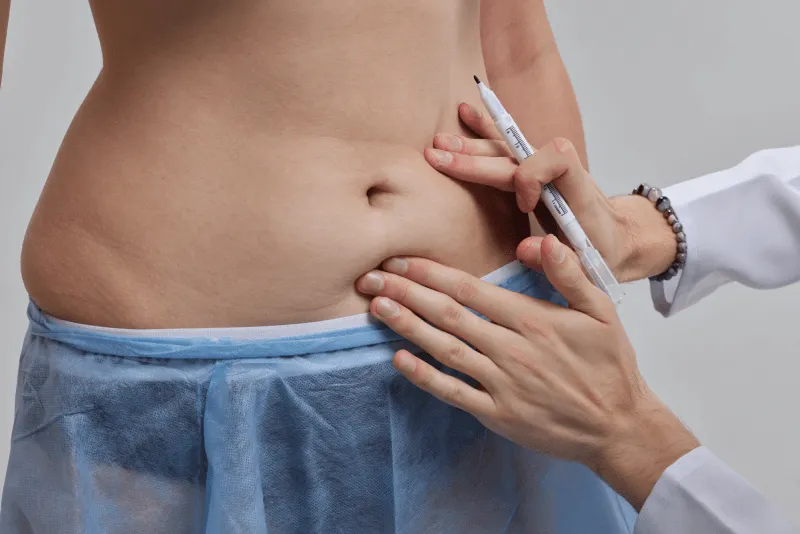
- Pre-Operative Marking & Tumescent Fluid Injection: The procedure commences with the patient in a seated or slightly reclined position. A detailed pre-operative marking is performed with the patient actively participating to define the desired jawline contour. Following this, a tumescent fluid – a solution comprising sterile saline, lidocaine (a local anesthetic), epinephrine (a vasoconstrictor), and sometimes a small amount of triamcinolone (a corticosteroid to minimize post-operative swelling) – is meticulously injected into the submental area. The tumescent technique serves multiple purposes: it anesthetizes the area, constricts blood vessels minimizing bleeding, and separates the fat cells from surrounding tissues, facilitating their removal.
- Incision & Cannula Insertion: Unlike traditional liposuction, modern submental liposuction often utilizes very small incisions (typically 2-3mm) strategically placed under the chin or along the jawline. These incisions are designed to be as inconspicuous as possible. A thin, blunt-tipped cannula – the instrument used to extract the fat – is then inserted through these incisions.
- Vaser Hi-Def Liposuction (Ultrasonic Assisted Liposuction): Vaser Hi-Def utilizes ultrasonic energy to liquefy the fat cells. The cannula emits precisely calibrated ultrasonic vibrations, selectively disrupting the fat membranes without damaging surrounding tissues like nerves, blood vessels, and skin. This allows for sculpting and contouring with unparalleled precision, contributing to a sharper jawline. The technology also promotes neocollagenesis – stimulating collagen production – leading to a degree of skin tightening.
- Fat Extraction & Sculpting: A medical suction device is connected to the cannula, gently extracting the liquefied fat. The surgeon meticulously sculpts the area, refining the jawline and ensuring symmetry. Real-time assessment of the contour is crucial during this stage.
- Wound Closure & Compression Garment: The small incisions are typically closed with sutures or surgical tape. A compression garment, designed to minimize swelling and support the healing process, is then applied.
Persona Case Study: Mrs. Eleanor Vance, UK
Mrs. Vance, a 45-year-old solicitor from London, UK, presented with a moderate degree of submental fullness despite maintaining a healthy lifestyle. She expressed dissatisfaction with her profile, feeling the double chin detracted from her overall appearance. After a virtual consultation and subsequent in-person evaluation at our partner facility in Istanbul, she was deemed an excellent candidate for Vaser Hi-Def liposuction.
Pre-Operative Assessment: Detailed photographic documentation was taken. Her skin elasticity was assessed as good, indicating a favorable outcome. Blood tests were performed to rule out any contraindications. A 3D facial scan was employed to model the anticipated results and discuss expectations.
Surgical Procedure: Mrs. Vance underwent the procedure under local anesthesia with sedation. The surgeon utilized the Vaser Hi-Def technique, focusing on removing the excess fat while maintaining a natural jawline curvature. The total procedure time was 38 minutes. Approximately 25cc of fat was removed.
Post-Operative Care & Recovery: Mrs. Vance remained in Istanbul for 7 days. She experienced mild swelling and bruising, managed with prescribed medication and cold compresses. The compression garment was worn consistently for 2 weeks, then gradually reduced to nighttime use. Follow-up virtual consultations were scheduled at 1, 3, and 6 months post-operatively. At the 6-month mark, she reported significant improvement in her jawline definition and expressed complete satisfaction with the results.
Risk Mitigation & Potential Complications
While submental liposuction is generally safe, as with any surgical procedure, it carries inherent risks. At CureHoliday, our priority is proactive risk mitigation through careful patient selection, experienced surgeons, and adherence to stringent medical protocols.
- Hematoma & Seroma: Collection of blood (hematoma) or fluid (seroma) under the skin are potential complications. These are typically managed with aspiration or, rarely, surgical drainage.
- Nerve Injury: Although rare with meticulous technique, temporary or permanent nerve damage resulting in numbness or altered sensation is a possibility. Precise cannula placement and careful tissue dissection are critical to minimize this risk.
- Skin Irregularities: Uneven fat removal can lead to contour irregularities. The Vaser Hi-Def technique significantly reduces this risk, but skilled sculpting is essential.
- Infection: Strict adherence to sterile technique and post-operative wound care minimizes the risk of infection. Prophylactic antibiotics are routinely administered.
- Skin Necrosis: Extremely rare, but possible, particularly in smokers or individuals with compromised vascular supply.
- Asymmetry: Achieving perfect symmetry can be challenging. Pre-operative planning and intra-operative assessment are crucial.
Mitigation Strategies:
- Thorough Patient Screening: Identifying patients with pre-existing medical conditions or unrealistic expectations.
- Experienced Surgeon: Selecting a board-certified plastic surgeon with extensive experience in facial liposuction.
- Advanced Technology: Utilizing Vaser Hi-Def for precise fat removal and minimal tissue trauma.
- Post-Operative Compliance: Emphasizing the importance of compression garment wear and adherence to wound care instructions.
Financial Considerations & Recovery in Turkey
Turkey has emerged as a leading destination for medical tourism, offering high-quality cosmetic procedures at significantly lower costs compared to Western Europe and North America. The cost of Vaser Hi-Def liposuction for a double chin typically ranges from 2,500 – 4,000 USD, considerably less than the 2,800 – 4,500 USD associated with rhinoplasty or the 4,500 – 8,000 USD for a deep plane facelift. The total package offered by CureHoliday includes the procedure, hospital stay, pre-operative assessments, post-operative care, and accommodation for 7-10 days. Visa requirements are straightforward, with e-visas readily available for citizens of the UK, US, and EU, allowing for a 90-day stay. Patients can choose recovery hubs in vibrant Istanbul, relaxing Antalya, or the culturally rich Izmir, tailoring their recovery experience to their preferences.
Final results are typically visible 3-6 months post-procedure, once all swelling has subsided and the skin has fully contracted.
Recovery Logistics, 2026 Cost Audit for Antalya/Istanbul vs Western Countries, and the Final Medical Verdict – Liposuction for Double Chin
Following a successful submental liposuction procedure – specifically targeting the often-stubborn submandibular fat pad contributing to a double chin – meticulous post-operative care is paramount for optimal results and patient satisfaction. This pillar delves into the granular details of recovery, a comprehensive cost analysis projected to 2026 for Turkish medical tourism versus Western alternatives, and a final assessment of the procedure’s efficacy and candidacy.
Post-Operative Recovery: A Phased Approach
The immediate post-operative period following liposuction for a double chin, utilizing techniques like Vaser Hi-Def, typically involves the application of a compression garment. This isn’t merely cosmetic; it’s a crucial component in minimizing edema (swelling) and seroma (fluid accumulation) by providing consistent pressure on the treated area. Patients can expect mild discomfort, readily managed with prescribed analgesics – often a combination of non-steroidal anti-inflammatory drugs (NSAIDs) and, if necessary, short-term opioid medication. Lymphatic drainage massage, initiated approximately 48-72 hours post-op, is vigorously encouraged. This manual technique stimulates fluid reabsorption, reducing swelling and minimizing the risk of fibrosis – the formation of scar tissue which can, in rare instances, lead to subtle contour irregularities.
The initial 7-10 day recovery period, particularly when electing to recover in Turkey, benefits from a dedicated aftercare program often bundled with the procedure. This commonly includes daily nurse visits for wound assessment, garment adjustment, and lymphatic drainage. While early ambulation (walking) is encouraged to prevent venous thromboembolism (DVT – blood clots), strenuous activity is strictly prohibited. Dietary modifications, emphasizing a soft, nutrient-rich diet to promote healing, are also implemented. A key aspect often overlooked is the management of the mentalis muscle – the muscle responsible for chin protrusion. Post-operative swelling can sometimes create the illusion of continued chin prominence, requiring targeted exercises prescribed by a physical therapist to regain optimal muscle function and prevent a “banding” effect.
Final results, while noticeable relatively quickly, aren’t fully apparent for 3-6 months. This timeline allows for complete resolution of edema, skin retraction, and collagen remodeling. Patients should anticipate some degree of residual numbness or altered sensation in the treated area during this period, which typically resolves spontaneously. It is critical to emphasize the importance of adherence to post-operative instructions, as non-compliance can significantly impact the final aesthetic outcome.
2026 Cost Audit: Turkey vs. Western Countries
The economic advantages of undergoing cosmetic procedures in Turkey, particularly in cities like Istanbul and Antalya, remain substantial. Our projected cost analysis for 2026, factoring in anticipated inflation and currency fluctuations, demonstrates a continuing disparity. Based on current data and projected trends, the cost of Vaser liposuction for a double chin is estimated at 2,500 – 4,000 USD in Turkey. This is significantly lower than the costs in Western countries:
- United States: $4,000 – $8,000+ USD
- United Kingdom: £3,000 – £6,000+ GBP (approximately $3,800 – $7,600 USD based on current exchange rates)
- Germany: €3,500 – €7,000 EUR (approximately $3,850 – $7,700 USD based on current exchange rates)
However, it’s crucial to consider the ‘all-inclusive’ packages offered in Turkey. These typically encompass the procedure itself, anesthesia fees, hospital stay (averaging 7-10 days), post-operative care (nursing visits, lymphatic drainage), and often, airport transfers and accommodation. When factoring in travel and accommodation expenses for Western patients, the total cost savings can be even more pronounced. For comparison, a deep plane facelift, a more complex procedure, currently ranges from 4,500 – 8,000 USD in Turkey, further illustrating the price differential. Rhinoplasty, another common procedure, is estimated at 2,800 – 4,500 USD in Turkey, demonstrating a consistent cost advantage.
The growth of ‘recovery hubs’ within Turkey offers a nuanced experience. Istanbul provides a cosmopolitan setting with sophisticated medical facilities, while Antalya offers a more relaxed, resort-style recovery environment – often preferred by patients seeking a combined cosmetic treatment and vacation. Izmir, with its thermal springs, is emerging as a destination focusing on post-operative rehabilitation and wellness. The choice of hub influences accommodation costs and access to specific amenities.
Final Medical Verdict: Candidacy & Considerations
Liposuction for a double chin is not a universal solution. Ideal candidates possess good skin elasticity – crucial for optimal skin retraction post-procedure – and a well-defined jawline obscured by localized fat deposits. Patients with significant skin laxity may require adjunctive procedures, such as a neck lift (platysmaplasty) or a limited-incision facelift to achieve a truly sharp jawline. Furthermore, a thorough assessment of the patient’s underlying anatomy is essential. The existence of platysmal bands (vertical muscle bands in the neck) or submandibular gland hypertrophy may necessitate alternative or combined treatment strategies.
Pre-operative imaging, including 3D facial scanning, allows for precise surgical planning and realistic expectation setting. The Vaser Hi-Def technique, utilizing targeted ultrasound energy, offers superior precision and minimizes trauma to surrounding tissues, but it requires a surgeon experienced in this specific methodology. The long-term success of the procedure hinges on maintaining a stable weight and healthy lifestyle. While liposuction effectively removes fat cells, it does not prevent future weight gain, which can lead to the re-accumulation of fat in other areas.
From a medical tourism perspective, it is vital to verify the credentials and accreditation of the chosen clinic. JCI (Joint Commission International) accreditation and regulation by the Turkish Ministry of Health are essential indicators of quality and patient safety. Visa requirements are generally straightforward, with e-visas readily available for most citizens of the UK, US, and EU, allowing for a 90-day stay.
Ready to consult a specialist? Schedule a Free Consultation for Liposuction for Double Chin in Turkey with cureholiday.com
Free Consultation
Fill out the form below to get your free medical travel plan and price quote.
Sources and how to verify this yourself
- Ministry of Health, Regulation on International Health Tourism and Tourist Health, Official Gazette 26 April 2025, No. 32882 — authorisation requirement for facilities and intermediaries, TÜSKA accreditation, compulsory complication insurance (deadline 31 December 2025 for insurance, 31 December 2026 for accreditation). source
- Ministry of Health, Regulation on Promotion and Information Activities in Health Services, Official Gazette 12 November 2025, No. 33075 — treatment promises and guarantees are prohibited; price and campaign announcements are permitted only within international health tourism. source