Cost and planning note (Mommy Makeover 2026)
The figures below are indicative market ranges, not a quote: your own price is confirmed after a clinical assessment.
Indicative price range: Standard Package: 4,500 – 7,500 USD | Advanced Combination: 8,000 – 12,000 USD | Tummy Tuck: 3,000 – 5,000 USD | Breast Lift: 2,500 – 4,500 USD | Liposuction Per Area: 500 – 1,500 USD | Bbl Fat Transfer: 3,500 – 5,500 USD
Facility standards: In Türkiye, any facility treating international patients must hold the Ministry of Health’s international health tourism authorisation; hospitals and medical centres must also be accredited by TÜSKA, and complication insurance is compulsory for procedures carried out in an operating theatre (Regulation of 26 April 2025).
Recovery Focus: Post-pregnancy body restoration & safety first.
Currency: GBP, EUR, USD accepted.
Managing “Brain Fog” and Emotional Sensitivity in the Recovery Suite
The Neuro-Physiological Landscape: Understanding Post-Operative “Brain Fog”
In the immediate aftermath of a comprehensive Mommy Makeover, patients often report a phenomenon colloquially known as “brain fog”—a state of cognitive cloudiness, characterized by diminished focus, mild confusion, or lethargy. While often dismissed as mere fatigue, this is a documented physiological response to the systemic stress of major reconstructive surgery. From a clinical perspective, this can be attributed to post-anesthetic cognitive dysfunction and the body’s natural neuro-inflammatory response as it prioritizes cellular repair and wound healing.
When undergoing complex procedures such as a tummy tuck combined with breast augmentation, the body’s endocrine system undergoes significant fluctuations. The metabolic demand required to knit together abdominal fascia and stabilize new implants can lead to temporary cognitive deceleration. This period is often accompanied by heightened emotional sensitivity. The interplay of hormonal shifts, the healing of neural pathways, and the psychological processing of physical transformation creates a delicate period of vulnerability. This is why the “Recovery Suite” concept is not merely a luxury, but a medical necessity; an environment designed to mitigate cortisol spikes and promote neurological stability is critical for optimal outcomes.
Structural Restoration: The Science of Diastasis Recti and Abdominal Reconstruction
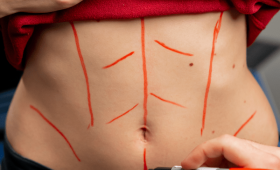
The foundation of post-pregnancy restoration lies in the repair of the abdominal wall. Diastasis Recti, the separation of the rectus abdominus muscles, is a common consequence of pregnancy-induced intra-abdominal pressure. To achieve true restoration, surgeons must go beyond surface-level skin excision.
Advanced clinical protocols involve Diastasis Recti repair, which involves internal corset suturing of the abdominal fascia. This technique reinforces the weakened midline, creating a functional internal “corset” that restores core stability and prevents future herniation. Depending on the degree of skin laxity and muscle separation, patients may undergo different surgical modalities:
- Full Abdominoplasty: Comprehensive removal of excess skin and significant muscle tightening.
- Mini Abdominoplasty: Targeted excision for patients with localized laxity below the umbilicus.
- Extended (360) Tummy Tuck: A circumferential approach designed to address skin laxity around the flanks and hips, often integrated with liposuction.
By addressing the underlying muscular architecture, the procedure ensures that the aesthetic result is supported by a structurally sound biological foundation.
Aesthetic Refinement: Mastopexy and High-Definition Contouring
Complementing the abdominal reconstruction is the refinement of the breast and hip profile. The goal of a modern Mommy Makeover is to restore the projection and volume lost during breastfeeding and weight fluctuations. Precision in breast reconstruction requires the use of high-grade, biocompatible materials. The industry standard involves the use of breast implants such as Mentor, Motiva, or Polytech, all of which are JCI-approved, ensuring minimal risk of capsular contracture or displacement.
For patients seeking more aggressive contouring, the integration of liposuction is pivotal. The use of Vaser Liposuction is utilized for high-definition contouring with minimal bruising. Unlike traditional suction-assisted methods, Vaser technology uses ultrasound energy to emulsify adipose tissue, allowing for more precise sculpting of the waistline and flanks. When paired with BBL (Brazilian Butt Lift) fat transfer, the surgeon can redistribute processed fat to the gluteal region, creating a seamless transition from the newly tightened abdomen to the hips.
Turkey: The Global Nexus of Surgical Excellence and Safety
The rise of Turkey as the global hub for advanced aesthetic surgery is not accidental; it is the result of a sophisticated convergence of medical infrastructure, specialized training, and stringent safety benchmarks. The Turkish medical model excels in providing high-complexity procedures—such as the advanced combination of tummy tuck, breast lift, and liposuction—within a highly regulated framework.
“The hallmark of Turkish medical tourism is the integration of high-level surgical precision with an unparalleled recovery ecosystem, ensuring that the physiological and emotional needs of the patient are met simultaneously.”
Logistical Precision and Financial Transparency
The success of a medical journey depends heavily on the seamlessness of the transition from clinical care to recovery. The Turkish model optimizes the postoperative period through high-end logistics. Patients typically arrive at Istanbul (IST) or Antalya (AYT), where VIP private transfers from the airport to the clinic are arranged to minimize physical exertion. The recovery phase is centered around 5-star recovery suites with companion stay included, allowing the patient to have essential emotional and physical support during the 7-10 days in Turkey required for the initial healing phase. While the body begins its intensive repair, full exercise return is generally advised after 6 weeks.
Understanding the investment required for these transformative procedures is essential for long-term planning. The following cost structures represent the standard for high-tier, comprehensive packages:
- Tummy Tuck (Individual): 3,000 – 5,000 USD
- Breast Lift (Individual): 2,500 – 4,500 USD
- Liposuction (Per Area): 500 – 1,500 USD
- BBL Fat Transfer: 3,500 – 5,500 USD
- Standard Package (Foundational): 4,500 – 7,500 USD
- Advanced Combination (Full Mommy Makeover): 8,000 – 12,000 USD
Before finalizing any surgical itinerary, Cure Holiday specialists recommend utilizing the free online video assessments with board-certified plastic surgeons. This allows for a preliminary evaluation of the abdominal fascia and skin elasticity, ensuring that the chosen surgical plan—whether Mini, Full, or Extended—is anatomically appropriate for the patient’s unique physiological profile.
The Neurobiology of Post-Operative Recovery: Navigating Cognitive Fog and Emotional Lability
While much of the surgical discourse focuses on the aesthetic precision of the “after” photo, the physiological reality of the “during” and “immediately after” phases involves a complex neurological and endocrine shift. Patients undergoing intensive combination procedures often encounter two phenomena: “brain fog”—clinically referred to as Post-Operative Cognitive Dysfunction (POCD)—and heightened emotional sensitivity. Understanding the biological drivers of these states is essential for managing expectations within the controlled environment of a high-end recovery suite.
Brain fog in the post-surgical window is often the result of a systemic inflammatory response. When the body undergoes significant trauma—such as the Diastasis Recti repair involving internal corset suturing of the abdominal fascia—the immune system releases cytokines. These signaling proteins, while necessary for healing, can cross the blood-brain barrier, inducing a state of transient neuro-inflammation. This manifests as difficulty concentrating, memory lapses, and a “clouded” sensation. When paired with the metabolic effects of general anesthesia, the cognitive load on the patient is significant.
Simultaneously, the hormonal fluctuations following major surgery can trigger emotional lability. The sudden shift in physiological homeostasis, combined with the psychological weight of undergoing a life-altering transformation, can lead to periods of intense vulnerability or tearfulness. In a premium recovery setting, the goal is to mitigate these stressors through environmental control, specialized nutrition, and superior logistical ease.
Case Study: The Transformation of a 34-year-old Mother of Three
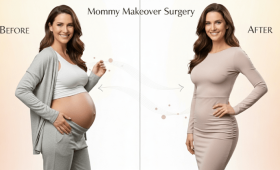
To understand the intersection of surgical precision and emotional recovery, we examine the journey of a 34-year-old Irish mother of three who sought to address significant postpartum changes. Her clinical requirements were complex, involving a multi-disciplinary approach to body contouring.
Her surgical plan was classified as an advanced combination procedure, with estimated costs ranging from 8,000 – 12,000 USD. The procedure necessitated a synchronized approach: an Extended (360) Tummy Tuck to address skin laxity, a BBL fat transfer (costing between 3,500 – 5,500 USD) to restore hip volume, and Vaser Liposuction (at 500 – 1,500 USD per area) for high-definition contouring of the flanks. Crucially, her surgery also required a Diastasis Recti repair to reconstruct the weakened abdominal wall.
“The physical transformation was profound, but the success of my journey relied heavily on the neurological peace provided by the recovery suite. The ability to recover in a low-stimulus, 5-star environment allowed me to navigate the initial ‘fog’ without the added stress of travel logistics or unfamiliarity.”
During her 7-10 days in Turkey, our patient experienced the typical post-operative inflammatory peak. However, because her logistics were handled via VIP private transfers from Istanbul (IST) and her accommodation was a 5-star recovery suite with companion stay included, her cortisol levels remained managed. The presence of a companion allowed for the emotional support necessary to navigate the “post-op blues,” while the clinical precision of the surgery ensured minimal physical trauma, facilitating a smoother cognitive recovery.
The Engineering of Safety: JCI Standards and Technical Precision
The reduction of surgical trauma is the primary defense against post-operative brain fog. By utilizing advanced technologies, surgeons can minimize the inflammatory cascade. The use of Vaser Liposultion is a prime example; by using ultrasonic energy to emulsify fat cells before aspiration, the procedure achieves high-definition contouring with significantly less bruising and tissue disruption compared to traditional methods.
Furthermore, the integrity of the surgical result is anchored in the quality of the medical components used. Adhering to rigorous JCI safety standards, all implants utilized in breast augmentations or lifts are sourced from industry leaders such as Mentor, Motiva, or Polytech. This standardization ensures that the body’s foreign-body response is minimized, reducing the risk of prolonged inflammation.
The surgical repertoire for body reconstruction is highly customizable to the patient’s anatomical needs:
- Tummy Tuck Options: Patients may choose between Full, Mini, or Extended (360) techniques depending on the extent of skin laxity and muscle separation.
- Liposuction Precision: Targeted liposuction per area allows for the refinement of the waistline without unnecessary trauma to surrounding tissue.
- Breast Augmentation/Lift: Precise implementation of breast lift (ranging from 2,500 – 4,500 USD) and implants to restore the thoracic profile.
- Reconstructive Integrity: The internal corset suturing of the abdominal fascia is critical for long-term stability and preventing recurrence of diastasis.
Optimizing the Recovery Environment: Logistics as a Clinical Tool
In the context of the “Recovery Suite,” luxury is not merely an aesthetic choice; it is a clinical intervention. To manage the emotional sensitivity and cognitive fog of a patient, the environment must be “neuro-protective.” This means minimizing the cognitive load of decision-making and physical exertion.
The logistical framework is designed to automate the patient’s entire experience, allowing the brain to focus entirely on the healing process:
- Seamless Transit: From the moment of arrival at Istanbul (IST) or Antalya (AYT), the patient is met by VIP private transfers, removing the stress of navigating foreign transit.
- Pre-Operative Clarity: The journey begins with free online video assessments with board-certified plastic surgeons, ensuring that the patient’s mental preparation and surgical expectations are aligned long before they depart.
- Controlled Environment: The 5-star recovery suites are curated to provide a low-stimulus, high-comfort setting, which is vital for managing the heightened emotional state post-anesthesia.
While the immediate post-operative period (the first 10 days) is focused on managing acute inflammation and cognitive fog, patients must also prepare for the long-term physiological reintegration. While the initial recovery in the suite is brief, a 6 weeks for full exercise return is the standard clinical recommendation to ensure the structural integrity of the internal corset suturing and the newly contoured adipose tissue.
By integrating advanced surgical technology, such as Vaser Lipo, with a highly controlled logistical and environmental strategy, the “Recovery Suite” model transforms the surgical journey from a period of traumatic stress into a streamlined, managed transition toward a new physical reality.
The Neuro-Psychological Dimension: Navigating “Brain Fog” and Post-Operative Sensitivity
In the immediate aftermath of major surgical interventions, many patients experience a phenomenon colloquially known as “brain fog”—a state of cognitive cloudiness, mild disorientation, or difficulty with concentration. Clinically, this can be attributed to the neuro-inflammatory response triggered by surgical trauma, combined with the metabolic processing of anesthetic agents. When the body is diverted to focus its resources on cellular repair and tissue regeneration, cognitive processing speeds may temporarily decelerable.
Furthermore, the physiological “rebound” following anesthesia often brings about heightened emotional sensitivity. The fluctuation of hormones and the systemic stress of surgery can lead to periods of unexpected tearfulness or heightened anxiety. This is not merely psychological; it is a physiological manifestation of the body’s autonomic nervous system adjusting to the post-surgical state. Managing this delicate period requires more than just medical monitoring; it requires a controlled, tranquil environment designed to mitigate external stressors and facilitate neurological stabilization.
“The success of a surgical outcome is measured not only by the precision of the incision but by the stability of the patient’s recovery environment during the critical first 72 hours post-anesthesia.”
The Recovery Suite: Engineered for Emotional and Physical Equilibrium
To mitigate the risks of cognitive disorientation and emotional volatility, the recovery logistics in Turkey are structured around the concept of a “sanctuary.” The transition from the operating theatre to a 5-star recovery suite is designed to be seamless, minimizing the cortisol spikes associated with travel and logistical uncertainty. These premium suites are specifically curated to provide a low-stimulus environment, which is essential for managing post-operative neuro-sensitivity.
A critical component of this logistical framework is the 5-star recovery suites with companion stay included. Having a trusted individual present is vital during the period of “brain fog,” providing both physical assistance and the emotional grounding necessary to navigate the initial days of healing. This support system is further bolstered by VIP private transfers, ensuring that the movement from Istanbul (IST) or Antalya (COK) airports to the recovery villa is devoid of the stressors typical of standard commercial transit.
Clinical Precision: Technical Standards in Anatomical Reconstruction
The efficacy of the recovery period is intrinsically linked to the technical sophistication of the procedure itself. Minimizing surgical trauma is the primary goal in reducing the inflammatory markers that contribute to post-operative brain fog. Modern surgical techniques in Turkey focus on high-definition results with reduced physiological impact:
- Vaser Liposuction: This technology is utilized for high-definition contouring, employing ultrasonic vibrations to emulsify fat cells with minimal trauma to surrounding tissues, resulting in significantly reduced bruising and edema.
- Abdominal Reconstruction: For patients addressing core weakness, Diastasis Recti repair involves internal corset suturing of the abdominal fascia, providing structural integrity and a much smoother recovery profile.
- Tummy Tuck Modalities: Surgical planning is customized based on the patient’s anatomy, with options including Full, Mini, or Extended (360) techniques to address varying degrees of skin laxity and muscle separation.
- Augmentation Standards: To ensure long-term safety and biocompatibility, only JCI approved implants are utilized, specifically Mentor, Motiva, or Polytech brands.
Post-Operative Timelines and Transitional Logistics
Managing expectations regarding the timeline of recovery is essential for preventing the “emotional crash” often seen when patients attempt to resume routine too early. The clinical protocol for patients in Turkey involves a structured 7-10 days in Turkey, during which the focus is on wound stabilization and the mitigation of acute inflammation. This period is the “active” recovery phase, where the primary goal is to ensure the patient is stable for long-haul flight.
However, the physiological “return to baseline” takes longer. While the initial stay is short, patients should anticipate a 6 weeks for full exercise return. During this window, the management of childcare, work responsibilities, and physical exertion must be meticulously planned. To assist in this transition, Cure Holiday specialists facilitate free online video assessments with board-certified plastic surgeons well in advance of travel. This allows for a pre-operative roadmap that accounts for the patient’s specific home-life logistics, ensuring that the “fly-home” timeline does not conflict with their ability to adhere to post-operative restrictions.
2026 Economic Analysis: Global Cost Breakdown
When planning for 2026, it is imperative to view the costs not merely as an expenditure on surgery, but as an investment in a comprehensive recovery ecosystem. The following breakdown illustrates the significant cost advantages of the Turkish recovery model compared to the UK and USA, even when factoring in the premium 5-star logistics provided.
Standard Surgical Packages:
- Comprehensive Standard Package: 4,500 – 7,500 USD
- Advanced Combination Packages: 8,000 – 12,000 USD
Specialized Procedure Estimates:
- Abdominoplasty (Tummy Tuck): 3,000 – 5,000 USD
- Mastopexy (Breast Lift): 2,500 – 4,500 USD
- Liposuction (Per Targeted Area): 500 – 1,500 USD
- BBL (Brazilian Butt Lift) with Fat Transfer: 3,500 – 5,500 USD
By consolidating surgical excellence, luxury aftercare, and specialized logistics into a single itinerary, the Turkish recovery model provides a level of clinical and emotional support that is often fragmented and prohibitively expensive in Western healthcare systems.
Considering a Mommy Makeover in Turkey? Get a Free Quote for your Managing “Brain Fog” and Emotional Sensitivity in the Recovery Suite Transformation with cureholiday.com
Free Consultation
Fill out the form below to get your free medical travel plan and price quote.
Sources and how to verify this yourself
- Ministry of Health, Regulation on International Health Tourism and Tourist Health, Official Gazette 26 April 2025, No. 32882 — authorisation requirement for facilities and intermediaries, TÜSKA accreditation, compulsory complication insurance (deadline 31 December 2025 for insurance, 31 December 2026 for accreditation). source
- Ministry of Health, Regulation on Promotion and Information Activities in Health Services, Official Gazette 12 November 2025, No. 33075 — treatment promises and guarantees are prohibited; price and campaign announcements are permitted only within international health tourism. source