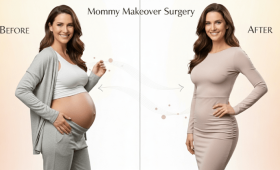
Cost and planning note (Mommy Makeover 2026)
The figures below are indicative market ranges, not a quote: your own price is confirmed after a clinical assessment.
Indicative price range: Standard Package: 4,500 – 7,500 USD | Advanced Combination: 8,000 – 12,000 USD | Tummy Tuck: 3,000 – 5,000 USD | Breast Lift: 2,500 – 4,500 USD | Liposuction Per Area: 500 – 1,500 USD | Bbl Fat Transfer: 3,500 – 5,500 USD
Facility standards: In Türkiye, any facility treating international patients must hold the Ministry of Health’s international health tourism authorisation; hospitals and medical centres must also be accredited by TÜSKA, and complication insurance is compulsory for procedures carried out in an operating theatre (Regulation of 26 April 2025).
Recovery Focus: Post-pregnancy body restoration & safety first.
Currency: GBP, EUR, USD accepted.
Managing “Incision Pulling” Sensations during your First Big Laughs
The Physiology of Tension: Understanding the “Pulling” Sensation
In the weeks following an abdominoplasty or a repair of diastasis recti, many patients report a peculiar, tight sensation—a subtle tugging or “pulling” that intensates during spontaneous moments of laughter, deep breathing, or sudden movement. While this can be disconcerting, it is a critical physiological indicator of the healing process. This sensation is often the result of the tension placed on the newly approximated abdominal fascia.
During a Diastasis Recti repair, the surgeon performs what is technically known as internal corset suturing. The separated segments of the rectus abdominis muscle (the “six-pack” muscles) are pulled back together and anchored to the linea alba using high-strength, absorbable sutures. This creates a structural “corset” that restores the integrity of the abdominal wall. When you laugh, your diaphragm contracts, increasing intra-abdominal pressure; this pressure pushes against the newly tightened fascia, creating that characteristic sensation of tension or “pulling” at the incision site.
“The sensation of tightness is not merely a side effect of skin removal, but a sign that the underlying muscular architecture is being successfully re-stabilized through tension-based healing.”
Advanced Sculpting: From Full Abdominoplasty to 360 Contouring
Post-pregnancy restoration is rarely a one-dimensional procedure. Depending on the degree of skin laxity and muscle separation, surgeons in Turkey offer various technical approaches to achieve a seamless silhouette. Choosing the correct “tummy tuck” type is essential for long-term satisfaction and managing post-operative tension.
- Mini Abdominoplasty: Targeted at patients with localized skin laxity in the lower abdomen, involving a smaller incision and less disruption to the surrounding tissue.
- Full Abdominoplasty: A comprehensive approach that addresses both the upper and lower abdominal quadrants, ideal for significant skin redundancy.
- Extended (360) Tummy Tuck: An advanced technique that extends the sculptural effects to the flanks, integrating liposuction to create a continuous, wrap-around contour.
To complement the abdominal tightening, many patients opt for Vaser Liposuction. Unlike traditional methods, Vaser technology uses ultrasound frequency to emulsify fat cells with extreme precision. This allows for high-definition contouring of the waistline while ensuring minimal bruising and less trauma to the surrounding microvasculature, which is vital for a smooth recovery.
The Gold Standard of Breast Restoration
A true “Mommy Makeover” foundation is often built upon the simultaneous restoration of breast volume and projection. Post-pregnancy, the Cooper’s ligaments—the connective tissues that support the breast—often undergo permanent stretching. A Breast Lift (Mastopexy) corrects this ptosis (sagging) by repositioning the nipple-areola complex to a more youthful height.
For patients seeking increased volume alongside the lift, the use of high-tier, JCI-approved implants is standard in Turkey’s premier surgical centers. Surgeons primarily utilize:
- Motiva Implants: Renowned for their ergonomic design and natural movement.
- Mentor Implants: A long-standing industry standard for stability and safety.
- Polytech Implants: Offering advanced cohesive gel technology.
Why Turkey is the Global Hub for Post-Pregnancy Reconstruction
Turkey has emerged as the epicenter of aesthetic excellence, not merely due to competitive pricing, but because of a sophisticated integration of surgical mastery and luxury convalescence. The Turkish medical model focuses on “comprehensive recovery,” ensuring that the patient’s environment is as optimized for healing as the surgical technique itself.
The logistics of a medical journey to Turkey are designed to eliminate patient stress, which is a known factor in accelerating the healing of incisions. Patients are met with VIP private transfers directly from Istanbul (IST) or Antalya (AYT) airports to their destinations. The recovery experience is centered around 5-star recovery suites, which frequently include a companion stay included, allowing partners or family members to assist during the initial, delicate days of the post-operative period.
Furthermore, the accessibility of expertise is unparalleled. Before even departing, patients can engage in free online video assessments with board-certified plastic surgeons. This allows for a precise anatomical evaluation and a customized surgical plan, ensuring that the patient understands exactly what the “pulling” or “tightness” they might feel is part of their personalized recovery roadmap.
Transparent Investment: The Economics of Transformation
Achieving a restored physique requires a significant investment in both surgical skill and premium medical technology. Turkey offers a transparent pricing structure that allows patients to plan for advanced combination procedures without the prohibitive costs found in Western Europe or North America.
Below is a breakdown of the estimated investment for common restorative components:
- Standard Package (Core Restoration): 4,500 – 7,500 USD
- Advanced Combination (Comprehensive Makeover): 8,000 – 12,000 USD
- Abdominoplasty (Tummy Tuck): 3,000 – 5,000 USD
- Mastopexy (Breast Lift): 2,500 – 4,500 USD
- Liposuction (Per Targeted Area): 500 – 1,500 USD
- BBL (Fat Transfer to Gluteal Region): 3,500 – 5,500 USD
The Recovery Timeline: Milestones to Physical Freedom
Managing expectations regarding physical activity is paramount to preventing dehiscence (the splitting of an incision). The recovery period is divided into two distinct phases: the acute healing phase and the remodeling phase.
The initial phase requires a stay of approximately 7-10 days in Turkey. During this window, the focus is on wound care, managing edema (swelling), and ensuring the surgical sites are undisturbed. Following this, the patient returns home to continue the healing process in a controlled environment.
The second phase, the remodeling phase, is where the “pulling” sensation begins to subside as the scar tissue matures and the fascia settles. Patients must adhere to strict physical restrictions, avoiding heavy lifting or core-intensive movements, for a period of 6 weeks for full exercise return. By following this timeline, the structural integrity of the Diastasis Recti repair is preserved, ensuring that the “pulling” sensation eventually transitions into a feeling of newfound strength and stability.
The Physiology of Post-Surgical Tension: Why Laughter Feels “Tight”
For many patients undergoing abdominal reconstruction, the first significant milestone of recovery is not the ability to walk unassisted, but the ability to experience genuine, deep laughter without a sharp, localized sensation of “pulling” at the incision site. While this sensation can be anxiety-inducing, it is a biologically predictable byproduct of the structural remodeling occurring beneath the skin. When a surgeon performs a tummy tuck (abdominoplasty), they are not merely repositioning skin; they are engaging in complex tissue reconfiguration.
The “pulling” sensation is most acute during sudden contractions of the rectus abdominis muscle—actions such as coughing, sneezing, or laughing. This is particularly prevalent when the procedure includes a Diastasis Recti repair. In this technical stage of the surgery, the surgeon performs internal corset suturing of the abdominal fascia. By pulling the separated muscle bellies back toward the midline and securing them with high-tensile sutures, the surgeon creates a new, tighter abdominal wall. While this provides the “flat” aesthetic desired, it temporarily reduces the elasticity of the abdominal wall, making the fascia less compliant during sudden muscular movements.
“The sensation of tension is often a sign of successful structural integration. As the internal sutures begin to incorporate into the biological tissue, the rigidity of the abdominal wall gradually softens, allowing for a more natural range of motion.”
A Case Study in Transformation: The Journey of a 34-Year-Old Irish Mother
To understand the transition from surgical tension to physical confidence, we look at the journey of a 34-year-old mother of three from Ireland. Following three pregnancies, she presented with significant skin laxity, abdominal muscle separation, and upper breast atrophy. Her goal was a comprehensive “transformation” rather than a single-area correction.
Her journey began with free online video assessments with board-certified plastic surgeons, a critical step in establishing a personalized surgical roadmap. Her plan involved an advanced combination procedure, integrating a tummy tuck, breast augmentation, and targeted liposuction. For her, the logistics were as much a part of the recovery as the surgery itself. Upon arrival at Istanbul (IST), she was met with VIP private transfers from the airport to the clinic and transitioned into a 5-star recovery suite with a companion stay included, ensuring her husband could assist during the initial days of restricted mobility.
During the first 7-10 days in Turkey, the “pulling” sensation was her primary concern. However, as the initial inflammatory edema (swelling) subsided, the tightness transformed from a sharp pull to a manageable sensation of firmness. By the time she returned to Ireland, she was well into her recovery, knowing that while she needed to avoid heavy lifting, she could begin to reintegrate her daily life, moving toward the 6 weeks for full exercise return milestone.
The Architecture of Combination Surgery: Precision and Technology
The modern approach to body contouring favors “combination” surgeries, which allow for a holistic silhouette change in a single session. This reduces the need for multiple periods of anesthesia and multiple recovery windows. The technical precision of these procedures relies on specific advanced technologies:
- Vaser Liposuction: Unlike traditional cannula methods, Vaser Liposuction is used for high-definition contouring with minimal bruising. By using ultrasound energy to emulsify fat cells specifically, it allows the surgeon to sculpt the flanks and abdomen with extreme detail.
- Abdominoplasty Variations: Depending on the patient’s anatomy, surgeons may perform a Full, Mini, or Extended (360) tummy tuck. The 360 approach is particularly effective for patients seeking circumferential contouring.
- Mammaplasty Excellence: To ensure long-term safety and aesthetic naturalism, breast implants used include Mentor, Motiva, or Polytech (JCI approved) brands, which are selected based on the patient’s desired projection and tissue density.
The complexity of these combined procedures is reflected in the investment required. While a tummy tuck can range from 3,000 – 5,000 USD and a breast lift from 2,500 – 4,500 USD, the advanced combination approach, which might include liposuction per area (500 – 1,500 USD) or a BBL fat transfer (3,500 – 5,500 USD), typically falls within the 8,000 – 12,000 USD bracket. A standard package for more moderate needs generally ranges from 4,500 – 7,500 USD.
Safety Standards and the Patient Recovery Timeline
The primary concern for any international patient is the standard of care. The surgical interventions discussed are performed in facilities adhering to strict JCI (Joint Commission International) safety standards. This accreditation ensures that everything from sterilization protocols to post-operative monitoring meets the highest global benchmarks for patient safety.
The recovery timeline is a structured progression:
- Days 1-7: Focus on wound care, managing edema, and minimizing movement. This period is ideally spent in the comfort of 5-star recovery suites to ensure easy access to medical support.
- Weeks 2-4: Gradual increase in walking; emphasis on preventing deep vein thrombosis (DVT) and managing the “tightness” of the abdominal fascia.
- Week 6: The transition point where most patients can return to full exercise, provided their surgeon has cleared the structural integrity of the internal sutures.
Managing the “pulling” sensation is a psychological component of the patient journey as much as a physical one. By understanding that the tension is a direct result of the internal corset suturing and the successful repair of the Diastasis Recti, patients can approach their recovery with the confidence that their body is being reconstructed into a more stable, contoured, and permanent form.
The Physiological Mechanics of Incision Tension
The first time you experience an involuntary spasm of laughter or a sudden cough following an abdominal procedure, the sensation can be startling. Patients often describe a “sharp tugging” or a “tight, stinging” feeling localized around the incision site. To understand this, one must look beneath the epidermal layer at the structural reconfiguration occurring within the musculature.
In advanced abdominoplasty, particularly when addressing Diastasis Recti, the surgeon performs an internal corset suturing of the abdominal fascia. This involves pulling the separated rectus abdominus muscles back into a central, cohesive position and anchoring them with heavy-duty, absorbable sutures. While this creates the “cinched” waistline desired, it creates a period of heightened tension across the midsection. During a deep laugh, the diaphragm contracts and the abdominal wall undergoes rapid expansion, placing transient mechanical stress on these internal sutures and the healing fascial edges.
“The sensation of ‘pulling’ is not necessarily a sign of wound dehiscence or failure; rather, it is the neurosensory perception of the fascia adapting to its new, tighter anatomical position.”
This tension is most acute during the initial 7-10 days of the recovery phase. As the inflammatory response subsides and the collagen remodeling phase begins, the flexibility of the tissue increases. However, patients must remain mindful that while the skin may feel healed, the internal structural integrity requires a strict 6 weeks for a full return to strenuous exercise and heavy lifting.
Post-Operative Recovery: The Transition from Turkey to Home
The logistics of recovering from major body contouring require more than just medical aftercare; they require a strategic plan for physical and domestic stability. A successful recovery is often bifurcated into two distinct stages: the clinical stabilization phase in Turkey and the long-term integration phase at home.
During your stay in Turkey, the focus is on acute wound management and lymphatic drainage. We recommend utilizing 5-star recovery suites with companion stay included. This allows your partner or a designated caregiver to assist with mobility and hydration in a luxury environment, significantly reducing the psychological stress of post-surgical vulnerability. The presence of a companion is vital for managing the initial “fog” of anesthesia and the logistics of the first few days of movement.
Navigating the Fly-Home Timeline
The transition back to the UK or USA involves specific physiological considerations, particularly regarding venous thromboembolism (VTE) prophylaxis. Most patients are cleared for flight after a period of clinical observation in Turkey. The logistical ease of this journey is enhanced by VIP private transfers from airport to clinic, ensuring that you move seamlessly from your recovery suite to Istanbul (IST) or Antalya (for AYT) without the physical strain of navigating crowded public terminals or heavy luggage.
Domestic Logistics and Childcare
For patients with young children, the 6-week window of restricted movement necessitates a pre-planned childcare strategy. Because the abdominal wall is under significant tension, lifting anything heavier than a small child can compromise the internal corset suturing. We suggest arranging for secondary care or a temporary reduction in domestic responsibilities during the first month to ensure the surgical tension remains stable and the incision edges remain uncompromised by sudden abdominal pressure.
2026 Financial Roadmap: Turkey vs. UK/USA
As we approach 2026, the disparity in surgical expenditure between Turkey and Western healthcare systems continues to widen. For patients seeking high-definition contouring or significant reconstruction, the cost-benefit analysis of medical tourism is profound. By bypassing the high overheads of UK and USA private clinics, patients can access advanced technologies like Vaser Liposuction—used for high-definition contouring with minimal bruising—at a fraction of the global price.
Below is the projected 2026 cost breakdown for primary procedures. Note the significant savings when opting for comprehensive packages compared to individual surgical components.
- Standard Package (Comprehensive approach): 4,500 – 7,500 USD
- Advanced Combination (Multi-area contouring): 8,000 – 12,000 USD
- Tummy Tuck (Full, Mini, or Extended 360): 3,000 – 5,000 USD
- Breast Lift (Mastopexy): 2,500 – 4,500 USD
- BBL Fat Transfer (Brazilian Butt Lift): 3,500 – 5,500 USD
- Liposuction (Per targeted area): 500 – 1,500 USD
When planning your 2026 budget, it is essential to view these figures as inclusive of the high-tier logistics mentioned above, such as VIP transfers and 5-star accommodation, which are often omitted from the “base prices” quoted by domestic UK or USA providers.
Clinical Standards and Surgical Precision
The physical sensation of “pulling” is heavily influenced by the precision of the surgical technique and the quality of the materials used. Superior outcomes are achieved when surgeons utilize cutting-edge technology to minimize trauma to the surrounding tissue.
Advanced Contouring Technologies
The use of Vaser Liposultion is a cornerstone of modern high-definition surgery. Unlike traditional mechanical liposuction, Vaser uses ultrasonic energy to emulsify fat cells specifically, preserving the structural integrity of the surrounding connective tissue. This leads to less post-operative edema and a reduction in the “tightness” or “tugging” sensation often associated with more invasive methods.
Implant Integrity and Safety
In cases of breast augmentation or lift, the choice of implant is paramount to long-term satisfaction and the reduction of palpable tension. We exclusively focus on JCI-approved, world-class brands, including:
- Motiva (for natural movement and ergonomic fit)
- Mentor (for high-profile stability)
- Polytech (for versatile anatomical shaping)
Pre-Surgical Planning
To mitigate the risks of post-operative complications and to ensure your recovery logistics are perfectly aligned with your surgical needs, we recommend utilizing free online video assessments with board-certified plastic surgeons. This allows for a digital review of your anatomical requirements—whether you require a Full, Mini, or Extended (360) tummy tuck—before you ever step foot on a plane.
Considering a Mommy Makeover in Turkey? Get a Free Quote for your Managing “Incision Pulling” Sensations during your First Big Laughs Transformation with cureholiday.com
Free Consultation
Fill out the form below to get your free medical travel plan and price quote.
Sources and how to verify this yourself
- Ministry of Health, Regulation on International Health Tourism and Tourist Health, Official Gazette 26 April 2025, No. 32882 — authorisation requirement for facilities and intermediaries, TÜSKA accreditation, compulsory complication insurance (deadline 31 December 2025 for insurance, 31 December 2026 for accreditation). source
- Ministry of Health, Regulation on Promotion and Information Activities in Health Services, Official Gazette 12 November 2025, No. 33075 — treatment promises and guarantees are prohibited; price and campaign announcements are permitted only within international health tourism. source