Cost and planning note (Mommy Makeover 2026)
The figures below are indicative market ranges, not a quote: your own price is confirmed after a clinical assessment.
Indicative price range: Standard Package: 4,500 – 7,500 USD | Advanced Combination: 8,000 – 12,000 USD | Tummy Tuck: 3,000 – 5,000 USD | Breast Lift: 2,500 – 4,500 USD | Liposuction Per Area: 500 – 1,500 USD | Bbl Fat Transfer: 3,500 – 5,500 USD
Facility standards: In Türkiye, any facility treating international patients must hold the Ministry of Health’s international health tourism authorisation; hospitals and medical centres must also be accredited by TÜSKA, and complication insurance is compulsory for procedures carried out in an operating theatre (Regulation of 26 April 2025).
Recovery Focus: Post-pregnancy body restoration & safety first.
Currency: GBP, EUR, USD accepted.
Managing Edema (Swelling) after Multi-Procedure Mommy Makeovers
Managing Edema (Swelling) after Multi-Procedure Mommy Makeovers
The Physiology of Post-Operative Edema in Multi-Area Reconstruction
In the context of a comprehensive Mommy Makeover, edema—the accumulation of interstitial fluid in the subcutaneous tissues—is an expected physiological response to surgical trauma. When multiple procedures are performed simultaneously, such as a breast lift combined with a tummy tuck and liposuction, the body’s inflammatory cascade is significantly more pronounced than in single-site surgeries. The localized vasodilation and increased capillary permeability required for the healing process can lead to significant swelling across the abdominal and thoracic regions.
Managing this edema is not merely about comfort; it is about protecting the structural integrity of the surgical results. For instance, during a Diastasis Recti repair, which involves the meticulous internal corset suturing of the abdominal fascia, excessive pressure from localized swelling can potentially strain the newly repaired tension lines. Therefore, the management of fluid dynamics is a primary focus of the post-operative protocols employed by top-tier surgeons in Turkey.
Surgical Precision: Reducing Trauma to Mitigate Swelling
Modern surgical advancements have revolutionized how we approach post-operative edema. The goal of a high-definition Mommy Makeover is to achieve aesthetic excellence while minimizing the disruption of the microvasculature. One of the primary technological drivers in this field is Vaser Liposuction. Unlike traditional mechanical aspiration, Vaser technology utilizes ultrasonic cavitation to emulsify adipose tissue, allowing for high-definition contouring with minimal bruising and significantly reduced post-operative edema.
The choice of surgical approach for the abdomen also plays a critical role in the swelling profile. Depending on the patient’s skin laxity and the extent of tissue redundancy, surgeons may opt for Tummy tuck options: Full, Mini, or Extended (360). While an Extended (360) approach covers the flanks and provides a more comprehensive contour, it naturally involves a larger surgical field and, consequently, a more complex edema management plan. Similarly, in breast reconstruction, the use of JCI-approved implants, such as Mentor, Motiva, or Polytech, ensures that the biocompatibility of the foreign body is optimized, reducing the risk of prolonged inflammatory responses or capsular contracture.
“The management of edema in multi-procedure cases requires a delicate balance between supporting the surgical tension lines—such as the abdominal corset—and promoting lymphatic drainage to prevent seroma formation.”
Safety Benchmarks and the Global Hub of Turkey
Turkey has emerged as the preeminent global hub for Mommy Makeovers, not merely due to cost-efficiency, but because of an unparalleled adherence to international safety benchmarks. The integration of advanced surgical technology with a rigorous regulatory environment makes it a destination of choice for patients seeking complex, multi-area restorations. Turkish surgical centers are frequently characterized by their use of state-of-the-art technology, such as 3D imaging for preoperative planning and advanced anesthetic monitoring.
Safety in these complex procedures is anchored by the expertise of board-certified plastic surgeons who specialize in the interplay between different surgical sites. When a patient undergoes a combination of liposuction per area (ranging from 500 USD to 1,500 USD) and BBL fat transfer (3,500 USD to 5,500 USD), the surgical team must manage the systemic inflammatory load. The proficiency of Turkish surgeons in managing these multi-layered anatomical repairs—from the deep fascial layers of the abdomen to the delicate glandular tissue of the breast—sets a global standard for reconstructive excellence.
The Economics of Comprehensive Restoration
One of the most compelling reasons for the rise of medical tourism in Turkey is the ability to access premium, multi-procedure packages at a fraction of the cost found in the UK or the USA, without compromising on the quality of the implants or the surgical technique. Understanding the cost structure is essential for patients planning their restorative journey:
- Standard Package: 4,500 – 7,500 USD (Typically involving core abdominal and breast work).
- Advanced Combination: 8,000 – 12,000 USD (Comprehensive reconstruction involving lipo, BBL, and multi-site tightening).
- Tummy Tuck (Standalone): 3,000 – 5,000 USD.
- Breast Lift (Standalone): 2,500 – 4,500 USD.
These figures represent a significant opportunity for patients to receive high-end, multi-area surgery involving Motiva or Mentor implants and Vaser technology, which would otherwise be financially prohibitive in many Western healthcare systems.
The Recovery Ecosystem: Logistics and Aftercare
Successful edema management extends far beyond the operating theater; it is deeply tied to the post-operative environment. The recovery period for a multi-procedure Mommy Makeover is structured to minimize physical strain and maximize lymphatic clearance. Patients typically spend 7-10 days in Turkey under close clinical supervision, which is a critical window for monitoring for any signs of hematoma or excessive seroma.
The logistics of the Turkish medical experience are designed to facilitate a low-stress recovery, which is vital for reducing cortisol levels that can otherwise impede healing. This ecosystem includes:
- Arrival and Transport: Seamless VIP private transfers from Istanbul (IST) or Antalya (AYT) directly to the clinic or recovery suite.
- Accommodation: Stay in 5-star recovery suites with companion stay included, providing a sterile yet comfortable environment for the initial healing phase.
- Pre-Surgical Planning: Access to free online video assessments with board-certified plastic surgeons to discuss surgical goals and swelling expectations before traveling.
While the initial period in Turkey focuses on acute post-operative care, patients must adhere to a longer-term recovery timeline. A full return to strenuous exercise is generally recommended at 6 weeks post-surgery. This duration allows the subcutaneous tissues to settle, the edema to subside, and the internal structural repairs, such as the abdominal fascia suturing, to reach a state of biological stability.
The Pathophysiology of Post-Operative Edema in Multi-Procedure Surgery
In the context of a comprehensive “Mommy Makeover,” edema—the accumulation of interstitial fluid in the subcutaneous tissues—is an expected physiological response to surgical trauma. When multiple anatomical sites are addressed simultaneously, such as the abdomen, breasts, and flanks, the body initiates a complex inflammatory cascade. This cascade involves vasodilation and increased capillary permeability, allowing plasma to escape the vascular space and settle into the surrounding tissues.
Managing this fluid shift is critical for ensuring optimal aesthetic outcomes and preventing complications like seromas (fluid collections) or hematomas. In multi-procedure transformations, the volume of edema is often higher than in single-site surgeries because the body is processing inflammatory signals from several different surgical planes. Effective management relies on understanding the technical nuances of the procedures performed, such as the use of Vaser Liposuction, which is engineered for high-definition contouring with minimal bruising, thereby reducing the initial inflammatory stimulus compared to traditional mechanical aspiration.
Clinical Case Study: Restoring Maternal Contour
“A 34-year-old Irish mother of three presented with significant abdominal laxity, diastasis recti, and loss of breast volume following three pregnancies. Her primary goal was a cohesive rejuvenation of the midsection and bust.”
For this patient, the surgical plan involved an advanced combination approach. The journey began with free online video assessments with board-controllable plastic surgeons, allowing for a precise preoperative evaluation of skin elasticity and fat distribution. The surgical execution focused on addressing the underlying structural deficiencies. Specifically, the Diastasis Recti repair involved internal corset suturing of the abdominal fascia to re-establish the midline integrity of the rectus abdominus muscles.
To complement the abdominal tightening, the patient underwent a Full, Mini, or Extended (360) Tummy Tuck (depending on the degree of lateral skin excess) alongside breast augmentation using JCI-approved implants, such as Mentor, Motiva, or Polytech. To address contour irregularities, liposuction per area was performed using Vaser technology, with the harvested fat redistributed via BBL fat transfer to enhance the gluteal profile. Because of the intensity of the multi-site trauma, the patient’s recovery required strict adherence to a compression protocol to mitigate the significant edema common in such advanced combinations.
The Technical Precision of the Transformation
The management of swelling is inextricably linked to the surgical techniques employed. The choice of technology directly dictates the postoperative inflammatory load. For instance, the application of Vaser Liposuction allows for more precise emulsification of adipocytes, which minimizes the disruption of the lymphatic vessels. This reduction in lymphatic interruption is a key factor in preventing prolonged edema.
Furthermore, the type of abdominoplasty selected plays a role in the patient’s fluid management strategy:
- Full Abdominoplasty: Involves extensive tissue mobilization, requiring more intensive compression to manage larger fluid shifts.
- Mini Abdominoplasty: Focuses on the lower abdomen, resulting in a localized inflammatory response.
- Extended (360) Tummy Tuck: Addresses the flanks and abdomen, necessitating a circumferential compression garment to ensure the skin adheres to the new underlying contours.
The structural integrity of the repair, particularly the internal corset suturing of the abdominal fascia during Diastasis Recti repair, provides the necessary tension to prevent the accumulation of fluid in the dead space created by the separation of the muscle layers.
Post-Surgical Management and Recovery Timeline
Recovery from a multi-procedure makeover is a structured, phased process. The primary objective in the immediate postoperative period is to control edema through external compression and controlled movement. The standard recovery protocol includes:
- The Acute Phase (7-10 days in Turkey): During this period, patients typically remain in 5-star recovery suites with companion stay included. This allows for close monitoring of surgical sites and immediate management of any swelling fluctuations. VIP private transfers from airport to clinic and subsequent hotel transfers ensure that the patient avoids physical strain during the most critical window of inflammation.
- The Sub-Acute Phase (Weeks 2-6): Focus shifts to gradual mobilization and the prevention of lymphatic stagnation.
- The Full Integration Phase (6 weeks for full exercise return): By the sixth week, the inflammatory cascade has largely subsided, and the subcutaneous tissues have stabilized, allowing for a return to strenuous physical activity.
Navigating the Surgical Journey: Logistics and Investment
Planning a multi-procedure transformation requires careful consideration of both the clinical requirements and the financial investment. The complexity of a “Mommy Makeover” is reflected in the tiered pricing structures offered by specialists. While a tummy tuck may range from 3,000 – 5,000 USD and a breast lift from 2,500 – 4,500 USD, the integration of these procedures into a single session requires a more comprehensive budgetary approach.
For patients seeking a total body reconfiguration, the standard_package typically ranges from 4,500 – 7,500 USD, whereas an advanced_combination—which might include BBL and liposuction—ranges from 8,000 – 12,000 USD. Detailed cost breakdowns for individual components include liposuction per area at 500 – 1,500 USD and BBL fat transfer at 3,500 – 5,500 USD.
Logistically, the journey is designed to be seamless, often involving arrivals at Istanbul (IST) or Antalya (AYT). By utilizing VIP private transfers and high-end recovery accommodations, the focus remains entirely on the patient’s physiological recovery and the mitigation of postoperative edema, ensuring that the surgical transformation is as smooth as the final aesthetic result.
The Pathophysiology of Edema in Multi-Component Surgery
Following a comprehensive “Mommy Makeover”—which often involves the simultaneous execution of a tummy tuck, breast augmentation, and liposuction—the body undergoes a significant systemic inflammatory response. This physiological reaction manifests primarily as edema, or localized swelling. In the context of multi-procedure surgery, edema is not merely a cosmetic inconvenience; it is a complex interplay of fluid shifts within the interstitial space caused by tissue trauma, vasodilation, and the disruption of lymphatic pathways.
When performing a Diastasis Recti repair, surgeons utilize internal corset suturing of the abdominal fascia to reconstruct the core. While this provides essential structural integrity, the manipulation of the deep fascial layers inevitably triggers an immune response. Similarly, while Vaser Liposuction is engineered for high-definition contouring with minimal bruising compared to traditional methods, the ultrasonic energy used to emulsify fat cells still necessitates a period of lymphatic drainage and fluid reabsorption. The goal of post-operative management is to facilitate the movement of this interstitial fluid back into the lymphatic system to prevent complications such as seroma formation.
“Effective management of post-operative edema requires a dual approach: minimizing the initial inflammatory insult through advanced surgical techniques, and optimizing the physiological drainage environment during the recovery phase.”
Post-Operative Management: Compression and Clinical Protocols
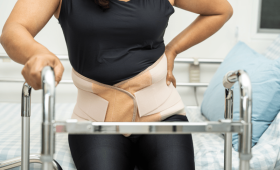
The management of swelling is heavily dependent on the use of medical-grade compression garments. These garments provide the necessary external pressure to reduce the space available for fluid accumulation and to ensure that the skin adheres precisely to the new underlying contours. For patients receiving tummy tuck options such as Full, Mini, or Extended (360), the compression must be strategically applied to support the abdominal wall and prevent tension on the internal sutures.
In the case of breast augmentation, where high-quality implants such as Mentor, Motiva, or Polytech (JCI approved) are utilized, compression helps in stabilizing the pocket and reducing the risk of hematoma. The clinical protocol involves:
- Lymphatic Drainage: Gentle manual lymphatic drainage (MLD) to encourage the movement of stagnant fluids.
- Fluid Regulation: Maintaining strict electrolyte balance to prevent secondary fluid retention.
- Activity Monitoring: Adhering to a strict 7-10 days in Turkey period of restricted movement, followed by a gradual transition toward the 6 weeks for full exercise return milestone.
‘Compression Therapy: Continuous use of graduated compression to mitigate subcutaneous edema.
The Turkish Recovery Ecosystem: 5-Star Post-Operative Logistics
The “Recovery Logistics” pillar of a Turkish Mommy Makeover is designed to alleviate the physiological stress of surgery by providing a controlled, luxury environment. Unlike the fragmented care often found in the UK or USA, the Turkish model integrates clinical aftercare with high-end hospitality. This is essential for managing edema, as high levels of cortisol (the stress hormone) can exacerbate swelling and impede healing.
Patients typically arrive via VIP private transfers from Istanbul (IST) or Antalya (AYT) directly to their recovery destination. The recovery infrastructure in Turkey focuses on 5-star recovery suites with companion stay included. This is a critical logistical advantage; the presence of a companion allows for the management of basic needs—such as hydration and medication adherence—without the patient needing to exert themselves, which is vital for minimizing the risk of post-operative blood clots (DVT).
For mothers navigating the complexities of post-surgical life, the logistics of childcare and domestic responsibility are often the greatest hurdles. The Turkish model allows for a “sanctuary period” where the patient is insulated from the physical demands of parenting for the first week, allowing the initial, most aggressive phase of edema to subside before they undertake the journey home.
Navigating the Transition: Fly-Home Timelines and Childcare
One of the most delicate phases of the recovery timeline is the transition from the Turkish recovery suite back to one’s home country. The 7-10 days in Turkey is a period of intense monitoring. During this window, the surgeon or a specialist nurse assesses the wound sites for signs of infection or excessive seroma.
The “fly-home” window is carefully calibrated. While the patient is medically cleared to fly after approximately 7 to 10 days, the logistical planning must account for the fact that full exercise return is not permitted for 6 weeks. This means that upon returning to the UK or USA, the patient must have a pre-arranged support system in place. Professional childcare or extended family support is highly recommended, as the physical limitations imposed by the internal corset suturing and the Vaser Lipo recovery period make lifting even small children or heavy objects strictly contraindicated.
2026 Global Cost Analysis: Turkey vs. UK/USA
The financial incentive for choosing Turkey extends far beyond the initial surgical fee; it encompasses the entire logistical package, including the 5-star recovery suite and VIP transfers. When comparing the 2026 projected costs, the disparity between Turkish specialized packages and Western healthcare remains significant.
Below is a breakdown of the estimated costs for the primary components of a Mommy Makeover:
| Procedure / Package Type | Estimated Cost (USD) |
|---|---|
| Standard Package (Combined) | 4,500 – 7,500 USD |
| Advanced Combination Package | 8,000 – 12,000 USD |
| Tummy Tuck (Full/Mini/Extended) | 3,000 – 5,000 USD |
| Breast Lift / Augmentation | 2,500 – 4,500 USD |
| Liposuction (Per Area) | 500 – 1,500 USD |
| BBL (Fat Transfer) | 3,500 – 5,500 USD |
When these figures are contrasted with the equivalent costs in the UK or USA—where a single tummy tuck can easily exceed 15,000 USD without including the cost of specialized post-op care—the value proposition of the Turkish model becomes clear. This budget efficiency allows patients to allocate more resources toward premium recovery logistics, such as higher-tier 5-star suites and enhanced companion care, ensuring a superior clinical outcome and more effective edema management.
Considering a Mommy Makeover in Turkey? Get a Free Quote for your Managing Edema (Swelling) after Multi-Procedure Mommy Makeovers Transformation with cureholiday.com
Free Consultation
Fill out the form below to get your free medical travel plan and price quote.
Sources and how to verify this yourself
- Ministry of Health, Regulation on International Health Tourism and Tourist Health, Official Gazette 26 April 2025, No. 32882 — authorisation requirement for facilities and intermediaries, TÜSKA accreditation, compulsory complication insurance (deadline 31 December 2025 for insurance, 31 December 2026 for accreditation). source
- Ministry of Health, Regulation on Promotion and Information Activities in Health Services, Official Gazette 12 November 2025, No. 33075 — treatment promises and guarantees are prohibited; price and campaign announcements are permitted only within international health tourism. source