About the prices on this page. The figures below are indicative market prices and country comparisons, not a quote. Our own current, all-inclusive prices are published on our weight loss surgery in Turkey page, and we confirm your figure in writing before you commit to anything.
Cost and planning note (2026)
The figures below are indicative market ranges for 2026, not a quote: your own price depends on the clinic, the surgeon and your clinical assessment.
Indicative price range: Gastric Sleeve: 3,500 – 5,500 USD | Gastric Bypass: 4,500 – 7,500 USD | Gastric Balloon: 2,000 – 3,000 USD
Facility standards: In Türkiye, any facility treating international patients must hold the Ministry of Health’s international health tourism authorisation; hospitals and medical centres must also be accredited by TÜSKA, and complication insurance is compulsory for procedures carried out in an operating theatre (Regulation of 26 April 2025). Ask us for the authorisation of the facility you are matched with.
Currency: USD / EUR / GBP accepted at all clinics.
The “Full Body Makeover” Package: Obesity Surgery Combined with Skin Removal
The “Full Body Makeover” Package: A Foundation in Bariatric & Post-Bariatric Surgery
The burgeoning demand for comprehensive weight loss solutions has led to the rise of the “Full Body Makeover” package – a combined approach integrating bariatric surgery for significant weight loss with subsequent body contouring procedures to address excess skin. This pillar establishes the medical foundation of this increasingly popular offering, outlining the qualifying criteria, surgical options, and international standards critical for patient safety and optimal outcomes. We will focus specifically on the *why* behind combining these procedures and the physiological rationale underpinning their success.
Defining the Patient Profile & the BMI Threshold
The cornerstone of eligibility for bariatric surgery, and therefore the initial phase of the “Full Body Makeover,” is a patient’s Body Mass Index (BMI). While often misunderstood, BMI serves as a readily accessible proxy for body fat based on height and weight. Our strict criteria align with established global standards: a BMI greater than 35 automatically qualifies an individual for consideration. However, acknowledging the complexities of individual health, we also consider patients with a BMI of 30 or higher *provided* they present with significant co-morbidities such as Type 2 Diabetes Mellitus, Obstructive Sleep Apnea (OSA), severe hypertension, hyperlipidemia, or non-alcoholic fatty liver disease (NAFLD).
It’s crucial to understand that BMI isn’t a perfect measure; it doesn’t differentiate between muscle mass and fat mass. However, its utility lies in its broad applicability and ability to identify individuals at increased risk of obesity-related complications. Pre-operative evaluation includes a comprehensive metabolic panel, cardiology clearance (ECG, potentially echocardiogram), and psychological assessment to ensure patient suitability and address potential behavioral factors influencing long-term weight management. This holistic approach underscores our commitment to patient wellbeing, extending beyond purely surgical intervention.
Bariatric Surgery Options: A Technical Overview
The “Full Body Makeover” typically begins with one of several established bariatric procedures. Understanding the mechanisms of action is paramount to appreciating the subsequent need for skin removal.
- Gastric Sleeve (Sleeve Gastrectomy): This restrictive procedure involves removing approximately 80% of the stomach, creating a smaller, tube-shaped organ (the ‘sleeve’). This reduces gastric volume, limiting food intake, and also diminishes the production of ghrelin – the ‘hunger hormone’ – contributing to decreased appetite. Costs range from 3,500 – 5,500 USD.
- Gastric Bypass (Roux-en-Y Gastric Bypass): Considered the “gold standard” for many, gastric bypass involves creating a small stomach pouch and connecting it directly to the jejunum (small intestine), bypassing a significant portion of the stomach and duodenum. This combines restriction *and* malabsorption, leading to more substantial weight loss. Costs range from 4,500 – 7,500 USD.
- Gastric Balloon: A less invasive option, a silicone balloon is inserted into the stomach endoscopically and inflated with saline. This occupies space, promoting satiety and reducing food intake. While offering less dramatic weight loss than surgical options, it’s suitable for individuals with lower BMIs or those seeking a bridge to surgery. Costs range from 2,000 – 3,000 USD.
The magnitude of weight loss achieved with these procedures is significant – often exceeding 50-80% of excess body weight within the first 12-18 months. However, rapid and substantial weight loss inevitably leads to excess, inelastic skin – the primary driver for the second phase of the “Full Body Makeover”: post-bariatric body contouring.
The Physiological Basis for Post-Bariatric Body Contouring
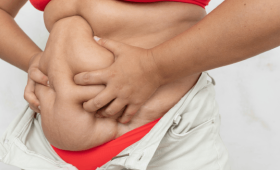
Following massive weight loss (MWL), the skin’s elasticity, compromised by years of stretching, often fails to adapt to the reduced body volume. This results in ptosis (sagging) of the abdominal skin, breasts, arms, thighs, and other areas. The underlying collagen and elastin fibers, responsible for skin firmness and resilience, have been irreversibly damaged.
Clinically, this presents not only aesthetic concerns but also significant functional impairments. Excess skin can cause:
- Chronic Intertrigo: Skin inflammation and infection in skin folds.
- Pressure Ulcers: Especially problematic in abdominal pannus (excess abdominal skin).
- Difficulty with Hygiene: Impacting quality of life.
- Limited Mobility: Affecting physical activity and overall health.
Common post-bariatric procedures to address these issues include abdominoplasty (“tummy tuck”), brachioplasty (arm lift), thigh lift, mastopexy (breast lift), and lower body lift (panniculectomy with circumferential lift). These procedures remove excess skin and fat, reshaping the body and restoring a more proportionate silhouette. The timing of these procedures is critical; generally, surgeons recommend waiting 12-18 months *after* achieving weight stabilization to allow tissues to settle and optimize surgical outcomes.
International Standards & Destination Considerations
CureHoliday.com prioritizes patient safety and quality of care. When considering the “Full Body Makeover” abroad, particularly in Turkey – a leading destination for medical tourism – adherence to rigorous standards is non-negotiable. We exclusively partner with facilities holding JCI (Joint Commission International) Accreditation and operate under the strict regulations of the Turkish Ministry of Health.
For our UK, US and EU clientele, obtaining a E-visa is typically straightforward, allowing for a comfortable 90-day stay facilitating both the surgical procedure and initial recovery. We offer a variety of recovery hubs tailored to individual preferences:
- Istanbul (City/Boutique): Ideal for those seeking a vibrant urban experience with access to cultural attractions.
- Antalya (Resort/Beach): Offers a relaxing and rejuvenating recovery environment with coastal scenery.
- Izmir (Aegean/Thermal): Combines the beauty of the Aegean coast with access to thermal springs known for their therapeutic properties.
Our financial transparency ensures clear cost breakdowns, with pricing communicated in USD, EUR, and GBP for convenience. We provide comprehensive pre- and post-operative care packages, including accommodation, airport transfers, and dedicated patient support, ensuring a seamless and stress-free experience.
The Surgical/Clinical Journey: A Detailed Overview
The “Full Body Makeover” package, encompassing bariatric surgery and subsequent panniculectomy/body contouring, represents a comprehensive approach to post-massive weight loss (MWL) patient care. This pillar delves into the specific surgical techniques employed, a detailed patient case study, and critical risk mitigation strategies. CureHoliday prioritizes patient safety and optimal outcomes, adhering to the highest international standards throughout this complex journey.
Bariatric Surgery Options: Technical Considerations
The initial phase focuses on achieving significant and sustained weight loss through bariatric surgery. Several options are available, each with its own physiological mechanisms and suitability profile. Patient selection is paramount, guided by the requirement of a Body Mass Index (BMI) exceeding 35 or 30 in the presence of significant co-morbidities such as type 2 diabetes, hypertension, or sleep apnea.
- Gastric Sleeve (Sleeve Gastrectomy): This procedure involves the laparoscopic removal of approximately 80% of the stomach, creating a tubular-shaped “sleeve.” This restricts food intake and reduces the production of ghrelin, the ‘hunger hormone’. Technical aspects include precise staple line placement, reinforced with a sero-desideral stitch to minimize staple line leaks – a serious postoperative complication. The average cost is 3,500 – 5,500 USD.
- Gastric Bypass (Roux-en-Y Gastric Bypass): Considered the “gold standard,” this more complex procedure creates a smaller stomach pouch and connects it directly to the small intestine, bypassing a significant portion of the stomach and duodenum. This results in both restriction and malabsorption. Minimizing anastomosis (connection) lengths and ensuring adequate blood supply to the bypassed segments are crucial for avoiding complications like marginal ulcers or internal hernias. The cost ranges from 4,500 – 7,500 USD.
- Gastric Balloon: A less invasive option involving the endoscopic placement of a silicone balloon into the stomach. This creates a feeling of fullness, limiting caloric intake. While effective for some, it’s typically a bridging therapy for patients who require temporary weight loss prior to a more definitive surgical approach. Cost: 2,000 – 3,000 USD.
All bariatric procedures are performed laparoscopically whenever feasible, utilizing high-definition imaging and specialized instrumentation. This minimizes invasiveness, reduces postoperative pain, and accelerates recovery times.
Post-Bariatric Body Contouring: Addressing Excess Skin
Following substantial weight loss (typically 50% or more of initial body weight, and often achieved 18-24 months post-bariatric surgery), many patients are left with excess skin, leading to functional impairments (skin rashes, infections, difficulty with hygiene) and psychological distress. Panniculectomy, abdominoplasty, brachioplasty (arm lift), thigh lift, and breast lift are common procedures performed as part of the “Full Body Makeover.”
- Panniculectomy: Removal of the excess abdominal skin that hangs down over the pubic area (the ‘pannus’). This is often the first procedure performed as it addresses significant hygiene concerns and improves overall comfort.
- Abdominoplasty (Tummy Tuck): Tightens abdominal muscles and removes excess skin and fat, creating a smoother, more defined abdominal contour. Different techniques exist (full, mini) depending on the degree of excess skin and muscle laxity.
- Brachioplasty: Removes excess skin and fat from the upper arms, improving arm shape and function. The extent of the incision varies based on the degree of skin laxity.
- Thigh Lift: Addresses excess skin and fat in the thighs, improving leg contour. Medial thigh lift, lateral thigh lift, and combined approaches are tailored to individual anatomy and aesthetic goals.
- Mastopexy (Breast Lift): Raises and reshapes the breasts, addressing ptosis (sagging) and restoring a more youthful breast contour. Can be combined with augmentation (implants) or reduction if desired.
Layered closure of the surgical wounds is critical to minimizing seroma formation (fluid accumulation) and optimizing aesthetic outcomes. Drainage catheters are routinely placed to facilitate fluid removal and prevent complications. We employ the use of negative pressure wound therapy (NPWT) in certain cases to promote wound healing and reduce the risk of infection, particularly in patients with compromised wound healing due to nutritional deficiencies or co-morbidities.
Persona Case Study: Mrs. Eleanor Vance, UK
Eleanor, a 45-year-old teacher from Manchester, UK, presented with a BMI of 42 and a history of type 2 diabetes and hypertension. She had previously attempted numerous dietary and exercise programs without sustained success. After thorough evaluation, she underwent a laparoscopic Roux-en-Y Gastric Bypass in Istanbul. Her postoperative course was uncomplicated, and she achieved a 65kg weight loss over 18 months.
Eleanor then opted for a staged body contouring plan. First, a panniculectomy was performed to address the significant pannus. Six months later, she underwent combined abdominoplasty and thigh lifts. The surgeries were spaced to allow for optimal wound healing and recovery between each procedure. Her diabetes and hypertension are now well-controlled without medication, and she reports a significant improvement in her quality of life.
Risk Mitigation and Standards of Care
CureHoliday maintains rigorous standards to mitigate potential risks associated with both bariatric and body contouring surgeries. These include:
- Preoperative Assessment: Comprehensive medical evaluation, including blood tests, ECG, and upper GI endoscopy, to identify and address any underlying health conditions. Nutritional assessment and optimization are vital to improve surgical outcomes.
- Surgical Expertise: Selection of highly experienced, board-certified surgeons specializing in bariatric and plastic surgery.
- Facility Accreditation: All procedures are performed in JCI (Joint Commission International) Accredited hospitals, ensuring adherence to international medical standards and stringent safety protocols. Facilities are also regulated by the Turkish Ministry of Health.
- Anesthesia Management: Experienced anesthesiologists utilize advanced monitoring techniques and tailored anesthesia protocols to minimize risks.
- Postoperative Care: Dedicated postoperative care teams provide comprehensive wound care, pain management, and nutritional support.
- Thromboprophylaxis: Routine use of pharmacological and mechanical thromboprophylaxis (blood clot prevention) measures.
- Infection Control: Strict adherence to sterile techniques and antibiotic protocols to minimize the risk of surgical site infections.
For international patients, we provide comprehensive logistical support, including assistance with e-visas (available for most UK/US/EU citizens for a 90-day stay), airport transfers, and accommodation in carefully selected recovery hubs in Istanbul (city/boutique), Antalya (resort/beach), or Izmir (Aegean/thermal), catering to different preferences. We support USD, EUR, and GBP currencies for all package costs.
We emphasize that a successful “Full Body Makeover” is a collaborative effort between the patient, surgeon, and dedicated medical team. Open communication, realistic expectations, and a commitment to long-term lifestyle changes are essential for achieving optimal and sustainable results.
Recovery Logistics, 2026 Cost Audit for Antalya/Istanbul vs Western Countries, and the Final Medical Verdict
Following successful bariatric surgery and subsequent massive weight loss (MWL), patients undergoing a “Full Body Makeover” package – combining procedures like gastric sleeve, bypass, or ballooning with panniculectomies, brachioplasties, and thigh lifts – face a unique and complex recovery trajectory. This pillar focuses on the logistical and financial considerations surrounding post-operative care, specifically comparing costs and standards in Turkey (Antalya & Istanbul) with those prevalent in Western nations, culminating in a final medical assessment regarding optimal recovery strategies.
Recovery Logistics: A Phased Approach
Recovery isn’t a single event; it’s a phased process. Immediately post-bariatric surgery (typically 2-3 days hospital stay), patients require diligent monitoring for complications such as anastomotic leaks (in the case of bypass), ileus, or deep vein thrombosis (DVT). Prophylactic measures against DVT, including intermittent pneumatic compression (IPC) devices and low-molecular-weight heparin (LMWH), are standard. Post-discharge, the first 4-6 weeks are critical for wound healing, dietary adherence to a liquid then pureed diet, and managing post-operative discomfort with prescribed analgesics.
However, the addition of body contouring procedures significantly extends this timeline. Multiple excisions create larger wound surfaces, increasing the risk of seroma formation (fluid accumulation under the skin) and infection. Compression garments, worn continuously for 6-12 weeks post-body contouring, are crucial to minimize swelling and sculpt the newly reshaped body. Lymphatic drainage massage, initiated after initial wound healing (typically 2 weeks post-op), helps reduce edema and optimize tissue oxygenation. A crucial, often overlooked, aspect is protein intake. Following bariatric surgery *and* extensive tissue repair, patients require a significantly increased protein consumption (80-120g/day) to facilitate wound healing and prevent muscle catabolism. This necessitates careful dietary planning and, often, supplementation with protein shakes and powders.
Furthermore, patients must be educated on recognizing signs of infection – increasing pain, redness, purulent discharge, fever – and understand the importance of immediate medical attention. Prolonged immobility post-surgery can lead to pulmonary complications; therefore, early ambulation and incentive spirometry are vital. Nutritional deficiencies, particularly iron, vitamin B12, and calcium, are common post-bariatric surgery and necessitate lifelong supplementation and monitoring. This is compounded after body contouring due to altered absorption rates and increased metabolic demands.
2026 Cost Audit: Turkey vs. Western Countries
The financial disparity between undergoing a “Full Body Makeover” in Turkey versus Western nations remains significant, but is evolving. As of late 2023/early 2026, and projecting forward to 2026, considering inflationary pressures and exchange rate fluctuations, here’s a comparative analysis:
- Gastric Sleeve: Turkey – 3,500 – 5,500 USD. Western Countries (US/UK/Germany) – $15,000 – $25,000+ USD.
- Gastric Bypass: Turkey – 4,500 – 7,500 USD. Western Countries (US/UK/Germany) – $20,000 – $30,000+ USD.
- Gastric Balloon: Turkey – 2,000 – 3,000 USD. Western Countries (US/UK/Germany) – $8,000 – $12,000+ USD.
- Panniculectomy: Turkey – $3,000 – $5,000 USD. Western Countries (US/UK/Germany) – $8,000 – $15,000+ USD.
- Brachioplasty: Turkey – $2,500 – $4,500 USD. Western Countries (US/UK/Germany) – $6,000 – $12,000+ USD.
- Thigh Lift: Turkey – $3,500 – $6,000 USD. Western Countries (US/UK/Germany) – $7,000 – $14,000+ USD.
These figures exclude travel, accommodation, and post-operative care in the patient’s home country. However, even factoring in these costs, the total expenditure in Turkey remains considerably lower. The Turkish Lira’s volatility is a key factor, making cost predictions subject to change. Currency fluctuations impacting the USD, EUR, and GBP must be actively monitored. Antalya generally offers more inclusive packages encompassing accommodation in resort-style hotels, potentially reducing overall expenses, while Istanbul tends towards boutique clinics offering highly specialized care. Izmir, with its thermal spas, is emerging as a recovery hub focusing on post-operative rehabilitation.
Medical Verdict: Optimizing Recovery Pathways
While cost is a significant driver for medical tourism, the quality of post-operative care is paramount. Turkey’s medical infrastructure is increasingly robust, with many facilities achieving JCI accreditation and adhering to rigorous Ministry of Health regulations. However, seamless continuity of care is crucial. We strongly recommend patients establish a relationship with a physician in their home country *prior* to surgery to facilitate post-operative monitoring, nutritional counseling, and management of any complications.
A novel approach, increasingly adopted by CureHoliday.com, is the implementation of remote patient monitoring (RPM) utilizing wearable sensors and telehealth consultations. This allows for continuous tracking of vital signs, wound healing progress (through photographic documentation), and early detection of potential complications, regardless of the patient’s location. RPM, coupled with a dedicated case manager fluent in the patient’s language, ensures a high level of personalized support throughout the entire recovery journey.
Furthermore, the “Full Body Makeover” package necessitates a multi-disciplinary approach involving a bariatric surgeon, plastic surgeon, anesthesiologist, dietitian, physiotherapist, and psychologist. Addressing the psychological impact of MWL and body image transformation is as important as managing the physical aspects of recovery. Patients should be screened for body dysmorphic disorder (BDD) and offered appropriate counseling if needed. Finally, establishing realistic expectations regarding aesthetic outcomes and the lengthy recovery process is critical for patient satisfaction.
A final medical verdict? While Turkey offers significant cost advantages, a truly successful “Full Body Makeover” demands meticulous planning, a commitment to holistic post-operative care, and proactive management of potential complications, regardless of geographical location. CureHoliday.com prioritizes patient safety and well-being by ensuring access to high-quality medical facilities, qualified practitioners, and a comprehensive support network throughout the entire process.
Ready to consult a specialist? Schedule a Free Consultation for The “Full Body Makeover” Package in Turkey with cureholiday.com
Free Consultation
Fill out the form below to get your free medical travel plan and price quote.
Sources and how to verify this yourself
- Eisenberg D, et al. 2022 ASMBS and IFSO Indications for Metabolic and Bariatric Surgery. — surgery is recommended at BMI ≥35 regardless of co-morbidity, and considered at BMI 30–34.9 with metabolic disease (lower thresholds for Asian populations). source
- Ministry of Health, Regulation on International Health Tourism and Tourist Health, Official Gazette 26 April 2025, No. 32882 — authorisation requirement for facilities and intermediaries, TÜSKA accreditation, compulsory complication insurance (deadline 31 December 2025 for insurance, 31 December 2026 for accreditation). source
- Ministry of Health, Regulation on Promotion and Information Activities in Health Services, Official Gazette 12 November 2025, No. 33075 — treatment promises and guarantees are prohibited; price and campaign announcements are permitted only within international health tourism. source