What Is Dental Implant Treatment And Why Is It Important?
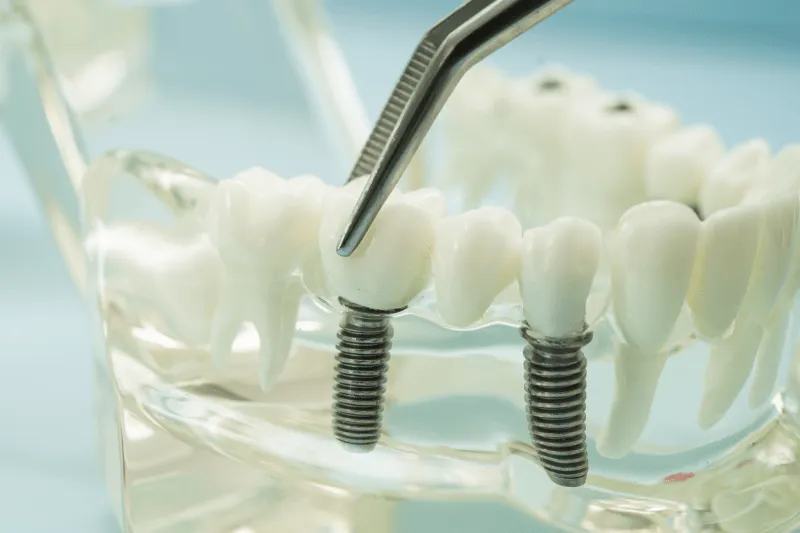
Dental implant treatment is the process of placing titanium-based screws into the jawbone to mimic the root of a missing tooth, followed by the attachment of a dental prosthesis. This method offers a much more natural, robust, and long-lasting alternative compared to traditional bridges or removable dentures. The greatest significance of dental implants lies in their ability to halt the bone loss that occurs following tooth extraction. The implant, acting as a root, sends mechanical stimulation to the jawbone, ensuring the preservation of bone density. From an aesthetic perspective, it is a revolutionary technique that allows for the restoration of even a single tooth without damaging the adjacent teeth.
Why Are Implants The First Choice For Treating Missing Teeth?
Tooth loss is not merely an aesthetic concern; it is also a functional problem that leads to issues in the digestive system and speech disorders. Implants provide the closest sensation to real teeth because they transmit chewing forces directly to the jawbone. While traditional bridge treatments require the cutting of adjacent healthy teeth, in implant applications, healthy teeth remain untouched. Furthermore, high success rates and the potential for a lifetime of use with proper care place implants ahead of other restorative options. Regaining self-confidence is an invaluable psychological advantage for patients.
Which Fundamental Stages Does The Implant Treatment Process Cover?
The implant journey is generally divided into four main phases: initial examination and planning, surgical preparation and implant placement, the healing (osseointegration) period, and finally, the prosthetic phase. For each patient, this duration varies depending on the bone structure and the necessity of extractions. While in some cases extraction and implantation are performed on the same day, other times a waiting period of months may be required due to bone grafting. This systematic approach ensures that every step is built upon a solid foundation from the previous one. The success of the treatment depends on meticulous adherence to each of these stages and the patient’s attention to oral hygiene.
What Is Performed During The Initial Examination And Planning Process?
Behind every successful operation lies detailed planning. The dentist first evaluates the patient’s general health, chronic diseases, and medications used. Then, a physical intraoral examination is conducted to inspect gum health and the status of existing teeth. At this stage, the patient’s expectations are heard, and realistic goals for the treatment are set. Planning covers not only the surgical area but also the aesthetics and function of the prosthesis to be made after the implant. Your dentist will draw a personalized roadmap for you and provide information about estimated costs and duration during this phase.
Who Is A Suitable Candidate For Dental Implant Treatment?
Almost any adult whose general health status allows for a surgical intervention can be a candidate for an implant. The most important criterion is the presence of sufficient bone volume and density to support the implant. Additionally, healthy gums directly affect the success of the implant. This treatment is usually postponed for young individuals whose jaw development is not yet complete. Controlled diabetes patients or those with heart conditions can receive implants with physician approval. However, those with active gum disease or heavy smokers must correct and control these conditions before treatment to significantly increase the chance of success.
How Does General Health Status Affect Implant Success?
Implant surgery is a process that relies on the body’s healing mechanisms. Therefore, systemic diseases can directly affect healing speed and success. For instance, uncontrolled diabetes can slow down tissue healing and increase the risk of infection. Medications that suppress the immune system or treatments like chemotherapy can negatively impact bone fusion. It is vital to share your medical history transparently with your dentist. When necessary, your dentist will consult with your general surgeon or internal medicine specialist to ensure the treatment proceeds in the safest and most effective way for you.
Why Are Three Dimensional Tomography And Digital Planning Necessary?
Classic two-dimensional x-rays may sometimes not provide enough information about the width of the jawbone and the location of nerve canals. Three-dimensional dental volumetric tomography (CBCT) allows the dentist to view the bone from all angles. Thanks to this technology, the exact angle, depth, and position where the implant will be placed are determined with millimeter precision in a computer environment. Digital planning minimizes the risk of encountering unexpected surprises during surgery and prevents complications like nerve damage. Moreover, by using surgical guide plates, it allows for seamless and less invasive procedures, maximizing patient comfort.
Is Tooth Extraction Always Mandatory Before An Implant?
If there is a tooth in the area where the implant will be made that is unsalvageable, decayed, broken, or wobbling, the extraction of this tooth is mandatory. However, if the area is already empty, one can proceed directly to the implant stage. The decision to extract is evaluated until the last moment, considering whether the tooth can be saved. If the tooth is a source of infection, extraction must be carried out immediately to protect the surrounding bone. In some cases, a waiting period may be necessary before placing the implant to ensure the infection at the extraction site is completely cleared. Your dentist will share the most logical decision to stabilize your oral health.
How Is The Atraumatic Tooth Extraction Technique Applied?
Traditional tooth extractions can sometimes damage the surrounding bone tissue. In cases planned for implants, “atraumatic extraction” techniques, which cause minimum damage to the bone, are preferred. In this process, the tooth is gently separated from its tissues using special tools called periotomes. The goal is to leave the walls of the bone socket, where the implant will go, as intact as possible. Preserving the bone is critical for the stability and aesthetic appearance of the implant to be made later. Cleaning the socket formed after extraction and supporting it with bone-protective procedures if necessary is one of the factors that directly determines the lifespan of the future implant.
Who Is A Candidate For Same Day Implant Application?
Immediate implantation, popularly known as “implant right after extraction,” is a popular method that saves time. However, for this method to be applied, there must be no active infection around the extracted tooth and sufficient bone support must be present. Additionally, the initial grip (primary stability) obtained when the implant is placed must be high. It is frequently preferred to preserve aesthetics in the anterior tooth region. In suitable cases, the patient can have a new implant root on the day they lose their tooth. This helps maintain the gum form and significantly shortens the time the patient remains toothless.
How Is Bone Grafting Performed In Cases Of Jawbone Insufficiency?
A certain bone thickness and height are required for the implant to be placed. If the bone has resorbed due to long-term toothlessness or infections, “bone grafting” or “bone powder” application is performed. In this process, synthetic, animal-derived, or bone particles taken from the patient’s own body are placed in the problematic area. The graft acts as a scaffold for the body to produce new and living bone tissue in that region. While it can be done simultaneously with the implant in small deficiencies, a waiting period of 4 to 6 months may be necessary for the bone to mature in large losses.
When And Why Is Sinus Lifting Operation Necessary?
In the upper jaw posterior region, just above the molars, lie the sinus cavities. After tooth loss, these cavities can sag downwards and may not leave enough bone height to place an implant. In this case, a surgical procedure called “sinus lifting” is applied. The sinus floor is gently lifted, and a bone graft is placed underneath. This creates a safe socket for the implant. This procedure, which is quite safe with modern techniques, is a key procedure that allows many patients who have lost their upper jaw back teeth to regain fixed teeth.
How Long Does Healing Take After Bone Powder Application?
After the bone graft is placed, it takes time for the body to integrate this material with its own tissue. This duration usually varies between 3 to 9 months depending on the type and amount of the graft and the area applied. During the healing process, pressure should not be applied to the grafted area, and maximum attention should be paid to oral hygiene. Blood circulation in the area is the most important factor determining the quality of new bone formation. Your dentist will follow up with x-rays during periodic checks to see if the bone is ready for implant placement. This stage, which requires patience, is the insurance of the long-term success of the treatment.
How Is The Placement Of The Implant Into The Jawbone Carried Out?
The surgical stage is usually a procedure that lasts about 15-30 minutes under local anesthesia. The gum is opened with a small incision, or a small hole is created with a closed surgical technique (flapless). A socket suitable for the diameter of the implant is opened in the jawbone using special drills. Then, the titanium implant screw is carefully placed into this socket. After the implant is placed, a cover screw is attached, and the gum is closed with stitches. Slight swelling or sensitivity after the operation is normal and can be easily controlled with prescribed medications. Thanks to modern anesthesia methods, patients do not feel any pain during the procedure.
Does The Patient Feel Pain Or Suffering During The Surgical Procedure?
One of the things patients fear most is pain; however, a dental implant operation usually goes more comfortably than a dental filling. Local anesthesia completely numbs the area, so only slight pressure and vibration are felt during the operation. The level of discomfort that may occur after the anesthesia wears off is similar to the pain felt after an extraction and can be relieved with simple painkillers. Advanced surgical techniques and minimal invasive approaches reduce tissue trauma, thus accelerating post-operative healing and allowing patients to return to their daily lives the next day.
What Are The Local Anesthesia And Sedation Options?
Standard local anesthesia is sufficient for most implant cases. However, for patients with excessive fear of the dentist (phobia), intense anxiety, or a gag reflex, sedation or general anesthesia options are also available. Conscious sedation is a safe method where the patient enters a state of deep relaxation but can respond to commands. General anesthesia is an option where the patient is completely put to sleep, usually preferred in full-jaw implant cases or complex bone surgeries. Your dentist will decide on the most suitable anesthesia method with you to keep your comfort at the highest level.
What Does It Mean For Titanium Screws To Be Biocompatible?
Titanium is known as the most compatible metal with the human body and has been used safely in orthopedic prosthetics for years. Being “biocompatible” means the body does not perceive this substance as a foreign object and does not reject it. The surface of dental implants is specially roughened or coated to encourage bone cells (osteoblasts) to hold tightly to the screw. In this way, titanium merges with the jawbone at a molecular level and behaves as if it were a part of it. This unique feature is the fundamental reason why implants can withstand high chewing pressures in the mouth for decades.
Why Is The Osseointegration Process The Most Critical Phase Of Treatment?
Osseointegration is the establishment of a direct functional and structural connection between the implant surface and living bone tissue. If loading (prosthesis) occurs on the implant before this fusion is fully realized, it can result in the loss of the implant. During this process, bone cells fill the grooves of the implant, securing it. This biological event occurs silently but is the “make or break” point of the treatment. For a successful osseointegration, the area must be protected from infection and must not be mechanically strained during the healing process. Successful completion of this phase means the prosthetic tooth will sit on a solid foundation.
How Long Is The Waiting Period For The Bone And Implant To Fuse?
Although the healing time varies from person to person, a waiting period of 2-3 months is usually foreseen in the lower jaw because the bone density is higher, and 3-4 months in the upper jaw. If a bone graft has been applied, this period can extend up to 6 months. Nowadays, thanks to some “fast-surface” implants, these waiting periods can be shortened. However, the ideal is to allow biological processes to take their natural course. During the waiting period, if a patient has an aesthetic concern like the front area, they can go through this process without being toothless using temporary prostheses. Your dentist will personalize the waiting period according to the condition of your bone.
How Should The Diet Be During The Healing Period?
For the first few days following the operation, extreme hot, extreme cold, and acidic foods should be avoided. To avoid putting direct pressure on the area where the implant was made, soft foods (yogurt, soup, puree, etc.) should be preferred. A nutritious diet during the healing process helps in tissue repair; especially foods rich in protein and vitamins should be consumed. Hard-shelled or sticky foods should be avoided until the prosthetic stage as they can disturb the stability of the implant. Adequate water consumption, on the other hand, balances the moisture rate in the mouth and supports healing.
How Does Smoking Threaten Implant Success?
Smoking is one of the most important risk factors for dental implant failure. Carbon monoxide and nicotine in tobacco smoke reduce blood flow, preventing tissue oxygenation. This situation makes it difficult for the implant to fuse with the bone (osseointegration) and increases the risk of infection (peri-implantitis). Research shows that the rate of implant loss in smokers is significantly higher than in non-smokers. Dentists strongly recommend quitting smoking at least one week before the operation and until healing is completed after the operation. Staying away from smoking during this period is vital for your own health and investment.
What Do The Gingiva Former And Healing Abutment Do?
After bone healing is completed, a small piece is attached to the implant; this is called a “healing abutment” or “gingiva former.” The purpose of this piece is to shape the gum as if a prosthesis were to be attached. The gum takes a natural form around this abutment within about 1-2 weeks. This stage is very important aesthetically because it ensures the gum looks natural around the prosthesis. This procedure is usually done without stitches or with a minimal intervention. Thanks to the healing abutment, when the prosthetic tooth is attached, an image is obtained as if a real tooth is emerging from between the gums.
How Is The Abutment Or Spacer Placement Performed?
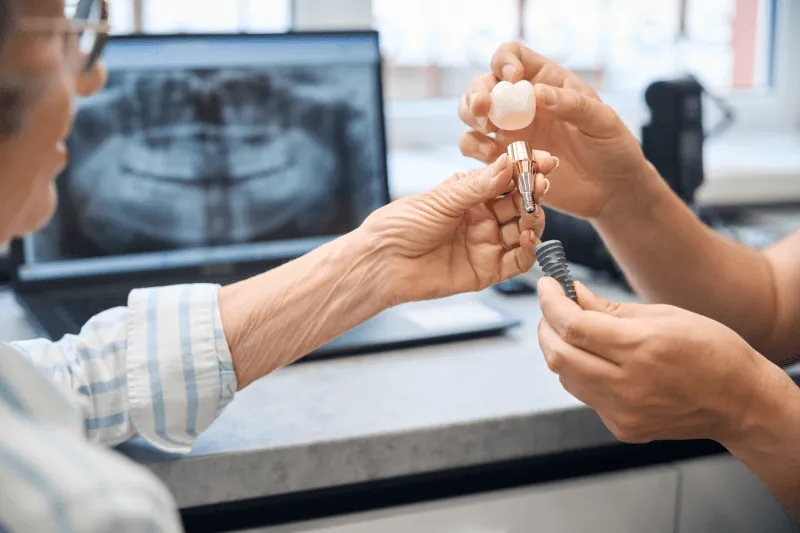
After the healing abutment is removed, a permanent spacer called an “abutment” is placed inside the implant. The abutment is the bridge that provides the connection between the implant inside the jawbone and the prosthetic tooth (crown) in the mouth. It can be produced from different materials such as titanium, zirconium, or gold plating. After the abutment is placed, the impression-taking stage begins until the permanent prosthesis is made. This piece provides support for the prosthetic tooth and ensures the correct transmission of chewing forces to the implant. The robustness and precise placement of the abutment are fundamental requirements for the prosthesis to be long-lasting.
Should Traditional Or Digital Be Chosen For The Impression Process?
In modern dentistry, the impression-taking process can be done with both traditional and digital methods. In the traditional method, paste-like substances are placed into the mouth. In the digital method, a three-dimensional map of the mouth is created with a camera called an “intraoral scanner.” Digital scans are better both in terms of patient comfort and minimize the margin of error, allowing the laboratory phase to proceed much more precisely. Scan data is transmitted to the laboratory in a computer environment, and the prosthesis design (CAD/CAM) is carried out over this data. Digital impressions generally allow for the production of faster and perfectly compatible prostheses.
When And Why Are Temporary Prosthetic Teeth Used?
Especially in studies conducted in the anterior tooth region, temporary prostheses are prepared so that the patient does not remain toothless during the healing period. These prostheses provide aesthetics and prevent speech disorders. They also help the gum maintain its form. However, temporary prostheses are usually not designed to withstand full chewing load; so it is necessary to eat carefully during this period. Fixed temporary teeth can be made, or removable temporary ones can also be preferred. Your dentist will plan the most comfortable temporary solution for you according to the condition of the implant.
How Are Permanent Prosthetic Teeth Designed And Produced?
The permanent prosthetic phase is the “artistic” part of the treatment. The dental technician and the dentist make a design suitable for the patient’s face shape, skin color, and the form of their other teeth. With CAD/CAM technology, prostheses are produced by scraping from blocks with millimetric precision. Color transitions, transparency, and the morphology of the tooth are carefully processed to reach the most natural appearance. At this stage, the final finish is made with the patient’s approval. The prosthesis should not only look beautiful but also provide a perfect closure with the teeth in the opposite jaw and should not hinder speech functions.
Should Zirconium Or Metal Supported Porcelain Be Chosen?
The choice of prosthetic material is determined according to the patient’s needs. Zirconium is the most preferred material in aesthetic areas (front teeth) thanks to its light transmittance and tissue compatibility. Metal-supported porcelains can be used as an economical option in the back tooth regions or long bridges due to their durability. However, the fact that zirconium does not cause bruising in the gums and gives results very close to natural tooth color makes it indispensable for modern treatments. Your dentist will recommend the most ideal material for you according to your budget, aesthetic expectation, and chewing forces.
How Are Prostheses Tried On And Adjusted?
Before the finished prosthesis is attached, it is tried on in the mouth. At this stage, the color, size, shape of the tooth, and its contact with adjacent teeth are checked. The most critical point is the “occlusion check”; that is, the teeth should not hit each other and there should be a balanced load distribution during chewing. If minor corrections are needed, they are made in the clinic or laboratory. When the patient feels comfortable with the prosthesis in their mouth and the dentist approves from a technical perspective, the final bonding or screwing process begins. The try-on stage ensures that the patient fully warms up to their new teeth.
How Is Treatment Completed With The Attachment Of Final Prostheses?
The approved prostheses are fixed onto the abutment with screws or special dental cements (adhesives). Screwed prostheses have become more popular in recent years because they can be easily removed and maintained by the dentist when necessary. After the prostheses are attached, the patient immediately starts smiling and talking. However, a one-to-two-day adaptation period may be required for full chewing function. Your dentist will explain in detail how to clean your new teeth and at what intervals you should come for a check-up. This moment is the most satisfying and happy result of the patient waiting for months.
How Should The Care And Cleaning Of Implant Teeth Be Done?
Implants do not decay, but the gums and bone around them can catch a disease called “peri-implantitis.” For this reason, implant care is no less important than natural tooth care. In addition to brushing at least twice a day, using dental floss or an interdental brush is essential to clean the bacterial plaque around the implant. Using a water flosser is a great aid for cleaning residues in unreachable areas. Good hygiene is the biggest factor ensuring the implant remains in the mouth for a lifetime. Remember, the enemy of your implant is bacterial plaque; you must be meticulous in the war against it.
Why Should Regular Dentist Checkups Not Be Neglected?
Even after the treatment is over, it is very important to go for regular check-ups every six months. In these checks, the dentist examines the relationship of the implant with the bone, whether the screws have loosened, and the gum health. Professional cleaning processes provide deep hygiene that cannot be done at home. If a potential problem is noticed at an early stage, it can be solved with very simple interventions. However, in neglected cases, bone loss can progress and lead to implant loss. This small interest you show in your implants allows you to receive the return on your investment in them for a lifetime.
Why Should You Be Treated Through Cure Holiday?
Embarking on a journey for dental treatment can be an experience positive enough to change your life when done with the right guide. Cure Holiday, with years of experience in dental health tourism, offers its patients not just a treatment, but also a comfortable and safe holiday experience. We have a network working with specialized surgeons and prosthetic experts who use the most modern technologies. Our priority is to ensure every patient feels at home and to manage the treatment process in its most transparent form. Our fundamental mission is to make world-class service accessible without compromising on quality.
What Are The Advantages Of Receiving Treatment With Cure Holiday?
When you choose Cure Holiday, you encounter a team that supports you at every step from planning to the healing process. The advantages we offer include free initial online consultation, detailed treatment plans, VIP transfer services, and accommodation organizations. Additionally, the implant brands we use are prestigious brands that are valid worldwide and offer a lifetime guarantee. Our price advantage does not mean we compromise on our quality; on the contrary, we enable you to use Turkey’s strong infrastructure in dentistry in the most effective way. You can spend a stress-free process with our assistants who are with you 24/7, without a language barrier.
What Should Be Done To Receive Treatment With Cure Holiday?
Our process is extremely simple and patient-oriented. As the first step, it is enough to contact us through our website or WhatsApp line. When you share your existing x-rays or intraoral photos, if any, our expert team makes a preliminary evaluation in a short time and offers you an estimated plan. When you approve the treatment plan, your travel dates are determined and your appointments are organized. You only buy your flight ticket; all other logistical details (airport pickup, hotel placement, and clinic appointments) are meticulously planned by Cure Holiday. From the moment you land in Turkey, you find yourself in safe hands.
How Does Cure Holiday Personalize The Patient Experience?
Every mouth structure and every patient’s expectation is different; that’s why we don’t believe in “one-size-fits-all” treatments. As Cure Holiday, we offer our patients the most suitable solutions by considering their aesthetic preferences, health histories, and budgets. Throughout the treatment, the private patient representative assigned to you answers all your questions instantly and makes you feel safe. We turn your treatment process into a pleasant memory by guiding you not only through clinical procedures but also about places you can visit in your spare time and local delicacies. Your satisfaction is our biggest reference.
Are You Ready For A New Smile With Cure Holiday?
You don’t have to wait to complete your missing teeth and increase your quality of life. Cure Holiday combines all the possibilities of modern dentistry with a professional tourism service. If you want to achieve healthy, bright, and functional teeth like thousands of our happy patients, take the first step today. Contact us to benefit from our free consultancy service and learn about special price offers for you. Remember, a beautiful smile is not just an aesthetic detail, but also the best investment you can make for your health and self-confidence. We are here to build that perfect smile together.