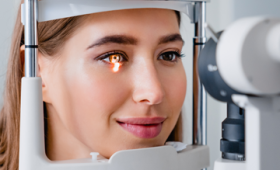
What are multifocal lenses?
Multifocal lenses are special artificial lenses placed inside the eye that have more than one focal point. Unlike traditional monofocal lenses, these lenses have a complex optical design that distributes light to different focal points, providing clear vision for both distance and near. They are generally preferred for cataract surgery or for presbyopia patients who want to get rid of glasses at an early age. Thanks to this technology, patients minimize their dependence on glasses while performing their daily activities and achieve a freer quality of life. They are considered the most modern solution in cases where the natural lens inside the eye loses its function.
How do these lenses work?
The working principle of multifocal lenses is based on the refraction of light through different rings or zones on the lens. Diffractive rings on the lens direct some of the light to the distant focus and some to the near focus. During this process, the brain learns over time which distance to focus on by processing the two different images received. This process is called neuroadaptation and is usually completed within a few weeks. This division of light allows the patient to achieve a fluid vision without having to constantly change glasses while reading a book or driving. Modern designs also optimize intermediate distance vision to meet needs such as computer use.
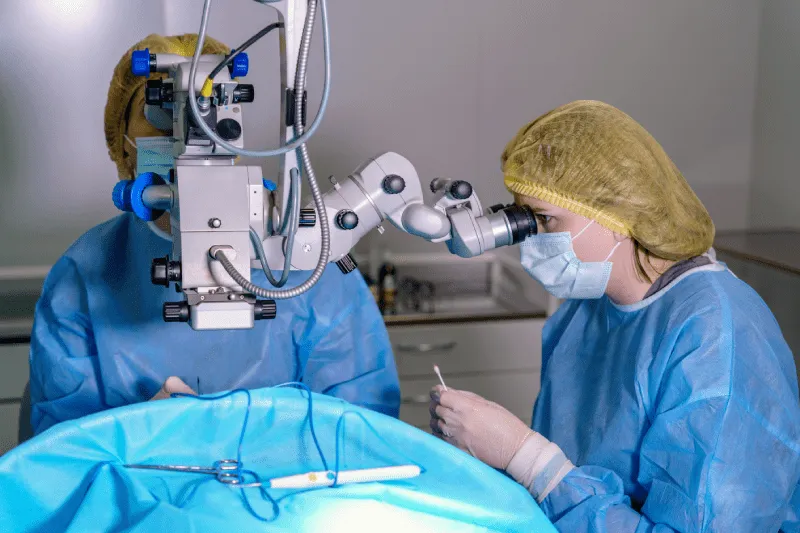
Who can use multifocal lenses?
The most ideal candidates for multifocal lens use are individuals who experience cataract problems or lose their near vision after the age of 40-45 (presbyopia). People with good general eye health, a smooth corneal structure, and no damage to the retina are considered suitable for this operation. In addition, these lenses are an excellent option for patients who have an active lifestyle and avoid using glasses for aesthetic or comfort reasons. However, since every patient’s eye structure is different, a detailed eye examination and corneal topography are essential. Your physician decides whether these lenses are suitable for you by looking at your living habits and the biometric measurements of your eye.
What is the role of lenses in presbyopia treatment?
Presbyopia is the loss of flexibility of the eye lens due to age and a decrease in the ability to focus near. Multifocal lenses are one of the most permanent methods designed to solve this problem fundamentally. Unlike laser treatments, these lenses placed inside the eye are permanent for life and also prevent cataract formation in advance. For presbyopia patients, these lenses offer the opportunity to get rid of both near reading glasses and distance vision defects at the same time. This situation means a great increase in comfort, especially for middle-aged and older individuals who constantly use phones and tablets in the digital age. After treatment, patients do not have difficulty reading small prints.
Why is lens selection important in cataract surgery?
Cataract surgery is a procedure in which the blurred natural lens is removed and an artificial lens is inserted in its place. At this point, the type of lens selected determines the vision quality that will affect the patient’s entire life after surgery. If a standard monofocal lens is selected, even if the patient sees the distance clearly, they must use glasses for near vision. However, the choice of multifocal lens gives the patient the chance of both getting rid of cataracts and living a life without glasses with a single operation. This choice plays a direct determining role on the patient’s future quality of life, hobbies, and productivity in business life. Therefore, it is vital to have a detailed interview with the physician.
How is the distance vision quality?
Multifocal lenses are quite successful in distance vision; however, due to the principle of light splitting, a slight decrease in contrast sensitivity may sometimes be felt compared to monofocal lenses. For most patients, this difference is negligible, and full clarity is achieved while driving, watching scenery, or watching television. Modern multifocal and trifocal lens designs are equipped with aspheric optical features to maintain sharpness in distance vision. In this way, distance performance in daylight gives excellent results. In night driving, patients feel quite safe when the adaptation process is completed. Vision begins to clear immediately after the operation and becomes more stable over time.
What changes in near vision?
Near vision is one of the areas where multifocal lenses stand out the most. Patients who were looking for glasses to read newspapers, look at messages on their phones, or examine a label before surgery can do these tasks without glasses after the operation. The near focus area on the lens ensures that objects at a distance of approximately 33-40 centimeters are focused clearly on the retina. This is a revolutionary convenience for those who deal with fine work such as sewing or spend time in the kitchen. In the first days, the need for light may be slightly more, but as the eye and brain adapt to the new situation, near vision comfort increases even in low light.
Why is intermediate vision critical?
Today, we spend most of our time at intermediate distance (60-80 cm) focal points such as computer screens, tablets, and kitchen counters. Classic multifocal lenses could sometimes leave a gap at this distance; however, new generation trifocal or “smart” lenses have eliminated this problem. Intermediate distance vision is the most critical element for the comfort of modern humans in the digital world. Seeing prices on market shelves, looking at the car’s navigation screen, or examining notes on a table in a meeting is possible thanks to intermediate distance vision. These lenses prevent “blind spots” in vision by providing a seamless transition between focal points and providing a natural perspective.
What is the difference between multifocal and trifocal lenses?
The term multifocal lens is a general definition and usually refers to bifocal (distance and near) lenses, while trifocal lenses have three different focal points (distance, intermediate, and near). Trifocal lenses are also known as “smart lenses” and perform superiorly in intermediate distance vision. While a slight blur may occur at intermediate distances in classic multifocal lenses, these transitions are much smoother in trifocal lenses. Today, most surgeons prefer trifocal lenses if the patient’s lifestyle is suitable. Because these lenses respond better to modern needs such as computer use. However, both types basically aim to eliminate glass dependency.
Is it possible to get rid of glasses completely?
One of the issues patients are most curious about is whether they can switch to a life completely without glasses after the operation. Approximately 90-95% of patients with multifocal lenses do not need glasses for any of their daily activities. In extreme cases, such as reading very small prints in very little light, a light reading glass may rarely be needed, but this is an exception. Patients describe the freedom of not looking for glasses on the nightstand when they wake up in the morning as priceless. The success rate is directly related to the patient’s expectations and the surgeon’s meticulousness in lens measurements. A correctly planned operation is the safest way to say goodbye to glasses.
What should be considered regarding night vision?
In individuals with multifocal lenses, some differences in night vision may be observed in the first few months after surgery. Conditions such as seeing rings around lights (halo) or light scattering (glare) are a natural result of optical design. These phenomena are usually filtered over time by the brain, and the patient begins not to notice this situation. Although the light from the headlights of oncoming cars may seem disturbing at first when driving at night, this situation decreases to a minimum with the neuroadaptation process. Patients are advised to be patient during this transition period and to be careful during night drives. For most people, this situation is seen as a small price to pay next to the general visual comfort provided.
Are light reflections and halos normal?
Yes, it is completely normal to experience light reflections and halos due to the diffractive rings used in the design of multifocal and trifocal lenses. Because these lenses refract light, halos can occur around bright light sources, especially in dark environments. This condition is an expected effect in medical literature and is usually not evaluated as a complication. Over time, the visual center of the brain learns to ignore these halos. If these effects do not decrease even after months, conditions such as contamination of the capsule behind the eye should be checked; this can be easily corrected with a simple laser procedure (YAG laser). For this reason, periodic checks should not be neglected.
How long does the surgery process take?
The intraocular lens placement operation is a very short and painless procedure thanks to modern technology. Usually, the surgical time for each eye is between 10 and 20 minutes. The operation is mostly performed with the “phaco” method, without stitches and under drop anesthesia. The patient does not feel any pain during the surgery, only a slight pressure or light play. The hospital stay is very short; the patient can be discharged a few hours after the operation. Being a fast and effective process allows even people with a busy work schedule to prefer this treatment. The success of the surgery is directly related to the experience of the surgeon and the technological equipment used.
How is the recovery period?
The recovery process after surgery is generally quite fast and comfortable. Most patients can return to their daily work the day after the operation and notice the significant improvement in vision. It is normal to have a slight watering, stinging, or itching sensation in the eye for the first few days; this is controlled with the prescribed drops. During the first week, it is necessary to avoid lifting heavy objects, letting water touch the eye, and rubbing the eye. It may take a few weeks for the full vision quality to settle and the eye to adapt to the new lens. Following the doctor’s instructions during this period is extremely important to minimize the risk of complications and get the best result.
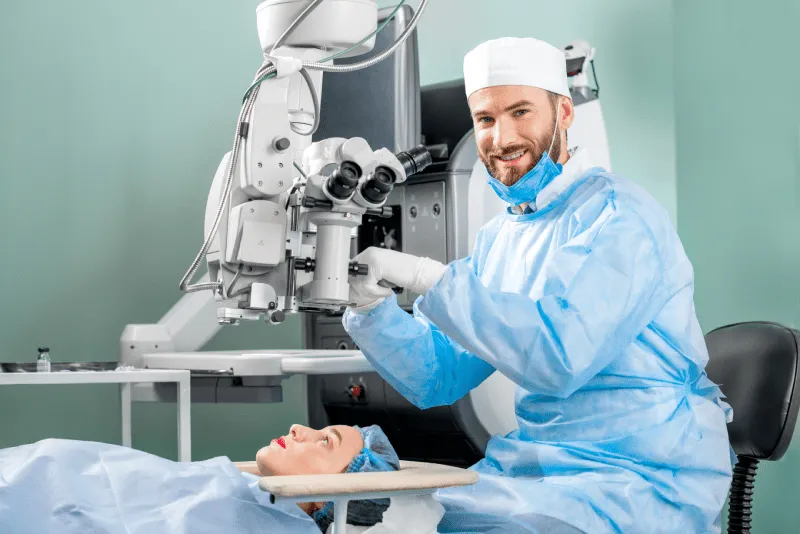
Is it applied to both eyes at the same time?
General practice is to perform cataract or lens replacement surgeries on different days for the two eyes. Usually, the operation of the other eye is performed a few days or a week after the first eye is operated on. This approach is preferred to observe the healing process of the first eye and to provide safety against any infection risk. It also provides the brain with the opportunity for a gradual transition to adapt to the new way of seeing. However, in some special cases and if the patient’s general health status is suitable, both eyes can be operated on the same day at the surgeon’s discretion. When making this decision, the patient’s comfort and medical safety standards are always prioritized.
What is the lifespan of the lenses?
Multifocal intraocular lenses are produced from biocompatible materials and are not rejected by the human body. One of the biggest advantages of these lenses is that they are permanent for life. Once placed inside the eye, they do not age, deteriorate, or lose their optical properties. This means that when this lens is attached to a patient, there is no need for cataract surgery in the future; because the natural lens where the cataract will develop has already been removed. As long as there are no other age-related problems in the eye structure (macular degeneration, etc.), the lenses continue to provide clear vision in old age. In this respect, multifocal lens treatment is a lifelong investment.
Are myopic and hyperopic patients suitable?
Multifocal lenses are an excellent solution not only for cataracts or presbyopia but also for patients with high-degree myopia and hyperopia. In very high-degree eye defects that are not suitable for laser treatment, these problems can be corrected permanently with the lens replacement (Refractive Lens Exchange) method. Since the lens is specially calculated according to the patient’s eye number, both distance and near distance defects are eliminated after the operation. Especially for patients with high numbers over the age of 40, this method may become more advantageous than laser as it provides clear vision for both distance and near. Getting rid of the thickness of glass lenses is a source of great happiness for these patients.
Does astigmatism get corrected with these lenses?
Traditional multifocal lenses may not fully correct astigmatism; however, special designs called “Toric Multifocal” can treat both refractive errors and astigmatism at the same time. If the patient has significant astigmatism in the corneal structure, the surgeon will definitely recommend a toric lens. These lenses are placed at a specific angle while being placed inside the eye, thus solving the problem of blurriness or shadowy vision caused by astigmatism. A multifocal surgery in which astigmatism is not corrected can prevent the full satisfaction of the patient. For this reason, the degree and axis of astigmatism should be determined meticulously in biometric measurements before surgery and a suitable technological lens should be selected.
Does dry eye syndrome affect the surgery?
Dry eye syndrome is an important factor that can affect vision quality after multifocal lens surgery. It is essential for the eye surface to be healthy and moist for the light to refract properly. In patients with severe dry eyes, problems such as fluctuations in visual acuity or failure to obtain desired clarity after surgery may occur. For this reason, surgeons evaluate the patient’s tear quality before the operation. If there is dryness, a treatment process is started before the surgery and the eye surface is optimized. During the post-operative period, healing is supported by using artificial tear drops for a while. When dryness is under control, the success and patient satisfaction of multifocal lenses will be quite high.
Can diabetic patients have these lenses implanted?
Individuals with diabetes (sugar disease) can have multifocal lens surgery, but there are some conditions for this. The most important criterion is that the patient’s diabetes is under control and there is no serious damage (diabetic retinopathy) in the retina layer behind the eye. If diabetes has affected the retina, the contrast sensitivity provided by multifocal lenses may decrease and the expected benefit may not be fully provided. For this reason, diabetic patients need to undergo a very detailed fundus (back of the eye) examination before surgery. If the retina is healthy, these patients can also experience the comfort of getting rid of glasses. Your doctor will draw the safest route with you according to your sugar level and eye health.
Is there a risk for glaucoma patients?
The use of multifocal lenses for patients with glaucoma, i.e., eye pressure, is an issue that should be carefully evaluated. If damage has occurred in the optic nerve due to glaucoma, the light-splitting structure of multifocal lenses can further reduce the patient’s already limited contrast sensitivity. In mild cases or in patients whose pressure is well-controlled and who have no nerve damage, some special types of multifocal or EDOF (Extended Depth of Focus) lenses may be preferred. However, for advanced stage glaucoma patients, monofocal lenses are usually seen as a safer harbor. Your surgeon will make the most accurate decision by examining the stage of glaucoma and your visual field. Health is always ahead of visual comfort.
Who is not suitable for this surgery?
Although multifocal lenses give great results, some eye structures may not be suitable for this technology. Especially those with serious irregularities or scar tissue in the cornea, those with advanced yellow spot disease (macular degeneration), and individuals with severe retinal damage are generally not good candidates for this treatment. In addition, light reflections may be intolerable for people who have to drive for a very long time at night because of their job (e.g., long-distance drivers). Individuals who have perfectionist expectations and are extremely sensitive to the slightest light scatter also need to think carefully before this decision. Realistic expectations are the key to operation success.
What should be considered when choosing a lens?
Choosing the right lens is not just a medical decision, but also a choice appropriate for the patient’s lifestyle. If you spend most of the day at the computer, you should choose a lens with strong intermediate distance; if you read a lot of books, a lens with sharp near focus should be your priority. The brand of the lens, the production technology, and the surgeon’s experience on that lens are very important. Also, biometric data of your eye, corneal curvature, and pupil structure are determining criteria in lens selection. The most expensive lens is not always the best lens; the lens that best suits your eye structure and daily needs is the “best” lens. You should explain your hobbies by establishing honest communication with your physician.
Can sports be done after surgery?
Returning to active life after multifocal lens surgery is quite fast, but a specific schedule should be followed. Light walks can be done in the first few days, but heavy exercises and intense sweating should be avoided. Generally, it is possible to return to sports such as fitness and pilates after one week. It is usually recommended to wait one month for swimming, sauna, and harder sports that require contact (boxing, football, etc.). The full fixation of the lens inside the eye and the elimination of infection risk determine this process. Using protective sunglasses while doing sports is beneficial during the recovery period, especially to protect the eye from dust and wind in outdoor environments.
Does the eye structure accept these lenses?
The human eye does not tend to reject these modern lenses. The materials used (acrylic, silicone, etc.) are materials that have been used in medicine for decades and are completely biologically compatible. Lenses do not cause any allergic reaction or tissue rejection inside the eye. A situation like “my eye did not accept the lens” is almost medically impossible; however, in rare cases, mechanical problems related to the displacement of the lens or the compatibility of the eye structure (capsule) with the lens may occur. Such situations can usually be corrected by surgical intervention or a simple laser procedure. Therefore, you do not need to worry about body compatibility.
How to deal with side effects?
As with every surgical procedure, some side effects can be seen in multifocal lens application, but these are generally manageable. Time is the best solution for light halos, which is the most common situation; the brain “erases” these images over time. If dry eye is experienced, artificial tear drops recommended by the doctor quickly increase comfort. Contaminations formed behind the eye after surgery (posterior capsule opacification) can blur the vision; in this case, vision is restored to its first day clarity with a 1-2 minute painless YAG laser procedure. Instead of panicking in any problem, communicating with your surgeon and going to regular check-ups is the most effective way to overcome side effects.
How does the brain adapt to this new vision?
The neuroadaptation process is the secret hero of multifocal lens success. The lens placed inside the eye drops both distance and near images onto the retina at the same time. At first, the brain may be a little “surprised” while processing these complex signals, and this situation can be felt as a slight focusing difficulty. However, the human brain has tremendous plasticity; over time, it understands which object you are looking at and strengthens the signal coming from that distance while pushing the other to the background. This adaptation process varies from person to person but generally takes 1 to 3 months. Being patient and using the eye in its natural flow instead of constantly testing it speeds up this process. After all, vision occurs in the brain.

What is the success rate?
Multifocal lens operations are considered one of the surgical procedures with the highest patient satisfaction worldwide. Statistics show that the success rate is over 95% when correct patient selection is made. Success is defined as the patient’s ability to continue their life without the need for glasses after surgery. Complication rates have dropped below 1% with advancing technology. The biggest factors affecting success are the experience of the surgeon, the technological equipment of the clinic, and the quality of the lens used. The vast majority of patients express their satisfaction by saying “I wish I had this surgery earlier.” These rates prove the reliability of the treatment.
How has technology improved vision quality?
In the last decade, there has been a revolution in intraocular lens technology. The sharp light glare and intermediate distance deficiency experienced in first-generation multifocal lenses have been largely overcome with new-generation trifocal and EDOF lenses. Lenses used today have nano-technological surfaces that use light more efficiently and minimize contrast loss. In addition, computer-aided biometry devices ensure the error-free calculation of the lens number, preventing unexpected numbers from remaining after surgery. Methods such as laser cataract surgery (Femtosecond laser) also increase the sensitivity of the operation, allowing the lens to be placed in the eye with millimetric accuracy. All these developments ensure that patients achieve much clearer and natural vision.
Does vision deteriorate in the long run?
In an eye with a multifocal lens, vision deterioration caused by the lens itself is not expected. Since the lens is artificial, it does not age or change numbers. However, diseases that may occur in other tissues of the eye (retina, macular, cornea) with age can affect vision. This situation has nothing to do with the lens attached; it is a natural aging process. Also, years after the operation, the capsule membrane in which the lens sits can thicken (secondary cataract); although this blurs the vision a bit, it is permanently treated in seconds with YAG laser. Generally speaking, the visual acuity obtained with multifocal lenses tends to remain stable for life.
Why should you seek treatment in Turkey?
Turkey has become one of the leading countries in the world in eye surgery and multifocal lens applications. Especially cities like Istanbul and Antalya host thousands of international patients every year with their hospitals equipped with the latest technology and world-renowned expert doctors. The biggest advantage of being treated in Turkey is to be able to access the highest level of health service at much more economical prices compared to Europe and America. Modern clinics have international accreditations and use the highest quality lens brands. Both getting treated and discovering the unique beauties of Turkey transforms health tourism into a holiday experience. Professional organizations like Ure Holiday make this process much easier for you.
How is health tourism planned with Ure Holiday?
The health tourism process may sometimes seem complex, but with Ure Holiday, this process progresses completely stress-free and organized. In the first step, you share your medical reports and expectations by contacting our expert consultants. Ure Holiday selects the most suitable doctor and hospital for you and arranges all your appointments. From the moment you arrive in Turkey, you feel at home with VIP transfer vehicles and luxury accommodation options. Thanks to a professional team that accompanies you in all processes before and after surgery, you do not deal with problems such as language barriers or transportation. Ure Holiday offers not just a treatment, but a comfortable journey where every detail is thought of.
How is the quality of health services in Turkey?
Turkey’s health infrastructure has exceeded world standards with large investments made in the last twenty years. The devices used in the field of eye surgery are located in clinics in Turkey simultaneously with the most modern technologies in the world. Turkish eye doctors have a very large experience in terms of the number of cases worldwide; this is a factor that directly increases the success rate of surgeries. Hygiene standards, patient care quality, and equipment of hospitals are regularly approved by international supervisory organizations. This quality you reach through Ure Holiday gives you both confidence and ensures that you achieve the clear vision you desire in the most professional way.
What are the advantages of Ure Holiday?
Choosing Ure Holiday means that you will receive a privileged service at every stage of your treatment. Our priority is for our patients to go through a comfortable process not only physically but also psychologically. While we work to ensure medical success thanks to our best hospital and surgeon network, we transform your recovery process into an enjoyable holiday with the accommodation and tour packages we offer. Thanks to our transparent price policy, you will not encounter any hidden costs. In addition, we stand by you in the post-operative follow-up process and respond to all your questions instantly. Being treated for multifocal lenses in Turkey with Ure Holiday is a unique experience that combines quality with comfort.
How does the appointment and consultancy process work?
It is very easy to take the first step to say goodbye to your glasses and achieve a clear vision. When you reach us through the Ure Holiday website or communication channels, a special health consultant is assigned to you. Your consultant answers your questions and prepares a special treatment package for you according to your needs. Your appointments, flight ticket, and accommodation are quickly organized with your approval. This professional process, which starts from the moment you land in Turkey, continues until your surgery is successfully completed and you return to your country happily. Contact us today to achieve the vision of your dreams and experience Ure Holiday privileges and take the first step to your new life.
Free Consultation
Fill out the form below to get your free medical travel plan and price quote.
Sources and how to verify this yourself
- Ministry of Health, Regulation on International Health Tourism and Tourist Health, Official Gazette 26 April 2025, No. 32882 — authorisation requirement for facilities and intermediaries, TÜSKA accreditation, compulsory complication insurance (deadline 31 December 2025 for insurance, 31 December 2026 for accreditation). source
- Ministry of Health, Regulation on Promotion and Information Activities in Health Services, Official Gazette 12 November 2025, No. 33075 — treatment promises and guarantees are prohibited; price and campaign announcements are permitted only within international health tourism. source