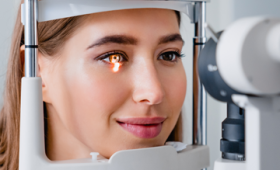
Hyperopia, commonly known as farsightedness, is a common refractive error. In this condition, light rays entering the eye focus at a point behind the retina (the light-sensitive layer), rather than directly on it. The main reason for this is that the eyeball is shorter than normal, or the curvature of the cornea (the transparent front surface) is insufficient.
As a result, while distant objects may be seen relatively well, objects, especially those nearby, cannot be seen clearly, leading to difficulty with close-up tasks such as reading and sewing. In young ages, the eye can compensate for this defect to some extent through a mechanism called “accommodation,” but this causes eye strain in the long run.
How Does Hyperopia Occur?
The occurrence of hyperopia is related to two main factors in the eye’s optical system: Eyeball Length and Corneal Curvature. In a normal eye, for light to focus on the retina, the eyeball must be of sufficient length, and the refractive power of the cornea and lens must be appropriate. In hyperopia, the eyeball is shorter than it should be, or the cornea (the front window) is too flat, which causes light rays to converge behind the retina instead of on it. This anatomical structural defect is congenital and is usually associated with genetic predisposition.
What are the Most Common Symptoms of Hyperopia?
The most common symptom of hyperopia is blurred vision for near objects. Activities such as reading, using a phone, or working at a computer require constant effort to maintain clarity. Other prominent symptoms include persistent eye strain (asthenopia), a burning and stinging sensation in the eyes, habitual squinting, and headaches that worsen especially in the evenings or after prolonged close work. In children, hyperopia can lead to the development of crossed eyes (strabismus) or lazy eye (amblyopia).
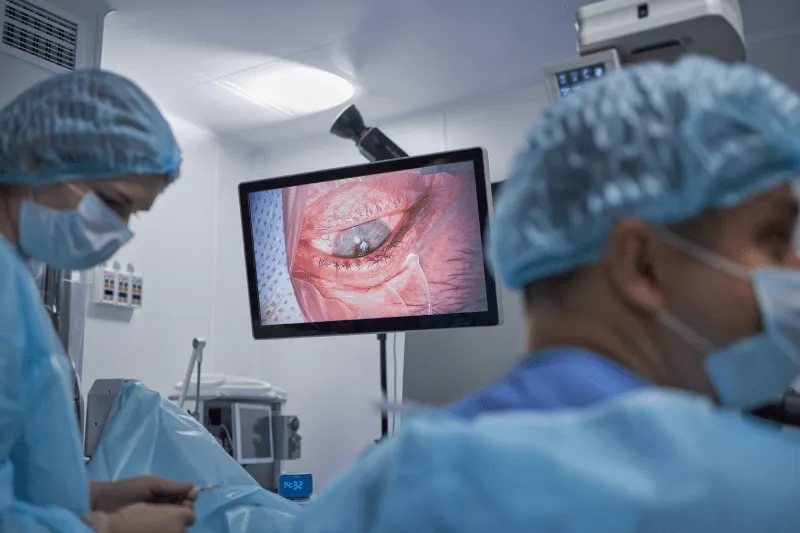
The Relationship Between Headaches and Eye Strain
Hyperopic patients, especially at a young age, constantly contract their eye muscles to accommodate (focus) to see up close clearly. This continuous contraction and focusing effort lead to excessive fatigue in the eye muscles. This fatigue manifests as cluster headaches in the forehead and temple areas. These headaches subside when the eyes are rested or when appropriate glasses are used. Untreated hyperopia can be one of the most common causes of chronic headaches and seriously reduces quality of life.
How is Hyperopia Detected in Children?
Hyperopia can sometimes progress insidiously in children because their accommodation abilities are very strong, and they can easily compensate for it. However, signs to look out for include: Reluctance to read for a long time or refusal to read, getting too close to the book, quick fatigue while studying, squinting, or constantly rubbing the eyes. The most important sign is accommodative esotropia, which can develop in some types of hyperopia, causing the eyes to turn inwards. If any of these signs are noticed, an immediate detailed eye examination is crucial to prevent permanent vision loss.
The Connection Between Hyperopia and Strabismus (Crossed Eyes)
High-grade hyperopia is the leading cause of accommodative strabismus (inward-turning eye) especially in young children. When the eyes over-accommodate to clear near vision, this simultaneously triggers excessive convergence in the eye muscles. This condition causes one or both eyes to turn inward. If left untreated, strabismus can lead to the development of a lazy eye (amblyopia). Typically, the use of correctly prescribed glasses can fully correct this type of strabismus or reduce the need for surgical intervention.
Risk of Developing Lazy Eye (Amblyopia)
Hyperopia, especially if it is higher in one eye than the other (anisometropic hyperopia), poses a high risk for the development of lazy eye (amblyopia). The brain automatically suppresses the image coming from the blurrier eye and prefers to use only the eye that sees clearly. This prevents the development of the visual center of the weaker eye and leads to permanent vision loss. If lazy eye is not diagnosed and treated during the critical childhood period, it can become impossible to correct later in life; therefore, early diagnosis and treatment are essential.
How is Hyperopia Diagnosed?
Hyperopia is diagnosed through a comprehensive eye examination. The ophthalmologist measures the patient’s refractive error using devices called an autorefractor and a phoropter. For the most accurate diagnosis, especially in children and young people, eye drops are used to dilate the pupils (cycloplegic examination) to temporarily disable the eye’s accommodation power. These drops reveal the true degree of hyperopia. These tests are a fundamental and indispensable step for creating the correct treatment plan.
Treatment Options: Glasses, Contact Lenses, and Surgery
Three basic treatment options are available for hyperopia: Non-surgical solutions being glasses and contact lenses, and surgical treatments providing permanent correction. Glasses are the simplest and safest solution, especially the first choice in treating strabismus in children. Contact lenses offer a more aesthetic option for those who do not want to wear glasses. Surgical treatments, on the other hand, aim for a permanent vision correction using methods such as laser procedures (LASIK, PRK, ReLEx SMILE, LASEK) or intraocular lens (IOL) implantation.
Use of Glasses: The First Step in Hyperopia
Glasses are the simplest, safest, and first-line solution in hyperopia treatment. Convex or “plus” (+) power lenses are used to help focus the light to clarify near vision. Especially in children, the use of glasses not only corrects vision but also prevents or treats strabismus and lazy eye development caused by excessive accommodation. Compliance with treatment and regular use of glasses are vital for a successful outcome, particularly during childhood.
Advantages and Disadvantages of Using Contact Lenses
Contact lenses are a good alternative for patients with aesthetic concerns or an active lifestyle. Because they are in direct contact with the eye, they provide a wider field of vision and do not cause peripheral vision disturbances. Advantages include cosmetic appearance and ease during sports activities. Disadvantages are that they require regular maintenance, increase the risk of infection, and can lead to some dry eye problems. Consultation with an ophthalmologist and strict adherence to hygiene rules are necessary before using lenses.
Who Are Candidates for Laser Treatment?
Laser eye surgery (such as LASIK, PRK) is suitable for patients seeking a permanent solution for hyperopia, who are over 18, whose spectacle prescription has been stable for the last year, and whose eye structure (corneal thickness, dry eye status) is suitable for surgery. The degree of hyperopia is evaluated individually for each patient based on corneal thickness and shape. Those who are pregnant or breastfeeding, have an active eye infection, or certain autoimmune diseases are not candidates for laser treatment. A detailed pre-examination is mandatory.
How Does LASIK Surgery Work for Hyperopia?
LASIK (Laser-Assisted In Situ Keratomileusis) is the most commonly used laser method for hyperopia treatment. The surgeon creates a flap on the surface of the cornea, and this flap is lifted up. Then, the underlying corneal tissue is reshaped with an excimer laser.
The goal in hyperopia is to increase the curvature of the cornea (making it steeper) to ensure light focuses correctly on the retina. After the procedure, the flap is repositioned, which ensures rapid healing and visual clarity.
The Difference Between PRK and LASEK Methods
PRK (Photorefractive Keratectomy) and LASEK (Laser-Assisted Sub-Epithelial Keratomileusis) are alternatives for patients whose cornea is not thick enough for LASIK or who have a more delicate corneal surface. In these methods, a permanent flap, as in LASIK, is not created. Instead, the outermost layer of the cornea, the epithelium (fully removed in PRK, loosened with a special solution in LASEK), is temporarily lifted, and the laser application is done directly onto the corneal surface. The recovery period is longer than LASIK, but there is no flap-related risk.
In Which Cases is Intraocular Lens (IOL) Implantation Applied?
Intraocular lens (IOL) implantation offers a permanent solution primarily for patients with high degrees of hyperopia or those whose corneal thickness is insufficient for laser treatment. There are two main types: Phakic IOL (implanting an additional lens while the eye’s own lens is in place) and Refractive Lens Exchange (RLE – removing the eye’s natural lens and replacing it with an artificial lens). RLE is usually applied to patients over 40 who are at risk of cataracts. These methods can safely correct even very high degrees of hyperopia.
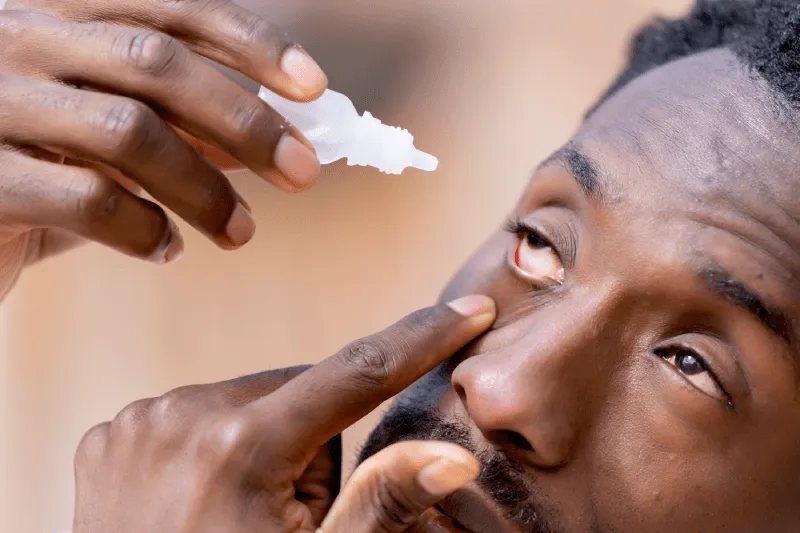
Do Prescriptions Return After Laser Surgery?
There is a small risk of hyperopia returning (regression) after laser surgeries. This risk is higher, especially in high degrees of hyperopia (generally more than +4.00 diopters). Regression occurs because the cornea tends to partially return to its original curvature over time after being reshaped. Therefore, it is critical that the prescription is stable for at least one year before the surgery and that the physician performs the surgery leaving sufficient tissue to minimize the risk of regression.
Possible Complications of Untreated Hyperopia
Untreated hyperopia, especially in childhood, can lead to strabismus (crossed eyes) and amblyopia (lazy eye), causing permanent vision loss. In adults, chronic eye strain, headaches, and a decrease in overall quality of life are seen due to the constant effort of accommodation. Furthermore, it is known that high-grade hyperopia increases the risk of narrow-angle glaucoma (eye pressure) in later life due to the narrowing of the drainage angle of the intraocular fluid. Early diagnosis and treatment prevent these complications.
Factors Influencing Treatment Choice in Hyperopia
The choice of hyperopia treatment depends on the patient’s age, degree of hyperopia, corneal thickness and shape, occupation, lifestyle expectations, and co-existing eye diseases. Glasses are the first choice in children. Intraocular lenses are preferred for high degrees and thin corneas, while laser methods such as LASIK or PRK are preferred for low-to-moderate degrees and suitable corneas. The physician evaluates all these factors and listens to the patient’s expectations to offer the most suitable and personalized treatment plan.
Pre-Surgery Preparation Process for Laser Eye Surgery
Before laser eye surgery, the patient undergoes a comprehensive pre-examination. This examination includes measuring corneal topography (shape map), corneal thickness (pachymetry), and pupil diameter. Before the surgery, patients who use contact lenses must stop wearing lenses for a certain period (usually 1 week for soft lenses, 4 weeks for rigid lenses) to allow the cornea to return to its natural shape. Additionally, it is recommended not to use makeup and perfume the day before the surgery; this is important in reducing the risk of infection.
How Did Turkey’s Rise in Medical Tourism Occur?
Turkey has shown a great rise in health tourism in recent years, and this success is particularly evident in eye health treatments. The main reasons for the rise are; modern medical infrastructure, hospitals accredited to international standards, high-tech surgical equipment, and most importantly, expert, experienced, and internationally trained doctor staff in the field. Offering first-class service at much more affordable costs compared to Western countries has made Turkey an attractive destination for international patients.
Quality Standards of Eye Health Treatments in Turkey
Eye health centers in Turkey have technology equivalent to, or even more advanced than, the best clinics in Europe and America. Many hospitals are accredited by international organizations such as the Joint Commission International (JCI). These accreditations show that patient safety, hygiene, and treatment processes comply with the highest international standards. Turkish ophthalmologists have reached a high level of experience and expertise by performing thousands of laser and cataract surgeries annually, which directly affects treatment success.
Cost Advantage of Hyperopia Treatment in Turkey
Turkey offers advanced surgical treatments for hyperopia, such as LASIK or intraocular lenses, at significantly lower costs compared to clinics in Western Europe and North America. This cost advantage results from the currency exchange rate difference and lower general operating expenses. While saving on treatment costs, patients also have access to the latest technology and the most experienced surgeons in the field. This makes Turkey both an economic and quality health tourism center.
Experience and Expertise of Turkish Ophthalmologists
Turkish ophthalmologists have globally recognized expertise, especially in the field of refractive surgery (laser and lens). The intensity of the healthcare system in Turkey and its developed health tourism have enabled doctors to encounter a large number of diverse and complex cases. As a result, doctors’ practical experience rapidly increases, and their surgical skills continuously develop. Most specialists have received international training and regularly attend international scientific meetings, which ensures they apply the most up-to-date treatment protocols.
Experience of International Patients Receiving Treatment in Turkey
International patients who receive eye treatment in Turkey are generally highly satisfied with the quality of service they receive, the attention of the doctors, and the hospitality of the hospital staff. Institutions providing medical tourism services organize all the patients’ travel, accommodation, and translator needs, making the process stress-free. The opportunity to discover the cultural and natural beauty of Turkey during the post-treatment recovery period further enriches the experience.
Post-Surgery Care and Follow-up Process
The first few days and weeks after laser eye surgery are critical for the recovery and follow-up process. Centers in Turkey meticulously carry out post-operative check-ups. Patients undergo a final check before returning to their home country, and the drops they need to use at home and points they need to pay attention to are explained in detail. Intermediary agencies like Cure Holiday provide remote support and consultation even after the patient returns, ensuring the recovery process is monitored continuously.
Turkey’s Geographical Location and Accessibility Advantage
Turkey has a strategic geographical location at the intersection of Europe, Asia, the Middle East, and Africa. This makes reaching Turkey extremely easy and fast for international patients from all over the world. The availability of direct flights to most major cities (Istanbul, Ankara, Izmir) and short flight times provide a logistical convenience, especially for short-term treatments like eye surgery, which increases accessibility to treatment.
Accommodation and Transfer Facilities During Treatment
Institutions offering health tourism services in Turkey usually provide “turnkey” packages that include accommodation in luxury hotels and all transfers between the airport and the hospital. These services ensure that the patient focuses only on their treatment and avoids logistical concerns. Companies like Cure Holiday, in particular, offer private VIP transfer and accommodation solutions that maintain the patients’ comfort and safety at the highest level, transforming the treatment process into a holiday-like experience.
Diversity of Eye Treatment Options in Turkey
Eye centers in Turkey are not limited to just LASIK for hyperopia treatment but offer the most current and widest range of treatment options. All advanced surgical methods such as PRK, LASEK, ReLEx SMILE, Femtosecond Laser technology, and Phakic IOL/RLE are available. This diversity allows the most suitable treatment to be determined and applied for each patient’s eye structure, prescription, and specific needs, maximizing the success rate and patient satisfaction.
Who is Cure Holiday and What is its Role in Health Tourism?
Cure Holiday is a reliable health tourism organization that provides international patients with access to high-quality eye health and other medical treatments in Turkey. The company connects patients with Turkey’s best eye surgeons and internationally accredited hospitals. Its role is to manage all processes before, during, and after the patient’s treatment, offering doctor selection, travel planning, accommodation, interpreting, and follow-up services under a single package. In this way, the patient completes the treatment process stress-free and safely.
Main Advantages of Receiving Treatment with Cure Holiday
The main advantages of receiving treatment in Turkey with Cure Holiday are combining high quality with affordable cost and offering comprehensive support. Patients easily access expert, experienced surgeons, while feeling safe thanks to Cure Holiday’s 24/7 personal assistance and multilingual communication support. Personalized treatment plans, luxury accommodation, and transfer services transform the treatment process into a comfortable and relaxed experience.
Cure Holiday’s Selection of Partner Eye Centers
Cure Holiday applies very strict criteria when selecting its partner eye centers. It is mandatory for clinics to have international JCI accreditation, use the latest laser and surgical technologies (such as Femtosecond, Excimer Laser), and for the surgeons to have at least 10 years of experience and high success rates. Furthermore, the clinics’ expertise in international patient services and patient-satisfaction focused approach are also important criteria. This diligence ensures that patients receive the most reliable and successful outcomes.
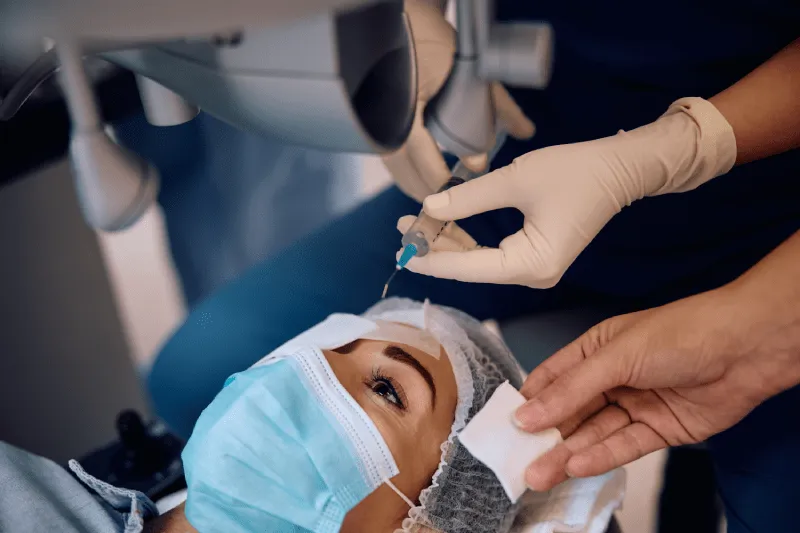
What Do Cure Holiday Treatment Packages Cover?
Cure Holiday treatment packages generally offer “turnkey” service for hyperopia. These packages include; comprehensive eye examination, the cost of the surgical procedure (LASIK, PRK, or IOL), post-operative medications, all hospital expenses, accommodation in a 5-star hotel, all VIP transfers between the airport and the hospital, and personal interpreting/assistance service during the treatment period. This transparent packaging prevents patients from encountering unexpected additional costs.
Appointment and Travel Planning with Cure Holiday
Starting treatment with Cure Holiday is a very easy and organized process. The first step is to get a free preliminary consultation via the website or phone. After evaluating the medical history and eye examination results, the most suitable surgeon and hospital are determined. Then, your travel dates and appointments are arranged by the Cure Holiday team. All logistics, including flight details and accommodation reservations, are managed on your behalf, allowing you to focus on the treatment.
Pre- and Post-Treatment Consulting Services
Cure Holiday provides detailed consultation before the treatment on preparation for surgery (contact lens break period, nutrition) and after the surgery on points to pay attention to (use of drops, care rules). In the post-operative period, remote follow-up and communication support continue even after the patient returns to their home country. 24/7 accessible consultants are available for all possible questions and concerns, which ensures the patient manages the recovery process safely.
Cure Holiday’s Patient Satisfaction and Reliability
Cure Holiday is an organization with high patient satisfaction rates. Its reliability is reinforced by working with internationally accredited hospitals, transparent pricing policy, and personal support offered at every stage of the treatment process. The company is committed to ensuring that its patients are satisfied with both their medical results and the quality of their accommodation and travel experience. This trust-focused approach plays an important role in international patients choosing Turkey.
Communication Support During Treatment with Cure Holiday
Eliminating the language barrier during the treatment process is one of Cure Holiday’s most important services. Multilingual personal assistants accompany you during hospital and doctor appointments, ensuring that communication between you and the doctor is flawless and fluent. This seamless communication facilitates the patient getting answers to all their questions, understanding the procedures, and actively participating in the treatment process, which is a factor that positively affects treatment success.
Combination of Treatment and Holiday in Turkey (Medical Tourism)
Receiving treatment with Cure Holiday means experiencing a cultural and relaxing holiday beyond just an eye surgery. Patients can explore the historical richness of Istanbul, the sunny beaches of Antalya, or the unique nature of Cappadocia during the pre- or post-operative recovery period. The opportunity to spend the treatment in the comfort of a holiday reduces stress and improves overall mood, contributing positively to treatment success and recovery speed.
Why Should You Choose Cure Holiday for Hyperopia Treatment?
In this important decision to clarify your life, Cure Holiday offers you not just a surgeon, but a reliable companion. It combines high-quality medical service with the latest technology, affordable cost, and a unique holiday comfort. Cure Holiday guarantees access to expert surgeons, comprehensive travel and accommodation arrangements, and 24/7 personal support. Cure Holiday is the right address for a stress-free and organized treatment process where you can safely entrust your eye health.
How Can Cure Holiday Clarify Your Life?
The first step to clarify your life with Cure Holiday is to receive a free preliminary consultation. Experts evaluate your eye examination results, determine the most suitable laser or lens treatment for your degree of hyperopia and corneal structure. Then, the most convenient date for you is determined, and the entire travel plan is organized. All that remains for you is to come to Turkey, have your surgery, spend the recovery period in a pleasant holiday atmosphere, and enjoy your new, clear vision.
Contacting Cure Holiday and Taking the First Step
If you are looking for a permanent solution to the eye strain and headaches you experience due to hyperopia (farsightedness), evaluate the opportunity to receive treatment in Turkey with the assurance of Cure Holiday. By contacting Cure Holiday via their website or communication channels, you can start creating your personalized treatment plan immediately. Remember, clear vision means a higher quality of life, and Cure Holiday is ready to guide you on this journey. Contact them now and take your first step towards clear vision.
Free Consultation
Fill out the form below to get your free medical travel plan and price quote.
Sources and how to verify this yourself
- Ministry of Health, Regulation on International Health Tourism and Tourist Health, Official Gazette 26 April 2025, No. 32882 — authorisation requirement for facilities and intermediaries, TÜSKA accreditation, compulsory complication insurance (deadline 31 December 2025 for insurance, 31 December 2026 for accreditation). source
- Ministry of Health, Regulation on Promotion and Information Activities in Health Services, Official Gazette 12 November 2025, No. 33075 — treatment promises and guarantees are prohibited; price and campaign announcements are permitted only within international health tourism. source